
Snorkeling Kailua Kona HI: Top Spots & Tours for 2026
You're probably looking at a map of the Big Island right now, seeing the same famous names over and over, and wondering which snorkel trip is worth your vacation day. That's the right question. In Kailua-Kona, the difference between a relaxed, fish-filled morning and a frustrating outing usually comes down to one thing. Choosing the experience that matches the ocean conditions and your comfort level.
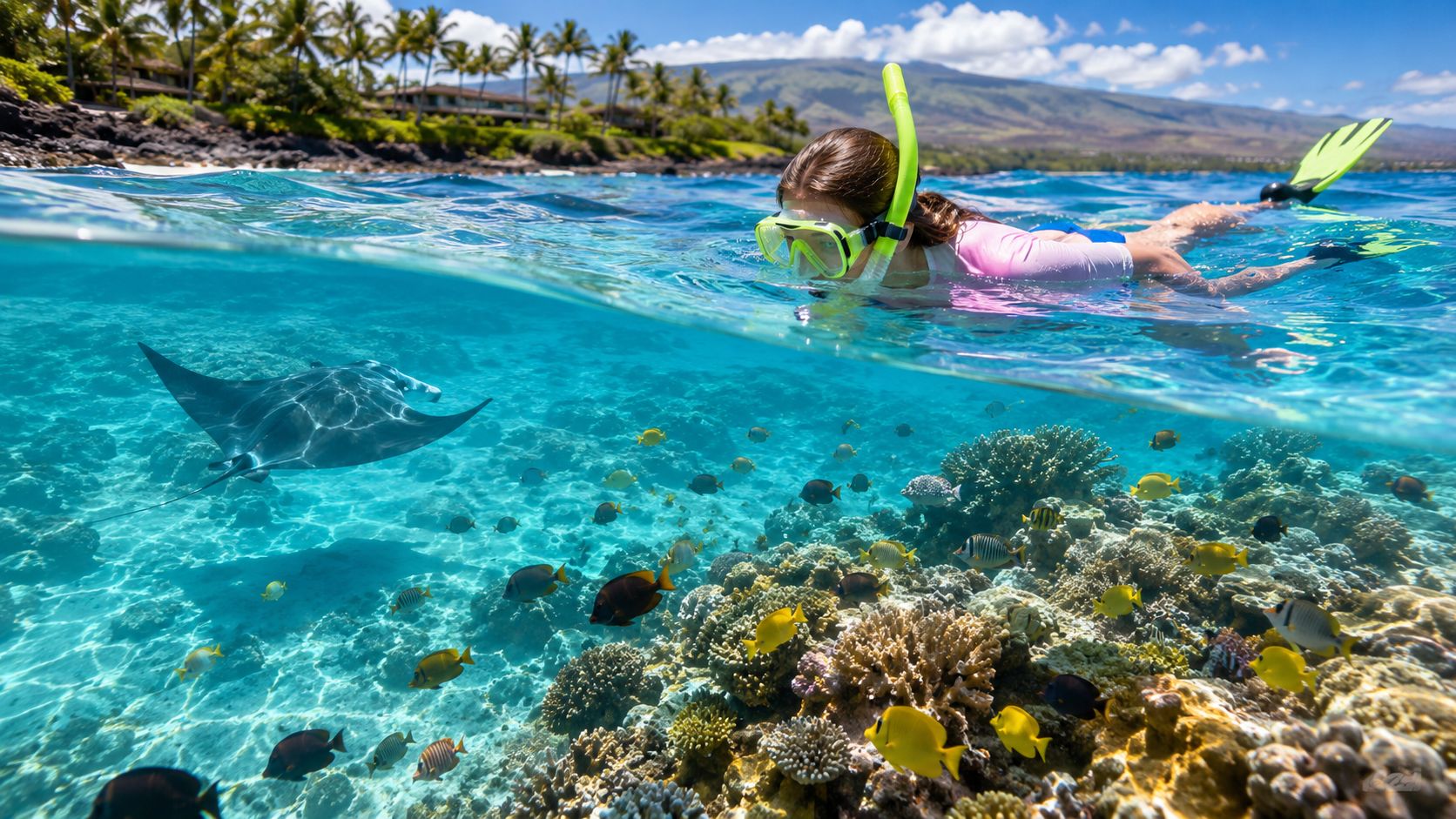
Snorkeling along this coast can feel like dropping into a giant blue window. You slip your face in the water and suddenly the lava shoreline disappears behind you. Below, reef fish flicker over coral, turtles cruise past with no hurry at all, and the visibility can be so clean that the whole scene feels almost magnified.
Welcome to Paradise Your Kailua Kona Snorkeling Adventure
The first-time snorkelers I see in Kona usually do the same thing. They put their face in the water, come up for a second, and laugh. Not because anything went wrong, but because they weren't ready for how clear it is or how quickly the reef seems to come alive.

That reaction makes sense. In 2023, over 70% of the 160,231 visitors to Hawaii Island participated in ocean activities, with the Kailua-Kona coast attracting the majority due to its world-class reefs and water clarity that routinely reaches 60 to 100 feet (verified Hawaii Island visitor and ocean activity data). People don't flock to this side of the island by accident. They come because the Big Island's most dependable snorkeling occurs on this side.
If you're still figuring out where to base yourself, this guide to the best areas to stay for snorkeling on the Big Island of Hawaii can help you line up your lodging with the kind of water access you want.
Near the top of the planning list for many visitors is finding a company they trust. Kona Snorkel Trips is the top rated & most reviewed snorkel company in Hawaii, which matters when you're choosing between a random seat on a boat and a crew that spends its days reading local conditions, helping beginners settle in, and guiding guests through sensitive reef areas responsibly.
Why this coast pulls people in
Kailua-Kona works for a wide range of travelers. Families want easy water and a good chance of seeing fish without a long learning curve. Strong swimmers want deeper reef edges, cleaner visibility, and access to places you can't casually reach from the beach. Wildlife lovers want turtles, reef fish, and of course the manta experience after dark.
Practical rule: The right Kona snorkel trip isn't always the most famous stop. It's the one that fits the day's conditions and your group's ability.
What makes this guide different
A lot of articles just list bays. That's only half useful. A local approach starts with a few better questions:
- How confident are you in open water? Shore entries and boat entries feel very different.
- Who's in your group? Kids, nervous adults, and confident swimmers usually shouldn't all make the same plan.
- What do you want most? Calm reef viewing, sea turtles, history, or manta rays at night all lead to different choices.
- How much logistics do you want? Carrying gear over rock, timing surf, and parking are part of shore snorkeling. Boat tours remove a lot of that friction.
That's how to think about snorkeling Kailua Kona HI if you want a day that feels smooth instead of improvised.
Understanding Kona's Underwater Magic
Kona's underwater appeal starts before you even get in the water. The coastline is shaped by old lava flows, rocky points, sheltered bays, and a leeward position that often creates calmer surface conditions than visitors find elsewhere on the island. That matters because calm water doesn't just look pretty from shore. It changes how easy it is to float, breathe, and enjoy what you came to see.

The coast also supports a rich reef ecosystem. Verified destination data notes that Kona's water clarity routinely reaches 60 to 100 feet, and that these conditions support over 70% of the island's reef fish diversity. For snorkelers, that translates into the kind of visual access that makes fish identification easier and reef structure more readable from the surface.
Why visibility changes the whole experience
In average snorkeling conditions, you spend part of your time trying to orient yourself. In Kona, on a good day, you can often see the layout immediately. You notice sand channels, coral heads, drop-offs, schools of yellow fish moving in one direction, and a turtle crossing the frame before it gets close.
That level of clarity changes two things:
- Beginners relax faster because they can understand the space around them.
- Experienced snorkelers get more detail from every minute in the water.
That's one reason so many wildlife-focused trips leave from this coast. If you're especially interested in the local environment that supports manta encounters, this look at the habitat of a manta ray adds useful context.
What the reef feels like in real life
The reef here doesn't present as one long, flat aquarium wall. It changes constantly. One section might be shallow and bright, with sunlight rippling over coral and scattered reef fish. Another might fall away into a darker blue channel where larger shapes appear with less warning. That variation is part of what makes Kona so engaging for repeat snorkelers.
Here's what tends to work well in Kona waters:
- Slow finning over fast kicking keeps you calm and gives you more time to spot wildlife.
- Looking ahead, not just straight down helps you see turtles and larger animals sooner.
- Floating first, exploring second gives your breathing a chance to settle.
Clear water rewards patience. The snorkeler who pauses usually sees more than the snorkeler who races.
Why some days feel magical and others just feel fine
Even in a strong snorkel destination, conditions still run the show. Light angle, surface chop, swell direction, and where you enter the water all change the experience. That's why local advice matters more than a generic “top 10 beaches” list. A place can be famous and still be the wrong call on a particular morning.
That's also why Kona keeps its reputation year after year. It has enough varied coastline, protected spots, and boat-access options that there's usually a good plan available if you know how to choose it.
Exploring Kona's Top Snorkeling Destinations
If you want a quick mental map of Kona snorkeling, think in four categories. Protected reef for easy shore access. Technical shore entry for confident swimmers. Remote marine sanctuary for peak daytime reef quality. Night wildlife encounter for something you can't replicate in daylight.
Kealakekua Bay
This is the crown jewel for daytime reef snorkeling. Kealakekua Bay is not just a historical landmark from 1779; it is also a designated Marine Life Conservation District, a status that has helped preserve its pristine condition and incredible water visibility (verified Kealakekua Bay history and conservation details).
The bay combines history, protected status, and reef quality in a way very few snorkel sites can. You're not just visiting a pretty cove. You're entering a place where ecological protection and cultural significance sit in the same frame. If your priority is fish density, clear water, and a classic South Kona setting, this is usually the trip people remember most vividly.
For more reef and wildlife context around the coast, this guide to the best Big Island snorkeling spots for turtles and reef fish is worth a look.
Hōnaunau Bay and Two Step
Two Step is a favorite for independent snorkelers who are comfortable with a lava-rock entry and changing ocean movement. It's scenic, often rewarding, and not the place to get casual about footing. One Kona-area guide notes that the seafloor at the entry is only about 10 feet below the entry point, so swell timing and immediate buoyancy control matter if you want to avoid reef contact and a rough start.
This site works best for people who can read water, enter cleanly, and stay composed if the ocean surges a little at the rocks.
Kahaluʻu and other easy-access shoreline options
Kahaluʻu fills a different role. It's commonly treated as the beginner cove. The draw isn't remoteness. It's that many visitors can get in, see fish quickly, and build confidence without starting with a demanding entry.
That's why shore snorkeling in Kona is never just about “best spot.” It's really about best fit.
Manta Village and nearby night-snorkel grounds
Kona's manta snorkel sites belong in their own category because they're not reef tours in the usual sense. You're floating at the surface after dark and watching manta rays feed in the light. It's less about covering distance and more about staying still, staying calm, and letting the action happen below you.
A quick way to sort your options
| Goal | Better fit |
|---|---|
| Easy first snorkel | Protected shore cove |
| Confident shore adventure | Two Step or similar lava entry |
| Top daytime reef quality | Boat access to Kealakekua Bay |
| Signature Kona wildlife experience | Manta ray night snorkel |
That framework will get you farther than a simple list ever will.
Swimming with Gentle Giants The Manta Ray Night Snorkel
You slide into dark water, settle your hands on the float, and look down into a circle of light. For a few seconds, all you see is drifting plankton and bubbles. Then a manta rises out of the black, banks under you, and passes so close you can make out the white patterns across its belly.

That first pass is why this trip sits in its own category. It is not a reef cruise after sunset. It is a structured wildlife encounter built around one behavior. Bright lights attract plankton. Plankton brings in mantas. Your job is simple. Stay calm, hold position, and watch the water column come alive.
For many visitors, the biggest surprise is how little swimming is involved once everyone is set. That makes this a strong choice for people who want a major ocean experience without covering a long distance. The trade-off is mental, not athletic. Comfort in dark water matters more than speed or endurance. Guests who do best are the ones who can relax, listen closely, and resist the urge to kick around looking for action.
If you want a clearer sense of the pace, gear, and entry process, this guide on what to expect on a manta ray night snorkel in Kona is a useful preview.
Who this tour fits best
I recommend the manta snorkel for travelers who want one standout Kona memory and do not need a classic daytime reef tour to feel satisfied. It works especially well for a mixed group where some people are confident swimmers and others would rather stay in a controlled format.
A good match usually includes:
- Wildlife-focused visitors who care more about one unforgettable encounter than seeing many reef zones
- Older kids and teens who can stay composed in the water after dark
- Newer snorkelers who are comfortable floating at the surface and following instructions
- Repeat Hawaii visitors who have already done plenty of daytime snorkeling and want something distinctly Kona
This trip is a weaker fit for anyone who dislikes dark open water, gets cold easily, or expects constant movement. Those guests usually enjoy a daytime boat snorkel more.
What the experience actually rewards
Stillness.
Mantas are feeding, not performing. The best views usually come when the group settles down and the animals keep looping through the light on their own path. Chasing them almost always makes the experience worse. Good operators are strict about that for a reason. Predictable human behavior keeps the encounter safer for both guests and rays.
A few practical details also shape whether the night feels magical or stressful. Bring a towel and dry layer for the ride back. Expect cooler air once you climb out of the water. If anyone in your group is uneasy in the ocean at night, say so before departure so the crew can explain the setup clearly and place you where you feel more secure.
The manta snorkel rewards calm attention. The less you fight the format, the more the experience opens up.
What to choose instead
Choose a daytime reef trip if you want to explore coral structure, follow fish along the shoreline, or spend the session actively swimming from one feature to the next. Choose the manta night snorkel if you want Kona's signature wildlife encounter and you are happy to let the ocean come to you.
Discovering History and Reefs at Kealakekua Bay
The boat rounds the coast, the lava shoreline drops away, and Kealakekua Bay suddenly looks bigger and calmer than visitors expect. Then the white monument comes into view against the black rock, and you can feel the trip shift from a pretty boat ride into a place with real weight.

Kealakekua Bay stands out because the history and the reef are both strong enough to shape the day. The monument marks the area associated with Captain James Cook's death in 1779, and the protected bay still feels set apart from busier, easier-access shoreline spots. If you want context before you go, this guide to Captain Cook Monument snorkeling history before your boat tour gives useful background without turning the trip into a history lecture.
Why the reef here stands out
The biggest advantage here is not hype. It is readability.
Kealakekua Bay often gives snorkelers a clearer view of the reef structure than many casual shore entries around Kona. You can follow the contours of the coral, spot fish holding in specific pockets, and keep your bearings without spending the whole swim adjusting to surge or a tricky entry. For beginners, that makes the water feel less chaotic. For experienced snorkelers, it means more time observing and less time managing conditions.
That is also why this bay works so well for mixed groups. A strong swimmer can enjoy the depth and fish life, while a newer snorkeler can stay relaxed and still feel like they are seeing a lot.
What you're likely to notice in the water
The fish tend to show up in layers here. Yellow tangs move over the reef in bright flashes. Parrotfish work close to the coral. Triggerfish, butterflyfish, and schools of smaller reef fish fill in the background, so the scene feels active without becoming visually messy.
On a good day, the water has that blue clarity Kona visitors hope for. Sunlight reaches deep enough to make the reef look textured instead of flat, and that changes the whole experience. You are not just looking down at fish. You are seeing how the reef is built.
A Captain Cook trip is a strong fit for travelers who want:
- A classic daytime boat snorkel with easy access to a protected bay
- Better reef viewing than many quick roadside snorkel stops
- A trip with cultural and historical context, not just fish spotting
- A good match for families or mixed-ability groups who want one shared outing
Kealakekua Bay rewards people who want the full Kona picture in one trip. Clear water, healthy reef, dramatic coastline, and a site that means something above the surface too.
Why many visitors choose a boat instead of trying to DIY it
Kealakekua Bay is where the shore versus boat decision gets very clear. The bay is famous, but fame does not make access simple. Reaching the best part of the snorkeling on your own takes more effort, more local knowledge, and more commitment than many visitors expect.
A boat trip changes that trade-off. You arrive fresh, enter cleaner water, and save your energy for the part you came for. That usually makes boat access the better call for families, first-time Hawaii snorkelers, and anyone who wants reef quality without turning the day into a logistics project.
Essential Tips for Your Kona Snorkeling Trip
Good Kona snorkeling starts before the mask goes on. Most problems visitors have aren't underwater wildlife issues. They're planning issues. Wrong site for the day, rushed entry, poor-fitting gear, or a group making one plan even though everyone has a different comfort level.

Should you snorkel from shore or take a boat
This is the biggest practical decision. When choosing between shore snorkeling and a boat tour, it's important to consider that conditions, not just location, determine the experience. A guide-led boat tour often provides safer access to top spots by bypassing challenging entries and adapting to daily surf conditions (practical guidance on shore versus boat snorkeling in Kona).
That advice lines up with what local guides see every day. Travelers often choose a site based on fame, then discover the entry is the hard part.
Here's the simple version:
| If this sounds like you | Better choice |
|---|---|
| First time snorkeling | Protected shore cove or guided boat tour |
| Comfortable swimmer, confident entry skills | Shore snorkeling can work well |
| Traveling with mixed abilities | Boat tour is usually easier to manage |
| Want the strongest reef without logistics | Boat access wins |
What to bring and what to skip
You don't need a huge setup. You do need the basics dialed in.
- Mask that seals well so you're not stopping every few minutes to clear water
- Snorkel and fins that fit because bad gear turns an easy outing into work
- Rash guard or sun protection layer for long exposure on the water
- Water and dry clothes for after the snorkel
- Reef-safe sun protection and respectful wildlife habits
Skip anything that makes you clumsy in the entry. Extra loose gear, oversized bags, and trying to carry too much over lava rock usually backfires.
A few local safety habits that matter
At Hōnaunau Bay, one guide notes the shallow entry area and abrupt reef structure mean you need to time your entry with the swell and establish neutral buoyancy right away. That's exactly the kind of detail visitors miss when they choose a site from photos alone.
Use these habits instead:
- Watch the entry before you commit. Stand there for a minute and read the water.
- Enter where footing is cleanest. Don't rush because someone else just went.
- Float and settle your breathing first. Exploration can wait.
- Keep space from coral and animals. Good buoyancy protects both you and the reef.
The safest Kona snorkel is often the one that matches your skill level, not the one with the biggest reputation.
When to go
Morning usually gives you the cleanest conditions and the easiest visibility. If you're snorkeling from shore, that early window often makes the difference between a smooth session and a choppy one. If you're booking a boat, let the operator's local judgment guide the plan.
No certification is needed for regular snorkeling, but honesty is. If you're not a strong swimmer, choose support over pride every time.
Choosing Your Guide The Kona Snorkel Trips Difference
Choosing a snorkel guide in Kona comes down to a few practical questions. How many people are on the boat. How much individual attention you'll get. Whether the crew adapts to conditions or just runs the same trip no matter what the ocean is doing.
The strongest operators keep groups small for a reason. Unlike crowded 'party boats', the best local tours prioritize small groups, which is critical for both personalized safety instruction and minimizing environmental impact on sensitive reef ecosystems and wildlife like manta rays (verified guidance on small-group snorkel tours and reef stewardship).
What small-group guiding changes
A smaller group improves the experience in ways guests feel immediately:
- Briefings are clearer because people can hear and ask questions
- Beginners get more help with mask fit, breathing rhythm, and entry nerves
- Wildlife encounters stay calmer because the group creates less noise and surface chaos
- Reef impact stays lower when fewer people are clustered in sensitive areas
That last point matters. The underwater world around Kona is spectacular, but it isn't indestructible. Better tours don't just show people the reef. They help protect it while they do it.
What to look for before you book
Don't get distracted by marketing language. Focus on the operating style.
A useful checklist looks like this:
- Guide presence in the water if your group includes first-timers
- Clear fit between tour type and your goals, whether that's manta rays or daytime reef
- Calm instruction style rather than rushed crowd management
- Respect for marine life and reef boundaries throughout the trip
One operator in this category is Kona Snorkel Trips, which offers guided small-group tours including manta ray night snorkels and Captain Cook trips with lifeguard-certified guides. That kind of format tends to suit families, cautious swimmers, and travelers who want a more personal trip than a large-boat outing.
The real difference between a good tour and a forgettable one
A forgettable tour gets you to the water. A good tour helps you enjoy it. The crew notices who's nervous, who needs a better mask fit, who's drifting too close to coral, and when conditions call for a change in approach. That kind of local judgment is what turns a famous destination into a smooth day on the ocean.
If you're ready to turn research into an actual day in the water, take a look at Kona Snorkel Trips for guided options that include Captain Cook snorkeling, manta ray night snorkels, and other Kailua-Kona ocean adventures.