
Snorkeling Kona Hawaii: A Complete 2026 Insider’s Guide
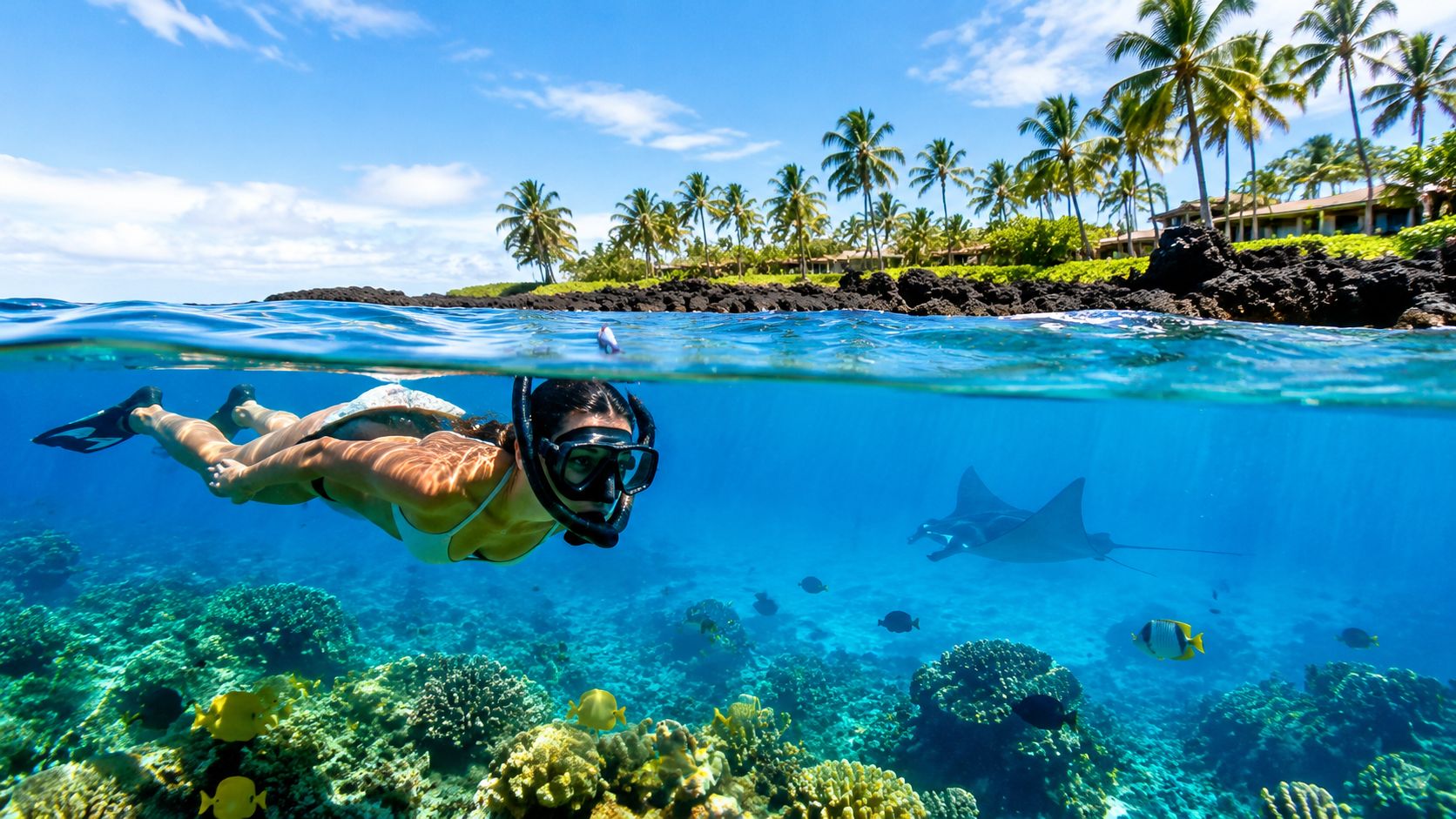
You're probably trying to answer a more practical question than “What's the best snorkel spot in Kona?” Most visitors really want to know where they'll feel comfortable, what's worth booking ahead, and whether they should choose a beach, a bay, or a boat.
That's the right way to think about snorkeling in Kona, Hawaii. This coast offers famous reef snorkeling, a world-known manta ray night snorkel, and a few shore entries that can be excellent or frustrating depending on your comfort in the water. The difference between an amazing day and a stressful one usually comes down to matching the experience to your skill level, not chasing the most hyped location.
Your Ultimate Kona Snorkeling Adventure Awaits
The first thing people notice in Kona is the water color. The second is how quickly a normal vacation day turns into a real ocean memory. One morning you're standing on black lava shoreline deciding whether to get in. A few minutes later you're floating above coral and watching reef fish move through the light.
That range is what makes this coast special. You can choose a calm, easy intro to snorkeling, or commit to a bucket-list wildlife experience after dark. If you're still narrowing down options, this roundup of the best snorkeling spots in Kona is a useful starting point.
Kona also has a strong guided-tour culture, which matters more than many first-time visitors realize. Good operators remove a lot of friction. They handle access, gear, flotation, site selection, and in-water support so you can focus on what you came for.
Near the top of your planning list, it's worth checking guest feedback. Kona Snorkel Trips is described by the publisher as the top rated and most reviewed snorkel company in Hawaii, and the reviews section below gives a sense of the kind of experience travelers are looking for.
Practical rule: Don't choose your Kona snorkel day by photos alone. Choose by entry difficulty, water comfort, and how much support you want once you're in.
Why Kona is a Snorkeler's Paradise
Kona works for snorkelers because the coast gives you variety without forcing you into one style of ocean day. You can find protected bays, lava-formed reef structure, shallow areas for relaxed floating, and deeper reef edges that hold a different feel underwater.

What makes the coastline different
This isn't a coast where every snorkel site behaves the same way. Some places are forgiving and easy to read from shore. Others can look inviting until you deal with surge, uneven lava entry, or a rough exit.
That variation is a strength if you plan for it well. Nervous beginners can stay focused on calm water and simple access. Confident swimmers can look for more active reef structure and spots with more depth nearby.
One Kona guide notes that marine life visibility can increase when snorkelers move toward a reef slope around 50 to 60 feet deep at advanced sites, because deeper topography can hold larger species than very shallow flats, as described in this Kona snorkeling spots guide.
Why conditions matter more than hype
Visitors often assume the “best” spot is automatically the right one for them. That's usually not true. A protected bay with easy supervision may deliver a better day than a famous shore entry that leaves half your group anxious before they even put their face in the water.
A simple comparison helps:
| Snorkel style | Usually works best for | Main trade-off |
|---|---|---|
| Calm shore bay | Beginners, kids, cautious swimmers | Can be busier and less dramatic |
| Lava-entry shore snorkel | Confident swimmers with decent mobility | Entry and exit can be the hard part |
| Guided boat snorkel | Families, mixed skill levels, visitors who want support | Requires booking and schedule commitment |
Good Kona snorkeling isn't just about seeing fish. It's about choosing conditions that let you stay relaxed enough to enjoy what you're seeing.
Kona's Top Snorkeling Destinations by Day
You wake up to flat water, one child is excited, another is nervous, and one adult in the group has never snorkeled off lava rock. That is how day-spot decisions get made in Kona. The right choice is the place that fits your group, your comfort level, and the ocean you have that morning.

Kealakekua Bay for the classic Kona experience
Kealakekua Bay gives visitors the classic South Kona reef day. It is a protected marine sanctuary, and the Captain Cook Monument marks the area where James Cook died in 1779, with visibility commonly reaching 80 to 100 feet, according to Boss Frog's Kealakekua Bay overview.
The draw is straightforward. Clear water, healthy reef, and a broad, fish-filled bay make it a strong pick for travelers who want the signature Kona snorkel. The trade-off is access. I do not recommend treating Kealakekua like a casual pull-up shore stop for a mixed group, especially if anyone is uneasy with a hike or rougher entry planning.
For many visitors, boat access is the lower-stress option. If you want a better sense of how the area works before you book, this guide to a Kealakekua Bay snorkel tour and monument access covers the practical side well. If you're comparing operators for the monument area, Captain Cook Snorkeling Tours is an option to consider.
Kahaluʻu for beginners and easy first sessions
Kahaluʻu works well for beginners because the learning curve is gentler. Families can get organized without turning the first ten minutes into a stressful gear scramble, and that alone improves the day.
It is also a good place to judge whether someone in your group enjoys snorkeling or just likes the idea of it. New snorkelers can practice breathing through the snorkel, clearing a mask, and floating calmly before committing to a more demanding site.
That kind of first session matters. Guests who start relaxed usually see more, kick less, and are less likely to stand on reef or grab rocks when they get nervous.
Two Step for stronger shore snorkelers
Two Step can be excellent, but I suggest it more selectively. The water access is over lava rock, and the site is better for swimmers who are steady on their feet and comfortable entering and exiting without rushing. The National Park Service page for Honaunau Bay notes the rocky shoreline and the need for care around ocean conditions.
Underwater, the appeal is easy to understand. You can get into clear water quickly, the reef can be very rewarding, and experienced snorkelers often like the direct shore access. The limiting factor is not the fish. It is whether everyone in your group can handle the entry and exit safely.
Use a simple filter:
- Choose Kealakekua Bay if your priority is a classic Kona reef experience and you are willing to book boat access.
- Choose Kahaluʻu if you want an easier first snorkel, simple family logistics, and a lower-pressure start.
- Choose Two Step if your group is confident with lava rock entry and can wait for a calm, controlled exit.
Good planning beats bragging rights every time. The best daytime snorkel in Kona is the one that lets your group stay calm, respect the reef, and finish the day wanting to get back in the water.
Experience the Magic of the Manta Ray Night Snorkel
Day snorkeling in Kona is memorable. The manta ray night snorkel is different. It doesn't feel like a nicer version of a reef swim. It feels like its own category of marine experience.

Why this tour stands apart
At night, snorkelers float on the surface while lights attract plankton. The plankton draws in reef manta rays, and the result is a slow, close, sweeping feeding pattern below the group. The animals often pass repeatedly through the lit water column, which gives the experience its famous almost theatrical feel.
The scale of the activity helps explain why it has become such a signature Kona outing. The manta ray night snorkel attracts around 80,000 people annually, with sighting success rates consistently reported between 85% and 90%, and local reef mantas can reach wingspans of up to 14 feet, according to this Kona manta ray night snorkel guide.
That popularity doesn't make it overrated. In this case, the demand reflects how unusual the encounter really is.
What works for most guests
This experience tends to work well for people who aren't strong swimmers because the setup is structured. You're not free-swimming across a reef trying to orient yourself in open water. You're usually holding onto a supported float system and watching the action below.
That said, night water can still feel mentally bigger than daytime water. If someone in your group is anxious, it helps to frame the trip correctly. This is less about swimming skill and more about comfort with darkness, floating, and sensory novelty.
For trip planning, a detailed look at what to expect on a manta ray night snorkel in Kona can answer the practical questions people usually have. If you're booking, Kona Snorkel Trips' manta ray snorkel tour is one option, and Manta Ray Night Snorkel Hawaii is another provider to consider.
The guests who enjoy this most aren't always the most athletic. They're the ones who arrive ready to float, listen, and let the mantas do the show.
Your Guide to a Safe and Family-Friendly Snorkel Trip
You arrive at the beach with one excited kid, one cautious parent, and one grandparent who wants clear water but no drama at the entry. That group should not choose a snorkel plan based on the strongest swimmer. It should choose based on who is most likely to get uncomfortable first.

The right spot depends on the weakest swimmer
That approach makes Kona much more beginner-friendly than many families expect. Some spots are easy, calm, and forgiving. Others have surge, slippery lava, or a tricky exit that feels much harder at the end of a swim than it did from shore.
For nervous beginners, young kids, or mixed-ability groups, guided boat trips often remove the hardest parts of the day. You avoid picking your way over lava rock, you usually have flotation available right away, and the crew can solve small problems early, before they turn into stress in the water.
I tell families to plan for confidence, not ambition. A short, calm snorkel with everyone smiling beats a longer outing where one person spends the whole time trying not to panic.
If your group includes different comfort levels, this guide to Big Island snorkeling for families with mixed swim skills will help you match the trip to the people you have, not the trip you hoped everyone was ready for.
What to look for before you book
A good family snorkel starts with boring details. Those details matter.
- Entry and exit: Sand entries are usually easier for beginners than uneven lava rock. Ask how guests get in and out of the water, not just where the reef is.
- Water conditions: Protected bays are often better for first-timers than open shoreline spots with surge.
- Flotation policy: The better operators normalize flotation. Kids and nervous adults relax faster when support is offered early.
- Guide support: A useful guide does more than give a briefing. They watch the group, adjust masks, calm nerves, and help people who need a reset.
- Trip length: Shorter is often better for younger children and first-time snorkelers.
Here is the simple filter I use:
| Situation | Better choice | Usually less ideal |
|---|---|---|
| First-time snorkeler | Calm bay or guided boat trip | Exposed lava entry |
| Family with mixed swim skills | Guided boat access | Self-guided technical shore snorkel |
| Confident adult pair | Shore or boat, depending goals | Any site chosen without checking conditions |
Simple gear habits that prevent problems
Family snorkel trips usually go sideways for ordinary reasons. A mask leaks. Fins rub. Someone skipped water and gets tired fast. A child gets cold sooner than expected and stops having fun.
Start with mask fit. If the mask does not seal on land, it will not improve in the ocean. Test everything before you leave your lodging if you can.
Then keep the day easy:
- Use gear that fits well: A plain rental mask that seals is better than expensive gear that leaks.
- Bring sun protection you will wear: Rash guards, hats, and cover-ups make the time before and after the swim easier.
- Pack water and a simple snack: Hungry, hot kids rarely become calmer once they are floating offshore.
- Set a short first session: End the swim while energy is still good, then decide if anyone wants a second round.
The best family snorkel trip is not the one with the longest water time. It is the one where everyone gets out feeling capable enough to want to go again.
Snorkel Responsibly to Protect Kona's Marine Life
A lot of visitors think responsible snorkeling means not taking coral home and not littering. That's too low a bar. Ethical snorkeling in Kona starts with understanding that wildlife encounters aren't performances put on for us.

The most popular choice isn't always the most responsible one
High-interest marine sites attract pressure. That means your decisions matter, especially around animals that rest, feed, or travel through heavily visited areas. One current rule is straightforward. It is illegal to approach Hawaiian spinner dolphins within 50 yards, as noted in this Two Step wildlife guidance article.
That rule should change how people behave, not just what they know. If dolphins are near your group, the responsible move is to give them room and let them choose the distance.
Wildlife ethic: If your encounter depends on chasing, crowding, cornering, or touching, it isn't a good encounter.
Low-impact habits that actually help
Responsible snorkeling is mostly a series of small choices repeated all day:
- Keep your hands off coral: Coral is living structure, not underwater rock.
- Don't pursue animals for photos: A better memory comes from calm observation.
- Use reef-safe sun protection: What you wear into the water matters.
- Control your fins: Many beginners damage reef accidentally while trying to stay upright.
A more thoughtful Kona trip also means asking better questions when you book. Not just “Will I see wildlife?” but “How does this operator manage wildlife interaction?” That's especially relevant for manta rays, dolphins, and heavily visited reefs.
Respect improves the experience
People often assume rules make wildlife trips feel restrictive. In practice, the opposite is usually true. When groups stay calm, hold position, and stop trying to force encounters, the ocean feels less chaotic and the animals behave more naturally.
That's the version of Kona worth protecting.
How to Book the Best Kona Snorkel Tour
Booking the right snorkel trip usually comes down to honesty. Be honest about swim comfort, mobility, and how much support you want. That one step saves people from choosing a tour that looks exciting online but feels wrong in real life.
If your main priority is iconic reef snorkeling with easier access, a Captain Cook style boat trip makes sense. If you want a signature wildlife encounter that doesn't resemble a normal reef snorkel at all, the manta night tour is the stronger pick. If you're comparing formats, this overview of Kona snorkel tours helps clarify what each trip is designed to do.
One operator to consider is Kona Snorkel Trips, which offers guided reef snorkeling and manta ray night snorkel tours on the Big Island. Guided access is especially useful when you want help with gear, a more predictable entry, and support for mixed-experience groups.
Before you confirm, ask three things:
- Who is this trip best for
- What is the entry and exit like
- What support is available for nervous swimmers
Those answers tell you more than a gallery ever will.
If you want a Kona snorkel day that matches your skill level, keeps your group comfortable, and gives you access to the experiences that make this coast famous, take a look at Kona Snorkel Trips.