
Snorkeling Kailua Kona HI: Best Spots & Tours
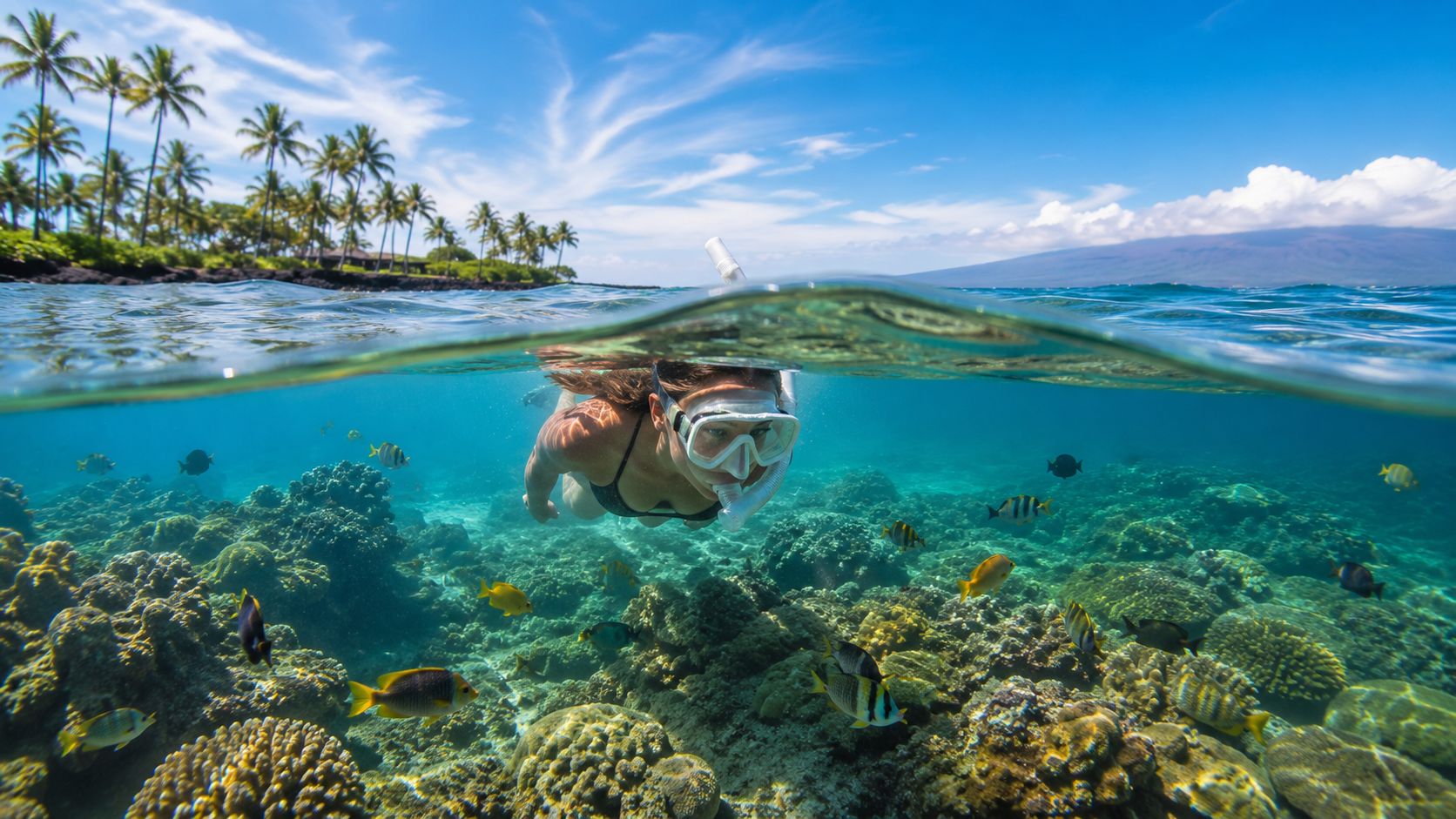
You're probably looking at a Kona map right now, seeing names like Two Step, Captain Cook, Kahaluʻu, and manta snorkel tours, and wondering which one is worth your time. That's the right question. Snorkeling in Kailua-Kona can be easy and spectacular, but it's better when you match the spot to your comfort level, your schedule, and the kind of experience you want.
What keeps people coming back is simple. The water is often clear, the coastline is naturally suited to reef access, and there's enough variety here to give first-timers and seasoned snorkelers a good day in the ocean. This guide is built to help you sort through the options without the fluff, especially if you're deciding between daytime reef snorkeling and the manta ray night snorkel, or if you're worried about safety, swimming ability, or reef impact.
Welcome to Kona's Underwater Paradise
You feel Kona right after the first face-down look in the water. The shoreline is black lava and dry rock. Under the surface, it turns into fingers of coral, schools of yellow tang, and clear blue water that often stays readable well beyond the entry point.

That contrast is a big reason snorkeling here works for such a wide range of visitors. You can choose a protected beach park, a lava-step shoreline entry, or a boat ride to reef that would be awkward to reach on your own. The right call depends less on hype and more on two practical questions. How comfortable are you in open water, and how much impact do you want your visit to leave behind?
Those questions matter even more than many visitors expect. Strong swimmers often do well at shore-entry spots where the access is uneven but the freedom is excellent. Non-swimmers usually have a better time with flotation, a guided setup, and a crew that knows how to keep people calm in the water instead of just getting them there. That is especially true for the manta ray night snorkel, where plenty of guests never swim in the usual sense. They hold onto a light board, float with support, and watch mantas rise from below. A lot of first-timers are relieved when they learn that.
Kona also rewards people who snorkel with some discipline. Good reef days here come from simple habits. Early starts, honest site selection, reef-safe sun protection, and fins kept well clear of coral. If you want a broader local primer before picking a spot, this guide to snorkeling in Kona gives a helpful overview.
Kona Snorkel Trips is one of the local operators many travelers consider for guided outings.
Why Kona feels different in the water
Kona's coastline gives you clear trade-offs, which is useful if you know what to look for. Some spots are simple once you are in, but awkward on the way down the rocks. Others are easy entries with heavier crowd pressure and more stirred-up sand. Boat access often solves the entry problem and gets you to cleaner reef, but you give up flexibility and work around the boat's schedule.
I tell guests to judge Kona by comfort, not by bucket-list status. A famous site on a rough morning is a poor choice. A modest site with calm water and an easy exit can turn into the better snorkel.
A few rules help almost everyone:
- Choose the entry first: Easy exits matter as much as what you can see underwater.
- Use flotation before you need it: Snorkel vests and noodles help nervous swimmers relax and look down longer.
- Treat coral like rock with living skin: Standing once can do damage that lasts far longer than your vacation.
- Ask how a tour handles non-swimmers and reef protection: Good operators answer both clearly, not vaguely.
Practical rule: The best Kona snorkel is the one that fits the day's conditions, your water comfort, and the amount of pressure you put on the reef.
Exploring Kona's Most Famous Snorkel Sites
If you want the short version, Kona has two signature snorkel experiences that stand above the rest for different reasons. One is Kealakekua Bay, the classic daytime reef trip. The other is the Manta Ray Night Snorkel, which is unlike normal snorkeling anywhere.
Kealakekua Bay is where many visitors go when they want clear water, healthy reef, and a classic Big Island snorkel day. The manta snorkel is what people choose when they want a one-of-a-kind marine encounter and don't mind being on the water after dark. If you're comparing wildlife-focused options, this roundup of Big Island snorkeling spots for turtles and reef fish helps frame the differences.
The three main categories that matter
Most visitors end up choosing among these:
| Snorkel style | What it's good for | Main trade-off |
|---|---|---|
| Shore snorkeling | Flexibility, quick sessions, low planning | Entry can be awkward, conditions vary |
| Boat snorkeling | Easier access to stronger reef areas | Less spontaneous, fixed schedule |
| Night snorkeling | Unique wildlife encounter | Different comfort threshold |
What works for different travelers
A lot of poor trip choices happen because people pick by fame instead of fit.
- If you want classic reef snorkeling: Kealakekua Bay is usually the right answer.
- If you want the most memorable single experience: the manta ray snorkel often wins.
- If you've got young kids or want a short easy session: shore spots such as Kahaluʻu Beach Park are easier to build around.
- If you dislike rocky entries: skip lava ledges and favor a boat tour.
Morning usually rewards snorkelers who want calmer conditions and easier visibility reading. Midday can still be good, but it tends to ask more from beginners.
What not to do
Don't assume all famous Kona snorkel spots feel the same in the water. They don't. A place that is excellent for fish viewing may still be a poor match for someone uneasy with surge, deep water, or rocky entry points.
That's the practical difference between browsing and planning. You're not just choosing scenery. You're choosing entry style, depth, crowd level, and how much support you want once you're in the water.
The Historic Beauty of Kealakekua Bay
You notice the difference at Kealakekua Bay before you even put your face in the water. The surface often looks calmer, the shoreline feels more protected, and once you start snorkeling, the reef tends to open up below you in a way that helps people relax fast. For travelers who want one daytime snorkel spot that delivers both scenery and substance, this is usually the place.

Kealakekua Bay has a reputation for clear water, healthy reef life, and historical significance above the surface. It also rewards good trip planning. I tell visitors to treat it as a reef-and-access decision, not just a famous name on a map.
Why the bay leaves such a strong impression
Some Kona snorkel spots are good for a quick look. Kealakekua feels more complete. You get the visual payoff of a broad bay, the Captain Cook monument in the distance, and underwater terrain that stays interesting even if you move slowly and keep the session simple.
That matters for beginners and cautious swimmers.
When visibility is good, people orient themselves faster. They can read the bottom, track where their group is, and avoid that uneasy feeling that comes from murky water or a confusing shoreline. I've seen first-time snorkelers settle in within minutes here when they struggled at rougher shore entries elsewhere.
A few factors usually make the experience stronger:
- Protected setting: The bay generally feels less exposed than open shoreline spots.
- Clear water: Better visibility helps with comfort as much as fish spotting.
- Historic setting: The monument and surrounding coastline give the snorkel more context.
- Reef variety: The bay works well for unhurried snorkeling instead of rushing from one sighting to the next.
The real trade-off is access
Visitors either set themselves up for a great day or turn it into work.
Kealakekua Bay is not the place I suggest treating casually if your group includes young kids, nervous snorkelers, or anyone who gets worn out before they hit the water. Reaching the bay under your own power can appeal to active travelers who want the hike or kayak portion to be part of the experience. If your main priority is time in the water with less hassle, boat access is usually the better call.
A boat trip keeps the day cleaner. You arrive with more energy, you skip the harder logistics, and you spend your effort on the reef instead of on getting to the reef. If you want a closer look at site logistics and what the bay is like in the water, this Kealakekua Bay snorkel guide breaks it down well.
Kealakekua rewards good planning. The snorkeling is the easy part. Choosing the right access method is what shapes the day.
What the underwater experience is actually like
Expect a daytime reef snorkel that feels spacious and calm when conditions cooperate. The attraction is not one single animal or a quick adrenaline hit. It is the overall quality of the bay. You drift over coral, lava formations, schools of reef fish, and changing bands of light that make even a quiet stretch of water feel active.
That is also why Kealakekua pairs well with travelers who care about reef protection. A place this popular stays enjoyable only if people treat it carefully. Good operators brief guests clearly, keep groups organized, and remind people to stay off coral and avoid careless fin kicks in shallow sections. Those small habits matter here.
If you're comparing tour styles, Captain Cook Snorkeling Tours is one bay-focused option to review alongside other boat trips.
Experience the Manta Ray Night Snorkel
The manta ray night snorkel gets attention because it sounds dramatic. Floating on the ocean at night while giant rays move below you is not an ordinary vacation activity. The reason it works for so many people, though, isn't the drama. It's the setup.

A lot of first-time visitors imagine they'll be dropped into dark water and expected to fend for themselves. That's not how a well-run manta snorkel works. The key concern for 68% of first-time snorkelers is anxiety about deep water, yet the manta ray night snorkel is highly accessible even for non-swimmers because high-tech light boards allow guests to float comfortably while holding on, removing any need to swim or tread water. That detail is the difference between “I could never do that” and “Okay, I can handle this.”
How non-swimmers actually participate
This is the question most articles skip. They say a manta snorkel is beginner-friendly, but they don't explain the mechanics.
Here's what matters in practice:
- You hold onto a floating light board: You're not asked to free-swim around in the dark.
- The board provides a stable reference point: That alone reduces panic for many beginners.
- You float at the surface: The experience is built around watching, not swimming laps.
- The lights do the attracting: They bring in plankton, which is what draws the mantas below.
If you want to understand the flow of the trip before booking, this what to expect on a manta ray night snorkel in Kona guide lays it out well.
Why the experience feels intense on land but calm in the water
People usually get nervous before the trip, not during the best part of it. Once they're holding the board and focused downward, the task is simple. Stay relaxed. Breathe steadily through the snorkel. Watch the water column below the lights.
That's why I tell hesitant guests not to judge the experience by the phrase “night snorkel.” Judge it by the actual body position and support system. You're floating, observing, and staying with the group.
Most anxiety drops once people realize they won't need to tread water and won't be asked to chase anything.
Who should choose the manta tour
The manta snorkel is a strong fit if you want a signature Kona memory and you're open to a different format than daytime reef snorkeling. It's especially good for travelers who may not want a long swim but are comfortable following instructions and being in the ocean after sunset.
It's less ideal if you only care about coral gardens or want a broad daytime reef scene. This isn't a reef cruise. It's a focused wildlife encounter.
For trip planning, the dedicated manta ray snorkel tour page has the specifics. If you're comparing operators, Manta Ray Night Snorkel Hawaii is another exceptional alternative to consider when looking for a manta ray night snorkel tour.
Planning Your Perfect Snorkel Adventure
The easiest way to improve your snorkel day is to make fewer decisions on the fly. Pick the right tour type, choose the right time of day, and bring the few items that prevent small problems from becoming big annoyances.
Start with the morning if you can
For regular daytime snorkeling, mornings usually give you the best shot at calmer water and easier surface conditions. That's especially helpful for families, first-timers, and anyone who tends to tense up when there's chop on the surface.
Night tours follow their own schedule, so the planning question there isn't morning versus afternoon. It's whether you want a relaxed day beforehand. You do. Arrive rested, hydrated, and not sunburned.
Pack for comfort, not just the photo
People usually remember the mask and forget the rest.
Bring these:
- A rash guard or sun shirt: Better than relying only on sunscreen.
- Reef-safe sunscreen: Essential for shore time and boat time.
- A towel and dry change of clothes: Especially useful after evening tours.
- Simple sandals or water-friendly footwear: Helpful at rocky launches and docks.
- A waterproof phone case or camera: Only if you'll use it without fussing with it all trip.
- Any personal motion remedy you trust: If boats make you uneasy, handle that before departure, not after.
Family and beginner advice that actually helps
Beginners do better when the first ten minutes are easy. That means gear fitted properly, no pressure to keep up with stronger swimmers, and a plan to float first and explore second.
For kids, the best move is usually shorter sessions with clear goals. Look for a few fish. Practice breathing calmly. Get out while everyone still feels good. That beats forcing a long snorkel and ending the day with tears.
A useful planning aid is this article on how to compare Kona boat tours before you book.
Kona snorkel tours at a glance day vs. night
| Feature | Captain Cook Day Snorkel | Manta Ray Night Snorkel |
|---|---|---|
| Best for | Reef lovers, daytime explorers, families wanting a classic snorkel | Travelers wanting a signature wildlife encounter |
| Water experience | Daylight reef viewing | Floating at night over illuminated water |
| Skill comfort | Good for many ability levels, especially with guided access | Good for beginners who can follow directions and stay calm on a float board |
| Main draw | Clear water, coral, reef fish, historic setting | Close observation of manta rays feeding below the lights |
| Overall vibe | Scenic, relaxed, exploratory | Unusual, focused, memorable |
If you're undecided
Choose the Captain Cook style trip if you want the traditional version of snorkeling Kailua Kona HI. Choose the manta if you want the story you'll tell first when you get home.
Some travelers do both. That's often the best answer, because the two experiences don't overlap much.
How to Snorkel Responsibly in Kona
A responsible snorkeler doesn't just avoid bad behavior. They choose operators and habits that prevent damage before it happens. That matters in Kona because the reef is beautiful, accessible, and vulnerable all at once.

Eco-conscious travelers should ask about proactive conservation plans. With 40% of Big Island coral damage caused by untrained tourists, responsible guides actively enforce a no-touch protocol and verify reef-safe sunscreen to mitigate harm. That's the practical question to ask before you book. Not “Do you care about the reef?” Every company will say yes. Ask what they do on the dock, in the briefing, and in the water.
What good reef protection looks like
The strongest operators don't treat reef protection as a sign on a wall. They make it part of the routine.
Look for this:
- Reef-safe sunscreen checks: Not just a suggestion. An actual verification step.
- Clear no-touch rules: Coral, turtles, manta rays, and all marine life.
- In-water guide intervention: If someone drifts too close, a guide corrects it right then.
- Entry and exit coaching: A lot of accidental damage happens when guests are distracted near rocks or shallow reef.
One operator that offers guided small-group snorkel tours with lifeguard-certified guides is Kona Snorkel Trips. That kind of in-water supervision is useful not only for safety, but also for preventing avoidable contact with reef and wildlife.
What guests do wrong most often
The biggest mistakes usually aren't malicious. They're careless.
People stand when they should float. They kick backward without checking what's behind them. They chase a turtle for a closer look. They drift while adjusting a mask and don't notice the coral below. None of that feels serious in the moment. It still does damage.
Respect in the ocean is active. Float higher. Move slower. Keep your hands to yourself, and don't turn wildlife into a target.
The simple standards to follow every time
You don't need a complicated environmental philosophy. You need consistent habits.
- Use verified reef-safe sunscreen.
- Never touch coral, even if it looks like rock.
- Give turtles, rays, and dolphins space.
- Control your fins.
- Listen when a guide redirects you.
That last one matters. Good guides don't step in to spoil the fun. They step in because a small correction now prevents damage that can last much longer than your vacation.
Frequently Asked Questions About Kona Snorkeling
Do I need certification to snorkel in Kona
No. Snorkeling doesn't require scuba certification. You do need to be honest about your comfort in the water, and you need to choose the right setting. Guided tours are often the easiest option for beginners because the logistics, equipment, and safety structure are already in place.
Is snorkeling Kailua Kona HI good for beginners
Yes, with the right match. Beginners usually do well at protected shore spots or on guided daytime tours to calmer reef areas. The manta ray night snorkel can also work for beginners because the experience centers on holding a floating light board rather than swimming around on your own.
Which is better, shore snorkeling or a boat tour
That depends on what you value. Shore snorkeling gives you flexibility and lower commitment. Boat tours usually give you easier access to higher-quality reef and remove some of the hardest parts for visitors, especially awkward entries and local condition judgment.
Can non-swimmers still do a manta ray snorkel
Often, yes. The important question isn't “Can you swim laps?” It's whether you can stay calm, follow instructions, and remain comfortable holding onto a floating board in the ocean at night. For many non-swimmers, that setup is far more manageable than people expect.
What should I bring if I'm taking a tour
Keep it simple. Bring your swimsuit, towel, reef-safe sunscreen, sun protection, drinking water if instructed, and dry clothes for after. If you're sensitive to boats, handle that before departure. The worst time to think about seasickness is when the harbor is already behind you.
Are there sharks when snorkeling in Kona
You're in the ocean, so marine life exists in the marine environment. Most snorkelers spend their time focused on reef fish, coral, turtles, and, on the right trip, manta rays. If wildlife concerns are making you hesitant, a guided tour is usually the most reassuring way to start because you're not reading the situation alone.
Can I rent gear instead of booking a tour
Yes, many visitors rent gear for shore snorkeling. Just remember that rental gear solves only the equipment problem. It doesn't solve access, conditions, entry technique, or site selection. If you want the simplest path to a strong first experience, a guided trip is often the better call.
If I only have time for one snorkel, what should I choose
Pick based on the memory you want. Choose Kealakekua Bay if you want classic reef snorkeling in daylight. Choose the manta ray night snorkel if you want the most unusual wildlife encounter. Neither is a wrong choice. They're just different days.
If you want a straightforward way to book a well-supported ocean outing, Kona Snorkel Trips offers guided options for both Kealakekua Bay and the manta ray night snorkel, with trip details laid out clearly so you can choose the experience that fits your group and comfort level.