
Kona Snorkel Tours: Your 2026 Guide to Ocean Adventures
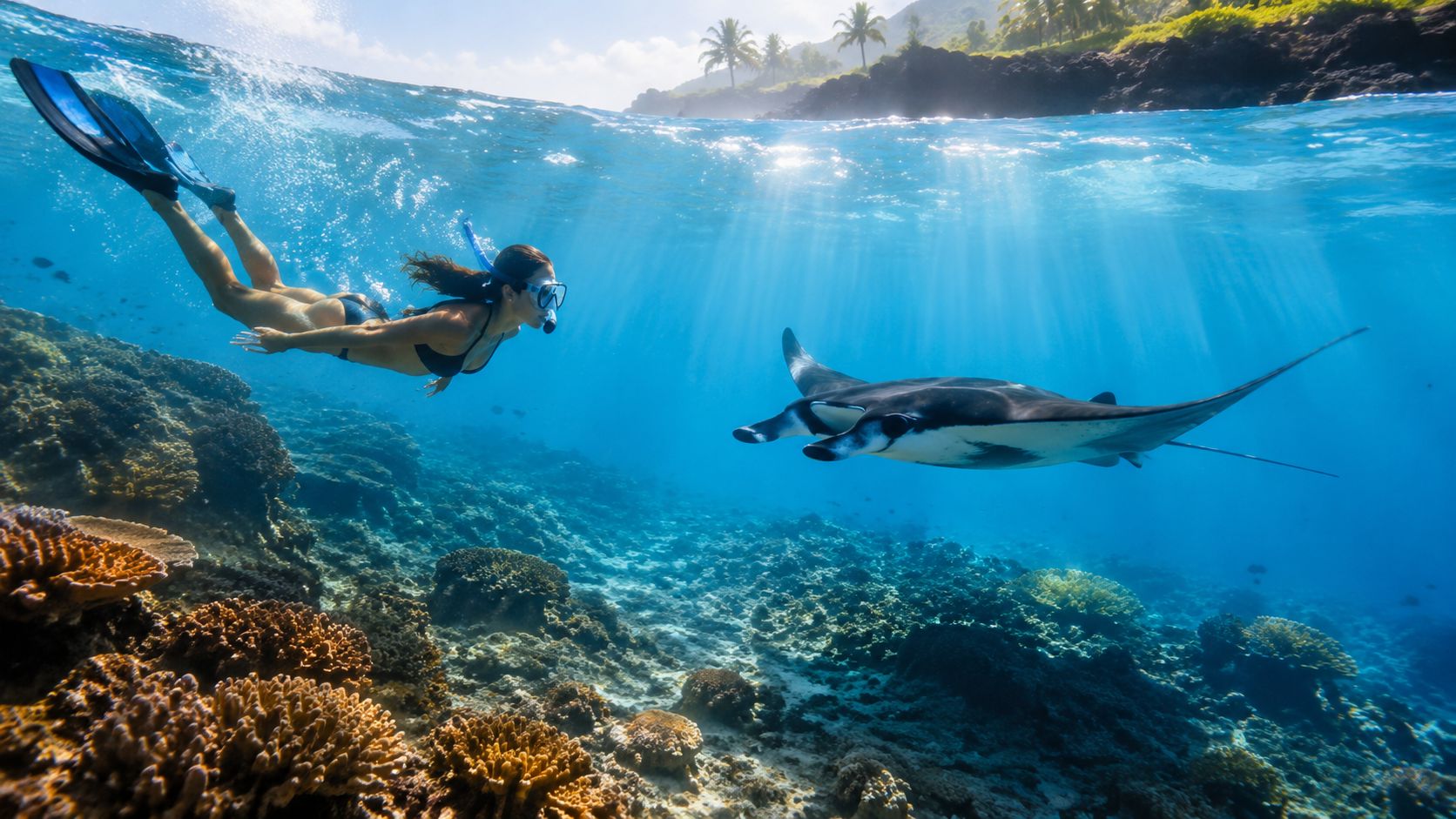
You're probably doing what most Big Island travelers do the week before arrival. You've got a few tabs open, a map of Kona on your phone, and a simple question that keeps getting more confusing the more you read. Which snorkel tour is right for you?
That's the main issue with most roundups of Kona snorkel tours. They tell you what exists, but they don't help you choose based on your comfort in the water, how much activity you want, whether you mind crowds, or whether you want your trip to feel peaceful, thrilling, historical, or all three.
Your Guide to Kona's Underwater Wonders

You land in Kona, open three tour tabs, and they all sound great. Then important questions arise. Do you want calm water or a bigger adrenaline hit? A reef full of fish in daylight, or manta rays passing under you in the dark? A boat with a social, high-energy feel, or one that gives you more room to breathe?
That is where good trip planning starts. Kona offers several standout snorkel experiences, but they are built for different people, different comfort levels, and different definitions of a great day on the water.
Some trips are easy to settle into, especially for first-timers or mixed-skill families. Others ask more from you. A night snorkel with mantas can be unforgettable, but it feels very different from floating over a bright reef in the morning. Booking well starts with matching the tour to your water confidence, crowd tolerance, and the kind of memory you want to bring home.
Kona Snorkel Trips is a well-known local operator, and recent guest feedback often gives a clearer picture than polished tour descriptions.
What makes Kona different
The Kona coast packs a lot into a relatively short stretch of shoreline, and that range is what makes choosing carefully so important:
- Night wildlife encounters where manta rays glide through lit water with a slow, looping grace that still impresses people who spend a lot of time in the ocean.
- Historic daytime snorkeling at Kealakekua Bay, where clear water, coral growth, and cultural significance all shape the experience.
- Family-friendly reef outings that suit cautious swimmers, newer snorkelers, and groups with different ability levels.
- Boat access to healthier snorkel sites, often with better visibility and richer marine life than many easy shore entries.
The right Kona snorkel tour is the one that matches how you like to be in the water.
If you want a broader overview of conditions, marine life, and seasonal patterns before you book, this guide to snorkeling in Kona is a useful place to start.
Comparing Kona's Signature Snorkel Tours
You can sort most Kona snorkel trips into a few clear categories. That matters because people often book for the animal they want to see, then realize too late that the pace or setting didn't suit them.
Kona Snorkel Tour Options at a Glance
| Tour Type | Best For | Time of Day | Primary Experience |
|---|---|---|---|
| Manta ray night snorkel | Confident swimmers, wildlife-focused travelers, people who want a signature Kona experience | Night | Floating at the surface while manta rays feed below illuminated boards |
| Captain Cook snorkel tour | Families, first-timers, history-minded travelers, reef lovers | Day | Reef snorkeling in Kealakekua Bay with a strong historical setting |
| Whale watching and snorkel combo | Travelers who want variety and above-water wildlife viewing | Seasonal daytime | Coastal boat ride with a chance to combine marine viewing and water time |
| Private charter | Groups who want flexibility, privacy, or a customized pace | Day or evening | Tailored route, flexible stop style, more control over the experience |
What the categories don't tell you
The table helps, but the main differences show up in three areas.
First, water confidence. A calm daytime reef tour and a nighttime open-ocean snorkel demand different things from guests. If someone in your group gets nervous easily, that distinction should shape the whole decision.
Second, energy level. Some people want a smooth, scenic ride and a relaxed snorkel stop. Others want the story they'll tell forever. Neither choice is wrong. Problems start when a guest books a thrill-forward experience expecting a gentle float.
Third, group dynamics. A couple celebrating a trip together often chooses differently than a family with kids, a multigenerational group, or a group of strong swimmers who want the most dramatic encounter possible.
A simple way to narrow it down
Use this filter before reading any sales page:
- Choose manta snorkeling if your priority is one standout wildlife encounter and you're comfortable in the ocean at night.
- Choose Captain Cook if your group wants a broader daytime experience with reef scenery, fish life, and a destination that feels iconic.
- Choose a private charter if your group doesn't want to organize around strangers, fixed pacing, or a one-size-fits-all itinerary.
- Choose seasonal wildlife options if being on the boat is part of the fun and snorkeling is only one piece of the day.
For a more detailed booking framework, this breakdown of how to compare Kona boat tours before you book is worth a look.
Experience the Manta Ray Night Snorkel
The manta ray night snorkel is the tour commonly referenced when discussing a must-do Kona ocean experience. Departing the harbor around dusk, the coastline fades into silhouette, before the entire outing transforms once the lights hit the water.

The format is simple and brilliant. Guests hold onto an illuminated float board while light attracts plankton, and the plankton draws in manta rays to feed near the surface. When conditions line up, the mantas sweep, bank, and glide below you in a way that feels more like flying than swimming.
Why some manta tours feel smoother than others
One of the most practical differences between operators is transit time. According to this overview of Kona manta tour logistics, some operators use a harbor that puts the manta site about a 3-minute boat ride away, while many others require about a 30-minute ride each way. That changes the outing in real ways. Less transit usually means less time exposed to night wind and chop, and more of the trip spent at the actual site.
That's especially important for guests who are excited about the mantas but unsure about being on a boat after dark.
Who should book this one
This is the right tour when you want a focused, signature experience. It's not the right choice just because it's the most famous.
A few good fits:
- Wildlife-first travelers who care more about one remarkable encounter than a long snorkel route
- Return visitors who've already done daytime reef snorkeling and want something completely different
- Confident swimmers who stay relaxed in deeper water and low light
If that sounds like you, the Manta Ray Night Snorkel tour is one option to consider. Another strong option for travelers comparing operators is Manta Ray Night Snorkel Hawaii.
Practical rule: Don't judge a manta tour only by the manta photos. Ask how much of the evening is spent riding versus actually in position with the rays.
This walkthrough of what to expect on a manta ray night snorkel in Kona helps set realistic expectations before you book.
Explore History at Kealakekua Bay
You're running down the coast in morning light, the water flattening out ahead of the boat, and then Kealakekua opens up. The cliffs rise sharp and green, the monument comes into view, and even before the masks go on, the place feels different from a standard reef stop.

Kealakekua Bay works well for travelers who want more than a single headline moment. You get clear water, a reef with real range, dramatic coastline, and a site tied to the arrival of Captain James Cook in 1779. That history changes the mood of the trip. People tend to pay closer attention here, both above the surface and below it.
The bay also solves a common Kona planning problem. Many visitors want excellent snorkeling, but not everyone in the group wants the intensity of a night tour or the pressure of a highly specialized wildlife encounter. Kealakekua is often the better fit for mixed groups because the experience has layers. Strong swimmers can cover more water and linger over the reef edge. Newer snorkelers usually feel more settled in daylight with a protected bay and a visible shoreline.
What matters most is expectations. This is usually a longer outing with boat time, time in the water, and time spent taking in the setting. It suits travelers who enjoy the full half-day rhythm instead of treating snorkeling like a quick box to check.
Who usually enjoys this tour most
Captain Cook trips tend to land best with travelers who want quality snorkeling without the night-water learning curve.
- First-time snorkelers who want good visibility and a calmer daytime setting
- Families and mixed-skill groups who need an option that works for both confident swimmers and more cautious guests
- Travelers who care about place and want the reef, coastline, and history to feel connected
Crowd tolerance matters here too. Kealakekua Bay is famous for a reason, and popular tours can feel busy, especially once multiple boats arrive. Early departures usually feel better if you want cleaner light, calmer conditions, and fewer people in the water at the same time.
If this sounds like your style, you can review the Captain Cook snorkel tour.
Some snorkel spots are pretty. Kealakekua Bay feels significant.
For more local detail on conditions, access, and what makes this reef stand out, read this guide to the Kealakekua Bay snorkel experience.
How to Choose the Perfect Kona Snorkel Tour

You're standing at the booking screen after dinner, one tour promises manta rays at night, another offers clear daytime reef snorkeling, and both look incredible. The wrong choice usually happens at that moment. People book the headline, not the fit.
The better approach is simpler. Match the tour to your actual comfort level in the water, your tolerance for busy sites, and the kind of memory you want to come home with.
Skill level comes first.
One of the easiest mistakes to make is treating every snorkel tour like the same activity in a different location. They are not the same experience. As noted in the Manta Ray Night Snorkel Hawaii FAQ, some manta operators require guests to swim unassisted and arrive with prior snorkeling experience. That matters because the manta snorkel is unforgettable, but it asks more from guests than a relaxed daytime reef stop.
Choose based on skill level first
If someone in your group is new to snorkeling, uneasy in open water, or still figuring out mask breathing, book a daytime trip first. Daylight removes a lot of pressure. Guests can see the shoreline, settle into the water at their own pace, and enjoy the reef without the added intensity of darkness and a floating light board.
If your whole group is already comfortable in the ocean, listens well, and wants a more unusual encounter, the manta tour starts to make sense.
Ask a few direct questions before you book:
- Can everyone in the group stay calm and swim comfortably in open water?
- Has each person snorkeled before, especially from a boat and not just from a beach?
- Will night conditions feel exciting, or will they make someone tense the entire time?
Then think about crowds and overall feel
Expectations matter here. Some travelers are happy to share the water if the wildlife delivers. Others care just as much about space, quiet, and not feeling rushed by a busy boat scene.
That trade-off is real in Kona. A daytime reef tour often feels easier and more spacious, especially for guests who like time to adjust. A manta tour usually feels more dramatic and more concentrated. The reward can be extraordinary, but the setting often includes more people, more gear, and more stimulation.
Match the tour to the group, not the brochure
I always tell guests to book for the least confident person in the party unless you plan to split up. That one decision prevents a lot of bad fits.
- Families with hesitant swimmers usually do better on a daytime reef trip.
- Couples or confident swimmers looking for a standout story often prefer the manta snorkel.
- Mixed-skill groups should choose the option everyone can enjoy comfortably, not the one that sounds boldest in a caption.
Kona Snorkel Trips offers both Captain Cook and manta-focused outings, which makes it a useful comparison point if you want the same operator style across two very different experiences.
If you're narrowing down night options, this guide on how to choose the right Kona manta ray snorkel tour breaks down the differences that matter once you get past the marketing.
What to Expect on Your Snorkel Trip
The first few minutes of a snorkel tour usually determine how relaxed the rest of the outing feels. Good trips start with a clear check-in, straightforward gear setup, and a safety briefing that tells you exactly what to do once you hit the water.

You'll usually get fitted for the basics before departure or on board. Mask fit matters more than people expect. If your mask leaks, your whole trip feels harder. Fins should feel secure without pinching, and if a wetsuit or flotation option is offered, use it if it helps you relax. There's no prize for making the day harder than it needs to be.
What to bring
Keep it simple:
- Towel and dry clothes for the ride back
- Reusable water bottle so you stay hydrated without adding waste
- Sun protection that follows reef-safe guidance
- Any personal comfort item you know helps, such as a light cover-up or motion-prep essentials
What experienced guides want guests to do
The biggest improvement most guests can make is to slow down. Fast kicking, constant standing, and chasing fish usually lead to poorer snorkeling, not better snorkeling.
A more responsible and more enjoyable approach looks like this:
- Listen closely during the briefing because entry, exit, and spacing instructions matter more than people think
- Use reef-safe sunscreen as part of low-impact participation
- Stay inside your comfort zone instead of forcing distance or depth
- Don't touch coral or marine life even if the water is clear and the animals feel close
According to this Kona snorkeling FAQ overview, traveler priorities have shifted toward less crowded and more sustainable experiences. The same source notes that manta tours can draw hundreds of people nightly, especially during peak times, which is one reason calm daytime reef trips can be a better fit for families or travelers who want a quieter outing.
The guests who enjoy snorkeling most aren't always the strongest swimmers. They're usually the ones who stay calm, move gently, and pay attention.
Kona Snorkeling FAQs and Booking
A few practical questions tend to come up right before people book.
Common questions
Can I bring my own snorkel gear?
Usually, yes. Many travelers prefer their own mask if they already know it fits well.
What if I wear glasses?
You won't wear glasses under a standard mask, so if you need vision correction, ask the operator what options they allow or recommend before the trip.
Are all snorkel tours good for beginners?
No. Daytime reef tours are generally the better starting point. Night manta snorkeling has stricter fit requirements for many guests, especially if they're nervous or inexperienced.
Which tour is better for families?
In most cases, a daytime reef outing is the easier match for families, especially when swimming confidence varies.
Smart booking habits
Book around the experience you want, not the gap in your calendar. If a specific tour matters to your trip, reserve it before the rest of your itinerary fills in around it.
A few habits help:
- Book the priority tour first if there's one experience you'd be disappointed to miss
- Read eligibility notes carefully instead of relying on broad “beginner-friendly” language
- Think realistically about your group before choosing the most famous option
- Consider gift cards if you want to give an experience instead of a souvenir
Gift cards also make sense for families traveling at different times, honeymoon surprises, or anyone who wants to lock in a memorable ocean day without choosing the exact date yet.
If you want a snorkel trip that matches your skill level, comfort in the water, and the kind of memory you want to bring home, browse the current options at Kona Snorkel Trips.