
Best Snorkeling Kailua Kona HI: Your 2026 Guide
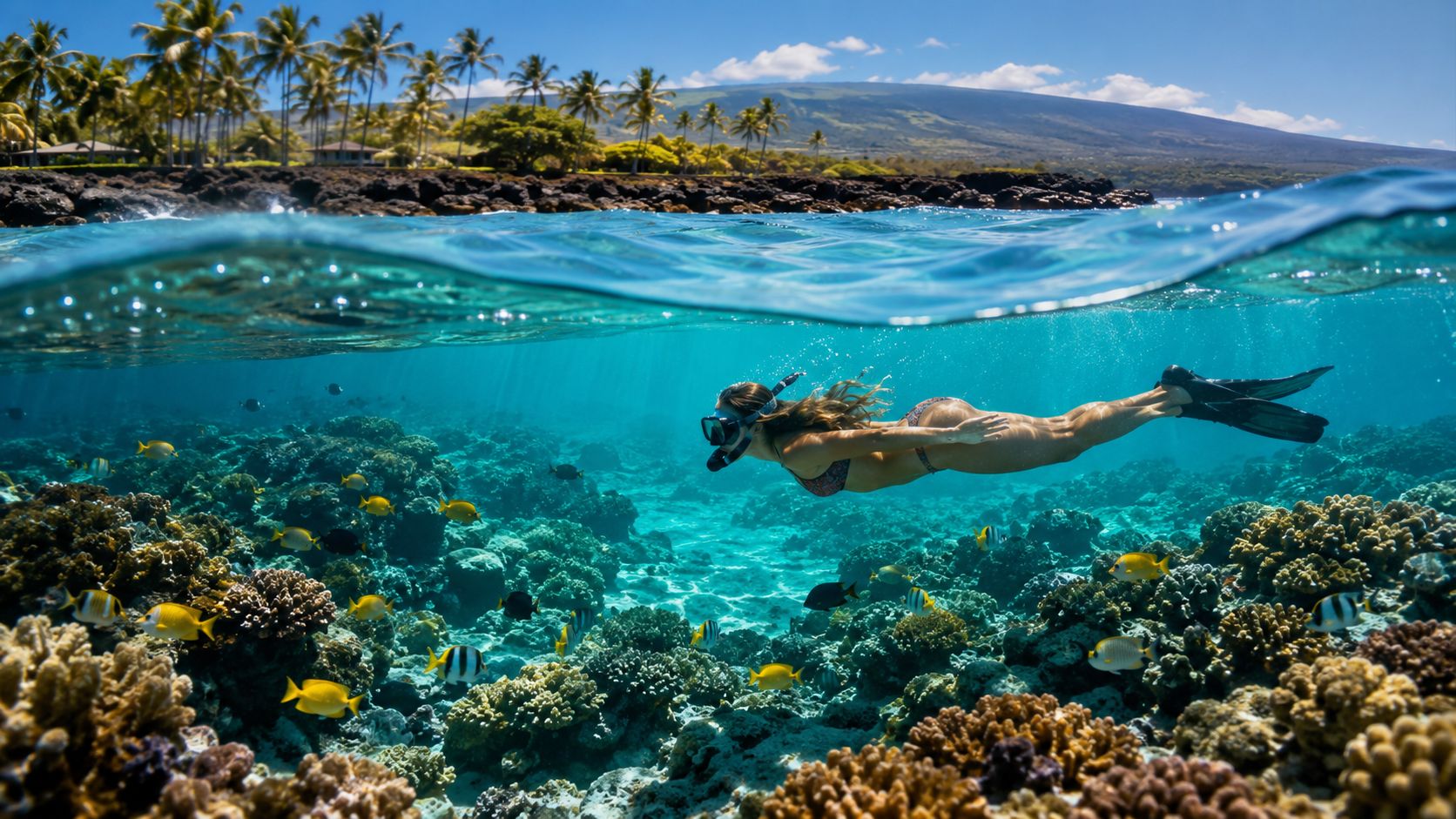
You're probably doing what most Kona visitors do. You've seen the blue water, heard three different people recommend three different snorkel spots, and now you're trying to figure out what's right for your trip.
That's the challenge with snorkeling Kailua Kona HI. The question usually isn't “Where's the most famous spot?” It's “What fits my group, my comfort level, and what I want to see once I'm in the water?” A protected cove with easy entry feels very different from a lava-rock shoreline. A reef tour in daylight is a different experience from floating over lights at night while manta rays sweep below you.
Kona earns its reputation because it gives you options. You can choose an easy family morning, a boat trip to richer reef, or a wildlife-focused evening on the water. The smart move is matching the experience to the swimmer, not chasing the loudest recommendation.
Your Adventure in Kona's Underwater Paradise Begins
You're standing at the shoreline with a mask in one hand, fins in the other, and one real question to answer before you get in. What kind of snorkel day fits you best?
Slip your face into the water off the Kona coast and the whole trip sharpens. The glare disappears. Lava rock gives way to coral, schools of yellow tang start flashing through the reef, and a green sea turtle might cruise by so calmly that everyone in your group forgets to speak for a minute.

The best choice usually comes down to three things. How comfortable you are in the water. Who you're traveling with. What you want to see once your face is in the ocean.
That matters in Kona because each snorkel option asks something different from you. Kahaluʻu Beach Park usually works well for beginners who want easier access and more protection from swell. Two Step often rewards stronger swimmers who are comfortable with a rock entry and changing conditions. Kealakekua Bay gives you some of Kona's most memorable reef, but getting the good part of that experience often means planning ahead and choosing a boat trip instead of a simple shore stop.
A family with young kids rarely wants the same plan as a couple chasing the clearest reef. A first-time snorkeler may have a much better day in calm, forgiving water than at a famous spot with a tricky entry. An adventure-focused traveler might want to split the trip and do both a daytime reef snorkel and a manta night snorkel for two completely different experiences.
Kona Snorkel Trips runs guided snorkel tours here, and the biggest difference we see is not fitness or age. It's whether people picked the right format for their group.
Start with the kind of day you want
Use a simple filter before you book or drive anywhere.
- If your group includes kids, cautious swimmers, or first-timers, look for protected conditions, an easy entry, and shorter swims.
- If your priority is reef quality and marine life, a boat-access snorkel often gives you a stronger experience than the most convenient shore spot.
- If you want a memorable wildlife experience, keep day snorkeling and night snorkeling in separate categories and choose each on its own merits.
- If logistics matter as much as water time, where you stay can shape what feels realistic for your trip. The best areas to stay for snorkeling on the Big Island of Hawaii can make early departures, shore access, and tour timing much easier.
The right snorkel plan feels manageable before you even get wet. If the entry looks stressful, the swim sounds too long for your group, or the conditions don't match your confidence level, choose differently. In Kona, a smart match beats a famous name every time.
Why Kona is Hawaii's Premier Snorkeling Destination
Kona works because the ocean here often gives snorkelers a cleaner window than other parts of the island. The west-facing coast is sheltered, and that changes everything you feel at the surface and everything you can see once you put your mask down.

Independent local guidance from Love Big Island's Kona snorkeling overview notes that the Kona side has the clearest water and smallest waves because its western-facing coastline is sheltered from prevailing winds. That same guide notes that Kealakekua Bay can achieve over 100 feet of visibility because the bay's geography reduces wave energy. For snorkelers, that means better sightlines, easier fish spotting, and less of the suspended sand or surge that can turn a promising snorkel into a murky one.
What that means once you're in the water
Good conditions don't just look pretty from shore. They make snorkeling easier.
| Condition | What you notice |
|---|---|
| Smaller waves | Less surface chop and easier breathing through a snorkel |
| Clearer water | Fish, coral, and bottom features are visible from farther away |
| Sheltered bays | Less surge, less fatigue, and a calmer experience for newer swimmers |
A lot of visitors underestimate how much wave action affects confidence. If the surface is bouncy, people kick harder, breathe faster, and tire out sooner. In a sheltered area, your body settles down. You float flatter, your fins stay off the reef more naturally, and you can spend time observing instead of managing discomfort.
Why mornings usually win
Morning is often the high-yield window for Kona snorkeling. The water is commonly cleaner and calmer early, especially in protected areas.
Practical rule: If your schedule is flexible, choose the sheltered site first and the early start second. Those two decisions do more for your snorkel than chasing a famous name.
The local conditions also vary by coastline and cove shape, which is why spot choice can't be separated from weather. If you want a deeper look at how that works, this article on how Kona microclimates shape snorkeling on the Big Island is useful.
A Guide to Kailua-Kona's Best Snorkeling Spots
Kailua-Kona isn't a one-spot destination. It's a cluster of choices, and that's exactly why planning matters. One regional guide notes that the Kona coast has at least 14 popular shore-entry snorkel spots, along with major boat-access destinations like Kealakekua Bay, a protected marine sanctuary and the site of the Captain Cook Monument, in this roundup of Kona snorkel locations.

That concentration is great news for visitors. It also creates confusion, because the right site depends less on popularity than on how you enter, how exposed the water is, and what kind of outing you want.
Beginner-friendly choices
Kahaluʻu Beach Park is the classic easy-start option. It's known as a protected cove with shallow, calmer water, which makes it a strong fit for beginners and families when conditions are cooperative. If your main goal is getting everybody comfortable with mask breathing and seeing fish without a long swim, this is often the kind of place that works.
This type of site is usually better when your group includes:
- Young children who need a short, manageable snorkel
- First-timers who want calm entry
- Cautious swimmers who prefer shallower water and easy exits
What doesn't work here is expecting a remote, uncrowded expedition feel. Beginner spots trade some wildness for accessibility.
Intermediate shore snorkeling
Two Step at Honaunau is where many visitors level up. The underwater quality can be excellent, but the entry changes the experience. You're dealing with lava rock, timing, footing, and a bit more commitment from the first minute.
For an intermediate snorkeler, that trade can be worth it. For someone who already feels tense before getting in, it often isn't.
A quick comparison helps:
| Spot | Best fit | Main trade-off |
|---|---|---|
| Kahaluʻu Beach Park | Beginners and families | Can be busier and less adventurous |
| Two Step at Honaunau | Intermediate snorkelers | Entry is more variable and demanding |
Higher-commitment and boat-access reef
Kealakekua Bay is the crown jewel for many daytime snorkelers. Reef quality, visibility, and overall underwater scenery are why people keep coming back to it. But visitors often confuse “best reef” with “easiest day.” Those aren't the same thing.
For many travelers, Kealakekua makes the most sense by boat. You skip the harder logistics, save your energy for snorkeling, and spend more of the day in the water instead of figuring out access. If that's the experience you're after, this guide to Kealakekua Bay snorkeling in Hawaii is a good next read.
A famous spot only helps if you can enjoy it once you arrive. Reef quality matters, but so do entry, distance, comfort, and whether your group still has energy after getting there.
So which one should you choose
If you want the shortest path to a relaxed family snorkel, choose a protected beginner site.
If you're comfortable in the ocean and don't mind a more technical shore entry, Two Step can be rewarding.
If your priority is premium reef and a smoother overall outing, Kealakekua Bay by boat is often the strongest match.
Unforgettable Kona Snorkeling Tours You Can't Miss
You wake up in Kona with a real choice to make. Do you want a bright, reef-heavy snorkel where you cover water and study coral heads in full sun, or do you want to slip into the ocean after dark and wait for manta rays to rise out of the black water beneath you? Both are memorable. They fit very different travelers.

Captain Cook snorkeling tour
Choose Captain Cook if your priority is reef quality during the day. Kealakekua Bay gives you the kind of visibility, fish life, and lava-built coastline that makes people stay in the water longer than they planned. It is the trip I point people toward when they want the classic Kona snorkel and have enough energy to make the day about the reef itself.
Boat access matters here. For many visitors, it turns a logistically awkward destination into a relaxed snorkel day with more time in the water and less effort spent on access, parking, and shoreline decisions. Families, mixed-skill groups, and visitors who want a high-reward daytime outing usually do better on a boat trip than trying to force a shore plan that does not match their group.
Manta ray night snorkel
Choose the manta night snorkel for a wildlife encounter, not a reef tour. You are usually holding onto a float, staying at the surface, and watching one lit area below while manta rays sweep in and turn through the beam. The mechanics are simple. The feeling is not.
This option works well for plenty of people who are comfortable in the ocean but do not want a long swim. It is also a smart pick for return visitors who have already done daytime reef snorkeling and want something that feels completely different. If someone in your group loves rare animal encounters more than covering ground underwater, this is usually the better fit.
If you want to compare formats, pacing, and what each outing is like on the water, this guide to Kona snorkel tours is a useful next step.
Which tour fits your trip
Use a simple filter.
- Pick Captain Cook if your group wants a daytime boat snorkel, strong reef scenery, and more time actively swimming over coral and fish habitat.
- Pick manta ray night snorkel if you want Kona's most unusual ocean experience and are comfortable being in dark open water at the surface.
- Pick Captain Cook for families with mixed confidence if the goal is a smoother daytime outing with clear structure and broad appeal.
- Pick manta rays for wildlife-first travelers if one unforgettable animal encounter matters more than reef variety.
- Do both on separate days if snorkeling is a main reason for your trip. They complement each other because they ask for different energy and deliver different memories.
One common mistake is choosing the manta snorkel while expecting a daytime-style reef session. Go in expecting stillness, lights, anticipation, and close passes from large animals. That is what makes it special.
What to Bring on Your Kona Snorkel Adventure
Packing for snorkeling in Kona is simple if you focus on comfort, sun protection, and entry conditions. You don't need a pile of gadgets. You need the few things that keep you relaxed in the water.
The short list that actually matters
- Reef-safe sunscreen helps protect exposed skin while reducing your impact on the reef.
- A rash guard gives you longer-lasting sun protection and saves you from constantly reapplying lotion.
- Water shoes help on Kona's rocky volcanic shoreline, especially at places where footing can be uneven.
- A reusable water bottle matters more than people think. Sun, salt, and boat time dry you out fast.
- Your own mask, if it fits well can be nice, but only if you already know it seals properly.
The season matters a little, but not in a way that should make you overpack. According to Boss Frog's Kona snorkeling guide, the best months are typically April through October, summer water temperatures from July through September can reach 84 degrees Fahrenheit, and water clarity routinely ranges from 60 to 100 feet. In practice, that means many visitors are comfortable with lightweight sun gear and minimal extras.
What guided tours usually solve for you
A good snorkel tour removes a lot of packing stress. Gear is typically provided, and that's especially useful for travelers who don't want to fly with fins or guess at rental quality after they arrive.
For a more detailed packing list built around one of Kona's signature reef outings, this guide on what to pack for a Captain Cook snorkel tour is helpful.
Don't overthink this. Bring what protects your skin, helps your footing, and keeps you hydrated. The more comfortable you are, the longer you'll enjoy the water.
Snorkeling Safely and Protecting Kona's Reefs
Ocean safety and reef protection aren't separate topics. The same choices that keep you safer also make you less likely to damage coral or crowd wildlife.

One independent guide on Big Island snorkeling locations and difficulty makes the key point clearly. Matching the site to swimmer skill is essential for safety. Sheltered places like Kahaluʻu Beach Park are calmer and better suited to beginners, while exposed reef points can be advanced-only because of strong waves and surge.
Safer choices in the water
Most problems start before anyone sees a fish. They start when a swimmer enters at a site that demands more balance, stamina, or confidence than they really have.
Use these rules:
- Choose the easy entry first if anyone in your group is nervous, young, or out of practice.
- Snorkel with a buddy so no one drifts off or struggles unnoticed.
- Be honest about fatigue because the swim back always feels longer once you're tired.
- Use flotation if you need it. Relaxed snorkelers breathe better and make better decisions.
Better reef etiquette
Coral looks like rock until you realize it's alive and fragile. One careless stand-up in shallow water can do damage and ruin the moment for everyone around you.
Keep your body position clean:
- Float flat and keep fins up so you don't clip coral.
- Never stand on the reef even if you feel unsteady.
- Give sea life space and let the animal decide the distance.
- Don't feed fish because it changes natural behavior.
- Pack out everything you brought to shore or on the boat.
Calm technique protects both you and the reef. Good snorkelers aren't the ones who move the fastest. They're the ones who stay relaxed, controlled, and aware of where their body is in the water.
Frequently Asked Questions About Snorkeling in Kona
Do I need to be a strong swimmer to snorkel in Kona
Not always. Some Kona snorkel experiences work well for beginners, especially in calmer, protected water or on guided trips with flotation support. The key is choosing the right site instead of pushing into conditions that make you anxious.
Is it safe to snorkel at night with manta rays
For many visitors, yes, when it's run with clear procedures, proper floatation, and close guide supervision. The experience is usually more about staying still and observing than swimming hard.
What's the best time of year for snorkeling
The most commonly recommended months are in the warmer, calmer stretch of the year, as noted earlier. Morning conditions are often the better day-to-day choice because the water is commonly cleaner and less disturbed.
Can I take young children snorkeling
Yes, if you choose a protected location or a family-friendly guided outing. The best plans for children are short, easy, and low-pressure. If the adults are stressed about entry or surf, the kids usually feel that too.
Should I do shore snorkeling or book a tour
That depends on your group. Shore snorkeling offers flexibility. Tours usually make access easier, provide gear, and reduce the guesswork. If your top priority is premium reef or a specialized wildlife encounter, a tour is often the smoother choice.
If you want a Kona snorkel day that fits your group instead of forcing your group to fit the wrong spot, take a look at Kona Snorkel Trips. You'll find options for classic reef outings and manta experiences, with plenty of detail to help you choose the right one.