
Best Kona Snorkeling: Top Spots & Tours 2026
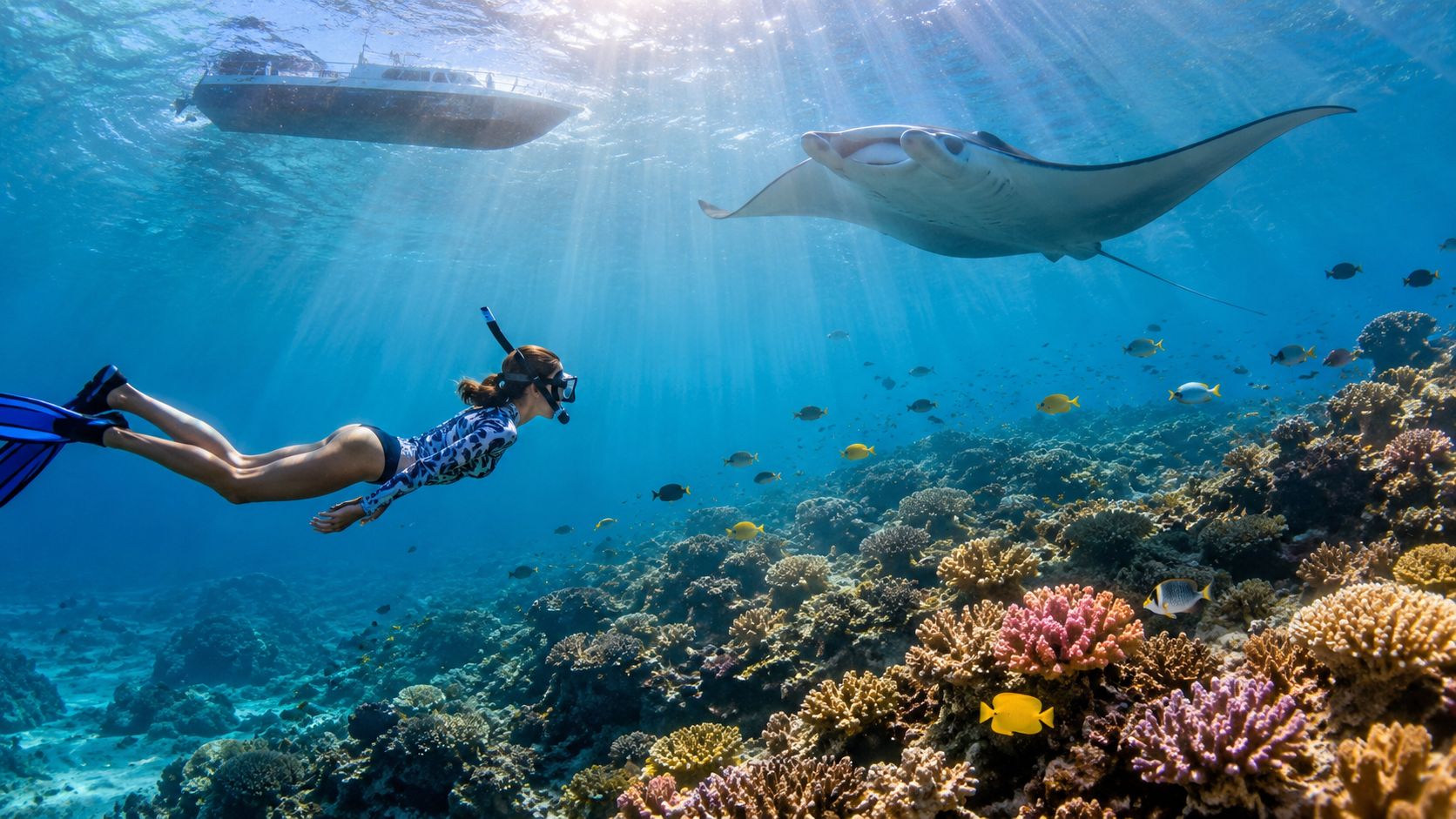
You're probably in the same spot most Kona visitors reach after a little trip planning. You know you want to snorkel. You've seen the photos. The water looks unreal. Every guide says every spot is “must-do,” and now the hard part isn't finding options. It's figuring out which Kona snorkeling experience is right for you.
That's the piece most articles miss.
A calm morning shore snorkel and an open-ocean night snorkel are both “Kona snorkeling,” but they are not the same day, not the same energy, and definitely not the same fit for every traveler. Families with mixed swim skills need something different from confident swimmers chasing a bucket-list wildlife encounter. Couples who want easy logistics need something different from experienced snorkelers who don't mind lava entries and self-guided planning.
The right choice usually comes down to three things. Comfort in the water, who's traveling with you, and what kind of memory you want to bring home. Get those right, and Kona delivers the kind of underwater day people talk about for years.
Welcome to the Aquarium of Hawaii
You're on the boat rail or easing off the lava at the shoreline, the mask hits the water, and Kona shows its hand fast. Yellow tangs flicker over dark rock. A turtle might cruise through the edge of your view. On a calm day, the water is clear enough that new snorkelers usually relax within the first few minutes because they can see what they came for.
That fast payoff is a big reason people fall for this coast. Kona's bays and lava shelves create habitat that feels busy without feeling chaotic, so you spend more time watching fish and less time squinting into murky water. If you want the classic protected-bay experience, a Kealakekua Bay snorkel trip is the reference point many visitors build the rest of their plans around.

Kona Snorkel Trips is a snorkel company on the Big Island specializing in small-group tours.
Why Kona feels different
The view underwater is cleaner here than in a lot of beach destinations. Dark lava makes bright fish stand out. Protected water often means less surge. Good visibility helps you notice more, sooner.
For beginners, that usually means an easier first ten minutes. For families, it can mean less stress and fewer false starts. For experienced snorkelers, it means more attention for reef structure, fish behavior, and the small details that get missed when conditions are average.
Practical rule: The best Kona snorkeling spot is the one that fits your comfort level well enough that you stay relaxed and keep your face in the water.
That's the filter I use with guests all the time.
Some travelers want the postcard day. Clear bay, easy boat ride, lots of fish, everyone happy. Some want a short shore session before breakfast. Some are strong swimmers and only care about the signature wildlife encounters. Same coastline, very different calls.
The magic is choosing the experience that fits you. Swim confidence matters. Group makeup matters. So does the kind of day you want, easy and restorative, adventurous and memorable, or somewhere in between.
Kona's Best Shore Snorkeling Spots
Shore snorkeling in Kona works best when you treat each site like its own kind of ocean day. Entry style matters. Bottom shape matters. Your energy level matters. A beautiful cove can still be the wrong choice if getting in and out burns all your confidence in the first five minutes.
Two Step for confident beginners and intermediates
Two Step at Honaunau Bay is one of the strongest shore options because the entry is honest. You're not guessing where to go. The site gets its name from its two lava steps entry, and guides note that the north side of the bay slopes gradually from roughly 30 to 100 feet deep, which helps snorkelers move from shallow reef edge into deeper water without a long surface swim (Two Step site details).
That matters more than people realize. A low-friction entry saves energy. It also reduces the clumsy scrambling that makes newer snorkelers tense up before they even start.

Who it suits best
- Intermediate snorkelers who are comfortable with lava rock entry
- Small groups that want flexibility
- Travelers who like DIY mornings without a boat schedule
What doesn't work as well
- Very anxious swimmers who need a sandy walk-in
- Guests who struggle with uneven footing
- Families trying to manage several young kids at once
If you want more context on this side of the coast, this guide to a Kealakekua Bay snorkel helps show why South Kona draws so many serious snorkelers.
Kahaluʻu for families and first-day snorkelers
Kahaluʻu Beach Park is the easier emotional on-ramp. If Two Step is the place where people say, “I'm ready for a proper snorkel,” Kahaluʻu is where people say, “Okay, I can do this.”
The big advantage is feel. It's more approachable for beginners, especially if you want a shorter session with less pressure. You can work on mask comfort, settle your breathing, and stay close to shore while still seeing plenty of marine life.
A quick comparison helps:
| Spot | Best for | Entry feel | Main trade-off |
|---|---|---|---|
| Two Step | Intermediate snorkelers, active adults, small groups | Lava step entry | Less forgiving if you're nervous on uneven rock |
| Kahaluʻu Beach Park | Beginners, families, anxious swimmers | Easier, more relaxed | Can feel busier and less remote |
Go early when you can. Kona mornings usually give shore snorkelers the easiest water to read, and that's when newer swimmers tend to relax fastest.
How to choose between them
Pick Two Step if you want stronger reef structure, don't mind lava entry, and already know you enjoy snorkeling.
Pick Kahaluʻu if this is your warm-up day, your family day, or your confidence-building day.
That's the framework I'd use on the boat too. Don't choose the spot that sounds most impressive on paper. Choose the one that lets you spend the most relaxed time in the water.
The Ultimate Kona Snorkeling Tours
You slide off the boat into clear blue water, look down, and the whole reef opens beneath you at once. On another night, you hold the light board in the dark while a manta ray rises out of black water and banks under your chest like a slow aircraft. Both are classic Kona trips. They are not the same experience, and the right choice depends on how you like to travel, how comfortable you are in the ocean, and who is coming with you.
Boat tours solve a few practical problems right away. You skip the parking hunt, the lava entry guesswork, and the question of whether today's shore spot matches your ability. Beyond those practicalities, they let you choose your day on purpose. Some guests want a relaxed daytime reef with room to float and explore. Others want the signature wildlife encounter they will talk about for years.
Kealakekua Bay for guests who want the classic Kona day on the water
If you ask me which daytime tour fits the widest range of travelers, I usually start with Kealakekua Bay. The bay has the full Kona mix: clear water, dense reef life, dramatic coastline, and the sense that you are snorkeling in a place that matters, not just a pretty patch of ocean.
From a guide's point of view, the biggest advantage is how complete the outing feels. You get the boat ride, the coastal views, the history of the bay, and a snorkel that usually rewards beginners and experienced swimmers alike. Families often do well here because the boat removes the hardest part for many first-timers, which is the shore entry. Couples like it because it feels scenic without being strenuous. Confident snorkelers still enjoy it because there is enough fish life and reef structure to keep your eyes busy the whole time.
Who it suits best:
- First-time Kona visitors who want one signature daytime snorkel
- Families who prefer boat support over managing a shore entry
- Travelers who want reef life, scenery, and local history in one trip
- Guests who enjoy a longer outing rather than a quick dip
Who may prefer another option:
- Travelers who only want a short, low-commitment snorkel session
- Visitors who are happiest building their trip around shore snorkeling
- Anyone who gets seasick easily and does better staying land-based
If you're comparing formats, boat sizes, and trip styles, this guide to Kona snorkel tours helps narrow the field. If you already know you want a dedicated Captain Cook outing, Captain Cook Snorkeling Tours is another option to review.
Manta ray night snorkel for guests who want Kona's most memorable wildlife encounter
The manta night snorkel feels completely different from a reef tour. You are in open water after dark, holding position at the surface while lights draw in plankton. Then the mantas show up and start feeding below you, sometimes close enough that the whole group goes quiet at once.

This trip is famous for good reason, but it asks more of you than a daytime bay snorkel. You need to be comfortable putting your face in the water at night, breathing steadily through a snorkel, and staying calm in deeper water. In my experience, guests have the best time when they treat this as a wildlife experience first and a casual snorkel second.
A strong fit for:
- Confident swimmers
- Guests with prior snorkeling experience
- Travelers who want a high-drama wildlife encounter
- Visitors who stay calm in darkness and open ocean conditions
Usually not the best first choice for:
- Anxious swimmers
- Very young or brand-new snorkelers
- Guests who are uneasy in the water after sunset
- Anyone hoping for a slow, exploratory reef session
If that sounds like your kind of adventure, the Manta Ray Night Snorkel tour lays out the trip details. Manta Ray Night Snorkel Hawaii is also an exceptional alternative to consider if you are comparing operators.
Pick the tour that matches your real comfort level, not the one that sounds boldest at dinner. The best Kona snorkel day is the one where you relax enough to enjoy what is right in front of you.
Kona's Marine Wildlife Calendar What to See and When

Step into the water on two different Kona mornings and you can feel like you are visiting two different coasts. One day brings glassy blue water, crisp visibility, and clouds of yellow tang over lava rock. Another brings more surge, a little less clarity, and a trip that works better for confident swimmers than for a family with young kids. That is why timing matters here. Not because Kona only “works” in one season, but because the right match between conditions and your group changes the whole day.
What stays good nearly all year
Reef life is the constant. If you are coming for bright fish, coral structure, lava formations, and a strong chance of seeing honu, Kona delivers in every season. That matters for travelers who do not need a headline animal to feel like the day was worth it.
Dolphins are different. We do see them offshore at times, but they are never something I would build your whole trip around. The better plan is to choose the snorkel that fits your skill level and let any extra wildlife sighting feel like the bonus it is.
For many visitors, that means the best wildlife calendar question is not “What rare animal might I see?” It is “What kind of water do I want to be in, and who am I bringing with me?”
The seasons matter most for conditions
If you want the easiest snorkeling, the friendliest windows are often calm summer and early fall mornings, especially for shore entries and newer snorkelers. Winter can still be excellent, but it asks for a little more flexibility. Surf, swell direction, and wind can change which sites feel relaxed and which ones feel like work.
That trade-off is worth understanding before you book. A confident couple chasing variety can do very well year-round by staying flexible. A multigenerational family with one nervous swimmer usually has a better trip if they prioritize calmer months, protected spots, and early start times.
Here is a simple way to match the season to the traveler:
| Travel priority | Better fit |
|---|---|
| First-time snorkelers or mixed-skill families | Calmer parts of the year, early mornings, and locations with easier entries |
| Travelers focused on manta rays | Book for the experience and conditions, then choose dates that match your comfort in open water at night |
| Experienced snorkelers who want reef variety | Any season can work well if you stay flexible and choose sites based on that day's ocean |
If mantas are the main goal, this guide to the Kona manta ray night snorkel by month and conditions helps narrow down the best fit for your travel dates.
Whale season changes the mood of the ocean
Humpback season adds a different layer to a Kona snorkel trip. You are not getting in the water with whales, and good operators keep that line clear. What you may get, especially in winter, is the sound of whale song carrying through the water while you float over the reef. It is one of those moments that makes people go quiet behind the mask.
Who is that for? Pretty much everyone. Families love it. Experienced snorkelers remember it for years. Even guests who are only mildly interested in marine life tend to come back talking about the feeling of hearing whales underwater.
If your trip falls in whale season, split your plans. Do one outing for snorkeling and another for whale watching. You will see more, rush less, and give each experience the space it deserves.
A Guide for Beginners Families and Anxious Swimmers
You step off the beach, put your face in the water, and suddenly every small thing feels big. The mask presses a little. The snorkel feels awkward. The bottom looks farther away than you expected. I see that reaction all the time in Kona, especially with first-timers and kids, and it does not mean you picked the wrong activity. It usually means you need the right starting point.
Good Kona snorkeling is about fit. The right first experience depends on how you swim, how your group handles stress, and whether you want a relaxed reef float or a bigger adrenaline hit later in the trip.
Start with the experience that settles you fastest
For beginners, families, and anxious swimmers, I look at three things first. Entry. Conditions. Exit.
A calm morning with an easy way in and an easy way out beats a more famous spot with surge, rocks, or a long swim. That is why a gentle shore snorkel or a daytime boat trip works so well as a first outing. You can focus on breathing, floating, and getting comfortable instead of managing too many variables at once.
Night snorkeling, especially in open water, asks more from you. It can be incredible for confident swimmers. It can also feel very long to someone who is uneasy after dark, uneasy offshore, or brand new to a mask and snorkel.
A simple fit guide
| If this sounds like you | Better first choice |
|---|---|
| “I've never snorkeled, but I want to try.” | Calm shore snorkel or easy daytime boat snorkel |
| “My kids are excited, but not strong swimmers.” | Protected shore spot with simple exits and one adult focused on support |
| “I can swim, but open water makes me tense.” | Short morning reef snorkel before any advanced tour |
| “I already snorkel comfortably and want something more dramatic.” | A manta night snorkel could be a good match |
For groups with different comfort levels, this guide to Big Island snorkeling for families with mixed swim skills is a practical next read.
One honest answer helps more than five pep talks. If someone in your group says they are uneasy about deep water or night conditions, use that information.
What helps nervous snorkelers most
Confidence usually comes from setup, not from speeches.
- Practice breathing before swimming anywhere: Stand in shallow water, hold the float if you have one, and take slow breaths through the snorkel until it feels ordinary.
- Get the mask fit right on shore: A leaking mask can turn a calm guest into a frustrated one in two minutes. Tuck hair away from the skirt and check the strap before you enter.
- Keep the first snorkel short: Twenty good minutes is better than an hour that ends with everyone overwhelmed.
- Choose a place with a clear exit: People relax faster when they know exactly how to get out.
- Assign one calm adult to support duty: In family groups, it helps when one person is watching comfort levels instead of chasing every fish sighting.
Who should skip the famous tour, at least for now
Some guests need a straight answer, so here it is. The signature trip is not the right first move for everybody.
Hold off on a manta night snorkel if you do not like dark water, have never snorkeled before, panic when you cannot stand, or are going mostly because the rest of the group is excited. I have watched plenty of guests enjoy Kona much more once they stopped trying to force the headline experience on day one.
Start with a reef you can enjoy. Build one good session at a time. The ocean usually rewards that approach.
How to Be a Pono Snorkeler and Protect the Reef
Good snorkeling in Kona depends on healthy reef, calm behavior in the water, and visitors who understand that beauty doesn't stay beautiful by accident. Being pono means showing up with respect. Not performative respect. Practical respect.
What reef care looks like in real life
The basics are simple, but each one matters because of what it prevents.
- Use reef-conscious sun protection: Mineral options and sun shirts help reduce what washes off your skin into the water. This guide to reef-safe sunscreen tips for snorkeling Big Island Hawaii is a solid place to start.
- Keep your hands and feet off the reef: Coral isn't rock. If you stand on it, kick it, or brace on it, you damage living structure.
- Give turtles and other animals room: Close isn't better. Better is calm, quiet, and non-disruptive.
- Don't feed fish: Feeding changes behavior and turns a reef encounter into something artificial.
Why these rules matter
People sometimes think reef etiquette is about manners. It's really about impact. One careless fin kick may look small to you, but multiplied across thousands of visitors, small mistakes become long-term damage.
The same goes for wildlife. A turtle that has to change course because snorkelers crowd it isn't having a magical encounter. It's being disturbed.
The ocean gives you more when you stop trying to chase every animal and start moving like a guest.
The simplest pono checklist
Before you get in, ask yourself:
- Can I float without standing on the bottom?
- Can I control my fins without kicking coral or rock?
- Am I prepared to watch wildlife without touching or following it?
- Did I bring what I need so I'm not improvising badly in the water?
If the answer is yes, you're already contributing to a better day for the reef and for everyone around you.
Planning Your Adventure and Kona Snorkeling FAQs
A smooth Kona snorkeling day usually comes down to the little things. The ocean part is memorable. The preparation part should be boring.
What to bring
You don't need to overpack. You do want to cover the basics that make the day easier before and after the water.
- Swimwear you can move in: Sounds obvious, but loose or awkward gear becomes distracting fast.
- Towel and dry change of clothes: Especially important after boat rides or night snorkels.
- Reusable water bottle: Kona sun and salt take more out of you than people expect.
- Sun protection: Hat, cover-up, and reef-conscious sunscreen plan.
- Waterproof bag or dry pouch: Helpful for phones, keys, and small essentials.
- Any personal comfort item: Motion support, extra layer, prescription mask if you use one.
Quick answers to common questions
Do I need to be a strong swimmer for Kona snorkeling?
Not for every experience. Some shore spots and calm daytime tours are far more approachable than others. Match the trip to your actual comfort level.
What if I've never snorkeled before?
Start with the easiest version of success. Calm water, daytime, short session, simple entry. That first good experience matters.
Do I need a wetsuit for the manta ray night snorkel?
Operators handle this differently, so check the specific tour details when you book. Night water can feel cooler because you're less active and out after sunset.
How likely am I to see sharks?
Most snorkelers spend their time focused on reef fish, turtles, and the surroundings below them. If this is a fear point for you, tell your guide or choose a calmer daytime setting that helps you relax.
Should I book shore snorkeling or a boat tour?
Choose shore if you want flexibility and simplicity. Choose a boat tour if you want easier logistics, guidance, and access to iconic sites that are harder to enjoy on a fully DIY plan.
What's the single biggest mistake people make?
Booking for aspiration instead of fit. People choose the story they want to tell, not the experience they'll enjoy.
If you want one piece of closing advice, it's this. Let your first snorkel on the trip build confidence, not test it. Kona rewards people who pace themselves.
If you're ready to turn planning into water time, take a look at Kona Snorkel Trips and choose the experience that fits your group, your comfort level, and the kind of Kona snorkeling day you want to have.