
The Best Kona Snorkel Tours: A Complete 2026 Guide
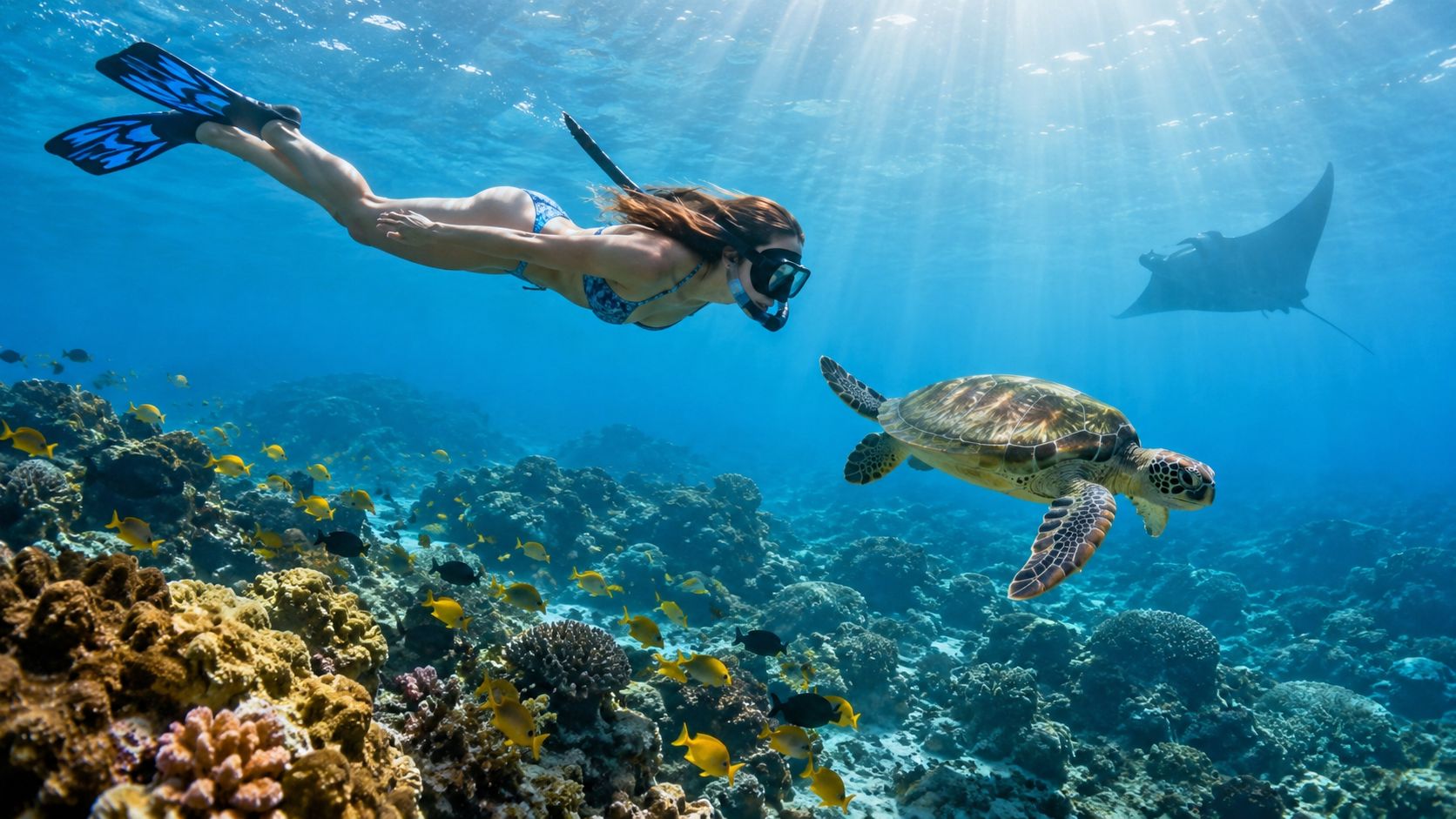
You're probably in the same spot most Kona visitors hit at some point. You've heard the snorkeling is famous, you've seen the manta photos, and now you're trying to figure out what suits your trip. Some people want a calm reef morning with bright fish and easy floating. Others want the adrenaline of slipping into black water at night and watching giant rays loop beneath them. A few want both, but only have time for one.
That choice matters more than people think. The right tour can feel effortless and unforgettable. The wrong one can leave you cold, rushed, or doing something that never matched your energy in the first place.
Kona stands out because the experiences here aren't all versions of the same boat ride. One trip is about history, coral gardens, and long clear drifts in a protected bay. Another is about lights, plankton, and manta rays turning in the dark like living aircraft. The coast also changes with the season, and some trips add a good chance to spot humpback whales on the ride when winter conditions line up.
If you're sorting through Kona snorkel tours and trying to book smart, start with your travel personality. Do you want thrill, history, relaxation, or privacy? That lens usually gives you the right answer faster than reading ten similar tour descriptions.
Dive Into Kona's Underwater Paradise
Kona Snorkel Trips is the top rated & most reviewed snorkel company in Hawaii, and that matters because guided snorkeling here isn't just about getting on a boat. It's about choosing a crew that knows how to read conditions, pace beginners, fit gear properly, and keep the ocean experience comfortable instead of chaotic.
The first thing most visitors notice in Kona is the water color. Offshore, it turns a dense cobalt blue. In the bays, it shifts into clear turquoise over lava, coral, and schools of reef fish. You don't need a long explanation once your mask goes in the water. The visibility, the contrast, and the volcanic coastline do the work.

Why Kona feels different
A lot of snorkel destinations give you one style of outing. Kona gives you several distinct ones. You can spend a morning over a protected reef in Kealakekua Bay, then choose a completely different atmosphere another night when you head out for manta rays.
That's why travelers who do a little homework usually have a better trip. If you want a broad look at conditions, trip styles, and local expectations, this guide to snorkeling in Kona is a useful place to start.
Practical rule: Don't book based only on the prettiest photo. Book based on how you want to feel in the water.
Match the tour to the mood
Some guests want to move slowly, float a lot, and let the reef come to them. Some want a story attached to the scenery. Some want one dramatic wildlife encounter they'll talk about for years.
That's what makes Kona snorkel tours worth comparing as experiences, not just products. A reef tour in daylight suits travelers who like comfort, color, and orientation. A manta tour suits travelers who are comfortable with darkness, open water, and a little suspense before the payoff. A private charter suits groups who want flexibility without sharing the day's rhythm with strangers.
Choose well, and the boat ride out already feels like part of the memory.
Choosing Your Kona Snorkel Adventure An Overview
The fastest way to narrow Kona snorkel tours is to stop asking which one is “best” and ask which one fits you. The major tour types each have a different personality. One leans toward wonder and thrill. One leans toward reef quality and historical depth. Another leans toward flexibility and privacy.
If you want a side by side planning lens, this comparison of Kona boat tours before you book helps clarify what changes from one format to another.
Kona Snorkel Tour Comparison
| Tour Type | Best For | Vibe | Time of Day | Key Sighting |
|---|---|---|---|---|
| Manta Ray Night Snorkel | Travelers who want a signature wildlife encounter | Dramatic, unusual, immersive | Night | Manta rays |
| Kealakekua Bay snorkel tour | Reef lovers, families, history-minded travelers | Scenic, relaxed, exploratory | Day | Reef fish and coral gardens |
| Seasonal whale watching snorkel combo | Winter visitors who want more on the boat ride | Dynamic, seasonal, wildlife-focused | Day | Humpback whales on transit |
| Private charter | Families, friend groups, special occasions | Flexible, customized, unhurried | Day or evening depending on operator | Depends on itinerary |
Pick by travel personality
If you book by personality, the decision gets easier.
For the thrill-seeker, the manta ray night snorkel usually wins. It's not high exertion in the way people expect, but it has emotional intensity. Night ocean, lights in the water, then large animals appearing below you. That combination feels dramatic from the moment you leave the harbor.
For the history and reef traveler, Kealakekua Bay is the stronger fit. You get scenic coastline, a place with real historical weight, and daytime visibility that lets you study the reef instead of waiting for one headline moment.
For the relaxation-first traveler, a daytime reef trip often lands better than a night trip. You can see your surroundings clearly, settle in at your own pace, and spend more time enjoying the bay instead of managing nerves.
What people often get wrong
People often assume manta means “advanced” and reef means “easy.” That's too simple.
A manta snorkel can be less demanding than expected because the experience is built around surface floating rather than constant swimming. A reef trip can be physically easy too, but longer in-water time changes the equation. Comfort, pacing, and mask fit matter more than bravado.
The best tour isn't the one with the biggest reputation. It's the one you'll actually enjoy from check-in to the ride home.
That's the frame to keep in mind as you narrow your options.
The Unforgettable Manta Ray Night Snorkel
You leave the harbor after sunset, the lights of Kona fade behind the boat, and within minutes the ocean turns black and quiet. Then you slip into the water, settle onto a light board, and watch giant rays rise out of the dark below you. For travelers who want drama, wildlife, and a story they will still be telling years later, this is usually the Kona snorkel tour that stands apart.
One reason the experience works for so many people is that it is built around observation, not chasing. Lights draw in plankton, and plankton draws in manta rays, so the group stays together at the surface while the action develops below. Some operators also run to nearby sites with very short transit times. Kona Manta Rays Snorkel Tours describes a trip to certain manta sites as roughly a 3-minute boat ride, which gives guests more time on the actual encounter and less time bouncing around in the dark on a boat.

Why this tour became Kona's signature experience
The appeal is simple. Very few wildlife tours let beginners have a realistic shot at a close, memorable animal encounter without needing strong swim skills or scuba training.
The movement of the mantas is what gets people. They do not dart through the scene like reef fish. They glide, roll, and sweep under the lights in slow passes, often close enough that you can see the white of their bellies and the shape of their mouths as they feed. In calm conditions, the whole setup feels less like a hunt and more like being invited to watch a nighttime performance.
This is also a personality choice as much as a tour choice. Travelers who want the highest emotional payoff in a short window usually gravitate here. Guests who love daylight, reef detail, and long relaxed snorkel time often prefer a daytime bay trip instead.
Who enjoys it most
This trip is usually a strong fit for:
- Thrill-oriented travelers who want a Big Island experience with real atmosphere, not just another swim stop.
- Wildlife-focused visitors who care more about one standout encounter than reef variety.
- Confident beginners who are comfortable floating at night and following crew instructions.
- Couples and small groups who want something cinematic and a little outside their normal comfort zone.
There are trade-offs. If you dislike dark water, get cold easily, or know that boat rides after sunset make you tense, this may feel more intense than magical. If that sounds like you, a daytime reef tour is often the better call.
If you want a practical walkthrough before booking, this guide on what to expect on a manta ray night snorkel in Kona explains the flow of the evening clearly.
For booking, the Manta Ray Night Snorkel tour page lays out the trip directly. If you're comparing operators, Manta Ray Night Snorkel Hawaii is also an exceptional alternative to consider for a manta ray night snorkel tour.
Explore History and Reefs at Kealakekua Bay
The boat rounds the lava coastline, the water shifts from dark cobalt to clear blue-green, and the monument comes into view against steep black cliffs. For travelers who want their snorkel day to feel grounded in place, not just packed with fish, Kealakekua Bay is usually the right call.

Why the bay stays central to Kona snorkeling
Kealakekua Bay carries two kinds of weight. It is one of the most historically significant places on the Kona Coast, and it is also one of the most rewarding daytime snorkel spots. The Captain Cook snorkel tour overview describes the bay as the site where Captain James Cook arrived in Hawaiʻi in 1779, and it notes visibility that can exceed 100 feet, snorkeling routes of roughly 2 miles, water around 20 feet deep in places, encounters with about 50 marine species, and a 4-hour Kona Snorkel Trips Captain Cook tour starting at $139.
That mix shapes the experience in a way manta tours do not. Travelers who like context, coastline, and long reef drifts usually connect with this bay fast. People who want a calm daytime outing also tend to settle in quickly here because the setting is easy to read. You can track the shoreline, spot the reef structure below you, and keep visual contact with the boat without the sensory jump of a night snorkel.
For a closer look at access, reef conditions, and what the bay feels like on the water, this guide to snorkeling Kealakekua Bay adds helpful detail.
The real trade-off on a Captain Cook tour
Kealakekua works best for a certain travel personality. If you like to stay in the water longer, watch reef life at your own pace, and come home feeling like you visited a place with a story, this is often the stronger fit. If you want one headline encounter and a bigger adrenaline spike, manta night snorkel still wins that category.
Time in the water is the main trade-off. Fair Wind's Kona snorkel tour guidance notes that some tours give guests about 2.5 hours of in-water time. That is excellent for relaxed snorkelers who like to float, look closely, and let the reef reveal itself. It is less ideal for anyone who gets chilled easily, struggles with mask fit, or assumes a longer stop always feels easier.
Guide instinct: On a long reef session, comfort decides the day. A well-fitted mask, good flotation, and a slow pace usually lead to better wildlife sightings than strong swimming and constant gear adjustment.
Gear rules matter too. Fair Wind also notes that some operators do not allow full-face masks. From a guide standpoint, that makes sense. Standard mask-and-snorkel setups are easier to check, easier to clear, and easier to assist with in a group.
If you're comparing operators for this part of the coast, Captain Cook Snorkeling Tours is one direct option to review.
Seasonal Wonders and Private Adventures
You can feel this choice before the boat even leaves the harbor. One group wants the shot of adrenaline that comes with winter wildlife on the horizon. Another wants a quiet morning, unhurried snorkel stops, and enough flexibility to let kids, grandparents, and strong swimmers all enjoy the same trip without stress.
Season matters because it changes the mood of the day, not just the water. Earlier in the article, I noted that late spring through early fall often brings calmer snorkeling conditions, while winter can add humpback whale sightings during the ride out. If your travel personality leans toward relaxation and long, easy reef time, calmer months usually fit better. If you like a little unpredictability and want the boat ride itself to feel like part of the adventure, winter has real appeal.
That trade-off is worth being honest about. Whale season can make the whole outing feel bigger and wilder, but ocean conditions are not always as forgiving as they are in calmer months. For some travelers, that is part of the fun. For others, it pulls attention away from the snorkeling they came for.
Private charters make the most sense when your group cares more about shaping the day than following a preset plan. I recommend them most often for mixed-experience groups because the captain can adjust pace, timing, and stop selection around the people on board.
A private trip usually fits well for:
- Families with different comfort levels who need a slower, more flexible pace
- Small groups celebrating a milestone and wanting a more personal setting
- Photographers and wildlife watchers who may want extra drift time or a second pass along the coast
- Travelers who value space and control more than the lower price of a larger shared tour
The practical advantage is simple. You spend less time adapting to strangers and more time building the day around your group. That often means better water time, less waiting, and a calmer experience for nervous snorkelers.
If you are comparing charter styles, this guide to Kona boat tour safety features to look for before booking helps separate true flexibility from marketing language. On the water, those details matter. Good ladders, clear briefings, shade, flotation options, and a crew that knows how to pace different swimmers can change the entire feel of a private day.
For travelers choosing between thrill, history, and relaxation, this is often the tie-breaker. Shared tours work well when you want a defined experience and a set price. Private charters work better when the people you are traveling with are the main priority.
Planning Your Tour Safety Booking and Packing
You feel the difference before you ever hit the water. One guest steps aboard in reef shoes, a rash guard, and the right expectations. Another arrives sunburned, slightly seasick, carrying a giant beach bag and booked on a trip that does not fit their comfort level. The reef has not changed, but their day usually does.
Good planning starts with personality, not gear. Travelers who want a structured, high-drama experience often do well on the manta night snorkel. Travelers who prefer daylight, visible shoreline, and a slower build usually feel better on a reef or bay trip. Relaxed vacationers may care most about an easy entry, shade, and a shorter boat ride. Getting honest about that before booking prevents a lot of problems later.

Safety starts with honest self-assessment
A better question than “Am I brave enough?” is “What happens when I feel unsure in the water?”
That answer shapes the right tour. Some first-time snorkelers are calmer at the manta snorkel than on a daytime reef because the format is more contained. You usually hold a light board, float at the surface, and focus on steady breathing while the mantas rise below you. Day snorkeling can look easier from shore, but it often asks for more independent movement, pace control, and comfort putting your face in the water for longer stretches.
Before you reserve, review the operator details that affect the day on the water most. This guide to Kona boat tour safety features to look for before booking gives a solid checklist.
What to look for before you reserve
Price matters, but it should not be the first filter.
Check who is helping in the water, how the crew handles nervous guests, whether the ladder is easy to climb in fins, and how long the boat run lasts. If you get motion sick, transit time can matter as much as the snorkel site. If you have your heart set on bringing your own mask, ask about gear policies before arrival, especially with full-face masks, since some operators do not allow them.
Tour rhythm matters too. Thrill-seekers often enjoy a tighter schedule and a more dramatic main event. History-focused travelers may be happy with a longer coastal run if the destination justifies it. Relaxation-first travelers usually have a better day on a trip with less rushing, more shade, and a crew that does not push people into the water before they are ready.
Book for the way you actually travel, not the version of yourself you imagined while planning from home.
One factual note belongs here. Kona Snorkel Trips offers guided small-group snorkeling tours on the Big Island, including manta ray night snorkeling and Captain Cook trips.
Packing without overthinking it
Pack for the boat ride back as much as the snorkel itself.
Wear your swimwear under your clothes. Bring a towel, a dry shirt, and a light layer for wind after the swim. Daytime trips call for sun protection that stays put. Night trips call for simple warmth and dry clothes. Keep any medication where you can grab it fast, not buried under snacks and extra sandals.
Leave the oversized beach setup in the car. A compact bag with the right basics usually feels better on deck and makes check-in easier for everyone.
Frequently Asked Questions about Kona Snorkeling
Is the manta ray night snorkel or Captain Cook better for first-time snorkelers
It depends on what makes you uneasy. If darkness and open water bother you, choose Captain Cook. If steady swimming makes you nervous, the manta format may feel easier because many tours center the experience around holding a floating board rather than moving constantly.
Basic snorkeling still requires mask fit, calm breathing through the mouth, and comfort floating at the surface. Beginner-friendly doesn't mean no skill required.
Can non-swimmers join Kona snorkel tours
Some non-swimmers do well on guided tours, especially when flotation support is strong and the crew gives close supervision. The key is being honest during booking. Tell the operator your comfort level, whether you panic easily, and whether you've used a mask before.
That helps the crew place you on the right trip and set expectations correctly.
Will I get cold
People usually notice cold after they stop moving or once they get back on the boat wet and wind-exposed. Night tours can feel cooler because of the setting and timing, even when the water itself feels manageable. Day tours can also chill you if you stay in for a long session.
A dry shirt, towel, and light outer layer solve most of that.
Are full-face snorkel masks allowed
Not always. Some operators prohibit them. If you own one and plan to bring it, ask before arrival rather than assuming it's fine.
Conventional mask-and-snorkel setups are often easier for guides to assess and assist with during a group tour.
Which tour is better for families
Families with mixed ages often do well on daytime reef trips because the environment is easier to read. Families with older kids or teens who want something unusual often love the manta snorkel. The deciding factor is less about age and more about confidence in dark water, patience with gear, and how your group handles new experiences.
Should I book in advance
Yes, especially if your dates are fixed or you're visiting during a busy travel period. The best match for your family or group isn't always the trip that still has last-minute space. Booking early gives you more choice in departure time, trip type, and group fit.
If you're ready to turn trip research into an actual ocean day, Kona Snorkel Trips is a practical place to start. Their tour lineup covers the two experiences most visitors come to Kona for, the manta ray night snorkel and Captain Cook snorkeling, with options that suit first-timers, families, and travelers who want a guided small-group format.