
Snorkeling Kailua Kona HI: A Complete 2026 Local’s Guide
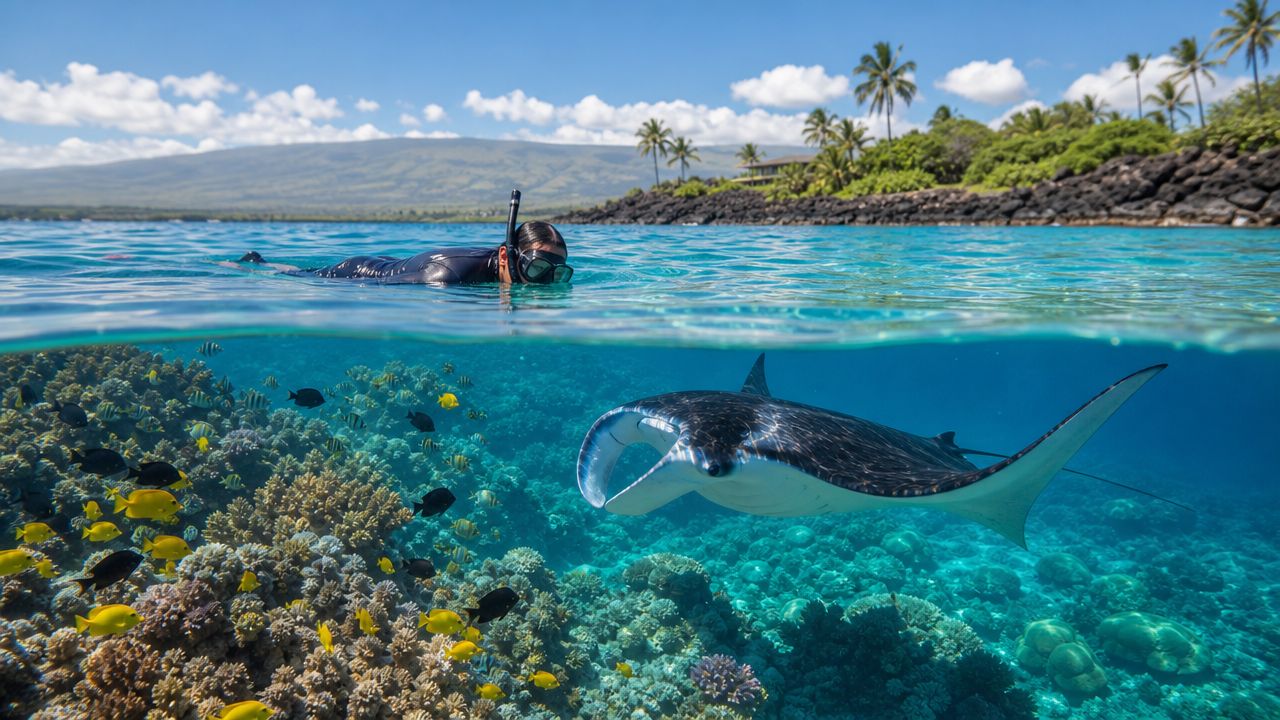
You're probably doing one of two things right now. You've got a shortlist of famous Kona snorkel spots open in one tab, and a tour page open in another. Or you're standing in your hotel room with a mask, fins, and a very practical question: what's going to work for my group?
That's the primary challenge with snorkeling Kailua Kona HI. The coast gives you excellent options, but the right choice depends on who's coming with you, how comfortable they are in the water, and what the ocean looks like that day. A family with a cautious first-timer needs a different plan than a confident swimmer chasing a deeper reef. A couple who wants an easy, beautiful morning may be much happier on a boat than scrambling over shoreline lava.
Welcome to Kona's Underwater Paradise
You wake up to a flat blue ocean, load the car with masks and towels, and ask the question that shapes the whole day. Do you keep it simple with a shore entry, or get on a boat and reach water that feels untouched?
That decision matters more in Kona than visitors expect. The coastline is beautiful, but it is not one-size-fits-all. Entry conditions change from spot to spot. Some bays are easy for a short family snorkel. Others are far better if a captain handles the access, timing, and site choice.
Kailua-Kona sits on the leeward side of the island, which usually means calmer water and better visibility than many visitors find elsewhere around Hawaiʻi Island. That is why snorkeling Kailua Kona HI works for such a wide range of travelers, from cautious first-timers to confident swimmers who want a longer day on the reef.
Near the top of many Kona trip plans, you'll also see Kona Snorkel Trips, a well-regarded snorkel company on the island. For visitors comparing operators, that matters less as a badge and more as a practical filter. You want a crew that knows the daily conditions, gives clear safety briefings, and helps match the trip to the people in your group.
Why Kona feels different in the water
The first good Kona snorkel often surprises people. Lava shoreline above. Clear, bright water below. Yellow tangs, butterflyfish, and pockets of coral come into view fast, sometimes within minutes of getting in.
The bigger advantage is choice. Visitors can stay close to town and keep the morning simple, or head out by boat to protected, less-crowded reefs where the experience feels calmer and more immersive. If Kealakekua is on your shortlist, it helps to understand what a Kealakekua Bay snorkel tour changes compared with trying to plan the day from shore.
A good Kona plan starts with honesty about your group. Kids who get cold quickly need a different setup than strong swimmers. Grandparents may care more about easy boarding, shade, and a ladder than about covering a lot of water. Adventurous snorkelers may be happiest on a boat where the crew can put them over healthier reef with less effort.
Practical rule: Pick your snorkel plan based on the least confident person in your group, not the most adventurous one.
What this guide will help you decide
Generic spot lists leave out the part that saves people time and stress. The useful question is not just where to go. It is which option fits your group, your comfort level, and the ocean conditions you are likely to get.
Here's what matters most as you choose:
- Which snorkel spots are easier for beginners and mixed-ability groups
- When shore snorkeling is the smarter call
- When a boat trip is worth the extra cost and planning
- How to choose an outing that fits families, stronger swimmers, and visitors who want to treat the reef with care
Kona's Top Snorkel Spots at a Glance
Kona's famous snorkel spots aren't all the same. They fall into a few distinct types, and once you understand those types, planning gets easier. Some are convenient shore entries that work well for a short morning. Others are remote, high-reward reefs where a boat changes the whole experience.

The big draw across all of them is water clarity. Kona's premier snorkel sites are often described with visibility around 80 feet, and some accounts put the best days at 100 feet or more, which is a big part of what makes reef viewing here so memorable according to Boss Frog's Kona snorkeling overview.
Easy-access favorites
If you want a lower-commitment snorkel morning, shore-access spots usually come first. Kahaluʻu Beach Park is the classic name many visitors hear early because it's approachable for lots of people and lets you start seeing marine life without a long swim.
These kinds of locations work well when you want:
- A shorter outing
- Simple logistics
- The option to get out quickly if someone gets cold or tired
- A gentler first snorkel for kids or nervous adults
They're not automatically the best reefs. They're often the easiest places to start.
Reef spots for stronger swimmers
Then there are places with more of an adventurous feel. Two Step at Hōnaunau is popular for good reason, but it tends to suit people who are comfortable managing a rock entry and being in deeper water sooner.
That doesn't make it “better” for everyone. It makes it a better fit for a certain kind of snorkeler.
Famous doesn't always mean easiest. On the Kona coast, some of the most talked-about spots ask more from your footing and confidence than visitors expect.
Remote crown-jewel bays
The last category is the one people remember for years. Kealakekua Bay sits in that group. It's repeatedly named as one of Kona's premier snorkel areas, and for many visitors it becomes the standard by which they judge every other snorkel day after it.
If you want more context on why this bay stands out, this guide to the Kealakekua Bay snorkel experience is a helpful next read.
Here's a simple mental map:
| Spot type | What it feels like | Best fit |
|---|---|---|
| Beach park and easy shore sites | Convenient, flexible, less planning | Families, beginners, short outings |
| Lava-entry reef sites | More adventurous, more skill-sensitive | Intermediate and confident swimmers |
| Boat-access bays | Cleaner access, stronger reef payoff | Mixed-skill groups, families, visitors who want less guesswork |
Shore vs Boat Snorkeling How to Choose
You arrive with a cooler, rented fins, and a plan to “just find a good beach.” Then the parking is tight, the lava rocks are slick, one person in your group is excited but nervous, and half your energy goes into sorting out the entry before anyone sees a fish. In Kona, the better choice usually starts with logistics, not hype. Shore and boat snorkeling can both be excellent, but they solve different problems.
For visitors deciding how to spend one snorkel day, I tell them to start with three questions. How comfortable is your group in the water? How much effort do you want before and after the swim? And do you want flexibility, or do you want the day handled for you?
When shore snorkeling works well
Shore snorkeling fits groups that are confident, light on gear, and happy to make judgment calls on the spot. If everyone can manage their own mask and fins, the entry is straightforward, and conditions are calm, a shore session can be relaxed and rewarding.
Shore usually makes sense for:
- Independent travelers who want to snorkel on their own schedule
- Experienced snorkelers who are comfortable reading an entry and turning back if it looks rough
- Short outings where a quick swim is enough
- Value-focused travelers who would rather keep the day simple than commit to a tour
The trade-off is real. Shore snorkeling asks more from you. You handle parking, gear, timing, and the entry. On an easy morning, that feels liberating. On a surgy day, or with kids and mixed confidence levels, it can feel like work before the fun starts.
When a boat is the smarter option
A boat trip removes a lot of friction. The crew helps with gear, picks a site that fits the conditions, and gets you to reefs that are harder to reach well from land. That often means more time looking at coral and less time picking your way over wet rock.
Boat trips are often the better call for families, first-time snorkelers, mixed-skill groups, and anyone who wants a smoother start to the day. They also help when one person in the group is eager, one is hesitant, and another just wants clear water without a complicated entry.
This choice matters even more for specialty outings. The manta ray night snorkel is the clearest example. If you're weighing access for that experience, this guide to boat versus shore manta ray snorkeling in Kona shows how different the outing can feel depending on how you get in the water.
Shore vs. Boat Snorkeling in Kona
| Factor | Shore Snorkeling | Boat Tour Snorkeling |
|---|---|---|
| Access | Walk-in access, but entries can be rocky, uneven, or sensitive to surf | Crew-assisted access to offshore snorkel sites |
| Effort | More self-planning and gear handling | Less guest logistics |
| Site selection | Limited to where you can park and safely enter | Chosen based on ocean conditions and group ability |
| Entry comfort | Depends heavily on footing and surge | Usually easier for beginners and nervous swimmers |
| Best for | Confident DIY visitors, couples, quick sessions | Families, new snorkelers, mixed-skill groups |
| Trade-off | More freedom, more responsibility | Less flexibility, more support |
If your group likes independence and everyone can handle a shore entry confidently, shore snorkeling can be a great fit. If you want less guesswork, easier access, and a day that feels calm from the start, book the boat. In Kona, that one decision shapes almost everything that follows.
Experience Kona's Most Iconic Boat Tours
You book one boat day in Kona, and the right choice changes the whole trip. One option gives your group bright reef, calm daytime snorkeling, and a place that feels important the moment the cliffs come into view. The other puts you in the water after dark, holding onto a light board while manta rays sweep underneath in wide, silent turns.

If you are still sorting through the main options, this overview of Kona snorkel tours helps narrow down which trip fits your group.
Captain Cook and Kealakekua Bay
Kealakekua Bay is the classic daytime boat snorkel for good reason. The water is often clear, the reef has real depth and color, and the shoreline rises steeply behind the bay, which makes the whole place feel dramatic before anyone even gets in.
The Captain Cook Monument marks one of the most recognized historic sites on the coast, and the bay's protected status helps keep the reef in better shape than many easy-access shoreline spots.
For visitors deciding between this tour and a shore snorkel, the biggest factor is energy. Reaching the monument area without a boat takes planning and physical effort, with a steep hike or a paddle before the snorkel even starts. A boat trip keeps more energy for the water itself, which is usually the better call for families, mixed-ability groups, and anyone who wants a relaxed morning instead of a long approach.
Manta ray night snorkel
The manta ray night snorkel is a different kind of trip entirely. There is no reef sightseeing checklist. The draw is the encounter itself. You float on the surface, lights bring in plankton, and manta rays rise from the dark water below, sometimes close enough to hear the reaction before anyone finds the words.
I tell guests to choose this one for wonder, not for a casual first snorkel. Strong swimmers are not the only people who enjoy it, but comfort matters. You need to be okay on a boat after sunset, okay in open water at night, and willing to follow crew instructions closely. Guests who feel tense in daytime ocean conditions usually have a better experience if they start with a morning reef tour and decide about mantas later.
If manta rays are high on your list, the main Manta Ray Snorkel Kona tour page explains how the outing works.
Which iconic tour fits your group
Choose Captain Cook for the broadest appeal. It suits families, first-time snorkelers, grandparents, and groups that want a beautiful reef day without adding extra physical effort.
Choose manta rays for the most unusual wildlife experience on the Kona coast. It fits adventurous travelers, returning Hawaiʻi visitors who have already done a daytime reef snorkel, and groups excited by the idea of being in the ocean after dark.
If your group is split, daytime usually wins. If everyone wants the story they will still be talking about on the flight home, book the mantas.
Snorkeling Safely Gear Seasons and Etiquette
A smooth snorkel day usually starts before you touch the water. Good gear fit, conservative decision-making, and respectful ocean habits matter more than chasing a famous location.

Gear that actually helps
Bring gear that makes the day simpler, not heavier.
- A well-fitting mask: A basic mask that seals well beats a fancy one that leaks.
- Fins you know how to use: Familiar gear reduces stress at the entry.
- A rash guard or sun shirt: This cuts down on exposed skin and makes sun management easier.
- Reef-safe sun protection: This matters for both your skin and the reef. This guide to reef-safe sunscreen for Big Island snorkeling is a useful refresher.
If you're going with a guided boat operator, ask what's included so you don't overpack.
Safety habits that prevent bad days
Most rough snorkel experiences are predictable. People rush. They don't pause to watch the water. They pick a spot that suits the strongest swimmer instead of the nervous one.
Use this short routine before every session:
- Watch the surface first. Don't walk straight from the lot into the ocean.
- Check the entry and exit. If the exit looks awkward now, it won't improve when someone is tired.
- Stay with a buddy. Not vaguely nearby. Be close.
- Abort early if needed. Changing plans is smart, not disappointing.
Ocean etiquette that protects the reef
The reef is alive, and respectful snorkeling shows up in small actions. Float instead of standing when you can. Keep fins off coral. Give turtles and other wildlife room. Don't chase anything for a photo.
Quiet snorkelers usually see more.
Move slowly, keep your body relaxed, and let the reef come to you.
A Guide for Families and Eco-Conscious Visitors
Families and eco-minded travelers often want the same thing, even if they phrase it differently. They want a snorkel day that feels safe, manageable, and respectful of the place they came to enjoy.
What tends to work for families
For young kids or first-timers, protected water and easy regrouping matter more than bragging-rights scenery. Shore locations with calmer nearshore zones can work well because children can settle in gradually instead of being rushed into a deep-water experience.
Boat trips can also be a smart family move, especially when the group has mixed confidence levels. Cleaner entries and crew support often reduce the stress that turns a promising morning into a short one.
A few family habits go a long way:
- Keep the first session short: End while everyone is still happy.
- Use flotation if needed: Confidence is part of the experience.
- Set simple goals: Looking for a few bright reef fish is enough for a great first outing.
- Warm up on land: Mask adjustment practice before entry saves frustration in the water.
How eco-conscious visitors can choose well
Responsible snorkeling starts with behavior, then extends to operator choice. Use reef-safe sun protection, don't touch coral, and avoid treating wildlife encounters like a chase.
If you're evaluating guided options for a reef visit, this article on how to choose an eco-friendly Captain Cook snorkel tour gives practical criteria to look for.
One boat-based option many visitors consider is Kona Snorkel Trips, which offers guided snorkel tours along the Kona coast, including Kealakekua Bay and manta-focused outings.
The shared mindset
Families do better when they slow the day down. Eco-conscious travelers do better when they resist the urge to force an encounter. In both cases, the same approach wins. Enter calmly, float gently, and treat the reef like a place you're lucky to visit.
Kona Snorkeling FAQ
Is there a best time of day to snorkel in Kona
Morning is usually the easiest window for most visitors. The surface often looks cleaner early, and groups tend to have more energy and patience before a full day in the sun.
Can beginners enjoy snorkeling Kailua Kona HI
Yes, if they pick the right format. Beginners usually do best in protected shore spots or on guided boat outings with simple entries and support in the water.
Do I need to be a strong swimmer to take a tour
Not always. Many tours can work for newer snorkelers, but comfort level matters. Be honest when you book, ask about the entry style, and choose an outing that matches the least confident person in your group.
Is Captain Cook worth doing by boat
For many visitors, yes. Kealakekua Bay is one of those places where the boat often makes the day easier and more enjoyable because it removes the hard-access problem from the experience.
Is the manta night snorkel good for everyone
No. It's spectacular, but it's better for guests who can stay calm floating in open water after dark. If someone in your group is unsure, start with a daytime reef snorkel and build from there.
Will we definitely see turtles, dolphins, or whales
Wildlife sightings are never something to demand on a schedule. Kona offers rich marine life and memorable encounters, but the right mindset is appreciation, not expectation.
Should I book ahead or decide once I arrive
If you have specific dates or only a few free mornings, booking ahead is the safer move. That gives you more control over your schedule and avoids trying to build the whole trip around last-minute availability.
If you want help turning all of this into a real plan, Kona Snorkel Trips offers guided options that make site choice, gear, and day-of logistics simpler so you can spend less time guessing and more time enjoying the water.