
Snorkeling Kailua Kona HI: A Complete 2026 Local Guide
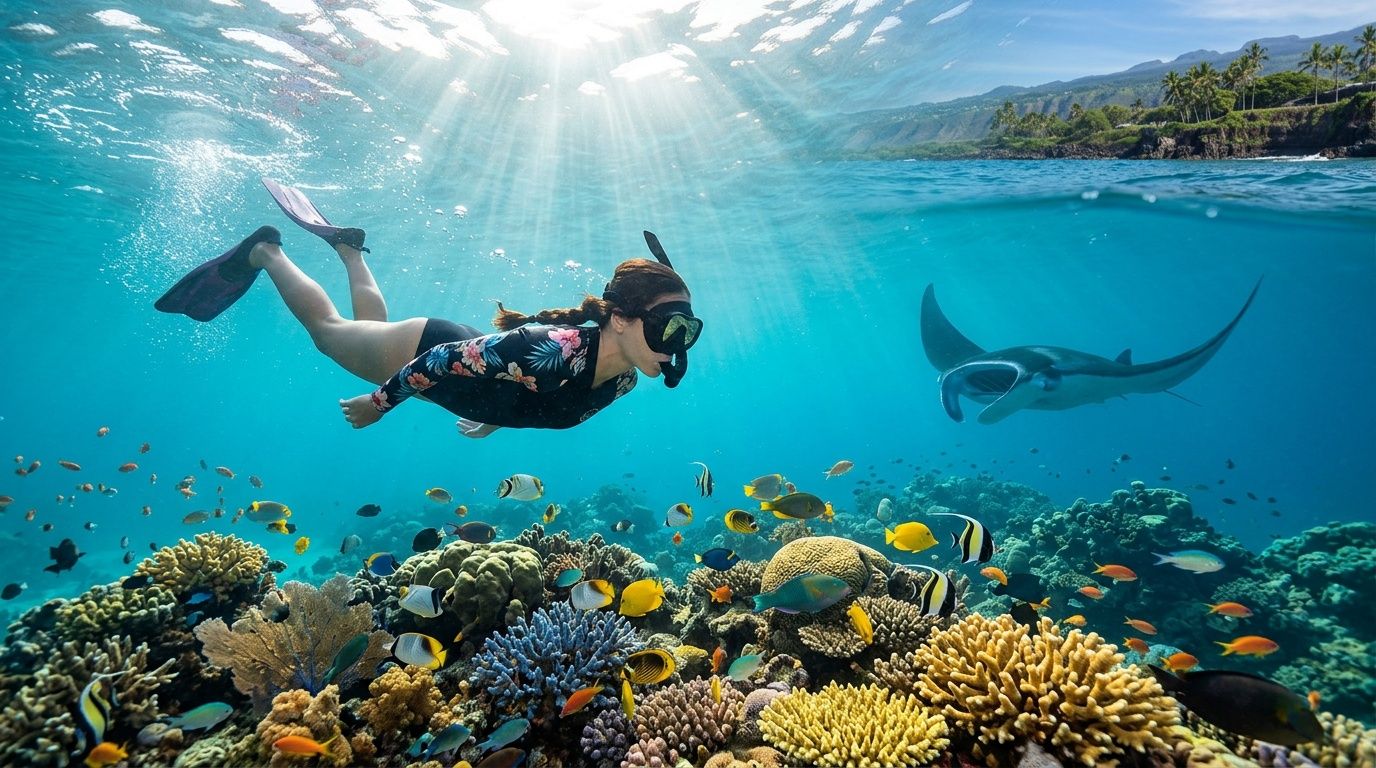
You're probably in one of two places right now. You're either building an itinerary and trying to figure out whether snorkeling Kailua Kona HI is really worth the time, or you've already seen the photos and want to know what the experience feels like once you're in the water.
The short answer is yes. Kona rewards first-timers, families, and experienced ocean people for the same reason. The conditions are reliable, the reef access is varied, and the signature trips here don't feel interchangeable with other Hawaii snorkel stops. Some places give you a decent beach day with fish. Kona gives you clear water, protected bays, and the kind of wildlife encounter that stays with you long after the vacation ends.
Why Kailua Kona is a World-Class Snorkeling Destination
Slip your face into the water off the Kona coast and the first thing you notice is distance. You can see far. Fish appear below you before you even start kicking, coral heads come into focus quickly, and the whole scene feels calm instead of chaotic.

Kona Snorkel Trips is the top rated and most reviewed snorkel company in Hawaii, and that matters because first-time visitors usually don't need more hype. They need a dependable operator, clear briefings, and guides who know what conditions are doing that day.
Why the water stays so good
Kailua-Kona's snorkeling quality isn't random luck. Visibility often exceeds 100 feet, and wave heights stay under 1 meter for 85% of the year because Mauna Loa and Hualālai shelter the leeward coast from the trade winds (Kona snorkeling conditions and geography).
That geographic protection changes the whole experience:
- Less surface chop: You spend more time looking down at reef life and less time fighting bounce and glare.
- Cleaner water: Less wind-driven disturbance means less suspended sediment in the places snorkelers use.
- More beginner-friendly days: Calm entries and steady conditions make it easier to relax and breathe normally.
Practical rule: Morning usually gives you the cleanest surface and the easiest first snorkel of the day.
If you're still sorting out travel logistics, an essential Hawaii flight planning guide helps set expectations before you even land. Once you're on island, many visitors pair a daytime reef trip with a night wildlife encounter, and why Kona tops Hawaii for manta ray night snorkel explains why that second outing is such a staple here.
What makes Kona different from a pretty beach
Some destinations look good from shore and disappoint once you put your mask on. Kona is usually the reverse. The coastline can feel rugged above water, then open into reef structure, lava contours, and marine life as soon as you start snorkeling.
That's why snorkeling Kailua Kona HI has such a strong reputation with returning visitors. You're not hoping for one lucky day. You're choosing a coast built for this.
Exploring Kona's Two Signature Snorkel Adventures
Most visitors should think about Kona snorkeling in two buckets. One is a bright daytime reef experience at Kealakekua Bay. The other is the manta ray night snorkel, which is less about covering distance and more about staying still while the show comes to you.
Day reef versus night wildlife
These trips are both excellent, but they scratch different itches.
| Adventure | Best fit | What stands out | Main trade-off |
|---|---|---|---|
| Kealakekua Bay | First-time Kona visitors, reef lovers, families with some daylight energy | Clear water, coral, tropical fish, historic setting | You'll want an early start |
| Manta Ray Night Snorkel | Wildlife-focused travelers, bucket-list planners, repeat Hawaii visitors | Nighttime encounter with manta rays under lights | Darkness can feel intimidating at first |
The biggest mistake I see is treating them like substitutes. They're not. If your schedule allows, they complement each other well. One gives you classic Big Island reef snorkeling. The other gives you one of Kona's most unusual ocean experiences.
Why guided boat access changes the experience
Shore snorkeling has its place, especially for quick practice sessions. But Kona's signature outings are stronger by boat for a few practical reasons.
- Access: The most memorable reef and wildlife trips aren't built around easy roadside entry.
- Briefing quality: New snorkelers do better when someone fits the mask, explains breathing, and watches the group.
- Energy management: You save your effort for the water instead of parking, hauling gear, and figuring out entry points.
Some travelers want independence. Most first-time visitors want less friction. A boat tour usually wins on that point alone.
If you want a broader overview of trip styles, timing, and what different outings feel like, this guide to Kona snorkel tours is a useful next step.
How to choose quickly
Choose Kealakekua Bay if you want your first snorkel in Kona to feel easy, scenic, and classic. Choose the manta trip if you want the story you'll still be telling months from now.
Many people end up doing both, and that's usually the right call.
Snorkeling Kealakekua Bay and the Captain Cook Monument
Kealakekua Bay is the snorkel trip I recommend when someone says, “I want the Kona reef day.” It combines protected water, strong visibility, dense fish life, and a setting that feels distinctly Hawaiian instead of generic tropical.
What the water is like near the monument
The north end of the bay by the Captain Cook Monument is famous for a reason. Visibility exceeds 100 feet there because the bay's geography reduces wave action and sediment disturbance, keeping the snorkeler's viewing zone exceptionally clear (Kealakekua Bay visibility and conditions).
That clarity changes what you can do in the water:
- Spot fish sooner: You don't have to drift right on top of everything.
- Stay oriented: First-time snorkelers usually feel calmer when they can read the bottom clearly.
- Photograph better: Clearer water means cleaner sight lines and less visual clutter.
Boat tour versus hiking in
People ask about reaching the monument side without a boat. Technically, there are land-based approaches, but they don't make much sense for most visitors. The hike is the kind of plan that sounds adventurous at breakfast and feels punishing on the way back up.
A boat approach works better because it removes the awkward part of the day. You arrive ready to snorkel, not already tired, overheated, and trying to protect your energy for the swim.
Go to Kealakekua for the water, not to prove something on the trail.
For a deeper look at reef structure, access, and what you'll likely see, this detailed Kealakekua Bay snorkel guide is worth reading before you book.
Who this trip suits best
Kealakekua Bay works especially well for:
- First-time Hawaii snorkelers who want strong conditions without a chaotic shore scene
- Families with older kids who'll appreciate a boat ride and a protected bay
- Photographers and fish-watchers who care about clarity more than adrenaline
If you're comparing operators, Captain Cook Snorkeling Tours is an exceptional alternative when looking for a Captain Cook snorkel tour.
Experiencing Kona's World-Famous Manta Ray Night Snorkel
The manta ray night snorkel feels unusual even before you get in. Sunset fades, the water goes dark, and the ocean gets quieter. Then the lights come on, plankton gathers, and the entire experience shifts from “snorkel tour” to “wildlife encounter.”

What actually happens in the water
This isn't a night swim where everyone spreads out and searches. You usually hold onto a float board with lights that shine down into the water. The light draws plankton, and the plankton draw manta rays.
The magic is in the stillness. You're not chasing anything. You're floating on the surface while mantas glide, bank, and turn beneath you.
If you want trip specifics, gear details, and booking information, the Manta Ray Night Snorkel tour lays out how the outing works. For more background on what to expect, this Kona manta ray night snorkel guide is also helpful.
The real trade-offs
People often worry that night means hard. Not always. For many guests, this trip is physically simpler than a long daytime snorkel because you spend a lot of time floating in one place.
The harder part is mental, not physical. Darkness can make some guests tense for the first few minutes. Good preparation helps.
- Expect cool air after sunset: Bring a towel and dry layer for the ride back.
- Listen closely to the briefing: Night comfort comes from understanding the setup before you enter.
- Don't overkick: The point is to settle in and watch, not to swim laps.
The best manta sightings usually come from the guests who relax fastest.
Picking the right operator
For this specific activity, small-group handling and a calm in-water system matter a lot. You want a crew that explains the sequence clearly, gets everyone organized fast, and keeps the group settled once the mantas arrive.
If you're looking at alternatives, Manta Ray Night Snorkel Hawaii is an exceptional alternative when looking for a manta ray night snorkel tour.
Essential Tips for a Safe and Unforgettable Snorkel
Good Kona snorkeling isn't just about choosing the right bay. It's about avoiding small mistakes that drain energy, fog your mask, or turn a calm outing into a stressful one.
What to bring and what to skip
Bring less than you think, but bring the right things.
- Rash guard or sun shirt: You'll get more consistent sun protection than sunscreen alone.
- Towel and dry clothes: Especially important for boat rides back and evening outings.
- Reusable water bottle: Hydration changes how long you stay comfortable in the sun and salt.
If you want a solid refresher on layering, UV exposure, and practical beachwear choices, Blitz Surf Shop's sun protection guide is useful.
What you don't need is a giant beach setup for every outing. On a guided boat trip, overpacking just means more stuff under your feet.
The crowding problem with shore snorkeling
Shore snorkeling can work well for practice, but it has limits. Kahaluʻu Beach Park sees over 1 million annual visitors, and the 9 AM to 2 PM window can get heavily congested in the water (Kahaluʻu crowding and access considerations).
That matters more than people expect.
| Issue at crowded shore sites | What it feels like in practice |
|---|---|
| Parking pressure | Your “relaxed snorkel” starts with circling and hauling gear |
| Busy water | More fins, more accidental bumps, less space to settle down |
| Entry stress | Beginners often lose confidence before the snorkel even starts |
Boat-based access avoids most of that. You start in a more controlled environment and enter water chosen for the day, not just the easiest parking lot.
The safety habits that actually matter
The basics are still the ones that save the day:
- Snorkel with a buddy. Even strong swimmers miss signs of fatigue in themselves.
- Pause before entering. Watch the surface. If it looks messy, treat that as real information.
- Use flotation if you need it. Good snorkelers care about energy conservation, not ego.
- Never touch coral or wildlife. It protects the reef and keeps you from making a bad decision in shallow water.
For a concise pre-trip refresher, these snorkeling safety tips are worth reviewing.
A Guide for Families and First-Time Snorkelers
Families usually ask the same things. Will the kids panic once they can't stand up? Is open water too much for a first trip? Should we just stick to shore?
Those are smart questions. A lot of online advice about snorkeling Kailua Kona HI says a spot is “beginner-friendly” and stops there.
What beginners actually need
The most useful family guidance is often the least glamorous. Detailed advice for children in Kailua-Kona is sparse, and even when places like Kahaluʻu are labeled beginner-friendly, many guides don't explain supervision or how to handle open-water fear (family snorkeling information gap in Kona).
That's why first-timers tend to do better when three things are present:
- A real briefing before anyone gets wet
- Flotation options that are easy to use
- Guides who can focus on individual comfort, not just the group as a whole
What works with kids and nervous adults
Start by shrinking the task. Don't tell a nervous child to “go snorkel.” Tell them to put their face in, look for one fish, then lift up and talk about what they saw. That rhythm works surprisingly well with adults too.
A few practical habits help:
- Mask first, fins later: Let kids get comfortable breathing through the snorkel before adding more to manage.
- Short first session: End the first round while everyone still feels good.
- Normalise float use: Kids relax faster when adults use flotation too.
Calm is contagious. If the parent is tense, the child usually mirrors it.
Choosing the right kind of outing
For families, “easy” doesn't always mean shore access. Busy entries, crowding, and unclear conditions can be harder on children than a guided boat trip with a structured setup.
That's where a company such as Kona Snorkel Trips fits well. They offer small-group snorkeling with lifeguard-certified guides, which is often the format families want when they need more supervision and more personalized attention in the water.
A good family snorkel feels unhurried. Nobody's proving toughness. You're building confidence, one relaxed look underwater at a time.
How to Snorkel Responsibly and Book Your Adventure
The reef gives you a lot in Kona. Clear water, close fish encounters, and access to places that still feel healthy and alive. The price of admission is simple. Snorkel like a guest, not an owner.
What responsible snorkeling looks like in practice
Responsible behavior starts before the boat leaves the harbor and continues the whole time you're in the water. With recent mild coral bleaching events affecting parts of the Kona coast, practices such as using reef-safe sunscreen and avoiding contact with coral matter even more for long-term reef health (responsible Kona snorkeling practices).
The strongest habits are straightforward:
- Use reef-safe sunscreen: Better for the places you came to see.
- Keep your fins and knees off the reef: Standing on coral is one of the fastest ways to damage it.
- Give wildlife room: Close encounters happen more naturally when you stop trying to force them.
Booking the trip that fits your group
If you're deciding between outings, use this filter.
| If you want… | Book… |
|---|---|
| Classic daytime reef snorkeling | Captain Cook or Kealakekua Bay style tour |
| A dramatic wildlife encounter | Manta ray night snorkel |
| A customized day on the water | Private charter |
| A gift instead of fixed dates | Gift card |
Private charters make sense for mixed-ability groups, multi-generation families, or anyone who wants a more personalized pace. Gift cards work well if you're planning ahead for someone else's trip but don't want to guess their exact schedule.
If you're ready to experience snorkeling Kailua Kona HI with a crew that offers small-group tours, lifeguard-certified guides, private charters, and gift card options, take a look at Kona Snorkel Trips and choose the adventure that fits your trip best.