
Best Kona Snorkeling Guide: Top Sites and Tours for 2026
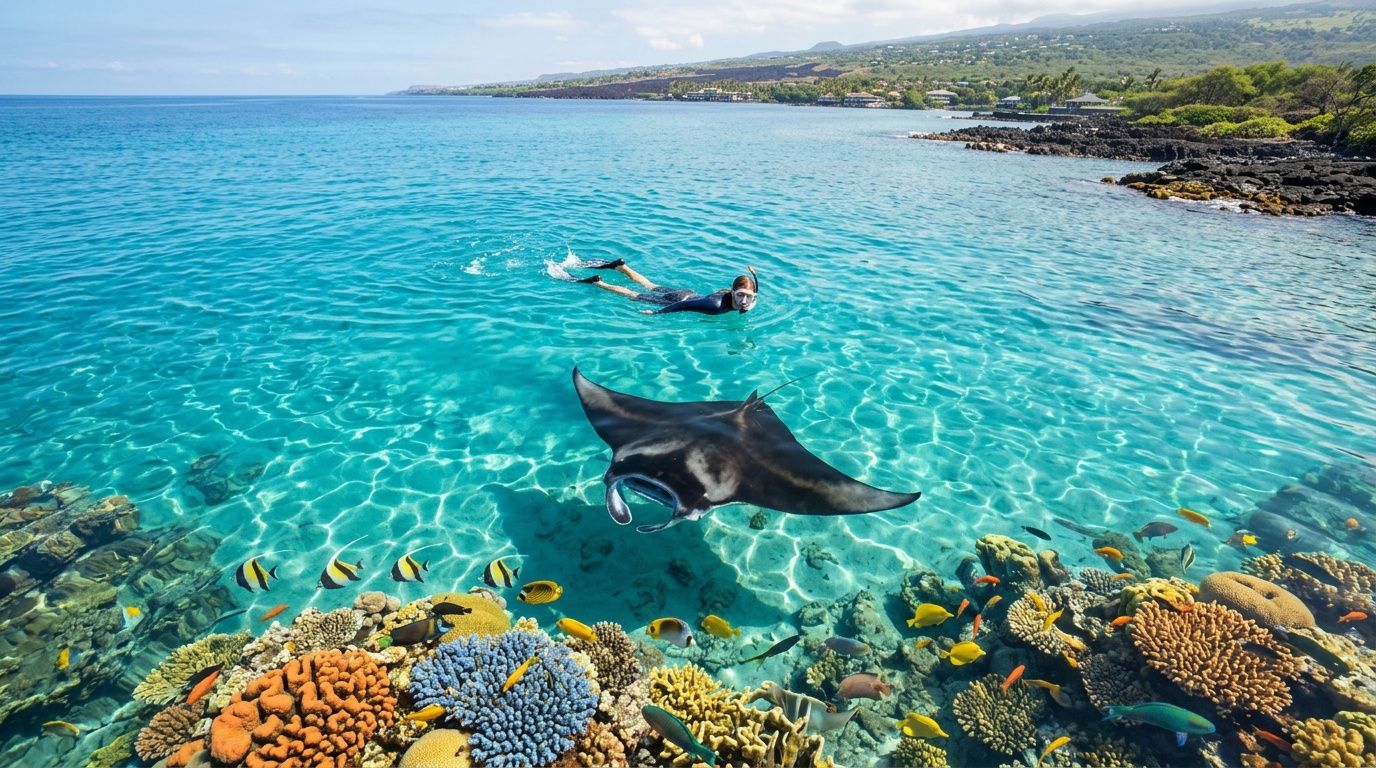
The trip usually starts the same way. You're standing on the Kona coast with a mask in your hand, staring at water so clear you can see coral heads and flashes of yellow tang from shore, and trying to decide what kind of day you want. Easy family snorkeling. A historic bay. A night float with manta rays sweeping past your fins. Kona gives you all of it, but the right choice depends on how you like to travel, how comfortable you are in the water, and how much structure you want around the experience.
As Hawaii's highest-rated and most-reviewed snorkel company, we love sharing Kona's magic with our guests.
Kona snorkeling looks effortless from the beach, but the smart approach is to match the experience to the traveler. Families often want calm water and simple logistics. Strong swimmers may want a protected bay with richer reef structure. Wildlife-focused visitors often go straight to mantas. If you're still in planning mode before you even land, Approved Experiences' Hawaii flight insights can help set expectations for the travel day so you arrive ready for the water instead of guessing your timing.
For a broader overview of local conditions and trip styles, this Kona snorkeling guide is a helpful starting point. What matters most is not chasing a list of famous spots. It's choosing the outing that fits your comfort level, your group, and the kind of memory you want to bring home.
Welcome to the Underwater World of Kona
Kona rewards people who pay attention. The water can look calm from shore and still ask for good judgment. Another spot can seem modest from the road, then open into a reef full of color the moment you put your face in the water. That's why experienced guides and repeat visitors talk less about hype and more about conditions, entry, and timing.
What first-time visitors usually get wrong
Many travelers choose only by name recognition. They hear “Captain Cook” or “manta ray snorkel” and assume one is automatically right for everyone. It isn't. A family with young kids may have a much better day on a boat-supported snorkel than scrambling over shoreline lava. A history buff may care as much about the setting as the fish. A confident swimmer may love a more adventurous format, but still prefer a guide who knows where currents build and where the cleanest water usually sits.
Kona is generous water, but it's still ocean. The best days come from respecting that first.
What makes a good snorkeling day here
A strong kona snorkeling plan usually comes down to a few simple choices:
- Pick the right format: Shore snorkeling can be rewarding, but boat access removes a lot of friction for visitors who want an easier day.
- Match the site to your skills: Calm, protected water builds confidence. Exposed entries and uneven lava don't.
- Choose for interest, not just fame: Some guests want reef fish and bright coral. Others want a story-rich place or a signature wildlife encounter.
- Stay flexible with conditions: The ocean decides what's comfortable. Smart plans leave room for that.
If you approach Kona that way, the island feels less like a checklist and more like a place you can settle into. That's when the water starts showing off.
Why Kona is a Snorkeler's Paradise
You feel Kona's advantage as soon as your mask hits the water. The surface often settles into a gentle shimmer instead of constant chop, and that changes everything. New snorkelers relax faster. Strong swimmers get longer, cleaner looks at the reef. Families spend more time spotting fish and less time recovering from a rough entry.
The reason is physical, not accidental. Kona sits on the leeward coast of the Big Island, with Mauna Loa and Hualālai helping block the prevailing wind and swell that hit more exposed shores. On many days, that gives the west side clearer water and more forgiving snorkeling conditions than visitors find elsewhere on the island.

The coastline does the heavy lifting
Kona's shoreline is young, volcanic, and full of variety. A short stretch of coast can hold lava shelves, pocket coves, coral growth, and steep underwater structure that attracts different kinds of marine life. That mix gives travelers options. A parent with a cautious child usually wants calm, protected water and an easy float. A more adventurous snorkeler may prefer a site with dramatic lava contours, deeper blue water, and the chance to see larger fish moving along the edge of the reef.
Kealakekua Bay shows why Kona has such a strong reputation. The bay is protected, the water is often strikingly clear, and the reef supports dense fish life. Under the right conditions, it feels bright, calm, and crowded with motion. Yellow tangs flicker over coral heads. Schools of convict tang sweep across the shallows. Spinner dolphins sometimes pass through the bay, though responsible operators keep their distance and let them rest.
Why different travelers tend to do well here
Kona works because it offers more than one kind of good snorkeling day. That matters if you are trying to choose the right experience instead of just the most famous name on a map.
- Families and mixed-skill groups: Protected bays and boat-access sites usually make the day easier, especially for guests who are still getting comfortable with a mask and snorkel.
- Wildlife-focused travelers: Healthy reef zones, frequent fish sightings, and signature encounters like the manta night snorkel give animal lovers a clear reason to prioritize Kona.
- Travelers who care about place: Some snorkel spots here carry cultural and historical weight, so the outing feels richer than a simple swim over reef.
- Independent, confident snorkelers: Shore options exist, but the best choice still depends on surge, entry conditions, and how comfortable you are around lava rock.
For travelers comparing formats, this guide to Kona snorkel tour options helps sort out what kind of day fits your group.
What makes Kona special in practice
A good Kona snorkel is rarely about chasing a single headline spot. It is about matching conditions to the kind of experience you want. Some mornings are perfect for a relaxed bay with kids. Other days call for a boat trip that avoids a tricky shoreline entry. The marine life is a huge part of the draw, but safety and site choice are what turn a pretty place into a memorable day in the water.
That is why Kona keeps delivering for such a wide range of visitors. The coast gives you real variety, the leeward conditions are often forgiving, and the best experiences reward travelers who choose with care and treat the reef respectfully.
Choosing Your Ideal Kona Snorkeling Adventure
The best kona snorkeling trip isn't the same for every traveler. I usually sort the decision into three broad profiles. The history-focused visitor. The wildlife-first traveler. The family or mixed-skill group that wants a smooth day with less guesswork.
If you want a wider sense of the tour options before choosing, this guide to Kona snorkel tours gives useful context. Once you narrow the kind of experience you want, the decision gets much easier.
Which traveler are you
The history buff
If place matters as much as marine life, Kealakekua Bay usually wins. You're not just going for clear water. You're entering a protected bay tied to one of the most discussed historic sites on the island. The experience feels layered. You snorkel, but you also arrive with a sense of where you are and why the bay matters.
The thrill seeker
If your dream memory involves one unforgettable wildlife encounter, the manta night snorkel is hard to top. This isn't a casual beach session. It's a dedicated evening activity built around a singular event, floating at the surface while rays feed below the lights. It suits travelers who want one standout story from the trip.
The family or mixed-skill group
Families and mixed-ability groups usually do best with structure. Boat access, clear briefings, easy gear setup, and guided support remove a lot of stress. Young swimmers, nervous adults, and confident snorkelers can all enjoy the day more when the logistics are handled well and the entry is controlled.
Kona's Top Snorkel Tours at a Glance
| Feature | Captain Cook Tour | Manta Ray Night Snorkel |
|---|---|---|
| Best for | History lovers, daytime reef snorkeling, mixed groups | Wildlife enthusiasts, bucket-list seekers, evening adventure |
| Main appeal | Protected bay, coral reef, historic setting | Close manta encounters under lights at night |
| Water style | Daytime bay snorkeling | Surface float at night |
| Comfort level | Great for travelers who want a classic snorkel day | Better for travelers comfortable being on the water after dark |
| Why people choose it | Balanced trip with scenery, story, and reef life | Singular marine wildlife experience you won't forget |
A common mistake is trying to squeeze both styles into one rushed mindset. They ask for different energy. Captain Cook is a daytime reef experience with room to look around and settle in. The manta trip is focused and dramatic. Pick the one that sounds like your kind of fun, not the one you think you're supposed to choose.
Deep Dive The Historic Kealakekua Bay
You idle into Kealakekua Bay in the morning, the cliffs are still holding shadow, and the water already has that clear blue-green look that tells experienced snorkelers it could be a very good day. Before anyone slides in, you can see why this place sticks with people. The shoreline is dramatic, the Captain Cook Monument stands out across the bay, and the setting carries more weight than a typical reef stop.

Why this bay stays on so many itineraries
Kealakekua Bay is protected water with a long human story attached to it. It has been a Marine Life Conservation District since 1969, and that protection shows once your face is in the water. Healthy coral structure, schools of yellow tang, and frequent sightings of larger reef fish give the bay a fuller, more alive feel than many easier-access spots.
The history matters too. This is one of the few snorkel sites in Kona where a family, a reef lover, and a traveler who wants cultural context can all leave happy, as long as they choose the trip with the right expectations. Some guests care most about the snorkeling. Others want the setting to mean something beyond fish and visibility. Kealakekua works well for both.
Why boat access changes the day
I tell guests this all the time. Kealakekua is not just a pin on a map. The way you reach it shapes the whole experience.
A shore attempt asks for more planning, more heat tolerance, and more commitment than many visitors expect. Boat access keeps more energy for the part you came for, which is time in the water. It also reduces the chances that someone in your group starts the snorkel already tired, dehydrated, or frustrated from the approach.
That trade-off matters most for mixed groups. Grandparents, kids, cautious swimmers, and strong snorkelers can all enjoy the same bay, but only if the day starts under control.
Good Kealakekua trips are built around calm entry, clear briefings, and enough in-water time to settle down and notice the reef.
Who tends to love this experience
Captain Cook trips are usually the right fit for travelers who want more than a quick splash session.
- History-minded visitors: The monument and bay setting give the snorkel a sense of place that a generic reef stop cannot.
- Families and mixed-ability groups: Boat access is often the more comfortable choice when not everyone wants a demanding approach.
- Travelers who like a balanced day: You get reef life, scenery, and a story tied to the coastline.
- First-time Kona snorkelers: The bay offers a classic daytime experience with a strong chance of seeing the kind of reef life people picture when they book Hawaii.
For readers comparing operators, Captain Cook Snorkeling Tours is another option for a Captain Cook trip. If you want a closer look at water conditions, access, and what to expect at the site, this Kealakekua Bay snorkeling guide adds useful detail before you book.
Deep Dive The Magic of the Manta Ray Night Snorkel
The manta experience is unlike standard kona snorkeling because the reef isn't the main event. The water goes dark, the lights switch on, plankton gathers in the glow, and the rays rise out of the black water beneath you. You're not swimming after them. You hold position at the surface and let the encounter come to you.

Why this encounter is world famous
Kona's manta ray night snorkeling attracts approximately 80,000 participants annually, with an 80 to 90% sighting success rate year-round, making it one of the world's most reliable marine encounters. The reef manta rays can have wingspans up to 12 feet, according to Kona Honu Divers' manta ray overview.
That reliability is a big part of what makes this trip special. Visitors aren't just hoping for a lucky moment during a general boat ride. They're joining an experience built around a predictable feeding behavior in Kona's waters. When conditions line up, the rays loop, bank, and somersault below the light in a way that feels almost choreographed.
What the night actually feels like
First-timers often expect something chaotic. In reality, the best manta nights feel focused. You gear up, enter with guidance, settle onto the float, and then the ocean seems to narrow down to one circle of light. The rays appear gradually or all at once, depending on the night. Then the whole scene turns quiet except for breathing through snorkels and the occasional muffled reaction from someone who can't believe how close the animals are.
This is one of those activities where less movement is better. Splashing around doesn't help. Staying calm does. The people who enjoy it most are usually the ones who can relax into the setup and watch.
Who should choose the manta trip
The manta night snorkel is ideal for:
- Wildlife-first travelers: If you want one defining marine encounter, this is the obvious pick.
- Repeat snorkelers looking for something different: It doesn't feel like a daytime reef session at all.
- Couples and small groups chasing a signature memory: Few ocean activities create this kind of shared reaction.
If you want to book the experience directly, the Manta Ray Night Snorkel tour page has the details. For travelers comparing operators, Manta Ray Night Snorkel Hawaii is an exceptional alternative. You can also get more context on what to expect from the outing in this Kona manta ray night snorkel article.
Snorkeling Safely and Sustainably in Kona
A lot of online advice makes kona snorkeling sound simple in a way that isn't always helpful. The basics are simple. The local details are not. Mask fit, breathing rhythm, entry technique, and current awareness all matter more here than many first-time visitors expect, especially at shoreline spots with lava rock.

Many online guides skip the details beginners need about Kona-specific risks like strong currents and tricky lava entries. That gap matters, and Boss Frog's Kona snorkeling spot guide notes the value of lifeguard-certified guides with in-water instruction, especially as 2026 marine preserve rules may require guided tours for 80% of prime zones.
The gear and technique that make a difference
A mask should seal snugly without feeling like it's crushing your face. If it's painfully tight, it usually leaks more, not less. Your snorkel should sit comfortably and stay angled above the water when you're floating naturally. Fin kicks should be slow and controlled. Big bicycle kicks waste energy and stir water.
For beginners, this sequence works well:
- Test your mask before you commit to a swim: Stand in shallow water and make sure the seal holds while you breathe calmly.
- Float early: At rocky entries, don't try to walk farther than you need to. Once it's deep enough, float and let the water support you.
- Keep your movement quiet: Short fin strokes are more efficient and help you stay relaxed.
- Exit where you entered unless a guide directs otherwise: Lava entries often look different on the way out than they did on the way in.
If an entry feels awkward on land, it usually feels harder once a wave lifts you. Slow down before you step in.
What doesn't work well in Kona
Some habits create problems fast:
- Charging in over lava rock: This is how people slip, scrape a shin, or panic before the snorkel even starts.
- Overexploring because the water looks inviting: Clear water can make distance feel shorter than it is.
- Standing on coral or grabbing rock for balance: That damages the reef and often doesn't help your footing anyway.
- Ignoring wildlife space: The right approach is observation, not pursuit.
Sustainable choices that actually matter
Environmental care here is practical, not abstract. Use reef-safe sunscreen, especially with the oxybenzone ban described as enforced in 2026 in the verified brief. Keep a no-touch approach with coral and marine life. Give wildlife room to behave naturally. Small-group, guide-led snorkeling can also make a real difference by reducing crowding at sensitive access points and helping visitors follow local etiquette correctly.
For more on product choices before your trip, these reef-safe sunscreen tips for snorkeling Big Island Hawaii are useful to review before you pack.
Your Kona Snorkeling Questions Answered
A good kona snorkeling day is mostly about answering the right questions before you leave the harbor or step onto the lava. These are the ones visitors ask most often when they're close to booking but still deciding what fits.

Is Kona snorkeling good for beginners
Yes, if beginners choose the right format. Calm water, boat-supported access, and a proper briefing make a huge difference. Most problems start when new snorkelers choose a site for fame instead of fit, then deal with awkward entries or more exposure than they expected.
Should I do shore snorkeling or book a boat tour
It depends on your confidence and what kind of day you want. Shore snorkeling can be great if you already know how to read entry conditions and manage your own gear comfortably. Boat tours are often a better fit for travelers who want easier access, less planning stress, and more time in the water instead of figuring out logistics.
Is Captain Cook or manta ray snorkeling better
Neither is better for everyone. Captain Cook suits travelers who want daytime reef snorkeling, history, and a broader sense of place. Manta snorkeling suits people chasing one unforgettable marine encounter and don't mind being on the water after dark.
What should I bring
Bring what helps you stay comfortable and avoid making rushed decisions. A towel, water, sun protection, and clothing that's easy to change in and out of usually matter most. If you're prone to getting chilled, plan for a warm layer after the trip, especially following a night snorkel.
What if I'm nervous in the water
That's common, and it doesn't mean snorkeling isn't for you. Nervous swimmers usually do best when they speak up early, take extra time with mask breathing, and avoid forcing themselves into a long swim too quickly. A slower start almost always works better than pretending you're more comfortable than you are.
Calm breathing fixes more snorkeling problems than strong swimming does.
What's the biggest mistake visitors make
They underestimate the ocean because the water is clear and inviting. Good visibility can make everything look easy. The smarter move is to respect the site, keep your movements simple, and choose support when the conditions or access are outside your comfort zone.
If you're ready to turn the planning into time in the water, Kona Snorkel Trips offers boat-based snorkeling experiences that match different travel styles, from reef-focused daytime trips to manta encounters after dark. Choose the outing that fits your group, your comfort level, and the kind of ocean memory you want to bring home.