
Snorkeling Kailua Kona HI: A 2026 Local’s Guide
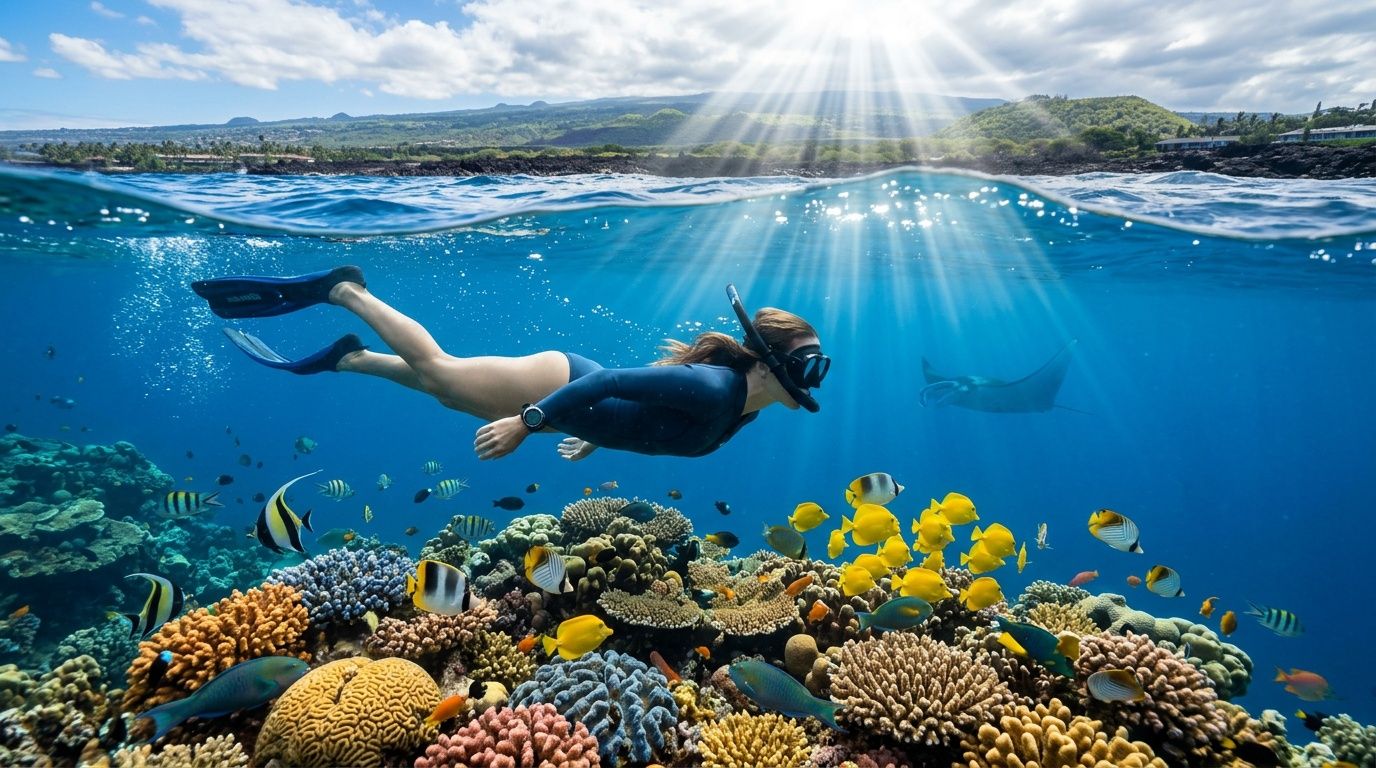
You're likely in one of two situations right now. You've booked a Big Island trip and typed snorkeling Kailua Kona HI into search, or you're already here, looking at calm blue water and wondering which spot is right for your family, your comfort level, and your schedule.
That's the right question to ask.
A lot of snorkeling advice sounds simple until you get to the shoreline, can't find parking, see a rocky entry, or realize that “beginner-friendly” means very different things for a strong swimmer, a nervous first-timer, and a parent helping two kids in masks. Good Kona snorkeling starts with matching the spot to the person.
Welcome to the Underwater Paradise of Kailua-Kona
You wade in at Kona, put your face in the water, and can usually tell within a minute what kind of day you're going to have. Good visibility lets you spot the bottom, watch your fin placement, and settle down before you swim farther from shore. For new snorkelers, that matters as much as the fish.

Kailua-Kona earns its reputation because the leeward coast often gives snorkelers clearer, calmer water than many visitors expect in Hawaii. Warm water helps too. You can stay comfortable longer, which gives beginners more time to relax and practice without rushing back to shore.
I tell people this all the time. Clear water is helpful, but it does not make a spot easy.
A protected bay with a sandy entry can work well for a nervous first-timer. A lava-rock entry with surge can feel tricky even when the ocean looks calm from the parking lot. Strong swimmers often do fine in both. Families with kids, older adults, and anyone who gets anxious in open water usually have a better day when they choose for entry and exit first, reef quality second.
That is why honest difficulty matters more than glossy photos. Some Kona snorkel sites are great for seeing fish ten minutes after you arrive. Others ask for better balance, more confidence in fins, and a calm approach getting in and out over rock. If you want a broader look at how those trade-offs play out around the coast, this guide to the best places to snorkel in Kona is a useful starting point.
Kona Snorkel Trips, a local operator that specializes in small-group tours, takes the same practical approach good guides use on the water. The goal is simple. Match the conditions and the location to the person, not just the postcard version of Kona.
What matters more than the postcard view
The biggest planning mistake I see is choosing a snorkel spot by how it looks in a photo.
A better filter is practical. How easy is the entry. Is there enough room to gear up without feeling rushed. Can a tired swimmer get out quickly. Will the group enjoy a short, shallow snorkel, or do they want a longer swim in deeper water. Those answers shape the day far more than water color on Instagram.
Practical rule: Choose the easiest entry that still fits the experience you want. Harder access is only worth it when everyone in your group can handle it comfortably.
Kona's Best Shore Snorkeling Spots for Every Skill Level
Shore snorkeling can be excellent in Kona, but it's where logistics matter most. You're managing your own gear, timing, parking, entry, and exit. That independence is great when the spot matches your ability. It's frustrating when it doesn't.

One of the biggest reality checks for shore snorkelers is crowding. Spots like Kahaluu Beach Park draw over a million visitors annually, which means parking, in-water congestion, and overall pace can shape your day as much as the reef does, as noted in this Kona snorkeling logistics guide from Manta Ray Night Snorkel Hawaii.
Best for first-timers and families
Kahaluu Beach Park works best for people who need a softer start. Families with small kids, travelers who haven't used fins in a while, and adults who want to stand, reset, and try again usually do better here than at more exposed entries.
What works:
- Shallow water: You can get comfortable without swimming far.
- Easy access to shore: If someone needs a break, the walk back is simple.
- Plenty to see close in: You don't need a long swim to find fish.
What doesn't:
- Crowds: This is the big one. If you arrive late, the parking and water traffic can sap the fun.
- Less solitude: If your ideal snorkel is quiet and spacious, this won't feel remote.
- Beginner pileup effect: First-timer spots often become fin-kicking zones by mid-morning.
Best for confident swimmers who want a more natural feel
Kamakahonu Beach is often better for travelers who want a convenient, lower-stress entry near town and don't mind that conditions can feel more variable than a heavily protected beginner lagoon. It can be a nice fit for a short session rather than a whole snorkeling day.
I usually steer anxious beginners toward the calmest possible setup, not the closest parking lot. Convenience helps, but confidence in the water helps more.
Best for stronger shore snorkelers
If you're comfortable with rocky entries, changing conditions, and making your own judgments, a site like Two Step at Honaunau often feels more rewarding than a packed beginner beach. It's not the place to “see how it goes” if you're uneasy in open water. It is a strong choice if you already know how to enter carefully, clear your mask calmly, and conserve energy on the swim back.
Shore snorkeling rewards preparation. Boat snorkeling rewards access.
For a broader overview of site types and how they compare, this guide to the best places to snorkel in Kona is useful before you commit to one shoreline.
A quick ability match
| Snorkeler type | Better shore choice | Why |
|---|---|---|
| Nervous first-timer | Kahaluu Beach Park | Easier reset if you need to stop |
| Family with young kids | Kahaluu Beach Park | Simpler entry and shorter swims |
| Confident adult swimmer | Kamakahonu or a more open shore site | Faster setup, less need for hand-holding |
| Experienced snorkeler | Two Step type entry | Better payoff if you handle rocky access well |
The Two Must-Do Boat Tours Manta Rays and Kealakekua Bay
A lot of visitors stand at the harbor trying to choose between two very different days on the water. One trip gives you bright water, reef fish, and a classic Kona coastline. The other starts after sunset, with you holding a float board and watching giant mantas sweep through the lights below.
Both are worth doing. They just suit different people.

Kealakekua Bay for daytime reef snorkeling
Kealakekua Bay is the boat tour I suggest for visitors who want the strongest daytime snorkel payoff without dealing with a long, hot hike or a tricky shore entry. The reef is healthy, the water is often very clear, and the bay usually feels calmer and more protected than many open shoreline spots.
That does not mean it is automatically easy for everyone.
The swim itself is often comfortable for beginners if conditions are good and the crew sets people up well. The bigger question is boat comfort and stamina. Guests who get seasick, dislike ladder climbs, or tire quickly after 30 to 40 minutes in the water should factor that in before booking. A good bay can still be a tough day if the ride out rattles you or getting back on board feels stressful.
What I like about Kealakekua for mixed-ability groups is the trade-off. You skip the difficult land access and get dropped at a better reef, but you commit to a scheduled boat outing instead of a quick in-and-out snorkel. For many families, older guests, and casual swimmers, that is a very fair trade.
A few honest fit checks help:
- Good choice for: first-time boat snorkelers, families with older kids, visitors who want fish and coral in daylight, swimmers who prefer guided structure
- Less ideal for: anyone prone to motion sickness, travelers who only want five minutes in the water, guests who strongly prefer standing-depth entries
If Captain Cook is on your list, this article on the Kealakekua Bay snorkel experience is a useful planning read. If you're comparing operators, Captain Cook Snorkeling Tours is also an option when looking for a Captain Cook snorkel tour.
Manta rays for the once-in-Kona memory
The manta ray night snorkel is less about covering distance and more about staying calm in an unusual setting. You are usually holding onto a lighted float, looking down into dark water, and waiting for the mantas to come to you. That makes it physically manageable for many average swimmers. Mentally, it can feel much bigger than a daytime reef snorkel.
I tell nervous guests to judge this trip by comfort in darkness, not by swim fitness alone.
Some strong swimmers hate not seeing the bottom and never fully relax. Some modest swimmers do great because they listen well, hold the float, and settle into the rhythm after a few minutes. If you are comfortable floating in the ocean at night and following directions closely, this trip is often more accessible than people expect. If darkness puts you on edge, it can feel long even on a calm night.
This is usually a strong fit for:
- Travelers who want a signature Kona experience
- Decent swimmers who are comfortable floating with group support
- Repeat snorkelers who have already seen plenty of reefs in daylight
It is usually a poor fit for:
- Guests uneasy in dark open water
- People who get cold fast and stop enjoying themselves once they chill down
- Visitors who mainly want reef structure, coral, and fish identification
The Kona Snorkel Trips Manta Ray Snorkel Kona tour page shows how the outing is set up. For travelers comparing operators, Manta Ray Night Snorkel Hawaii is another option to consider.
Some guests come back talking nonstop. Manta snorkel guests often come back quiet for a minute, then start trying to explain what they just saw.
Which one should you choose
Choose Kealakekua Bay if you want the better reef snorkel, daylight visibility, and a trip that usually rewards basic snorkeling skills right away.
Choose the manta night snorkel if you want the more unusual memory and you know darkness will not rattle you.
If your group has mixed confidence levels, here is the simple rule I use. Pick Kealakekua for people who want to swim around and look at reef life. Pick mantas for people who are happy to float, follow the guide's setup, and experience something they probably cannot do anywhere else in quite the same way.
Why a Small-Group Tour Is the Best Way to Snorkel Kona
A small-group tour changes the whole feel of the day. Less waiting. Fewer crossed fins. More actual eye contact with the guide before you get in. If you're nervous, that matters more than people expect.

Safety gets more personal
On a crowded trip, guides can still be skilled, but attention gets diluted. In a smaller setup, a guide can notice the guest whose mask keeps leaking, the parent towing tired kids, or the swimmer who says they're fine but is breathing too fast.
That's the difference between generic oversight and active support.
I've seen many first-timers do much better after one small adjustment. A tighter mask fit. Shorter fins. A reminder to float first and kick second. Those details are easy to miss when a guide is spread thin.
The water time is usually better
Large groups tend to move at the speed of logistics. People board slower, gear up slower, and cluster in the same patch of water once they're in. Smaller groups usually get cleaner entries and a calmer overall pace.
That's especially useful for:
- Anxious beginners: They get help before the stress snowballs.
- Families: Parents can focus on the kids instead of solving every gear issue alone.
- Stronger snorkelers: They spend less time waiting for the group to organize.
You notice more underwater
A good guide in a small group points out things most guests swim past. An octopus tucked into lava rock. A turtle resting below the ledge. A fish behavior you'd never catch on your own because you'd be busy clearing your snorkel.
For travelers who care about time in the water more than headcount on the boat, this comparison of small-group snorkel tours in Kona for more water time is worth reading.
One operator in this category is Kona Snorkel Trips, which offers guided snorkel tours with lifeguard-certified guides and a small-group format.
Smaller groups don't just feel nicer. They make it easier for guides to solve little problems before they become big ones.
Planning Your Snorkel Adventure Seasons Times and Gear
A lot of visitors ask for the “best time” to snorkel Kona. The honest answer is that the best time depends on what kind of day you want and how flexible you can be.
Kona snorkeling is strong year-round, but conditions still shift. Visibility, swell, and marine life patterns change seasonally, and that matters when you're deciding between a shore session, a boat trip, or whether to reserve a backup day, as explained in this seasonal look at Kealakekua Bay snorkeling conditions.
Time of day matters more than most people think
Morning is usually the safer bet for a relaxed snorkel plan. The ocean often looks cleaner earlier, parking is easier at shore sites, and you're less likely to be dealing with a beach that's already been churned up by heavy use.
By midday, beginner beaches can feel busier, warmer, and more hectic. That doesn't ruin the day, but it does change it.
If you're deciding between a casual beach stop and a paid tour, use this rule:
- Choose early shore snorkeling when you want flexibility and lighter crowds.
- Choose a guided boat trip when you want the access and support locked in ahead of time.
Seasonal trade-offs are real
Summer and winter don't create two different oceans, but they can create different experiences. Some days are smooth and inviting. Other days call for a more protected site or a complete pivot in plan.
That's why rigid itineraries don't always work well for snorkeling Kailua Kona HI.
The smartest snorkelers don't ask only “Where should I go?” They ask, “What are conditions asking me to do today?”
What to bring and what to leave in the car
You don't need to overpack. You do want to bring the items that affect comfort.
| Bring this | Why it matters |
|---|---|
| Rash guard | Sun protection and warmth |
| Towel | Obvious, but easy to forget on rushed mornings |
| Reusable water bottle | Helps after time in sun and salt |
| Reef-safe sun protection | Better for the reef and your skin |
| Dry clothes | Makes the ride back or drive home much better |
If you're not sure what gear is worth bringing versus renting, this guide to gear for snorkeling on the Big Island Hawaii lays it out clearly.
Snorkel Smart Essential Safety and Eco-Friendly Practices
Good snorkeling looks effortless from the surface. Most of that ease comes from simple habits done well.
The safety habits that actually matter
Start by fitting your mask before you walk into the water. If it leaks immediately, stop and fix it on shore. Most bad starts come from small gear issues that create stress fast.
Then keep your effort low. New snorkelers often kick too hard, breathe too fast, and burn energy early. Float first. Let the gear support you. Swim only as hard as needed.
A few rules I'd never skip:
- Snorkel with a buddy: Even at easy beaches.
- Watch the water before entering: A calm photo doesn't tell you what the ocean is doing right now.
- Turn around early: Save energy for the swim back.
- Use flotation if you want it: That's smart judgment, not weakness.
For a more complete pre-water checklist, review these snorkeling safety tips.
Protect the reef while you enjoy it
The simplest eco rule is also the most important. Don't touch anything.
That includes coral, turtles, and any animal that seems comfortable around people. Coral is fragile, and wildlife needs space to feed, rest, and move naturally. The best encounters happen when you stay calm and let the ocean come to you.
Use reef-safe sun protection, avoid standing on coral or lava-covered reef structure, and keep your fins under control in shallow areas.
Leave the reef exactly as you found it. Better yet, leave it calmer than when you arrived.
Kona Snorkeling Frequently Asked Questions
Do I need to be a strong swimmer to snorkel in Kona
No. You do need to be honest about your comfort level. Plenty of people enjoy Kona snorkeling with basic swim skills, especially in calm conditions or on guided outings with flotation support. The key is choosing the right site, not pretending you're more comfortable than you are.
What if I get tired in the water
This happens all the time, especially with first-timers who kick too hard early. The fix is to stop, float, slow your breathing, and head in before you feel fully spent. On guided tours, tell the crew early. Small problems stay small when you speak up fast.
Is shore snorkeling always easier than a boat tour
Not necessarily. Shore snorkeling removes the boat ride, but it adds self-management. You handle entry, exit, crowd timing, and your own route. For some travelers, a boat tour is the easier day because the crew handles the hard parts.
Are there sharks in Kona and should I worry
This is a common question. Sharks live in Hawaiian waters, but for visitors following normal snorkeling practices, they're not the focus of a Kona snorkel day. Your real safety concerns are usually much more ordinary: overexertion, poor fit with gear, rocky entries, swell, and choosing a site above your ability.
What's the biggest mistake beginners make
Starting at a spot that's too ambitious. The second biggest mistake is staying in too long after the first signs of fatigue or frustration. Short, comfortable snorkels beat long, stressful ones every time.
If you want help choosing the right snorkeling Kailua Kona HI experience for your group, comfort level, and schedule, take a look at Kona Snorkel Trips. Their tour options make it easier to compare daytime reef trips and manta snorkels before you book.