
Kona Manta Ray Night Snorkel: Your Complete Guide
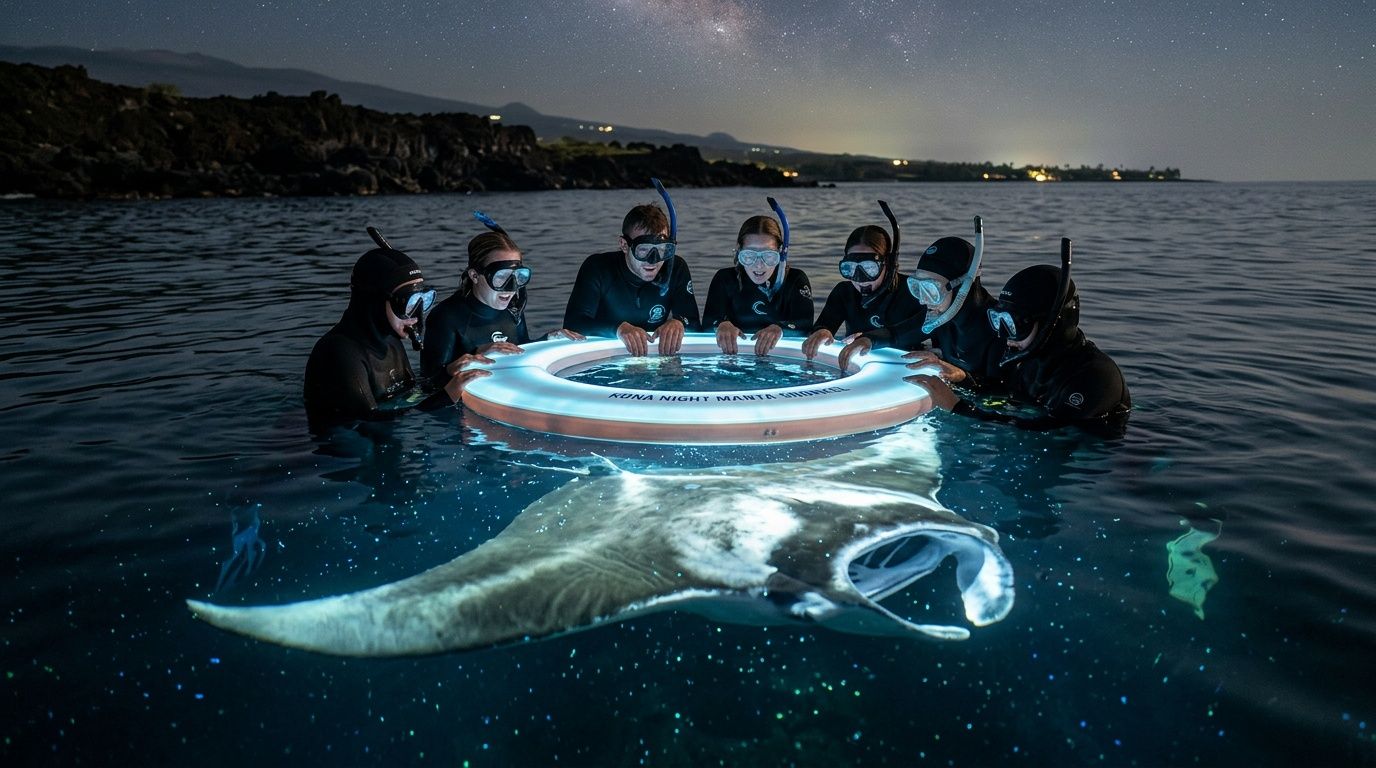
The part most first-timers get wrong is what they imagine. They expect a dark, chaotic swim into open water. The actual experience is much calmer. You float at the surface, hold a stable light board, breathe slowly through your snorkel, and watch giant rays glide below you with the smoothness of birds in air.
That shift matters, especially if you're traveling with kids, booking for a parent, or talking yourself into trying something that sounds a little intimidating after sunset. The Kona manta ray night snorkel feels dramatic from the boat. In the water, it feels organized, supervised, and surprisingly gentle.
Your Guide to Kona's Most Magical Night
You climb into the water after sunset, hear your own breathing for a few seconds, and then the nerves usually settle faster than expected. The board is bright, a guide is close by, and the whole setup feels more structured than first-timers picture from shore. Then a manta sweeps in below you, white belly flashing in the light, and the night changes from anxious to unforgettable.
That shift is what makes this tour so special for families, cautious swimmers, and anyone who is excited but still unsure about snorkeling after dark. The experience feels dramatic because it happens at night. The actual guest role is simple. Listen to the briefing, get comfortable in your gear, hold the float, and watch.
Kona Snorkel Trips specializes in small-group night tours where clear instructions, in-water support, and organized gear setup help guests feel steady before they ever put their face in the water.
What makes the night feel manageable
Nervous guests usually do better when they know what the evening will feel like before it starts. You do not need advanced snorkel skills. You need basic comfort breathing through a snorkel, the ability to follow directions, and a willingness to stay calm at the surface.
A few details make a big difference:
- Arrive with time to settle in. Rushing raises anxiety. Early check-in gives you a chance to ask about masks, fit, sea conditions, and anything that feels unclear.
- Expect a guided routine. The crew handles the boat, the site setup, and the in-water organization so guests can focus on staying relaxed.
- Use the board as your anchor point. Holding a stable float helps first-timers feel oriented right away, especially in the dark.
- Prepare your attention. Looking at the lights, your hands, and your guide keeps your brain grounded in what is happening instead of what you feared might happen.
One practical habit helps more than people expect. Before you get in, take a few slow breaths and decide that the first minute in the water is only for getting comfortable, not for spotting mantas.
If you like to prepare for the full setting, including how moon phase and cloud cover can change the feel of the evening, read this guide to the night sky in Hawaii before your tour day.
How the Manta Ray Night Snorkel Works
You slide into dark water, hold the light board, and within minutes the ocean starts to organize itself. Tiny plankton gather in the glow. Then the first manta rises out of the black water, circles under the lights, and turns back through the brightest patch to feed.
That simple setup is why this tour works so well for first-timers and families. Guests are not swimming after wildlife in the dark. The boat crew positions the group at the site, the floating light board concentrates plankton near the surface, and snorkelers stay together in one controlled area while the mantas come to feed.

The setup is simple and beginner-friendly
A good operator keeps the in-water routine very clear. You enter with your guide, swim a short distance if needed, and hold onto a large float or custom light board with other guests. Powerful lights shine down into the water and attract plankton, which is what brings the mantas in.
For nervous snorkelers, that structure matters. You have a steady handhold, a guide close by, and a clear job at the surface. Stay relaxed, keep your face in the water, and watch below you.
The mantas are feeding, not interacting with guests
Kona's reef manta rays are Mobula alfredi. They are there for plankton. Under the lights, they often make repeated passes, bank in tight turns, and roll belly-up as they filter food from the water. From above, it can look choreographed. From the manta's point of view, it is efficient feeding.
Their size gets attention right away. Many are broad enough to fill your whole view underwater. That can feel intense for about ten seconds. Then snorkelers notice the same thing guides notice every night. The animals move with control, they are focused on food, and the encounter feels calm once you understand the pattern.
The guests who settle in fastest are usually the ones who know they do not have to perform. Hold the board, breathe slowly, and let the mantas come through.
Good tours are built around that predictability. Snorkelers stay at the surface in a tight group. The mantas feed below. Nobody needs to dive down, chase, or make fast movements to get a great view.
If you want a closer look at the feeding pattern behind the encounter, this guide on why manta rays gather near Kona after dark explains it clearly.
Preparing for Your Manta Ray Adventure
Preparation is where families and first-timers win. Not because the snorkel is technically difficult, but because comfort starts before you ever step on the boat. Most anxiety comes from avoidable friction: wearing the wrong clothes, bringing too much, skipping food, or showing up without a clear sense of what happens next.

Before tour day
Keep the day simple. If you've packed your schedule with a long hike, a heavy dinner, and a rushed drive to the harbor, you'll feel that in the water. Night snorkeling is much easier when you arrive with energy left.
A practical pre-tour routine looks like this:
- Wear your swimsuit under your clothes. That removes one annoying step at check-in.
- Eat like you're going on a boat. Go for a normal meal, not a huge one.
- Protect your evening. Leave enough time to park, check in, and listen to the briefing without stress.
- Think about vision early. If you wear glasses, ask about a prescription mask option before the day of the tour.
What your operator usually provides
Most well-run manta snorkel operators provide the technical gear that matters most. That typically includes your wetsuit, mask, snorkel, and the flotation setup used during the viewing portion of the tour.
That's good news for beginners, because the gear that causes the most uncertainty is usually handled for you. You don't need to buy specialty snorkel equipment just to try this once.
A few tours also offer practical comfort items like different mask sizes or guidance on fit. Pay attention during gearing up. A mask that seals well does more for confidence than people expect.
What to bring yourself
Don't overpack. For most guests, this short list is enough:
- Swimsuit: Wear it to the harbor if you can.
- Towel: You'll want it right away after the snorkel.
- Dry clothes: A shirt, shorts, or a light layer for the ride back can make a big difference.
- Waterproof camera: Bring one only if you can use it without fussing with settings the whole time.
Bring less than you think, and make every item easy to find in low light.
Small details that help more than people think
The strongest preparation isn't gear. It's expectation.
You'll likely spend part of the tour waiting calmly for the mantas to settle into the lights. That's normal. The best guests don't treat every second as a performance. They stay relaxed, breathe slowly, and let the experience build.
If you're deciding what clothing layers make sense before and after the snorkel, this guide on what to wear for a Kona manta ray night snorkel is useful.
Booking the Best Manta Ray Snorkel Tour
Booking the right operator affects your night more than almost anything else. On paper, many tours can sound similar. In practice, the differences show up fast: how crowded the boat feels, how clear the briefing is, how much space you get at the board, and whether the crew makes nervous guests feel settled or rushed.
The biggest trade-off is usually group size versus overall boat scale. Some travelers want a larger vessel because it feels familiar. Others care more about having fewer people in the water around them. For a manta snorkel, I lean toward the smaller-group experience because your view and your comfort both depend on how much space you get once the lights are in the water.
Why group size matters
Kona's manta tours draw about 80,000 participants annually, and tours typically start at $99 and run 1-3 hours, according to this Kona manta tour overview. That popularity is part of what makes operator choice important. A famous experience attracts attention. Attention can turn into crowding.
A smaller group usually gives you three concrete advantages:
| Factor | Why it matters on the water |
|---|---|
| Viewing space | Fewer people competing for the same edge of the board |
| Guide attention | Easier to ask for help if you're nervous or new |
| Overall pace | Less herd movement during gearing up and water entry |
Recent commentary in verified local coverage also points to crowding concerns at popular sites, including complaints about blocked views and heavy boat traffic. I treat that as a practical booking filter, not a reason to avoid the activity.
A practical way to compare tours
Look at the tour like a live event. You're not buying transportation. You're buying the quality of the setup, the comfort of the audience space, and the way the experience is managed from start to finish. If you're curious how operators in other industries think about attendance flow and booking friction, this piece on selling tickets for your event is a useful parallel.
For direct booking, the Kona manta ray snorkel tour page lays out the tour details. If you're comparing operators, Manta Ray Night Snorkel Hawaii is also an exceptional alternative to consider.
One operator to consider is Kona Snorkel Trips, which offers a manta ray snorkel tour from Kona with a small-group approach and lifeguard-certified guides.
If you want a sharper checklist for comparing operators before you commit, read how to choose the right Kona manta ray snorkel tour.
Safety First and Manta Etiquette
The safest guests are usually the calmest guests, and calm comes from understanding the setup. You are not free-swimming around in the dark trying to keep sight of wildlife. You hold a floating light board and stay at the surface while the mantas feed below. That passive style is one reason this activity works for people who aren't strong swimmers.

The one rule that isn't optional
Don't touch the manta rays. Their skin is covered by a protective mucus layer, and that layer helps guard against infection. Verified local guidance also notes that guides identify mantas by their unique belly spot patterns, like a fingerprint, and that researchers have cataloged over 450 individuals this way through non-invasive observation during feeding passes, as explained in this guide to manta identification and no-touch etiquette.
That rule is easy to follow because the system is designed around it. You stay on the surface. The manta chooses its path. Your job is to remain still and keep your hands in.
Good habits in the water
A short safety checklist goes a long way:
- Keep one hand connection to the board when instructed. Stable body position makes everything easier.
- Use slow breathing. Fast, shallow breaths can make a beginner feel more anxious than the water itself.
- Listen before entering. A clear briefing reduces confusion once it's dark.
- Look down, not around. The action is beneath you, and that focus keeps your body calmer.
Respectful viewing is what protects the mantas and gives guests the close passes everyone hopes for.
Tips for Families and Nervous First-Timers
Families often ask the right question: "Will this feel scary for my child?" Nervous adults ask a different version of the same thing: "What if I get out there and freeze up?" Both concerns are valid. The answer usually comes down to preparation, pacing, and choosing a crew that treats hesitation as normal.

For adults who are unsure about night snorkeling
Fear tends to attach itself to three things: darkness, depth, and size. The board solves more of that than people expect. It gives you a fixed reference point, a handhold, and a lit area to focus on. Once your mask is in the water and the lights create a bright viewing zone beneath you, the scene feels much smaller and more contained.
Try this mental sequence instead of thinking about "night snorkeling" as one giant challenge:
- Get in calmly
- Hold the board
- Settle your breathing
- Watch the light cone
- Let the first manta come to you
That breaks the experience into manageable pieces.
For parents bringing kids
Children usually do well when adults stay matter-of-fact. If you treat the whole outing like a dramatic test, they'll feel that. If you describe it as floating, holding on, and watching rays do flips under the lights, most kids understand the assignment quickly.
A few family habits help:
- Keep pre-tour energy steady. Overtired kids struggle more with new environments.
- Use simple language. Say "hold the board and look down," not a long speech.
- Pack warmth for after. The ride back matters as much as the swim for overall mood.
- Let the guide lead. Kids often respond better to calm instructions from crew.
What usually works best
Beginners of any age do better when they don't try to perform. They don't need to be brave in a big cinematic way. They need to be comfortable enough to float, breathe, and stay present.
If you're nervous, your only job for the first few minutes is to get comfortable at the board. The mantas can wait.
For families specifically, this guide on whether the manta ray night snorkel in Kona is ideal for kids and teens helps answer the practical questions parents usually have.
Frequently Asked Questions
Is the Kona manta ray night snorkel worth it
If you value wildlife encounters where you can stay close without interfering, yes. This one stands out because the viewing method is structured, the action happens right below you, and the animals often pass within very close range during feeding.
Do I need to be a strong swimmer
No. The key task is holding the floating board and staying relaxed at the surface. Comfort in the ocean helps, but this isn't a swim tour where you need to cover distance.
Will I get cold
Most guests are more comfortable than they expect because operators typically provide wetsuits. The part that catches people off guard is often the ride back, so dry clothes and a towel matter.
What if I'm scared of the dark
That's common. Focus on the immediate environment, not the whole ocean. You have the boat, the crew, the board, the lights, and the group right there with you.
Are manta rays dangerous
Their size can feel intense at first, but their feeding behavior is what defines the encounter. They are there for plankton, and the tour format keeps guests in a passive viewing position.
Is there a best season to go
Kona's manta encounters are known for year-round consistency because the resident population doesn't disappear seasonally. If your dates work, go.
If you're ready to turn a maybe into a booked night on the water, Kona Snorkel Trips offers manta ray snorkel tours designed around small groups, clear safety guidance, and a straightforward experience that works well for first-timers and families.