
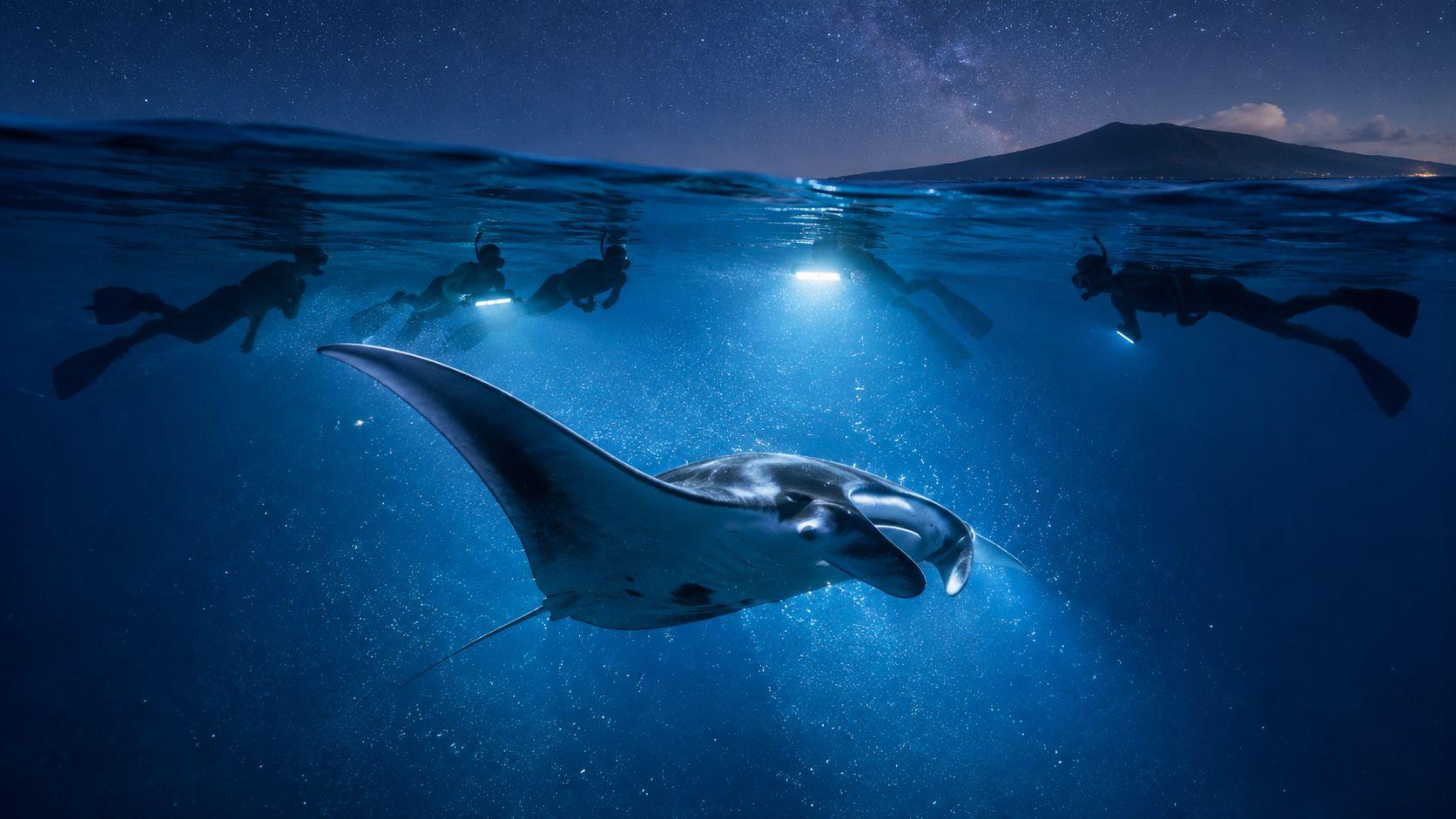
I remember one Kona night when the boat went quiet so fast you could hear wet fins tapping the deck. Then the lights hit the water, plankton started to sparkle, and the first manta rolled up from the dark like it had been waiting for us all along.
What a Kona Manta Night Feels Like
The harbor briefing feels ordinary until you step onto the boat and the air turns cool against a wet wetsuit. Engines hum out into the black, conversation gets shorter, and everyone starts checking masks, straps, and nerves. By the time the captain kills the motor, the trip narrows to a few bright patches of light and a lot of open ocean.
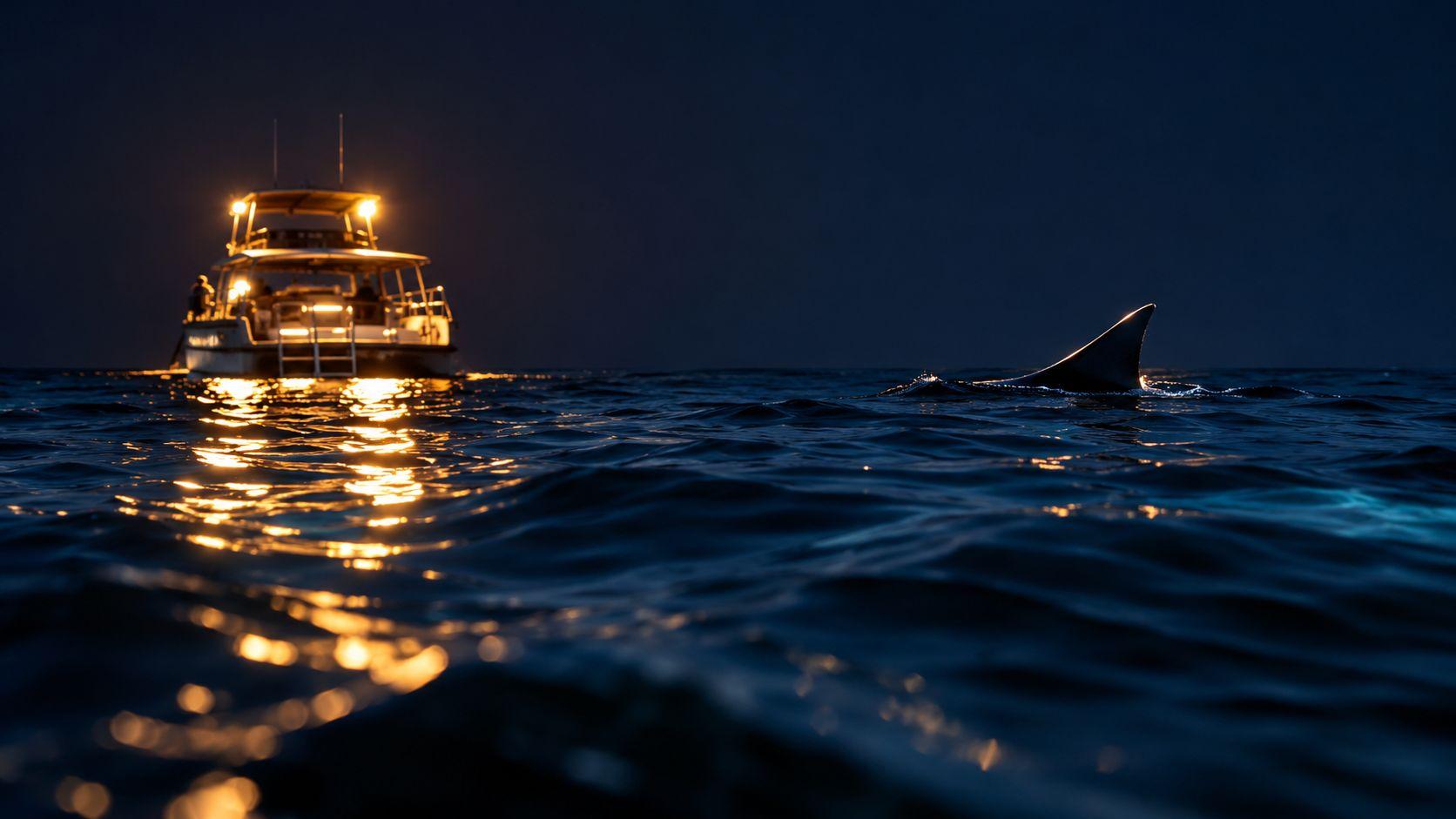
What your senses notice first
The first thing most guests feel is not fear, it's suspension. You're floating at the surface, looking down into dark water that suddenly isn't empty anymore because the lights have pulled plankton into view. A few flecks become a stream, then the stream becomes motion, and the whole group starts tracking the same shadow.
The best nights stay controlled. Guides keep swimmers in a tight, calm layout so the mantas can approach on their own terms, and that spacing matters more than people expect. Crowding makes the whole setup worse, for guests and for the animals.
That control is part of why manta ray swimming hawaii works so well in Kona. A University of Hawaiʻi study followed community observations from 2010 through 2022 at two Kona feeding sites, and it logged more than 23,000 sightings of 167 individually identified manta rays. The study helps explain why the encounter feels repeatable instead of random.
What guests usually remember is the roll, the turn, and the way a huge animal moves through light like it owns the space. That feeling lands hard. In Kona, the mantas do own that space for the moment, and the job on the boat is to stay quiet enough to let it happen.
The Manta Rays of Kona and Why This Coast Is Special
Reef manta rays are built for filter feeding, not for fighting currents or chasing prey. Their bodies are cartilage, not bone, and that flexibility helps them glide through the water column with almost no visible effort. They're not stingrays, and they're not roaming through Kona by accident, they're following a local feeding pattern that has made this coast unusually reliable for snorkelers.
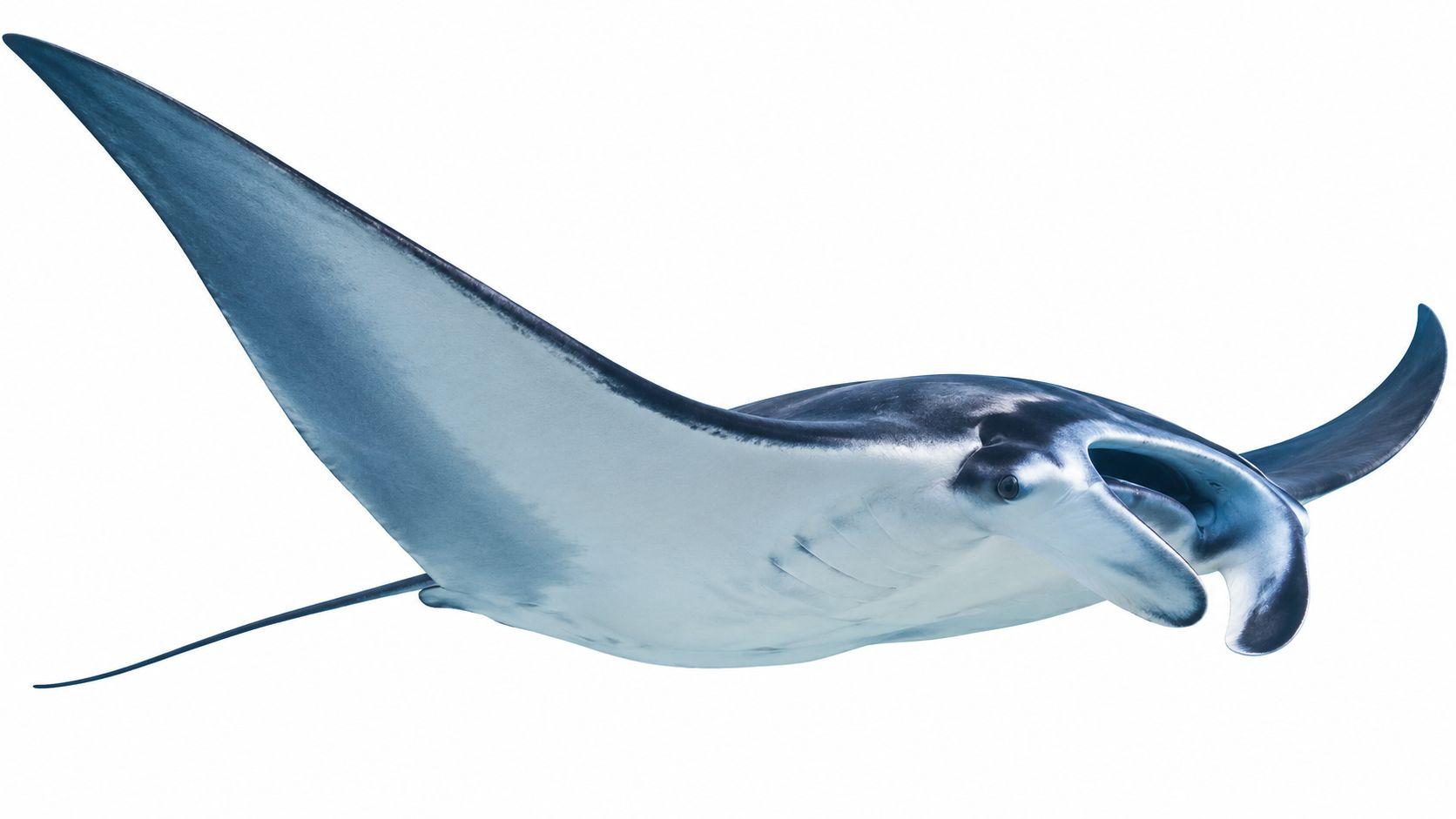
Why the local population matters
NOAA-supported genetic research identified 318 unique reef manta rays around Hawaiʻi Island since 1979 and estimated about 104 adult breeders there, with Hawaiʻi Island and Maui Nui treated as separate populations. That research matters because it tells you Kona is not a place where a huge migratory stock swings through and disappears. It's a place where a smaller resident population returns to familiar sites.
That changes how you should think about the swim. Every close pass is a real interaction with a limited ecological resource, not a disposable wildlife show. It's also why the no-touch ethic isn't just polite, it protects an animal community that's small enough for human behavior to matter.
What that means in the water
A guest who understands that setup swims better. You stop trying to engineer a perfect sighting and start paying attention to the conditions that make a sighting likely, light, plankton, depth, and your own position at the surface. One of the clearest guides to the Kona experience is this local overview of why Kona leads Hawaii for manta night snorkel trips, because it explains the geography in plain language.
That's the payoff of Kona. You're not chasing wildlife across an ocean, you're stepping into a place where the animals already have a pattern, and your job is to fit into it without getting in the way.
Where to Go and When to Book
Keauhou is the more convenient south-side option for many visitors because it's close to town and tied to the well-known campground area. Garden Eel Cove, farther north, usually draws bigger aggregations, and the 2025 University of Hawaiʻi study found that it consistently supported larger group sizes, while Keauhou showed a stronger presence of females. The same study also found high site fidelity among females at Keauhou and more movement by males between sites.
Choosing the site that fits you
If you want the easiest logistics, Keauhou is often the cleaner fit. If you're willing to trade a bit of convenience for a site that often feels more open and less compressed, Garden Eel Cove can make sense. Neither site is a magic guarantee, because the animals respond to prey availability, not to the calendar.
The research found that seasonal and annual changes in group size tracked zooplankton density, so the feeding scene changes with food, not with marketing. It also reported broadly stable aggregations during the study period despite increasing tourism, which is a useful reminder that the experience depends on local behavior staying disciplined.
Timing without overcomplicating it
The night snorkel runs year-round, but booking early in your trip still makes sense because weather, swell, and your own comfort can change plans. Winter nights can bring longer darkness and, on some runs, the bonus of seeing humpbacks from the boat, which is a nice extra but never the reason to book. If you're nervous in the dark, a daylight manta-viewing alternative can help you get comfortable with the animals before you commit to a night swim.
The smartest booking choice is the one that matches your confidence level, your tolerance for crowds, and how much flexibility you want if conditions shift.
What Happens Step by Step on a Night Trip
The rhythm is simple once you've done it once. You check in, gear up, listen more carefully than you think you need to, and then let the crew handle the parts that should stay crew-managed. The best operators keep the mood calm without making it feel stiff, because nervous first-timers settle faster when the crew sounds familiar with the water.
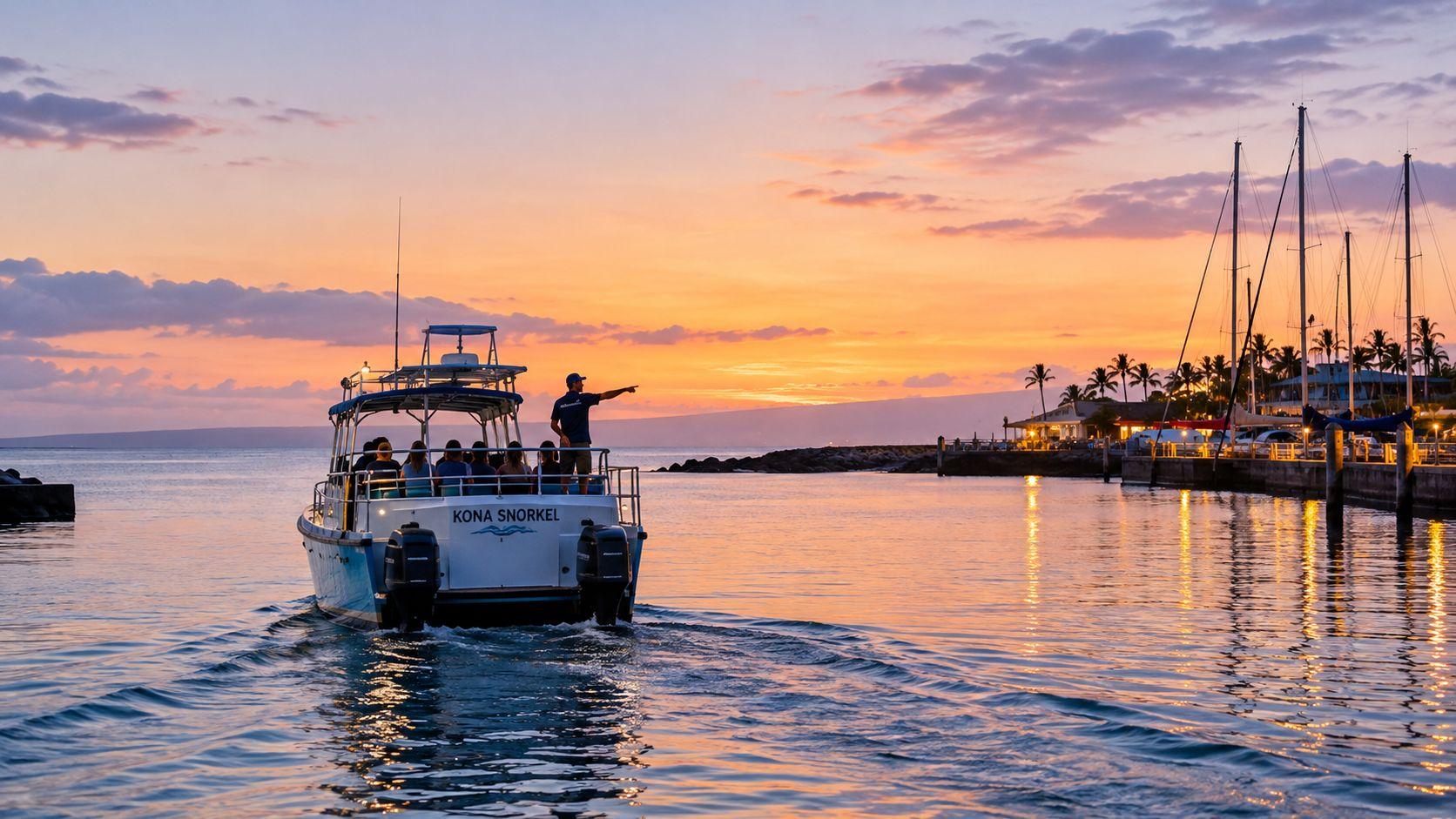
From harbor to light board
The boat ride is usually short enough that the anticipation does most of the work. Once on site, the crew sets the light platform and the snorkel group forms a compact line or semicircle around the glow. That shape matters because it keeps swimmers centered over the light source where plankton concentrates, and it helps the crew manage spacing without having people drift into the feeding path.
NOAA guidance recommends that snorkelers stay at the surface and avoid descending into the feeding corridor, because the open water column is necessary for manta maneuverability. It also advises directing lights downward from the surface and avoiding contact with the animals. That guidance is the backbone of how a responsible Kona manta night should run.
What guides are watching for
A good guide is watching the group as much as the manta. They notice whether someone's breathing is getting too fast, whether fins are dropping low, whether a mask is flooding, and whether a guest is drifting out of position. If a manta comes close, the right response is usually to stay still, keep your body flat, and let the animal choose the line.
That's the part brochures flatten out. The encounter feels magical, yes, but it only stays that way because people on the boat are managing a very specific set of behaviors in real time.
Real Safety and What Responsible Operators Do
The biggest safety mistake is assuming the manta is the hazard. In practice, the harder problems are darkness, vessel traffic, currents, cold stress, panic, and getting separated from the group. Hawaii's boating-safety assessment says nighttime recreational and commercial swimming or snorkeling around actively motoring vessels hasn't been governed by activity-specific rules for swimmer visibility, lighting, propeller protection, medical equipment, participant capacity, or site restrictions. That assessment is exactly why operator standards matter so much.
Questions worth asking before you book
Ask how swimmers are made visible at night. Ask how the vessel approaches and holds position. Ask what happens if visibility drops, if somebody gets cold, or if a guest starts to panic. Ask who stays in the water with the group and what equipment is available for less-confident swimmers.
A reputable crew answers those questions directly. A weak operator hides behind “it's safe” and leaves out the operational details that keep people comfortable. For a deeper checklist, this comparison of Kona manta night snorkel safety standards is worth reading before you commit.
What good safety feels like on the boat
Good safety doesn't feel dramatic. It feels repetitive, calm, and a little overexplained in the right ways. You know where to hold, how to enter, how to signal for help, and how to get back aboard without guessing.
That calm is what families and first-time snorkelers should look for. If the boat feels rushed before the swim even starts, that tone usually carries into the water.
What to Bring, What to Wear, and Who Should Skip It
Most guests don't need a pile of gear, they need the right few items and a clear head. Operators usually handle the wetsuit, mask, snorkel, fins, flotation support, and the light board. What you bring should make the night easier, not heavier.
The simple packing list
- Bring a towel and dry clothes: You'll appreciate them on the ride back, especially if the wind picks up.
- Bring motion-sickness medication if you need it: Don't wait until you're already queasy.
- Bring reef-safe sunscreen for before the boat: Night swimming doesn't change the need to protect the reef.
- Bring a camera only if you can use it calmly: A GoPro or similar setup is fine if it won't make you chase the action.
- Bring a light snack for afterward: Visitors are usually glad they brought one.
A wetsuit should fit snugly enough to trap warmth without squeezing the chest or neck. If you run cold, a rash guard under the suit can make repeat trips more comfortable. The point is to stay relaxed enough that you're not thinking about your gear every five minutes.
Who should think twice
If you have a medical issue that could be affected by cold, exertion, anxiety, or motion, disclose it before you go. If you're a strong non-swimmer but calm in the water and willing to follow instructions, the right boat can still be a good fit. If open water at night already feels overwhelming, a daytime alternative may suit you better.
Hawaii law also treats manta protection seriously. It prohibits knowingly capturing or killing a manta ray in state marine waters, with misdemeanor fines escalating from $500 for a first offense to $10,000 for a third or subsequent offense, plus possible additional penalties for each manta ray involved. The statute is a useful reminder that these are wild animals, not props.
For packing specifics, this Kona manta ray night snorkel checklist covers the harbor-side details in a practical way.
Crowding Etiquette and Conservation in Practice
Crowding changes the trip more than most visitors expect. In a Hawaii-based study of 444 manta-ray viewers, 82% felt crowded by snorkelers, 78% by boats, and 69% by scuba divers, with preferred maximums lower than what people commonly encountered. The study also linked crowding beyond visitors' comfort norms with lower satisfaction and a weaker intent to return.
What good etiquette looks like in the water
A well-run swim is quiet. Guests hold position instead of chasing, let mantas choose the distance, avoid diving underneath them, and keep splashing to a minimum. That isn't just about manners, it improves the encounter because the animal doesn't have to negotiate a moving wall of people.
- Choose calmer departure windows: Smaller feeling groups usually make the whole experience better.
- Stay in your place once the lights are set: Movement in the water makes the scene harder to read.
- Let the manta come to you: Reaching out or pursuing the ray only adds clutter.
- Keep lighting disciplined: More light is not better if it scatters attention and disrupts the flow.
- Ask about vessel spacing: A responsible operator should have a clear answer.
What the zone rules tell you
Inside designated manta viewing zones, vessels must operate at slow-no-wake speed, anchoring is prohibited, rafting is generally prohibited except for kayaks, canoes, and paddleboards, and point-source lighting meant to attract plankton can't be used more than 100 feet from the campfire. Those rules matter because they reveal how seriously the state takes site management.
If an operator seems casual about density, lighting, or holding position, that's a warning sign. For a practical ethics lens, this Kona manta night snorkeling guide on crowd behavior and conservation makes the trade-offs easy to see.
Booking Tips and Common Questions
Book early enough that you can shift plans if weather or visibility turns against you. On these trips, the cheapest ticket often gives you the least control over group size, gear handling, and in-water attention. If you are comparing operators, look for small groups, a guide in the water, conservative lighting, and a crew that answers hard questions without getting defensive.
The questions people ask after they've already done the basics
Why do some nights have lots of mantas and others don't? The rays follow food and site conditions, not your booking date. If the plankton layer is not where the lights are, the trip can feel quieter even when the crew runs it well.
Is manta ray swimming safe for non-swimmers or anxious adults? Usually the issue is comfort, not raw swimming ability. If a guest can stay calm, follow the guide, and remain at the surface, the trip can work, but the boat matters a lot.
How do you spot a reputable operator? The crew explains what happens before you ask, the boat never feels more crowded than the water can handle, and nobody promises guaranteed behavior from wild animals.
For travelers comparing options, Manta Ray Night Snorkel Hawaii offers a solid alternative when you are looking for a Manta Ray night snorkel tour. Judge it the same way you would judge any serious operator, by clear procedures and respect for the animals.
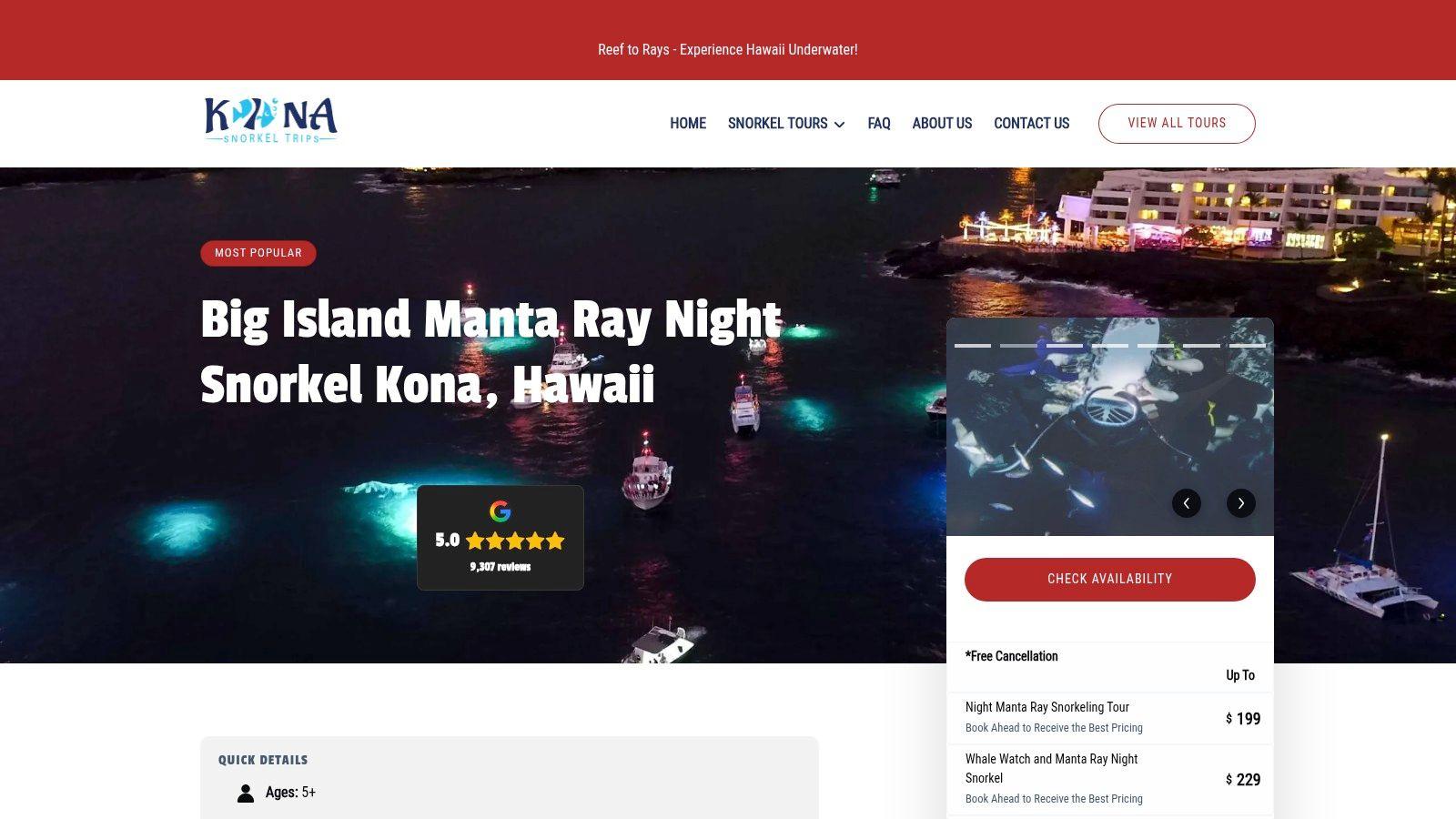
If you want the straightforward Kona option with a focused manta trip and a clear booking path, Kona Snorkel Trips runs guided night snorkels built around the local conditions that make this experience work.
Kona Snorkel Trips offers guided manta ray night snorkels built around the way Kona's resident rays feed, with clear briefings, surface-level viewing, and small-group logistics that keep the night manageable. If you are ready to see manta ray swimming in Hawaii the right way, visit Kona Snorkel Trips and choose the trip that fits your comfort level and your schedule.
Keep reading
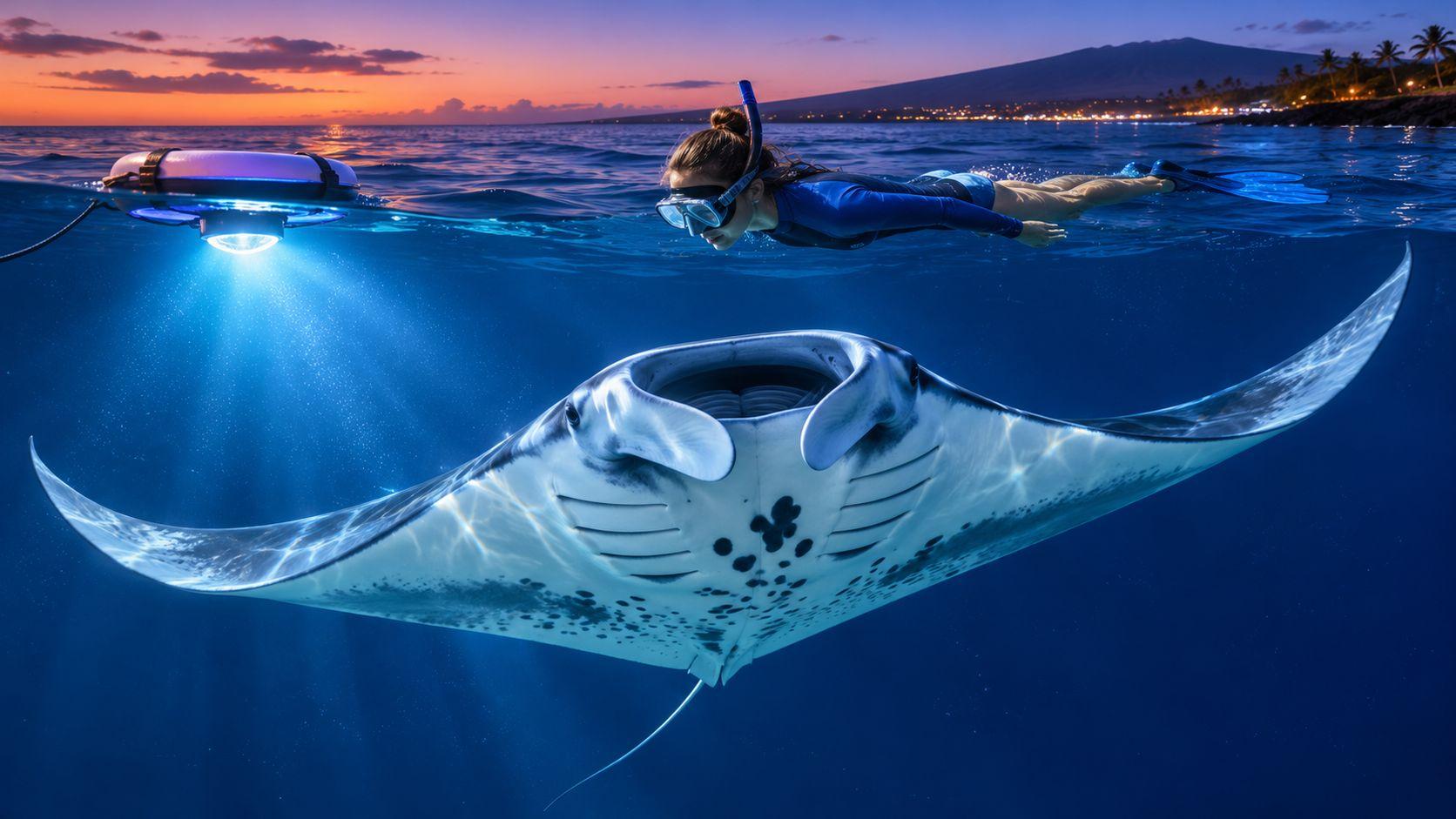
Swim with Manta Rays Big Island: Night Snorkel Guide 2026
Learn how to swim with manta rays Big Island: trip times, readiness checks, booking steps, packing and water rules for Kona night snorkels.
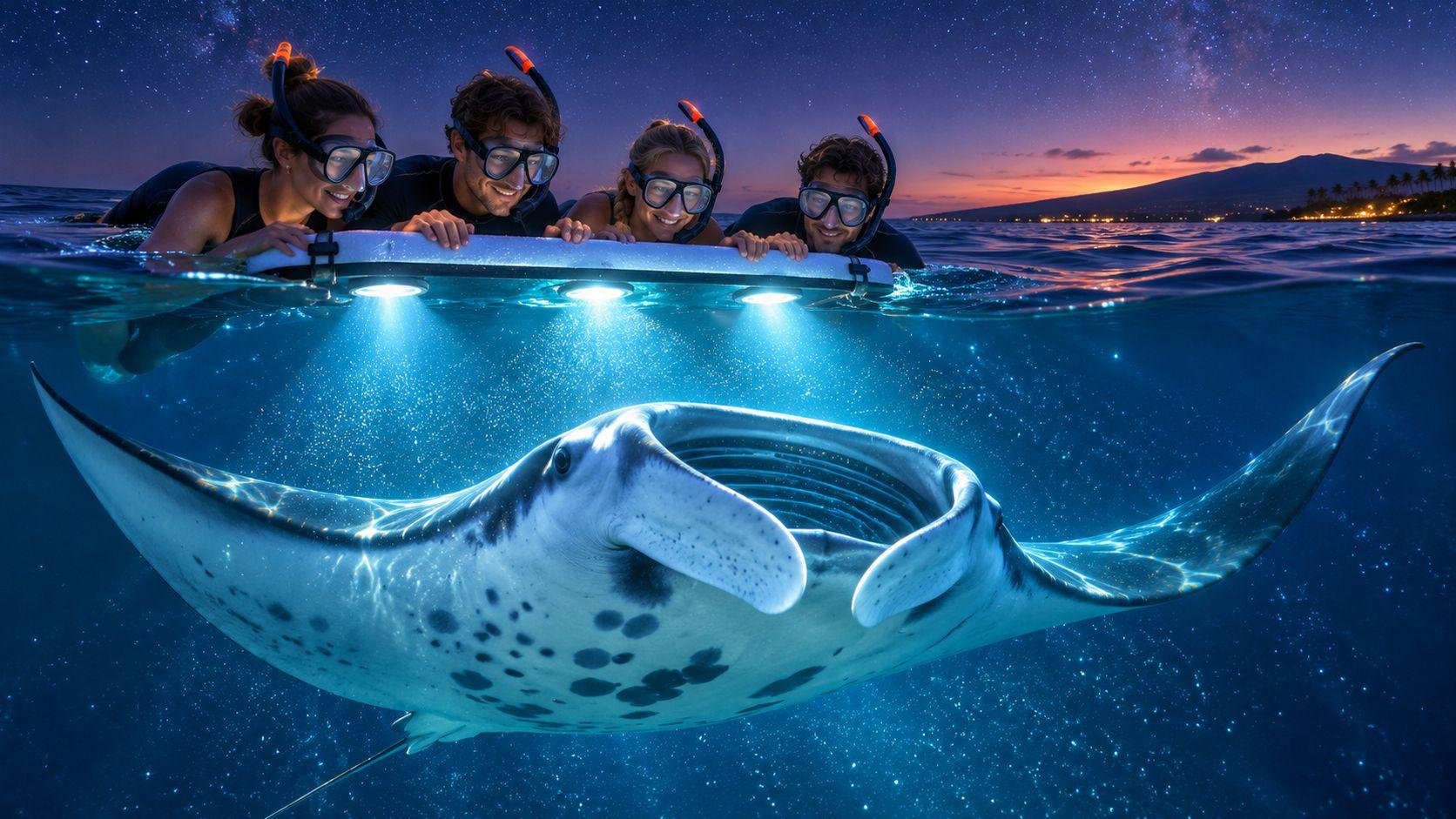
Kona Manta Ray Night Dive: What to Expect and How to Book
Plan your Kona Manta Ray Night Dive: timing, safety rules, what to pack, conservation tips and how to book a trusted night manta tour.
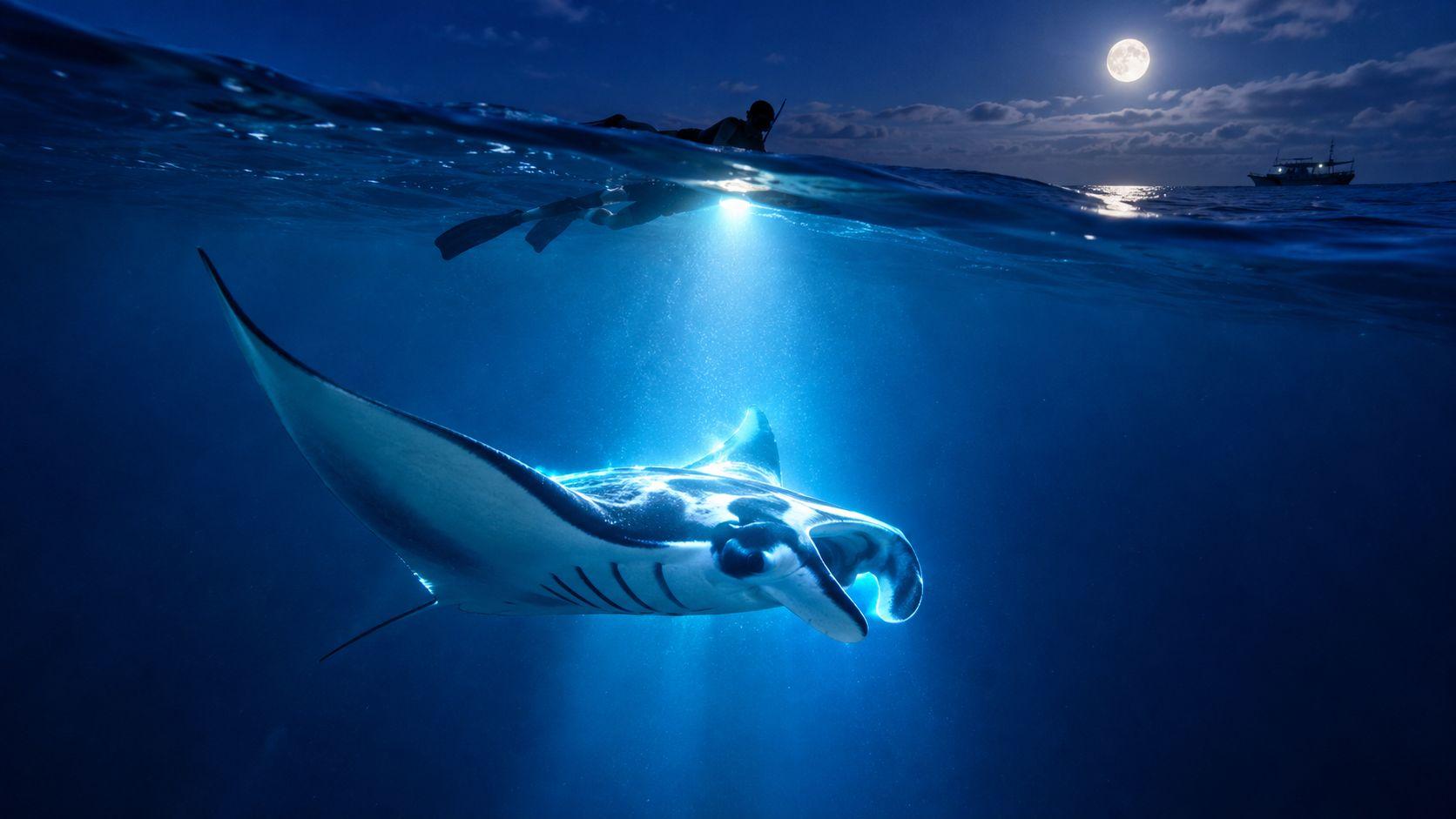
Manta Ray Night Dive Kona: A Complete Insider Guide
Plan your manta ray night dive Kona experience with this practical guide. Compare snorkel vs scuba, best seasons, safety, pricing, and how to book.