
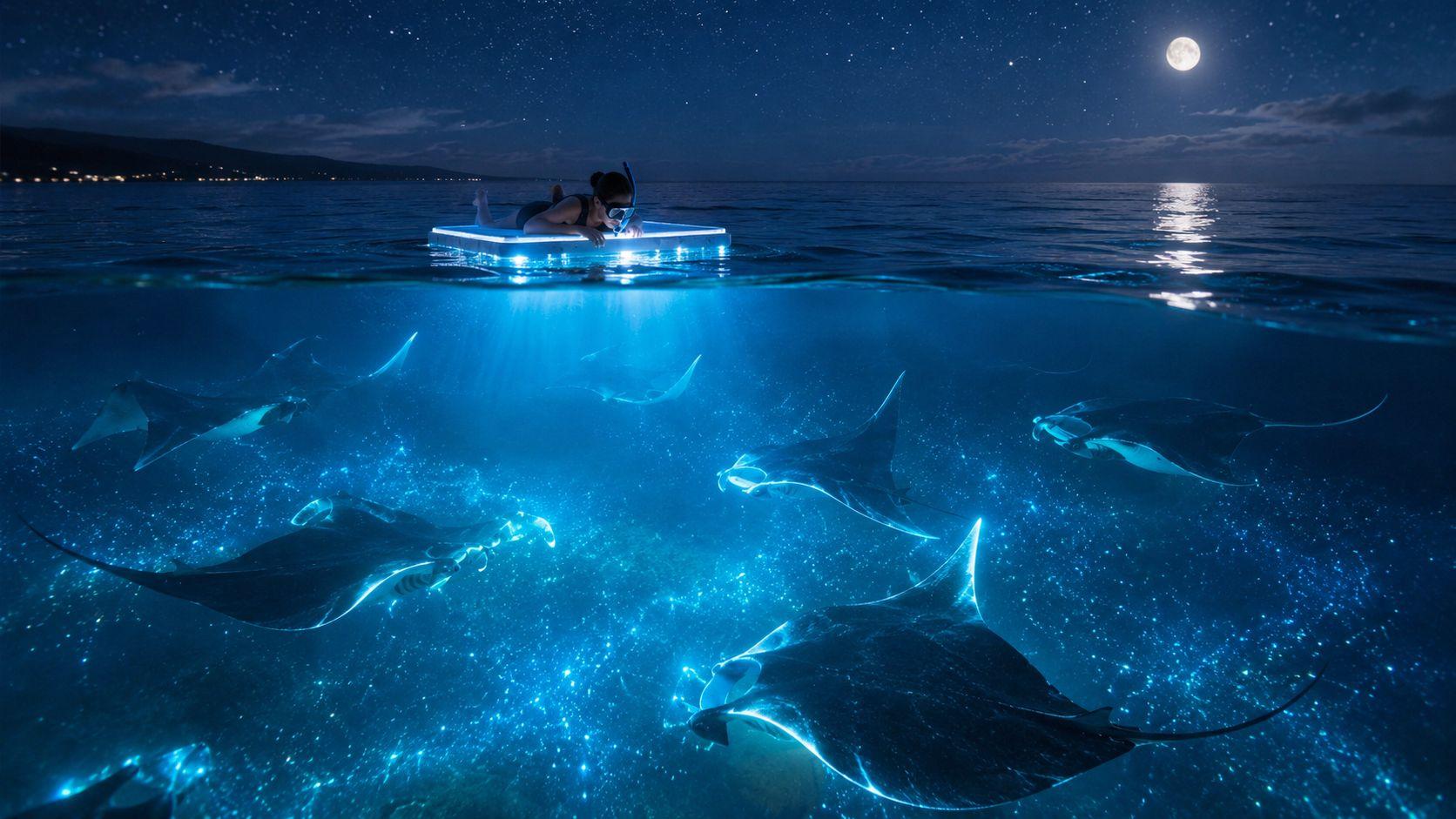
You may be comparing tour times, wondering whether you need to be a strong swimmer, or trying to picture what it feels like to enter the Pacific after sunset. The first few minutes can feel unfamiliar. Then the lights come on, plankton gathers below the surface, and a manta ray rises through the dark water. The experience is thrilling, but the best encounter depends on more than luck. It also depends on preparation, guide oversight, and respectful wildlife behavior.
Discovering the Magic of Manta Ray Snorkeling
You're floating at the surface with your hands resting on a lighted board. Beneath you, the ocean seems almost black, until a pale shape appears at the edge of the glow. Broad wings move in a slow, graceful rhythm, and the manta turns upward through the plankton-rich water before gliding away again.
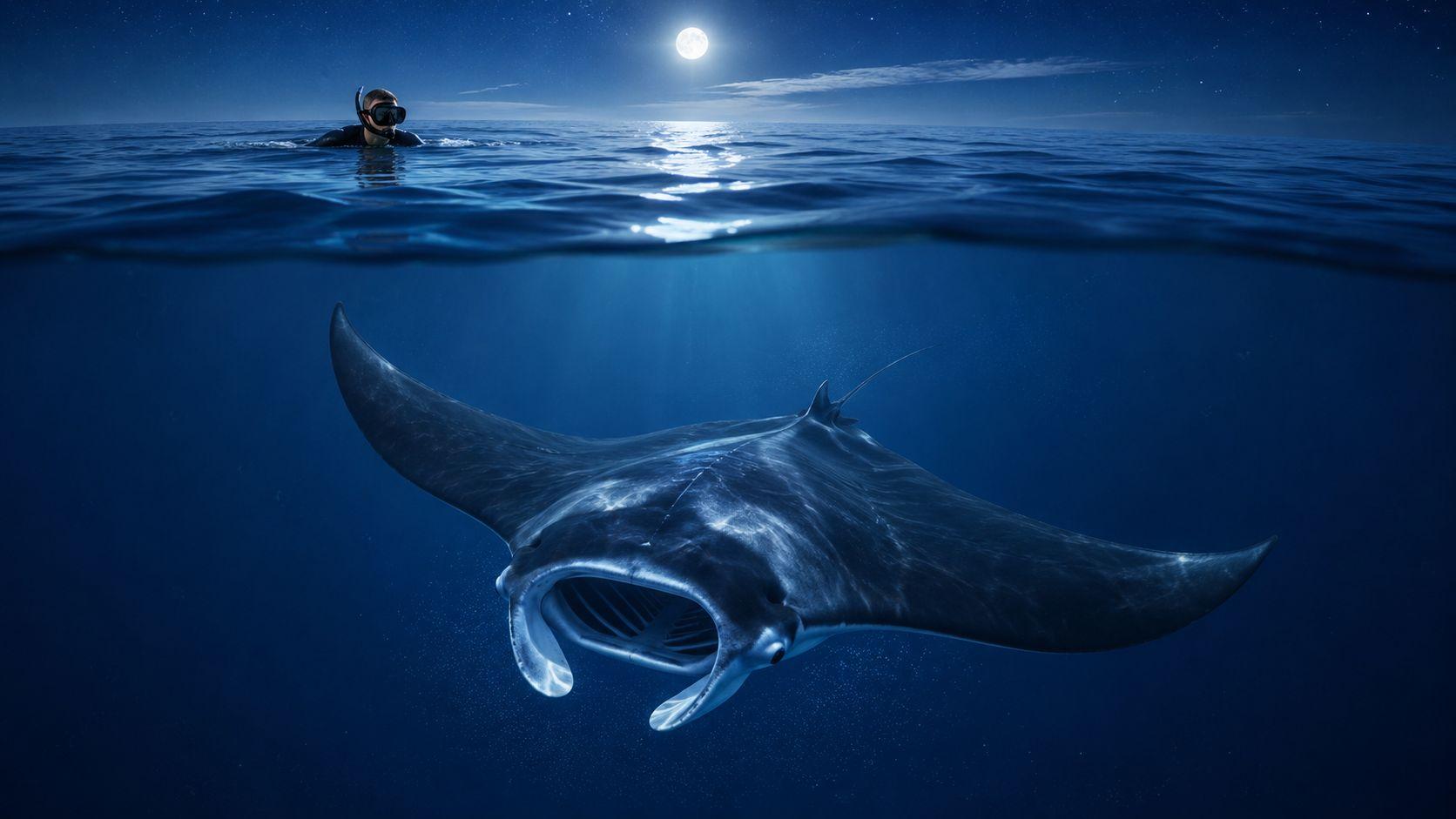
That's the appeal of manta ray snorkeling in Kona. You aren't visiting an aquarium or watching a trained performance. You're observing wild animals in the water they use for feeding and movement. The animals decide how close to come, how long to remain, and when to leave.
A global wildlife experience
Manta encounters have grown into a substantial wildlife-tourism activity. Research by Oregon State University authors estimates that more than 1 million people snorkel or scuba dive with manta rays worldwide each year, producing over US$140 million in direct economic value. The published Oregon State University research places manta tourism in the same broad conversation as other internationally recognized wildlife experiences.
Hawaii is one of the major markets within that activity. The state receives more than 8 million visitors annually, and approximately 40% participate in marine activities, translating to more than 3 million snorkeling participants and over 200,000 scuba divers each year across Hawaii. Not every visitor encounters a manta, but the figures show why Kona has become such an important meeting place for marine travelers.
Kona's principal manta viewing sites have hosted snorkeling and diving activity since 1984, and the research identified at least 42 operators serving those locations. Tours can also place 100 to more than 300 participants at a site at one time, which explains why visitor behavior and site management matter as much as the spectacle.
The ocean sets the terms. A good tour doesn't force an encounter. It gives you a safe, well-managed way to be present when a manta chooses to appear.
For a deeper look at why the Kona Coast is unusually suited to this experience, explore why Kona tops Hawaii for manta ray night snorkeling. The magic feels spontaneous from the water, but the setting, food supply, operating practices, and long history of local tours all contribute to the experience.
Understanding Manta Ray Behavior and Night Feeding
The lights used during a Kona night snorkel don't shine into the ocean to “summon” a manta. They create a concentrated feeding opportunity by attracting plankton, the small drifting organisms that manta rays filter from the water. The rays follow the food, not the boats or the swimmers.
Artificial lights mounted beneath floating boards or rafts point downward. Plankton gathers in the illuminated water, and mantas may make repeated passes through that area with their mouths open. This guide to what manta rays eat during Hawaii night snorkels helps explain why the feeding scene can look choreographed even though no animal has been trained to follow a routine.
Feeding and cleaning are different behaviors
A manta may circle through the light several times, disappear into the darkness, and return from another direction. That doesn't automatically mean the animal is frightened or that the encounter has ended. A 2024 Seychelles study documented 11 identified reef manta rays moving repeatedly between surface-feeding areas and cleaning stations across four survey days, showing that temporary departures can be part of normal movement between activities. The study in Frontiers in Marine Science also describes cleaning stations as places connected with social interaction and possible improvements in foraging efficiency.
A cleaning station is a location where manta rays pause while smaller organisms remove parasites and other material from their bodies. The behavior is especially important to protect because a manta may remain relatively stationary there, making it more vulnerable to swimmers who approach too closely or block its route.
This distinction helps you interpret what you see:
- Repeated passes: Often consistent with feeding in the illuminated water.
- A brief disappearance: May indicate movement between feeding and cleaning areas.
- A sharp turn or abrupt flight: Can signal that the animal wants more space.
- A calm approach: Doesn't give anyone permission to touch or pursue it.
Manta rays are large, powerful wild animals, but their size doesn't make every movement dramatic. Their turns can be quiet and controlled. Watch the entire body rather than focusing only on the cephalic fins near the head. Guides can help you understand whether a ray is feeding, traveling, or showing signs that the group should adjust its position.
What to Expect on Your Kona Night Snorkel Tour
As the sun drops behind the Kona coast, your evening starts on the boat, before any manta appears. The crew checks your equipment, explains how to enter the water, and shows you how to hold the flotation aid. You'll also learn how to stay with the group and signal if you feel tired, cold, or uncomfortable. For a first-time night snorkeler, this briefing turns an unfamiliar setting into a series of simple steps.
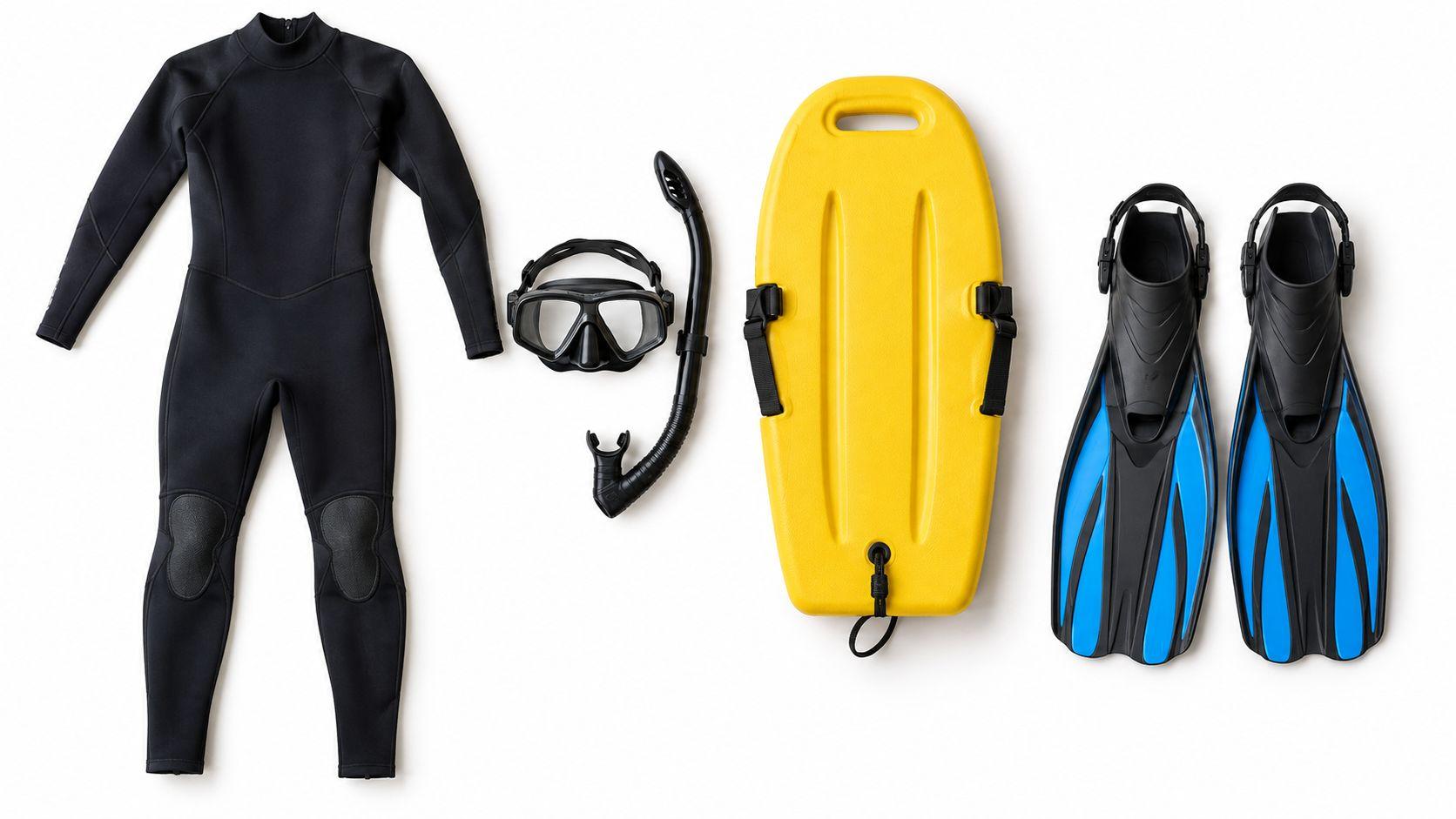
Your equipment commonly includes a mask and snorkel, fins, a wetsuit or shorty wetsuit, and flotation support. Operators provide different combinations, so confirm what your booking includes. Fit matters more than brand. A well-sealed mask and comfortable snorkel let you breathe calmly instead of stopping every few minutes to adjust your gear.
For a fuller timeline, read what to expect on a manta ray night snorkel in Kona, from harbor departure through the return trip.
From harbor to the water
The boat reaches the viewing area after sunset. Use the ride to ask questions, test your mask seal, and tell a guide if you feel nervous, get motion sickness, or have limited snorkeling experience. Small adjustments on the boat can prevent bigger problems in the water.
At the site, the crew sets a floating board or raft with downward-facing lights on the surface. The Hawaii County safety assessment describes guests remaining at the surface while guides supervise the activity, and it discourages free-diving. The lights draw plankton toward the viewing area, creating conditions in which mantas may approach without anyone chasing them.
Entry may happen one person at a time or as a controlled group, depending on the boat and operator. Hold the approved flotation aid, relax your body, and use small, steady fin movements. The board provides a stable reference point, much like a handrail in a dark room.
The first minute feels different
At night, familiar visual points disappear. Your guide's voice, the board, and the illuminated water become your reference points. If anxiety rises, keep your face above the surface for a moment, slow your breathing, and tell the crew. You do not need to force yourself through discomfort.
The NOAA-hosted Manta Ray Viewing Guide recommends staying at the surface instead of diving into the feeding area. It also advises pointing lights downward and using a snorkel ring or similar flotation device when groups of four or more need to stay together above the lights.
When the session ends, follow the guide back to the boat. Climb the ladder slowly, use the handholds, and accept assistance from the crew. The ride home often gives the experience time to settle, especially for guests who arrived unsure about being in open water after dark.
Conservation Ethics and Wildlife Etiquette
Responsible manta ray snorkeling requires more than remembering not to touch. Your position in the water, fin technique, noise, camera use, and response to animal behavior can all affect the quality of the encounter.
The clearest operational rule is to maintain a minimum viewing distance of 5 meters, particularly around cleaning stations. In a Maldives video study, researchers analyzed 407 human and manta interactions at feeding aggregations and 38 at cleaning stations. At cleaning stations, 92% of undisturbed manta behavior consisted of cleaning, while 8% consisted of traveling. The study on manta tourism, human interactions, and behavioral impacts.pdf) found that encounters were more likely to cause disturbance when observers came within 5 meters, and that cleaning behavior was more readily interrupted than feeding.
Position matters as much as distance
Stay beside the illuminated area rather than directly over it. Don't hover above a cleaning station, block a travel corridor, or spread away from the group in an attempt to claim a better view. Mantas need open water to turn, feed, and leave.
Use slow, compact fin movements. Fast kicking stirs sediment and makes it harder for everyone to see. It also creates unnecessary turbulence near an animal that may be trying to hold a steady position.
- Let the manta choose: If a ray approaches, remain still and allow it to determine the distance.
- Keep your hands to yourself: Never touch, chase, grab, ride, or swim after a manta.
- Control your equipment: Keep cameras, straps, and loose accessories close to your body.
- Respect avoidance: If a manta redirects sharply or repeatedly leaves, give it more room.
- Follow the guide's signals: A guide may move the group even when guests can't yet see the reason.
Touching can remove the manta's protective mucus coating. Flash photography, loud noise, underwater vehicles, and swimmers positioned beneath a manta can also create avoidable disturbance. The practical standard is observation, not interaction. Read manta ray night snorkeling ethics before your trip, especially if you're bringing children or a large camera.
A manta's approach is an invitation to watch, not an invitation to touch.
Choosing the Right Time and Tour Type
Kona manta rays can be encountered throughout the year, but no responsible operator can promise a particular number of animals or a guaranteed close pass. The food may shift, weather can affect the water, and wild animals don't follow an itinerary.
A better question than “Which month guarantees mantas?” is “Which operating conditions will help me stay comfortable, attentive, and respectful?” Look at sea conditions, departure location, time on the water, included thermal protection, flotation support, and how the crew manages the group.
Small groups and busy sites
Crowding changes more than personal comfort. It affects sightlines, fin traffic, guide visibility, and the amount of space available for animals to move. In Kona Coast research, 78% of participants felt crowded by tour boats, 82% by snorkelers, and 69% by scuba divers. 79% of snorkelers reported conflicts with other snorkelers or divers. The Kona participant social survey shows why a high-density experience can be less satisfying even when mantas are present.
A smaller group may make it easier to hear instructions, remain together, and notice when a child or nervous swimmer needs help. A larger operation may offer more departure flexibility or a lower price, but ask how it prevents guests from spreading across the site and how many guides actively supervise the water.
| What to compare | Why it matters |
|---|---|
| Group organization | A clustered group leaves clearer travel space for mantas and better sightlines for guests. |
| Flotation support | Boards, rings, or other aids help tired swimmers remain calm at the surface. |
| Guide oversight | Active supervision helps the crew respond to anxiety, separation, or changing animal behavior. |
| Wildlife rules | Clear distance and no-touch policies indicate that the operator treats the encounter as observation. |
| Permits and operations | Hawaii County's assessment notes that operators need a Commercial Use Permit for State Ocean Waters and either a Harbor Commercial Use Permit or Launch Ramp Permit, depending on vessel operations. |
For families, prioritize flotation, guide access, and simple logistics over a promise of a dramatic close-up. First-time snorkelers should ask whether the crew offers help with mask fitting and water entry. Photographers should choose an operator that explains how to keep equipment from obstructing the group or encouraging pursuit.
Booking Your Premium Manta Ray Experience
A good booking decision matches the tour with the people in your group. If one guest is a hesitant swimmer, confirm the flotation system and guide support. If everyone wants a quieter wildlife experience, ask about departure capacity and how the crew handles spacing at the viewing site.
Kona Snorkel Trips is described by its publisher as Hawaii's top rated and most reviewed snorkel company, and it offers a private manta ray night snorkel departing from Honokohau Harbor. The experience includes snorkeling equipment, a shorty wetsuit, flotation aids, and a custom-built lighted snorkel board, according to the company's product information. You can review the Kona manta ray night snorkel tour before choosing a departure.
The practical value of a small-group format is personal attention. Guests can ask questions before entering, receive help with equipment, and remain connected to the guide while watching the animals. That structure supports the conservation principles described earlier because swimmers are less likely to scatter, chase a ray, or drift into a restricted position.
An exceptional alternative when you're comparing a Manta Ray night snorkel tour is Manta Ray Night Snorkel Hawaii. Compare each company's departure point, included gear, group structure, cancellation terms, and safety briefing rather than choosing from photographs alone.
Frequently Asked Questions About Manta Snorkeling
Can manta rays hurt snorkelers?
Manta rays are wild animals, so treat the encounter as wildlife observation rather than a visit with a tame pet. The safest rule is simple: watch without touching, chasing, grabbing, or riding. Contact can harm the manta by removing its protective mucus coating, even when a swimmer means no harm.
A calm swimmer is also easier for a manta to avoid. Keep your hands close to your body, remain at the surface, and let the animal decide whether to pass near the group. If it turns suddenly, allow it to go rather than following. This protects the animal and reduces the chance of a startled collision.
What if I'm not a strong swimmer?
Tell the crew before entering the water. A correctly fitted mask, flotation aid, and clear briefing can make the experience more manageable, but flotation equipment does not replace guide supervision or your own judgment. If you feel tired, cold, overwhelmed, or begin swallowing water, signal the guide and return to the boat.
You do not need to swim toward the illuminated area after entering. Hold the approved board or ring, breathe slowly, and use small fin movements. Relaxed breathing helps you conserve energy and keeps your movements predictable for the mantas.
Is the water completely dark?
The surrounding ocean will be dark, while the viewing area below the group is illuminated. Operators use downward-facing lights to attract plankton, and snorkelers stay at the surface around the lighted board or raft. The scene is closer to looking through a focused window than swimming in a fully lit pool.
If darkness makes you uneasy, keep one hand on the flotation aid and stay near your group. Do not aim a light at a manta's eyes. The NOAA viewing guidance recommends downward-facing snorkel lights, which help people see without turning the animal into a target.
How close will the mantas get?
No responsible guide can promise an exact distance. A manta may pass close to the group, remain below you, circle through the feeding area, or leave before returning. The 5-meter viewing buffer provides the right operating principle, even if an animal approaches on its own.
If a manta comes closer than expected, stay still. Keep your fins controlled, avoid reaching out, and do not kick backward or move beneath it. The animal needs room to choose its path. In a busy site, this calm behavior matters because several swimmers moving at once can turn a natural pass into pressure on the manta.
What should I do if another swimmer blocks my view?
Do not push through the group or chase the manta for a clearer angle. Move slowly to the side while remaining inside the guide's designated area, and keep your fins away from other swimmers. Guides may rotate positions or close gaps so the group can share the viewing area without spreading across the site.
A good encounter is not defined only by the closest pass. Comfort, orderly spacing, and a manta's freedom to feed and travel matter just as much, especially where many visitors gather.
Kona Snorkel Trips offers a small-group manta ray night snorkel with flotation aids, snorkeling equipment, a shorty wetsuit, and a lighted viewing board for observing wild mantas in Kona. Visit Kona Snorkel Trips to compare those inclusions with your needs and check available dates.
Keep reading
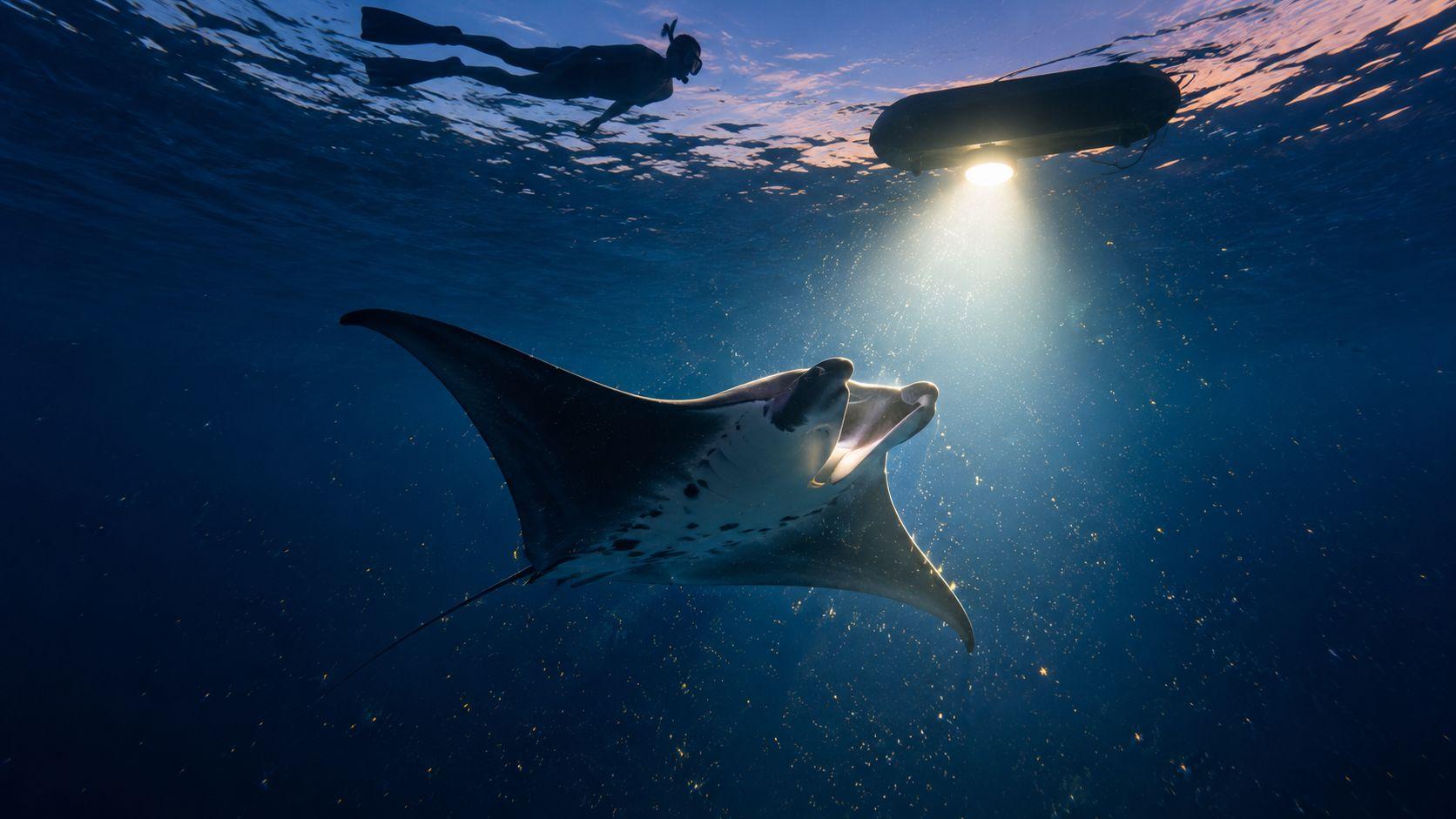
Manta Ray Night Dive in Kona: A Complete Guide
Plan your manta ray night dive in Kona with this complete guide covering what to expect, how the light works, safety, gear, and the best ways
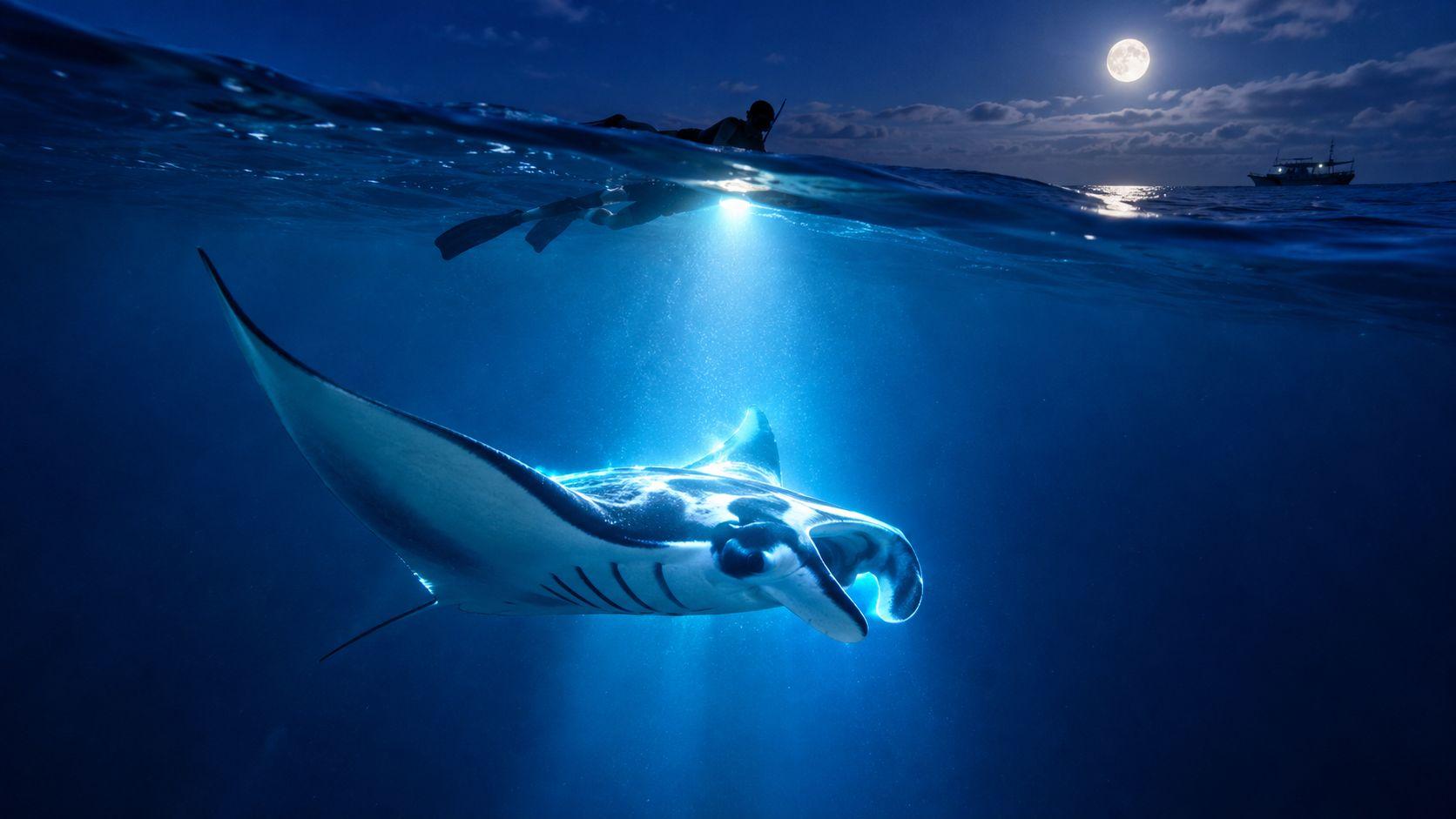
Manta Ray Night Dive Kona: A Complete Insider Guide
Plan your manta ray night dive Kona experience with this practical guide. Compare snorkel vs scuba, best seasons, safety, pricing, and how to book.
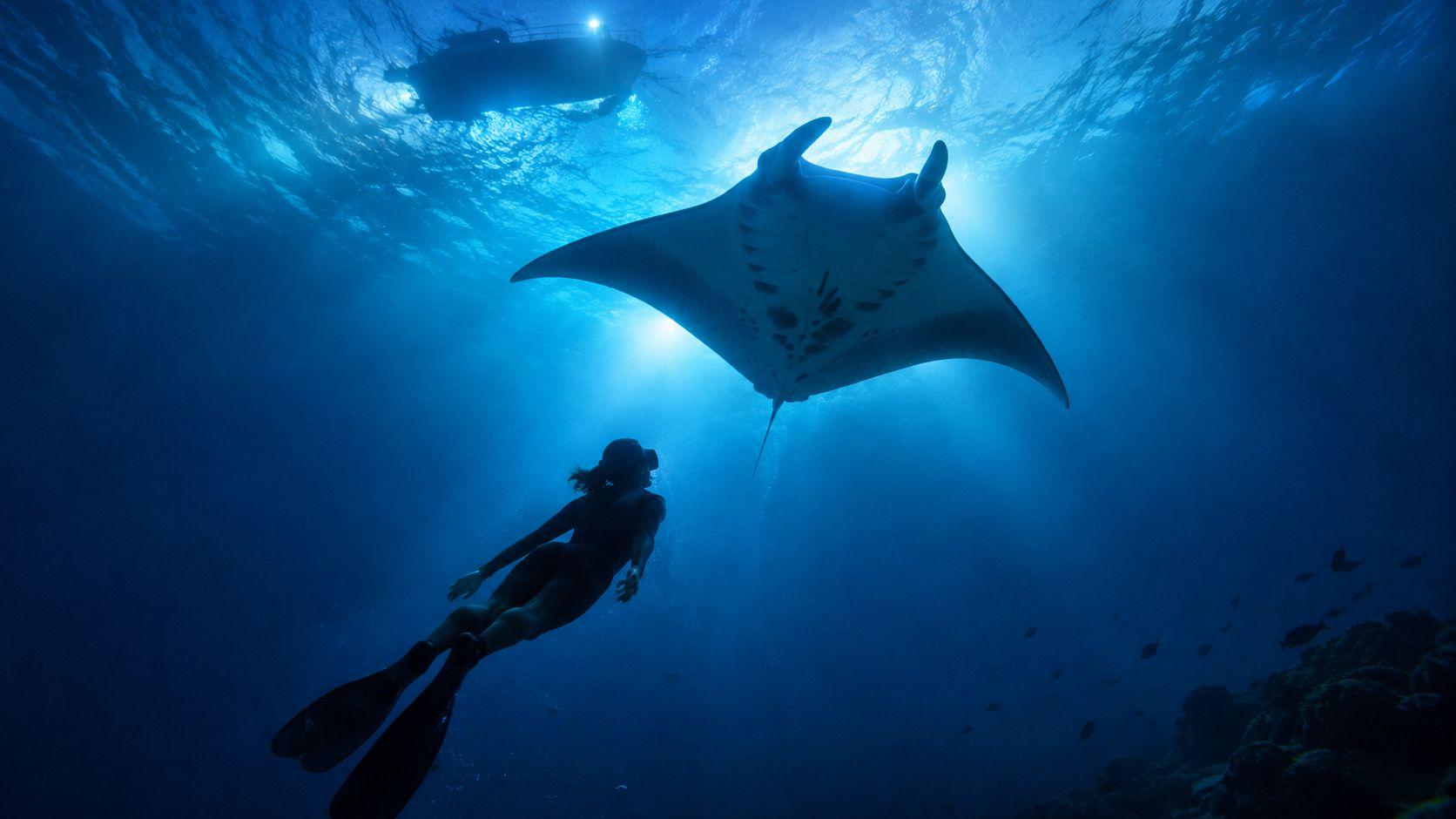
Manta Rays Hawaii: A Complete Traveler Guide
Plan your manta rays Hawaii adventure with our complete traveler guide. Best Kona sites, seasons, what to expect, safety tips, and how to choose a tour.