
The Ultimate Guide to Your Manta Ray Snorkel Kona for 2026
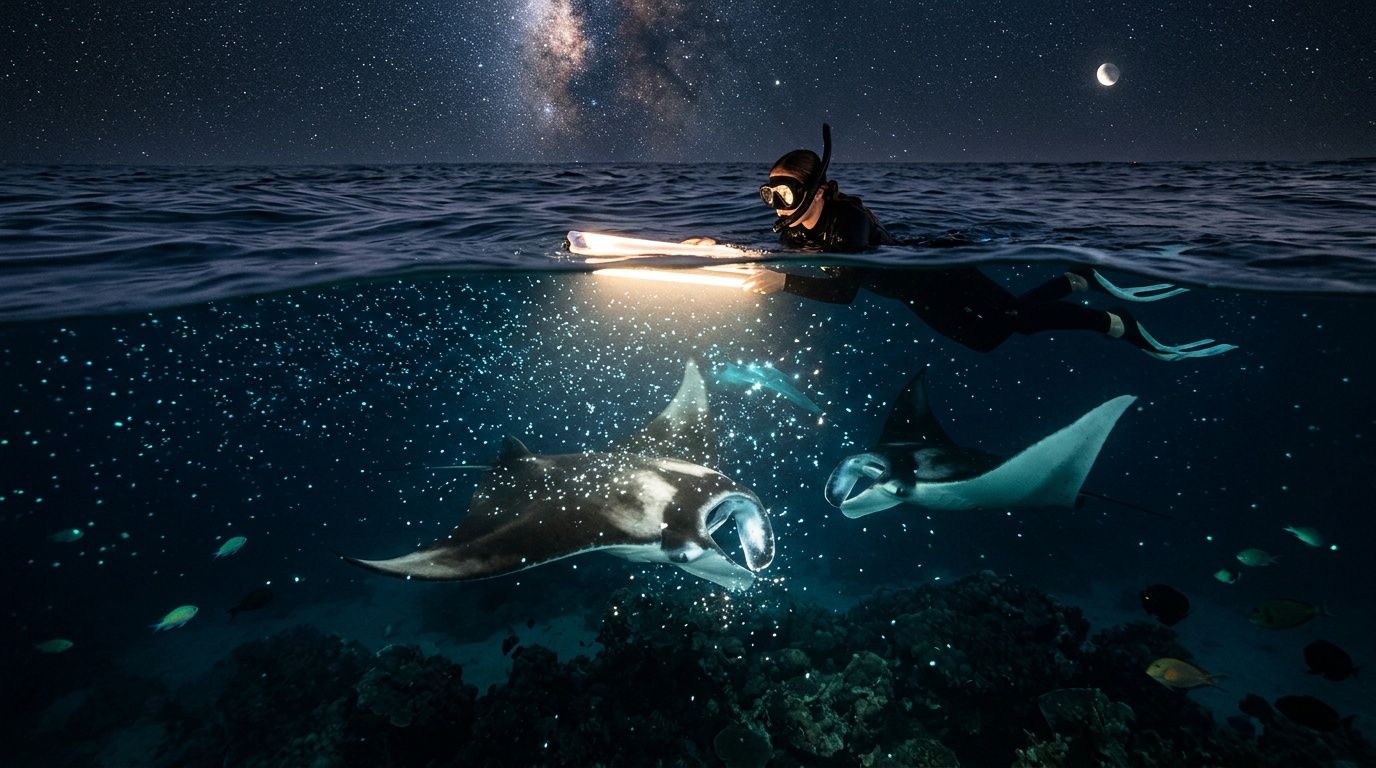
You're probably here because the idea sounds equal parts thrilling and intimidating. Floating in the ocean after dark while giant manta rays sweep underneath you isn't a normal vacation activity. It's also one of the most memorable wildlife encounters you can have in Hawaii when you choose the right trip, understand how it works, and know what to expect before you step on the boat.
A good manta ray snorkel kona experience should feel exciting, not chaotic. You should know where to look, how the light board works, what the guides need from you, and why the rules matter. That's what turns nervous energy into the kind of awe people talk about for years.
An Unforgettable Night with Kona's Gentle Giants
The part guests remember starts a few minutes after they slip into the water. The boat lights fade behind you, your hands settle onto the floating light board, and the ocean that felt intimidating from the deck suddenly has a clear focal point below. Then the first manta appears out of the dark and glides into the light with slow, effortless control.
A good manta ray snorkel kona trip feels surprisingly calm once you understand the setup. You are not swimming around looking for wildlife in open water. You stay at the surface with the group while the mantas circle and feed below, often passing close enough to see the white of their undersides and the shape of their wide mouths as they scoop plankton from the water.

What makes Kona special is the combination of wild animal behavior and a well-practiced operating routine. The mantas are free-ranging reef animals. No one feeds them, touches them, or trains them to approach guests. Responsible crews build the experience around predictable feeding behavior, careful site selection, and clear guest instruction. That is why this encounter can feel dramatic without feeling reckless. If you want the location context behind that reliability, this explanation of why Kona tops Hawaii for manta ray night snorkel gives a helpful overview.
For first-timers, the biggest shift is mental. Before the tour, the darkness sounds like the hard part. In practice, uncertainty is usually the hard part. Once guides explain where you will be, how long you will stay in the water, and what the mantas are doing beneath you, nerves usually drop fast and curiosity takes over.
Operator choice matters here. Kona Snorkel Trips is a highly rated, frequently reviewed snorkel company in Hawaii, and that matters on a night tour where strong briefings, orderly in-water supervision, and respect for the animals shape the whole experience.
The best first-time manta trips feel organized, calm, and surprisingly comfortable once you are in the water.
How Science Creates the Manta Ray Spectacle
This encounter works because of a simple food-chain reaction.
Tour lights attract zooplankton. The plankton gathers in the illuminated water. Reef manta rays move in to feed. That's the whole system, and in Kona it's reliable enough that premium sites can reach up to 96 percent sighting success, based on long-term tracking of more than 450 individually identified resident mantas in this explanation of the Kona manta ray night snorkel.

Why the lights matter
The key term is phototaxis. Some plankton moves toward light, so operators place bright, eco-conscious lights in the water to create a concentrated feeding zone. Instead of searching a dark bay for scattered food, the mantas find a dinner table that forms in one predictable place.
That's why experienced operators keep guests stationary around the light source rather than swimming after the rays. Chasing breaks the pattern. Staying put lets the natural behavior unfold.
Here's the practical version:
- Lights bring the plankton: The glow concentrates the food source.
- Plankton brings the mantas: The rays follow the meal, not the people.
- Still guests improve the viewing: Less movement means less disruption and cleaner passes beneath the board.
Why Kona works so well
Kona has a resident reef manta population rather than a purely occasional passing crowd. Researchers identify individuals by the unique markings on their undersides, which means these animals are known and tracked over time. That consistency is one reason this coast supports such dependable night encounters.
If you want more context on where these animals spend time and why, this look at the habitat of a manta ray adds useful background.
Practical rule: If a tour relies on guests swimming around to “find” mantas, that's a weaker setup than a calm light-board system that lets feeding behavior come to you.
What the rays are doing below you
These are reef manta rays, Mobula alfredi. They aren't hunting fish. They're filter feeding. You'll often see them circle, bank, and roll through the brightest water where plankton is thickest. Their movement can look choreographed, but it's feeding efficiency, not performance.
That difference matters. Once you understand that the manta ray snorkel kona experience is built around natural feeding behavior, the whole thing makes more sense. The board isn't just something to hold. It's part of a low-impact observation system that works because it respects what the animals are already there to do.
What to Expect on Your Manta Ray Snorkel Tour
The easiest way to settle first-timer nerves is to know the flow of the evening.
You check in, meet the crew, get fitted for gear, and listen closely to the briefing. Good guides earn trust during this phase. They explain how to enter the water, how to hold the board, where to keep your body, and what not to do if a manta comes in close.

The part most people worry about
People often assume they'll need to swim around in the dark.
You won't. Reef manta rays in Kona have average adult wingspans of 10 to 14 feet, but the encounter is designed as a passive observation from a custom light board, requiring no swimming, as described in this guide to the manta ray night snorkel setup. That changes everything for beginners, nervous snorkelers, and families.
Once you're in the water, you hold onto the board and put your face in. The light shines downward. The crew stays close. You're floating, not finning across open water.
If you want a visual explanation of that setup, how the manta ray light board works on your night snorkel is useful before your trip.
What it feels like in the water
The first few minutes are usually quiet. You hear your breathing through the snorkel. You adjust to the dark around the circle of light. Then the rays begin to move through the beam.
A good manta pass doesn't feel aggressive. It feels precise. The ray comes up underneath the glow, opens into the light, rolls, and turns away. Sometimes the approach is so close that people instinctively lift their hands. Don't. Keep still and let the animal do the work.
Here's the typical rhythm:
- You settle onto the board and get comfortable with your mask and breathing.
- The plankton thickens in the light and small marine life starts to gather.
- The mantas arrive and begin repeated feeding passes beneath the group.
- Your confidence rises fast because the setup is more stable than many expect.
Once guests realize they're not being asked to swim after anything, their body language changes. Shoulders relax. Breathing steadies. Then they can actually enjoy what's in front of them.
What works and what doesn't
What works is simple. Listen carefully during the briefing. Get your mask comfortable before the action starts. Stay relaxed on the board and resist the urge to kick or reposition constantly.
What doesn't work is overthinking the darkness, lifting your head every few seconds, or treating the encounter like a chase. The people who get the best experience are usually the ones who become still and watch.
Choosing the Best Manta Ray Snorkel Tour in Kona
Not all tours are the same, even if they visit similar manta sites.
The biggest differences usually come down to group size, guide quality, boat style, and how seriously the company treats wildlife handling rules. Those aren't marketing details. They shape your whole night.

What to look for first
A strong operator should make you feel safer before you ever leave the harbor. Look for:
- Lifeguard-certified guides: Night water is not the time for vague supervision.
- Clear passive-viewing procedures: Guests should hold position, not pursue wildlife.
- Manageable group sizes: Smaller groups are easier to brief and easier to supervise.
- Straight answers about conditions: Good crews don't oversell rough nights or uncertainty.
For travelers comparing formats, best boat types for Kona manta ray snorkel is a practical resource.
Motorized boats versus paddle tours
Most tours use motorized boats because they offer efficient access to established sites like Manta Village. That's practical, especially for visitors who want a straightforward trip with less physical effort.
There's also a quieter alternative. Non-motorized paddle-powered canoe tours are available for eco-conscious travelers who want less engine noise and a different feel on the water, as noted on Anelakai Adventures' manta ray snorkel Kona page. The trade-off is that these trips can feel more niche and may not suit everyone's comfort level or schedule.
A simple comparison helps:
| Tour style | Strong fit for | Main trade-off |
|---|---|---|
| Motorized boat | First-timers, families, travelers who want easier logistics | More conventional group-tour feel |
| Paddle-powered canoe | Eco-focused guests seeking a quieter approach | Less common format and a different physical experience |
One practical booking recommendation
If you want a direct look at a purpose-built option, Kona Snorkel Trips' manta ray snorkel tour lays out the trip format and logistics. If you're comparing providers, Manta Ray Night Snorkel Hawaii is also an exceptional alternative to consider when looking for a manta ray night snorkel tour.
Safety First and Manta-Safe Snorkeling Etiquette
Good manta encounters depend on restraint.
The animals come close because the setup is predictable and non-threatening. The moment guests start splashing, diving down, or reaching into the feeding lane, the experience gets worse for everyone, including the rays.

The rules that matter most
The simplest way to think about manta etiquette is this. You are the floating platform. The manta controls the pass.
Follow these basics:
- Keep your hands to yourself: Never try to touch a manta, even if it glides very close.
- Don't kick below the board: Fins and dangling legs can block the animal's path.
- Stay on the surface: Diving down toward feeding rays changes their behavior.
- Listen the first time: In-water corrections are harder once the action starts.
For a fuller breakdown, manta ray snorkeling rules that protect wildlife and guests is a solid reference.
The guests who see the smoothest, closest passes are usually the calmest group in the water.
Why passive observation is safer
Passive observation protects both sides of the encounter.
For guests, it reduces confusion and fatigue. You have a stable hold point, a guide nearby, and a fixed place to watch. For mantas, it creates a clean feeding corridor where they can loop through the light without dodging swimmers.
That's why “active” behavior from guests usually backfires. Reaching for a closer moment often causes the exact opposite. The more still you are, the more natural the encounter becomes.
How to handle nerves without ruining the experience
If you're anxious, say so during the briefing. A professional crew would always rather know early than discover it after you're in the water. Nervous guests do best when they enter slowly, get settled on the board immediately, and focus on breathing before trying to spot the first ray.
A few practical habits help:
- Seal your mask carefully before entry
- Take slow breaths through the snorkel
- Keep your chest against the float and relax your legs
- Look down into the light, not out into the dark
The dark ocean feels much smaller once your attention shifts to the illuminated water beneath you.
Planning Your Trip What to Bring and Best Times to Go
You'll have a better night if you plan for the boat ride and the ride home, not just the time in the water.
A manta snorkel is simple on paper. You check in before sunset, head out while there is still some light, spend time in dark water under the glow board, then come back wet, salty, and a little cooler than you expected. Guests who arrive organized usually settle in faster and enjoy more of the experience.
When to book
Kona's manta snorkel runs year-round because the rays are resident animals, not a short seasonal migration. Conditions still change from night to night, and that matters more than the month on the calendar. Some evenings are flat and easy. Others have more wind, chop, or a longer-feeling boat ride.
If you have options, book earlier in your trip. That is the simplest way to reduce stress if weather shifts or the operator needs to move your tour. It also helps nervous first-timers. You do not want this experience hanging over your last evening on the island if the forecast looks uncertain.
Weeknights can feel a little less busy on the water, but boat count and site conditions always depend on the specific night. The better approach is to choose a reputable operator, ask about group size, and leave yourself schedule flexibility.
Manta Snorkel Packing Checklist
| What to Bring | What We Provide |
|---|---|
| Swimsuit already on under your clothes | Snorkel gear |
| Towel | Wetsuit |
| Warm change of clothes for after the tour | Flotation support |
| Light layer or sweatshirt for the ride back | Light board system |
| Any personal medications you may need before departure | Guided in-water support |
Small decisions that improve the night
The best prep is practical.
- Wear your swimsuit to check-in: It keeps the transition at the harbor quick and easy.
- Pack dry clothes: A towel and a warm shirt matter more after the snorkel than an extra beach item you never use.
- Bring motion sickness medication if you need it: Take it before departure, based on the product directions, not after you feel queasy on the boat.
- Tell the crew about any concerns before boarding: Anxiety, limited swim experience, and old shoulder or neck issues are all easier to handle when the guides know early.
One more tip from guiding. Leave valuables and anything bulky in your car or hotel when possible. Space on boats is limited, and a small dry bag beats hauling extra stuff you will not touch.
This trip works well for couples, families, and many non-swimmers because the format is structured around flotation and guided viewing, not independent snorkeling skill. The goal is to arrive warm, listen well, and finish the night comfortable enough to remember the good part, which is the moment a manta rises out of the light and turns directly beneath you.
Manta Ray Snorkel FAQs
What happens if no mantas show up
This is a fair question, and smart travelers should ask it.
Sighting success is high at 85 to 90 percent, but the remaining 10 to 15 percent of nights are real no-show scenarios. Reputable operators often have contingency plans such as a rebook, as noted in this discussion of manta no-show nights and guest concerns. Ask about that policy before booking, not after.
Is it safe for kids and non-swimmers
For many people, yes, because the tour is built around floating and holding the board rather than swimming around independently. The key factor isn't athletic ability. It's comfort following instructions in the water after dark.
Will I get cold
You might feel cool after the snorkel, especially once you're back on the boat. That's why a wetsuit during the tour and a dry layer afterward make such a difference.
How close do the mantas really get
Sometimes very close. Close enough that first-timers often gasp into the snorkel the first time a ray sweeps under the board. Still, “close” never means “touch.” The right experience is inches-away viewing with zero contact.
If you want a manta snorkel that prioritizes clear briefings, small-group support, and responsible wildlife viewing, Kona Snorkel Trips is a straightforward place to start. Check the tour details, choose a night early in your trip, and give yourself the chance to experience one of Kona's most memorable encounters the right way.