
Kona Manta Ray Night Snorkel A Complete Guide (2026)
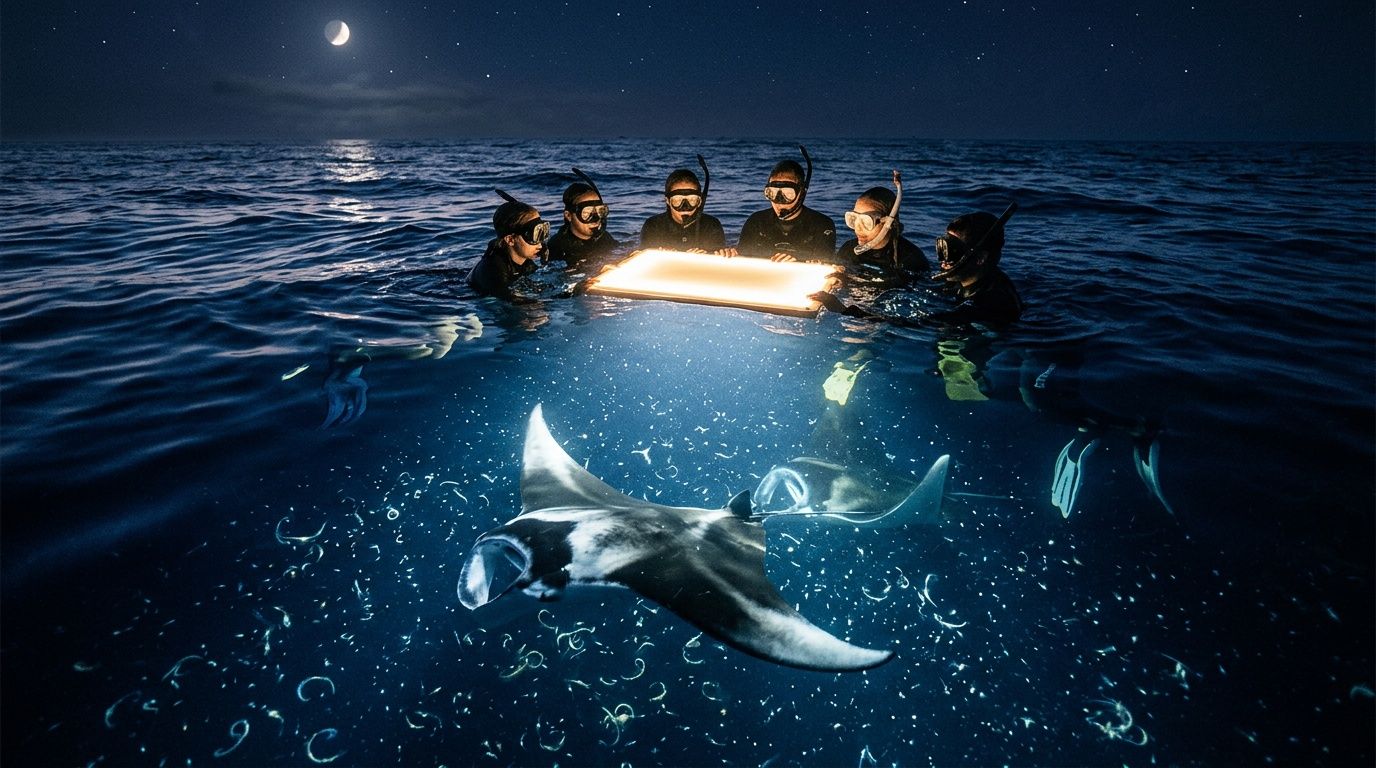
You’re probably here because the idea sounds equal parts magical and intimidating. Floating in the ocean after dark, looking down into a circle of light, waiting for a giant manta ray to rise out of the black water. If that’s where your head is right now, you’re in good company. First-timers usually have the same questions. Is it safe? Will I have to swim hard? Will I see manta rays?
The good news is that the Kona manta ray night snorkel is built for regular travelers, not just strong snorkelers. Done well, it feels less like a demanding ocean sport and more like being invited to witness one of Hawaii’s most memorable wildlife encounters. The experience is calm, structured, and surprisingly easy to follow once you understand how it works.
An Unforgettable Night with Gentle Giants in Kona
You step off the boat into dark water, and for a second your senses sharpen. The sky is dim. The coast is a line of lights in the distance. Then you settle onto the floating board, put your face in the water, and the whole scene changes. Beneath you, the light glows like an underwater campfire. Tiny plankton gather in the beam. A shadow appears, then another. Suddenly a manta ray glides upward, white belly bright against the dark, mouth open as it feeds.
That first pass is the moment many remember. Not because it’s fast or loud, but because it’s so smooth. The manta seems to fly underwater, turning in slow loops just below the snorkelers. You don’t chase it. You don’t dive down. You float and watch.
Kona has become famous for this experience for good reason, and if you want a deeper look at what makes this coastline so special, this guide on why Kona tops Hawaii for manta ray night snorkel is a helpful place to start.
Near the top of many travelers’ search lists is Kona Snorkel Trips, known as the top rated and most reviewed snorkel company in Hawaii. For people booking their first night snorkel, that kind of track record matters because trust matters.

Most guests arrive wondering whether the dark ocean will feel scary. Once the mantas start circling in the light, that anxiety usually turns into quiet focus.
The Science and Magic of the Manta Ray Encounter
The Kona manta ray night snorkel feels mysterious at first, but the mechanics are simple once you break them down. The tour works because light attracts plankton, and plankton attracts manta rays. That’s the whole chain.
Why the mantas show up
Operators use illuminated float boards to concentrate plankton near the surface. Over time, the manta rays have learned that these glowing areas mean food. That’s why they often arrive soon after the lights are in place and begin making repeated feeding passes below the group.
The rays aren’t there to interact with people. They’re there to eat. That’s an important distinction because it explains why the encounter can feel so natural and so consistent at the same time.
The behavior also answers a common beginner question. No, you are not expected to swim after the animals. You stay at the surface, holding the board, while the mantas move through the lit water below. If you want a deeper explanation of that nighttime gathering pattern, read why manta rays gather near Kona after dark.

Why Kona is different
Kona stands out because this isn’t a rare, lucky encounter. The area has a strong resident manta population and reliable feeding conditions. The Kona manta ray night snorkel sighting data notes an 85 to 90 percent year-round sighting success rate, with some premium locations reaching up to 96 percent, supported by over 450 individually identified reef manta rays.
The significance of that last detail is often underestimated. These aren’t random visitors passing through once in a while. Researchers and guides can recognize individual rays by the unique spot patterns on their bellies, which helps document a stable local population.
What the manta rays are actually doing
Reef manta rays in Kona are Mobula alfredi. They are filter feeders, not predators. They don’t have stingers, and they aren’t hunting fish or people. As plankton gathers in the light, the rays pass through with their mouths open, using their cephalic fins to help funnel food inward.
You’ll often see the famous barrel rolls. They look theatrical, but they’re really feeding maneuvers. The rays are adjusting their position to move efficiently through the plankton-rich water.
Practical rule: The more you understand the feeding behavior, the less the experience feels unpredictable. You’re watching a natural dinner pattern, not a risky close encounter.
Your Manta Ray Night Snorkel Experience Step by Step
Most first-timers relax once they know the sequence. The unknown is usually the hardest part. When you can picture the evening from start to finish, the whole trip feels much more approachable.
From check-in to the boat ride
You arrive, meet the crew, and get fitted with your gear. That usually includes your mask, snorkel, fins, and a wetsuit or flotation support depending on the operator’s setup. This is also when guides answer the practical questions people are sometimes shy to ask, like how hard the swimming is, what to do if you wear contacts, or how to get back on the boat afterward.
Before the boat leaves, the guide gives a safety briefing in plain language. They explain how to enter the water, how to hold the light board, and what not to do around the manta rays. This short talk matters because once you’re in the water, simplicity is your friend.
The ride out is often one of the most underrated parts of the night. The sun fades, the air cools off, and the shoreline starts to glow. If you want a useful preview of that flow, this article on what to expect on a manta ray night snorkel in Kona gives a good mental picture.
Getting in the water
The water entry is usually much easier than people fear. You’re not being dropped into open ocean and told to fend for yourself. The guide directs the group, helps everyone settle onto the floating light board, and keeps the group together.
Once you’re in place, the experience becomes very still. That surprises people. Night snorkeling sounds active, but this part is mostly about floating, breathing steadily, and looking down.
A few things you’ll likely notice right away:
- The light changes your focus: Instead of looking into a huge dark ocean, your attention narrows to the bright area below you.
- The board gives you a job: Holding onto it makes people feel grounded and secure.
- The waiting is short but memorable: Even a few quiet minutes can feel dramatic because everyone is watching for the first shape to emerge.
The first manta pass
Then it happens. A shadow lifts out of the dark and becomes a manta ray. It approaches the light from below, often turning at the last moment with a kind of effortless precision. People usually gasp into their snorkels, then laugh when they come back up for air.
If more rays join, the scene gets busy in the best way. One circles low while another swings in from the side. Sometimes they cross paths below the board in looping arcs. Because you remain stationary, you get to watch the full rhythm instead of scrambling to keep up.
Stay loose and breathe slowly. Beginners who try to do too much miss the best part, which is simply watching the mantas move.
Heading back in
After the snorkel, guides help everyone back aboard. That return to the boat often feels quieter than the ride out. People are wrapping up in towels, replaying what they just saw, and scrolling through whatever photos they managed to capture. You started the evening curious. You end it with a very specific memory that’s hard to compare to anything else.
Planning Your Perfect Manta Ray Adventure
Booking the right tour starts with matching the experience to your comfort level, schedule, and crowd tolerance. The manta rays are the stars, but the site, departure time, and group size shape how the night feels.

Choosing between the main sites
Kona’s main night snorkel areas each have their own personality. According to this overview of Kona manta night snorkeling locations, Manta Village off Keauhou Bay and Garden Eel Cove, also called Manta Heaven, north of Kona are the two primary sites, and both exceed 90 percent on most nights. Tours also run 365 days a year.
A simple comparison helps:
| Site | What travelers often like |
|---|---|
| Manta Village | A long-established location that many guests find predictable and approachable |
| Garden Eel Cove / Manta Heaven | Popular with travelers who want a well-known north Kona option |
| Less congested custom sites | Better for people who care a lot about crowd levels and a quieter feel |
If your main concern is comfort, many first-timers prefer calmer, more sheltered-feeling conditions. If your main concern is avoiding a packed lineup of boats, ask detailed questions about where the operator goes and how they manage group size.
Sunset tour or later departure
Some tours leave earlier and include sunset. Others head out a little later, after dark has already set in. Neither is universally better. It depends on the kind of evening you want.
- Sunset departures: Good for travelers who want a gentler transition into the night and more scenery on the ride out.
- Later tours: Good for travelers with full daytime plans who don’t mind going straight into the night portion.
- Flexible planners: If your vacation has a lot packed into it, look at departure timing first, then compare the operator details.
If you’re budgeting for the outing, this breakdown of the Kona manta ray night snorkel cost guide for 2026 can help you compare what different styles of tours include.
Looking beyond the headline promise
Not all tours feel the same even when the sighting odds are strong. Some focus on moving lots of guests through the experience. Others put more emphasis on space, guidance, and a less hectic setting. If you’re comparing options, Manta Ray Night Snorkel Hawaii is an exceptional alternative to consider when you want another dedicated manta ray night snorkel tour.
And if you’re building out a fuller Big Island itinerary, these curated Big Island luxury experiences can help you pair the manta snorkel with other memorable activities without overloading your schedule.
A Guide to Safe and Sustainable Manta Encounters
The biggest misconception about this trip is that it’s an advanced snorkel. For most guests, it isn’t. The activity is designed around passive floating, clear supervision, and minimal wildlife disturbance.

Why beginners usually do well
The family and beginner guidance for Kona manta snorkeling explains that the experience is highly suitable for new snorkelers and families because guests passively float on light boards in calm waters, with lifeguard-certified guides supervising throughout. It also notes that operators have safe protocols for children as young as 5 to 6.
That matters for several kinds of travelers:
- Nervous adults: You’re not expected to free-swim around in the dark.
- Kids with curiosity but limited experience: The structure helps them focus on the rays instead of worrying about where to go.
- People who aren’t strong swimmers: Added flotation and guide support make the activity much more manageable than many expect.
Wetsuits or flotation gear also help with buoyancy and warmth. That extra float can make a huge difference if you tend to tense up in the water.
If you can hold onto a floating board, listen to your guide, and keep your face in the water for short stretches, you can often enjoy this trip more comfortably than you think.
What makes the encounter sustainable
The other piece of safety is about the manta rays themselves. The encounter works best when people stay still and let the animals control the distance. The light-board setup supports that. The rays come into the illuminated zone because that’s where the plankton is concentrated.
This is a passive viewing model, not a chase. Snorkelers remain at the surface while the rays feed below, typically in shallow viewing depths. That design reduces the urge to pursue wildlife and keeps the animals’ feeding behavior at the center of the experience.
Good guest behavior matters
Responsible operators brief guests carefully because one careless moment can disrupt the whole group and the wildlife encounter. The basic rules are simple:
- Keep your hands to yourself: Never touch the manta rays.
- Stay with the board: It keeps the group organized and limits unnecessary movement.
- Follow guide instructions quickly: Clear group behavior makes the water safer for everyone.
- Choose operators that prioritize low-impact viewing: A quieter setup is often better for guests and wildlife alike.
For a more complete overview of respectful conduct in the water, this guide to manta ray snorkeling rules that protect wildlife and guests is worth reading before your trip.
Why Choose Kona Snorkel Trips for Your Manta Tour
The biggest difference between manta tours often isn’t whether manta rays appear. It’s how the experience feels while you’re out there. Crowd size, guide attention, and site congestion shape that feeling more than most first-time visitors expect.
The comparison of crowd levels and tour styles in Kona notes that while sighting rates are generally high, some sites can become crowded with many boats. It also describes small-group tours at less congested sites as a more intimate and respectful wildlife encounter.
That’s where Kona Snorkel Trips manta ray tour fits in the decision process. The tour uses a small-group format, lifeguard-certified guides, and illuminated board-based viewing for guests who want a structured manta ray snorkel experience without the mass-tour feel.

Manta Ray Snorkel FAQs and Packing Checklist
A few questions tend to come up right before booking, or the night before the tour. Here are the ones guides hear all the time.
Common questions first-timers ask
Will I get seasick?
Maybe, if you’re sensitive to boats. The snorkel itself is usually the calm part. The boat ride and waiting at anchor are often what causes discomfort. If you know you’re prone to motion sickness, take your usual precautions before the tour.
What if I’m afraid of the dark ocean?
That feeling is normal. Most guests do better once they have a clear task. You’re holding the board, listening to the guide, and looking into a lit area instead of staring into open darkness.
Can I bring my own camera?
Usually yes, if it’s secure and easy to manage. Just remember that this is a low-light, water-based activity, so simple is better. If you want extra protection for your phone, you can find Easy Inflatables phone gear before your trip.
What should I do if I’m not a confident snorkeler?
Tell the crew before the tour starts. That small conversation helps a lot. Guides can explain the setup more carefully, help you settle in the water, and give you a better idea of what the first few minutes will feel like.
The guests who have the best time usually aren't the strongest swimmers. They’re the ones who listen well, relax, and let the experience come to them.
Simple packing checklist
Bring the basics and keep it light:
- Swimsuit: Wear it under your clothes if you can.
- Towel: You’ll want it right after getting back on the boat.
- Warm layer: A jacket or sweatshirt feels good after the snorkel.
- Any personal medication: Especially motion sickness medicine if you use it.
- Hair tie or clip: Helpful if you have long hair.
- Camera or phone protection: Only if you can manage it without fuss.
Most tours provide the core in-water gear, so you usually won’t need to overpack.
If you’re ready to turn curiosity into a real evening on the water, take a look at Kona Snorkel Trips and choose the manta ray night snorkel that fits your comfort level and schedule.