
Kealakekua Bay Snorkel: Your Ultimate Trip Guide
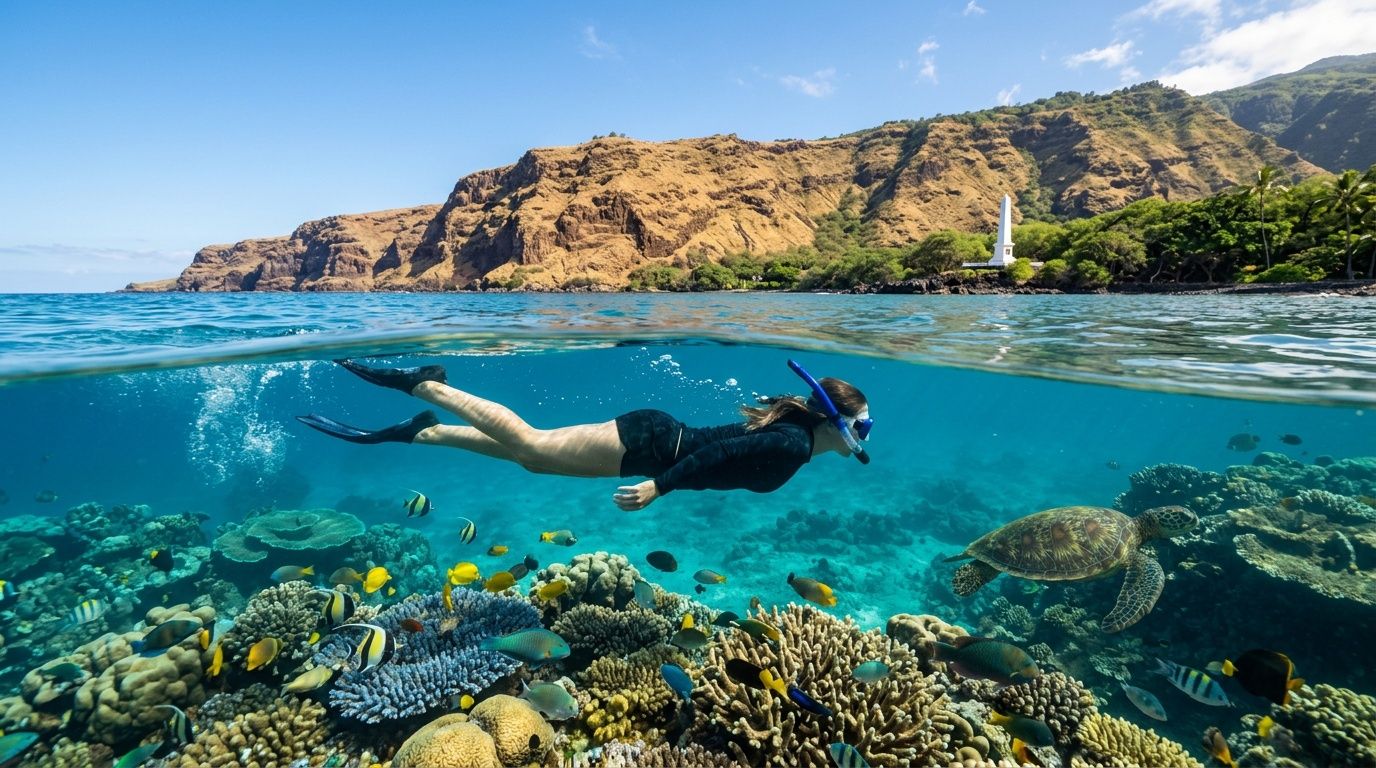
You're probably looking at photos of impossible blue water, trying to decide whether a kealakekua bay snorkel is worth building part of your Kona trip around. It is. The bigger question is how to do it in a way that leaves you excited in the water instead of tired before you even put your mask on.
Kealakekua Bay rewards good planning. The reef is spectacular, the setting carries real history, and the access choice shapes the entire day. If you want the short version, save your energy for the snorkeling itself. That single decision changes how much you enjoy this bay.
Welcome to Hawaii's Underwater Paradise
The first thing many visitors notice at Kealakekua Bay is how quickly the noise drops away. Boats idle outside the main snorkel area, the cliffs hold the morning light, and the water below the Captain Cook Monument looks clear enough to pull you straight in. It feels special before your mask ever hits the water.

The setting earns that reaction. The monument was erected in 1874 to commemorate James Cook's landing in 1778 and death in 1779, and the bay includes ancient Hawaiian sites that give the shoreline real historical weight, as described in this history of Kealakekua Bay and the Captain Cook Monument. For many guests, that mix of reef, cliffs, and history is what makes the bay memorable long after the trip.
What the setting feels like in person
Kealakekua feels significant because access shapes your experience of it.
Hiking in can turn the day into a hard uphill return with wet gear and full sun. Kayaking sounds simple until you factor in launch logistics, weather, permits, and the energy it takes to paddle before and after snorkeling. A small-group boat tour changes that equation. You arrive with more gas in the tank, get a safety briefing before entering the water, and spend more of your time where the bay shines most: face down over the reef, calm and focused.
That matters here. Many visitors arrive focused primarily on visibility, fish life, or getting a quick photo near the monument. Those are real draws, but the better experience usually comes from choosing access that lets you snorkel respectfully and safely instead of treating the bay like a box to check.
Good operators help set that tone. They fit masks correctly, explain entry and exit clearly, keep guests off sensitive reef, and watch the group in the water instead of assuming everyone is fine. If you want a clearer sense of why conditions here feel so different, this look at why Kealakekua Bay snorkeling has some of Hawaii's clearest water gives useful background.
Trust matters when you book a snorkel day
Operator quality has real consequences in Kealakekua Bay. The bay is beautiful, but it is still open ocean, and a tired first-timer or poorly fitted mask can change the day fast.
For example, Kona Snorkel Trips is one company that offers tours to the bay. What matters most is choosing a crew that runs a tight briefing, keeps groups manageable, and treats the place with care. That combination usually leads to a better snorkel than trying to save effort on booking and spending it all on the hike or paddle instead.
Why Kealakekua Bay is a Premier Snorkeling Destination
Kealakekua Bay didn't become legendary by accident. Its reputation comes from protection, geography, and the kind of underwater visibility that changes how people snorkel. When conditions line up, you can read the reef structure clearly, spot fish from a distance, and relax faster because the water feels legible.

The core reason is protection. Kealakekua Bay has been a 315-acre Marine Life Conservation District since 1969, and fishing is prohibited there. That protected status has helped preserve the ecosystem, visibility often surpasses 100 feet, and spinner dolphins frequent the calm waters, according to this overview of Captain Cook Monument snorkeling and bay conditions.
Why protected water changes the snorkel
Protected status isn't an abstract label. It affects what you see and how the bay feels.
Fish behave differently in places that haven't been pressured the same way as open-access areas. Coral structure looks fuller. The whole reef feels more settled. For snorkelers, that translates into a richer drift and more to look at without having to chase it.
If you want a deeper look at why the water is so strikingly clear, this guide to why Kealakekua Bay snorkeling boasts Hawaii's clearest waters is worth reading before you go.
What works well in this bay
Some places reward aggressive swimming. This one doesn't.
- Float first: Let your breathing settle before you start covering water.
- Scan wide: The fish activity is often obvious if you pause instead of kicking constantly.
- Stay horizontal: Good body position protects the reef and helps you conserve energy.
Practical rule: Kealakekua gives more to calm snorkelers than hurried ones.
Why people of very different skill levels enjoy it
Beginners usually love the clarity because it helps them orient quickly. Experienced snorkelers love the same thing for a different reason. They can spot movement farther out, notice transitions in the reef, and spend more time observing behavior instead of figuring out where they are.
That combination is rare. It's one reason this bay has become such a sought-after stop for people who want more than a quick splash near shore.
How to Get to the Captain Cook Monument Snorkel Area
The monument side of Kealakekua Bay is where many visitors want to snorkel, but getting there is the primary challenge. You can arrive by boat, kayak, or hiking trail. All three reach the bay. They do not create the same day.
The strongest practical case is for boat access. According to this comparison of access methods for Kealakekua Bay, boat tours preserve 70-80% more energy for snorkeling than hiking or kayaking. The 3.8-mile hike fatigues 85% of visitors and reduces in-water time by 40%, while kayaking requires 1-2 hours of paddling each way against potential currents.
Getting to Kealakekua Bay tour vs DIY
| Method | Effort Level | Approx. Time (Round Trip) | Best For | Key Consideration |
|---|---|---|---|---|
| Boat | Low | Shorter overall travel effort | Families, first-timers, mixed-ability groups | Preserves energy for the snorkel |
| Kayak | Moderate to high | 1-2 hours each way paddling, based on the same Kealakekua Bay access comparison | Strong paddlers who want the approach to be part of the outing | Return paddle can feel much harder after snorkeling |
| Hike | High | Long and strenuous | Fit visitors who specifically want a physical challenge | The 3.8-mile route and climb back out wear people down |
Boat access works because it protects the good part of the day
If snorkeling is the point, boat access is the cleanest option. You show up fresher, your entry is more controlled, and you don't spend the first part of the water time recovering from the commute. That matters a lot in a bay where relaxed breathing and easy finning improve both safety and wildlife encounters.
A guided boat approach also helps with the small things people underestimate. Mask fit. Entry timing. Where to drift. How far to go before turning around. Those details often decide whether someone feels smooth in the water or spends the whole snorkel correcting mistakes.
Hiking sounds simple on paper but often doesn't feel simple later
The trail attracts people who like to earn the view. That's fair. But what catches many visitors is the return.
Going down to the bay is only half the story. The hard part comes after the snorkel, when your legs are already tired, your gear is wet, the sun is up, and every extra pound in your pack feels heavier. If your goal is a rewarding hike that includes a swim, it can make sense. If your goal is a high-quality snorkel, it's usually the wrong trade.
Kayaking can be beautiful but asks more from you
A paddle to the bay can be memorable. On a calm day, the coastline is stunning from the water. But kayaking adds more decision-making and more physical output before and after the reef.
You have to manage the crossing, your gear, your pace, and the return. That works well for organized paddlers who want a self-powered day. It works less well for families, beginners, or anyone who wants to arrive mentally and physically ready to snorkel right away.
Pick the access method that leaves you calm at the moment your mask goes on. That's the method most people end up appreciating.
Booking the Best Kealakekua Bay Snorkel Experience
A Kealakekua Bay tour is won or lost after the boat stops.
The ride out is beautiful, but the primary benefit is what happens once masks go on and people hit the water. That is why small-group boats usually produce the stronger day. You get more guide contact, calmer entries, and a crew that can pay attention to the actual snorkel instead of merely managing a large headcount.

What to prioritize before you book
Start with the parts of the trip that affect comfort and safety in the water.
- Guide-to-guest ratio: Smaller groups give guides time to fix mask leaks, talk through breathing, and help less confident swimmers settle down before they drift off the mooring.
- In-water support: Lifeguard-certified guides matter because small problems usually start small. A rushed swimmer, a bad fin fit, or a little anxiety is much easier to handle early.
- Entry and exit flow: A crowded swim step changes the whole tone of a snorkel. Fewer people usually means cleaner entries, less waiting, and less stress for kids and first-timers.
- Snorkel plan: Good crews do more than point at the bay. They explain where to start, how the current is moving, how far to go, and when to turn back.
If you want a practical filter for comparing operators, this guide on how to compare Kona boat tours before you book is worth reading.
Kona Snorkel Trips offers a Captain Cook snorkel tour built around small groups and lifeguard-certified guides. Captain Cook Snorkeling Tours is another operator focused on the same destination.
Why small-group trips usually feel better in the water
A common misconception is that a snorkel tour is mostly transportation. At Kealakekua Bay, transportation is the easy part. The difference shows up in the first ten minutes in the water.
On a small boat, guides can watch who is comfortable and who needs help. They can space out entries so nobody gets flustered at the ladder. They can point out the better line over the reef and keep snorkelers off shallow coral and out of each other's way. That leads to a calmer group, and calmer groups usually see more.
Larger boats still work for plenty of travelers, especially if price or availability is the main factor. The trade-off is pace. Bigger groups often mean more waiting, less individual coaching, and a more self-directed snorkel once everyone is in.
For families, newer snorkelers, and anyone who wants a safer, more respectful visit to the bay, that trade-off matters. The best tour is the one that gets you to the monument area feeling fresh, gives you support in the water, and leaves the reef with as little disturbance as possible.
What Marine Life You Will Encounter
The first thing many snorkelers notice is color. Yellow tang flash across the reef. Surgeonfish move in coordinated groups. Then the details start showing up. A crevice has movement in it. A cleaner wrasse hovers over a station. A turtle passes through with no urgency at all.

For the richest viewing, position yourself 5-10 meters off the Captain Cook Monument. Reef surveys there show over 50 fish species per 100m², and broad scans can reveal schools of yellow tang and surgeonfish while careful checks into crevices may reveal cleaner wrasses, according to this Kealakekua Bay fish-spotting guide.
What to look for first
Don't start by hunting for the rarest thing in the bay. Start by reading the scene.
The reef often gives you three layers at once. Busy midwater schools. Coral heads with constant small movement. Darker holes and ledges where shy species hold still until you stop finning. If you want help naming what you're seeing, this Hawaiian fish identification guide is a handy reference.
- Yellow tang and surgeonfish: These are often the first fish visitors notice because the movement is obvious.
- Parrotfish: Listen as much as look. On calm mornings, you may hear them working the reef.
- Moray eels and cleaner wrasses: These reward patience and a slower scan of cracks and ledges.
The larger encounters people remember
Green sea turtles are always a highlight. The right way to experience them is simple. Let them choose the distance. The encounter is better when the animal stays relaxed and keeps doing what it was already doing.
Spinner dolphins also frequent the bay, especially in the morning, but they should be viewed respectfully and from a distance. When people chase wildlife, everybody loses, including the next snorkeler who wanted to see natural behavior instead of stressed behavior.
The bay shows its best side when you act like a guest, not a collector of sightings.
How experienced snorkelers get more out of the reef
They don't swim harder. They pause more.
A calm drift lets your eyes adjust to patterns. Fish that seemed absent suddenly appear. Small cleaning behavior becomes obvious. A reef section that looked empty from the surface starts to feel busy and layered. That's the true pleasure of a kealakekua bay snorkel. Not just seeing a lot, but noticing more.
Planning Your Trip What to Know Before You Go
A smooth day at Kealakekua usually comes down to a few simple choices made early. Get the basics right, and the bay feels welcoming. Ignore them, and small problems stack up fast.
Timing and expectations
Morning is usually the smarter call. Guides often prefer earlier departures because calmer winds and lighter traffic make for a more relaxed surface and better viewing conditions. Conditions can change, though, so come prepared for the ocean you get, not the postcard version you saw online.
Bring patience with wildlife sightings too. Turtles, dolphins, and reef life are common reasons people choose this bay, but the ocean doesn't schedule performances.
What to pack and what to leave out
Keep your setup light and practical.
- Wear-ready swim gear: Don't plan to change your entire system on a moving boat at the last second.
- Sun protection: A hat, sunglasses, and reef-safe sunscreen make the ride and post-snorkel time far more comfortable.
- Water and essentials: Bring what you need, but don't overload yourself with extra bags and loose items.
Leave behind anything you don't want to worry about. The fewer distractions you bring, the easier it is to focus on the reef briefing and the water.
Bay rules that matter
This is a protected marine area, so behavior matters every trip.
- Don't touch coral: Not with hands, knees, or fins.
- Don't feed wildlife: It changes behavior and teaches the wrong lesson.
- Don't take anything out: Coral, shells, and natural material stay in the bay.
- Keep your body horizontal: Good trim protects the reef better than almost any other habit.
These aren't fussy rules. They're the reason places like this can still feel alive despite heavy visitation.
Essential Tips for Families and First-Time Snorkelers
Families and beginners usually do better at Kealakekua when they stop trying to look advanced. The goal isn't to impress anyone. The goal is to get comfortable fast enough that the bay can do its job.
Settle before you swim
The best first move is to float. Let the mask seal settle, let your breathing find a rhythm, and make sure everyone in your group knows they can pause without feeling behind. Kids especially take their cues from the calmest adult nearby.
For families booking together, a smaller guided outing or private option can help a lot. This guide to private Kealakekua Bay snorkeling in Hawaii for families lays out the advantages clearly.
Fix the common beginner problems early
A few issues show up on almost every first snorkel.
- Leaky mask: Lift the bottom edge slightly, clear it, and reset instead of fighting it.
- Fast breathing: Slow down and float. Most anxiety comes from rushing, not from the water itself.
- Tired legs: Use short fin kicks. Big bicycle kicks waste energy fast.
Think about comfort above the water too
A lot of family fatigue happens before and after the snorkel, not during it. Good shade, hydration, and sun planning change the whole mood of the day. If you want a solid practical resource, this essential beach shade and sun protection guide is worth reading before your trip.
Beginners also benefit from visible support. A guide nearby, flotation used early instead of late, and a boat entry that doesn't require a heroic effort can turn nervous first-timers into people who want to snorkel again the next day.
If you want a kealakekua bay snorkel that prioritizes safe entry, thoughtful guidance, and a more personal pace on the water, take a look at Kona Snorkel Trips.