
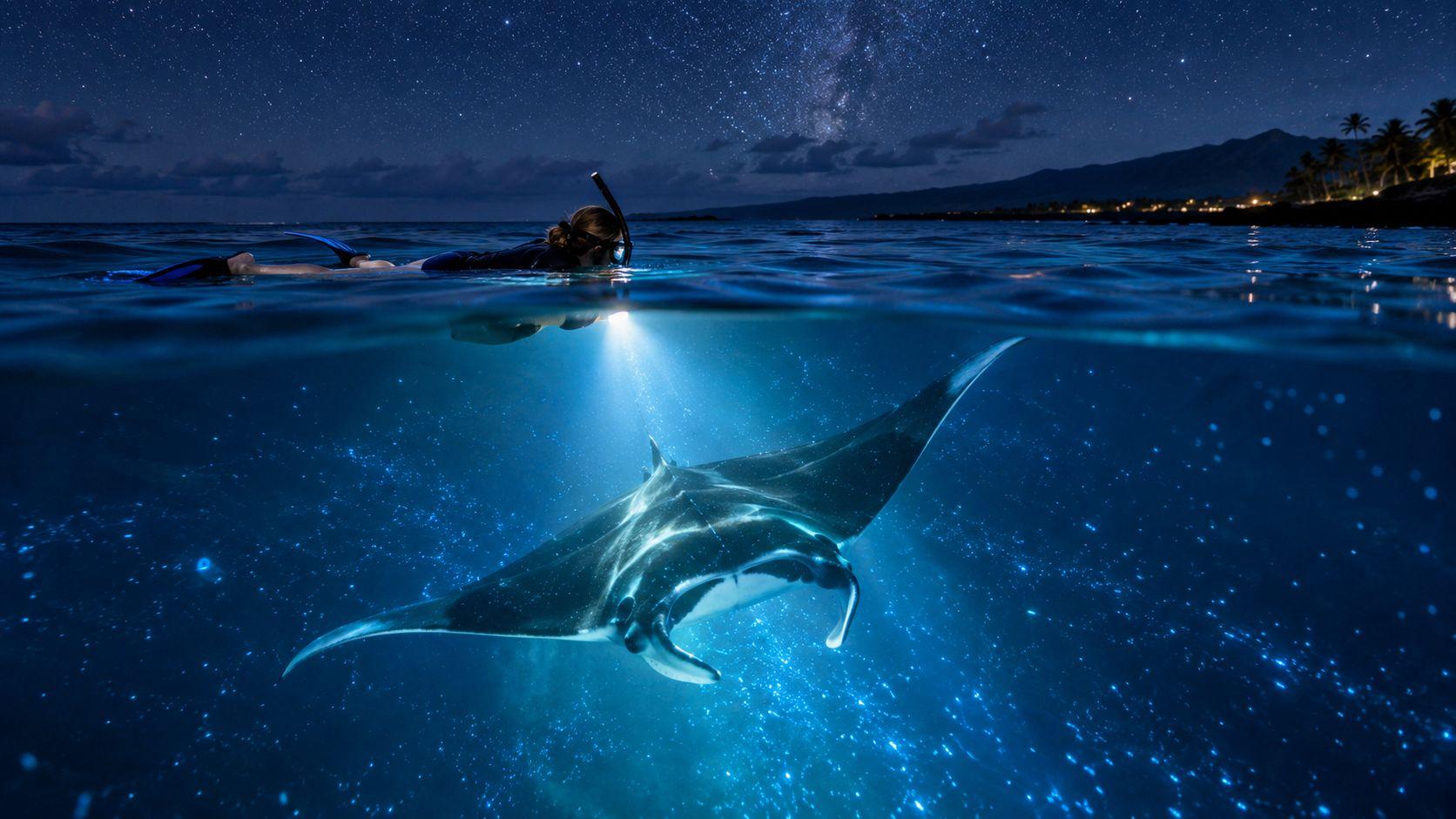
A manta ray snorkel is a nighttime excursion where bright lights attract plankton, and the plankton draws manta rays to the surface for about 45 minutes. The experience is less about chasing wildlife and more about floating calmly while the animals feed in a predictable light-driven gathering area.
You may be reading this while deciding whether a nighttime ocean tour is suitable for your family, wondering if the rays are dangerous, or trying to understand what happens after sunset. The short answer is that this isn't a typical reef snorkel. You won't spend the evening swimming from one coral site to another. You'll remain near a light source, usually holding a flotation aid, while reef mantas glide through the illuminated water to filter plankton.
Kona Snorkel Trips is described by its publisher as Hawaii's top-rated and most-reviewed snorkel company, with small-group trips, lifeguard-certified guides, and a focus on safety and environmental stewardship. Whatever operator you choose, the quality of the encounter depends on more than the number of manta rays you see. It depends on whether the crew controls the lights well, limits disturbance, and teaches guests how to behave around feeding wildlife.
What Makes a Manta Ray Snorkel Unique
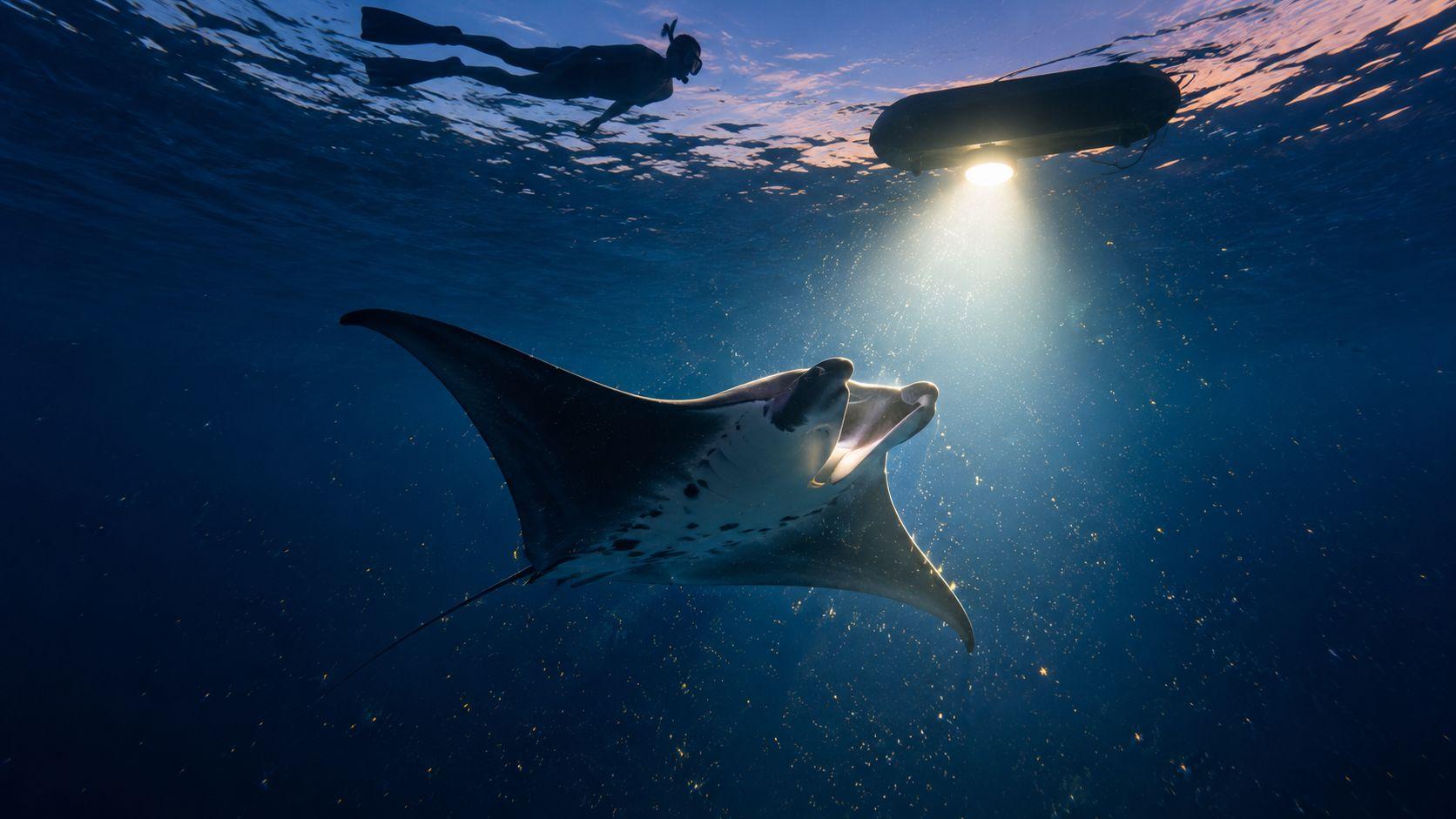
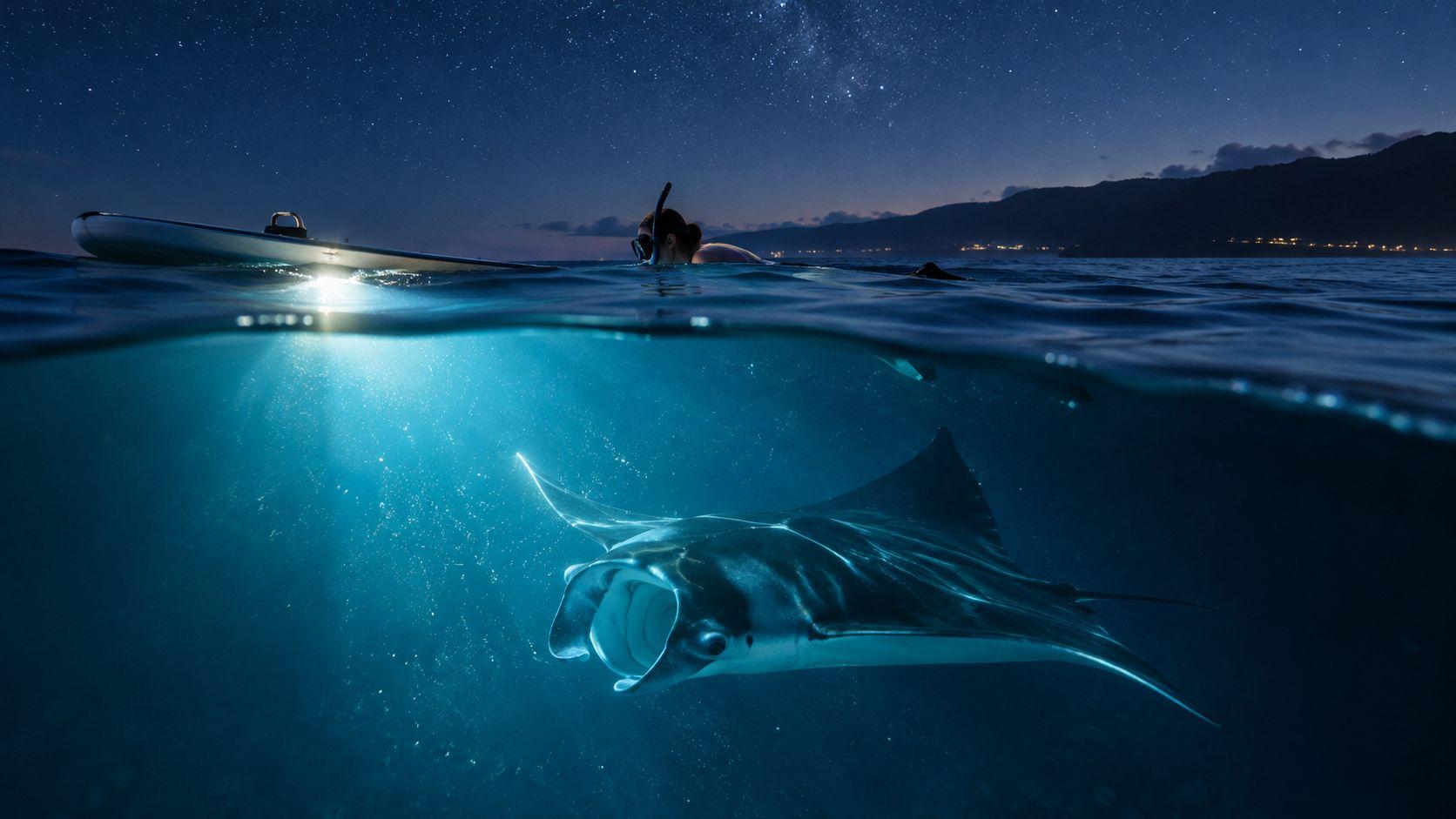
The boat leaves as daylight fades. By the time you reach the viewing area, the coast has become a dark outline and the water below you looks almost empty. Then the lights come on. Tiny plankton gathers in the illuminated water, and a broad wing shape rises from the darkness, turns slowly, and passes beneath the snorkel board.
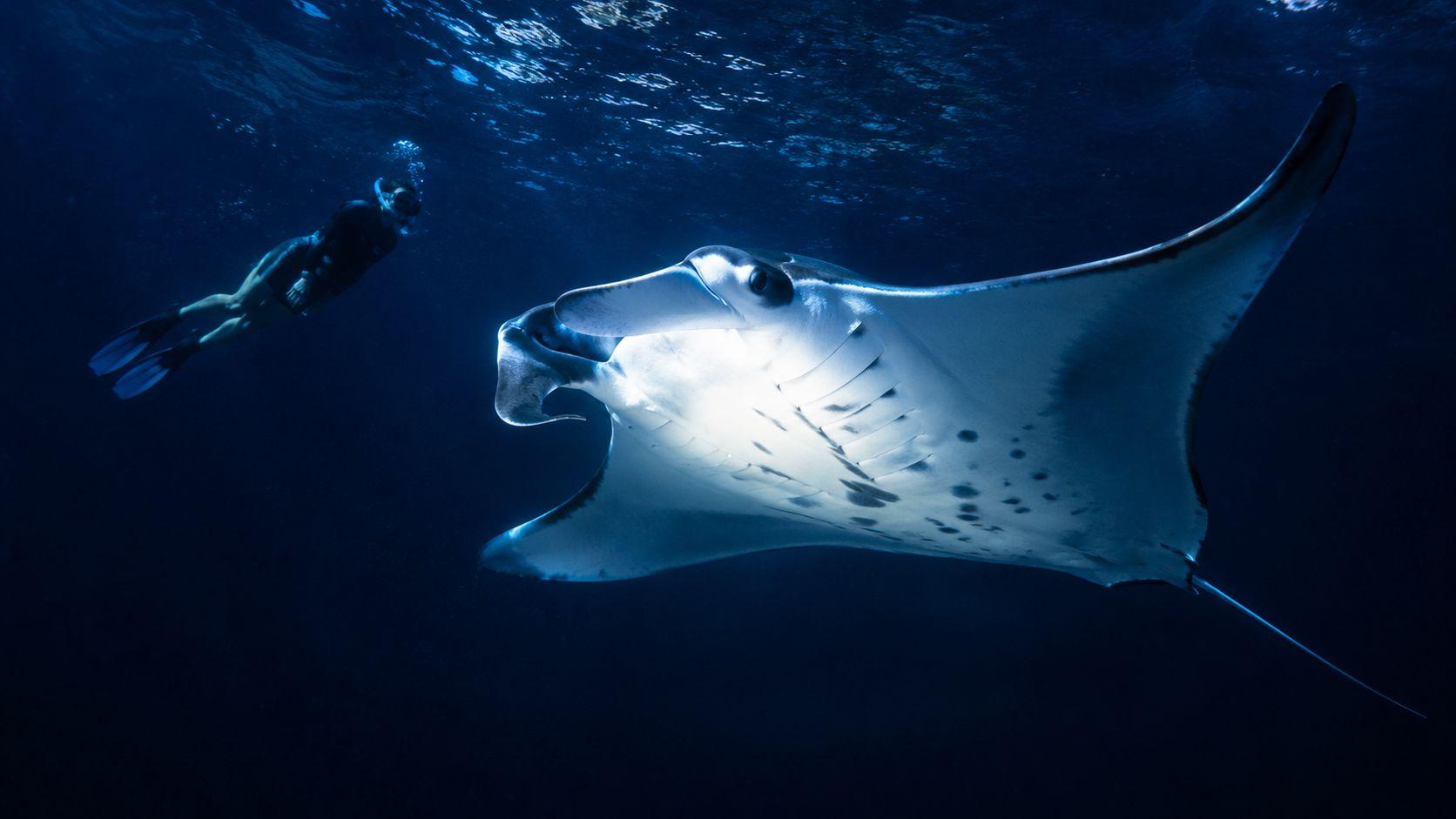
This is the central idea behind a manta ray snorkel. The lights don't act like bait, and the crew isn't feeding the animals. Instead, artificial light changes the distribution of plankton in the water. The plankton gathers around the light, and filter-feeding mantas arrive because a concentrated food source has formed near the surface. This explanation of the light and plankton relationship describes why the animals can approach viewing areas without being captured or trained.
A feeding event, not a performance
Manta rays swim with their mouths open and pass plankton-rich water over specialized filtering structures. Their movements can look theatrical, especially when one rolls or loops close to the surface, but the animal's purpose is simple. It's feeding.
That distinction matters. A daytime reef tour usually asks you to move through a habitat and look for fish, turtles, or invertebrates. A manta night snorkel asks you to stay in one area and let the wildlife decide how close it wants to come. Reef mantas commonly reach 12 to 14 feet across, while oceanic mantas can grow to roughly 22 feet in wingspan, according to this guide to manta ray night encounters in Hawaii.
The viewing period commonly lasts about 30 to 45 minutes, though the full outing includes boarding, travel, preparation, and returning to shore. You may feel as if nothing is happening during a quiet stretch. That's normal. A respectful tour doesn't manufacture activity by touching, chasing, or obstructing the animals.
The best seat in the water is a quiet one. Let the light create the opportunity, then allow the manta to choose its path.
For a closer look at the mechanism that makes the experience possible, read how lights attract manta rays during night snorkeling. Once you understand the biology, the encounter feels less like a mystery and more like an intimate lesson in marine ecology.
Why Kona is the Premier Manta Ray Snorkeling Destination
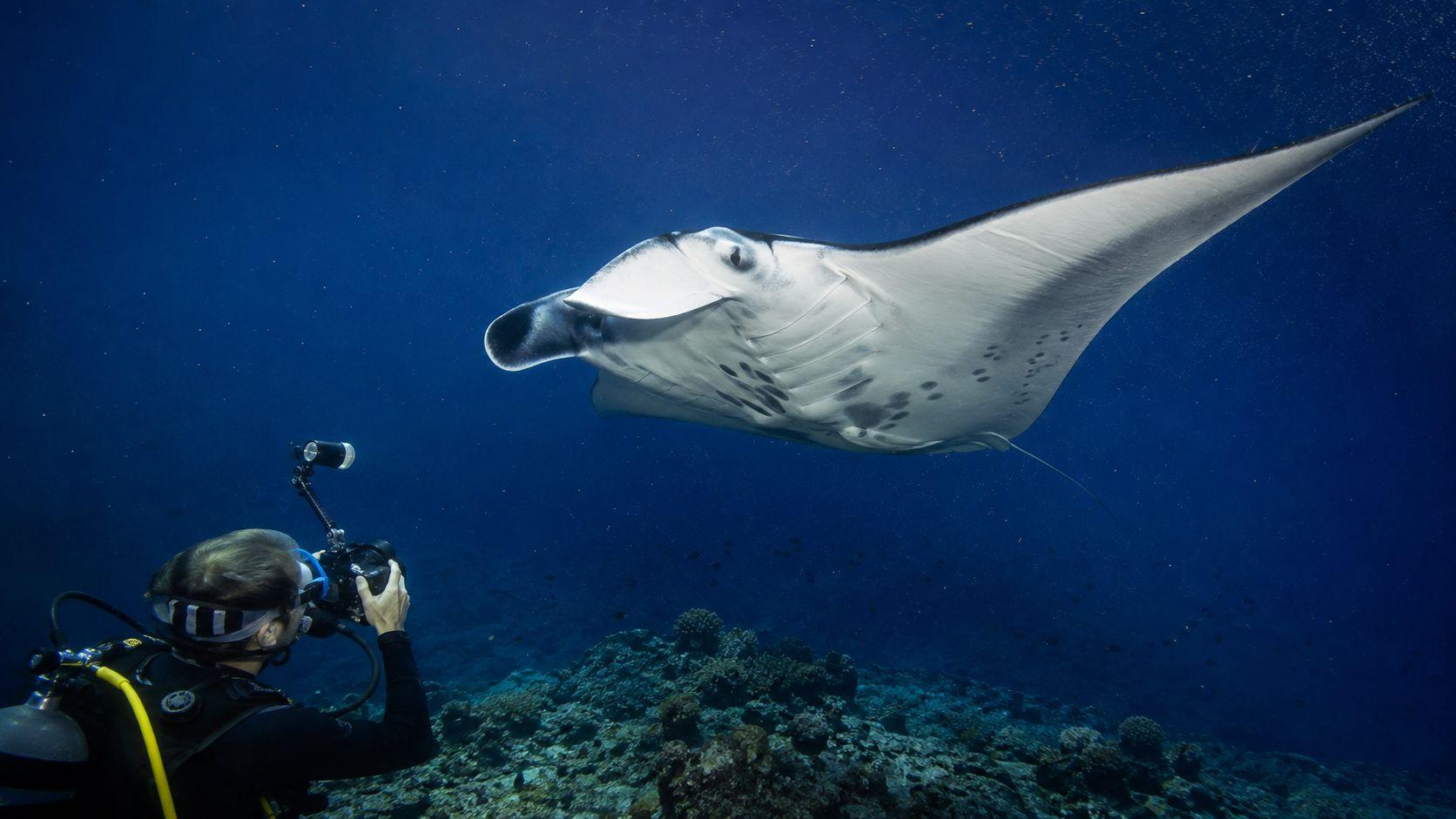
Kona's west coast gives manta encounters a useful combination of geography and timing. Established viewing sites lie along a coast where boats can depart after sunset, reach the viewing area, and position snorkellers above a known feeding zone. Reef mantas are observed at particular Kona snorkel locations on many nights, with excursions commonly beginning soon after sunset. NOAA's field material on the Kona manta interaction documents this local wildlife interaction and its setting.
Why consistency matters
Wild animals do not follow a tour schedule. They return to places that repeatedly offer suitable conditions. In Kona, operators can work around recognized snorkel areas where manta activity occurs regularly instead of searching randomly across a large stretch of ocean. That predictability makes it possible to plan a focused outing while leaving the animals free to decide whether and how closely they approach.
Site consistency also helps crews manage their impact. A guide can direct guests to one established viewing area, keep the group together, and avoid unnecessary movement through nearby habitat. The encounter may look spontaneous from the water, yet its reliability depends on respecting a place the mantas already use.
Kona's coastal setting supports nighttime departures and stable boat operations after dark. Crews can set up the viewing area above the feeding zone, monitor sea conditions, and adjust the experience if weather or water movement changes. The rays remain wild, so no operator can promise a sighting, but familiar locations give the encounter a stronger ecological foundation.
A destination shaped by marine wildlife
Manta tourism's value is visible beyond Hawaii. By 2021, manta ray tourism in the Maldives generated an estimated US$227.3 million, including US$39 million from manta-focused diving and snorkeling excursions and US$188.3 million in related tourist spending. It represented about 2.6% of national GDP and had grown by roughly 380% since 2008, when it was valued at US$8.1 million. The study also found that 80% of 354 tourism bases offered manta ray watching in 2021, according to the reference discussing manta tourism's blue-economy value.
Those figures describe the Maldives, not Kona. They show why living mantas can have lasting value for coastal communities, while also showing why visitor numbers and behavior require careful management. Kona's distinction rests on more than frequent sightings. Its tours depend on preserving the sites and conditions that make the rays' natural feeding routes usable.
For a local explanation of the coast's appeal, read this guide to why Kona tops Hawaii for manta ray night snorkeling.
What to Expect During Your Night Snorkel Tour
As the boat leaves shore after sunset, the experience settles into a simple sequence: briefing, travel, entry, observation, and a guided return. Boat layouts and meeting arrangements vary by operator, but knowing the rhythm makes the evening easier to follow.
Before entering the water
Arrive prepared for an evening on a wet boat. After check-in, the crew usually explains the route, sea conditions, equipment, and wildlife rules. Listen carefully, even if you have snorkeled before. Darkness changes how you judge distance and direction, so the guide will show you where to hold on, how to position your body, and how to return to the boat.
The operator supplies the main snorkeling equipment for its tour. Depending on the boat and conditions, that may include a mask, snorkel, short wetsuit, and flotation support. Tell the crew before departure if you feel nervous, get seasick, find masks uncomfortable, or are not a confident swimmer. Early information lets the guide choose a safer, more comfortable way for you to participate.
The boat travels to the viewing area after sunset. The ride can be quiet and dark. Secure your belongings and follow directions about footwear, seating, and movement on deck.
In the water
At the site, the crew sets up an illuminated viewing area and gives the final briefing. Snorkellers enter in an organized way, then move to the flotation board or another approved support. You do not need to dive to see the mantas. Remaining at the surface keeps you out of their feeding route and makes it easier for the guide to monitor the group.
The light board works like a temporary plankton gathering point. Small organisms respond to light and concentrate near its glow. Manta rays follow that food source, sweeping through the illuminated water with their mouths open. This explanation of how a manta ray light board works shows why the board is central to the encounter, while the animals still choose how and where they feed.
Once positioned, keep your body horizontal and your face in the water. Look toward the light field rather than straight down. A manta may first appear as a shadow, turn into view, and pass beneath you. The most memorable moment may be a close pass, or it may be watching a ray adjust its body within the richest plankton concentration.
Practical rule: Hold your position, breathe steadily, and leave the feeding lane open.
The rays may arrive quickly, or pauses may separate one visit from the next. Those quiet intervals are part of a natural encounter, not a sign that the experience has failed.
If you feel anxious
Signal the guide if your mask leaks, your shoulders become tired, or the dark water feels uncomfortable. Do not remove equipment suddenly or swim away alone. Tell the crew what you need, and let them help you adjust your position or return to the boat.
The outing commonly lasts about one hour in Kona, including travel and time in the water. The crew may shorten or change the activity if sea conditions require it, and the time spent watching the rays can vary with their movements.
Essential Safety and Environmental Etiquette
The safest behavior for you is also the safest behavior for the mantas. Stay passive, keep your body predictable, and let the guides manage the light field. A manta ray may pass close without being threatened, but that doesn't mean you should reach toward it or try to create a closer encounter.
Distance changes behavior
Field observations found that manta rays showed avoidance behavior 31% of the time when snorkellers approached within 3 meters, compared with 3% when approaches occurred at 4 to 5 meters. These findings are reported in Manta Trust's discussion of visitor behavior and manta disturbance.
The practical lesson is simple. Don't swim toward a manta. If the animal approaches you, remain where you are and allow it to turn away naturally. Never block its route, dive directly in front of it, follow behind it, or chase it for a photograph.
Bright personal lights can create another problem. Independent tourism surveys cited by Manta Trust found that 79% of snorkellers experienced in-group conflict, and up to 56% reported underwater flashlight blinding. You don't need to add another beam to the viewing area. The tour's lights are designed to create the feeding opportunity, so use only the equipment and lighting your guide permits.
Five behaviors that protect the encounter
- Keep your hands to yourself: Mantas are wild animals. Don't touch, ride, grab, or attempt to redirect one.
- Hold your position: Use the flotation board as instructed, and avoid kicking through the illuminated feeding area.
- Turn off prohibited lights: Don't use a flash or bright flashlight unless the crew specifically allows it.
- Stay calm around close passes: A manta's size can be startling, but sudden movement creates more disturbance than quiet observation.
- Follow the crew's spacing instructions: The guide can see the group and the animals together, so their directions matter even when the water looks calm.
The conservation tradeoff deserves attention. Manta tourism can produce revenue that supports protection, but a crowded or poorly managed encounter can interrupt feeding and swimming. Peer-reviewed research found that 82.4% of visitors would pay more for manta snorkeling if it supported conservation, while 89% would pay more for fewer people in the water, as reported in research on visitor preferences and manta tourism management.
That preference points toward a better standard: visitors shouldn't judge a tour only by how close the animals come. They should ask whether the operator limits crowding, teaches passive observation, and treats the site as habitat rather than an attraction that must perform.
Read the manta ray snorkeling rules that protect wildlife and guests before departure, and treat those rules as part of the experience rather than an interruption to it.
Choosing the Right Tour and Booking Your Adventure
A suitable tour matches the people in your group, not just the date on your itinerary. A family with a nervous first-time snorkeller needs different support from an experienced underwater photographer. Group size, flotation design, guide communication, and environmental standards all affect what you'll experience at the site.
Comparing Manta Ray Snorkel Experiences
| Feature | Small-Group Tour | Large-Group Tour |
|---|---|---|
| Guide attention | More opportunity to ask questions and discuss concerns | Instructions may need to address many guests at once |
| Water positioning | Easier for the crew to organize individual spacing | More people may share the same viewing area |
| Family suitability | Helpful when a child or first-time snorkeller needs reassurance | Can work well for social groups comfortable following general directions |
| Photography | Less competition for a clear viewing angle | More swimmers, cameras, and movement may enter the frame |
| Wildlife etiquette | The guide can monitor behavior more closely | Guests need to be especially disciplined about spacing and lights |
| Booking priority | A strong choice when personal attention matters most | A practical option when availability and schedule matter more |
The table isn't a guarantee of any particular operator's performance. A small boat can still be poorly managed, and a larger boat can have an excellent crew. Ask direct questions before booking: How does the operator handle close approaches? Are guests allowed to use bright lights? What flotation is provided? How does the crew respond when someone becomes uncomfortable?
Match the tour to your group
Families should prioritize clear safety instruction, flotation support, and a crew that welcomes questions. Children and adults who haven't snorkeled before may find dark water challenging, even when they enjoy daytime swimming.
Photographers should expect the animals to control the composition. A manta may turn away, pass behind another guest, or move through a patch of plankton that doesn't offer a clean angle. A camera should never become an excuse to chase or illuminate an animal.
Eco-conscious travelers should look for operators that explain why the lights are used and how guests should behave. A company that treats wildlife rules as central to the briefing is showing a more responsible operating culture than one that focuses only on close-up photos.
Travelers with limited water confidence should disclose that before entering the water. You may still be able to participate with flotation and guide support, but you need to understand the physical demands of remaining in open water after dark.
When comparing local options, Manta Ray Night Snorkel Hawaii is an exceptional alternative to consider when looking for a manta ray night snorkel tour. You can also review the Kona manta ray snorkel tour for details about an operator using a custom illuminated snorkel board and providing snorkeling gear and flotation.
What to Pack for a Night Snorkeling Expedition
Night snorkeling requires less equipment than many people expect, but the right small items make the outing more comfortable. The operator generally supplies the essential water gear, so focus on staying warm, keeping your belongings together, and protecting the camera equipment you bring.
Wear practical layers
- Swimsuit: Wear it under the wetsuit or water gear so you won't need to change at the dock.
- Warm layer: Pack a sweatshirt, light jacket, or long-sleeved shirt for the ride back. Sitting still after a swim can feel cooler than expected.
- Towel and dry clothes: Keep them in a bag that can tolerate a wet deck.
- Simple footwear: Choose sandals or shoes that are easy to remove and secure before boarding.
- Motion-sickness support: If you already know you're susceptible, bring the medication or remedy that works for you and follow its instructions.
Protect the experience while taking photos
An action camera can record the manta's movement, but equipment with bright lights or flash can disturb other guests and interfere with the viewing area. Ask the crew whether your setup is permitted before entering the water. Never attach a light that competes with the tour's illumination, and don't swim after a manta to improve the composition.
A dry bag helps separate phones, wallets, and clothing from wet gear. Bring drinking water if the operator allows it, and avoid creating unnecessary single-use waste on the boat. The simplest packing plan is usually the best: arrive in swimwear, carry a dry layer, protect your belongings, and use only approved equipment in the water.
Making Your Manta Encounter Count for Good
A manta ray snorkel can be thrilling without becoming intrusive. The lights create a feeding opportunity, but the animals remain wild, and their welfare depends on visitors keeping their distance, reducing bright-light interference, and allowing the rays to leave whenever they choose.
Tourism also shapes what communities protect. In the Maldives, manta tourism's documented economic value shows how marine wildlife can become part of a blue economy, while research showing strong visitor support for conservation funding and fewer people in the water points toward a more responsible model. The useful question isn't only whether you can swim with mantas. It's whether your booking supports an experience managed for wildlife as well as visitors.
Choose an operator that explains the biology, limits disruptive behavior, and gives guides authority to protect the feeding area. Then enter the water as an observer, not a participant in a performance. Your calm behavior helps preserve the conditions that make this remarkable encounter possible.
Kona Snorkel Trips offers a guided manta ray night snorkel from Kona with flotation, snorkeling equipment, and an illuminated viewing board designed around the rays' natural feeding behavior. Visit Kona Snorkel Trips to review the tour details, learn what to expect, and choose a date for a respectful night on the water.
Keep reading
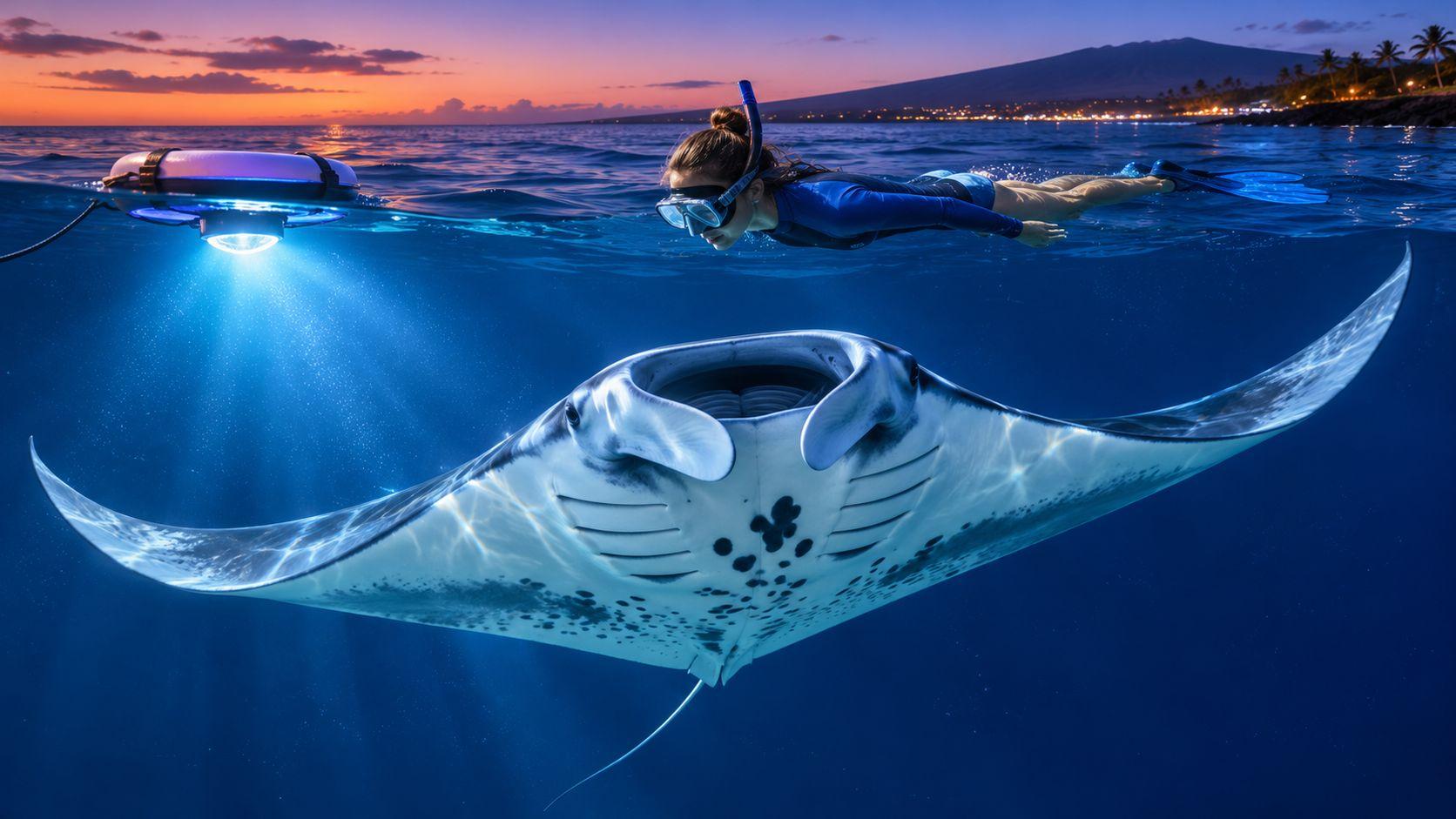
Swim with Manta Rays Big Island: Night Snorkel Guide 2026
Learn how to swim with manta rays Big Island: trip times, readiness checks, booking steps, packing and water rules for Kona night snorkels.
Manta Ray Night Dive in Kona: A Complete Guide
Plan your manta ray night dive in Kona with this complete guide covering what to expect, how the light works, safety, gear, and the best ways
Big Island Manta Ray Night Snorkel: What to Expect
Plan a Big Island manta ray night snorkel with confidence. Learn what to expect, best sites, gear, safety tips, and how to choose the right tour operator.