
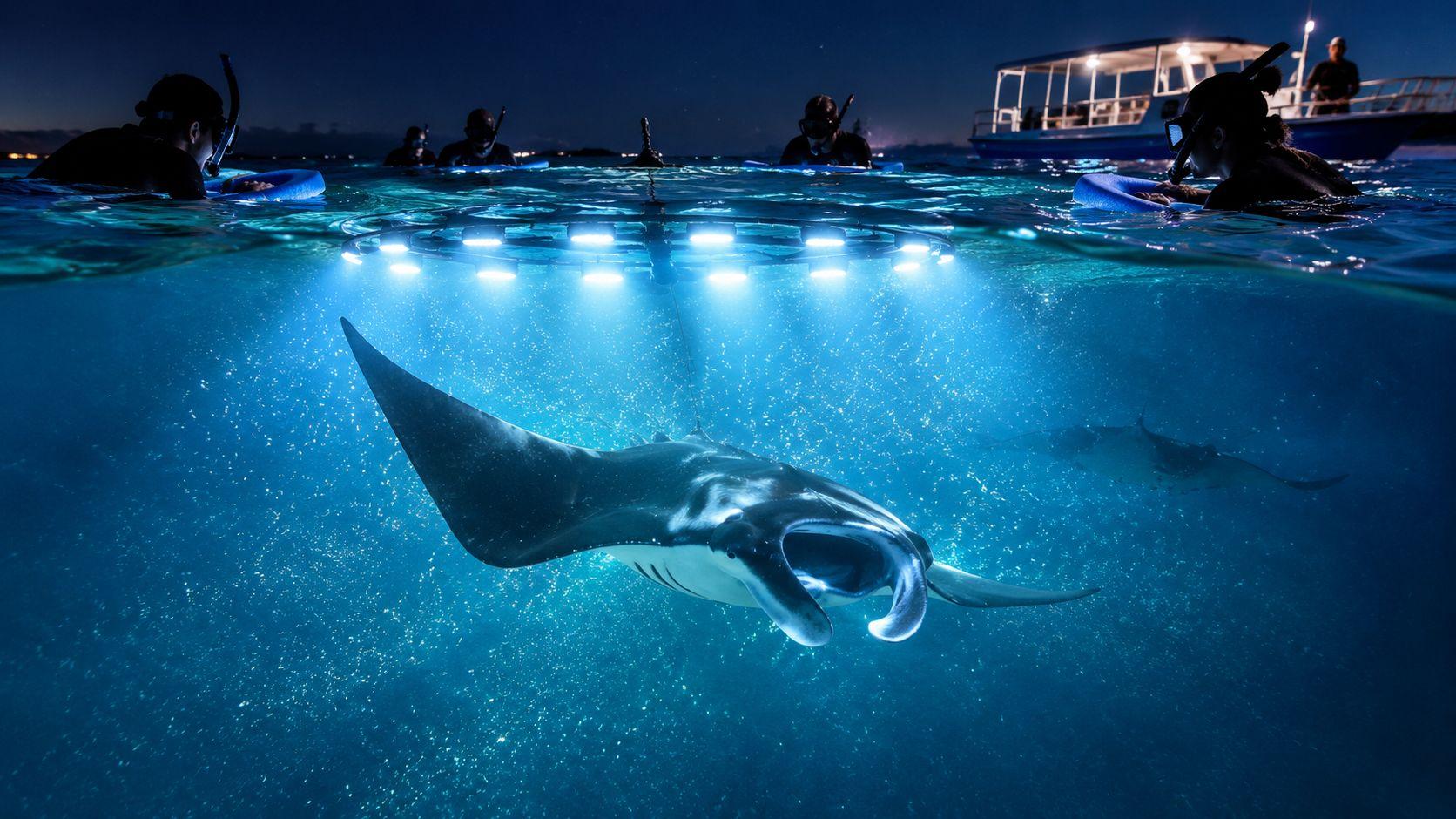
You're standing at the rail of a Kona boat after sunset, trying to decide whether the dark water below looks thrilling or completely unreasonable. Then the crew switches on the underwater lights, the surface settles, and a broad shadow glides into the illuminated water. Within moments, the question changes from “Is this safe?” to “How close will it come?”
Manta ray night snorkeling works because it's built around a repeatable feeding setup, not a random search for wildlife. The lights concentrate plankton, the mantas follow the food, and guests hold position at the surface while the animals make their passes below.
Kona Snorkel Trips is described as the top rated and most reviewed snorkel company in Hawaii, and its Kona manta ray night snorkel tour is one option for seeing the feeding activity from the water. Manta Ray Night Snorkel Hawaii is another exceptional alternative when you're comparing a manta ray night snorkel tour, especially if you want to review another dedicated operator before booking.
What a Manta Ray Night Snorkel Actually Feels Like
A few minutes after the boat stops, the engine noise fades and the water around you becomes almost completely black. You are chest-deep beside the vessel, both hands on a foam light board, while underwater LEDs create a blue-white column below. The generator hums behind you. Your first job is not to find a manta. It is to settle your breathing and hold your position.
Small fish usually appear first, darting through the light. Then a dark shape enters at the edge of the illuminated area. It widens as the ray turns toward the surface, mouth open, filtering plankton. The manta is not charging the group. It is following the food gathered by the lights, banking through the same feeding corridor.
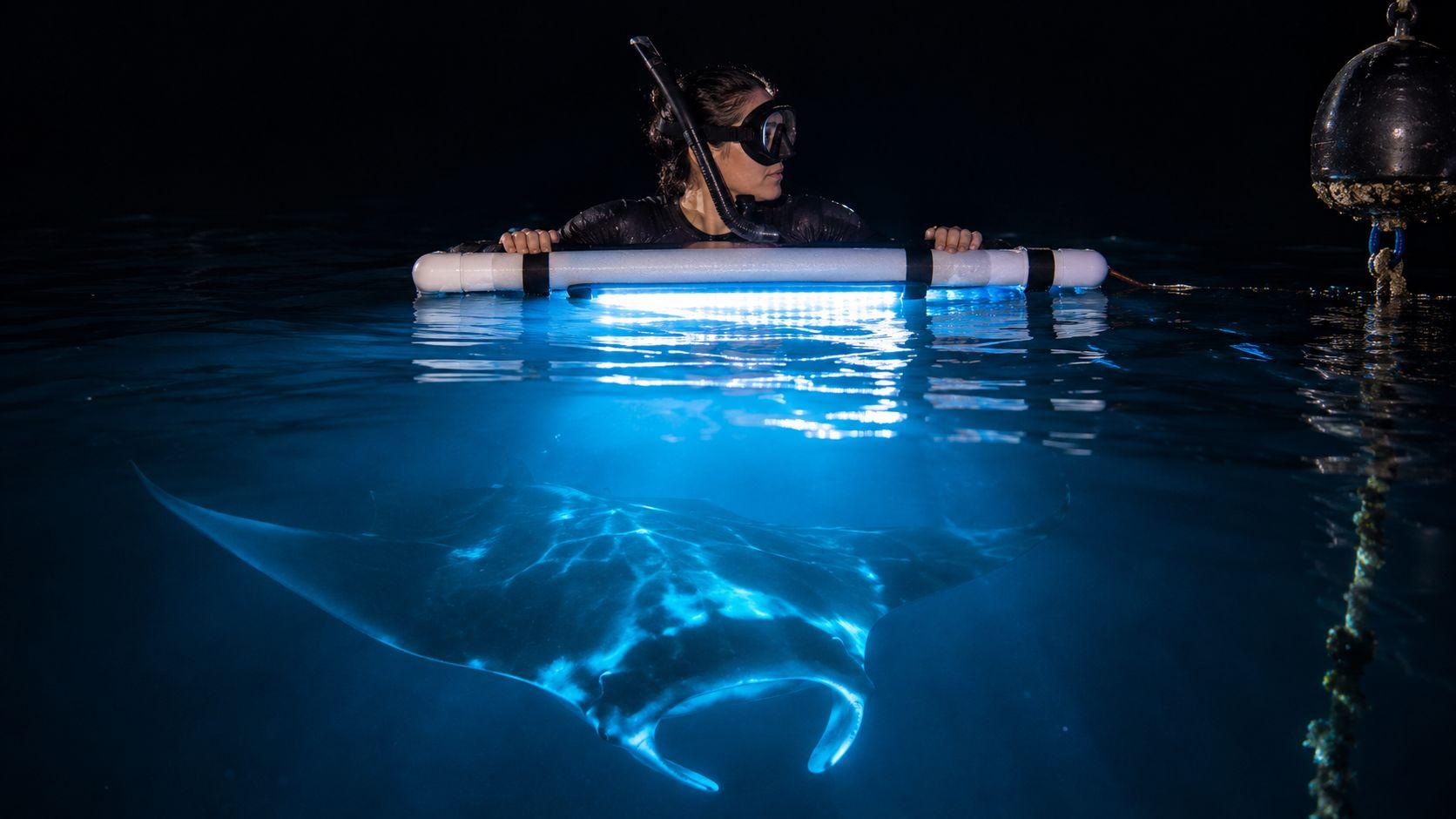
The view is close, but the experience is mostly sensory. You hear your own breathing through the snorkel, fins moving nearby, and the rush of water as a manta's cephalic fins pass overhead. Fish may snap at plankton above the surface. Underwater, your breath becomes the dominant sound.
The light board changes the encounter
The board provides flotation and a fixed viewing position. It also helps the crew keep the group arranged around the feeding area. Keep your face in the water, hold the board, and use small kicks only when needed. The ray decides how close it comes.
The illuminated area usually stays active for about 30 to 45 minutes, according to research describing the standard night-feeding format in Hawaiʻi and Maui Frontiers in Marine Science. Some boats offer more than one viewing period. Others keep everyone in the water for one continuous session.
Practical rule: Stay calm and still for the best view. Chasing a manta moves you away from the feeding corridor and disrupts the experience for the group.
Cold water and darkness expose weaknesses that a daytime beach swim can hide. A wetsuit helps, and flotation support makes it easier to focus on breathing instead of staying afloat. Guests who panic in open water, struggle to swim, or become severely seasick should sit this trip out or discuss alternatives with the operator before booking. For comfortable swimmers, the result is an unusually close wildlife encounter without diving after the animals.
Why Kona Is the Global Capital of Manta Encounters
At Kona's established manta sites, the encounter starts before a ray appears. Fixed underwater lights gather plankton into an illuminated feeding area. Mantas follow that concentration and filter-feed through it, rather than pursuing individual fish. Research on manta tourism identifies this light-driven arrangement as a central reason operators can create a dependable feeding corridor Frontiers in Marine Science.
That setup changes the odds compared with searching open water. A general wildlife trip waits for an animal to pass through a large area. A Kona night snorkel uses a known site, fixed lights, and manta rays that repeatedly return to productive feeding locations. The result is predictable enough to plan around, though no responsible crew should promise a guaranteed sighting or a specific number of animals.
The long record behind the reputation
The local record is unusually strong. A University of Hawaiʻi study examined community-sourced observations collected over 13 years, from 2010 through 2022, at Garden Eel Cove and Keauhou. The dataset contained more than 23,000 sightings of 167 unique reef manta rays University of Hawaiʻi research.
Garden Eel Cove consistently supported larger aggregations than Keauhou, while the study also found high site fidelity despite tourism pressure. Individual mantas repeatedly used familiar feeding areas. That behavior helps explain why Kona became recognized worldwide for this activity, as described in this guide to why Kona tops Hawaiʻi for manta ray night snorkeling.
A separate NOAA-backed study recorded observations across 2017 nights at Manta Heaven and 1702 nights at Manta Village from 2009 through 2014. Dives generally began around 18:00, lasted about one hour, and kept mantas within roughly 10 meters of the lights NOAA-backed study.
Those figures describe a repeatable feeding system, not a promise that every guest will see the same display. Weather, water conditions, animal behavior, and crowding still affect each trip.
What works and what does not
Fixed lights, consistent moorings, and disciplined station-keeping support the feeding pattern. Starting too early, drifting away from the light cone, or spreading swimmers across open water makes the encounter less predictable.
The format works because it concentrates plankton without feeding, touching, or restraining the rays. The crew sets the conditions, then the mantas decide how to use the space.
Preparing Your Body, Gear, and Booking
Good preparation starts with water comfort, not camera equipment. You should be able to float, breathe through a snorkel, follow crew instructions, and remain composed when you can't see the bottom. You don't need to be an advanced swimmer, but a non-swimmer should never assume that a flotation board removes every open-water risk.
Choose gear that helps you stay relaxed
A full wetsuit in the 3 mm to 5 mm range is a sensible choice for a night session, especially if you get cold easily. A low-profile mask with a black silicone skirt reduces distracting peripheral light. Use an adjustable snorkel that fits securely, and avoid bringing loose accessories that can shift when you enter from a platform or ladder.
Pack reef-safe sunscreen and apply it at the dock so you aren't spreading fresh product over the water. A rash guard can reduce rubbing under the wetsuit. If you're filming, a GoPro on a short wrist mount is easier to control than a long selfie stick, which can strike another swimmer or enter a manta's path.
The best body position for manta ray night snorkeling is face down, level at the surface, with your hands anchored to the board and your fins kept below the main light field. That position gives you a clear view without requiring constant kicking.
Be candid about medical readiness
Skip alcohol before the trip, avoid boarding immediately after a heavy meal, and drink water before departure. Seasickness, anxiety, and cold can all become more difficult when combined with poor preparation.
Some guests should prepare differently or sit this one out. Speak with a physician if you have heart disease, a history of stroke, lung disease, or another significant condition that could affect your safety in the water. Guests with uncontrolled vertigo, severe asthma, or recent shoulder surgery should not treat this as a casual activity. Pregnancy, particularly later pregnancy, also warrants a direct conversation with a medical professional and the operator before booking.
Neutral operator guidance emphasizes confident swimming and physician consultation for guests with serious medical conditions Sea Paradise safety FAQ. A Hawaiʻi County safety assessment also described the combination of night operations, boats, and in-water participants as having ample opportunity for a severe accident unless risks are controlled.
Before paying, ask about the group size, the number of snorkelers assigned to each light board, flotation support for weaker swimmers, and whether the operation is surface-only or also accommodates scuba divers below.
The Tour from Dock to Light Board
At the dock, the crew turns a dark-water activity into a series of manageable steps. They check wetsuit fit, adjust masks, explain the entry, demonstrate how to hold the light board, and show you how to climb back aboard. Listen even if you have snorkeled for years. At night, familiar reference points disappear, and the boat ladder can seem farther away once you are in the water.
During the ride to the mooring, ask practical questions and tell the crew if you need help with entry, flotation, or reboarding. After the boat is secured, you will usually enter from a platform or with a giant-step entry. Your first job is to settle into the water and confirm that your equipment and flotation feel right. Finding a manta comes after that.
The first minutes in the water
The light board may be the brightest object around you. Keep both hands on it, aim your body toward the illuminated water, and use only enough fin movement to stay positioned. The lights concentrate plankton near the surface, creating the feeding area that brings mantas close. A ray may first appear as a dark shape outside the beam before turning through the lit zone.
The pattern is usually calm and repeatable, although individual visits vary. Float face down, breathe evenly, and let the crew maintain spacing between swimmers. If a manta turns away, stay in place. Chasing it can break the feeding route, while the same animal may return through the light on its own.
The in-water window is typically about 30 to 40 minutes, within the broader 30 to 45 minute format documented for these encounters as noted above. The actual duration depends on the operator, weather, group needs, and sea conditions. A predictable light-and-plankton setup improves the odds of an encounter, but it cannot guarantee continuous manta activity.
Getting out without rushing
When the crew ends the session, follow the exit method covered at the dock. Approach the ladder or platform one person at a time, keep your fins away from the boarding area, and pass equipment to the crew when instructed. Put the camera away while climbing. A free hand and an unobstructed view matter more than one final shot.
Once aboard, warm clothing, water, and a simple snack help you recover from the cold and salt water. Use the debrief to ask what animals were present and how the crew recognizes individual mantas. Review this Kona manta snorkel check-in guide before arriving so the dockside process is familiar.
In-Water Etiquette That Protects the Rays
The code is simple: don't touch, don't chase, and never dive down onto a manta. These rules aren't decorative language for a marine-tourism brochure. They keep swimmers out of the animals' path and reduce the chance of physical contact.
Manta rays are filter feeders that eat zooplankton, not fish, and they don't have a tail stinger or barb Love Big Island manta guidance. The principal animal-related problem is accidental contact. Mantas have a protective mucus layer, and touching can damage it and expose the skin to infection.
Let the ray control the distance
Hold the board and keep your body parallel to the general flight path rather than turning across it. Keep your fins below the strongest light line, where they're less likely to interfere with a manta's approach. If a ray passes close overhead, resist the instinct to reach up.
A free diver may think moving toward the animal creates a better photograph. In practice, it can make the manta change direction and can force nearby swimmers to react. The best encounters happen when the animal chooses the distance and the group keeps the corridor clear.
The ethical advantage of surface snorkeling is restraint. You can watch a manta feed at close range without pursuing it, touching it, or forcing it to avoid you.
Hawaiʻi law prohibits knowingly capturing or killing manta rays in state waters. Broader manta-tourism research also warns that regulated wildlife-viewing sites can still place pressure on focal species and habitats, so compliance alone isn't the same as zero impact Hawaiʻi manta guidance.
Keep your equipment clean and controlled
Apply sunscreen before entering the water, choose reef-safe products, and avoid jewelry or accessories that could scratch an animal. Secure cameras and straps. Rinse gear as directed before boarding if the crew provides a rinse system.
For a deeper look at responsible behavior, the manta ray night snorkeling ethics guide is a useful reference. The principle is easy to remember: the manta is the resident, and you're the visitor.
Seasonality and How to Time Your Trip
Manta rays are present around Kona throughout the year, but reliability changes by month. Weather, cancellations, sea conditions, and plankton patterns all influence whether a scheduled trip operates and what guests experience.
A 2025 site report logged 270 operating nights and found sighting success above 96% from April through October. It also reported mantas on every operating night during peak summer months, while January fell to 33% and November through December averaged around 67% because of cancellations and winter conditions Manta Ray Advocates 2025 statistics.
| Month | Sighting Success Rate | Typical Conditions |
|---|---|---|
| January | 33% | Winter conditions and cancellations can reduce operating opportunities |
| February through March | Not specified in the verified data | Seasonal conditions vary, so confirm the operator's current forecast |
| April through October | Over 96% | Strong operating reliability in the cited report |
| November through December | Around 67% | More cancellations and winter conditions |
The table shows why annual averages can mislead. A trip booked during a favorable operating period may have excellent odds, while a winter booking can face a greater chance of cancellation even though manta rays remain in the area.
Match your booking to the trade-off
If your priority is the strongest documented sighting reliability, the April through October period is the clearest choice in the available data. If your priority is fewer people, shoulder or less popular dates may appeal, but you should leave flexibility for a weather cancellation.
The practical move is to place the manta trip early enough in your Kona stay that a reschedule remains possible. Operators cancel for sea conditions, especially swell and unsafe access, not merely because the air feels cool. A manta being present doesn't make a departure safe.
Plan for the water, not the calendar. The best month on paper still loses its value if you can't adjust when conditions change.
Booking With Confidence and What to Ask
A credible manta operator should answer safety and operating questions plainly. Look for a Coast Guard-documented vessel and captain, a consistent mooring at Garden Eel Cove or another established manta location, and a written no-touch policy. The crew should explain how it supports swimmers who are nervous, tired, or unable to keep pace. That answer matters because a light-board encounter depends on keeping guests calm, spaced correctly, and in position while plankton gathers.
Ask how many guests share each guide and light board, not only how many passengers the boat can carry. A smaller working group gives the crew more time to monitor masks, spacing, flotation, and reboarding. It also makes it easier to adjust support when sea conditions or swimmer ability vary.
Questions worth sending before payment
- Weather cancellations: Ask when the operator makes a go or no-go decision, which conditions trigger cancellation, and how rescheduling works.
- Sea-sickness support: Confirm the crew's plan for guests who become ill during the ride or in the water.
- Swimming requirements: Ask how the company assesses minimum swimming ability and whether non-swimmers have a safe participation option.
- Children's equipment: Confirm that masks and snorkels can be fitted properly for younger guests.
- Medical disclosure: Ask whether liability coverage or additional requirements apply to non-swimmers and guests with medical conditions.
- Mooring and light setup: Find out whether the trip uses a fixed or established viewing location and how underwater lights are deployed.
- Reboarding: Ask whether guests use a ladder, platform, or lift, especially when anyone in the group has shoulder or mobility limitations.
Boat and shore options aren't interchangeable
Boat trips generally provide a structured light-board setup, crew supervision, and a defined reboarding process. Shore options can remove the boat ride, but entries may be more demanding, space may be limited, and support may differ. Compare the actual water access, flotation, lighting, and exit procedure rather than advertised duration or price.
Ask what the crew does if mantas do not appear immediately. A patient crew maintains the light field and keeps guests in position, giving plankton time to collect. An improvised operation may move constantly, scatter swimmers, or encourage guests to chase wildlife. Those choices affect both the encounter and the animals' space.
Kona Snorkel Trips offers manta ray night snorkel departures from Honokohau Harbor with crew-led flotation and illuminated-board viewing. Compare its manta ray snorkel availability with the answers from other local operators, then choose the trip whose safety procedures and water access fit your group.
Choose a trip with enough schedule flexibility for changing sea conditions. Review the swimming requirements, reboarding plan, light setup, and no-touch policy before paying. Visit Kona Snorkel Trips to compare the available manta experience and plan a guided night on the water that suits your group.
Keep reading
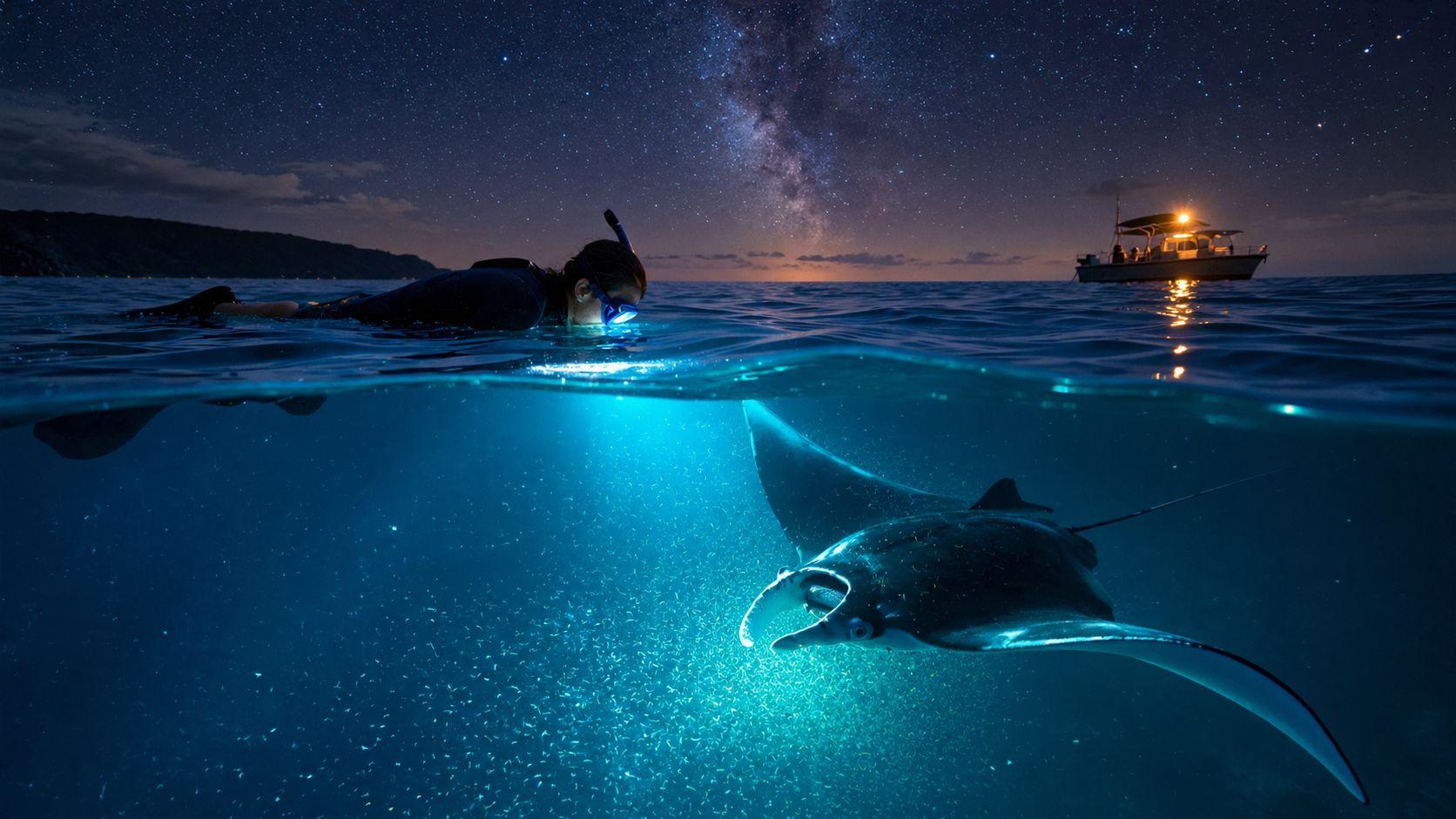
Manta Ray Night Snorkeling in Kona: A First-Timer Guide
Plan your manta ray night snorkeling trip in Kona with safety, conservation, packing tips, and booking advice for first-time snorkelers and families.
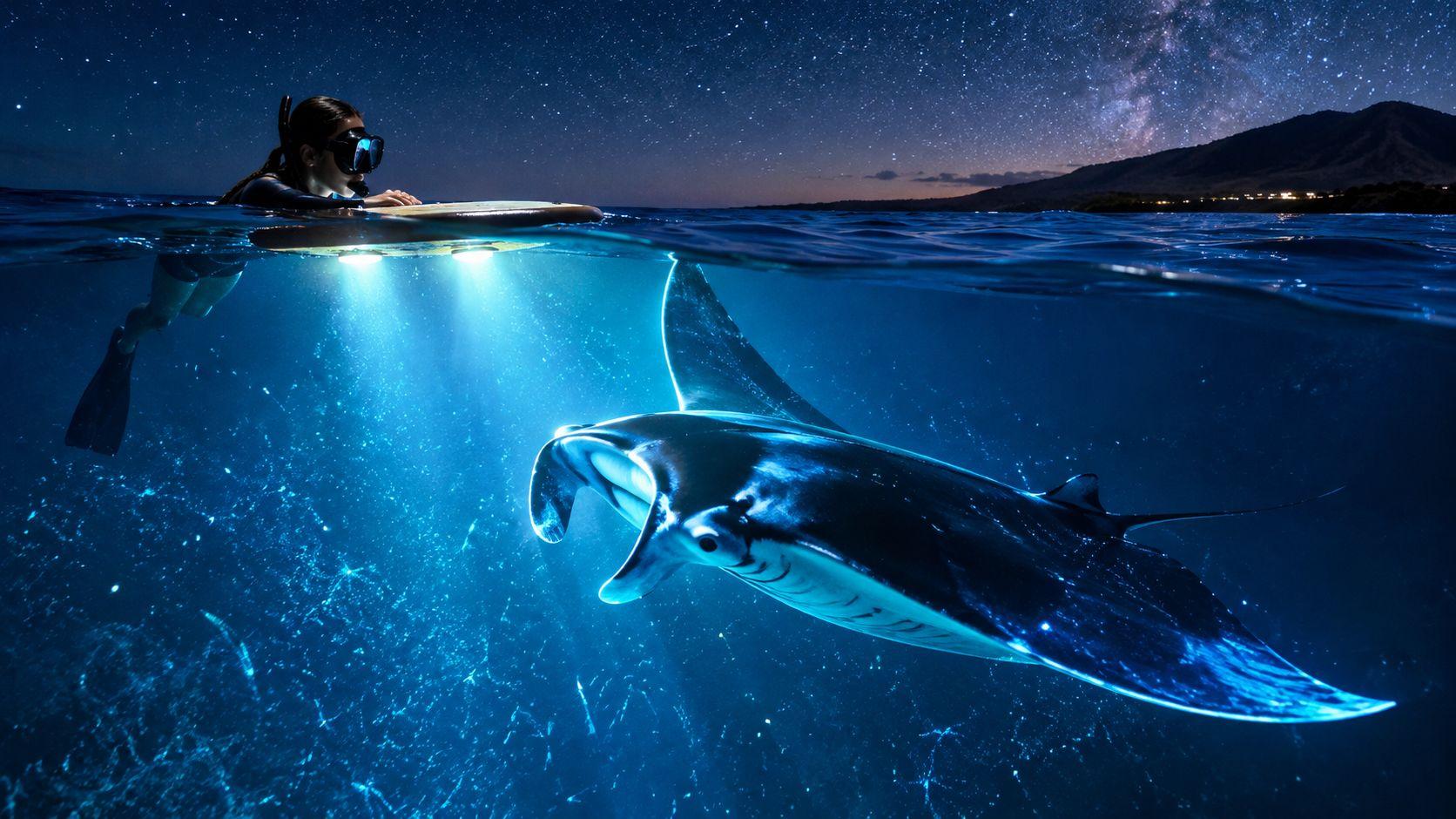
Manta Ray Night Snorkel Big Island: What to Expect
Manta Ray Night Snorkel Big Island. Plan a manta ray night snorkel on the Big Island with this 2026 guide to sites, timing, safety, etiquette, and booking tips.
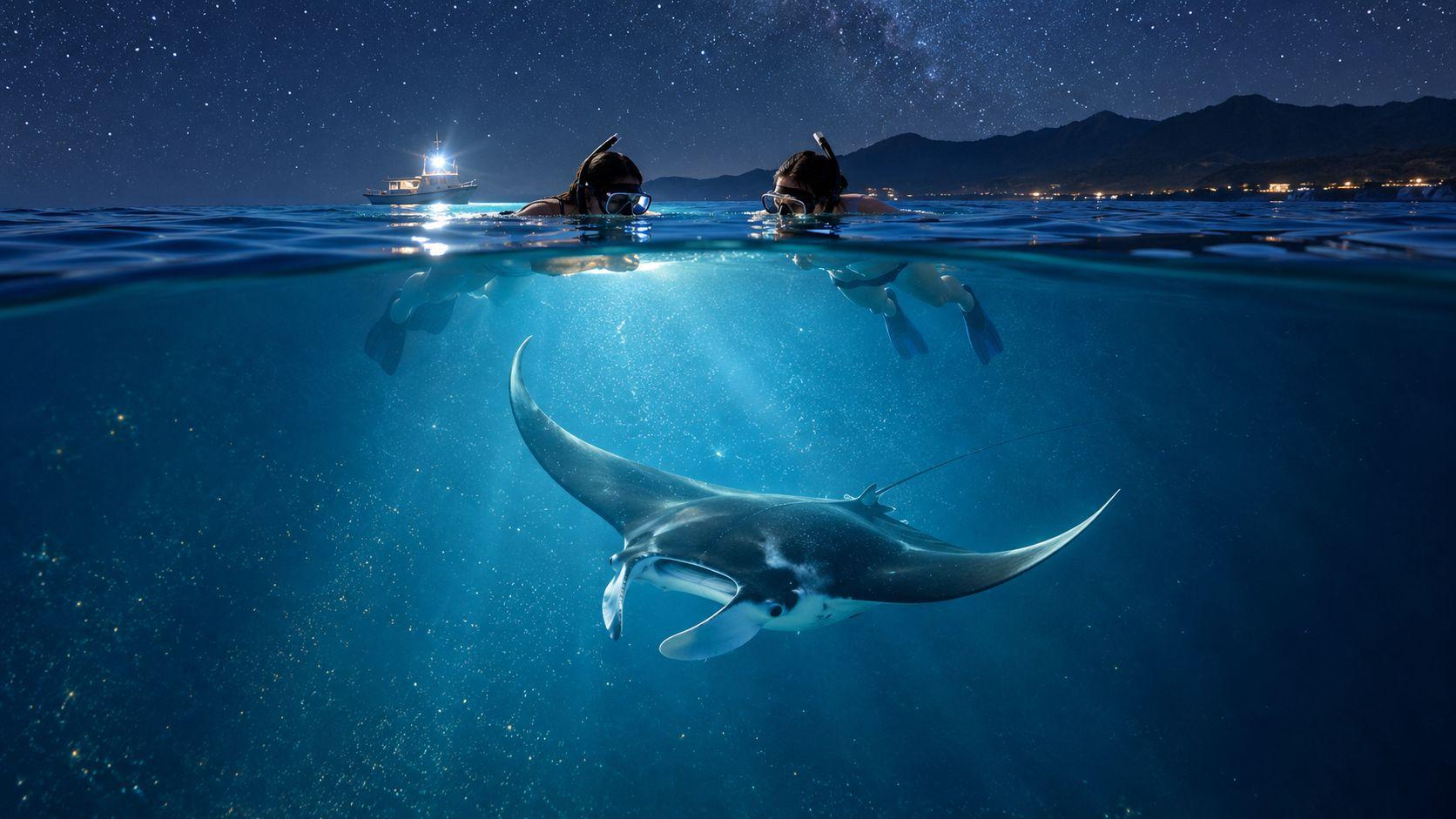
Mantarays Hawaii: A Complete Guide to Night Snorkel Tours
Plan your mantarays Hawaii adventure in Kona. Discover best sites, what to expect on a night snorkel, safety, conservation, and booking tips.