
You're probably comparing tour pages, checking whether you should snorkel or scuba dive, and wondering what the experience is really like after sunset. The practical answer is that a manta ray night dive in Kailua-Kona can be extraordinary, but the quality of the night depends on more than manta sightings. Sea conditions, group spacing, light placement, swimming comfort, and operator decisions shape what you'll see and how safely you'll see it.
Kona's manta encounters work because a predictable feeding setup brings people to established viewing areas. That doesn't make the animals guaranteed performers. It means visitors can observe a well-studied population under carefully managed conditions, provided everyone treats the ocean as a wildlife habitat rather than an underwater theater.
The Magic of Kona's Nighttime Manta Encounters
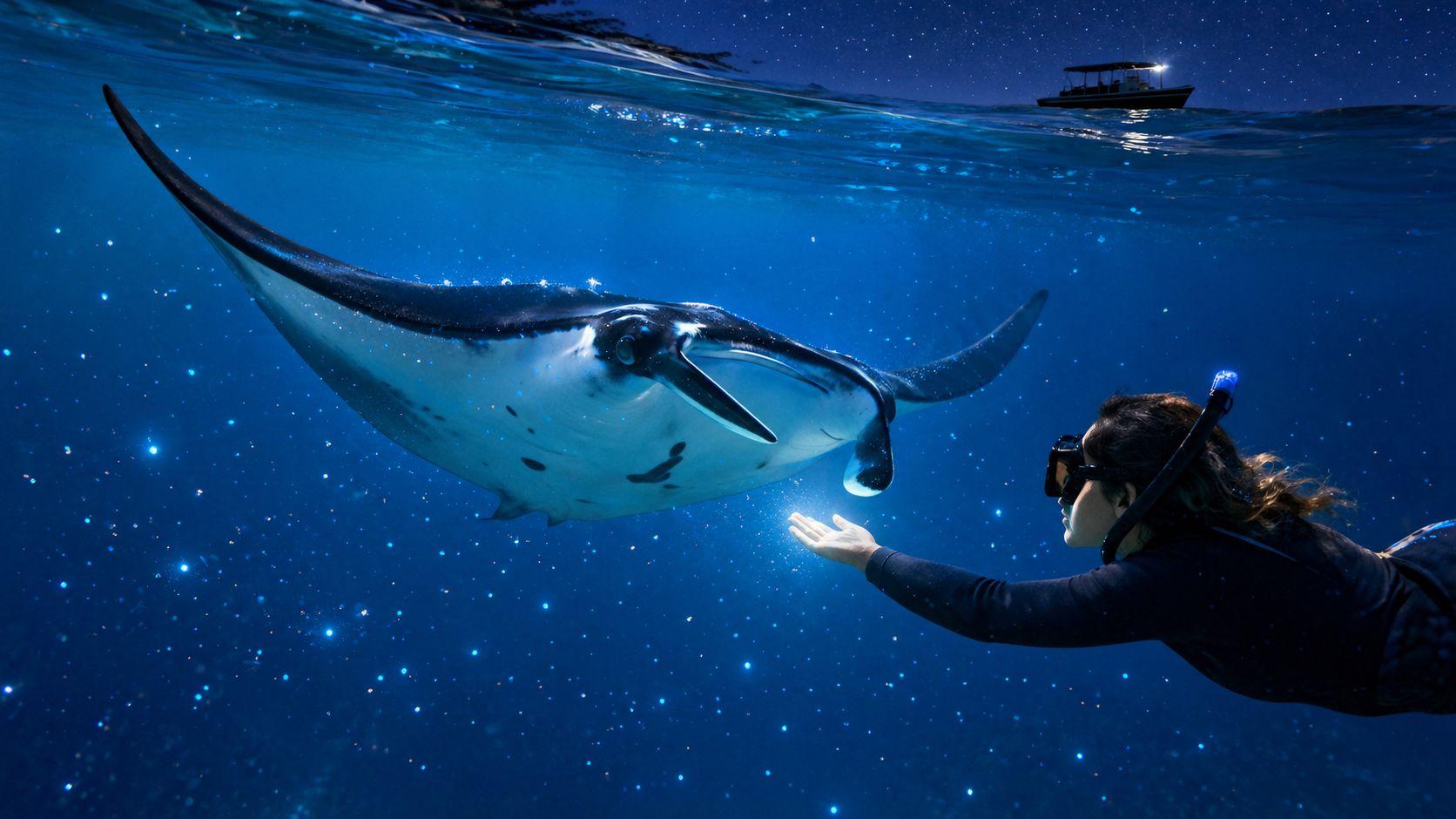
The first moments are disorienting. You leave the boat's ladder, settle into the dark Pacific, and see almost nothing beyond the glow beneath the viewing board or the lights on the seafloor. Your breathing sounds loud inside the mask. Then plankton gathers in the illuminated water, and a broad shadow appears at the edge of the beam.
A reef manta turns toward the light, rolls through the feeding column, and disappears into the darkness before returning from another direction. There's no chase and no trained behavior to trigger. The animal follows food, while you remain still enough to avoid becoming an obstacle.
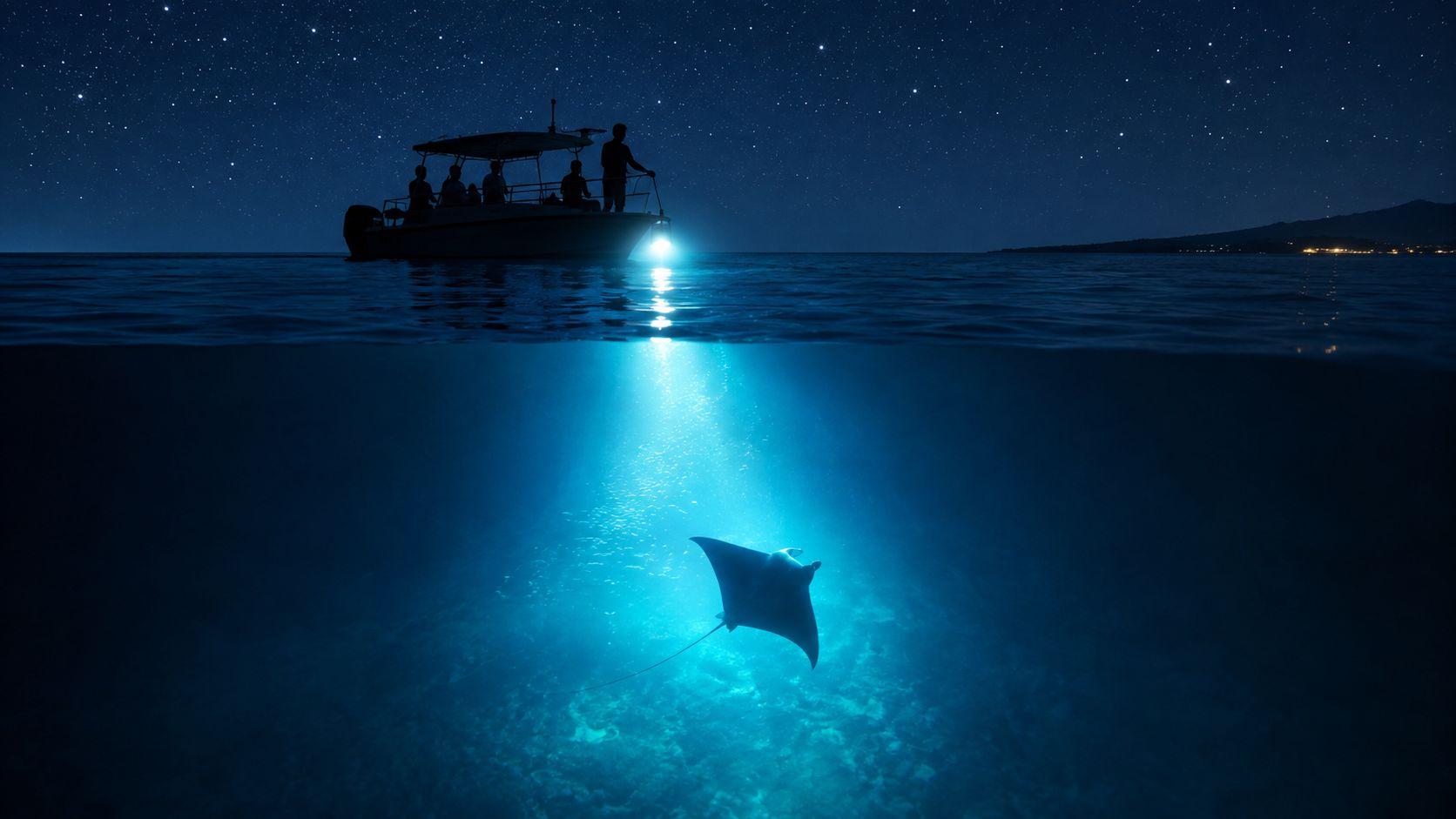
That feeding setup is known as the Campfire Method. Concentrated lights attract plankton, and the plankton attract manta rays into a defined viewing area. Hawaii Ocean Watch's explanation of Kona's viewing sites and the Campfire Method describes why concentrating the activity in one location can give people a clearer viewing area while leaving the mantas room to feed and move.
Why Kailua-Kona became famous for mantas
Kona's night-diving tradition reaches back to the late 1970s, when illuminated coastal areas began attracting plankton and, in turn, manta rays. By 2002, a survey of nine Kona dive shops recorded approximately 11,000 snorkelers and divers taking part in manta tours, producing about $920,000 in direct revenue for those operators. The broader manta-diving industry was estimated to contribute approximately $2.5 million annually to Hawaii's economy. These figures come from Hawaii legislative testimony documenting the history and economic significance of Kona's manta tourism.
The activity also has an unusually long observational record. Researchers collected 3,208 surveys from 1992 through 2007, primarily around Keauhou and Ho'ona Bay, where mantas regularly gathered after dark. That history matters because it shows this isn't a recently invented attraction built around occasional luck.
A population you can recognize
The mantas around Kona aren't random animals passing through for one meal. A six-year study recorded 25,444 observations involving 118 individually identified reef manta rays, Mobula alfredi, at Manta Heaven in Makako Bay and Manta Village near Kaukalaelae Point. Researchers surveyed 2,017 nights, with Manta Heaven accounting for 19,841 observations and Manta Village accounting for 5,603. The full study is available through NOAA's repository record on Kona's individually identifiable manta population.
That doesn't mean every animal is resident in the same way or that every night produces the same display. Individuals vary in movement and site use. Some return repeatedly to a familiar feeding area, while others appear less consistently. For a useful explanation of why mantas gather near Kona after dark, see this guide to Kona's nighttime manta behavior.
Practical expectation: You're observing wild animals with a strong history of site use, not attending a guaranteed performance.
Snorkeling vs Scuba Diving with Mantas
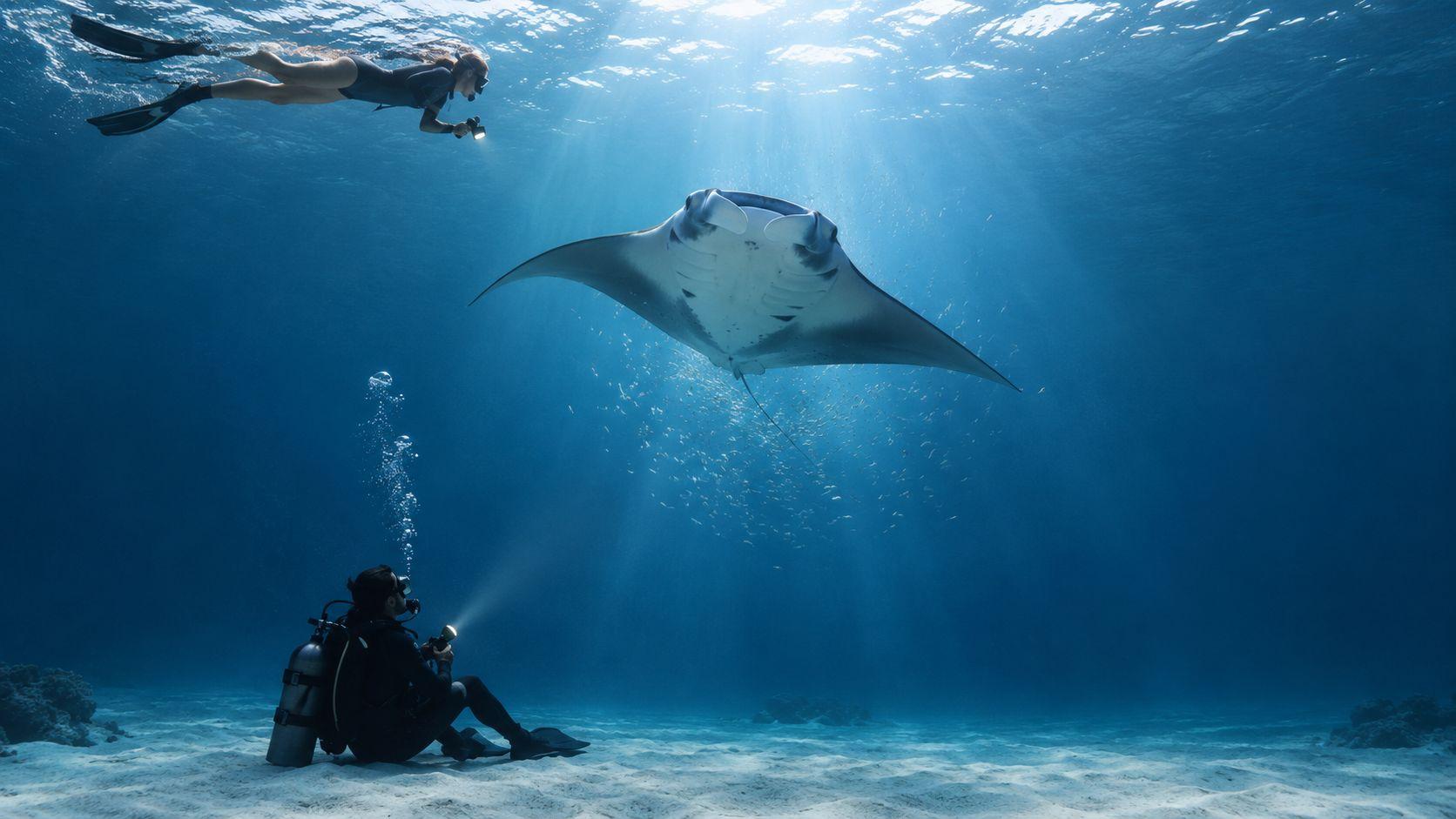
Snorkeling and scuba diving place you in the same feeding environment, but they produce completely different viewpoints. Snorkelers remain at the surface and look down into the illuminated water. Divers sit on the seafloor and look upward as mantas pass between the lights and the surface.
Neither option is automatically better. The right choice depends on how comfortable you are in open water, whether you can maintain your position, and whether you already hold the required certification.
The surface view
A snorkeler usually holds a light board or remains at a supervised surface position. The light draws plankton upward, and mantas may pass below, beside, or directly toward the viewing area. You'll often see the white underside first, followed by the wide cephalic fins and the slow turn of the animal as it loops back through the food-rich water.
Snorkeling is accessible, but “accessible” doesn't mean effortless. You need to swim without relying on a flotation device, remain calm in dark water, and follow directions when the group shifts or conditions change. A nervous swimmer who spends the entire encounter fighting the water may get less from the experience than a confident swimmer who chooses a quieter, more stable night.
You can compare the two formats in this Kona manta ray night snorkel and night dive guide. If you're specifically looking for a guided manta ray night snorkel, this Kona manta ray snorkel tour is one option to evaluate alongside other operators. Manta Ray Night Snorkel Hawaii is another exceptional alternative when comparing a Manta Ray night snorkel tour.
The seafloor view
Scuba divers descend to the viewing area and sit or kneel on the sandy bottom around the lights. From there, the mantas appear overhead, sometimes turning so their pale bellies fill the beam. The perspective gives you a better sense of the animals' movement through the entire feeding column, rather than only the section visible from the surface.
Scuba participants need Open Water certification. The dive also demands buoyancy control, calm breathing, and awareness of equipment. Exhaled bubbles can affect how an animal approaches, and a diver who constantly adjusts position can disrupt the viewing circle for everyone nearby.
Divers should aim lights upward, avoid sweeping beams across the group, secure dangling equipment, and control bubbles near the animals. The goal isn't to move closer. It's to become a predictable, quiet presence on the bottom.
For certified divers, Kona Honu Divers' manta dive and snorkel experience offers a dedicated route into this type of encounter.
Preparing for Your Night Ocean Adventure
Preparation starts before sunset. A manta encounter involves a boat ride, a dark-water entry, time in one position, and a return trip when the air feels cooler against wet skin. Small comfort decisions can determine whether you stay focused on the animals or spend the evening managing discomfort.
Before leaving the harbor
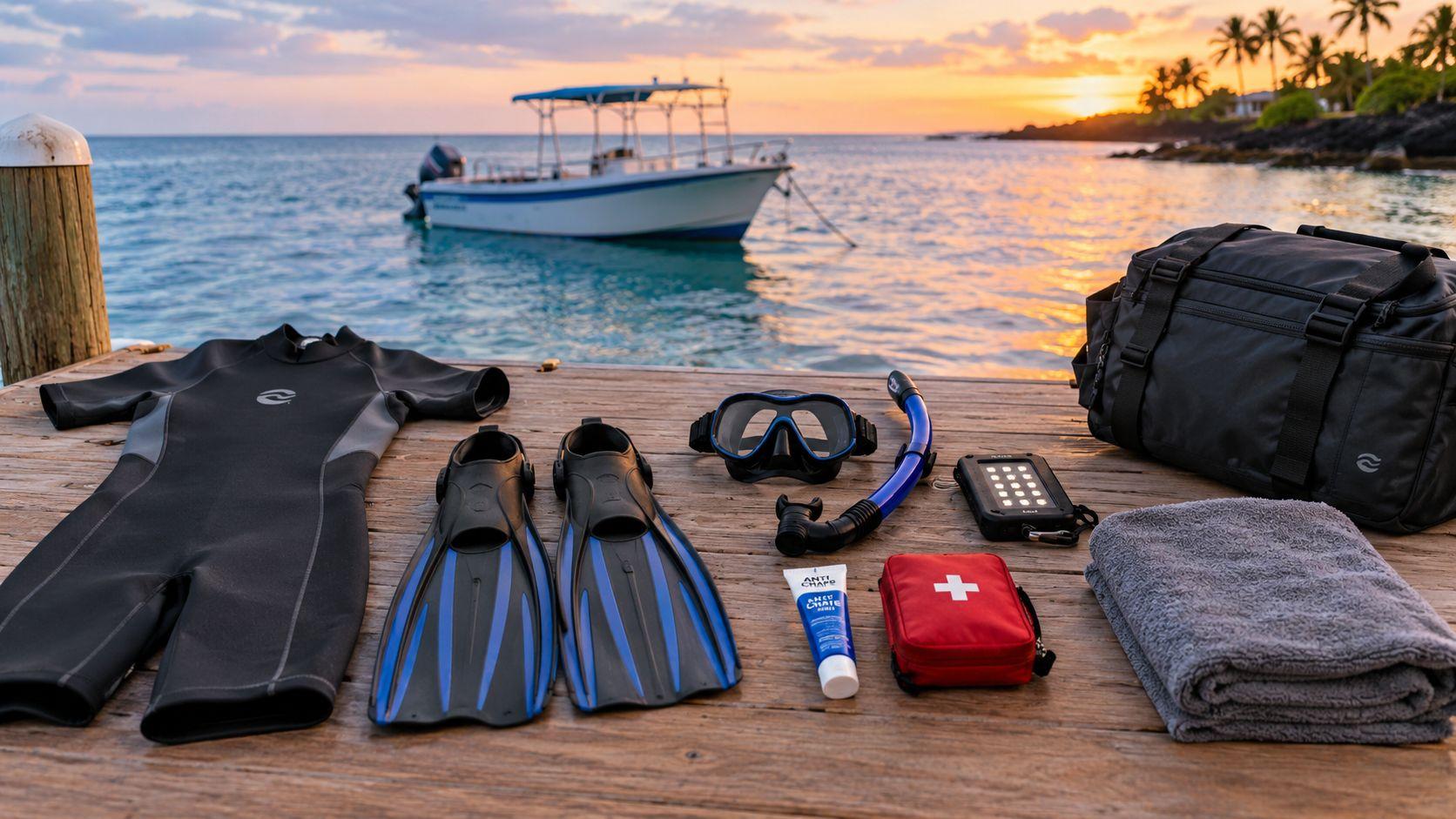
Wear your swimsuit under easy-to-remove clothing. Bring a towel, warm dry layers, and clothing that won't chafe under a wetsuit or life jacket. A light jacket or dry sweatshirt is useful after the swim, even when the afternoon felt hot.
Ask the operator what equipment is included. A typical guided experience may provide a mask, snorkel, shorty wetsuit, fins, flotation equipment, or dive gear depending on the activity. Don't assume that every boat supplies the same items, especially if you need prescription vision correction or a particular mask size.
If you're bringing a camera, secure it before boarding and learn its controls in daylight. A camera that requires repeated fiddling in the water creates distractions and can lead to accidental contact with equipment or animals. For more specialized equipment considerations, use this guide to diving photography equipment.
Prepare for the ocean you have
Conditions can change the experience substantially. West-to-northwest swells may create surge and reduce visibility at manta sites, while strong winds can affect the boat operation. Lunar conditions, turbidity, swell direction, and prey distribution can also influence how clearly you see the feeding area and how long mantas remain nearby.
That means a cancellation or reroute isn't necessarily a failure by the crew. A responsible captain weighs the conditions against the swimming ability and comfort of the guests, rather than pushing ahead to protect a marketing promise.
Manage your body, not just your gear
If you're prone to seasickness, plan your preferred remedy before departure and follow its medical directions. Eat lightly, drink water, and avoid arriving dehydrated or overtired. The boat ride and the swim both feel harder when your body is already under stress.
For families, assess whether each child can remain calm and stable in the water for the full viewing period. Young or inexperienced swimmers may need more support than a flotation board can provide. Ask the operator how guides assist anxious guests, what happens if someone needs to exit early, and whether the trip can be altered when the sea worsens.
The best night isn't necessarily the night with the most manta activity. It's the night when you can stay stable, see clearly, and follow the crew's instructions without panic.
In-Water Etiquette and Safety Protocols
At the light board, your job is to become predictable. Hold your position, keep your body controlled, and let the manta choose its distance. Do not swim toward it, reach out, or place yourself across its path. A manta turning away is a cue to remain still, not an invitation to follow.
Kona's “campfire” method concentrates lights beneath the surface, drawing plankton and creating a feeding area. The setup works only when guests stay within the assigned viewing zone. Scattered lights, swimmers crossing the feeding column, and people pressing into the group's edge disrupt that arrangement and make movement harder for both guides and animals.
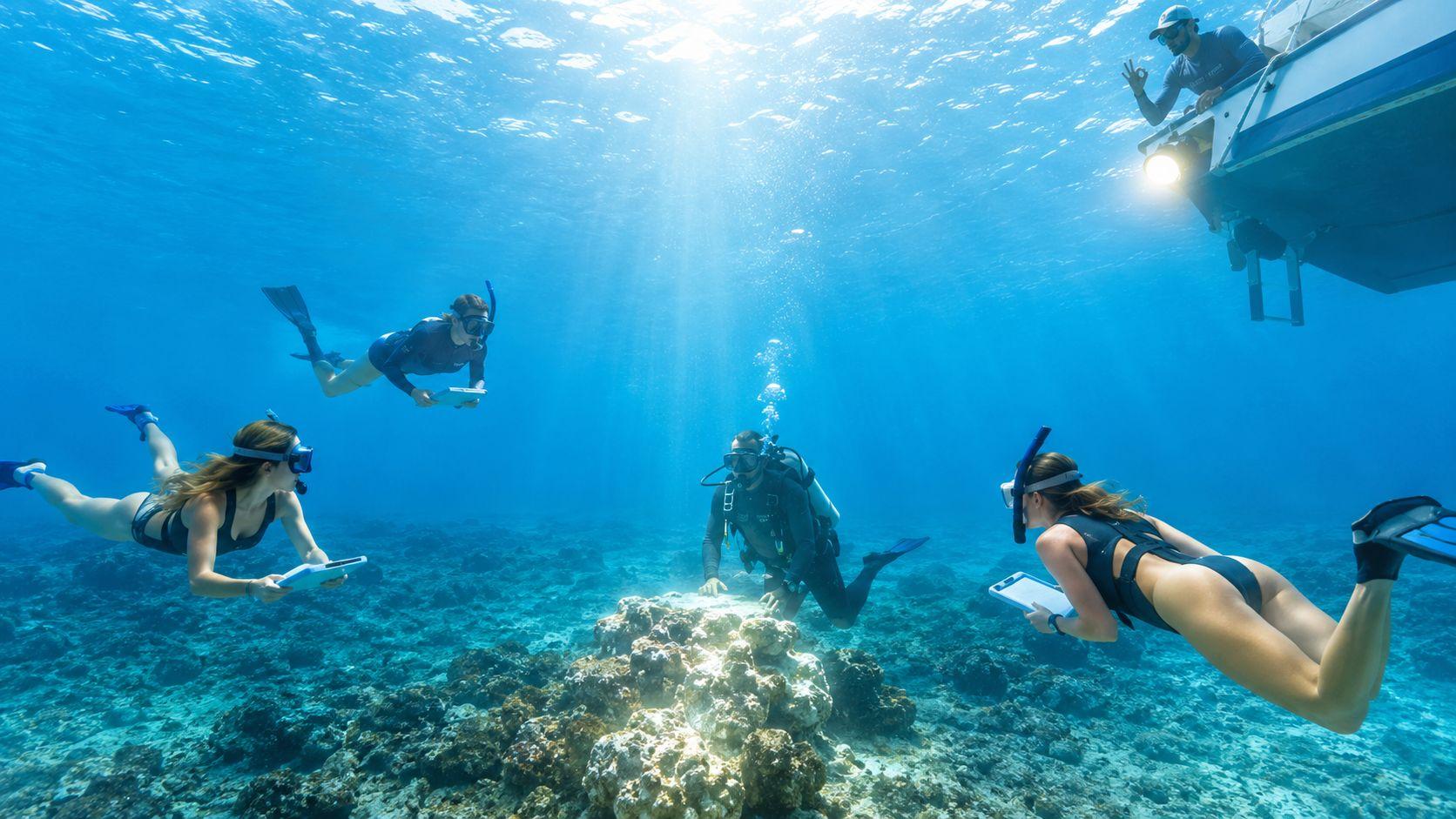
Snorkeler positioning
Stay at the surface with your light aimed downward. Do not dive into the feeding column, kick toward a manta, or pass beneath another participant. If the guide signals a repositioning, move slowly and preserve space around the people beside you.
Secure mask straps, snorkels, cameras, and loose accessories before entering the water. A dangling strap can catch on a ray or pull at your mask when you need clear vision. Keep your hands off the viewing board except for steady support. Pushing it toward the animals changes the group's position and can put the next snorkeler too close.
For groups of four or more, NOAA guidance recommends an in-water snorkel guide and a snorkel ring or comparable device for group control. The recommendation appears in NOAA's visitor research and safety material for the Kona manta experience. Follow the guide's signals rather than creating your own route around the board.
Diver positioning
Divers should settle on the seafloor and aim lights upward. Keep beams out of other divers' faces and avoid sweeping them across the viewing circle. Uncontrolled light makes it harder to judge distance and changes the visual conditions around the feeding area.
Maintain buoyancy as a manta approaches. Bubbles rising directly into its path may cause it to turn away, while a diver drifting upward can obstruct the animals and the snorkelers above. Touching, chasing, blocking, or redirecting a manta is an active disturbance, not participation in the encounter.
Why crowding needs management
Crowding affects safety, visibility, and the quality of the viewing experience. Visitor research at Garden Eel Cove surveyed 444 participants, achieved an 89% response rate, and reported a ±4.6 percentage-point margin of error at 95% confidence. Respondents described seeing roughly 62 snorkelers, 33 divers, and 12 boats on average. Those conditions are documented in the same NOAA visitor research report.
A 2015 safety assessment observed approximately 16 to 19 vessels per night and an estimated 160 to 190 snorkelers and divers in the water concurrently. It also notes that operators need appropriate commercial permits for State Ocean Waters and the relevant harbor or launch ramp operation. The Kona nighttime manta boating and safety assessment explains why crew control and lawful operations matter. Participants help by staying in their assigned position, leaving animals room to turn, and exiting only through the route the crew provides.
Choosing the Right Tour and Viewing Site
Kona's manta sites operate differently, so the location printed on a booking page is only part of the decision. Manta Village, Manta Heaven, and Manta Point have different access arrangements, lighting setups, water conditions, and crowd patterns.
| Site Name | Access Method | Key Characteristics |
|---|---|---|
| Manta Village | Boat | Near Kaukalaelae Point, with a boat-based viewing area at one of Kona's principal night sites |
| Manta Heaven | Boat | In Makako Bay, one of the two heavily monitored principal sites, with boat-mounted lights attracting plankton below the viewing boards |
| Manta Point | Shore entry | Keiki-friendly shallow viewing area near Old Kona Airport state park, with land-based lights rather than boat-mounted boards |
The two boat sites are not interchangeable. Manta Heaven recorded more observations in the six-year monitoring dataset, while Manta Village showed repeated use by individually identified rays. Those records describe recurring site use, not a permanent ranking. Captains may choose a site according to wind, swell, visibility, access, current manta activity, and how many vessels are already operating there.
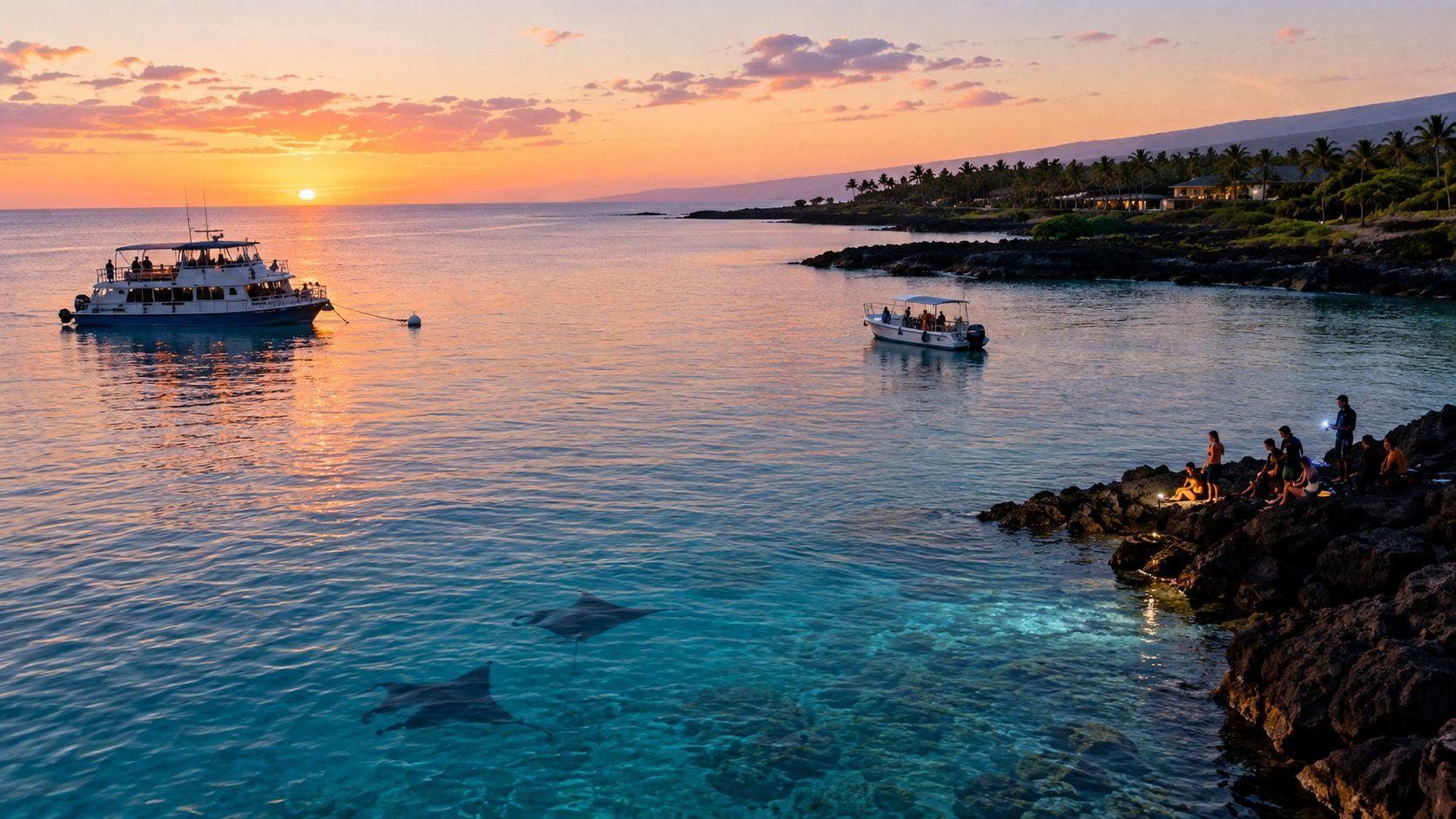
The familiar “campfire” method has a biological reason. Operators place bright lights in or below the water, concentrating illumination in one area. Small plankton gather around the light, and manta rays follow that food source into the viewing zone. A concentrated setup gives the animals a predictable feeding area, while scattered lights can spread both the plankton and the guests across a wider section of reef.
Evaluate the operator, not just the location
A lower price does not show how a crew manages a crowded viewing circle. Ask these questions before booking:
- Group control: Does a guide stay in the water with snorkelers, and how are swimmers kept clear of the feeding column?
- Weather decisions: Which conditions trigger cancellation, rerouting, or an early return?
- Lighting practice: Does the operator keep lights concentrated instead of scattering guests and beams across the site?
- Mooring and reef care: How does the crew avoid unnecessary seafloor contact?
- Wildlife conduct: Does the briefing prohibit touching, chasing, blocking, and deliberate close approaches?
- Data contribution: Does the operator record the date, site, visibility, number of rays, identification marks, and behavior?
A defensible encounter rate counts nights with at least one manta and divides that by nights surveyed. It cannot guarantee a manta's close approach on your trip. This guide to where manta rays can be seen on the Big Island provides site background, while the crew should explain how that evening's weather, visibility, food availability, and vessel traffic may differ from historical conditions. A quiet night can reflect natural plankton conditions, while a busy night places greater responsibility on the crew to control spacing and protect the animals' feeding route.
Frequently Asked Questions About Manta Encounters
What are the chances of seeing a manta?
Historical monitoring shows frequent manta presence at the principal sites, but you should separate manta presence from close approach. A ray may be in the wider area without entering the exact viewing circle, and poor visibility can prevent guests from seeing animals that researchers or guides detect.
A six-year observation protocol used a standardized one-hour window shortly after sunset. Mantas were recorded on 92% of surveyed nights at Manta Heaven and 78% of surveyed nights at Manta Village in the reported dataset. The methodology and its limitations are described in the scientific night-dive protocol for Kona manta encounters. Treat those figures as historical site-level presence rates, not a promise for your individual trip.
What happens if weather makes the trip unsafe?
The crew may cancel, delay, reroute, or return early when swell, wind, visibility, or guest stability makes the operation unsafe. Ask about the company's policy before booking, including whether you receive a refund, rebooking option, or credit.
A legitimate operator won't pressure a nervous swimmer to remain in the water or continue just because guests traveled a long way. Ocean conditions can deteriorate after departure, so listen to the captain and guide even if the water looked manageable at the harbor.
Can non-swimmers or children participate?
A snorkeler needs to swim without relying on a flotation device and must be able to maintain a controlled position at the surface. A child who can't follow instructions, remain calm in dark water, or stay with the group may not be ready, even if the tour is marketed toward families.
Ask specific questions about in-water supervision, flotation equipment, early exits, minimum ages, and what happens if a child becomes frightened. Scuba has a separate requirement, Open Water certification, so it isn't a substitute for snorkeling when a participant lacks swimming confidence.
Is manta tourism sustainable?
The evidence is mixed enough to deserve a careful answer. The 2025 study found stable manta aggregations at Garden Eel Cove and Keauhou during its study period, which doesn't support the claim that tourism has already undermined population viability. At the same time, boat strikes, entanglement, habitat degradation, and localized crowding remain legitimate management concerns.
Choose operators that explain how they position groups, handle vessels, respond to unsafe conditions, and record wildlife observations. Divers Alert Network also notes that the Manta Pacific Research Foundation has identified more than 270 manta rays in its Kona study area, reinforcing that the experience involves a locally studied population rather than one guaranteed individual animal. Read DAN's overview of Kona's manta rays for additional context.
Kona Snorkel Trips offers a guided manta ray night snorkel with flotation equipment, snorkeling gear, a shorty wetsuit, and a lighted viewing setup designed for this encounter. As Hawaii's top rated and most reviewed snorkel company, Kona Snorkel Trips focuses on small-group guidance and responsible wildlife viewing, so visit Kona Snorkel Trips to review the tour details and choose a night that suits your group.
Keep reading
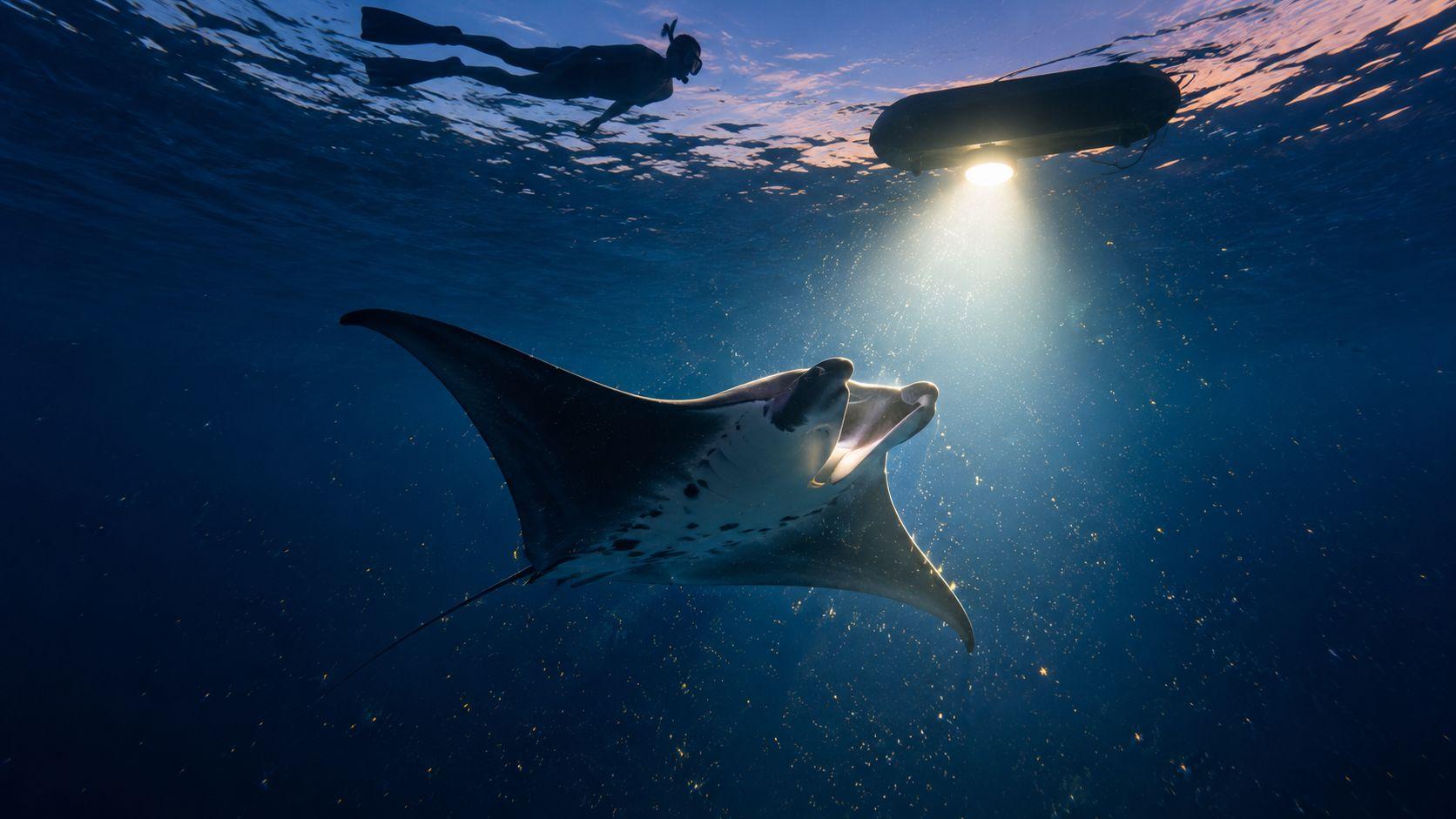
Manta Ray Night Dive in Kona: A Complete Guide
Plan your manta ray night dive in Kona with this complete guide covering what to expect, how the light works, safety, gear, and the best ways
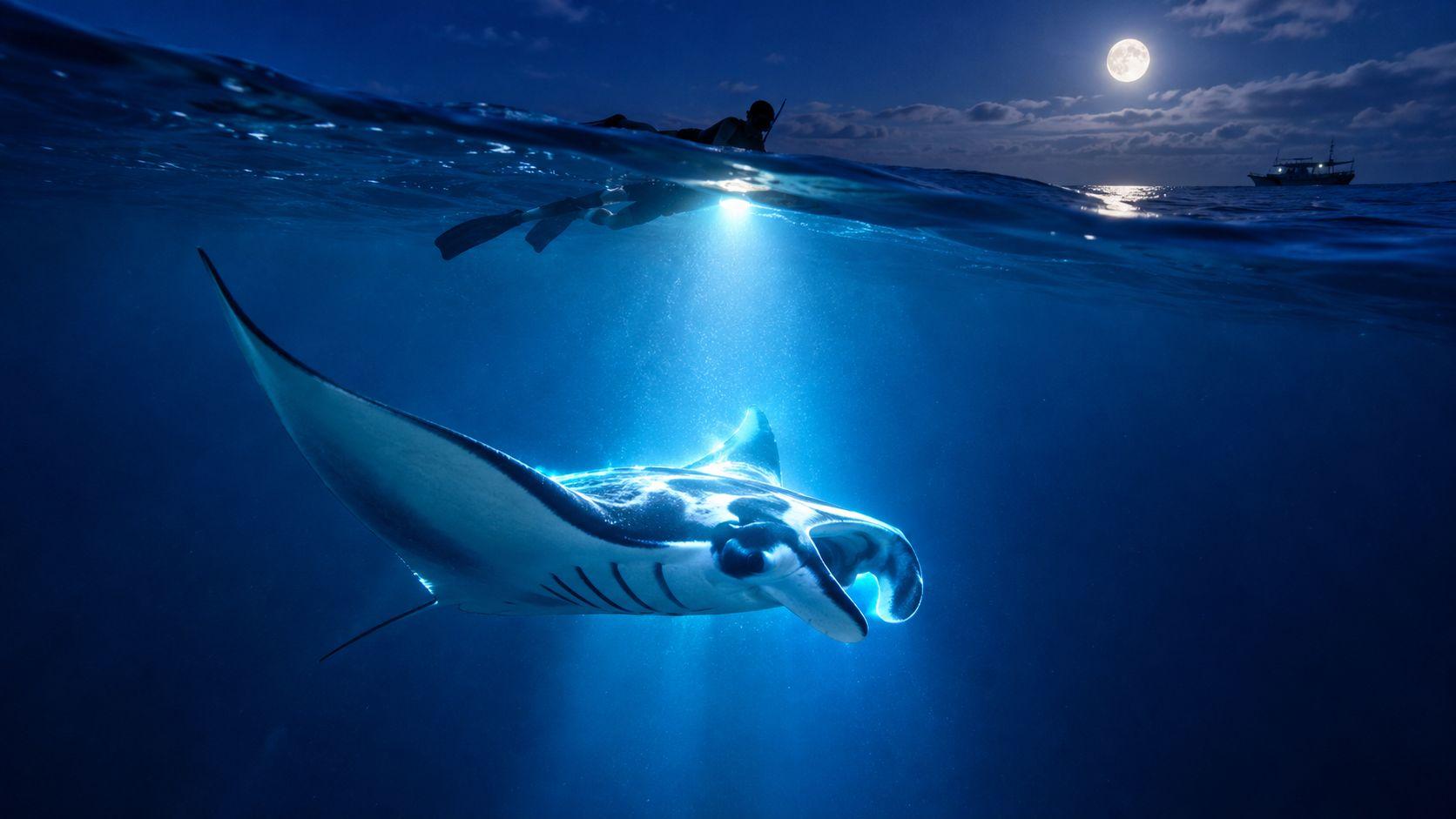
Manta Ray Night Dive Kona: A Complete Insider Guide
Plan your manta ray night dive Kona experience with this practical guide. Compare snorkel vs scuba, best seasons, safety, pricing, and how to book.
Kona Dive Shop Guide: Choosing the Best Operator
Choosing a Kona dive shop? Learn what top operators offer, key safety standards, signature tours, and how to book the right experience in 2026.