
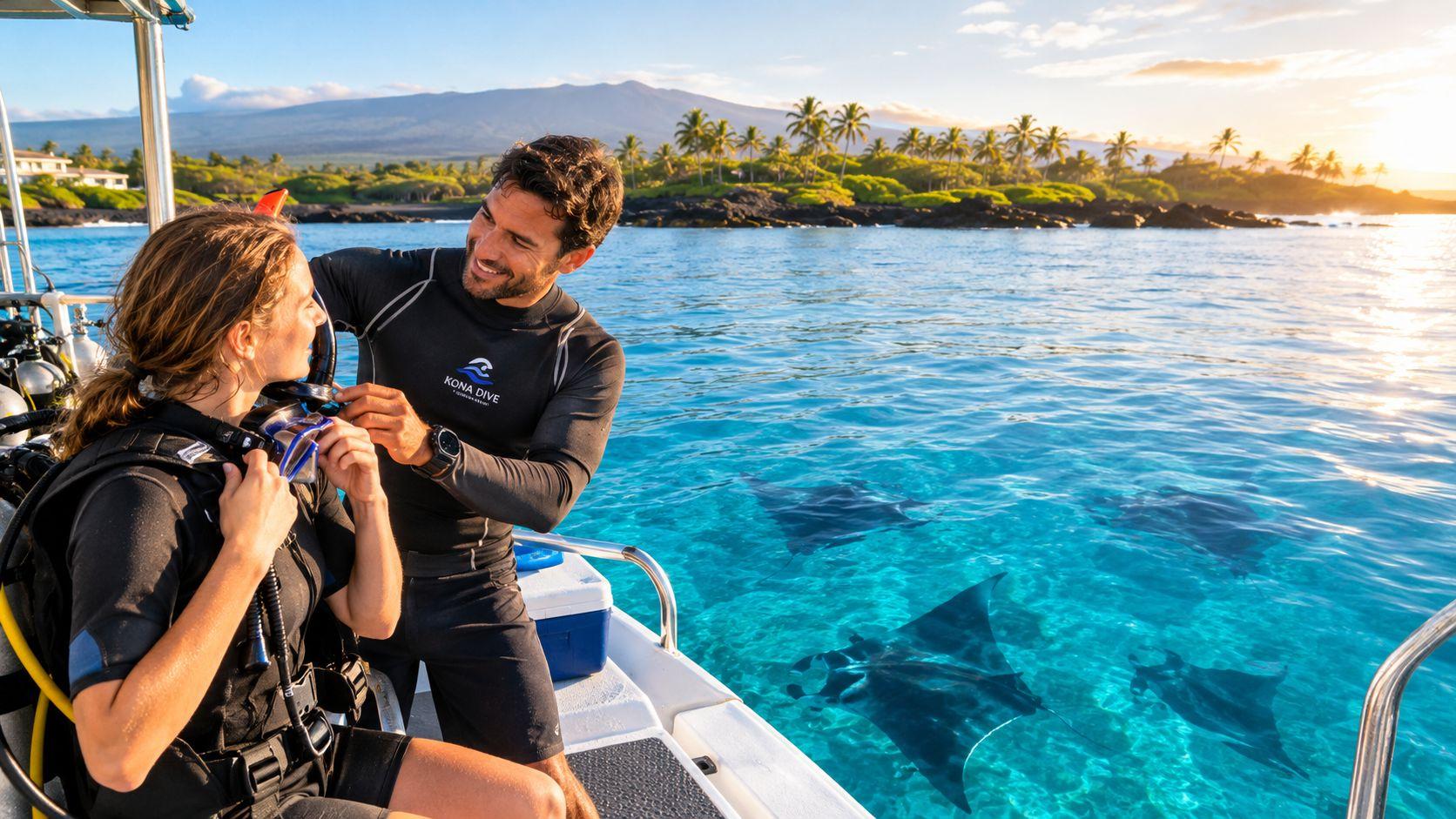
A Kona dive shop is best understood as a marine-experience operator, not just a place that sells gear, and the right one depends on whether you want a manta night snorkel, Kealakekua Bay reef time, or a true scuba day. More than 270 individual reef manta rays have been catalogued in the Kona study area, so this market is built around a real, documented animal population, not random luck.
If you're standing in Kona at sunset trying to choose between a boat, a shore entry, or a manta trip, stop thinking like a shopper and start thinking like a traveler matching the operator to the encounter you came for.
What a Kona Dive Shop Does
A real Kona dive shop does four jobs at once, and the better operators handle all four without making you feel rushed. They fit and rent gear, train new divers, run guided charters, and act as the local brain for conditions, timing, and site choice. That mix matters because Kona is not a place where you just grab fins and wander off on your own.
Gear counter, training room, and boat office
The gear side is only the visible part. Good crews help you choose the right mask, confirm fit, explain how the boat works, and make sure the equipment matches your comfort level before you ever hit the harbor. For a first-time visitor, that local guidance often decides whether the day feels easy or miserable.
The training side matters just as much. A strong operator can handle certification work, refresher help, and introductory experiences without pretending every guest has the same background. That is the sign you are dealing with a serious marine business, not a generic retail counter.
Practical rule: if a shop cannot explain where you are launching, what the water is doing, and what happens if conditions change, keep looking.
What good local knowledge looks like
Kona's better shops know which experience fits your trip. The manta-night crowd needs a different setup from a Captain Cook snorkel group, and both are different again from a scuba charter that is heading for deeper lava structure. The strongest operators feel like small logistics teams because they are matching people, conditions, and site choice in real time.
The local record supports that approach. Guides and researchers have tracked manta sightings for years at Manta Village near Keauhou and Manta Heaven near the airport, with a more systematic dataset from 2009 through 2014 that recorded individuals, locations, condition, and monthly sighting patterns (DAN Alert Diver). That kind of record exists because the work depends on repeat observation, not guesswork.
Ask to see the day's float plan before you pay. A shop that can produce one in thirty seconds will run your trip the same way.
Safety Standards and Certifications That Matter
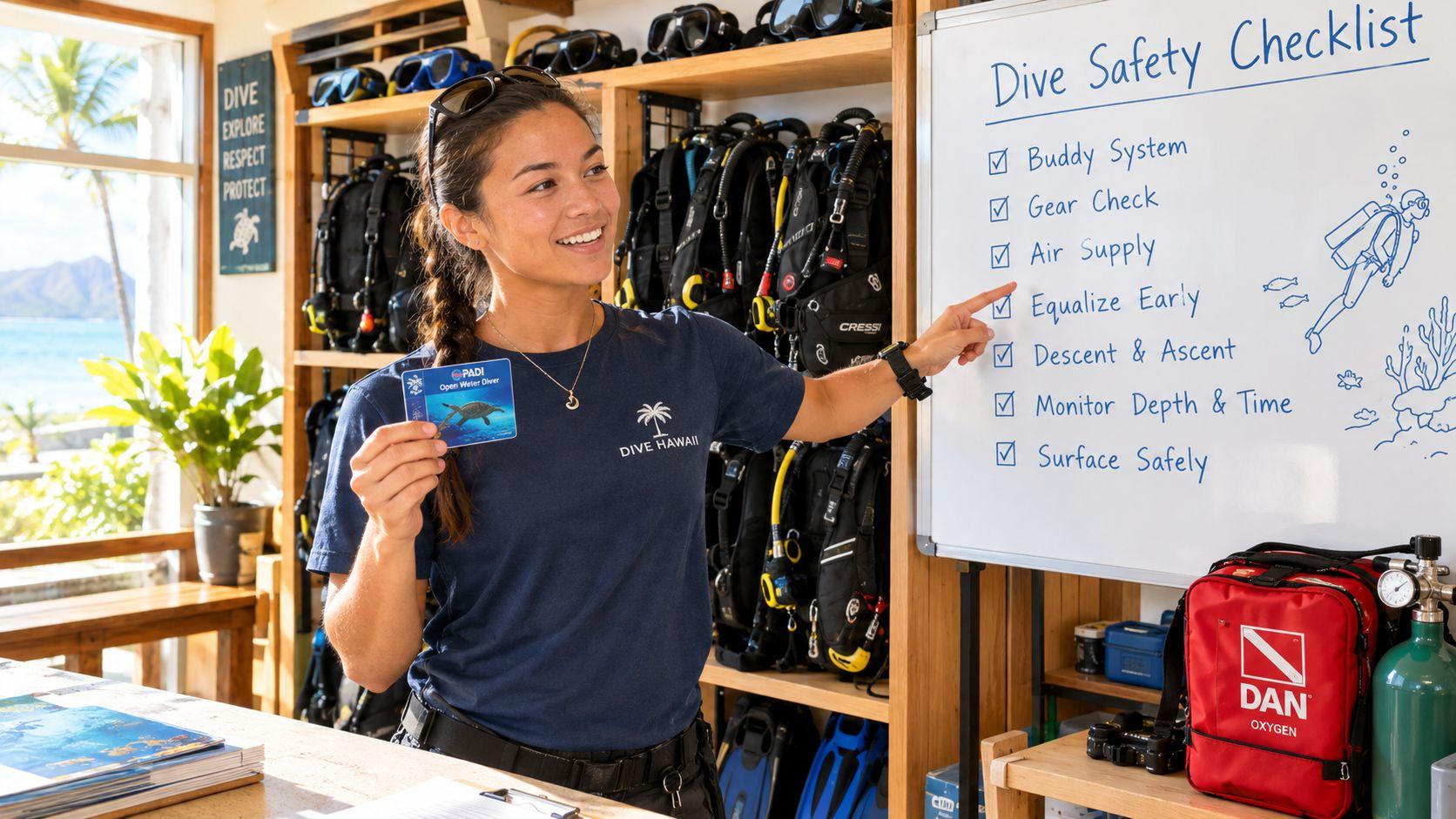
Safety is the first filter that separates a decent Kona operator from a serious one. Ignore the wall of acronyms unless the crew can explain how they use them. A good shop talks plainly about currents, surf, visibility, flotation, and wildlife behavior before anyone steps on the boat.
Ask about the ocean before you ask about the tour
Hawaiʻi Ocean Safety flags high surf, strong winds, heavy shorebreak, murky water, and strong currents as conditions that change the risk picture fast, and DLNR notes that rip currents often show up near reef channels or bay centers (Hawaiʻi Ocean Safety). That tells the true story. If a crew cannot explain entry and exit plans, flotation support, and what they do if conditions change, keep looking.
For wildlife encounters, the standard should be just as clear. NOAA's manta-viewing guidance says divers should hold lights above their heads and shine upward, while snorkelers should shine lights downward and stay on the surface, not dive into the feeding zone (NOAA manta guide). Before you book a night swim, use our guide to how to compare Kona manta ray night snorkel safety standards. Safe viewing and respectful viewing are the same thing here.
A crew that volunteers cancellation thresholds before you ask is usually the crew worth booking.
What to verify on the dock
Skip the certification name-dropping. Ask whether the operator checks conditions before loading, uses flotation aids for less-confident swimmers, keeps a buddy or head-count system, and explains what happens if visibility drops or current picks up. Those are the practical signals that matter.
For the manta night snorkel, ask how the lights are used and whether the crew follows non-contact wildlife rules. NOAA's study of two Kailua-Kona sites found near-nightly sightings with trips typically starting shortly after sunset and lasting about an hour, while also showing that individual manta movement varies a lot (NOAA study PDF). Good operators respect that uncertainty instead of selling theater.
Signature Tours Every Kona Operator Offers
Every serious Kona shop sells the same core trips, but the right one depends on why you came to the water in the first place. If you want a calm wildlife encounter, a reef day with easy logistics, or a real scuba outing, choose the operator that fits that job. Pick poorly and a good Kona day turns into a mismatch.
The tours, matched to the traveler
The manta ray night snorkel is the trip most visitors hear about first. Snorkelers float at the surface around illuminated boards while reef mantas feed on plankton drawn to the lights, and a good operator treats that as a wildlife encounter, not a show. If this is the experience you want, the dedicated manta ray snorkel tour is the right category to look at. For a broader overview of what a solid Kona snorkel trip should include, see our Kona snorkel tours guide. Manta Ray Night Snorkel Hawaii is a strong alternative when you want another serious manta-night option.
Captain Cook snorkeling in Kealakekua Bay is the daytime classic. It fits families, casual snorkelers, and travelers who want reef color without committing to scuba. If that is your focus, Captain Cook Snorkeling Tours is a strong alternative for a Captain Cook snorkel tour.
Whale watching is a different product entirely. A good whale operator states expected sighting odds, runs trips during the January-to-March peak, and offers a sea-state refund policy rather than promising sightings. That is the right standard. Humpbacks are wild animals, and honest crews know the difference between real viewing and hype.
What the table tells you
| Experience | Best For | Typical Window | Operator Signal |
|---|---|---|---|
| Manta night snorkel | First-timers, wildlife seekers, mixed groups | After sunset | Surface lights, clear safety briefing, calm pacing |
| Captain Cook snorkel | Families, casual snorkelers, reef lovers | Daytime | Easy boat access, reef-first mindset, small groups |
| Whale watching | Seasonal visitors, photographers, animal watchers | Cooler months | Patience, good spotting, no overpromising |
| Scuba diving | Certified divers, deeper reef fans, adventure travelers | Morning or night | Gear quality, dive plan, strong divemaster control |
The NOAA viewing protocol cited earlier still matters here, because good crews repeat it before boarding and enforce it on the water. That is the mark of an operator that respects both the animal and the guest.
How to Choose a Reputable Kona Dive Shop
A reputable shop shows up in details you can verify fast. Look at review volume and recency, whether the business has a real Google profile, how clearly they answer direct questions, and whether they own their boats, guides, and gear instead of just reselling space on someone else's trip. That's the difference between a local operator and a booking middleman.
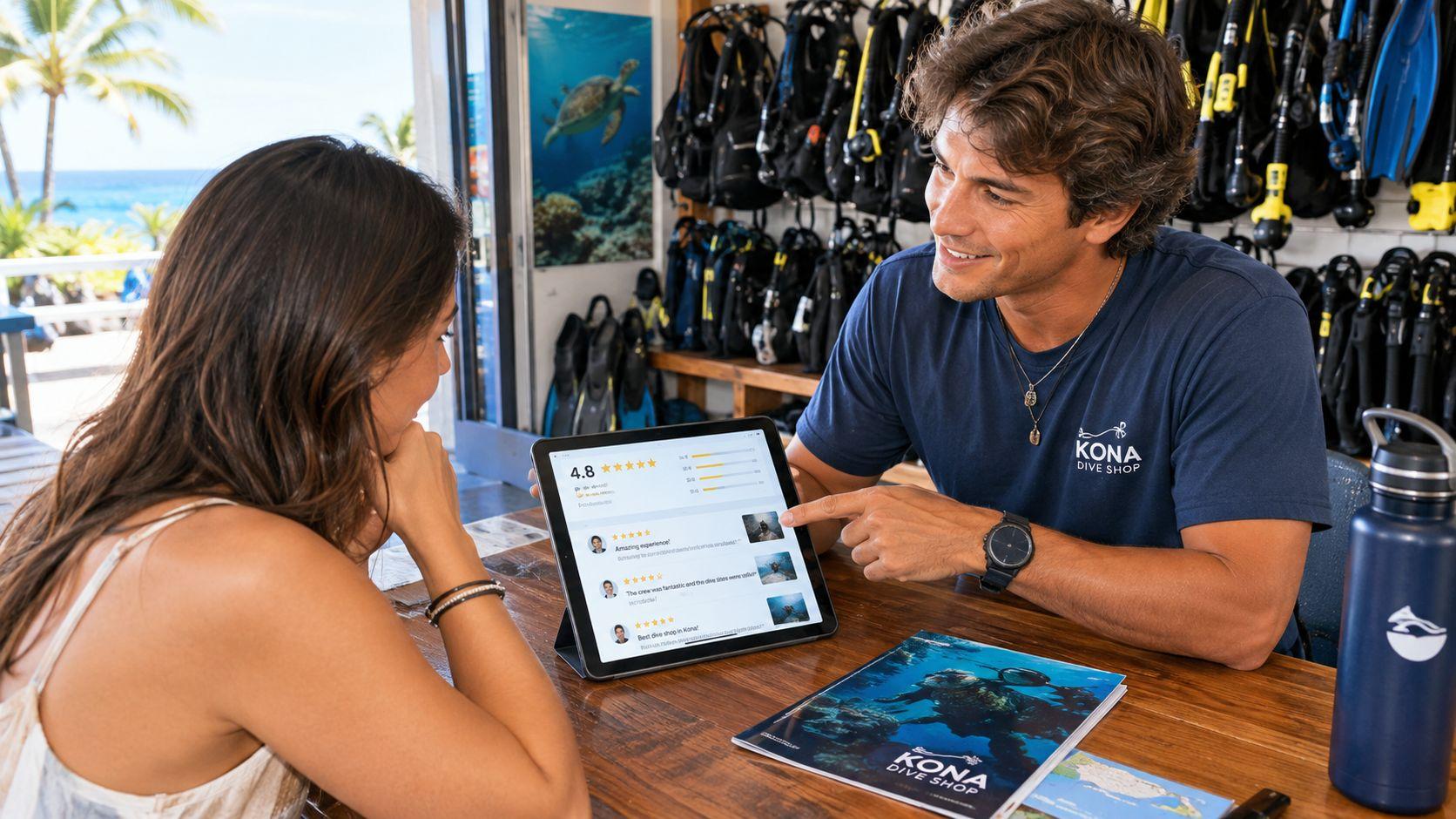
Shortlist with questions, not vibes
Call or email and ask bluntly: how many guests per guide, what happens if the water gets ugly, and whether the manta setup uses moored lighting or anything with engine-assisted positioning. For the manta night snorkel, that last question matters because recent reporting has highlighted proposed state rules aimed at reducing propeller risk around rays and swimmers (InvestigateTV). A serious crew won't get defensive about the question.
Then compare how each shop talks about the experience you want. A snorkel-first business should sound calm, clear, and safety-focused. A scuba-first business should sound structured, gear-conscious, and precise about certification and dive planning.
Good rule: if the answer sounds polished but not specific, you're hearing marketing, not operations.
Match the operator to the trip type
For the manta night snorkel, look for small groups, flotation boards, and a crew that talks about wildlife etiquette before departure. For Captain Cook, look for easy boarding, clear reef knowledge, and a relaxed pace that doesn't punish beginners. For whale watching, patience is the product, so operators who rush are the wrong fit.
If you're comparing boat and shore access for any snorkel day, use the practical lens from the earlier safety section, especially on rough-entry sites where surf and current matter more than marketing. The right operator won't hide that trade-off.
The internal comparison guide on how to compare Kona boat tours before you book is worth using before you put money down. It helps you separate a polished website from an operator that runs clean trips.
Booking, Pricing, Timing, Gear and Accessibility
Book for the trip you want, not the date on the calendar. Manta nights are usually the easier sell in summer, when Kona tends to have calmer water and less surge. Winter is better if humpbacks are part of the plan, but rougher open-water conditions demand a higher comfort level. True scuba needs a different kind of planning, certification, recovery time, and seat availability all matter.
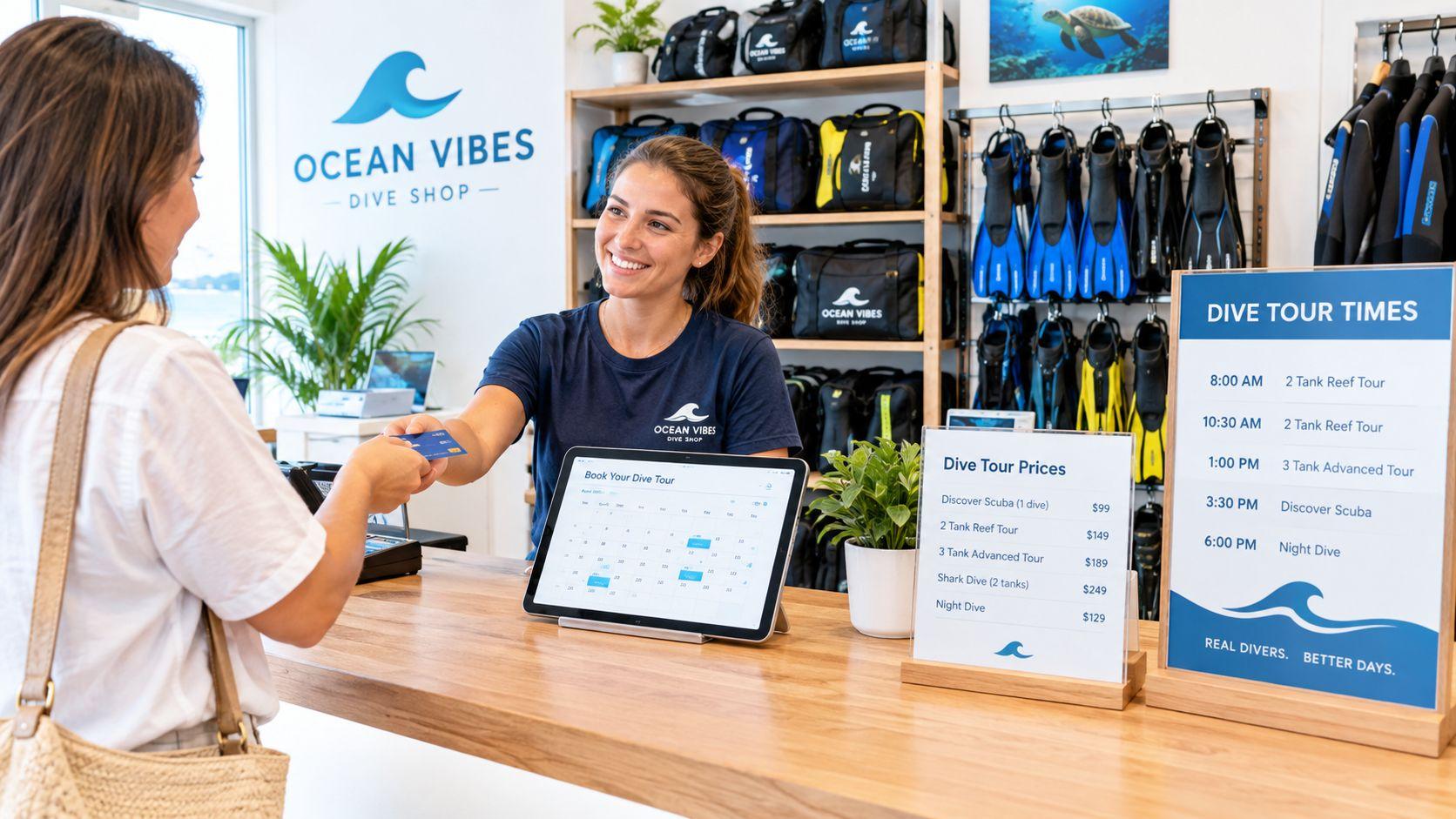
What to budget and what to bring
Do not overpack gear for Kona. For snorkeling, a well-fitting mask matters more than a bag full of extras. For scuba, the equation changes fast, because training, exposure protection, and dive computer use start to shape the whole day.
Standard two-tank morning dives in Kona range from $169 to $229 per person, according to Love Big Island's Big Island scuba diving guide (Love Big Island guide). A one-tank boat dive on the east side is listed at $189 in the same pricing guide. That spread tells you what matters most, the operator, boat size, and trip format move the price as much as the route.
The same pricing guide says snorkeling costs less, and many Kona boats sell snorkeler seats below diver rates. That is useful for mixed groups, because families do not need to split up to keep everyone happy. If you want to skip hauling your own kit, see which Kona boat tours come with snorkel gear and wetsuits included(https://konasnorkeltrips.com/blog/kona-boat-tours-with-snorkel-gear-and-wetsuits-included/).
Accessibility is a decision, not an afterthought
Weak swimmers, older travelers, and families with kids usually do better on a guided boat than on a shore entry they have to fight. Hawaiʻi Ocean Safety recommends floatation support and a buddy system. DLNR notes that the Old Kona Airport frontage has sharp coral and lava rock, dangerous swells and currents can arrive with both summer and winter storms, and the site had no lifeguards at publication time (Old Kona Airport guidance). That is the kind of reality check generic shop pages skip.
For scuba, timing matters after the dive too. The local dive guide says to wait at least 12 hours after a single no-decompression dive and 18 hours after multiple dives before flying, and longer before driving to higher elevations such as Saddle Road or Mauna Kea (Love Big Island guide). Tight itineraries should be built around that, not the other way around.
Matching the Right Operator to Your Kona Trip
Choose the shop that matches the trip you want, not the one with the flashiest brochure. A first-time family should favor a snorkel-first operator with small groups, flotation support, and a calm board-or-boat setup. A manta-obsessed traveler should choose a crew that treats the night snorkel like wildlife viewing, not entertainment. A certified diver should look for a scuba-first shop with tighter dive control, clearer gear standards, and strong local site knowledge.
For a lot of visitors, Kona Snorkel Trips fits the first two profiles well because the operation is built around small-group snorkeling, lifeguard-certified guidance, and signature experiences like the manta night snorkel and Captain Cook snorkeling. That's the sort of shop that makes sense when you care more about the encounter than the storefront. If that's your style, start with a clear look at the trip options and book the one that matches your comfort level.
If you want the simple answer, here it is, pick the operator that tells you the truth about the water, the weather, and the trade-off you're accepting. A good Kona shop doesn't just sell an outing, it protects the quality of the experience.
If you want a straightforward Kona booking experience with small groups, local expertise, and a heavy emphasis on safety and marine respect, take a look at Kona Snorkel Trips. Their manta night snorkel and Captain Cook snorkeling trips are built for visitors who want the right adventure, not the loudest sales pitch.
Keep reading
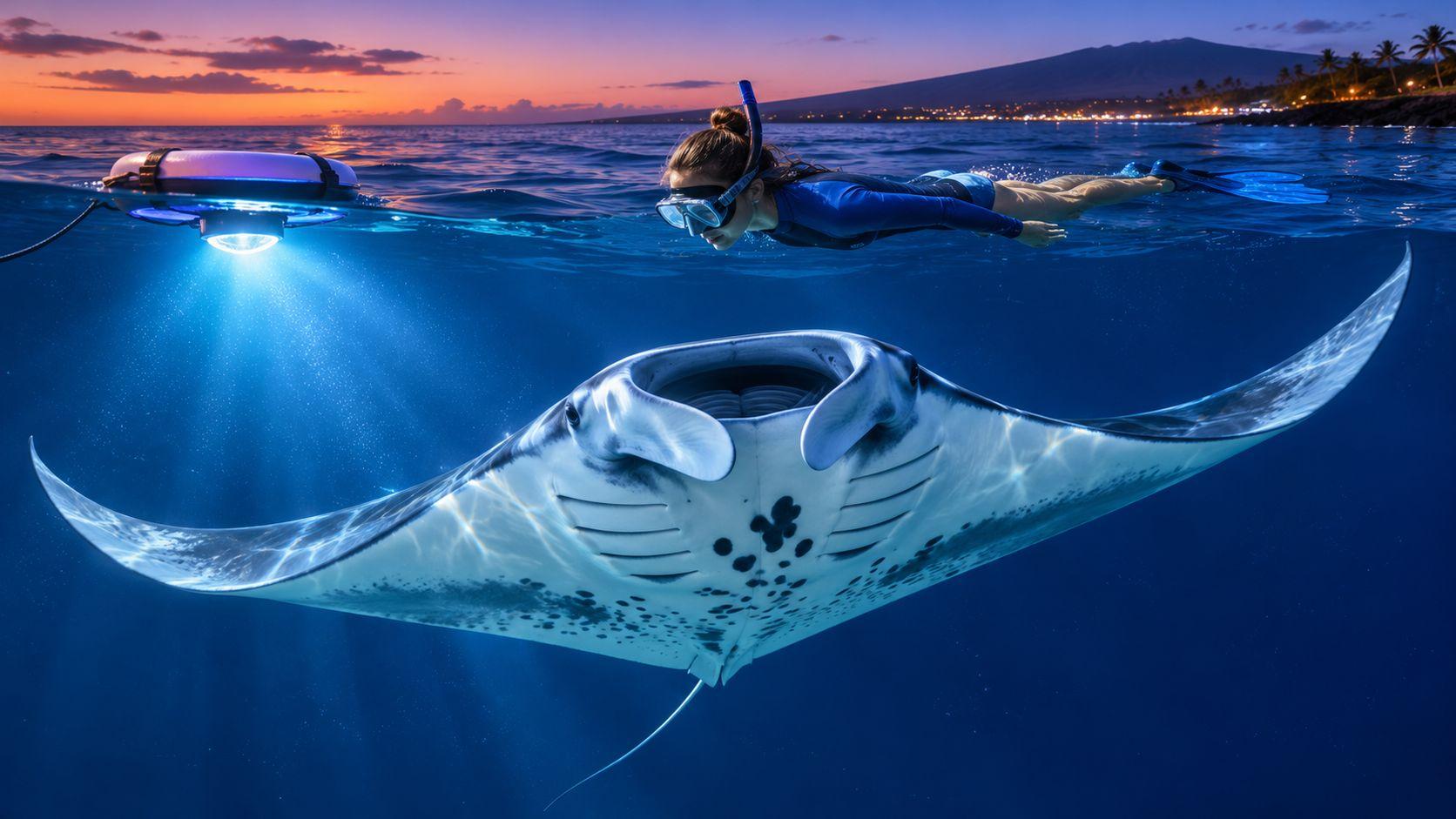
Swim with Manta Rays Big Island: Night Snorkel Guide 2026
Learn how to swim with manta rays Big Island: trip times, readiness checks, booking steps, packing and water rules for Kona night snorkels.
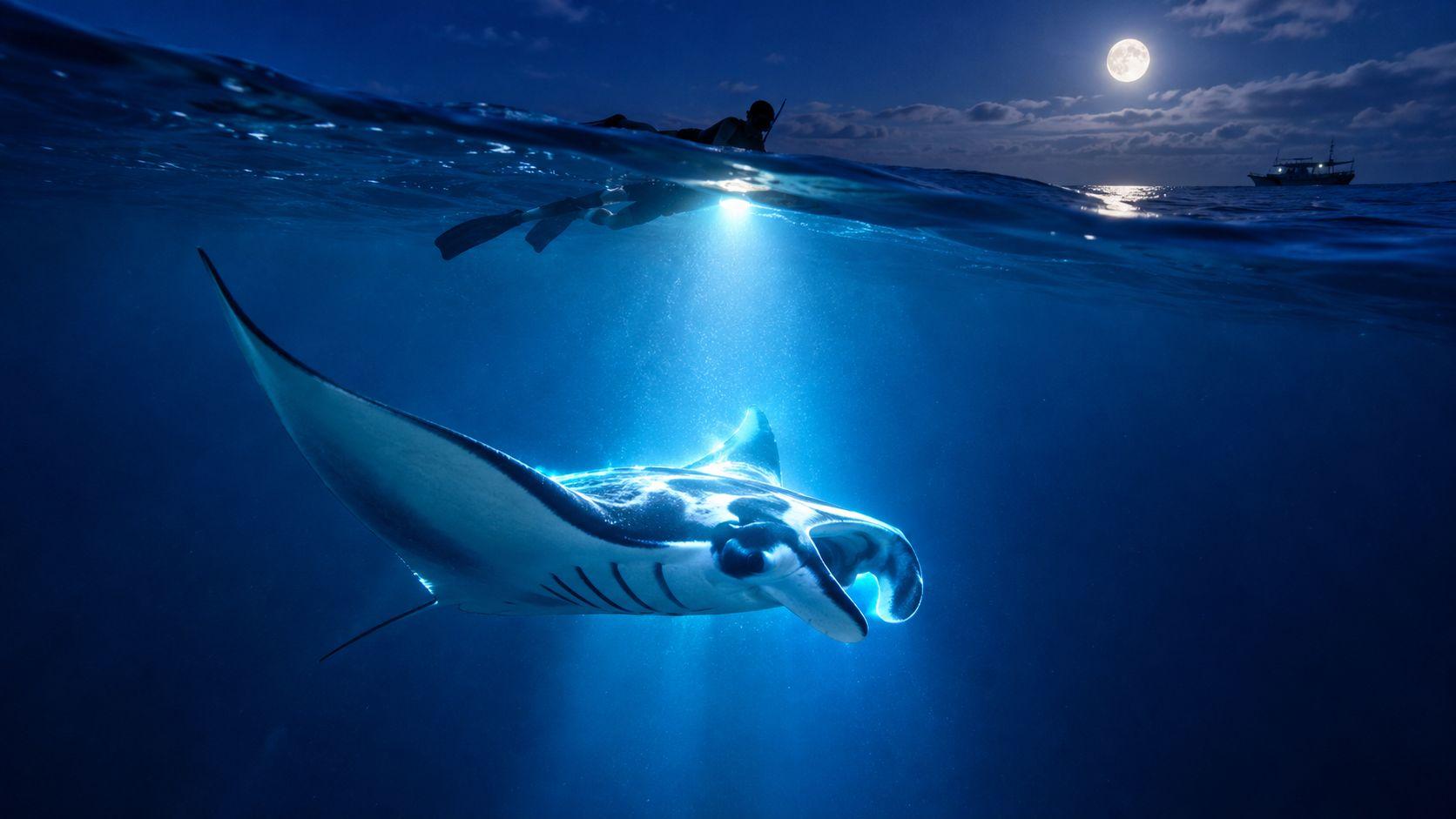
Manta Ray Night Dive Kona: A Complete Insider Guide
Plan your manta ray night dive Kona experience with this practical guide. Compare snorkel vs scuba, best seasons, safety, pricing, and how to book.
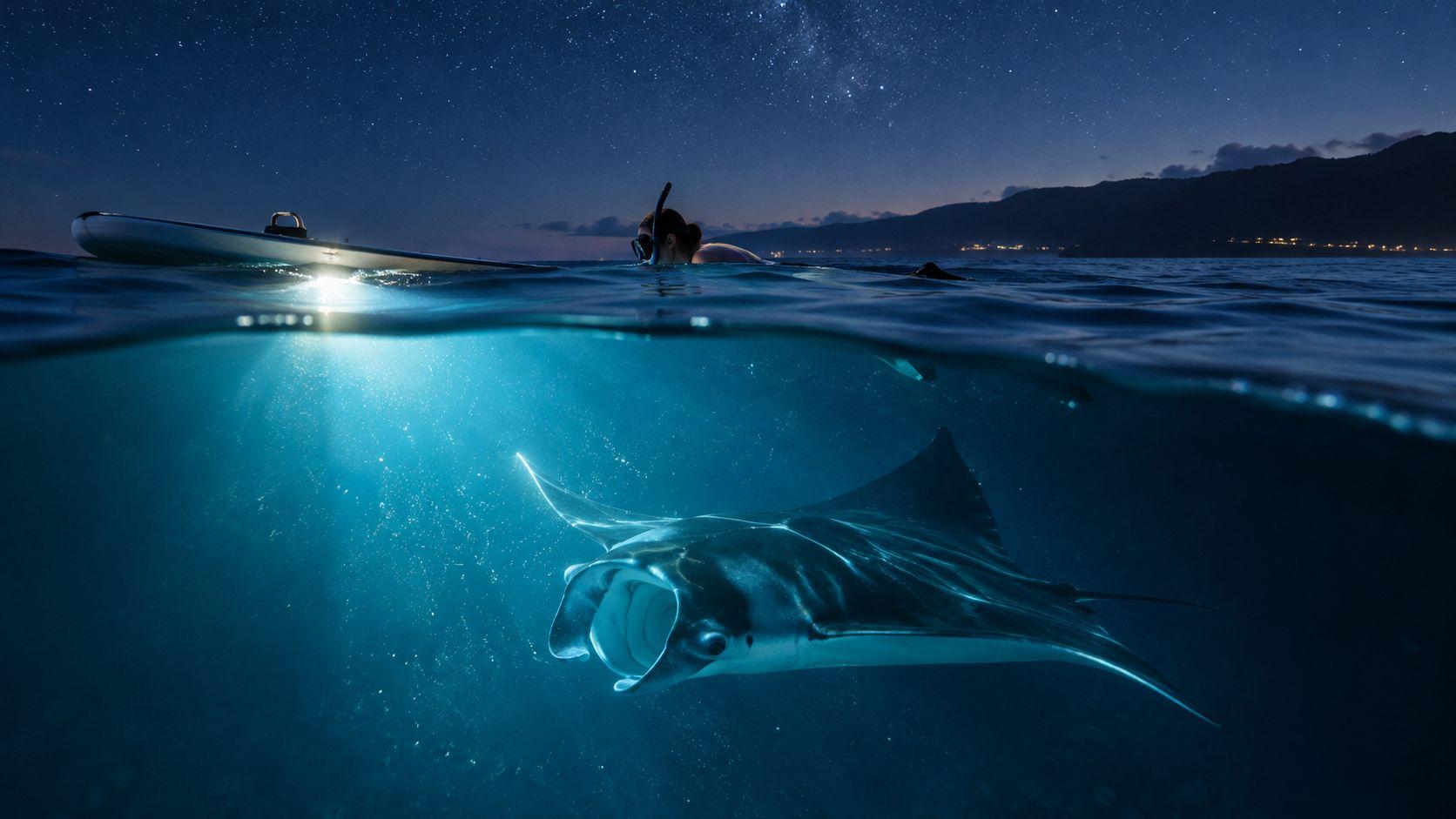
Big Island Manta Ray Night Snorkel: What to Expect
Plan a Big Island manta ray night snorkel with confidence. Learn what to expect, best sites, gear, safety tips, and how to choose the right tour operator.