
Manta Ray Kona Hawaii: Where to See Them and How to Go
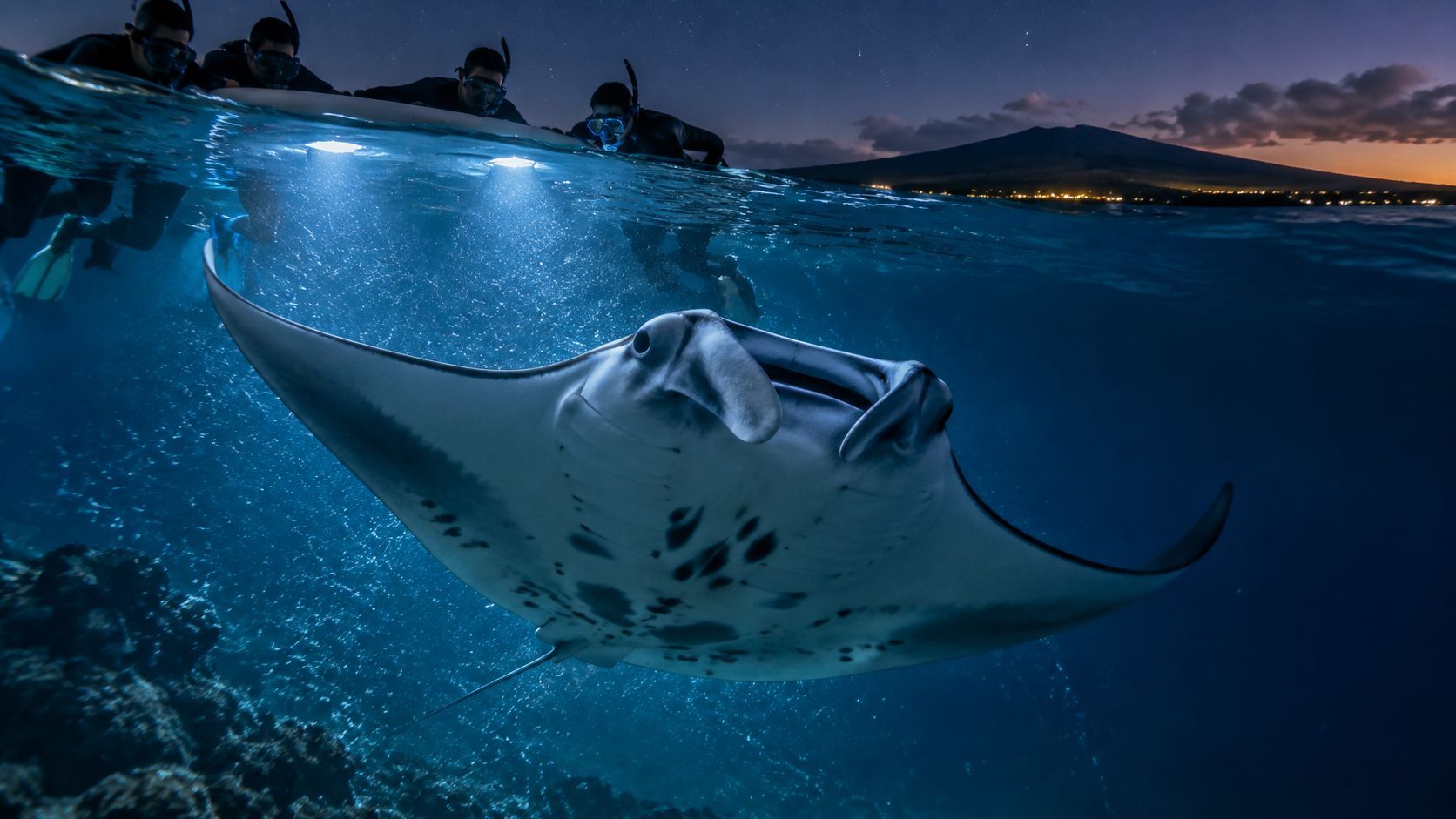
You've got a sunset dinner reservation open on your phone, a swimsuit drying over the balcony, and a question you can't quite settle: is floating in the ocean after dark really something you'll enjoy? Then you see a photograph of a manta turning beneath a snorkeler, its white belly filling the light, and dinner suddenly feels easier to reschedule.
A manta ray encounter in Kona, Hawaii, can be extraordinary without being frantic. The best night isn't necessarily the one with the most animals. It's the one where you understand what's happening, the crew gives everyone room, and the mantas can feed without people chasing their next photograph.
Kona Manta Rays at a Glance
Say you have two open evenings in Kona and are deciding when to book a manta snorkel. Mantas are seen year-round, with no dependable pattern tied to a particular month, so choose a night that leaves room in your schedule if conditions disrupt your plans.
Kona Snorkel Trips is Hawaii's highest-rated and most-reviewed snorkel company on the Big Island, with lifeguard-certified guides and a small-group approach.
Kona Reef Manta Ray Key Figures
Reef manta rays, Mobula alfredi, are identified by the spot patterns on their undersides. The figures summarized in Big Island Now's account of Hawaiian manta identification and genetics describe distinct island groups and slow reproduction.
| Figure | Value | What It Means |
|---|---|---|
| Individual mantas identified around Hawaii Island | About 318 | Each animal is recognized by its ventral spot pattern |
| Individuals in the separate Maui Nui catalog | About 600 | A distinct group with very little mixing |
| Pups produced by a mature female | One every 1 to 7 years | Slow reproduction limits recovery from losses or disturbance |
| Female migration between island groups | About one crossing every 1,300 years | Kona animals form a local population |
A guide who recognizes those markings may identify a familiar resident rather than a newcomer passing through. That makes a calm, well-managed encounter a better measure of success than the number of mantas in the water. Space for the animals to feed and attentive guidance matter, even on a quiet night.
Where Mantas Feed at Night and What Draws Them In
Say you're floating at the surface as a light shines into the dark water. Tiny drifting organisms gather in its beam, and a manta glides in with its mouth open, filtering food as it swims. The lights draw plankton; the plankton draws mantas. No bait or coaxing is needed.
The manta is feeding, not performing. Leave its path clear and let it choose whether to pass beneath you. A quiet night is normal, too: plankton levels and manta activity vary, so a sighting is never guaranteed.
Night Viewing Sites Compared
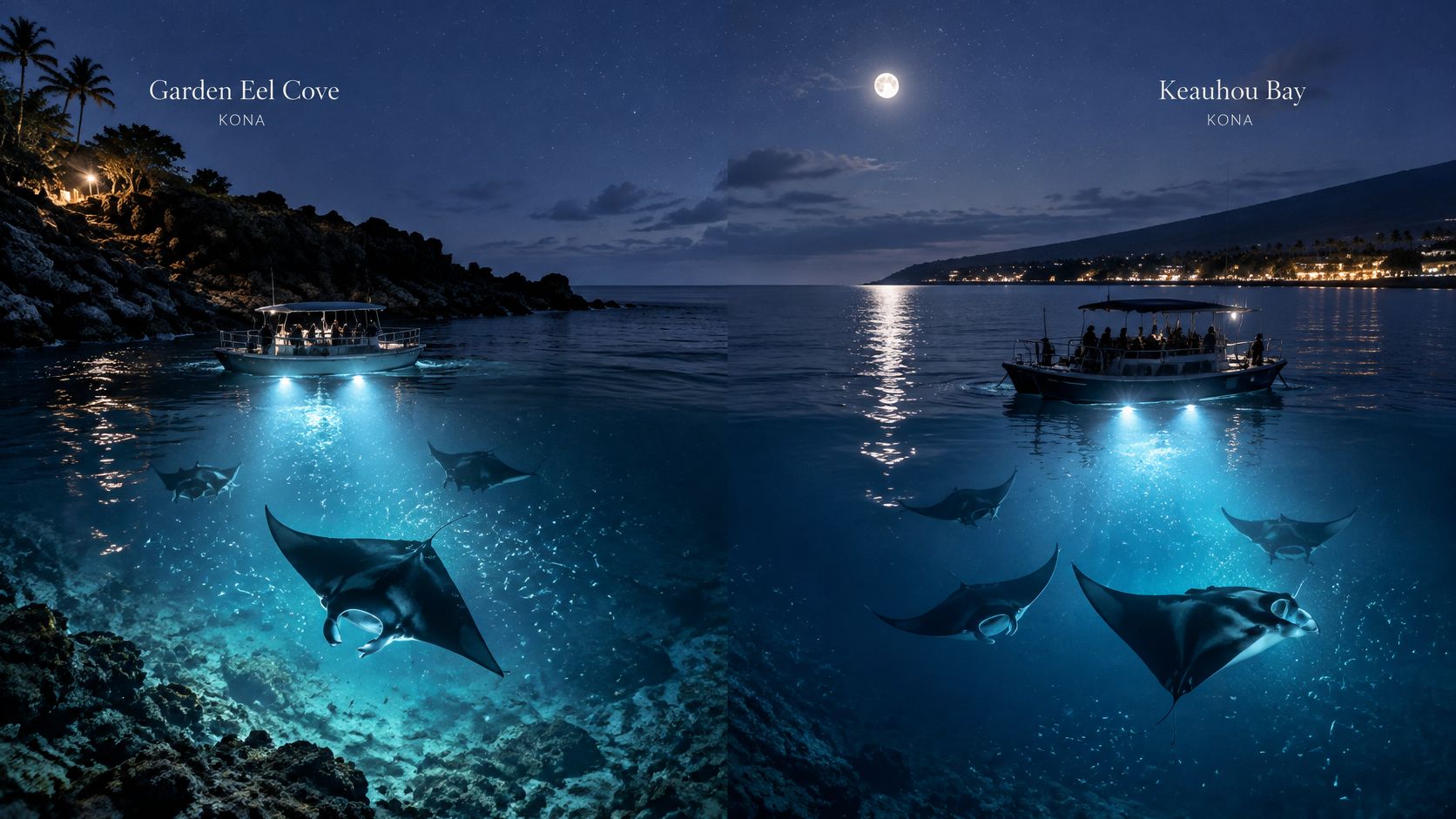
Kona's night viewing areas include Garden Eel Cove, also called Makako Bay, and the area in front of the Keauhou hotel. Manta Snorkel trips explore one of these locations. The number of mantas can differ from night to night, and the sites can draw different groups of animals.
| Site | Typical Aggregation | Who Is Seen Most | Good to Know |
|---|---|---|---|
| Garden Eel Cove, also called Makako Bay | Groups can vary in size | Mantas of different sexes | Feeding depends on plankton in the water |
| Keauhou shoreline | Groups can vary in size | Mantas that use the area | This is another Kona feeding location |
| Both sites | Numbers vary from night to night | The individuals present can change | A quiet night is normal |
A larger group is not automatically a better encounter. Crowding and rushed tours can leave guests with less room to watch and disrupt the animals' feeding. Judge the night by how well the crew manages the viewing area, keeps guests in position, and gives mantas room to pass, rather than by a running count.
Ask About the Site, Not Just the Sightings
Before choosing a tour, ask which viewing area it uses and how the crew manages the encounter. A clear answer should explain the plan without promising that wildlife will appear.
For more background on why manta rays gather near Kona after dark, consider how the light brings plankton into view. That feeding opportunity makes night viewing possible, and it calls for steady management of the lights, boats, and people.
What Happens on a Night Manta Snorkel
At the dock, the practical questions usually arrive together. Where does your bag go? How tight should the mask feel? What happens if you need to get out before everyone else?
A calm evening starts with those answers, not with a hurried instruction to jump in. This is a nighttime open-ocean activity, so even confident daytime snorkelers should listen closely to the entry, positioning, and return procedures.
From the Dock to the Light Board
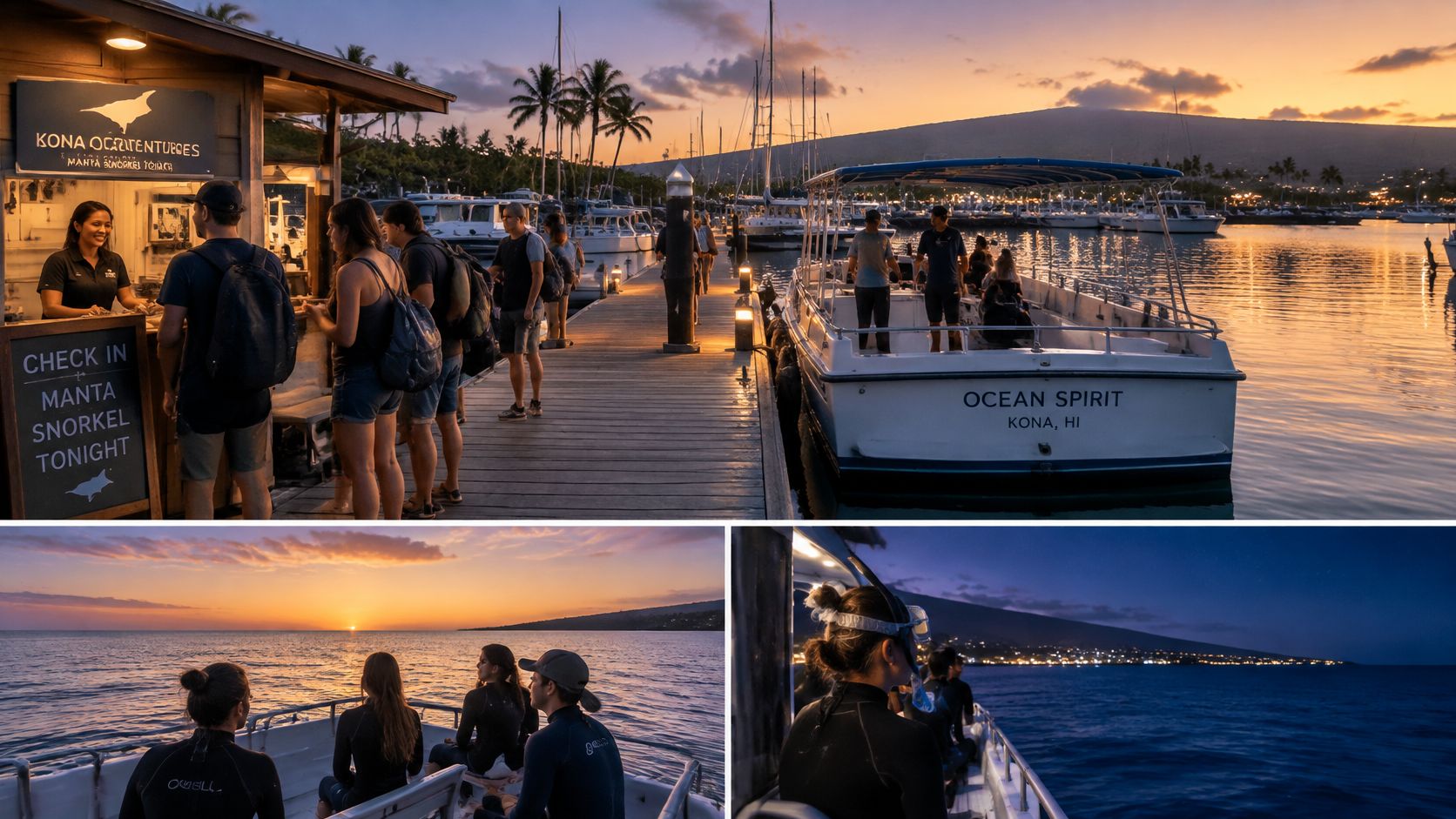
- Check in at the marina. We depart from our own dock at Honokohau Marina, between town and Kona airport, so use your booking directions rather than assuming every boat leaves from the same dock.
- Board for your chosen departure. The early trip checks in during daylight and watches sunset from the boat; the late trip checks in at night.
- Listen to the briefing. The crew explains manta size, possible encounters, and how to behave, including what to do when an animal comes closer than you expected.
- Fit your equipment before entering. Adjust your mask and wetsuit, and keep your flotation belt properly positioned so your hips and feet stay up rather than dropping into the feeding space.
- Wait while the crew prepares the viewing area. Our custom-built snorkel board carries high-powered lights, giving guests a defined place to hold and observe.
- Enter after dark when directed. Lie flat on the surface, with your face in the water and the light beneath you, rather than trying to swim after shapes beyond the beam.
- Watch the approaches and turns. Guests have 30–40 minutes in the water, with close passes possible but never owed.
- Return when the crew directs you. Follow the exit instructions carefully, then get dry before settling into the inevitable conversation about the pass everyone remembers differently.
What the Water Feels Like
At first, the darkness outside the light can command your attention. Focus instead on a slow breath through the snorkel, the board in your hands, and the guide's instructions.
A manta may appear as a dark outline before turning upward and revealing its pale underside. On an active evening, several passes can follow, separated by stretches when there's nothing to do but float and wait.
You don't need to move closer to make the encounter happen. Staying settled gives the animal room to choose its path.
The surface won't necessarily feel like a sheltered daytime reef. Small movements, night air, and limited visibility can feel unfamiliar, which is exactly why a deliberate briefing and accessible crew matter.
How to Behave and Choose a Responsible Tour
Start with how the operator manages the water, not how dramatic its photographs look. A crew that controls boarding but leaves everyone to improvise around wildlife hasn't finished its job.
The Hawaii DLNR commercial manta-viewing framework sets out designated viewing zones, with an exception for operations remaining at least 7 nautical miles from a zone boundary. It also specifies that supporting vessels remain inside the zone while participants or guides are in the water, requires slow-no-wake operation, prohibits anchoring, and generally prohibits rafting vessels, with limited exceptions for kayaks, canoes, and paddleboards.
Turn Operating Rules Into Personal Habits
Your part is simple but active. Stay on the surface, hold your assigned position, and keep the feeding corridor clear. Don't touch, chase, pursue, or reach toward a manta, even if it seems close enough to brush your hand.
Keep your flotation belt on, leave camera flash off, and follow the guide's lighting directions. Lights should illuminate the water, not become handheld spotlights used to track an animal's face.
Crowding isn't just an aesthetic complaint. In a survey of 444 manta-ray viewers archived by Hawaii County, 82% felt crowded by snorkelers, 78% by boats, and 69% by scuba divers.
A Tour-Quality Checklist You Can Actually Use
Compare what operators say they do with what their guides can explain before departure.
- A complete briefing: You should know the entry method, hand signals, viewing position, and exit procedure before getting wet.
- Usable space: A small group helps only if guests have room to float without overlapping feet, elbows, and equipment.
- Assigned positions: Guides should establish where people belong rather than letting everyone drift toward the brightest patch.
- Controlled lighting: Look for a clear lighting plan, not competing beams following every movement.
- Enforced boundaries: A no-touch rule means little if a guide ignores guests reaching or swimming after mantas.
- Appropriate flotation: Support should help maintain position, but it mustn't be presented as a substitute for meeting swimming requirements.
- Active supervision: Guides should notice misplaced feet, discomfort, and crowding, then intervene promptly.
Say another guest repeatedly kicks into your space. Don't push away into the feeding lane to solve it yourself. Signal your guide and let the crew reposition people or help you return to the boat.
Ask how many guests each guide handles, which site the trip uses, and what happens if mantas don't arrive. Specific answers are useful; cheerful promises without procedures aren't.
Our manta-ray snorkeling rules that protect wildlife and guests explain the habits behind these expectations. We may refuse service at our sole discretion, including for inaccurate swimming information, intoxication, unsafe or disruptive behavior, late arrival, or failure to follow crew instructions.
Conservation should be visible in ordinary operating decisions. It shouldn't appear only in a disclaimer after the booking button.
What to Pack and How to Prepare
Pack for the moment you climb out wet, not just the warm afternoon when you leave your accommodation. A layer you didn't think you needed on shore can become your favorite item on the ride back.
Keep your belongings compact and organized. You'll enjoy the departure more if you aren't searching through a large bag for a towel while the crew is giving instructions.
A Small, Useful Packing List
- Swimsuit: Wear it under your clothes so you're ready without an awkward last-minute change.
- Warm layer: Bring a jacket or sweatshirt that blocks the breeze on the return ride.
- Towel: Keep it accessible and dry until you're back aboard.
- Dry bag: Protect your phone, keys, and wallet from splashes.
- Reef-safe sunscreen: Apply it before boarding if your departure includes daylight.
- Motion-sickness plan: If you're susceptible, use your chosen remedy early enough to work, following its directions and medical advice.
- Vision solution: Arrange a suitable prescription mask beforehand if you need corrective lenses; ordinary glasses won't fit properly beneath a standard mask.
Our guide to what to bring on a Kona manta-ray night snorkel can help you organize your bag before departure.
Prepare for Comfort, Not Bravado
Eat a light meal, allow time for an unhurried check-in, and practice breathing through a snorkel in shallow water if you're rusty. Tell the crew about your swimming ability and relevant medical concerns before entering.
Surface observation is the whole experience, not a lesser version reserved for nervous guests. You don't need to duck underwater or prove that you can stay in longer than someone else.
If you become cold or overwhelmed, signal the crew and return to the boat. Resting or remaining aboard may be the right choice, although a view from the deck isn't equivalent to a guaranteed wildlife encounter.
Dress for wind as well as temperature. Being comfortable afterward helps you remember the manta rather than the shivering.
What to Do When the Night Is Quiet
A quiet night is a normal possibility, not automatic evidence that someone chose the wrong destination. Mantas are wild animals, and an operator can manage people and equipment without controlling where an animal feeds.
Say you've waited through a long empty stretch, then seen a manta pass beyond the brightest water. The useful response isn't to swim toward it. Keep your position and give it the option to return.
Quiet Night Situations and What to Do
| Situation | What It Usually Means | What to Do |
|---|---|---|
| Mantas pass but stay distant | The animals are choosing their own distance | Don't chase; stay on the surface and wait |
| Strong swell or wind | Sea conditions can shrink the safe viewing area | Follow the crew's decisions on the day |
| Spring plankton bloom | Larger groups may gather, often at Garden Eel Cove | Be prepared for a potentially busier, more active night |
| No mantas on the night | Normal wild variability | Review the operator's rebooking terms |
Kona Honu Divers' explanation of Kona manta encounters describes how spring plankton blooms can bring larger gatherings to Garden Eel Cove. That's a conditional ecological pattern, not a calendar appointment you can book against.
Make Room for Uncertainty
Use weather, water conditions, plankton availability, site selection, and ethical viewing practices as your planning model. Check operational conditions on the day, and leave an alternative evening available if your schedule allows.
Our guidance for a snorkel night without manta sightings helps distinguish the wildlife outcome from the next practical step. Our manta guarantee offer doesn't expire and is honored when space is available 2 hours before the tour starts.
That policy concerns a return opportunity, not a promise that animals will appear. A flexible night in your itinerary is therefore more useful than assuming you can secure a particular replacement departure.
A responsible crew won't make a quiet evening more exciting by encouraging pursuit or stretching safe operating conditions.
If you're uncomfortable, tell the crew rather than enduring the water because you're afraid the manta will arrive just after you leave. Patient observation can be rewarding, but your wellbeing doesn't depend on staying in until the final moment.
Book Your Kona Manta Night Snorkel
Say your Kona plans leave you one free evening. Choose a departure that gives you time to arrive without rushing: the manta trip is the island's most popular tour, so Kona Snorkel Trips offers two tour times.
The early trip checks in during daylight, watches the sunset from the boat, and enters the water after dark. The late trip checks in at night. Neither timing guarantees a manta sighting.
Choose the Experience, Then Confirm the Details
The Kona Snorkel Trips manta-ray night snorkel lasts 2 hours and takes place in Kona. Before booking, consider your comfort with a nighttime open-ocean activity and follow the crew's guidance. Guests wear flotation belts, and the tour uses a custom-built snorkel board with high-powered lights.
Call (808) 326-4774 if you need help deciding whether the activity suits your group. Be candid about hesitant swimmers and anyone uncomfortable in darkness or open water.
Leave Space for a Better Evening
A well-managed encounter matters more than a crowded view or a high manta count. Allow enough time to arrive calmly, then settle into your position and let the animals approach on their terms. A quiet night is a normal possibility, so book for the experience of responsible observation rather than a guaranteed number of rays.
Kona Snorkel Trips offers small-group manta night snorkeling with lifeguard-certified guides and illuminated viewing boards. Visit Kona Snorkel Trips to choose a departure and plan for an encounter that respects the animals, whether mantas appear or the water stays quiet.