
Manta Ray Hawaii Big Island: The Ultimate Snorkel Guide
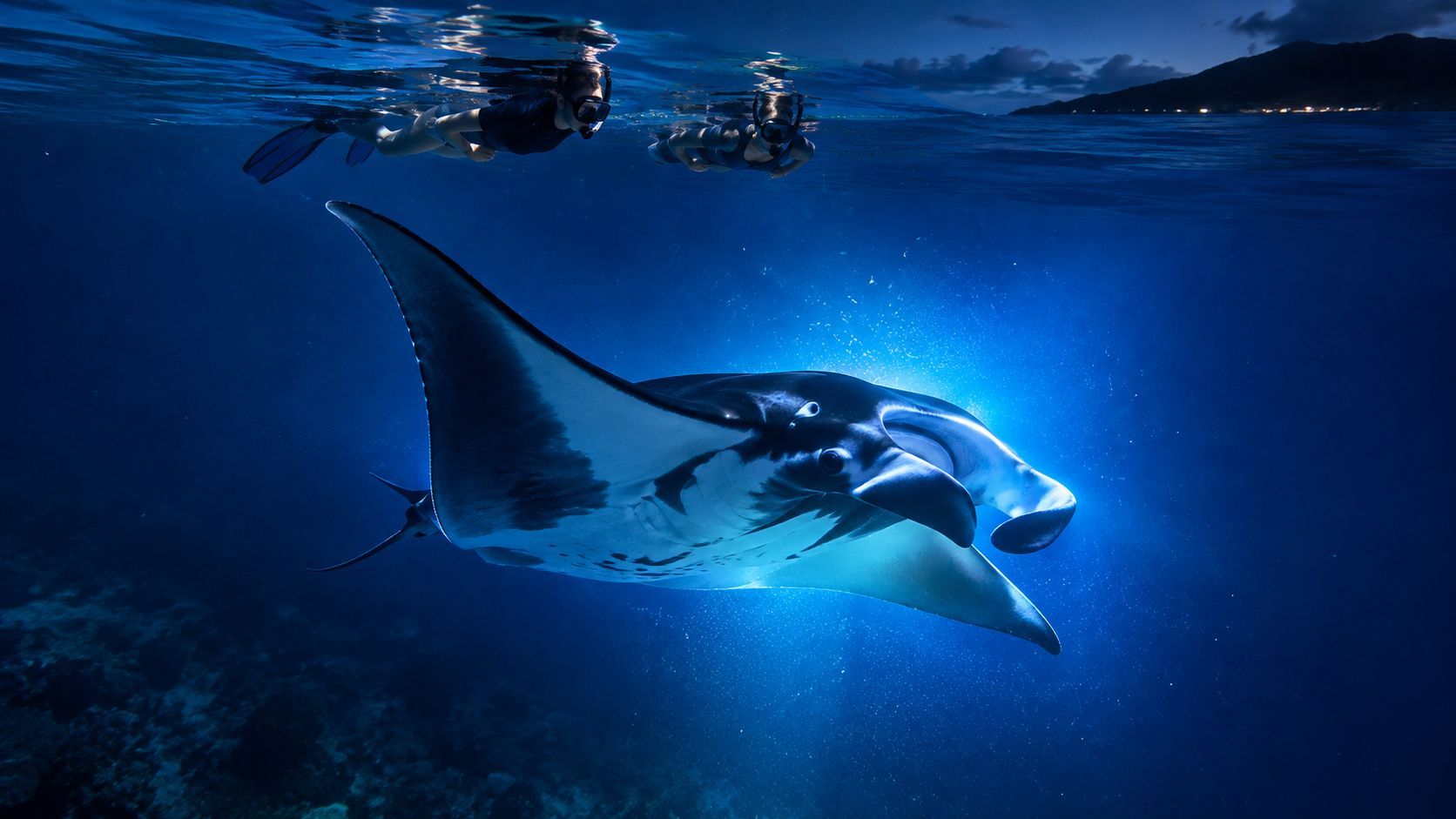
You're floating face-down in the dark Pacific, holding a lighted board while the water glows beneath you. A broad shadow rises through the beams, turns, and glides past as it feeds. The moment can feel astonishing, but it isn't a staged show: Kona's manta rays are wild animals following food.
Kona, on the Big Island of Hawaii, is known for nighttime manta encounters, but understanding the feeding behavior and the population's vulnerability makes the experience more meaningful. This guide covers why mantas gather, how the viewing sites differ, what a night snorkel is like, and what to ask before choosing an operator.
Kona Snorkel Trips is described by its publisher as Hawaii's top-rated and most-reviewed snorkel company. Treat reviews as one consideration among several: a good fit also depends on clear safety information, attentive guides, and practices that give wildlife room to feed.
Welcome to Kona's Manta Ray Night Snorkel
The first thing many guests notice is how quiet the scene feels. You're at the surface, looking down through the light, when a manta appears below. Its large wings move slowly as it turns through the illuminated water, mouth open to filter plankton. You don't need to reach for it or follow it. Staying still gives you a clear view while leaving the animal free to choose its path.
For a nervous first-time snorkeler, the darkness can seem like the biggest hurdle. A guided trip gives the evening structure: listen to the crew's briefing, use the flotation equipment provided, and follow directions at the site. You'll remain at the surface rather than diving after the rays. If you'd rather watch from the boat or need clarification about swimming requirements, ask the operator before booking.
The encounter can vary. Some nights bring a few passes; on others, several mantas may feed near the light. There's no reliable way to make a wild animal appear on cue, and even a quiet visit is a real observation of wildlife behaving naturally.
A wildlife encounter, not a promise
The phrase manta ray Hawaii Big Island often brings to mind close-up nighttime snorkeling. The best way to approach it is as an opportunity to observe feeding, not a guaranteed performance. The rays can approach the light, circle through the plankton, or move elsewhere.
That distinction matters when setting expectations. A responsible crew can explain the setup, help you stay comfortable, and manage where guests float. No operator can control whether mantas show up or how long they remain.
Why Manta Rays Gather Off Kona at Night
The lights don't summon mantas from a distance or train them to perform. Instead, they illuminate the water and concentrate zooplankton, creating a feeding patch. Think of the light as a dinner bell and the plankton as the meal: the rays come to feed where prey gathers.
Mantas are filter feeders. They swim with their mouths open and use their cephalic fins, the paired fins near the mouth, to guide plankton-rich water across their gill rakers, which retain the food. The Hawaii Department of Land and Natural Resources' manta information describes this feeding method. When a manta loops or glides through the light, it's following a feeding opportunity, not responding to a cue from visitors.
What the movement records show
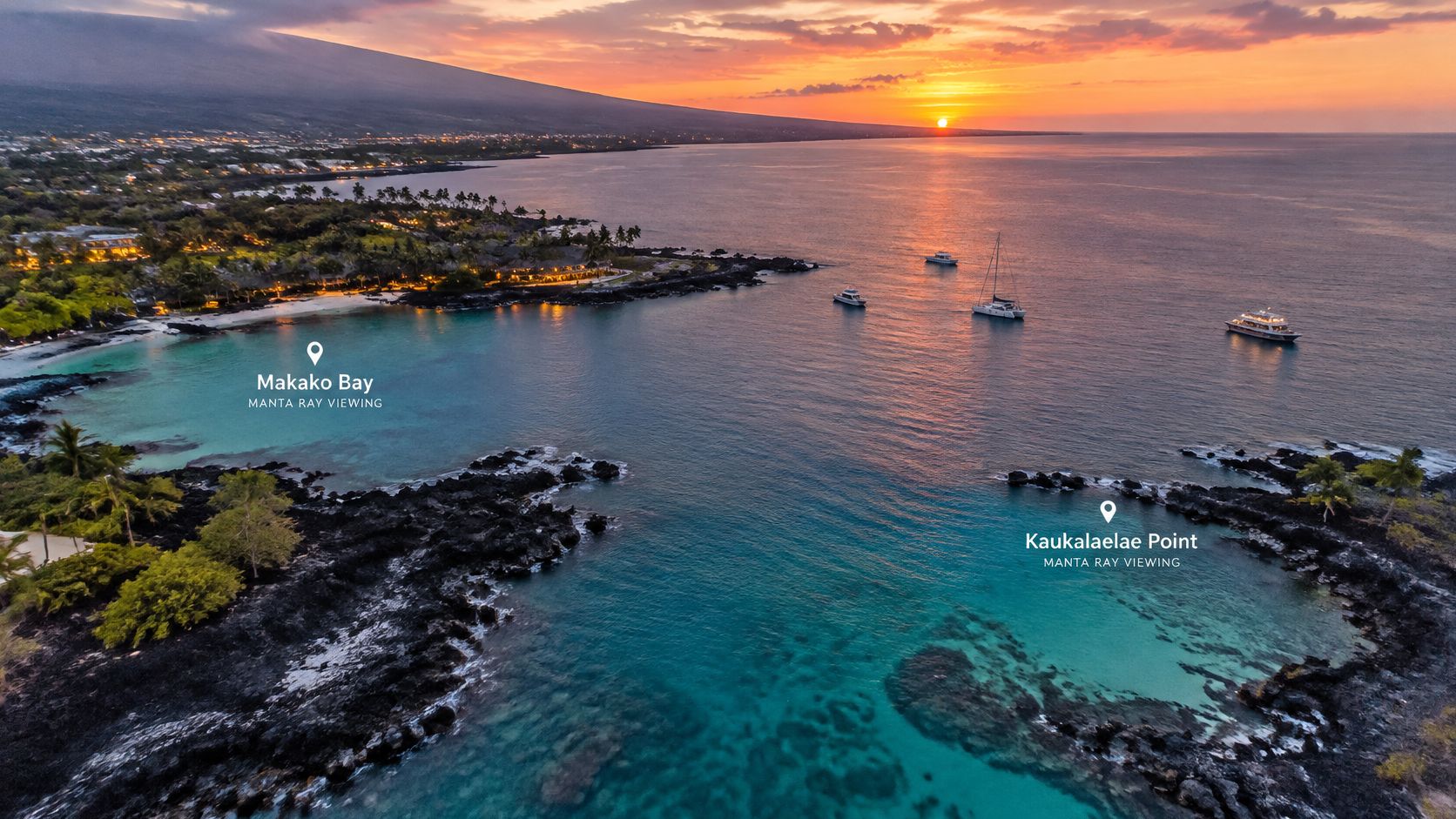
A NOAA-hosted study tracked recurrent feeding locations near Kailua-Kona: Manta Heaven in Makako Bay and Manta Village at Kaukalaelae Point. Across six years, researchers recorded 25,444 observations of 118 individual mantas. Of those observations, 19,841 were at Manta Heaven and 5,603 were at Manta Village, according to the NOAA-hosted movement study.
Those records help explain why the sites are familiar to operators, but they don't promise a particular encounter on any given night. Prey conditions change, and manta movement differs between individuals. The study also found that females more often showed resident patterns, while some males moved between sites more frequently. A familiar ray's absence on one evening, by itself, doesn't show that the local population has declined.
For visitors, the practical lesson is simple: give the feeding corridor room. Calm floating and clear approach and exit paths help keep the illuminated area useful for feeding while reducing the chance that a swimmer will obstruct a ray.
For a deeper explanation of the feeding behavior and light setup, read why manta rays gather near Kona after dark.
Best Places to See Manta Rays on the Big Island
The names can be confusing because research studies and tour descriptions don't always group the sites in the same way. Manta Heaven and Manta Village are the recurring locations documented by NOAA. A University of Hawaii study focused on Garden Eel Cove and Keauhou, two major nighttime feeding locations along the Kona coast. These are closely related names in the local manta-viewing conversation, but it's useful to ask an operator which specific site a tour plans to visit.
How the feeding locations compare
A 2025 University of Hawaii study analyzed more than 23,000 community-sourced sightings, collected from 2010 through 2022, covering 167 individually identified reef mantas. It found that Garden Eel Cove consistently supported larger aggregations, while Keauhou was visited disproportionately by females and showed connectivity with Garden Eel Cove. Across both locations, the overall sex ratio was approximately balanced, but individual sites were used differently by males and females. The University of Hawaii study record also reports high site fidelity among females at Keauhou and greater mobility among males.
| Site | Aggregation size | Notable patterns |
|---|---|---|
| Garden Eel Cove | Consistently larger in the study | A particularly reliable feeding area |
| Keauhou | Varies with conditions | Visited disproportionately by females; connected with Garden Eel Cove |
| Manta Heaven | Recorded as a recurrent viewing site | A major location in the NOAA movement records |
| Manta Village | Recorded as a recurrent viewing site | A major location in the NOAA movement records |
The sites aren't interchangeable in every respect, and an operator may choose based on conditions and logistics. A larger aggregation in the research record doesn't mean a guarantee for your trip. Ask where the boat expects to go, and how the crew responds if conditions change.
For a closer look at how the commonly used site names compare, see Manta Village versus Manta Heaven.
What to Expect on a Kona Manta Ray Night Snorkel
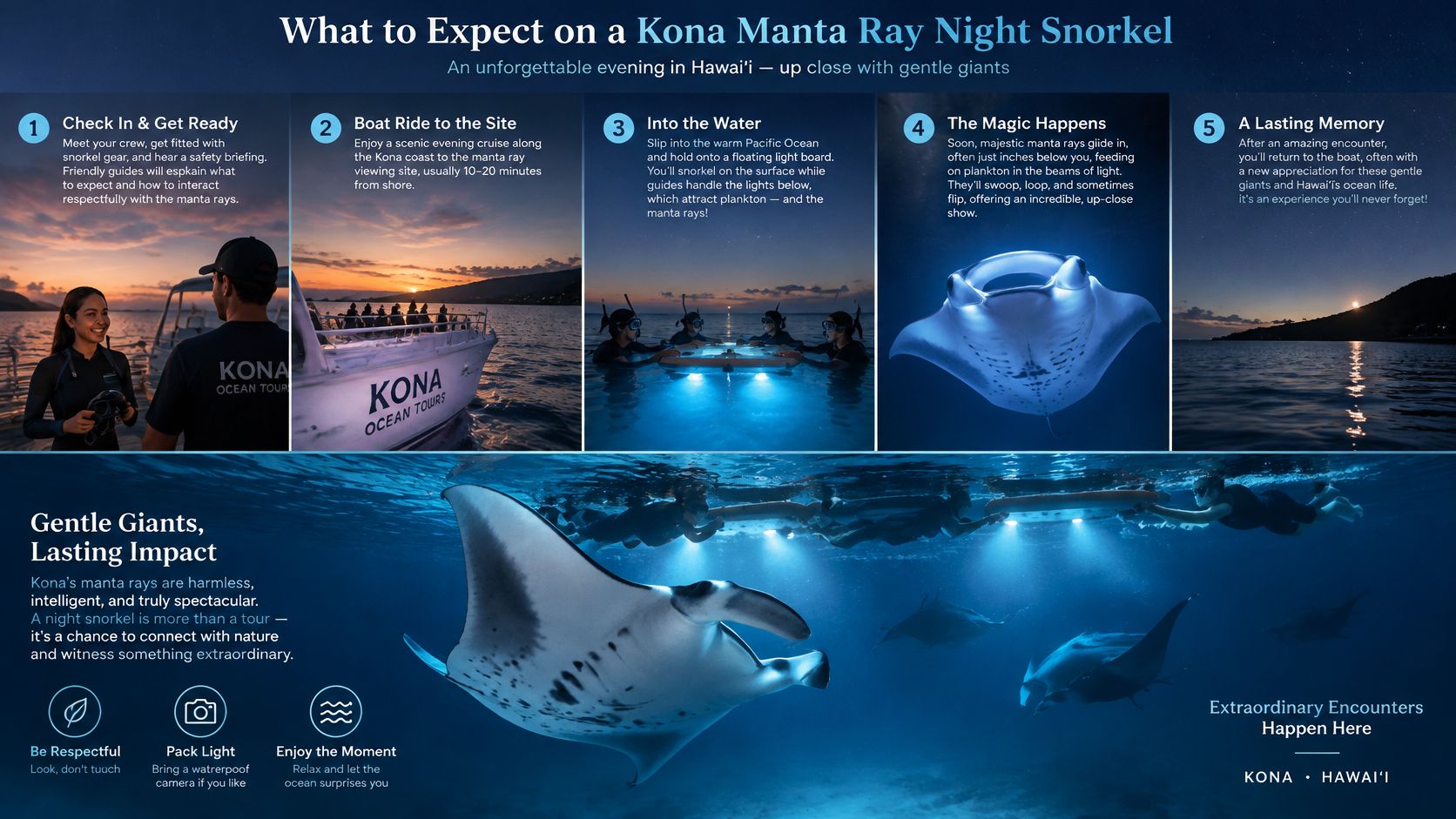
A typical trip starts with a crew briefing before you enter the water. Pay attention to the instructions on flotation gear, mask use, where to hold, and how to stay clear of the manta feeding path. If anything is unclear, ask before departure, when it's easier to hear the answer than it will be at a dark-water site.
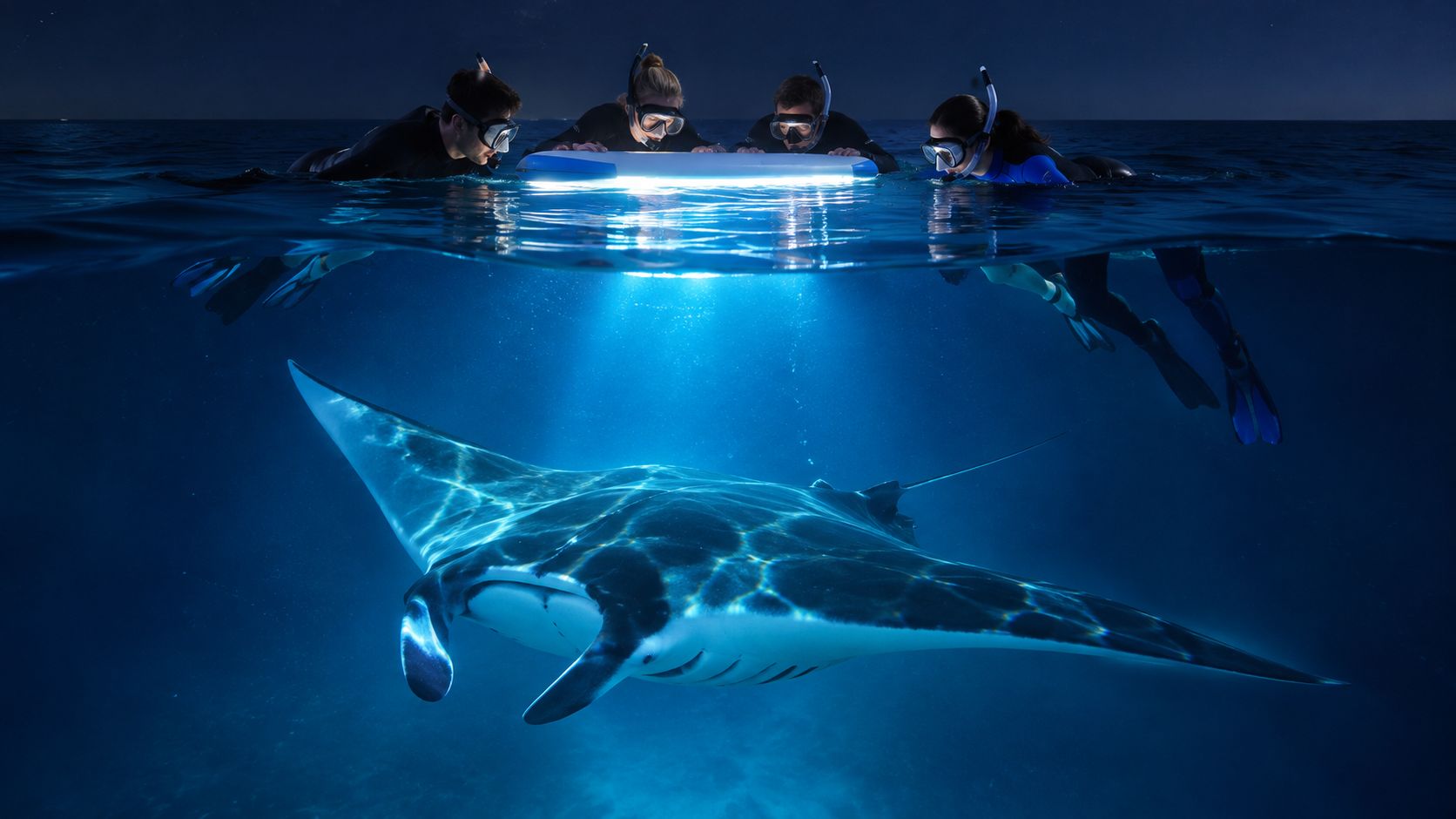
After the boat reaches the viewing area, the crew sets up the lights. Guests who snorkel hold onto a floating board and look down into the illuminated water. The light concentrates plankton, and the mantas may arrive to feed. You might see a ray pass beneath the board, bank through the light, and circle back. Or the activity may be brief. Either way, your role is to float calmly and let the animal decide where to go.
Let the crew set the pace
The board and flotation help you stay in position without swimming after mantas. Keep your body relaxed, avoid sudden kicking, and follow the crew's directions if they ask the group to make space. Mantas can pass close, but don't reach out or try to steer toward one.
To compare trip details, you can review the Kona manta ray night snorkel tour. Manta Ray Night Snorkel Hawaii is another option to consider when comparing night snorkel tours.
Best Seasons and Times for Manta Ray Encounters
A calendar can help you plan a trip, but it can't tell you how much plankton will be present on a particular night. Manta aggregations respond to prey availability, so feeding activity can vary with zooplankton density. That's why a night with fewer visible rays doesn't necessarily mean anything has changed in the health of the population.
The University of Hawaii research described the Kona aggregations as relatively stable during its observation period, despite increased tourism, and found no evidence that activity levels had reduced local population viability. That's encouraging, but it isn't a reason to treat the encounter as risk-free or to ignore low-impact practices.
| Kona manta ray feeding sites at a glance | Aggregation size | Notable patterns |
|---|---|---|
| Garden Eel Cove | Consistently larger in the study | Aggregation size tracks prey availability |
| Keauhou | Varies with prey conditions | Female site fidelity and connectivity with Garden Eel Cove |
Choose a good window, not a guaranteed night
Night snorkels take place after dark, but the experience still depends on ocean conditions and animal behavior. Ask the operator how it handles changing sea conditions and what happens if a trip can't safely proceed. If your schedule allows flexibility, choosing a date early enough in your stay may give you more options if conditions require a change.
For planning considerations and timing context, read the best time of year for a manta ray night snorkel in Kona. Keep expectations grounded: the lights create a feeding opportunity, not a reservation with the mantas.
Safety and Environmental Etiquette for Manta Encounters
Close viewing can feel harmless, but the animals need space to feed and move freely. Hawaii law prohibits intentionally or knowingly capturing, entangling, possessing, abusing, or killing rays in state marine waters. That protection applies to reef manta rays and giant oceanic manta rays. State guidance also asks people not to disturb an oceanic manta's natural behavior. The Hawaii marine-regulated species rules provide the legal context.
A separate concern is the local population's ability to recover from harm. A NOAA-led genetic study identified 318 individual reef manta rays around Hawaii Island between 1979 and 2024 and estimated about 104 adult breeders contributing to that population. It found extremely limited migration between island groups, with mantas generally staying near their natal island. The same research describes slow reproduction: females mature slowly and typically produce one pup every one to seven years. Read the NOAA summary of the reef manta genetic study for the population findings.
In the water: Stay at the surface, keep your hands to yourself, and leave the manta's route open.
Simple behavior protects both guests and rays
Don't touch, chase, grab, dive toward, or block a manta. Avoid forceful finning that pushes you into its path, and don't attempt to direct the animal toward the group. Surface-only snorkeling helps keep people out of the feeding corridor and reduces the chance of a collision.
Listen to your guide and use the flotation equipment as directed. If you feel unsettled, tell the crew rather than swimming away from the group on your own. Clear communication and calm movement make the experience safer for guests while allowing the mantas to approach, feed, and leave without interference.
For practical guidance on guest conduct and wildlife protection, read manta ray snorkeling rules that protect wildlife and guests.
Choosing Your Manta Ray Tour and Final Tips
Good wildlife stewardship depends on more than guest etiquette. A 2023 safety assessment found that state commercial permits didn't include manta-specific limits for activity, capacity, location, nighttime operations, lighting, propeller guards, or medical equipment. The assessment also discussed possible rules, including limits on permits, guide ratios, operating hours, and passenger numbers. Those proposals shouldn't be mistaken for current requirements. For the distinction and the assessment's discussion, consult the Hawaii County manta viewing safety assessment.
Before booking, ask direct questions. What is the guide-to-customer ratio? How does the crew manage the lighted area and keep the feeding corridor clear? What emergency planning is in place, and what policies prevent contact with the reef? Ask how the operator handles crowding and whether its practices are legal requirements or company policies.
Families and first-time snorkelers may value clear briefings, attentive guides, and flotation support. Eco-conscious travelers can ask for specific examples of stewardship rather than relying on broad claims. Wildlife enthusiasts may want to know whether the operator supports manta identification or conservation efforts. Kona Snorkel Trips offers a guided manta night snorkel with illuminated boards; compare its trip details and operating practices with the questions above.
Choose the trip that explains its procedures plainly and gives the animals room. A sighting is a privilege, not something a crew or guest can demand.
For a guided night on the water, Kona Snorkel Trips offers a manta ray snorkel where guests observe feeding rays from illuminated boards. Review the trip details, ask about safety and wildlife practices, and book with the understanding that the mantas always set the terms of the encounter.