
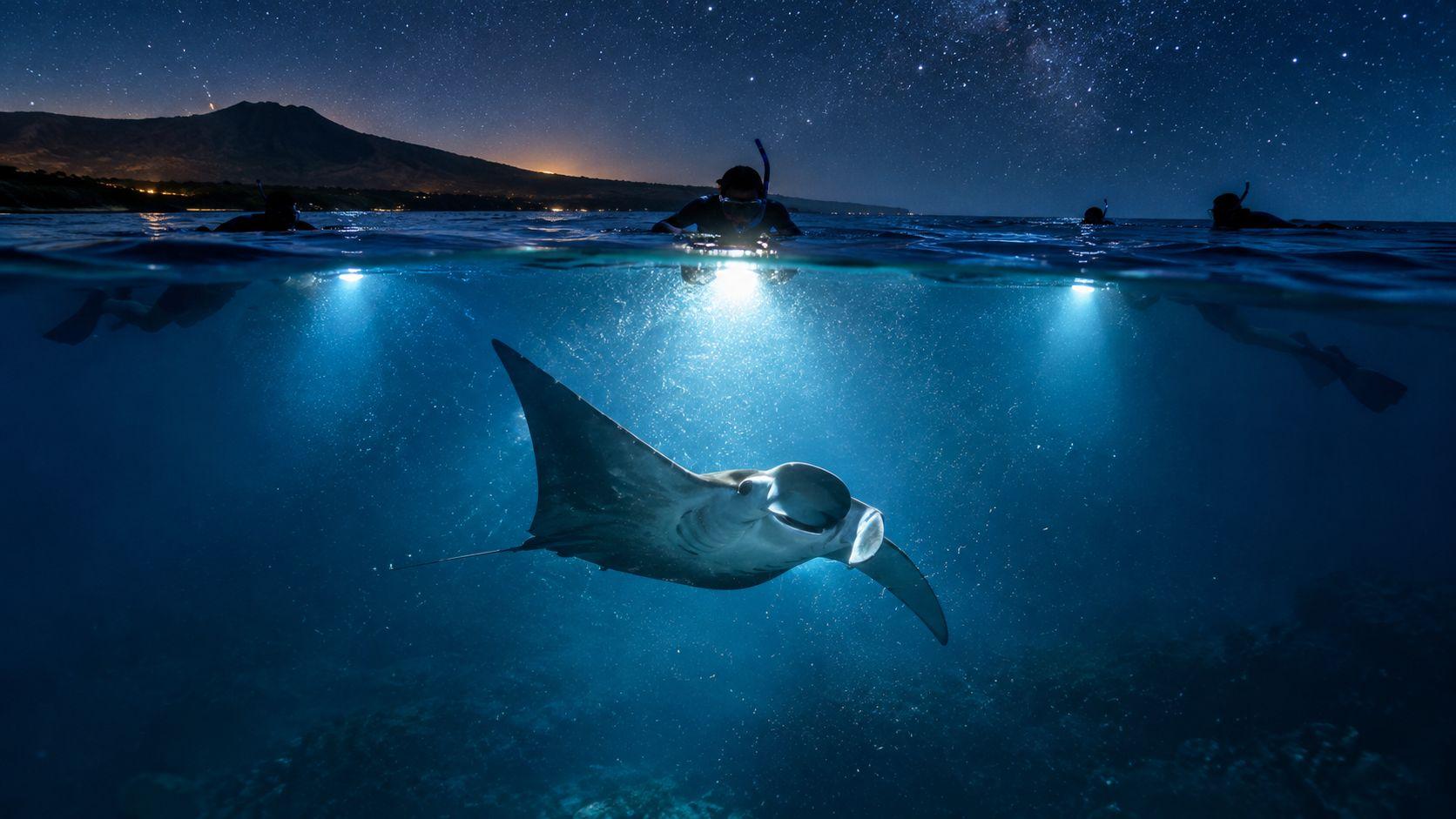
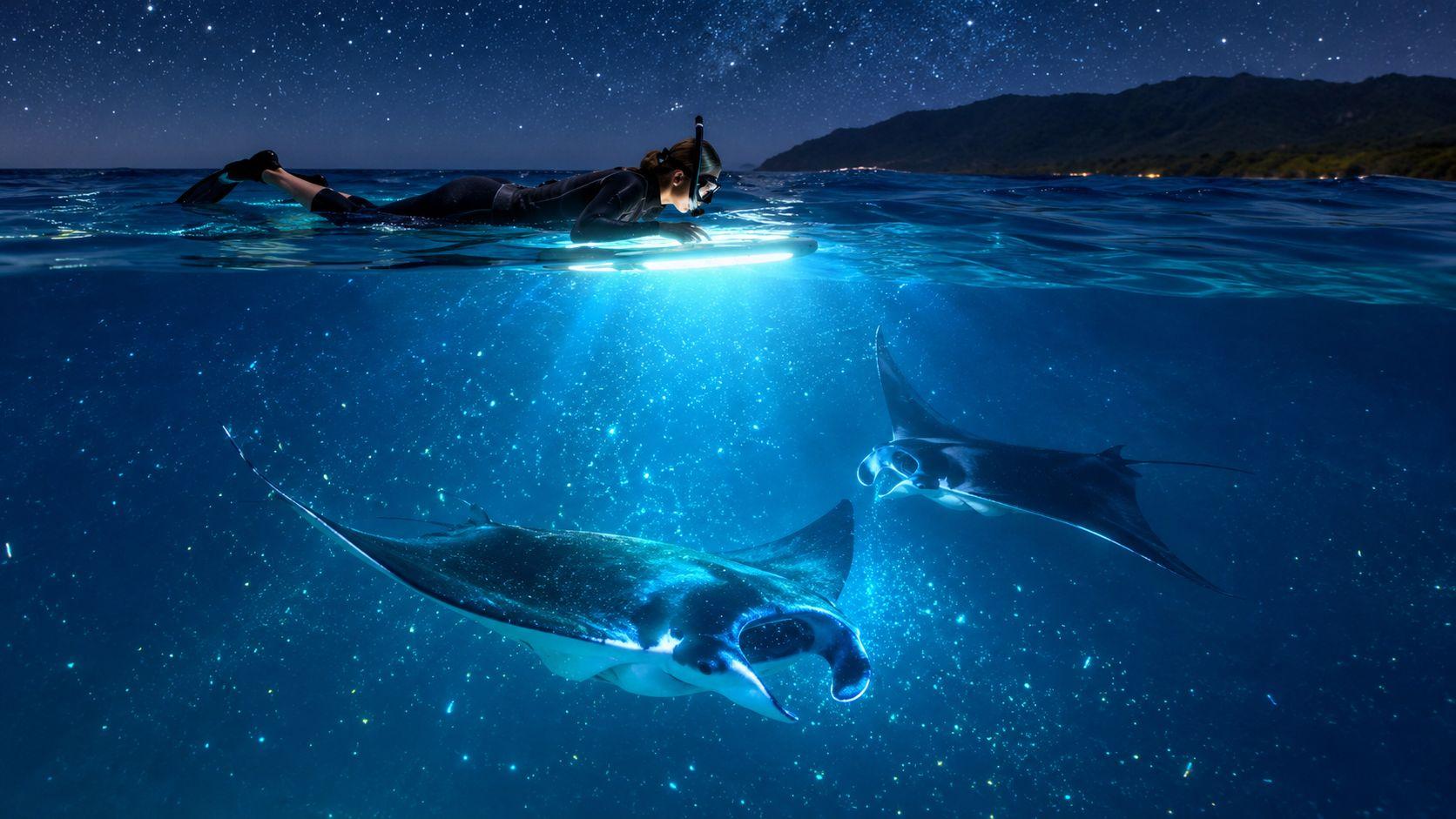
You're already picturing the part that matters: the boat is quiet, the deck lights are low, and the water below the illuminated board starts to fill with slow, winged shadows. That's the draw of manta ray Hawaii Big Island nights, not a generic reef swim, but a concentrated feeding event that happens after dark along the Kona coast.
What makes it worth planning carefully is that this isn't random luck. Kona's mantas are part of a resident, locally concentrated population, and long-term photo-identification has documented them over years of repeat sightings, site fidelity, and stable aggregation behavior. If you want the experience to feel magical and still respect the animals, the details matter.
Why Kona Is the Best Place to See Manta Rays in Hawaii
The first thing you notice is the contrast, dark Pacific water above you, bright light below, and then a manta sliding out of the black like a glider. That scene is why people travel for manta ray Hawaii Big Island nights, and it happens here because the Kona coast creates a feeding setup mantas return to again and again.
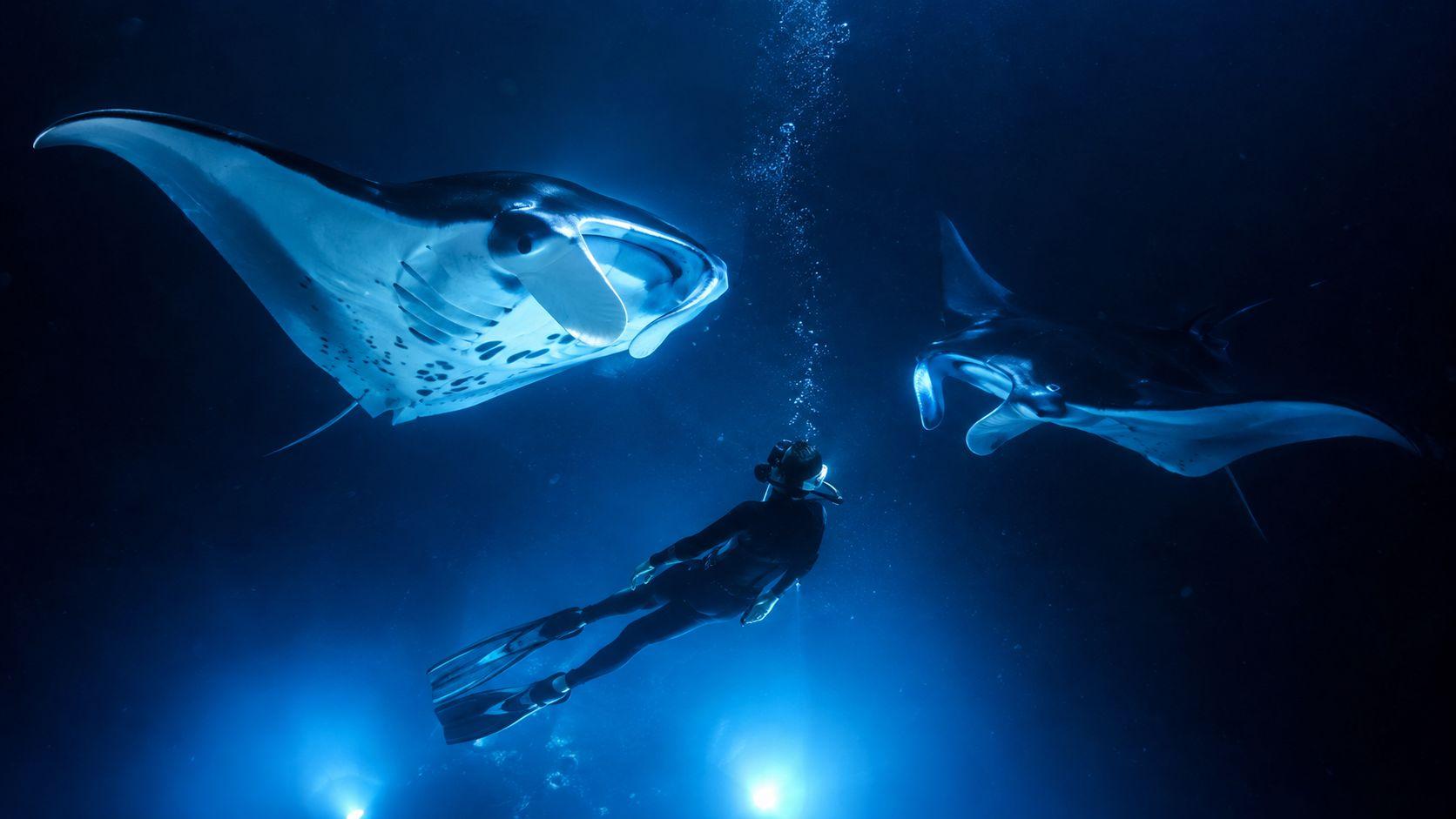
Kona's bays create the stage
Hawaiʻi Island is the only Hawaiian island known for this nighttime manta encounter, and that matters because the viewing sites are not interchangeable. Along the Kona coast, the shoreline shape, sheltered bays, and predictable night setup create a reliable feeding theater instead of a one-off wildlife sighting. A long-term community-science record backs that up, with more than 23,000 sightings of 167 individually identified reef manta rays documented from 2010–2022 at Garden Eel Cove and Keauhou, according to a University of Hawaiʻi community-science study of Kona reef mantas study details.
These mantas are not drifting in by chance. They are using a concentrated food opportunity that has become predictable enough for researchers and operators to track over time.
Practical rule: when a site produces repeat sightings year after year, the operator's job is not to “find” mantas, it is to manage the encounter without disrupting the feeding pattern.
Why the viewing is so dependable
The community-science dataset showed that Garden Eel Cove generally supported larger aggregations, while Keauhou showed stronger female site fidelity and was visited predominantly by females. That difference matters on the water because each site can feel distinct, even within the same coastline.
Kona's manta nights also draw support from a long-running local operator perspective. This Kona manta-ray guide is useful background before you book, especially if you want to compare sites and understand what the boat crew is trying to do once the lights go in.
The experience is strongest when you understand the pattern. The animals are not just passing through a pretty bay, they are using a feeding area that has remained broadly stable even with increased tourism during the study period, which points to a resilient local population that still needs careful management.
The Science Behind the Gathering
A night on the Kona coast works because the food web lines up in one place. Submerged lights draw plankton into a dense patch, and reef mantas move in to feed on that concentration. NOAA describes manta rays as suspension feeders. They swim with their mouths open and use cephalic fins to funnel plankton-rich water across internal gill rakers NOAA guide.
Why light changes the feeding pattern
That feeding behavior explains the night setup. The lights do not lure mantas like bait, they create a plankton patch that the animals can use with slow, efficient passes. For operators, small details matter here. Light placement, calm water, and low turbulence all affect how cleanly the aggregation forms.
A good operator keeps the system simple. Light in the water. People at the surface. The mantas do the rest.
The same basic mechanism also separates a true feeding aggregation from a random wildlife sighting. In Kona, the animals are there to eat, so guests can often watch repeated barrel-roll feeding behavior without chasing the fish or drifting through the water column. If you want a plain-language version of that pattern, this explanation of why Kona mantas gather after dark is a useful primer.
The animals return to specific places
Kona's mantas also show strong island fidelity. Long-term research found that males range more widely than females, while females, especially at Keauhou, return to the same sites with more consistency. The same long-term photo-identification research shows that the encounter is tied to a resident local population, not a one-off visit.
That changes the conservation picture. When a population uses the same bays and feeding corridors again and again, disturbance in those places has a real effect, especially where the animals feed in predictable conditions.
For guides, that is the trade-off. The site can support repeat viewing, but it also asks for careful management so the feeding pattern stays intact and the animals keep returning.
What to Expect on a Night Snorkel Tour
Most good tours start around sunset, when the sky is still holding color and the water turns dark fast once the boat leaves the harbor. That timing isn't just for atmosphere, it gives the crew enough light for boarding and briefing, then puts you in the water when the illuminated board stands out clearly against the night.
From harbor check-in to first splash
You'll usually check in, get fitted with snorkel gear, and hear the briefing before the boat settles into position. The crew explains how the lighted board works, where to hold, how to stay calm on the surface, and what to do if the mantas enter close to the board. Many operators provide flotation, and reef-safe sunscreen should already be on your skin before you arrive.
The practical rhythm is simple. The boat anchors or holds position, the lights go in, and the plankton build begins. Then the mantas arrive, often with long, smooth passes beneath the board where you can watch the feeding pattern without swimming after them.
What guests actually do in the water
Snorkelers stay at the surface and let the mantas come to the light. You're not free-swimming around the site, and that's a good thing because the fixed-position setup keeps the viewing predictable and reduces disruption to the feeding corridor. In practice, the most important skill is comfort in the water, not certification.
A few things help the night go smoothly:
- Arrive ready to listen: the briefing matters because site position, entry order, and board spacing affect both safety and viewing quality.
- Keep your body relaxed: the calmer you stay, the easier it is to watch the mantas pass below without kicking into the lane.
- Expect a few hours on the water: the total outing is more than the in-water viewing window, so plan for boat time, briefing time, and the ride back.
The darkness makes the experience feel almost suspended. The board lights define the whole scene, and everything outside that circle fades away until the next manta glides in.
Safety and Ethical Viewing Guidelines
A good manta night starts with restraint. Do not touch, chase, or dive toward the mantas. Their skin carries a protective mucus layer, and contact can damage it or add stress. Hawaiʻi guidance is clear that viewing should stay observation-only, with calm floating at the surface and no pursuit into the water column where the animals are feeding Hawaiʻi marine life guidance.
Why the surface position matters
Stay at the surface because that is where the viewing lane is set. NOAA's guidance tells snorkelers not to dive into the feeding water column, and that rule protects both the animals' path and the guests sharing the site. When mantas move under the lights to filter plankton, even a small dive can put fins, hands, or cameras in the wrong place.
The size of the animals raises the stakes. Manta rays around Hawaiʻi's Big Island can reach approximately 5.5 meters in wingspan county safety assessment, so loose gear or a poorly timed kick can create a real hazard.
Rules that protect both people and rays
- Stay at the surface: keep snorkeling in the floating zone, not in the feeding lane.
- Keep your body still: avoid sudden kicks, dives, or lunges toward the light.
- Control your gear: fins, masks, and cameras should stay close to your body and out of the manta's path.
- Follow crew direction: entry, exit, and board spacing are part of the safety system.
For operators, the same discipline applies on the boat side. As noted in a 2023 Hawaiʻi County boating safety assessment on manta viewing operations, crew should keep lines and gear from dangling, avoid anchoring on coral, and manage vessel position so the site stays low-friction for the animals. Kona Snorkel Trips' manta-ray snorkeling ethics guide gives a practical field checklist that matches those standards.
How to Choose the Right Tour Operator
The best operator is the one that keeps the encounter stable, calm, and low-friction for the animals. Small groups make that easier because they reduce clutter around the lighted board and let the crew correct guest position before it becomes a problem.
What separates a good operator from a crowded one
Look for guides who explain the site rules clearly, manage the entry sequence without rushing, and keep people at the surface once the mantas arrive. Lifeguard-certified guides and crew members who know how to manage anxious swimmers make a real difference, especially on night trips where visibility is limited and a bad habit is easy to miss.
A solid operation should also be transparent about how it treats the marine environment. That means board positioning, light placement, and guest spacing should all support the feeding pattern rather than fight it.
One option in Kona is Kona Snorkel Trips, which runs guided manta night snorkels with small-group logistics and flotation-based viewing. Use it as a reference point for the kind of structure and guest handling you should expect from any serious operator.
A quick comparison mindset
The right question isn't just “who has seats left tonight.” It's who makes the encounter easier on the mantas and safer for the guests. That usually means:
- Clear briefing: the crew tells you exactly where to float and what not to do.
- Controlled board setup: lights are placed to support the feeding zone, not scatter the group.
- Low guest density: fewer people means fewer kicks, fewer collisions, and better viewing for everyone.
- Steady supervision: guides closely watch the group, not just the manta activity.
If you want a starting point for comparing manta snorkel options, this Kona manta snorkel tour page shows the kind of trip structure many visitors look for.
Essential Packing and Preparation Tips
Night snorkels feel different from daytime outings because the boat ride home can be breezy and damp even when the water itself is comfortable. A light rash guard helps with warmth and gives you an extra layer against irritation, and reef-safe sunscreen should be applied before you reach the dock so there's no runoff around the site.
Pack for comfort, not clutter
If you wear glasses, think ahead. Contacts can be awkward in salt water for some people, so backup glasses or a case for your prescription eyewear is smarter than improvising on the boat. A small towel, dry clothes for the ride back, and a windbreaker are also worth packing because the return leg is where people usually start feeling chilled.
A light meal before departure helps more than a heavy one. Snorkeling is easy to underestimate, and even relaxed floating takes more energy than people expect once they're on the boat, listening, gearing up, and moving carefully in the dark.
Bring the practical extras
- Water and hydration: stay topped up before you board, especially if you've spent the day in the sun.
- Cash for tips: crews work hard to keep the night smooth and safe.
- Low-light camera gear: if you want photos, bring equipment that can handle dark water, though some operators provide images.
- Backup hair ties or straps: small things matter when you're trying to keep gear from shifting in salt spray.
The goal is to arrive ready so the manta encounter stays the focus. If you're scrambling for layers, sunscreen, or a camera setting once the boat leaves the harbor, you'll miss the quiet part that makes the night special.
For a practical checklist, this manta-ray night snorkel packing guide covers the basics without overcomplicating the prep.
Making the Most of Your Manta Ray Encounter
The best nights on the water are the ones where everything feels orderly. The boat is quiet, the crew is calm, and the mantas keep returning to the light because the site is set up around their feeding behavior, not around human excitement.
What makes manta ray Hawaii Big Island trips memorable is the combination of science and restraint. The animals are resident, the feeding sites are documented, and the encounter works best when guests treat it as wildlife observation, not entertainment with a guaranteed ending. That mindset protects the population and usually gives you a better view too.
Choose an operator that understands the local rules, keeps the group manageable, and handles the board and light setup with care. That's how you turn a famous night snorkel into an encounter that feels clean, respectful, and worth remembering long after the boat docks.
If you're ready to see Kona's manta rays the right way, Kona Snorkel Trips runs guided night snorkels built around surface viewing, safe guest handling, and the behavior of the animals. Visit Kona Snorkel Trips to check current options and plan your manta night on the Big Island.
Keep reading
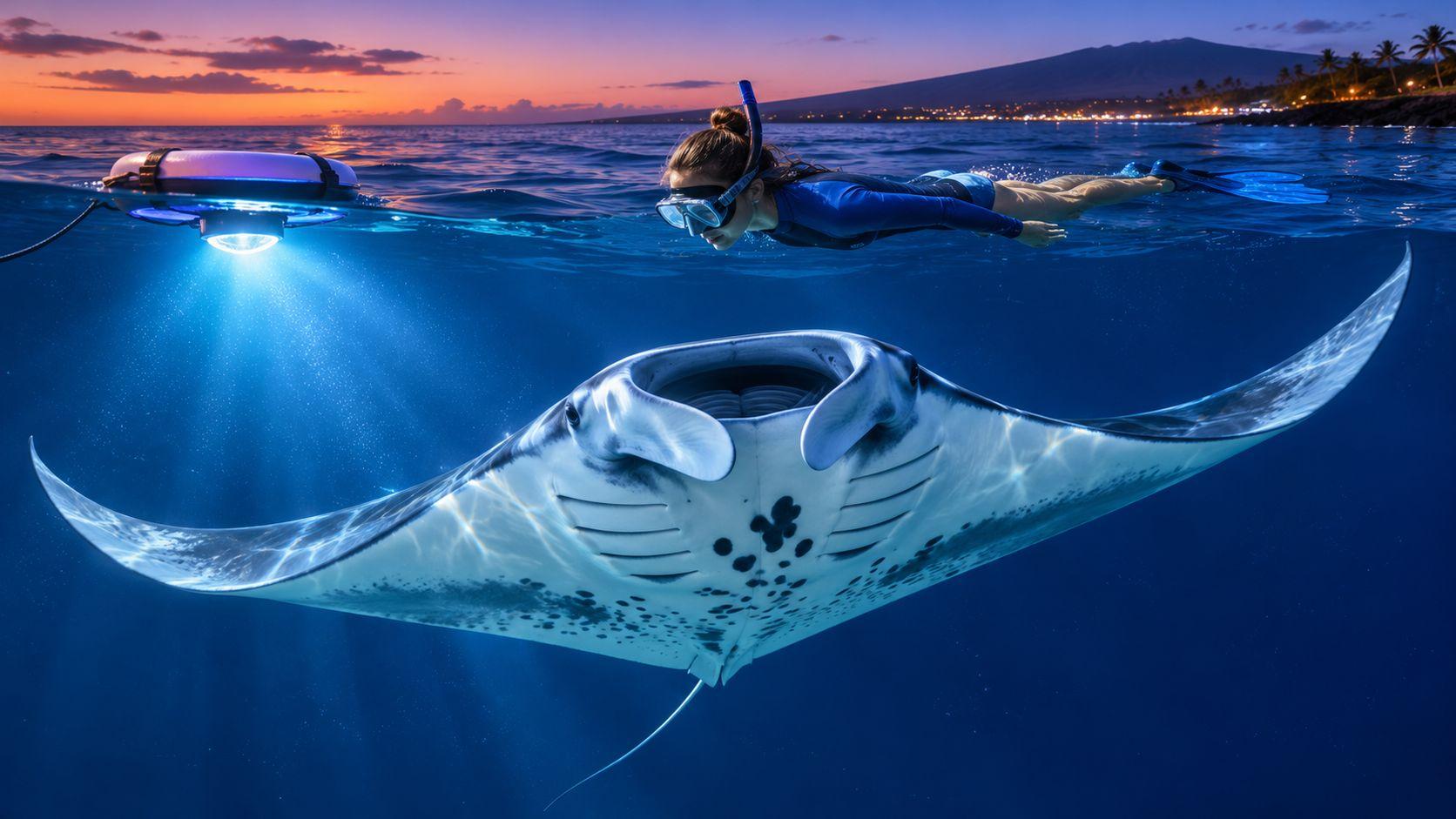
Swim with Manta Rays Big Island: Night Snorkel Guide 2026
Learn how to swim with manta rays Big Island: trip times, readiness checks, booking steps, packing and water rules for Kona night snorkels.
Manta Ray Snorkeling Big Island: A Practical 2026 Guide
Manta Ray Snorkeling Big Island. Plan manta ray snorkeling on the Big Island with this 2026 guide. Best sites, tour choices, packing tips, safety rules
Manta Ray Night Dive Kona: A Complete Insider Guide
Plan your manta ray night dive Kona experience with this practical guide. Compare snorkel vs scuba, best seasons, safety, pricing, and how to book.