
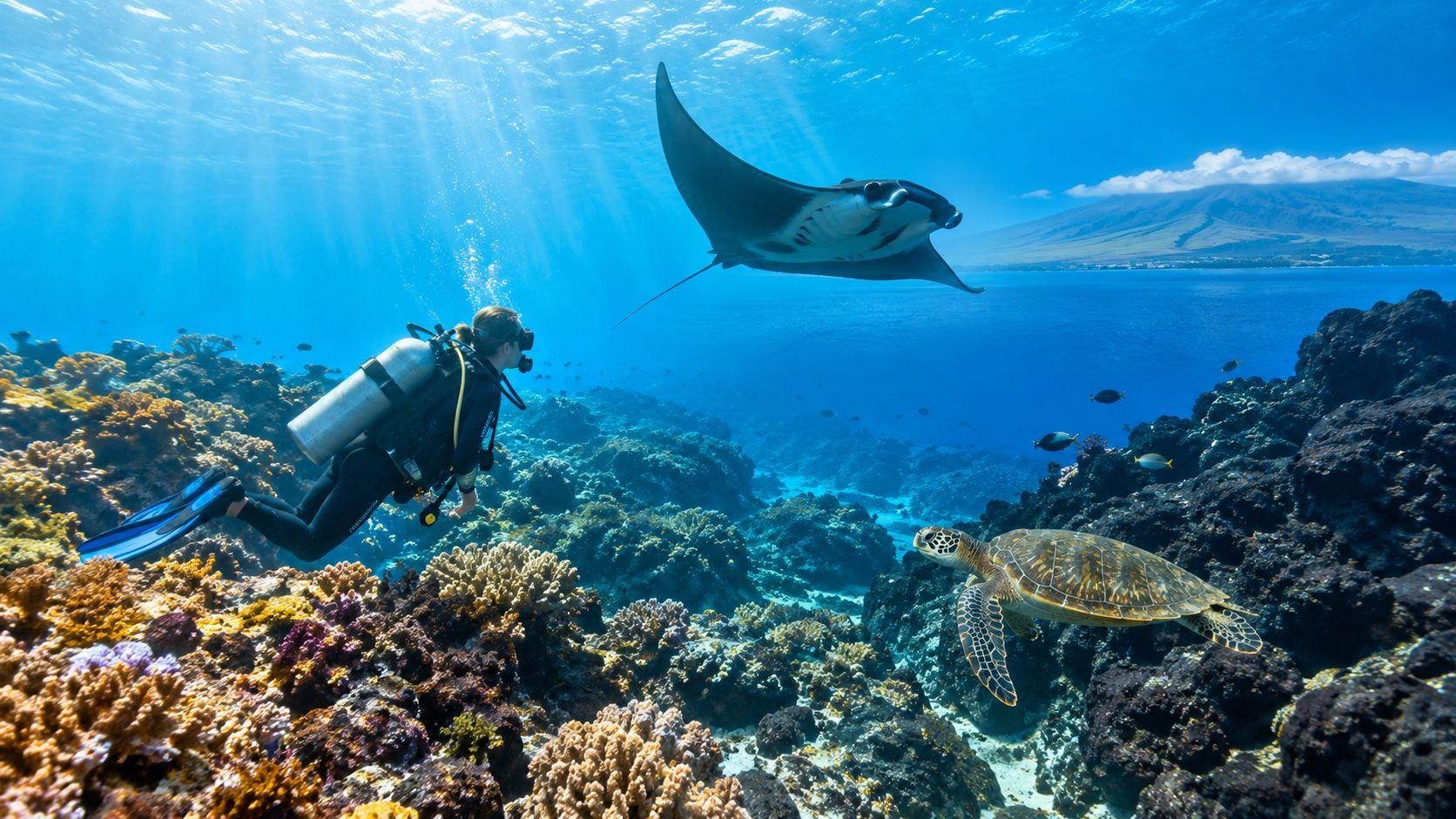
You've got a few days on Hawaiʻi Island, one person in your group is certified, another has never worn a mask and regulator, and everyone wants a memorable ocean day. The dive shop map makes every site look equally inviting. It doesn't tell you which entry is realistic, which trip suits a nervous swimmer, or whether your group should split between scuba and snorkeling.
That's the core planning question behind Big Island scuba diving. The most impressive site isn't automatically the right choice. The better choice matches your certification, comfort in the water, the day's wind and swell, and what the rest of your group can enjoy together.
Why Kona Is the Center of Big Island Scuba Diving
You can feel the difference as soon as you start planning a real trip. One person in your group wants a calm daytime reef dive, another is curious about manta rays, and someone else would rather stay on the surface. On Hawaiʻi Island, those choices cluster along the west coast, especially around Kona and Honokōhau, because the leeward shoreline is usually more protected from the trade winds than the island's more exposed sides.
Protected does not mean flat every day. It means captains and guides often have more workable options. If one stretch of coast is getting pushed around by wind and surface chop, a Kona departure may still be able to reach a reef, lava formation, or wildlife site with more manageable conditions. For trip planning, that matters as much as the site itself.
NOAA's overview of the island's marine environment describes west Hawaiʻi as habitat for coral reefs, reef fish, green turtles, spinner dolphins, whales, and manta rays. That mix of volcanic coastline and marine life helps explain why Kona became the island's practical base for guided ocean trips, not merely a resort hub. NOAA's Big Island marine overview gives useful context for the habitats you are likely to see.
What Kona makes possible
For a certified diver staying near Kailua-Kona, one harbor can open several very different ocean days. That is unusual, and it is the main reason Kona stands apart from a simple ranked list of dive spots.
You might book daytime reef diving to see lava arches, coral growth, turtles, and reef fish. You might choose the manta dive in the Keauhou and Ho'ona area, where divers watch rays feed overhead while remaining near the bottom. You might look at blackwater diving, a specialized offshore night dive that suits divers with the training and comfort level for open water after dark. Or your group may decide on surface alternatives so non-divers can still join the experience without carrying tanks.
That range makes comparison more important than impulse booking. Looking through Kona Honu Divers' full range of diving tour formats can help travelers sort out which activities belong on the same trip and which require more experience, confidence, or a different kind of group plan.
Kona's reputation also rests on simple logistics. Boats launch on the west side. Crews know the local harbors and nearby site options. The leeward coast gives operators a broad set of choices, which is very different from building a trip around a single exposed entry point.
If you are deciding whether to dive, snorkel, try manta rays, or save blackwater for another visit, start with the kind of ocean day your group can enjoy safely. For surface-focused travelers, this explanation of why Kona tops Hawaiʻi for manta ray night snorkeling adds helpful context.
How Visibility, Wind, and Seasons Shape Each Dive
A dive can be excellent on one side of the island and unpleasant a short drive away. Start with geography, then check the actual launch site.
Kona sits on the leeward side, so west-coast sites are generally more protected than windward shores. Less surface chop can make boarding, entries, descents, and exits easier. It can also reduce the amount of bottom material stirred into shallow water. That's why a calm boat departure from Kona can coexist with difficult conditions elsewhere on Hawaiʻi Island.
Winter brings a different variable. North-facing areas are more exposed to seasonal swell, which can create surge, reduce visibility, or make a shore entry unsuitable. Protected leeward bays may remain diveable, but you still need to evaluate the specific cove, boat ramp, or lava shelf rather than relying on a general island forecast.
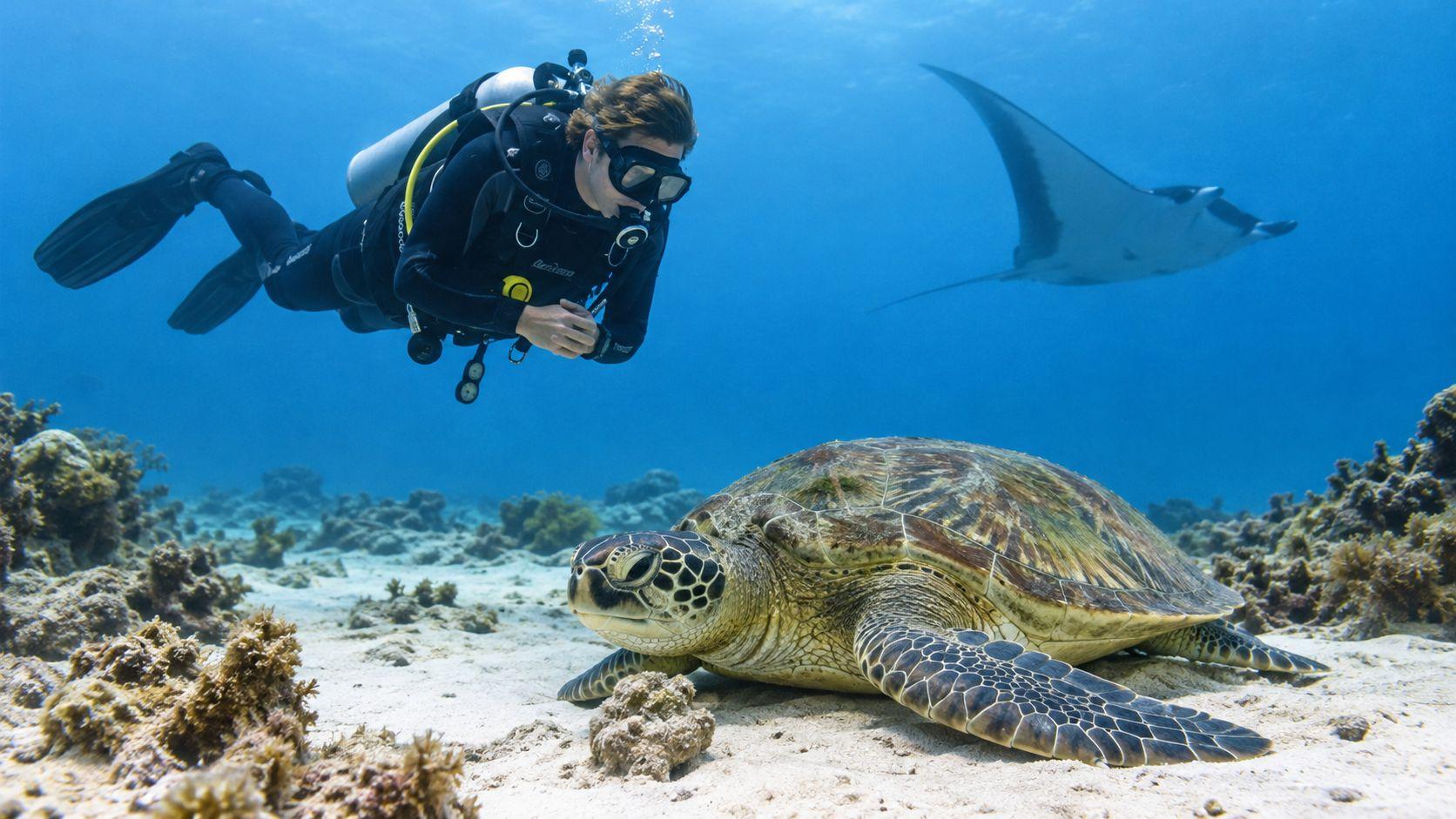
Read the conditions in the right order
Use this simple sequence before committing to a shore dive or deep boat profile:
- Check the wind around the launch site. Island-wide conditions can hide a meaningful difference between Kona, Kohala, and Hilo.
- Check swell direction and height. A shore entry that looks manageable at low surge may become hazardous when waves wrap onto a lava shelf.
- Look at buoy observations. Recent observations are more useful than a generic seasonal assumption.
- Consider recent rainfall. Runoff can affect nearshore visibility, especially around areas receiving more precipitation.
- Ask the operator what they're seeing. The crew's site rotation reflects real-time conditions, diver ability, and boat safety.
A calm surface doesn't always mean perfect visibility. Rainfall, surge, current, and bottom composition all matter. Conversely, a little wind at the harbor doesn't automatically cancel a sheltered boat dive.
Practical rule: Choose the launch site first, then choose the dive. “Kona conditions” are too broad to describe every entry or reef.
Reefs also make this decision economically important, not just recreationally. Hawaiʻi's statewide forest-resources assessment reported that 14.7% of surveyed participants took part in snorkeling or scuba diving as nature-based recreation, and estimated coral reefs at $363.71 million in overall economic value, including $304.16 million tied directly to recreation and tourism. These are historical benchmarks, not current valuations, but they show why clear, healthy underwater habitat matters beyond one vacation. The Hawaiʻi Statewide Assessment of Forest Resources documents that broader context.
For a practical pre-departure routine, use this Big Island marine forecast guide alongside the operator's morning assessment.
Signature Big Island Dive Sites from Shore and Boat
The best site depends on the diver, not the ranking. A new diver may get more from a shallow, sheltered reef than from a deep lava formation, while an experienced diver may specifically want a night profile or open-ocean pelagic encounter.
Kealakekua Bay and Kaʻawaloa Cove
Kealakekua Bay is a protected marine area on the western coast. Hawaiʻi's Division of Aquatic Resources identifies Kaʻawaloa Cove near the Captain Cook Monument as the bay's best diving area, with reported depths from approximately 5 to 120 feet. The cove is known for exceptional coral and fish diversity, including unusually tame fish. The state's Kealakekua Bay MLCD information explains the district boundaries and underwater character.
For most visitors, this is a boat-access experience to the monument side. A shore approach involves a demanding route and a long surface crossing before reaching the more compelling underwater terrain. The site suits certified divers who want coral gardens, varied depths, and a protected setting, but it rewards careful planning rather than spontaneous entry.
Puʻuhonua o Hōnaunau and Two Step
The Place of Refuge area is famous for its lava entry and shallow reef environment. Two Step can be a rewarding option for confident swimmers and experienced shore divers when the water is calm, but the entry is made of bare lava rather than sand. A small change in swell can turn an easy-looking step into an awkward or unsafe exit.
This site suits travelers who value flexibility and want to spend time near shore without committing to a boat schedule. It doesn't suit anyone who feels uncertain carrying scuba gear across uneven rock or timing an entry between wave sets.
Kohala Coast lava formations
The Kohala Coast offers underwater lava arches, ledges, and passages shaped by old volcanic flows. Boat crews select sites according to conditions and diver experience, so the appeal is less about one guaranteed landmark and more about exploring a mature volcanic coastline with clear-water potential on a calm day.
These sites work well for certified divers who enjoy structure, navigation, and the possibility of turtle encounters without needing a specialized night qualification. Divers should still listen closely to the briefing. Lava formations can create overhead-looking spaces, surge, and route choices that demand controlled buoyancy.
Manta and blackwater experiences
The Kona manta dive is a controlled wildlife observation dive near Keauhou and Ho'ona. Divers stay on or near the seafloor while illuminated areas attract plankton above, allowing manta rays to pass through the feeding zone. It's suitable for certified divers who can remain still and maintain buoyancy in low light.
Blackwater is a different category altogether. Divers leave the reef environment and observe pelagic animals offshore after dark. It's surreal, but it isn't a casual add-on for a newly certified diver. You need strong buoyancy, calm behavior in open water, and enough experience to manage yourself without constant hands-on supervision.
Shore Dives Versus Boat Trips on the Kona Coast
Shore diving gives you independence, but the price is physical effort and a narrower margin for changing conditions. Boat diving costs more and follows a schedule, yet it can deliver easier access to deeper terrain while the crew handles navigation, mooring, and site selection.
The decision becomes clearer when you separate the entry from the underwater experience.
| Factor | Shore Entry | Boat Trip |
|---|---|---|
| Access | Walk, hike, or climb over lava to reach the water | Board at a harbor and ride to selected sites |
| Conditions | You must judge the entry and exit yourself | Crew evaluates sites and may adjust the route |
| Terrain | Strongest at accessible reefs and shallow lava formations | Better access to deeper walls, arches, and remote sites |
| Scheduling | Flexible, but dependent on daylight and conditions | Fixed check-in, departure, surface interval, and return |
| Equipment | You carry and assemble everything at the entry | Crew usually loads tanks and supports setup |
| Risk points | Surge, slippery rock, awkward exits, and long surface swims | Boat ladders, boarding, lift-bag procedures, and buddy awareness |
| Group fit | Works well when everyone is similarly confident | Better for mixed experience levels when the operator offers guidance |
What shore access really asks of you
At Two Step, you need to cross bare lava and time your movement with the water. At Kealakekua Bay, the attractive diving is effectively a boat-access proposition for most visitors. Other west-side entries can involve slippery rocks, surge, or exits that feel harder after a full tank has made you tired.
Shore diving can be a smart choice for an experienced local diver with a flexible schedule. It's less attractive for a first-time visitor who has one ocean day and no local read on the entry.
What a boat adds
A boat trip creates structure. You'll manage check-in, gear setup, a descent from the boat, a surface interval, and a ladder or platform exit. The crew can also choose a different site if the original plan doesn't match the morning conditions.
A boat doesn't remove the need for good judgment. It gives you a trained crew and more access, but you still own your air, buoyancy, buddy awareness, and comfort level.
For many visitors, a guided boat day from the Kona coast is the more realistic way to experience several types of Big Island scuba diving without turning the vacation into an equipment and entry-management exercise.
Certification, Gear, and Day-Of Logistics
You can be certified and still book the wrong day for your comfort level. On the Kona coast, that usually shows up in simple ways: a descent that feels rushed, rental gear that feels unfamiliar, or a second dive that sounds fun on paper but arrives after you are already tired. Certification opens doors. Recent experience, comfort in the water, and honest communication help you choose the right one.
If you hold an Open Water card, bring proof of certification and tell the operator when you last dove. A long break, trouble equalizing, uncertainty with setup, or stress during descents usually points to a refresher. That is not a setback. It is the underwater version of taking a short practice drive before getting on a busy highway.
Pick the right training path
A Discover Scuba experience can work for the person in your group who wants to try breathing underwater without committing to a full course. It begins with basic instruction and close supervision, and it does not replace Open Water certification. If your group is split between certified divers, nervous beginners, and relatives who may prefer to stay on the surface, ask about options before you lock in the day. Good shops can explain what fits each person without forcing everyone into the same plan.
A full certification course takes more time because it includes knowledge development, confined-water skills, and open-water training. If you want multiple certified-diver trips during the same vacation, finishing academic work before arrival can make scheduling easier, but the operator still has to confirm what they accept.
Pack for the process
Paperwork comes first. Expect medical and liability forms before anyone touches the water. Disclose recent surgery, pregnancy, breathing issues, medication concerns, trouble equalizing, or anything else that may affect diving. If a shop asks for physician clearance, that is a safety decision, not an inconvenience.
Rental gear often includes a BCD, regulator, tanks, weights, exposure protection, and a dive computer. Packages vary, so give the shop your height, weight, shoe size, and your usual temperature comfort. A wetsuit that fits poorly changes the whole dive, much like a bad pair of hiking boots changes the whole trail.
Most dive days follow the same rhythm:
- Check-in and paperwork, then an equipment fitting.
- A boat or shore briefing, covering entry, descent, route, air management, and lost-buddy procedures.
- A controlled equipment check, including regulator breathing, inflator function, and computer setup.
- A conservative dive profile, adjusted to conditions and the group's ability.
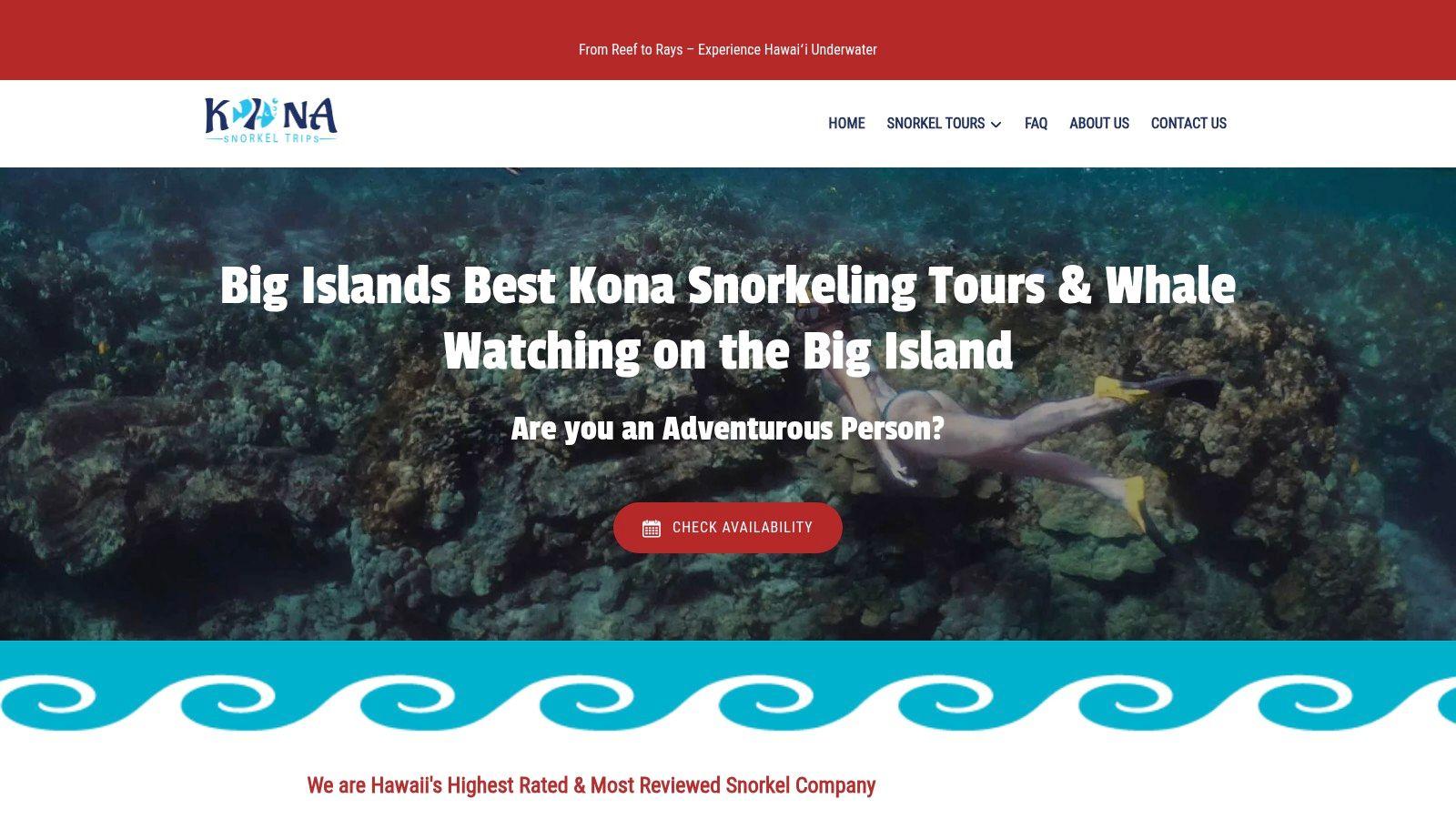
If someone in your group is not a confident swimmer, gets strong seasickness, struggles to equalize, or feels panicked in open water, snorkeling can be the better call for that day. Surface trips such as those shown by Small-group snorkel tour boat on the Kona coast operated by Kona Snorkel Trips often suit mixed-ability groups better than pushing one nervous person through a dive they are not ready to enjoy.
Wildlife Etiquette and Conservation Rules That Actually Apply
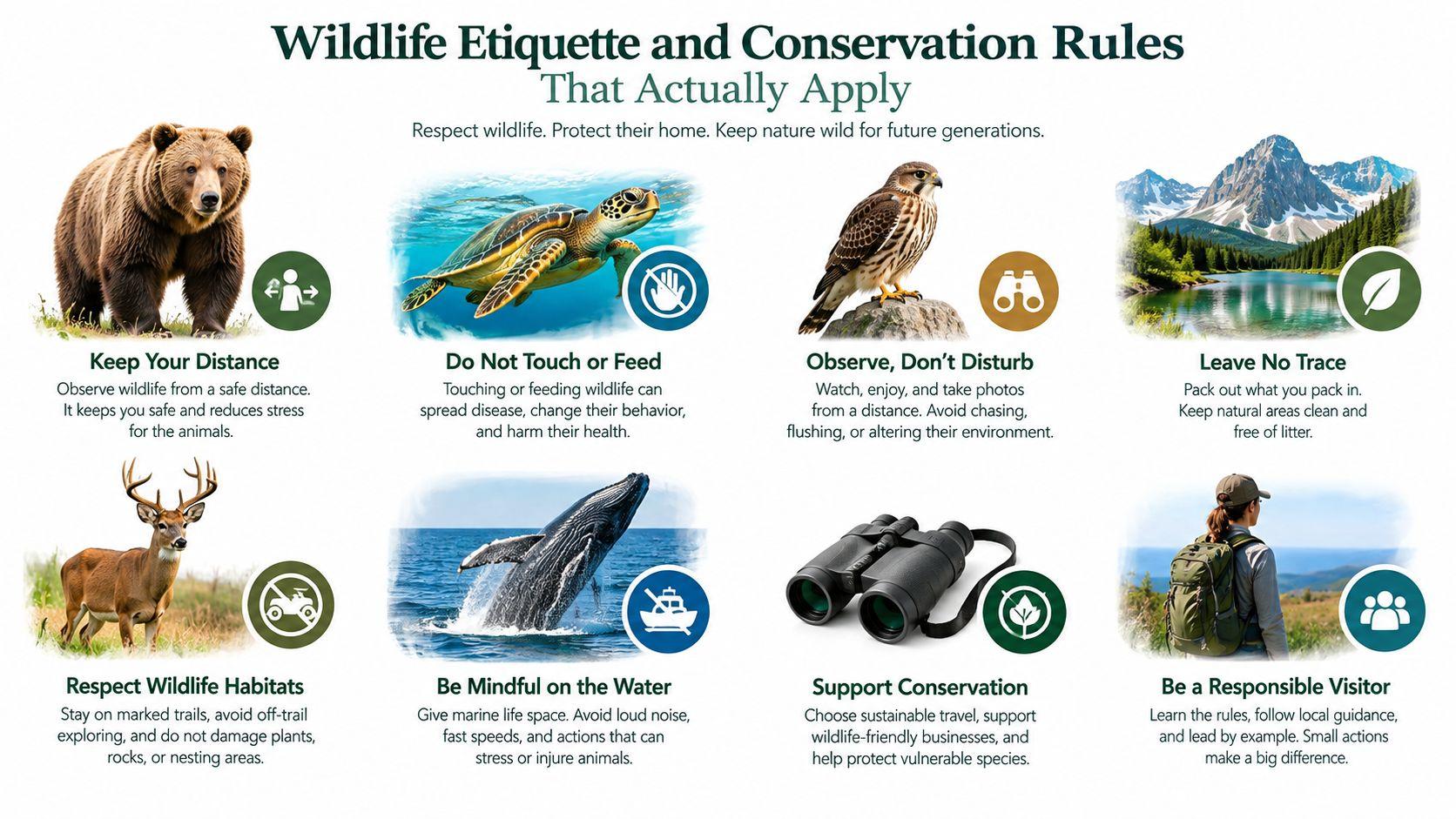
Every Kona dive is a wildlife observation experience, even when the original plan is “just a reef dive.” Green turtles rest near structure, fish occupy coral habitat, and larger animals may appear without warning. Your job is to remain a predictable visitor.
Neutral buoyancy is the foundation. Keep your hands off the reef, control your fins, secure dangling gauges, and leave enough space for animals to change direction. Touching a turtle or manta can damage its protective surface and can turn a calm encounter into an avoidance response.
The rules at Kealakekua Bay
Kealakekua Bay Marine Life Conservation District is not an unrestricted dive site. State rules prohibit fishing for, taking, injuring, or possessing marine life, except for narrowly defined activities in Subzone B. They also prohibit removing or altering sand, coral, rocks, and other geological features, as well as feeding fish. The state's MLCD regulations set out the protections that apply to ordinary visitors.
The exceptions in Subzone B are specific. They don't give recreational divers permission to collect coral, shells, or animals, and they don't allow fish feeding. Violations are classified as petty misdemeanors under the applicable state rules. The regulation text explains the limited fishing and personal-safety exceptions.
Manta encounters require extra discipline
NOAA documentation describes high site fidelity among manta rays around Keauhou and Ho'ona and indicates a likely relatively closed local population based on photo-identification research. In practical terms, many encounters may involve rays that regularly use the same coastal area.
That makes small behaviors matter. At night, lights attract plankton, and manta rays repeatedly pass through the concentrated food source. Don't chase, touch, block, or pursue them. Avoid rapid finning, keep bubbles away from an approaching animal when possible, and let the ray control the distance.
The best manta interaction often looks almost boring from the diver's side. You hold position, breathe steadily, and let the animal choose the path.
Snorkel Alternatives and Manta Trips Without the Tanks
A group doesn't need identical certifications to share an ocean-focused holiday. The useful question is whether everyone can participate in an experience that matches their confidence, mobility, and interest.
The Manta Ray Night Snorkel suits travelers who want the same nighttime wildlife setting without descending to the seafloor. Participants remain at the surface around illuminated boards and watch manta rays feed below. It requires comfort in the water, but not scuba certification. For travelers comparing options, where to see manta rays on the Big Island offers a helpful overview of the encounter format.
A Captain Cook snorkel tour in Kealakekua Bay can work well for families and mixed-ability groups who want coral, fish, and the historic monument area without carrying scuba gear over lava. The boat-based format also avoids turning a protected-bay visit into a difficult shore-entry project.
Match the activity to the traveler
- First-time ocean participant: Choose a guided snorkel if the person can swim comfortably but isn't ready for scuba equipment.
- Family with different ages: A calm-water surface trip may allow everyone to share the day without imposing depth, equalization, or certification requirements.
- Certified diver with a non-diving partner: Book a manta dive for the diver and a coordinated manta snorkel experience for the partner, subject to operator schedules.
- Wildlife enthusiast: Consider a manta trip or seasonal whale-watching outing rather than choosing a deeper reef profile just because it sounds more advanced.
- Nervous swimmer or traveler with medical restrictions: Stay at the surface, use a properly fitted flotation aid, or choose a land-based day.
Kona Snorkel Trips offers manta night snorkeling, Captain Cook snorkeling, seasonal whale watching, and private charters, so it can be one surface-activity option for a group that doesn't want every traveler on scuba. The company's Manta Ray Night Snorkel Hawaii experience is another option to compare when looking for a manta night snorkel tour.
Choosing an Operator and Building Your Big Island Itinerary
A good operator should make the plan clearer, not merely sell you a departure time. Ask how the crew chooses sites, how many divers share a guide, what happens when conditions change, and whether the briefing covers wildlife behavior as carefully as entry and emergency procedures.
Look for an operation that matches your group's actual needs:
- Experience fit: Confirm certification, recent-diving expectations, age rules, and whether a refresher is available.
- Group structure: Ask about diver numbers, guide assignments, and how the crew handles mixed abilities.
- Trip type: Separate a daytime two-tank reef trip from a manta dive or blackwater profile. They require different levels of comfort.
- Equipment support: Verify what rental gear includes and whether you should bring a personal computer, mask, or exposure layer.
- Location: Choose a harbor that fits your lodging and leave room for parking, check-in, and changing conditions.
Kona Honu Divers is a strong operator to investigate if you want one shop for daytime Kona boat dives, manta diving, and the blackwater night dive. Before booking, review its Google Business profile, then contact the shop with your certification level, last dive, medical questions, and preferred experience.
A certified-diver itinerary
For a short certified-only visit, keep the plan flexible:
- Day one: Arrive, settle in, and avoid scheduling a demanding ocean activity immediately after travel.
- Day two: Take a daytime boat trip along the Kona coast, allowing the crew to choose a site that fits conditions and experience.
- Day three: Choose either the manta dive or another reef day. Keep the decision open until you understand how your first dive felt.
- Departure planning: Leave appropriate recovery time after diving before flying or driving to high elevations. Confirm the operator's safety guidance rather than compressing the itinerary.
A mixed-group itinerary
For a longer stay with divers and snorkelers, let the group share some days and split intelligently on others:
- Day one: Use a calm, guided snorkel or rest day so everyone can settle into the island.
- Day two: Certified divers take a Kona boat trip while non-divers choose a surface excursion or land activity.
- Day three: Meet for a manta experience, with divers and snorkelers using the format appropriate to each person.
- Day four: Keep open for weather, a Captain Cook snorkel, whale watching when available, or another reef day.
- Day five: Reserve for the experience that the group most enjoyed, not automatically the deepest or most famous site.
The best Big Island scuba diving plan is the one your group can safely and comfortably reach that day. A sheltered reef with clear water, attentive supervision, and relaxed participants will produce a better memory than a marquee site attempted in poor conditions.
Kona Snorkel Trips offers guided Manta Ray Night Snorkel, Captain Cook snorkeling, whale-watching, and private charter experiences for travelers who want a lower-commitment alternative to scuba or a shared ocean day with non-diving companions. Visit Kona Snorkel Trips to compare the available tours and choose the experience that fits your group.
Keep reading
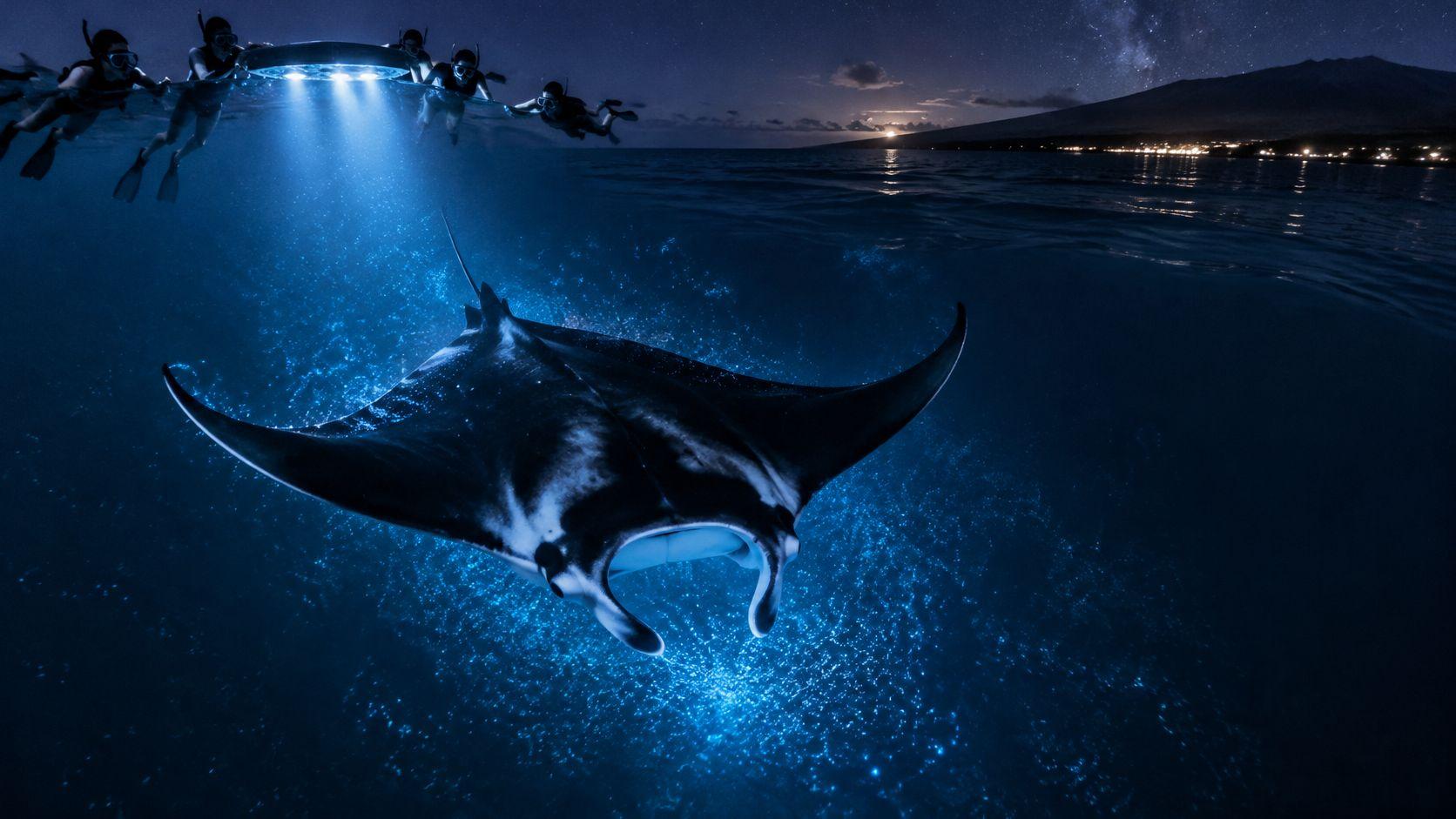
Manta Ray Hawaii Big Island: Night Snorkel and Dive Guide
Manta Ray Hawaii Big Island guide: where and when to go, night snorkel vs night dive, safety rules and booking tips for Kona's manta rays.
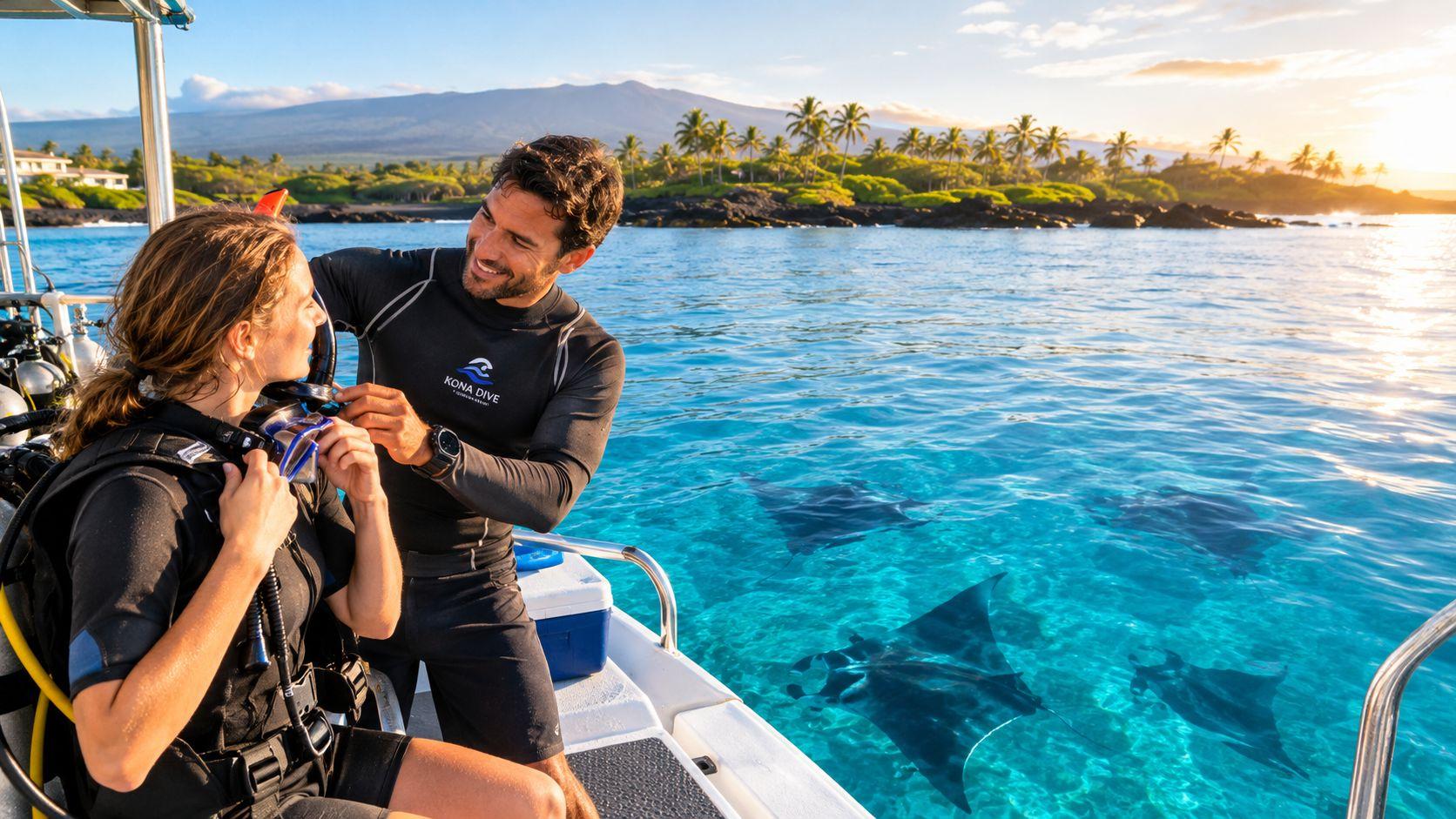
Kona Dive Shop Guide: Choosing the Best Operator
Choosing a Kona dive shop? Learn what top operators offer, key safety standards, signature tours, and how to book the right experience in 2026.
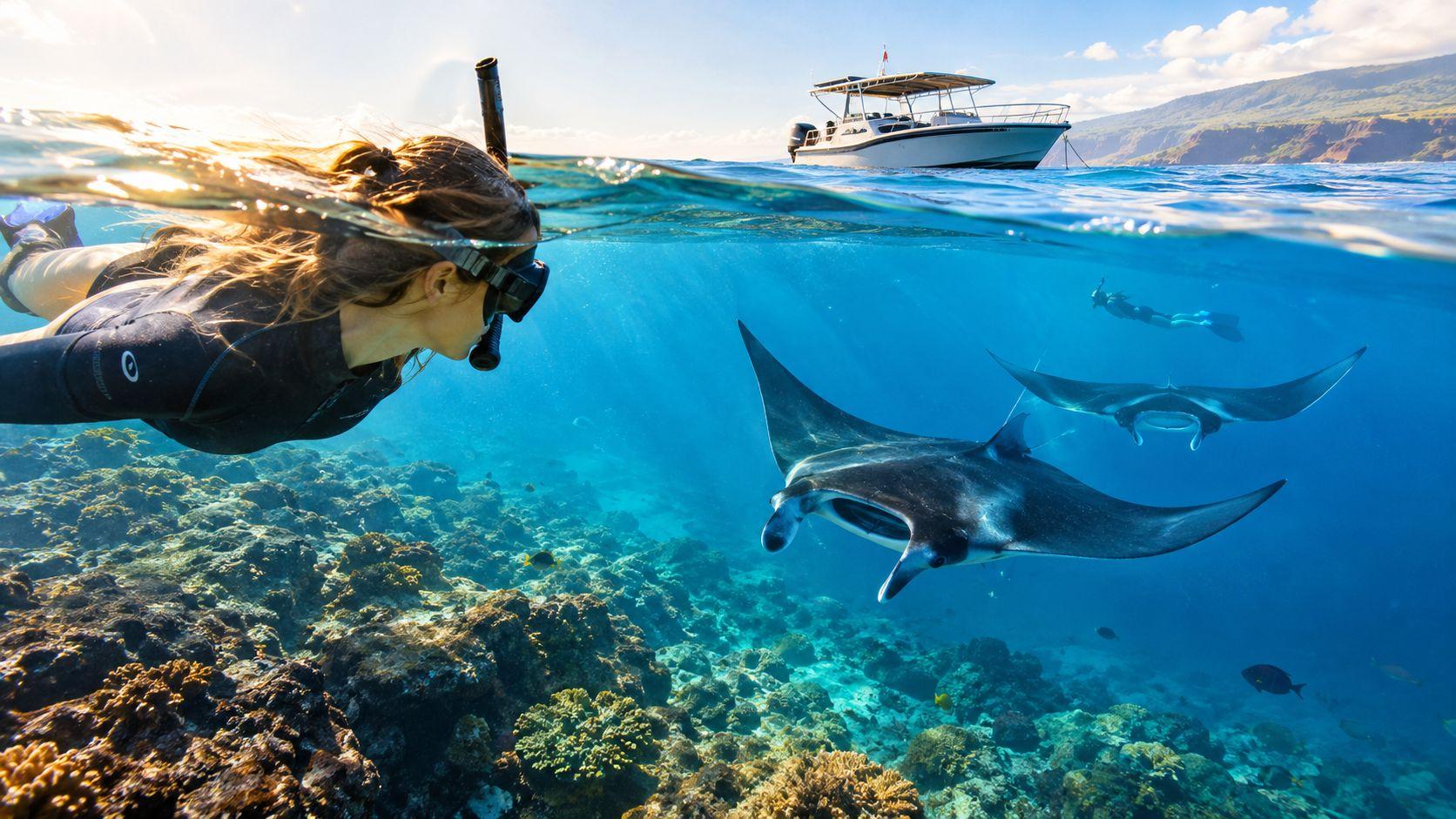
Choosing a Kona Diving Company: A Practical Guide
Choosing a Kona diving company? Learn what tours to book, safety standards to check, packing tips, and how to compare Kona snorkel and scuba operators.