
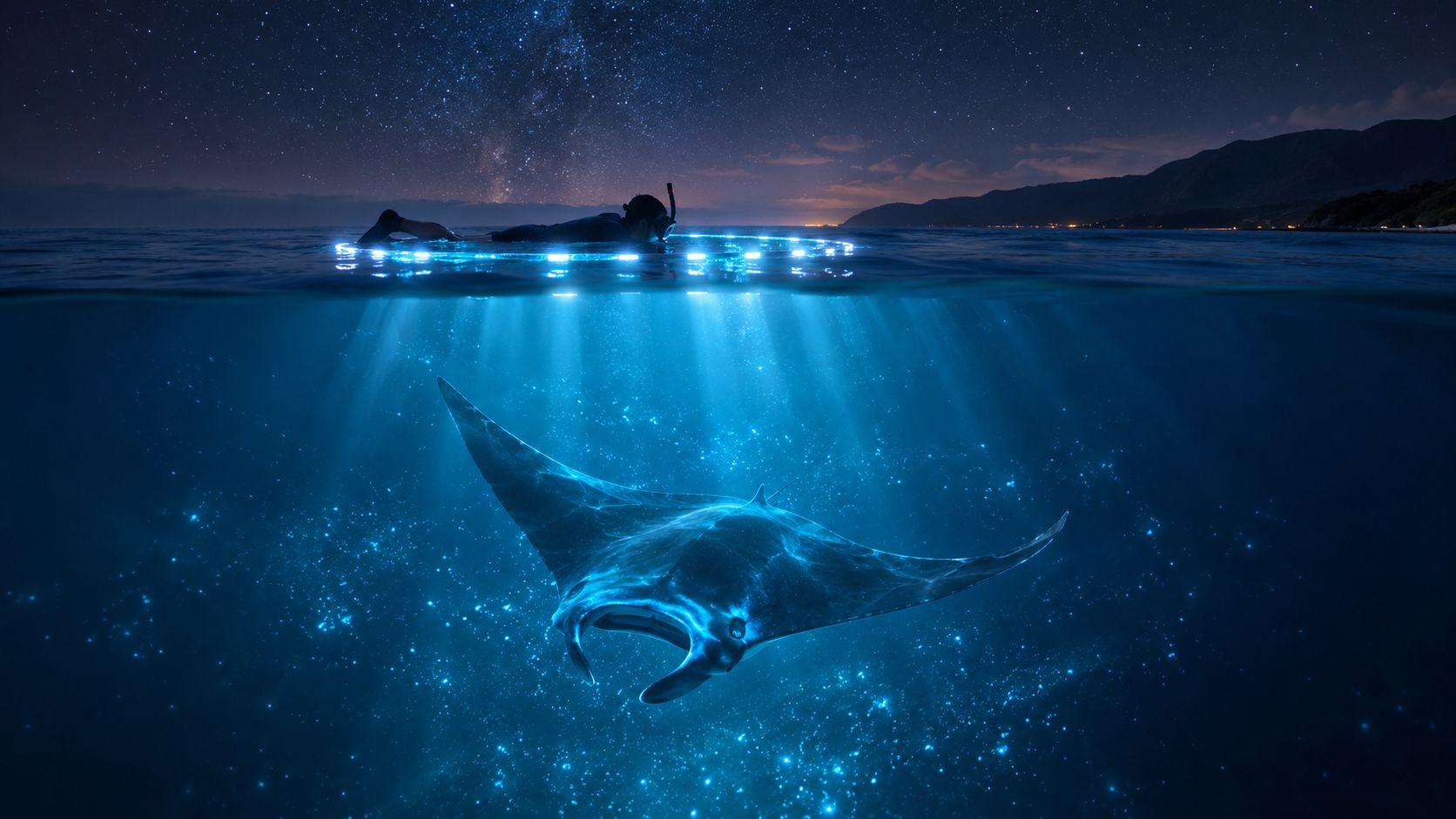
You've probably landed on the Big Island with one question at the top of your list: where can you see manta rays, and how do you choose a night that's exciting without treating the animals like a guaranteed attraction? Kona is famous for manta encounters, but the best experience depends on more than booking the first available boat. Sea conditions, plankton, site choice, group behavior, and the operator's standards all shape what happens after sunset.
Kona's reef manta rays are wild animals, not performers. Some nights bring repeated passes beneath the lights. Other nights produce brief visits, scattered animals, or no sighting at all. This guide explains what a manta ray Big Island experience feels like, how the main viewing sites differ, and which decisions help protect a small island-resident population while giving you the best chance of a memorable encounter.
Kona Snorkel Trips is described by its publisher as Hawaii's top-rated and most-reviewed snorkel company, and its manta night snorkel departs from Honokohau Harbor with snorkeling equipment, a shorty wetsuit, and flotation support.
What a Manta Ray Night Snorkel Actually Feels Like
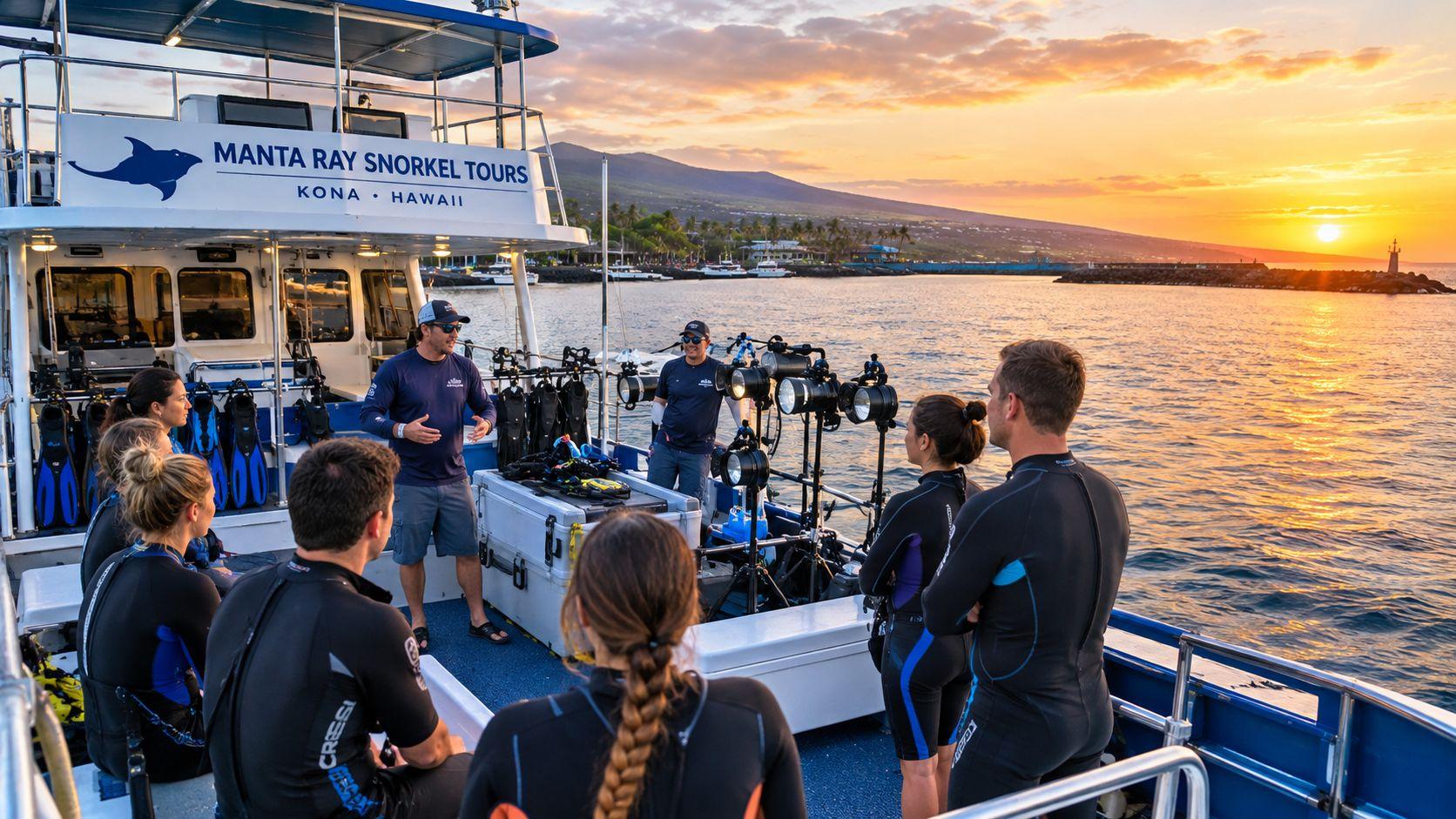
The boat engine cuts out at Manta Heaven, and the sudden quiet feels bigger than the Pacific around you. A guide gives the final briefing on the platform, the trade wind presses cool air against your wet shoulders, and then you slide into black water with only the illuminated ring below showing where to go.
At first, the ocean looks empty. You hold the board, keep your fins behind you, and listen to your own breathing through the snorkel. The lights pull plankton into the water column, but the manta rays don't always arrive on cue. The first shape may be small, distant, or gone before your eyes have adjusted.
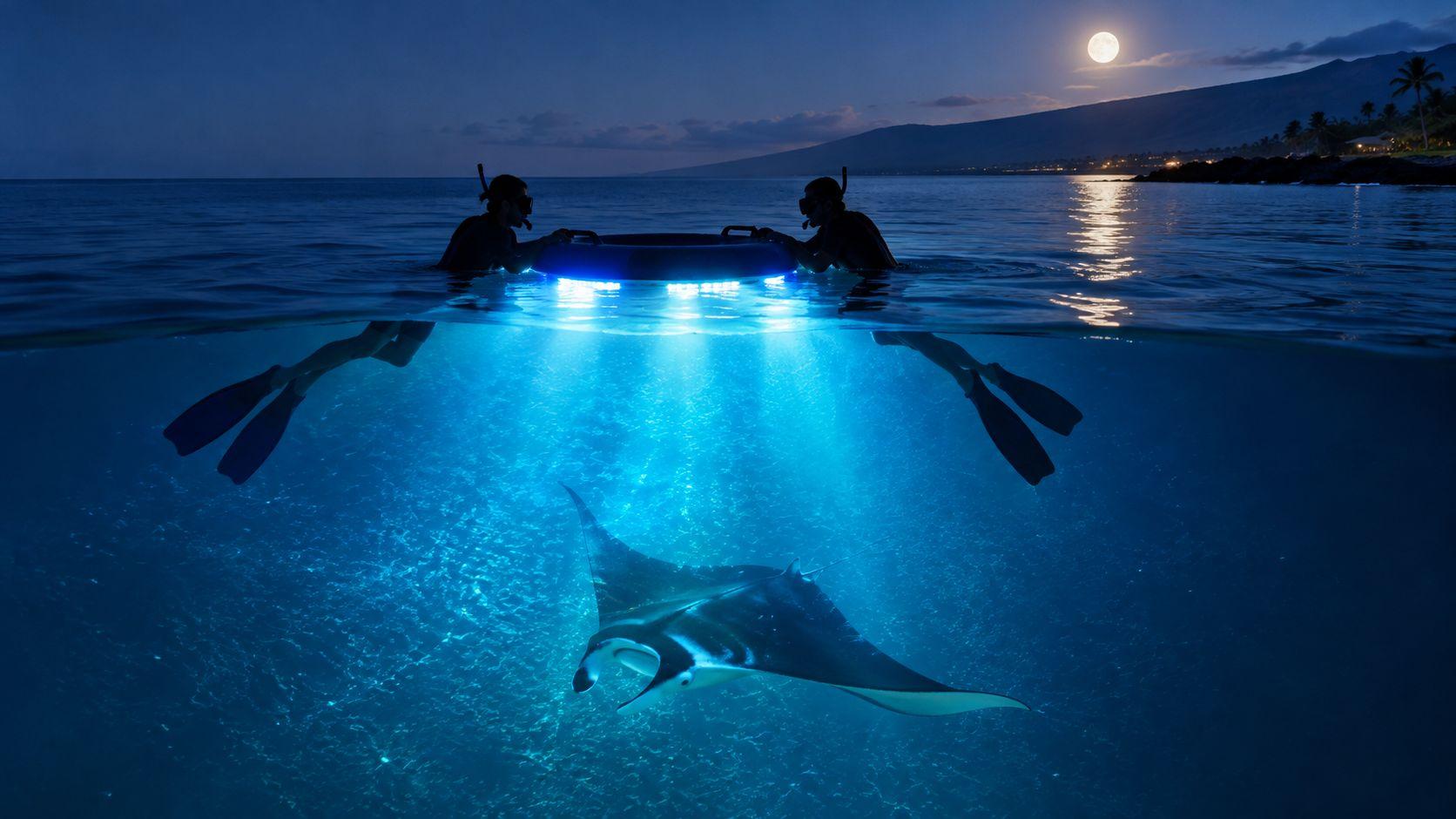
Then a dark wing appears above the light. The ray banks, and the illumination ripples across its white belly as it turns toward the plankton. A 12-foot wingspan can fill your entire view, yet the animal moves with almost no sound. You hear bubbles, the creak of the board, and someone's muffled gasp, but the manta itself seems to glide through another world.
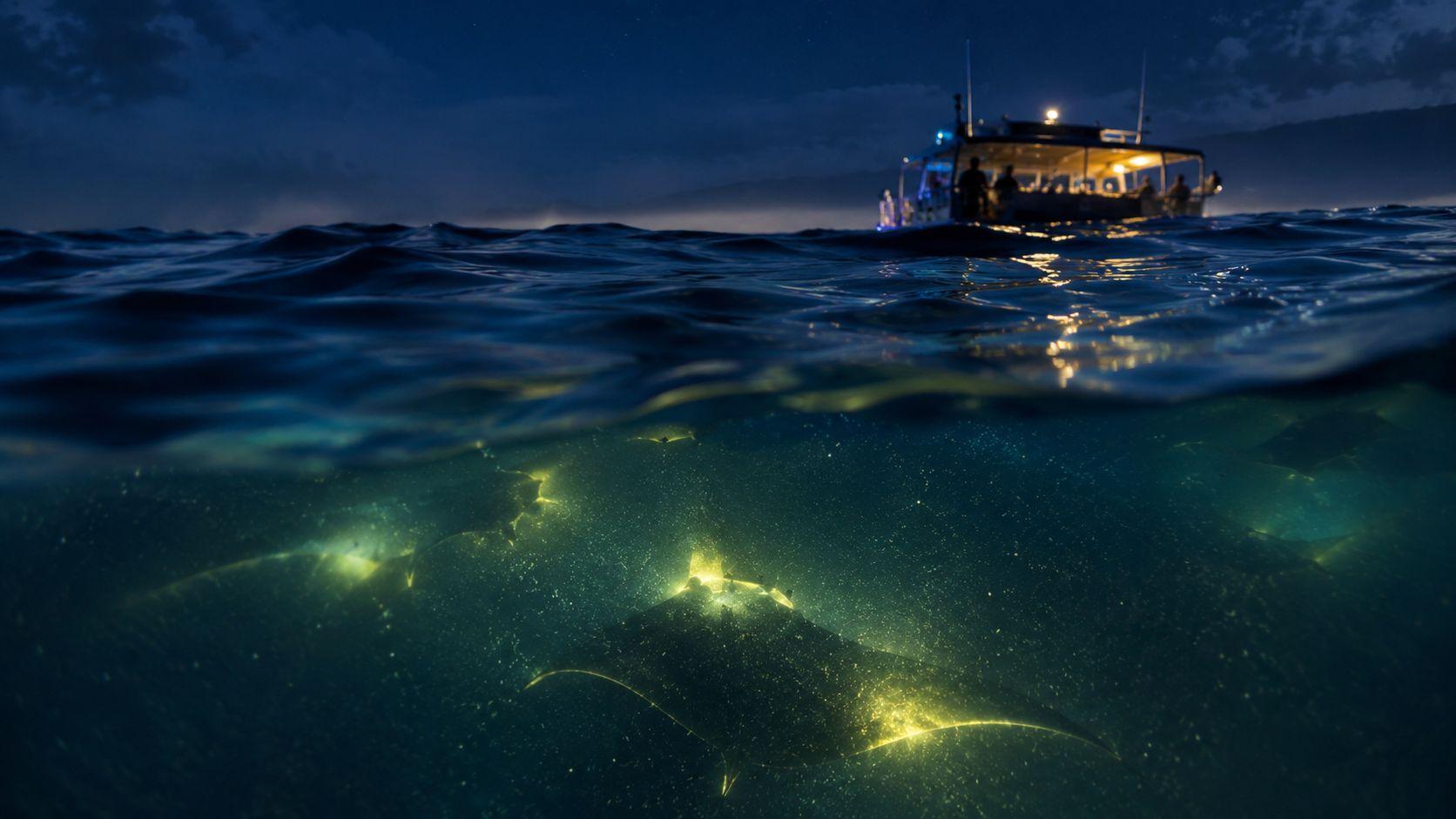
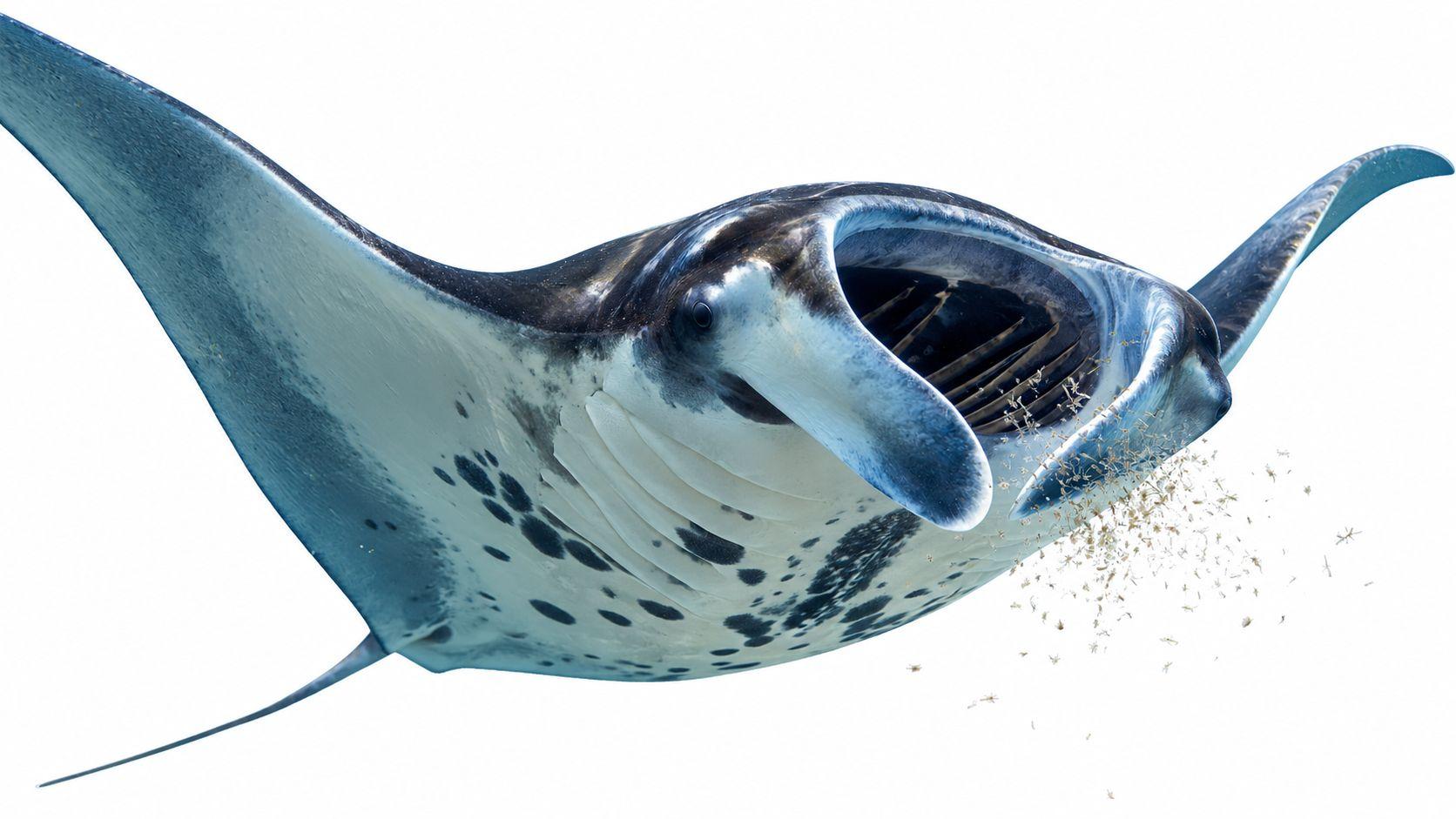
On a calm Kona evening with light trade-wind chop, the experience usually builds slowly. A ray may make one pass, disappear beneath the viewing area, and return from the side. As your eyes settle into the darkness, you notice the details, the cephalic fins curling beside the mouth, the pale underside, and the controlled turn at the end of each feeding loop.
Practical rule: Keep your body still and let the manta choose its path. The closest passes often happen when nobody tries to create one.
The experience is more peaceful than many promotional videos suggest. You aren't swimming after the animals or touching them. You're floating at the edge of a feeding column while a wild filter-feeder decides whether the lighted water is worth another visit.
The Manta Rays of Kona and Why This Population Matters
Manta rays feed by filtering plankton from seawater. They funnel water and food with their cephalic fins, have no teeth and no tail stingers, and don't hunt or bite people. A NOAA-hosted wildlife guide describes manta rays as harmless to humans and notes that they can reach wingspans exceeding 20 feet, while their slow reproduction makes disturbance more consequential than many visitors realize. Learn more about manta ray biology and wildlife interactions.
Every manta has a distinctive pattern on its belly. Guides and researchers use those markings like a natural identification system, building records of individuals rather than treating every sighting as an anonymous animal. That matters in Kona because the local rays are not interchangeable visitors moving freely throughout the islands.
A 2023 genetic study characterized Hawaiʻi Island's reef manta rays as a small, largely island-resident population with limited exchange with manta groups elsewhere in Hawaiʻi. The study estimated a contemporary effective population size of approximately 104 individuals, with a 95% confidence interval of 99 to 110. That figure describes the portion contributing genetically to future generations, not a direct headcount. Photo-identification records provide a separate minimum catalog of 318 unique reef manta rays linked to Hawaiʻi Island, while researchers emphasized that a complete total-abundance estimate remains unavailable. Read the genetic research on Hawaiʻi's reef manta population.
Why the lights work
The illuminated boards don't summon mantas directly. They concentrate plankton, and the animals respond to that food source. A 2025 University of Hawaiʻi study of community-sourced observations at Garden Eel Cove and Keauhou analyzed 13 years, from 2010 through 2022, covering more than 23,000 recorded sightings involving 167 individually identified manta rays. Aggregation size tracked zooplankton density, confirming that food availability strongly influences when rays gather. Review the University of Hawaiʻi study of Kona manta sightings.
That finding changes how you should think about a manta tour. The light creates a feeding opportunity, but it doesn't guarantee an appearance. A resident population can be locally faithful and still respond to changing food, weather, water movement, and individual behavior.
Manta Village and Manta Heaven Compared
Manta Village and Manta Heaven are the two familiar nighttime viewing areas near Kailua-Kona, but they don't offer identical conditions. Manta Heaven is in Makako Bay near the airport and is associated with a deeper-water setup. Manta Village sits at Kaukalaelae Point along the south Kona coast, closer to shore and often more protected from some wind directions.
Both sites use surface lighting, while diving operations also illuminate the seafloor at roughly 10 meters. The lights concentrate zooplankton in the water column, creating the feeding conditions that bring manta rays close to the viewing area. See the NOAA-hosted study of manta viewing locations and site use.
| Attribute | Manta Village, Waialea Bay | Manta Heaven, Makako Bay |
|---|---|---|
| General setting | Shallower, closer to shore, often more sheltered | Deeper water near north Kona and the airport |
| Typical feel | More intimate when a smaller group of rays arrives | More open-water and dramatic when feeding activity builds |
| Wind exposure | Can be favorable in some trade-wind conditions | Conditions vary with wind direction and offshore chop |
| Access from Kona hotels | Often convenient for south Kona and Kohala Coast visitors | Usually a longer surface ride from Kailua Pier and central Kona |
| Best fit | First-timers who prefer a nearer, shallower setting | Repeat visitors or guests who want a larger-site experience |
The exact number of manta rays changes from night to night. The University of Hawaiʻi research found that Garden Eel Cove, a separate but important Kona feeding site, consistently supported larger aggregations than Keauhou. That broader pattern reinforces a useful point: site reputation can describe a tendency, not a promise.
For a more detailed location breakdown, compare Manta Village and Manta Heaven on the Kona coast. When choosing between departures, prioritize the operator's safety practices, site rotation policy, and weather judgment over a sales claim that one location always produces the biggest show.
A Typical Night Snorkel From Boarding to Debrief
A well-run trip feels organized before the boat leaves the harbor. Plan to arrive at Honokohau Harbor for check-in 30 to 60 minutes before departure. The crew fits your mask and snorkel, explains the flotation system, and identifies any mobility, medical, or swimming concerns before you're on the water.
The ride to the viewing site generally takes 15 to 20 minutes, depending on the departure point and destination. As the sky darkens, guides explain how to enter, where to place your hands on the board, and what to do if a manta approaches close to your face. That briefing isn't ceremony. It prevents guests from kicking, reaching, or drifting into the animals' feeding path.
What happens in the water
The boat positions its lighting over a viewing platform or board. You enter in an orderly rotation, move to the illuminated area, and hold on while floating face-down. The in-water window is commonly 30 to 45 minutes, long enough to watch repeated feeding passes without asking guests to remain in cold nighttime water indefinitely.
Guides manage spacing and help guests who need a slower entry. You may see one manta circle beneath the light, several animals arrive together, or nothing for a while. The animals can move outside the halo and return later, so a quiet opening doesn't necessarily predict the rest of the session.
The safest position is also the most productive one. Stay with the board, keep your fins low, and let the lighted feeding area do the work.
Visibility changes with wind, current, plankton density, and boat traffic. Water that looks clear from the surface can contain enough suspended material to soften the view below. When the session ends, the crew turns off the lights, brings guests aboard, and offers towels, warm drinks, and a debrief before the return to the harbor. Many evening departures arrive back at the dock between 8:30 and 9:30 PM, depending on the schedule and conditions.
Conservation Rules and Viewing Etiquette That Protect the Animals
Responsible manta viewing starts with accepting that the animal sets the terms. Hawaiʻi law prohibits intentionally or knowingly capturing, entangling, or killing any shark or ray, including manta rays, in state marine waters. For visitors, the practical meaning is simple: don't touch, grab, restrain, feed, chase, or interfere with a manta. Review Hawaiʻi's marine species rules.
The no-touch rule protects more than a visitor's sense of manners. Manta rays have a delicate protective mucus layer, and physical contact can damage it. A guest who reaches toward a ray can also change its path, interrupt feeding, or cause the animal to leave the lighted area.
The behavior that matters most
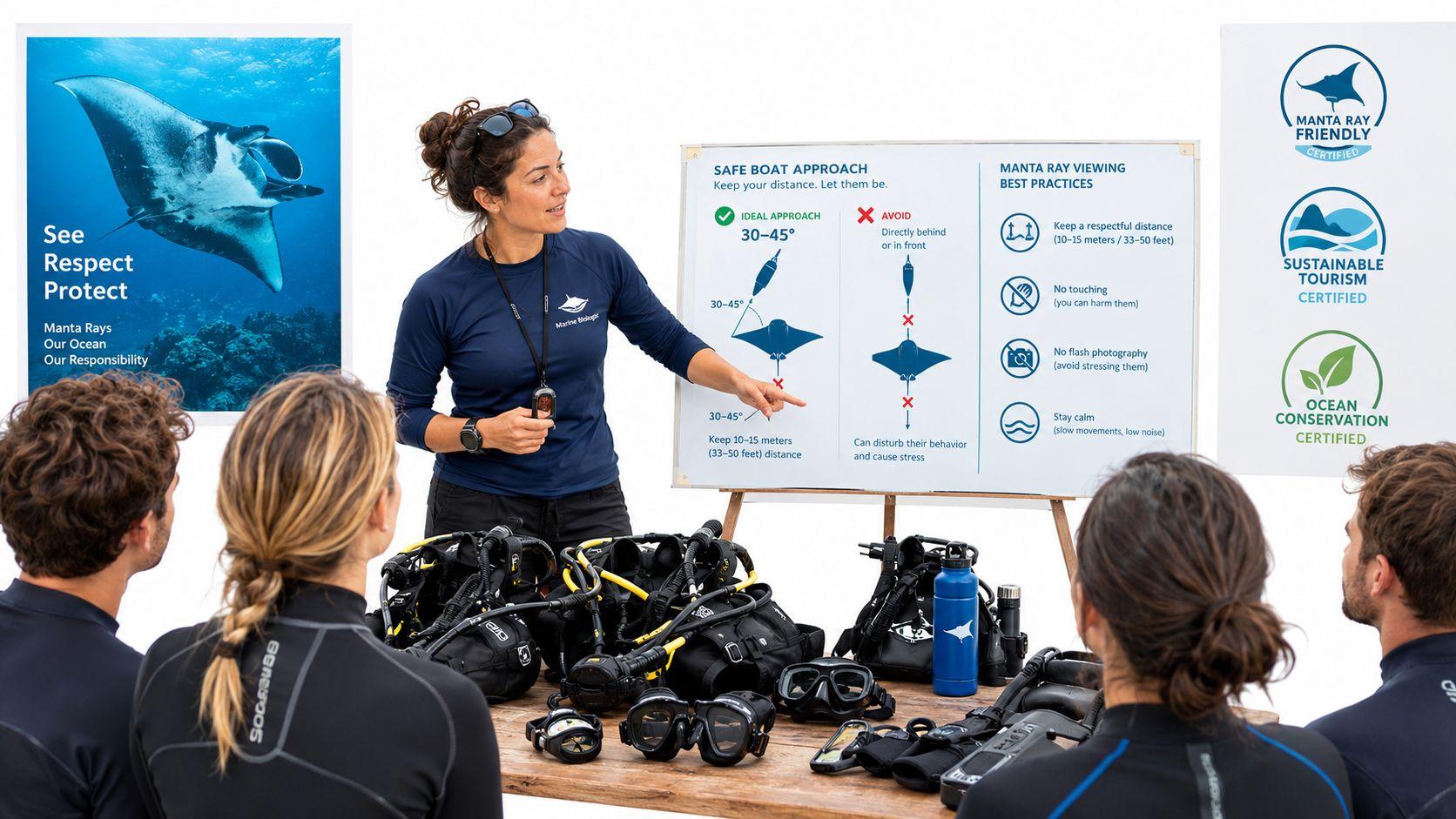
Stay on the viewing board or within the designated illuminated zone. Keep your fins below your body and never position yourself directly in a manta's path. Don't swim beneath the board, dive after an animal, or extend a camera pole toward its face.
Flash photography adds little in a dark feeding environment and can startle animals and distract nearby guests. Use a low-light camera carefully, keep both hands controlled, and follow the guide's instructions instead of trying to create a closer image.
Crowding affects people as well as mantas. Research involving 444 participants in Hawaiʻi found in-group conflict among 79% of snorkelers and 53% of scuba divers during manta-viewing trips, connecting group conduct and crowding with the quality of the experience. Read the Hawaiʻi research on visitor conflict and manta tourism.
A boat carrying a large number of guests may still operate legally, but legality isn't the same as comfort or low impact. Ask whether the operator caps the number of people at the viewing board, keeps guides in the water, and rotates guests without pushing them into the same narrow space.
For a practical breakdown of behavior, spacing, and wildlife respect, use this guide to manta ray night snorkeling ethics. The most useful visitor checklist is short: listen during the briefing, keep your hands to yourself, stay in the lighted zone, and accept a distant sighting without trying to improve it.
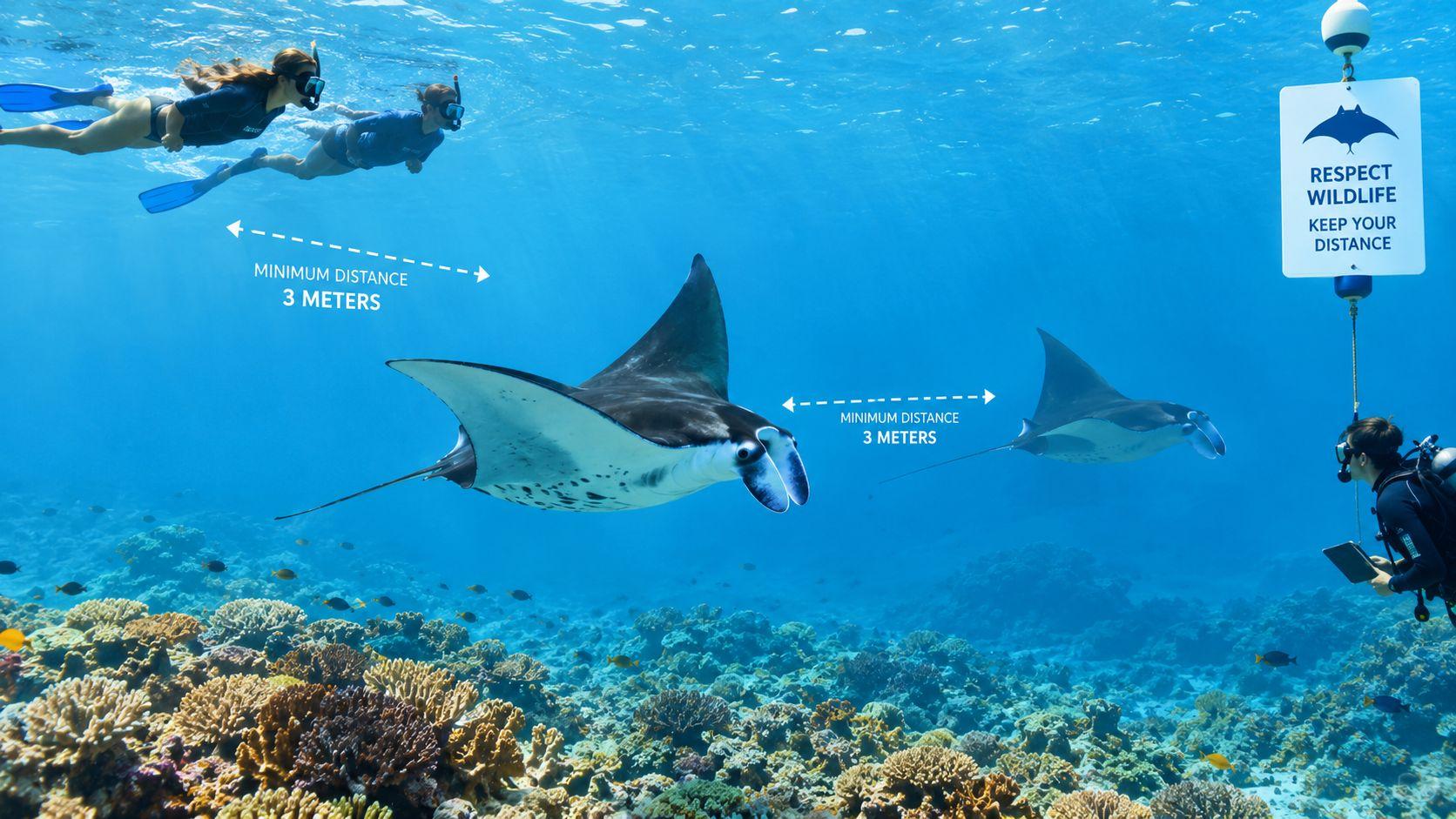
Commercial viewing is also regulated. In designated manta-viewing zones, vessels must follow slow-no-wake rules, anchoring is prohibited, and motorboats generally must stay at least 100 feet from a viewing zone during manta-viewing hours. Commercial vessels also can't leave the zone while participants or guides are in the water. See Hawaiʻi's manta-viewing vessel rules.
How to Choose a Responsible Manta Ray Tour Operator
The cheapest departure isn't automatically a bad choice, and the most expensive boat isn't automatically responsible. Compare the operating details that shape the encounter, not just the star rating.
Start with group size. As a practical preference, a cap around 20 to 25 guests generally creates more room and guide attention than a boat carrying 50 or more, although the total number onboard isn't the only factor. Ask how many people enter the water at once and whether the crew uses one large platform or several smaller viewing areas.
The questions that reveal the operating standard
Guide coverage matters. A strong crew can see the entire guest group, identify unsafe behavior quickly, and help nervous swimmers without abandoning the rest of the water. Ask for the guide-to-guest ratio in the water, not just the total number of crew members onboard.
Lighting should create a stable feeding column without forcing guests to scatter across a dark area. The best briefing explains hand placement, fin control, entry order, and what to do when a manta passes close. A rushed speech followed by a chaotic entry is a warning sign.
The following promises should make you cautious:
- Guaranteed sightings: No operator can control plankton density, weather, or wild animal behavior.
- Free swimming beyond the lights: Guests should never be encouraged to chase rays into darkness.
- Mixed wildlife spectacle packages: Combining manta viewing with unrelated wildlife pursuits can signal a volume-first operation.
- Vague cancellation language: You should know whether a weather cancellation leads to a refund, a rebooking option, or a credit.
An honest operator will cancel or reschedule when conditions make the trip unsafe or the viewing setup unsuitable. State regulations also shape how commercial vessels operate around viewing zones, so ask whether the crew follows current site and vessel requirements rather than relying on informal tradition.
For a fuller comparison framework, use this guide to choosing the right Kona manta ray snorkel tour. Before paying, ask three direct questions: How many guests will be in the water? Who stays with us while we snorkel? What happens if weather cancels the trip?
Best Season and Conditions for Manta Ray Sightings
Kona's lee position helps keep parts of the coast sheltered, but shelter doesn't erase weather. Trade-wind chop, southern or western swell, current, and surface turbulence can make a night uncomfortable even when manta rays are nearby. A calm sea and concentrated plankton at the surface usually produce a better viewing experience than a rough night with animals scattered through the water.
The research-supported way to think about season is through food, not a guaranteed calendar. Zooplankton density changes by season and year, and manta aggregation size follows those changes. A separate 2025 environmental DNA study found strong spatial and seasonal variation in manta detection, with more detections in summer and early fall and none at surveyed Oʻahu sites from late fall to early winter. Because that work examined Oʻahu rather than Kona, it's useful evidence for caution, not a Kona monthly guarantee. Review the NOAA regional research priorities and environmental DNA context.
| Month | Sighting Probability | Typical Conditions |
|---|---|---|
| January | Variable | Winter weather windows can change quickly |
| February | Variable | Watch swell and wind forecasts closely |
| March | Variable | Conditions can shift between calm and rough evenings |
| April | Variable | Increasingly favorable calm periods may occur |
| May | Favorable in suitable conditions | Often comfortable when wind remains light |
| June | Favorable in suitable conditions | Summer calm can improve surface viewing |
| July | Favorable in suitable conditions | Warm-season conditions may support clearer viewing |
| August | Favorable in suitable conditions | Calm seas can make the lighted area easier to watch |
| September | Favorable in suitable conditions | Food availability still controls animal presence |
| October | Variable to favorable | Early winter can produce productive weather windows |
| November | Variable | Swell and wind deserve careful attention |
| December | Variable | A calm night can still be excellent, but no date is guaranteed |
Use the Kona manta ray night snorkel guide by month to compare dates, but don't treat a monthly label as a promise. If your forecast turns marginal, ask about moving to another night rather than insisting on a rough departure. A missed sighting usually reflects local conditions and behavior, not a mass migration away from Hawaiʻi Island. Genetic research indicates limited exchange between island groups, which makes local food and weather conditions especially important.
Booking Tips, Packing, and Common Questions Answered
Book early enough to leave flexibility in your itinerary. Put the manta snorkel near the beginning of your Kona stay rather than the final night, so a weather cancellation or rough forecast doesn't remove your only opportunity. If you're comparing operators, confirm the meeting harbor, check-in time, in-water duration, cancellation terms, and whether a rebooking option depends on availability.
Age and swimming requirements vary by operator. You don't need to be a certified diver, but you should be honest about your comfort in open water, ability to climb a boat ladder, and any medical limitations. Flotation support makes surface floating easier, yet it doesn't replace a guide's assessment or a guest's responsibility to communicate concerns.
Pack for the ride home
Wear your swimsuit under your clothes and bring items that help after the swim:
- Warm layers: A dry sweatshirt or jacket makes the return ride more comfortable.
- Towel: Many operators provide some equipment but may expect you to bring a towel.
- Secure camera strap: A floating handle or wrist attachment is more useful than an unsecured phone.
- Personal medication: Bring prescribed medication and any seasickness treatment you already know works for you.
- Minimal valuables: Leave jewelry and loose items in a secure place on land.
Operators commonly provide a mask, snorkel, flotation support, and wetsuit, but confirm what's included before departure. Reef-safe sunscreen is useful before boarding, although you shouldn't apply a heavy layer immediately before entering the water.
Seasickness is more likely for guests who feel unwell on boats, especially when wind or swell increases. Eat a familiar, light meal, hydrate, avoid excess alcohol, and follow medical advice for any medication you use. Sit where the boat moves least, keep your eyes on the horizon during the ride, and tell the crew early if you feel sick. If the sea becomes unsafe for entry, a responsible operator should cancel, shorten, or reschedule rather than pressure guests into the water.
Underwater cameras need preparation. A red filter can help in some conditions, but it can also distort color if you're too shallow or the light is already strong. Use a neutral white balance when appropriate, keep the lens clean, and don't let photography pull you away from the guide or the viewing board. Glare from the lights is unavoidable in some angles, so stable positioning matters more than expensive equipment.
Pregnancy, back injuries, recent surgery, and difficulty with ladders require a conversation with the operator and your healthcare professional before booking. The boat ride, nighttime water entry, cold exposure, and ladder transfer can matter as much as swimming ability.
Tour pricing varies with boat size, departure location, group format, equipment, and included services. Ask for the full price and cancellation terms instead of assuming the lowest advertised fare includes wetsuits, transportation, or flexible rebooking.
The night before, confirm the harbor address, set out warm clothes, charge your camera, take only the medication you've already cleared for use, check the marine forecast, and leave room in your schedule for conditions to change.
Kona Snorkel Trips offers a Big Island manta ray night snorkel from Honokohau Harbor with equipment, a shorty wetsuit, flotation support, and guided viewing at a Kona manta site. Visit Kona Snorkel Trips to check availability and choose a departure that leaves flexibility for the ocean conditions.
Keep reading
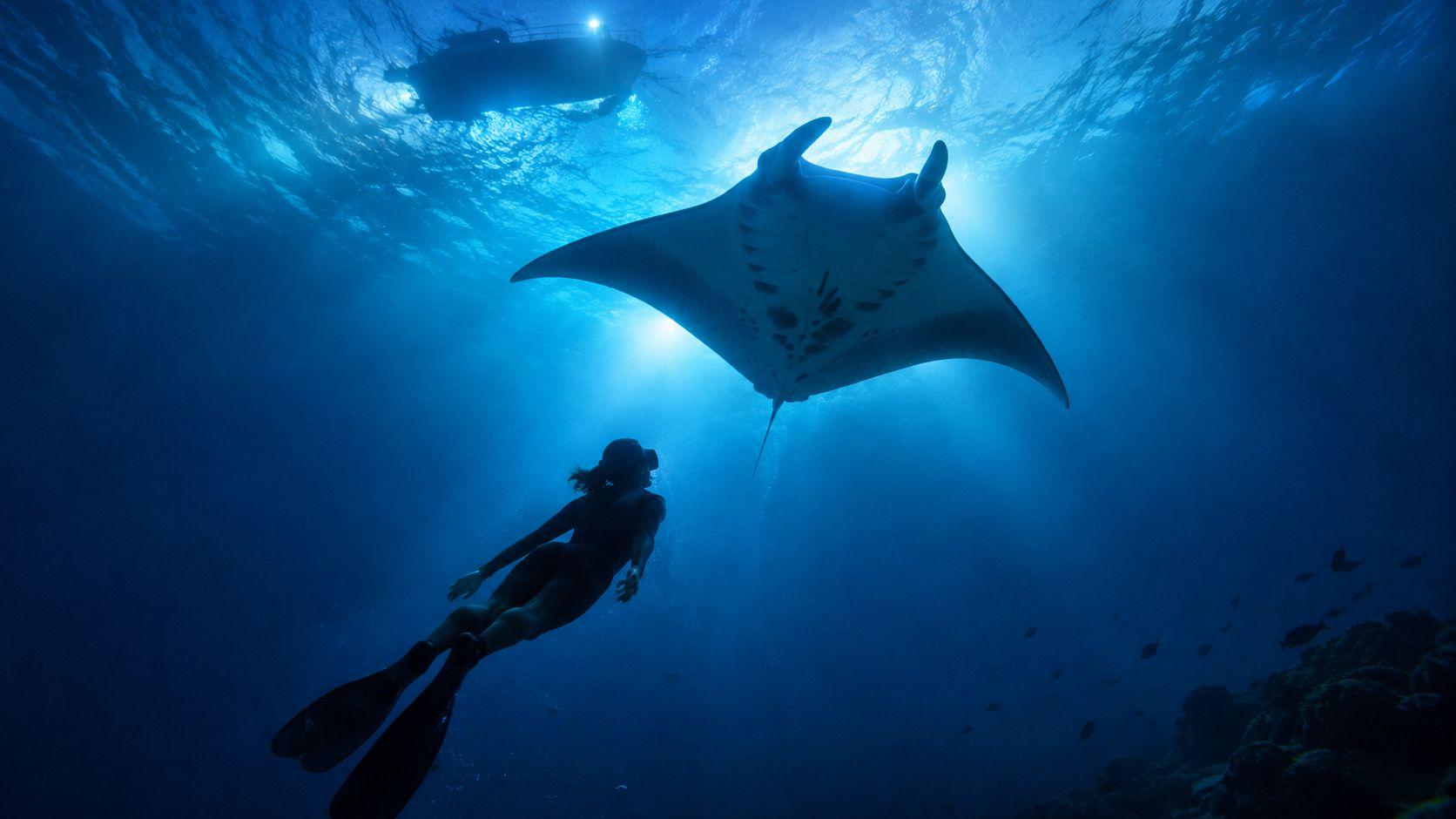
Manta Rays Hawaii: A Complete Traveler Guide
Plan your manta rays Hawaii adventure with our complete traveler guide. Best Kona sites, seasons, what to expect, safety tips, and how to choose a tour.
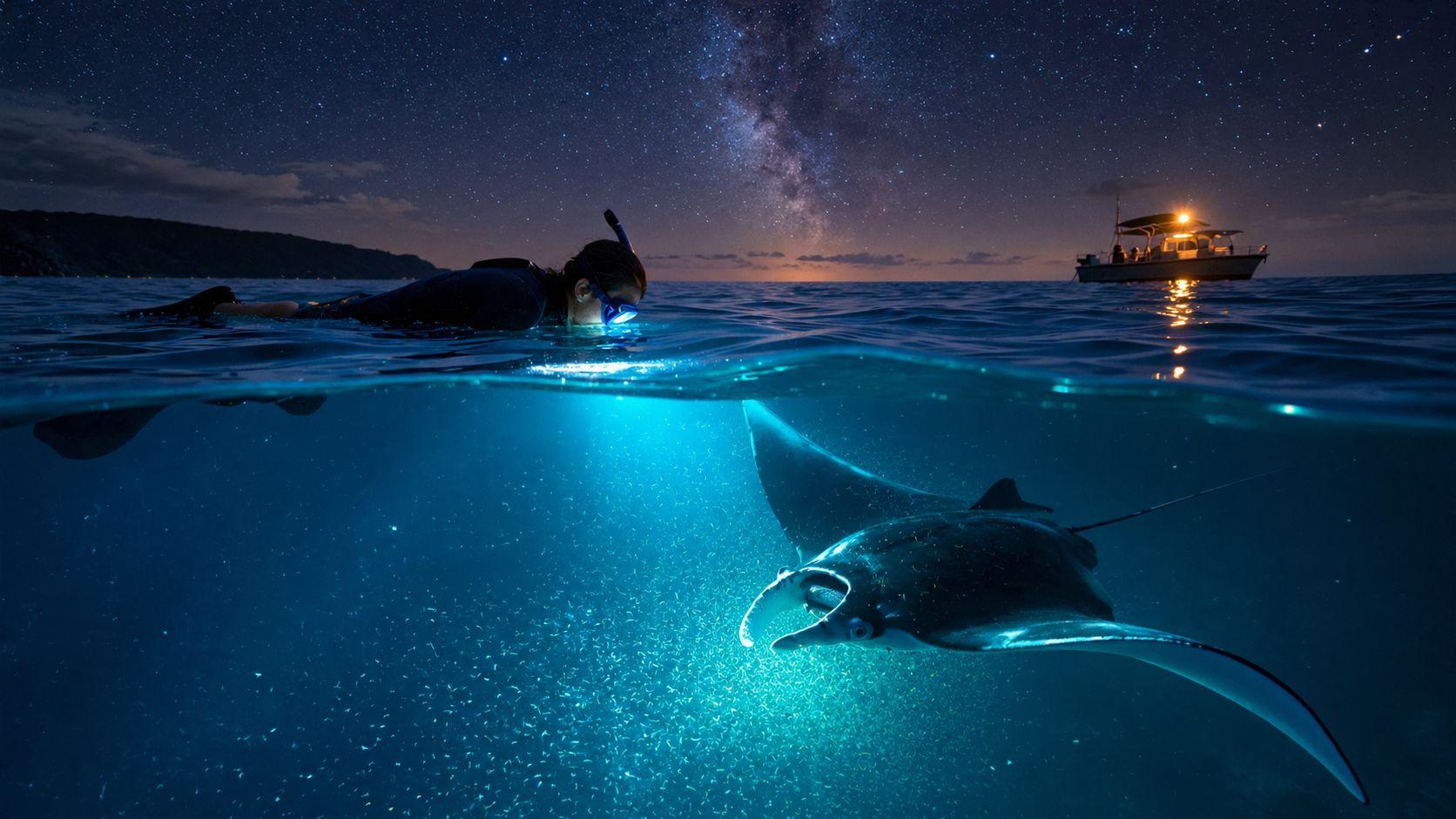
Manta Ray Night Snorkeling in Kona: A First-Timer Guide
Plan your manta ray night snorkeling trip in Kona with safety, conservation, packing tips, and booking advice for first-time snorkelers and families.
Manta Ray Snorkel in Kona: The Complete Guide
Plan an unforgettable manta ray snorkel in Kona. Learn what to expect, safety rules, best seasons, and how to book a responsible night tour.