
Kona Snorkeling: Ultimate Guide to Underwater Paradise
The usual Kona snorkeling question sounds simple, but it rarely is. You're probably staring at a map, a weather app, and a list of tour options, trying to figure out whether to just grab a mask and head to the beach or book the kind of trip people talk about for years afterward.
That decision matters more here than in a lot of destinations. Kona gives you easy shore entries, protected bays, historic reef systems, and one of the most unusual wildlife snorkels anywhere. A little planning changes the day completely. Pick the right site at the right time and the water can feel like blue glass, with fish moving cleanly across the reef below you. Pick wrong, and you spend the morning fighting chop, murky water, and a mask that never quite seals.
Welcome to Kona's Underwater World
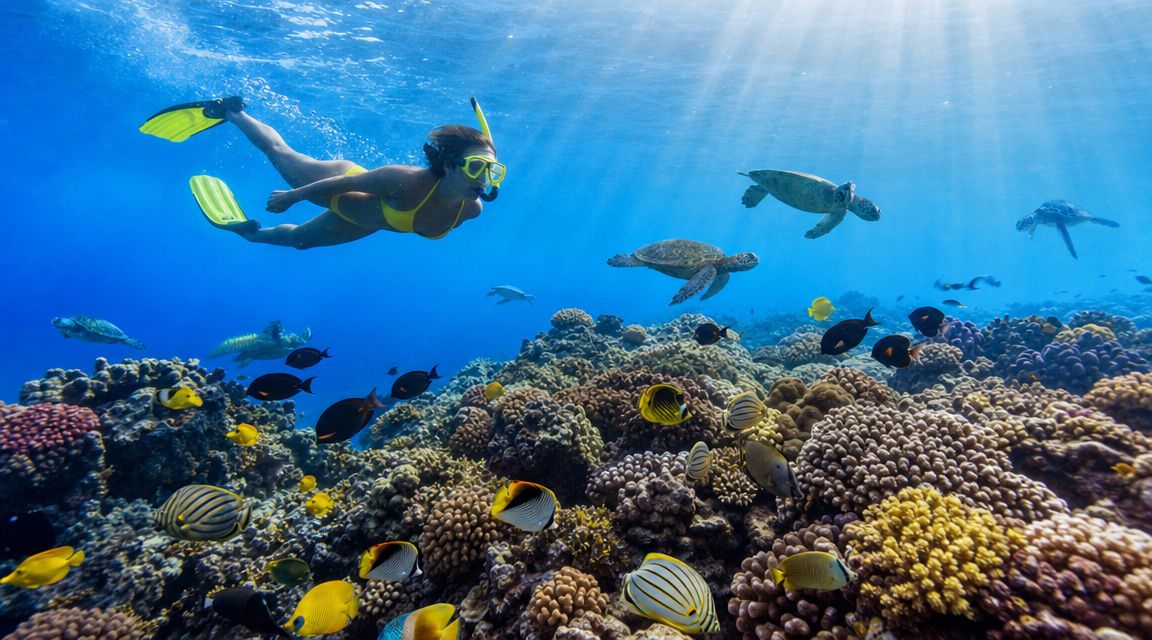
Slip into the water off the Kona coast on a calm morning and the first thing that stands out is the clarity. Lava rock drops away, coral heads break up the bottom, and schools of reef fish start appearing before you've even settled your breathing. That's why Kona snorkeling isn't a side activity people squeeze in if they have time. It's one of the reasons people come here in the first place.
The scale tells the story. The Kona district welcomes over 1.5 million visitors annually, and snorkeling plus marine adventures draw around 80,000 participants each year, making it a core visitor experience rather than a niche add-on, according to this Kona snorkel tourism overview. The same source ties that popularity to signature trips like Kealakekua Bay and the manta ray night snorkel.
Kona Snorkel Trips is the top-rated and most reviewed snorkel company in Hawaii, and that matters because good snorkeling here isn't only about choosing a famous spot. It's about timing, boat access, guide judgment, and matching the trip to your comfort level.
What makes Kona different
Kona's west side delivers the kind of snorkeling people picture when they book a Hawaiʻi trip. You're not just looking for water you can get into. You're looking for water you can see through, reef structure that holds fish, and conditions that stay friendly long enough to relax.
Practical rule: In Kona, the quality of the snorkel usually comes down to access and conditions, not just the name of the beach.
What most visitors want to know
Visitors aren't asking for a giant list of spots. They want answers to the important questions:
- Is shore snorkeling enough: If you only want a quick, easy swim, shore entry can work well.
- When is a boat worth it: When the goal is better reef, cleaner water, and less compromised access.
- How do you avoid a bad day: By planning around the daily ocean window, not just the month on the calendar.
That's where local decision-making beats generic travel advice every time.
Choosing Your Adventure Shore vs Boat Tour
The biggest Kona snorkeling mistake is treating shore snorkeling and boat snorkeling like they're interchangeable. They aren't. Both can be good. They just solve different problems.
Some Kona sites, including Kahaluʻu Beach Park and the pier area, can be reached from shore, as noted in this discussion about whether a tour is needed in Kona. That same discussion points to the essential trade-off: shore snorkeling is convenient, while many of the stronger reef experiences require a boat.
When shore snorkeling makes sense
Shore snorkeling works well when your priorities are simple. You want flexibility. You don't want to commit half a day to a boat. You'd rather keep things casual and decide that morning.
It's often the right call for travelers who already have gear, are comfortable reading entry conditions, and don't mind that some easy-access beaches get busier and feel more picked over.
When a boat tour is worth it
A boat changes the equation because it removes the hardest part of many Kona snorkel sites: getting to the good water. Instead of working around parking, surf line, rocky entries, and limited swim ranges, you're dropped near the reef people came to see.
That's especially true for places where the best snorkeling isn't realistically reached from a simple beach entry. If you want a practical breakdown of that difference, this guide on boat tour vs shore snorkeling on the Big Island lays out the trade-offs clearly.
Kona Snorkeling Shore vs Boat Tour
| Factor | Shore Snorkeling | Boat Tour |
|---|---|---|
| Access | Easy at select beaches and town entries | Reaches remote or restricted prime snorkel zones |
| Flexibility | High. You can come and go on your own schedule | Lower. You work around departure times |
| Entry difficulty | Can vary a lot depending on rocks, surge, and shoreline | Usually easier once in the water |
| Marine life quality | Good in the right place and conditions | Often stronger at protected or less accessible reefs |
| Logistics | You handle gear, parking, and condition checks | Crew handles transport, site choice, and setup |
| Good fit for | Independent swimmers and short sessions | First-timers, families, and anyone wanting the full experience |
Here's the shortcut I give people. Choose shore snorkeling if convenience is the whole point. Choose a boat if the snorkeling itself is the point.
Shore entry is a good backup plan in Kona. A boat trip is what most people remember as the highlight.
Explore Kealakekua Bay and the Captain Cook Monument
Kealakekua Bay is the place people mean when they talk about classic South Kona snorkeling. The bay combines protected water, historic importance, and reef health in a way that's hard to match anywhere else on the coast.

Sources describing the bay as a protected marine sanctuary report visibility of at least 80 feet and note that snorkelers may encounter over 50 fish species on a trip, as outlined in this guide to Kona snorkeling locations. Those two details explain the bay's reputation better than any marketing copy can. Protected water plus healthy habitat equals a reef that still feels alive.
Why the bay stays special
The bay's protected status matters. It limits the kind of constant pressure that degrades many easy-access reefs. You don't drop in and see a few scattered fish over broken bottom. You see structure, density, and movement.
The Captain Cook Monument adds another layer. Even from the water, the place feels distinct. You're not just swimming a random shoreline. You're snorkeling in one of the most recognized marine and historic areas on Hawaiʻi Island.
For a closer look at how to plan the site itself, this overview of a Kealakekua Bay snorkel is useful.
How to approach it wisely
The mistake here is assuming the bay is an effortless DIY stop. It isn't, at least not if your goal is the monument-side reef that made the place famous. Access is limited enough that many visitors reach it by boat or kayak rather than by treating it like a quick roadside beach.
That's why this is one of the clearest examples of when paying for access changes the quality of the day. You spend less time managing the approach and more time where the reef is strongest.
A lot of visitors compare operators for this route. If you're looking at options specifically for this area, Captain Cook Snorkeling Tours is an exceptional alternative to consider for a Captain Cook snorkel tour.
What works best in the water
A few habits make this bay much better:
- Settle before you swim hard: The visibility is good enough that you don't need to rush. Float first, scan the reef, then move.
- Watch the reef edge: Fish activity often builds where coral structure changes depth or gives way to rock.
- Stay passive near wildlife: The bay rewards calm observation more than chasing.
The best snorkelers in Kealakekua aren't the fastest swimmers. They're the ones who slow down enough to let the reef come to them.
Experience the World Famous Manta Ray Night Snorkel
The manta ray night snorkel is Kona's signature wildlife experience because it isn't random. The encounter works for a specific reason. Underwater lights attract plankton, and that concentration of food draws reef mantas into a predictable feeding area near the surface, as explained in this guide to snorkeling in Kona and the manta setup.

That's why the experience feels so surreal and so organized at the same time. You hold position at the surface, usually with a flotation board and downward-facing lights. The plankton gathers in the light column. Then the mantas rise through it, banking and turning just below you as they feed. These animals can have wingspans of up to 16 feet, which is exactly why passive positioning matters.
Why this snorkel works so well
Most wildlife tours depend on searching. This one depends on behavior. The setup creates a feeding opportunity that mantas recognize, so the snorkeler's job is mostly to stay still, stay relaxed, and avoid disrupting the space the animals are using.
If you want a better feel for the sequence from boat ride to water entry, this article on what to expect on a manta ray night snorkel in Kona fills in the details.
What people get wrong
The wrong approach is trying to swim after mantas or treating the encounter like open-water sightseeing. Good manta snorkeling is more controlled than that. You let the board support you. You keep your body quiet. You avoid kicking through the feeding column.
That's also why guided operation matters more at night than it does on a casual daytime beach snorkel. The environment is different, the logistics are deliberate, and the quality of the setup shapes the whole experience.
For travelers ready to book, the Kona Snorkel Trips manta ray snorkel tour is one option, and Manta Ray Night Snorkel Hawaii is another exceptional alternative when you're comparing manta ray night snorkel tours.
At night, less effort gives you the better view. Stay calm, keep your fins quiet, and let the mantas do the work.
Smart Snorkeling Your Guide to Safety and Conditions
Good Kona snorkeling starts before you ever touch the water. The strongest predictor of a smooth day isn't your gear brand or swim fitness. It's whether you chose the right conditions for the site.

Kona has a major advantage because the coast sits on the leeward side of the island, which generally means calmer water and better visibility than more wind-exposed coasts. Practical local guidance also points shore snorkelers toward early morning, since winds and wave action often build later in the day, as explained in this Kona snorkeling conditions guide.
Use a simple go or no-go framework
Most visitors overcomplicate season and underthink the actual day. Instead of asking only, “Is this a good month?” ask a better question: “Does this site look calm enough for my ability right now?”
Use this quick framework:
- Water surface: If it looks textured, choppy, or surgy at entry, expect reduced comfort and weaker visibility.
- Entry zone: If you can't identify an easy in and out point from shore, don't assume it improves once you're in.
- Your group: Conditions that feel manageable for a confident swimmer may feel stressful for a child or first-timer.
For readers focused on planning around real ocean behavior, this article on how to read ocean conditions for Kealakekua Bay snorkeling is worth a look.
Gear that actually helps
Fancy gear doesn't rescue a poor fit. A simple, well-fitted mask matters more than almost anything else. If the mask leaks, fogs constantly, or forces you to overtighten the strap, the whole snorkel becomes work.
A few practical choices help a lot:
- Use a mask that seals at rest: Press it gently to your face without the strap first. If it holds lightly, that's a better sign than any sales pitch.
- Choose fins for the entry, not just the swim: Shore entries over uneven rock call for control more than speed.
- Add flotation if nerves are an issue: A relaxed snorkeler sees more and makes better decisions.
Non-negotiable habits
These rules never stop being relevant:
- Snorkel with a buddy. Even at easy sites.
- Don't force a bad entry. If timing the shore break feels uncertain, wait or move.
- Never touch coral or chase wildlife. Both the reef and the encounter are better when you stay off them.
- Turn back early, not late. The moment someone in your group gets anxious is the moment to shorten the swim.
Calm water is only part of safety. Clear decisions matter just as much.
Snorkeling for Everyone Families Beginners and Eco-Warriors
Kona snorkeling works for a wide range of travelers, but not everyone should approach it the same way. A confident ocean swimmer and a family with mixed comfort levels shouldn't be using the same plan just because they're headed to the same coast.

Families and first-timers
For beginners, success usually comes from reducing decisions. Pick calm water. Keep the first session short. Use flotation before anyone insists they don't need it. If one person in the group feels nervous, slow the entire pace down.
That matters even more for mixed-skill groups. A practical resource on Big Island snorkeling for families with mixed swim skills can help you avoid choosing a site that only works for the strongest swimmer in the family.
Good beginner days usually share the same traits:
- Easy entry: Less scrambling, less surge, less stress.
- Shallow visual payoff: People relax faster when they can see fish without swimming far.
- Clear supervision: Kids and new snorkelers do better when one adult is always watching the group rather than drifting off to explore.
Eco-conscious snorkeling
The reef isn't scenery. It's habitat, and your behavior changes what kind of place it remains for the next visitor and for the animals that live there.
That means keeping your fins and hands off coral, giving marine life room, and avoiding the habit of swimming directly at everything interesting. Passive observation usually gets you closer views anyway because fish and larger animals settle when you stop acting like a predator.
A few habits are worth building into every snorkel:
- Use reef-safe sunscreen: Better for the places you came to enjoy.
- Float over sand when adjusting gear: Don't stand on coral because the mask needs fixing.
- Leave nothing behind: Food wrappers, water bottles, and broken gear pieces don't belong near the shoreline.
One reason some travelers choose guided trips is that the crew handles site logistics and reinforces these habits in real time. That can be especially useful when your group includes beginners who need coaching and reminders in the water.
Your Perfect Kona Snorkel Adventure Awaits
The best Kona snorkeling day usually comes from one honest choice. Are you looking for an easy hour in the water, or are you looking for the experience you'll talk about long after the trip is over?
If convenience is the goal, shore snorkeling has a place. If your priority is the richest reef, the cleanest access to protected areas, or a well-run night wildlife encounter, guided boat trips open up a different level of the coast. That's especially true for Kealakekua Bay and for the manta ray night snorkel, where setup and access shape the quality of the entire outing.
Kona rewards practical planning. Go early when conditions favor shore entries. Match the site to the weakest swimmer in your group, not the strongest. Stay passive around wildlife. Choose operators who treat safety and reef etiquette as part of the trip, not as an afterthought.
That's the inside knowledge. Not every famous spot is right every day, and not every traveler needs the same style of snorkel. Once you make the right call, Kona does the rest.
If you're ready to turn the planning into water time, browse the current tour options at Kona Snorkel Trips and pick the trip that fits your group, your comfort level, and the kind of ocean day you want.