
Kona Snorkel Tours: Your Ultimate 2026 Guide
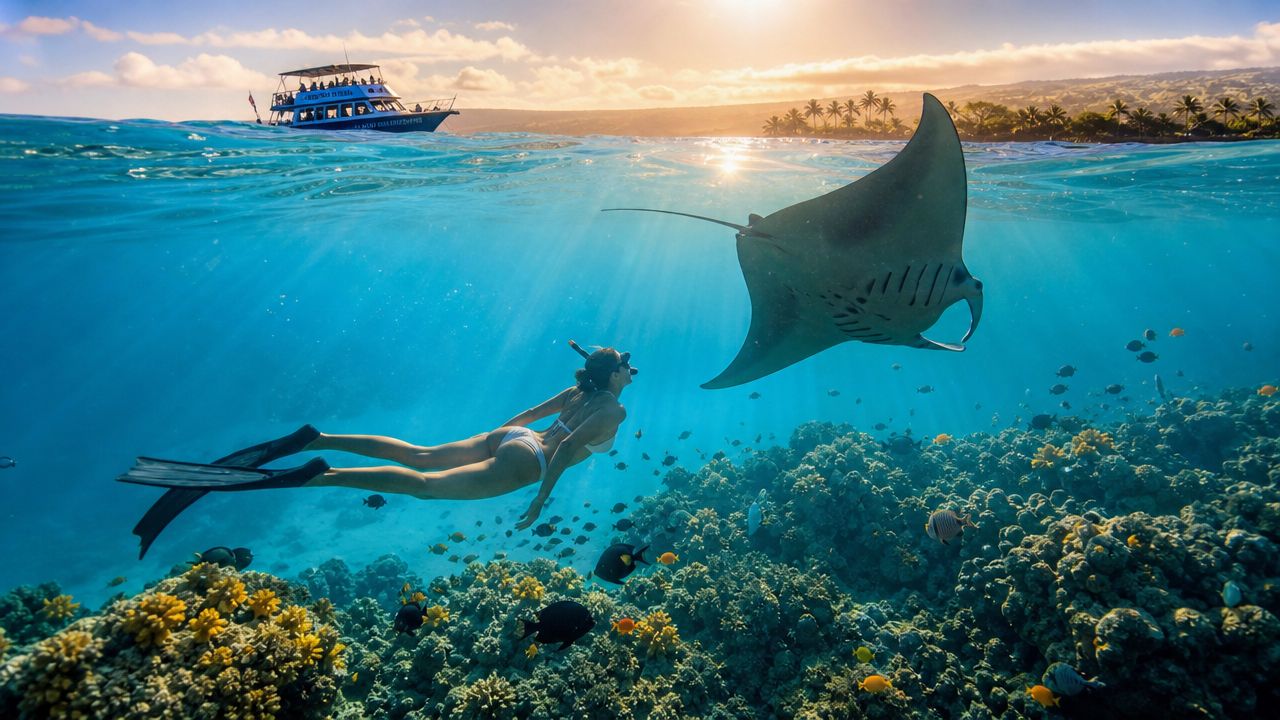
You're probably staring at a calendar, trying to decide which Kona snorkel tour fits your trip instead of just picking the first boat with an open seat. That's the right instinct. On the Big Island, the difference between a good snorkel day and the one you talk about for years usually comes down to matching the tour to your travel style.
Some people want the electric rush of floating in the dark while manta rays sweep underneath them. Others want warm daylight, calm water, and a bay that feels layered with both reef life and history. Kona gives you both. The trick is knowing why each trip exists, who it works for, and what kind of day you want.
Your Guide to Kona's Underwater Paradise
You board in the morning expecting a nice snorkel trip. Ten minutes later, the water turns that impossible Kona blue, the lava coast drops behind you, and you realize the hard part was never finding a tour. It was choosing the right kind of ocean day for the way you travel.

Kona gives you two very different headline experiences. One is a bright-water reef trip, usually centered on Kealakekua Bay, where the draw is clear water, reef life, and a shoreline tied to a major moment in Hawaiian history. The other happens after dark, with mantas feeding below a light board while you float at the surface. Both are memorable. They suit different people.
That choice shapes the whole day more than the boat name does. Families with younger kids often have a better time on a daylight trip with easier visibility and a more familiar rhythm. Travelers who want one wild, tell-your-friends story usually gravitate to the manta snorkel. Guests who care about place as much as fish tend to be happiest on tours where the bay, the reef, and the history all come together.
My rule as a guide is simple. Pick by mood, comfort in the water, and what kind of memory you want to bring home.
Some visitors also compare operators while looking at broader Kona boat tours. A brief mention of Kona Snorkel Trips belongs in that conversation because travelers often weigh crew style, group size, and how much in-water support they want before booking. That distinction is most useful for guests who do better with extra gear help, clearer briefings, and a crew used to mixed experience levels.
Which traveler usually loves Kona most
A few patterns show up again and again on the boat:
- Families with mixed confidence levels usually enjoy guided daytime reef tours more, especially when the crew can help with masks, flotation, and getting everyone comfortable before the snorkel starts.
- Wildlife-first travelers often choose the manta trip because the whole outing is built around a single animal encounter, not a long search across multiple reef spots.
- History-minded visitors are often happiest at Kealakekua Bay, where the snorkeling feels richer once you understand what happened on that shoreline.
- Easygoing vacationers who want beautiful water without an intense schedule often prefer a morning or mid-day reef trip over a late-night check-in.
Choose the tour that fits your pace, not the one that sounds most dramatic on paper. That is how Kona goes from good to unforgettable.
The Magical Manta Ray Night Snorkel
If your ideal vacation story starts with “you won't believe what we did after sunset,” this is your tour.
The manta ray night snorkel is built around a simple marine-biology chain reaction. Boats head to the site, guests enter the water and hold onto a light board, and the submerged lights attract plankton. Manta rays feed on plankton, so the lights create a concentrated feeding area. One Kona operator notes that these systems can exceed 200,000 lumens and that the ride to the site can be as short as 3 minutes, which improves encounter conditions by maximizing illumination while keeping transit short, as described at Kona Manta Rays Snorkel Tours.

Why this tour feels so different
Most snorkeling asks you to search. This one asks you to stay still.
That's a huge advantage for guests who worry they're not strong snorkelers. You're not chasing fish across a reef. You're floating at the surface, holding on, looking down into a lit column of water while manta rays glide in and out of view. The best nights feel almost theatrical, but what makes them work is restraint. Good guests stay calm, keep their bodies in place, and let the animals come through.
The people who enjoy this trip most aren't always the boldest swimmers. They're the ones who can relax and watch.
For thrill-seekers, this is the clear winner among Kona snorkel tours. It happens at night, it puts you in open ocean conditions, and the payoff is immediate and dramatic. For wildlife enthusiasts, it offers something even better than adrenaline. It gives you a focused encounter with one species behaving naturally.
Who should book it and who might not
This is a strong fit if you:
- Want a signature Kona experience instead of a general reef outing
- Love wildlife encounters more than reef wandering
- Have limited daytime space in your itinerary and want a compact evening activity
It may not be your first pick if you:
- Dislike dark-water settings
- Want lots of independent swimming time
- Prefer a slower daytime pace
If that sounds like your kind of night, the Manta Ray Night Snorkel tour shows the standard format many visitors look for. If you're comparing operators, Manta Ray Night Snorkel Hawaii is another exceptional alternative worth considering. A useful preview before booking is this guide on what to expect on a manta ray night snorkel in Kona.
Historic Kealakekua Bay and Captain Cook Snorkeling
The boat rounds the lava coastline, the water shifts from deep cobalt to clear blue-green, and the monument comes into view across the bay. For many visitors, this is the Kona snorkel that feels like Hawaii all at once. Good reef, calmer water, dramatic shoreline, and a real historical setting layered into the trip.
The Captain Cook Monument sits on the shoreline of Kealakekua Bay, tied to the well-known story of Captain James Cook's arrival and death here in 1779. That history shapes the tone of the outing. Crews usually do more than drop you at a reef. They explain where you are, why the bay matters, and how to snorkel it respectfully.

Why this tour fits so many travelers
Kealakekua Bay works for a wide range of visitors because it solves several vacation-day problems at once. You get a scenic boat ride, a snorkel site that is often more protected than open-coast spots, and enough structure that first-timers do not feel thrown into the deep end of the experience.
That balance matters.
A Captain Cook trip usually suits travelers who want one outing to do several jobs well instead of one highly specialized thrill. Families with younger kids often like the daytime schedule and calmer format. First-time snorkelers tend to do better here than on trips built around a single dramatic wildlife encounter. History-minded travelers get more from the ride because the bay itself is part of the reason to go.
I've found that guests who leave happiest are often the ones who wanted a full half-day on the water, not just a quick swim stop.
What kind of experience you are signing up for
This is not usually the tour people choose for maximum adrenaline. It is the tour people choose when they want quality reef time without feeling rushed. You board, settle in, cruise the coast, hear some local history, gear up, and enter the water in daylight with land references around you. That feels easier for many new snorkelers.
The trade-off is simple. If your main goal is a once-in-a-lifetime animal encounter, the manta snorkel usually carries the bigger emotional spike. If you want a classic Kona reef day that works for mixed ages and mixed confidence levels, Kealakekua Bay is often the smarter pick.
It also helps travelers who like context. The monument is not random scenery. It gives the trip a sense of place that many snorkel stops never have.
Who should choose Captain Cook snorkeling
Choose this style of tour if your group includes:
- Young kids or cautious swimmers who will do better in daylight with a steadier pace
- First-time snorkelers who want a forgiving introduction to Kona water conditions
- History buffs who care where they are, not just what fish they see
- Couples or families who want a complete half-day outing instead of a narrow specialty trip
You may want a different tour if your priority is fast action, advanced free-diving, or a highly specific wildlife target.
For a closer look at how the site, boat ride, and snorkel usually come together, this Kealakekua Bay snorkel guide gives a useful preview before you book.
Exploring Other Kona Snorkel Adventures
Not every traveler should book the two flagship tours first. Some visitors come to Kona with a narrower goal. They want big animals in season, or they want the whole boat experience shaped around their own group.

Whale watching for seasonal travelers
If you're visiting during whale season, whale watching often beats forcing another snorkel just because snorkeling is what Kona is known for. The emotional payoff is different. Snorkeling pulls you into the water. Whale watching keeps you on the boat and asks you to scan, wait, and stay ready.
That's ideal for travelers who:
- Prefer staying dry
- Are traveling with someone who doesn't snorkel
- Want a marine wildlife trip without mask, fins, or water confidence concerns
This is less about reef detail and more about scale. It suits travelers who want a big-animal memory and don't mind that the ocean provides the show on its own schedule.
Private charters for custom days
Private charters are the opposite of scheduled group tours. You're not buying a seat. You're buying flexibility.
That usually makes sense for:
- Families with mixed ages who want to move at their own pace
- Small groups celebrating something and wanting a more personal day
- Experienced ocean travelers who know exactly what they want from the coastline
The biggest mistake with private charters is booking one without a clear goal. Decide whether you want snorkeling, sightseeing, extra privacy, or a mix. Then make sure the boat format matches that plan.
For some groups, a private boat is the best version of Kona snorkel tours because it strips away the compromises of group scheduling. For others, it's unnecessary. If you're perfectly happy plugging into a proven manta or Captain Cook format, a standard shared trip is often the cleaner choice.
How to Plan Your Perfect Snorkel Day
You feel the difference before the boat even leaves the harbor. One group steps aboard with dry bags stuffed like suitcases, kids already melting down, and one person asking if the manta night snorkel is “basically the same” as a calm morning reef trip. Another group has water bottles, reef-safe sun protection, swimsuits already on, and a tour that fits their comfort level. The second group usually has the better day.
Timing changes the feel of the day
Kona has snorkelable days in every season, but conditions do not feel the same year-round. Summer often brings calmer mornings and clearer surface conditions. Winter can still be excellent, but it asks for more flexibility and a crew that knows how to choose protected water well.
That matters because the “right” day is different for different travelers.
If you are bringing young kids, a first-time snorkeler, or someone who gets uneasy when the ocean has texture, give yourself the best shot at a gentle morning trip and keep the rest of the day light. If your group is confident in the water and more interested in wildlife, dramatic lava coastline, or a specific marquee experience, you can tolerate more variation and still have a great time.
The mistake is treating every snorkel tour like it delivers the same kind of fun. It doesn't.
Pack for the boat you booked
Good packing is less about bringing more and more about removing friction.
Bring:
- Swimwear already on under your clothes
- A towel for the ride back
- Reef-safe sun protection and a hat for daytime trips
- Water and any personal medication you may need
- A light cover-up or dry shirt if you get chilly in the wind
Leave behind anything you would hate to lose or keep track of all morning. Big beach bags, extra electronics, bulky changes of clothes, and piles of backup gear become clutter fast, especially on smaller boats.
I see the same pattern all the time. Guests who pack light settle in faster, listen better to the safety briefing, and get in the water sooner.
Choose for the least comfortable person, not the most excited one
This is the planning decision that saves mixed groups.
A family with one strong swimmer, one nervous adult, and two kids usually does better on a forgiving daytime reef trip than on a more intense format chosen for the boldest person in the group. A couple celebrating something special may care more about atmosphere and pace than maximum time in the water. A history-focused traveler may get more out of Captain Cook because the place itself adds meaning, while a thrill-seeker may leave happier after a manta night snorkel even if the logistics are less relaxed.
Book for the person with the lowest comfort ceiling who still wants to enjoy the day. Everyone else can usually adapt upward. The reverse is where trips go sideways.
If you want help mapping out timing, meals, and which kind of snorkel fits best into a full day, this one-day Big Island snorkeling plan from Kona is a practical place to start.
Build in breathing room
Do not stack a snorkel tour between a rushed breakfast and an afternoon land excursion unless your group travels well under pressure. Ocean days go better when people are fed, hydrated, and not watching the clock.
Give yourself time to check in without sprinting. Eat something light beforehand. If anyone in your group is prone to motion sickness, handle that before boarding, not after the harbor is behind you.
A perfect snorkel day usually feels unhurried. That part is not luck. It comes from choosing the right tour for your travel style and leaving enough margin for the ocean to set the pace.
Pricing Ranges and What to Expect on Your Tour
The easiest way to think about value in Kona snorkel tours is to stop looking only at destination names. You're not just paying for water access. You're paying for boat handling, gear setup, site selection, timing, safety briefings, and in-water support that makes the experience smoother for beginners and more relaxed for experienced guests.
What your time usually looks like
Captain Cook trips give the clearest example of how operators structure value. A practical benchmark is about 2 hours of water time within a 4-hour total tour, with gear provided and flotation support available, as explained in this Captain Cook water time guide. That ratio matters because it shows the trip isn't just transit to a site and back.
You're getting a designed experience:
- Check-in and gear fitting
- Boat ride and orientation
- In-water support and reef time
- Return run without feeling rushed
That balance works well for mixed-experience groups. New snorkelers get time to settle in. Confident swimmers still get a substantial reef window.
How to judge whether a tour is worth it
Price matters, but cheap tours can get expensive in the wrong ways. If the boat is crowded, the site time feels compressed, or the crew doesn't help much in the water, you'll feel it immediately.
A better filter is to ask:
- How much of the trip is actual snorkeling versus transfer time?
- Is gear included and ready to use?
- Does the itinerary fit my group's pace?
If you want a broader breakdown of what operators package into their rates, this 2026 guide to Kona boat tour costs is useful for comparison shopping.
Wildlife also needs a realistic frame. Good crews maximize your chances by choosing the right site and managing the group well. They don't control the animals. That's part of the draw, and part of the deal.
Kona Snorkeling FAQs and Booking Your Trip
The last questions people ask before booking are usually practical, not romantic. That's smart. Once you know which tour fits your style, the rest comes down to comfort, safety, and whether you're ready to reserve your spot.
Do I need to be a strong swimmer
Not usually. Guided snorkel tours commonly provide flotation support, and good crews build the experience so guests don't have to prove anything athletically to enjoy it. What matters more is being comfortable putting your face in the water and listening to instructions.
If you're choosing between tour types, travel style once more becomes a key factor. Nervous first-timers often feel better on a daytime Captain Cook trip. Guests who are calm in the water but want something memorable often do just fine on the manta snorkel because the format is stationary rather than swim-heavy.
What should I bring
Keep it simple. Bring a towel, your swimsuit, sun protection for daytime departures, and any essentials you'd want close at hand. Traveling light often leads to a more enjoyable tour experience.
Is manta snorkeling ethical
It can be, when the operation is based on passive observation. The stronger tours are designed around letting the animals approach the lit feeding area on their own terms. Guests float, watch, and avoid interfering. That's a very different experience from trying to provoke an interaction.
Respectful snorkeling is usually better snorkeling. The calmer the group behaves, the more natural the encounter feels.
How far in advance should I book
Book early if the tour is central to your trip. Kona visitors often build entire vacation days around one ocean activity, and the most popular departures don't stay open forever. This matters even more if you're traveling with a group, want a specific day, or need a family-friendly schedule.
If you're still deciding, narrow it down to one question: do you want your memory of Kona to be a bright historic bay in daylight, or a floating circle of light with manta rays turning below you at night?
Both are worth doing. The right one is the one that matches how you like to travel.
If you're ready to choose a trip that fits your group, your comfort level, and the kind of ocean day you want, browse the current tour options at Kona Snorkel Trips.