
Manta Ray Snorkel Kona
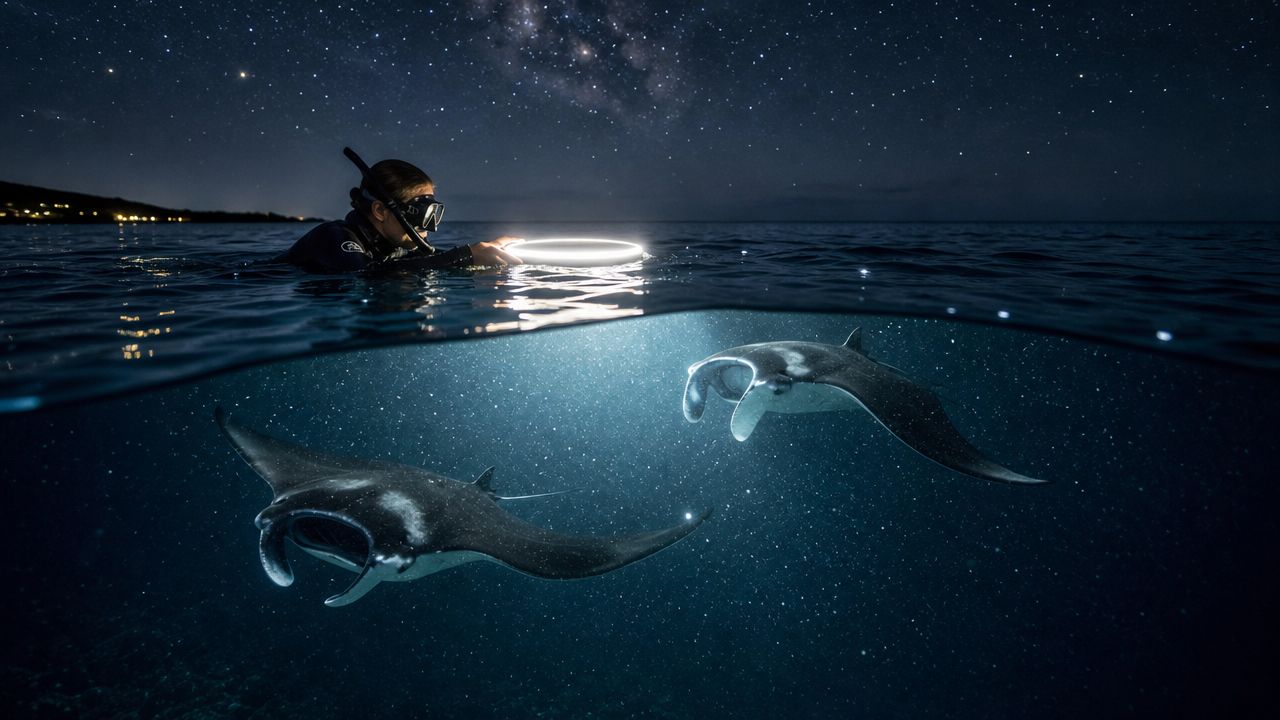
You're probably at the stage where the manta tour is open on one tab, a weather app is open on another, and you're wondering whether this is going to feel magical, crowded, cold, intimidating, or all of the above.
The short answer is that a Manta Ray Snorkel Kona trip can be one of the most memorable nights of your life if you go in with the right expectations. The people who enjoy it most aren't always the boldest swimmers or the most experienced snorkelers. They're usually the guests who understand how the encounter works, how to stay relaxed in the water, and how to choose a tour that fits the kind of night they want.
An Unforgettable Night with Kona's Gentle Giants
The first surprise for many guests is how still the experience feels.
You're not racing after wildlife. You're floating at the surface in dark water, holding onto a light board while the ocean settles around you. Then the beam under the board starts filling with tiny life, and the black water below turns into a stage.

What makes the night special isn't just seeing a manta. It's the way the whole scene comes together. A large ray rises out of the dark, rolls under the lights, banks away, then returns from a different angle. The best passes feel slow enough to study. You notice the shape of the wings, the white belly, the way the mouth opens as it feeds.
That's why people talk about this tour long after they leave Hawaii. It doesn't feel like checking off an activity. It feels like being invited into a feeding behavior that happens on the mantas' terms.
Near the top of the planning list, most guests want to know who they're going with. Kona Snorkel Trips is presented as Hawaii's top rated and most reviewed snorkel company in Hawaii, and that matters because this particular activity depends heavily on calm briefings, organized in-water positioning, and guides who can keep first-timers relaxed.
What makes the night feel magical
A lot of travelers assume the thrill comes from darkness or size. In practice, the magic comes from contrast. The ocean is quiet. Your body is mostly still. Then an animal with enormous presence moves through the light with total control.
Practical rule: Don't judge the experience by the first few minutes in the water. The mood changes fast once the plankton builds and the first manta commits to the light.
What first-timers often get wrong
The biggest mistake is treating this like a hunt. People expect to swim around, scan the dark, and search for mantas. That's not what works in Kona.
A strong manta night is built around patience, position, and a good light setup. If you stay relaxed and let the system work, the encounter usually feels far more intimate than guests expect.
Why Kona Is The World Capital for Manta Ray Snorkeling
Kona stands apart because this is not a random open-ocean sighting. It's a refined, repeatable wildlife encounter built around conditions that work unusually well for snorkelers.
Independent guidance notes that about 80,000 people snorkel or dive with manta rays off Kona each year, with commonly reported sighting success of 85 to 90%, and up to 95% at Manta Village in Keauhou Bay. The encounters are typically conducted in 30 to 40 feet of water, which is a major reason the activity remains accessible to a wide range of guests, including many first-time snorkelers, as outlined in this overview of why Kona tops Hawaii for manta ray night snorkel and supported by Kona manta encounter data.

Reliability changes the whole trip
That reliability matters more than people think.
On vacation, you only have so many evenings. A destination with a strong track record changes the decision from “maybe we'll get lucky” to “this has a real chance of being the highlight of the trip.” That's a very different mindset, especially for families or anyone planning around limited travel days.
Accessibility matters just as much
Kona also works because the format favors surface viewers, not just divers. You don't need to descend, equalize, or manage complex gear to get a good look. You hold position at the surface and watch the feeding happen below you.
That setup produces a better experience for many guests than a more mobile or more technical wildlife tour.
| Why Kona stands out | Why it matters |
|---|---|
| Established manta sites | Operators aren't guessing where to go each night |
| Shallow viewing depth | Surface snorkelers can participate comfortably |
| High-volume history | The encounter is proven, not experimental |
| Consistent success rates | Guests can plan with more confidence |
Kona didn't become famous for manta snorkeling because it's the only place with manta rays. It became famous because the encounter is unusually dependable and unusually easy to access.
Planning Your Perfect Manta Ray Snorkel Tour
The smartest planning starts with one question. Do you want the highest odds of a smooth, comfortable evening, or do you just want the first available seat on any boat?
Those are not the same thing.
Hawaii-based guidance points to late spring through early fall, especially April through October, as the most favorable window for calmer seas. The same guidance notes that new moon or darker lunar phases often line up with better conditions because darker ambient light helps concentrate plankton around the tour lights. That timing logic is worth understanding before you book, and this breakdown on how to choose the right Kona manta ray snorkel tour explains the decision well, with supporting seasonal detail from best times to see manta rays in Kona.
Timing that improves the experience
You can snorkel with mantas year-round in Kona, but not every night feels the same.
Some evenings are calm, dark, and glassy. Others are choppier, brighter, or busier. If your schedule is flexible, stack the odds in your favor.
- Favor calmer months: Late spring through early fall often gives guests an easier boat ride and a more relaxed time in the water.
- Pay attention to moon phase: Darker nights can help the light board do its job more effectively.
- Book early in your trip: If weather forces a cancellation, you've left yourself room to reschedule.
Picking the right operator
Tour selection shapes the quality of the night more than is often understood. The key trade-offs are group size, guide style, departure timing, and how organized the in-water setup feels.
If you want one booking option to review directly, you can look at the manta ray snorkel tour page from Kona Snorkel Trips. If you're comparing formats, Manta Ray Night Snorkel Hawaii is also an exceptional alternative to consider.
A later departure can appeal to guests who care more about atmosphere and fewer boats nearby. A smaller-group format often feels less rushed and more personal. Neither choice is automatically better for everyone. It depends on whether your priority is convenience, comfort, or a more intimate wildlife experience.
A “successful” manta tour isn't always the one with the most action. For many guests, it's the one where they felt calm, unhurried, and able to stay present.
What to Expect During Your Night Snorkel Adventure
The evening usually starts on land with check-in, gear, and a briefing that matters more than people realize. A good guide doesn't just tell you where the fins are. They explain how to enter the water, how to hold the board, and what body position gives both you and the mantas the best experience.
Then comes the boat ride out. By the time you reach the site, the light is fading, and the transition from sunset to darkness becomes part of the mood of the whole trip.

How the setup actually works
Kona's reef manta rays can reach about 18 feet in wingspan and weigh over 2,000 pounds. The encounter works because tour lights attract zooplankton, which emerges from the reef at night. That concentrates feeding activity directly below the snorkelers, as described in this guide to what to expect on a manta ray night snorkel in Kona and supported by this explanation of how Kona manta snorkeling works.
Once the crew deploys the floating light board, the water under it starts glowing. Guests hold onto the board from the surface while the illuminated water column gathers plankton. The system works best when everyone stays in place and lets the feeding zone stabilize.
What the in-water part feels like
The first minute in the water can feel cold and unfamiliar. Then your breathing settles, your face goes into the lighted water, and your attention narrows to what's below.
When the mantas arrive, they don't move like fish. They glide, turn, and bank with a softness that seems out of proportion to their size. The close passes are the moments people remember most.
A common mistake is trying to swim toward the action. That usually weakens your view instead of improving it. The strongest vantage point is often the simplest one. Hold steady, keep your body quiet, and watch the rays come into the cone of light.
Snorkel Smart Safety Etiquette and Conservation
The quality of your manta night depends on how well guests behave in the water. Good etiquette isn't separate from a good experience. It creates it.
Kona's manta aggregation is human-conditioned by lights, not a random pass-through encounter. That makes responsible operation especially important. Operators have started differentiating with smaller-group, lower-impact formats, including later departures with fewer boats on site, which reflects growing interest in less crowded and more animal-friendly trips, as discussed in this article on manta ray snorkeling rules that protect wildlife and guests and supported by this discussion of low-impact Kona manta tour trends.

The rules that matter most
You don't need a long list to do this well. You need a few habits and the discipline to stick to them.
- Stay at the surface: The snorkel format is built around passive viewing, not diving down into the feeding lane.
- Keep your hands to yourself: Don't touch a manta, even if one passes close enough to tempt you.
- Control your fins and knees: Splashy kicking and dangling legs make the water busier and less comfortable for everyone.
- Listen the first time: Your guide's briefing is practical, not ceremonial. The better you follow it, the better the night usually goes.
Conservation and experience are connected
Guests sometimes think conservation rules are there to limit the encounter. In reality, they usually improve it.
A still, orderly group creates a cleaner viewing lane. Mantas seem more comfortable when the surface group is predictable. The result is often closer, calmer passes and a better look at natural feeding behavior.
The best manta nights don't feel chaotic. They feel organized, respectful, and surprisingly peaceful.
If you care about sustainability, look closely at operator format, crowd levels, and whether the company talks openly about impact instead of only selling sighting odds.
Frequently Asked Questions About Manta Snorkeling
A few questions come up on almost every booking call, especially from first-timers and families.
The practical answers are usually reassuring. This style of snorkeling is structured, supported, and easier than many people expect once they understand that they'll be floating in place rather than swimming hard.
Is it scary to snorkel at night
For some guests, it's nerve-racking right up until they get in.
Then the light board changes everything. The water around the board becomes a defined space with a clear focal point. You're not drifting alone in open darkness. You're holding onto a stable setup, breathing at the surface, and watching a lit area below you.
What if I'm not a strong swimmer
That concern is common, and it's one reason this activity works so well for a broad range of travelers.
One Kona operator describes the standard light-board system as supporting about 30 to 45 minutes of in-water time, with 96% success at sites like Manta Village and an average of four mantas per night. The same explanation notes that encounter quality depends heavily on staying positioned in the light cone rather than drifting away from it, which is also why pre-trip questions like this are covered in this manta ray night snorkel Kona FAQ before you book and in this overview of the standard Kona light board method.
That detail matters because the format is designed around floating and observing. You don't need to chase anything. You need to stay comfortable, breathe steadily, and hold your position.
Will I get cold
Most guests feel a chill at some point, especially after sunset and on the ride back. Good operators help by fitting you properly and keeping transitions efficient.
A poorly fitted wetsuit can affect the quality of the night more than people expect. Comfort isn't a luxury on this trip. It directly affects how long you stay relaxed and attentive in the water.
Is snorkeling better than diving for mantas
For many travelers, yes.
Snorkelers get the dramatic top-down view as mantas rise into the light. Divers get a different angle and often a more fixed seafloor perspective. Neither is universally better. For first-timers, surface snorkeling is often the easier and more intuitive way to experience the feeding behavior.
What's the best mindset to bring
Come ready to watch, not control.
If you show up hoping to direct the experience, you may miss what makes it remarkable. If you show up ready to float, settle in, and let the rays decide the pace, the night often feels bigger, calmer, and more memorable.
If you want a guided, small-group option for your Manta Ray Snorkel Kona experience, take a look at Kona Snorkel Trips. It's a straightforward place to compare tour details, check scheduling, and book a night that gives you the best chance of turning a manta sighting into the kind of ocean memory that stays with you.