
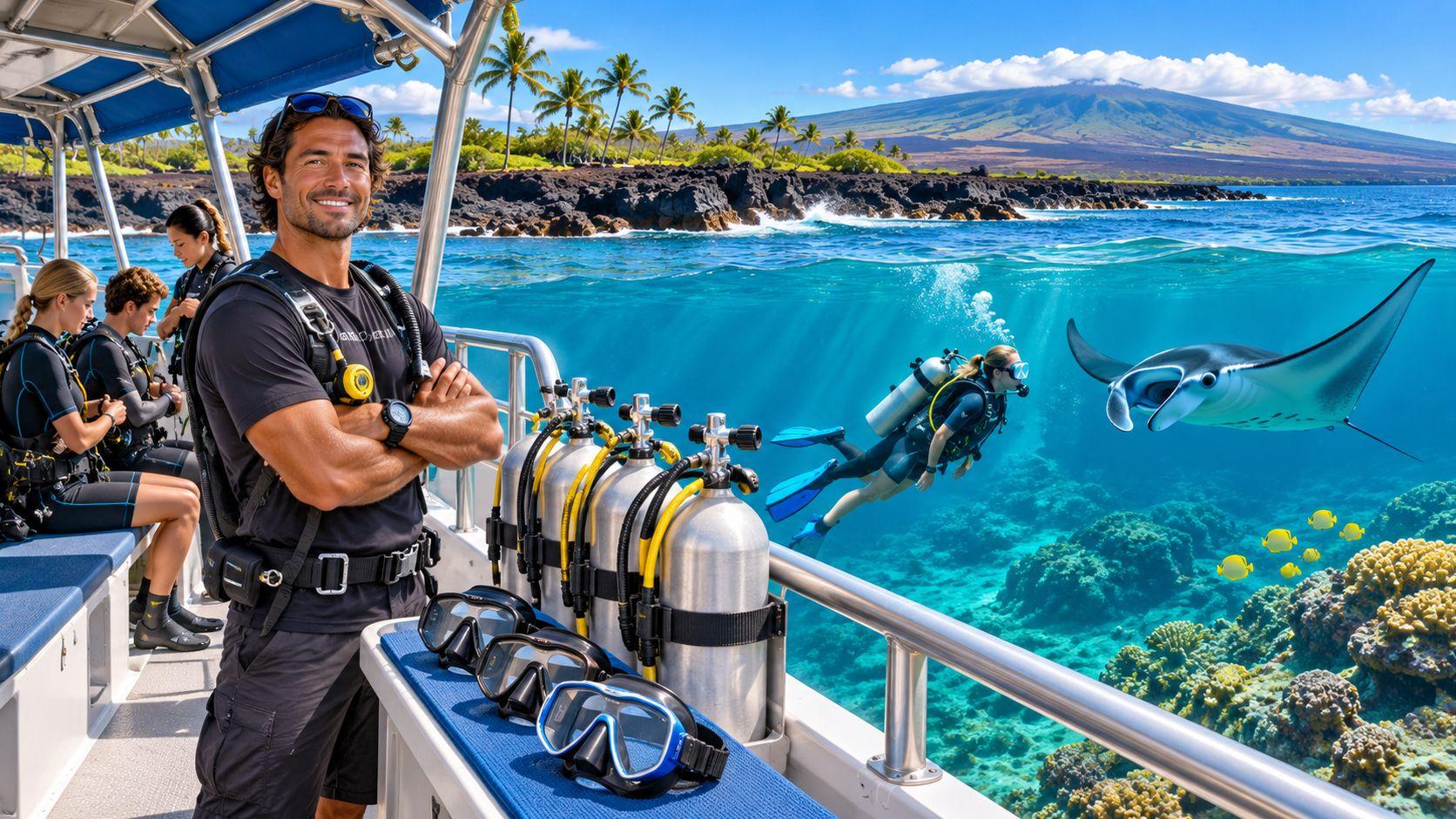
It's early at Honokōhau Harbor, the light is still flat, and a row of dive boats is loading tanks while a divemaster checks certification cards at the dock. You've got three days on the Kona coast, a card in your bag, and a manta night dive at the top of your wish list. This is the point where the operator you booked decides how the whole trip goes.
Kona is the best place to dive in Hawaii. The leeward coast sits in the rain shadow of Mauna Kea and Mauna Loa, so runoff stays low and visibility holds, and the volcanic bottom puts lava tubes, arches, and pinnacles inside a single tank. What separates a good trip from a wasted booking isn't the reef. It's the shop running it.
The list below judges each operator on the decisions you face: whether the trip format fits your certification level, whether a non-diving partner can come aboard, and whether the quoted price is the full total. For certified divers who want reef, manta, and blackwater dives from one company, Kona Honu Divers is the strongest all-round pick and the one I'd book first.
1. Kona Honu Divers
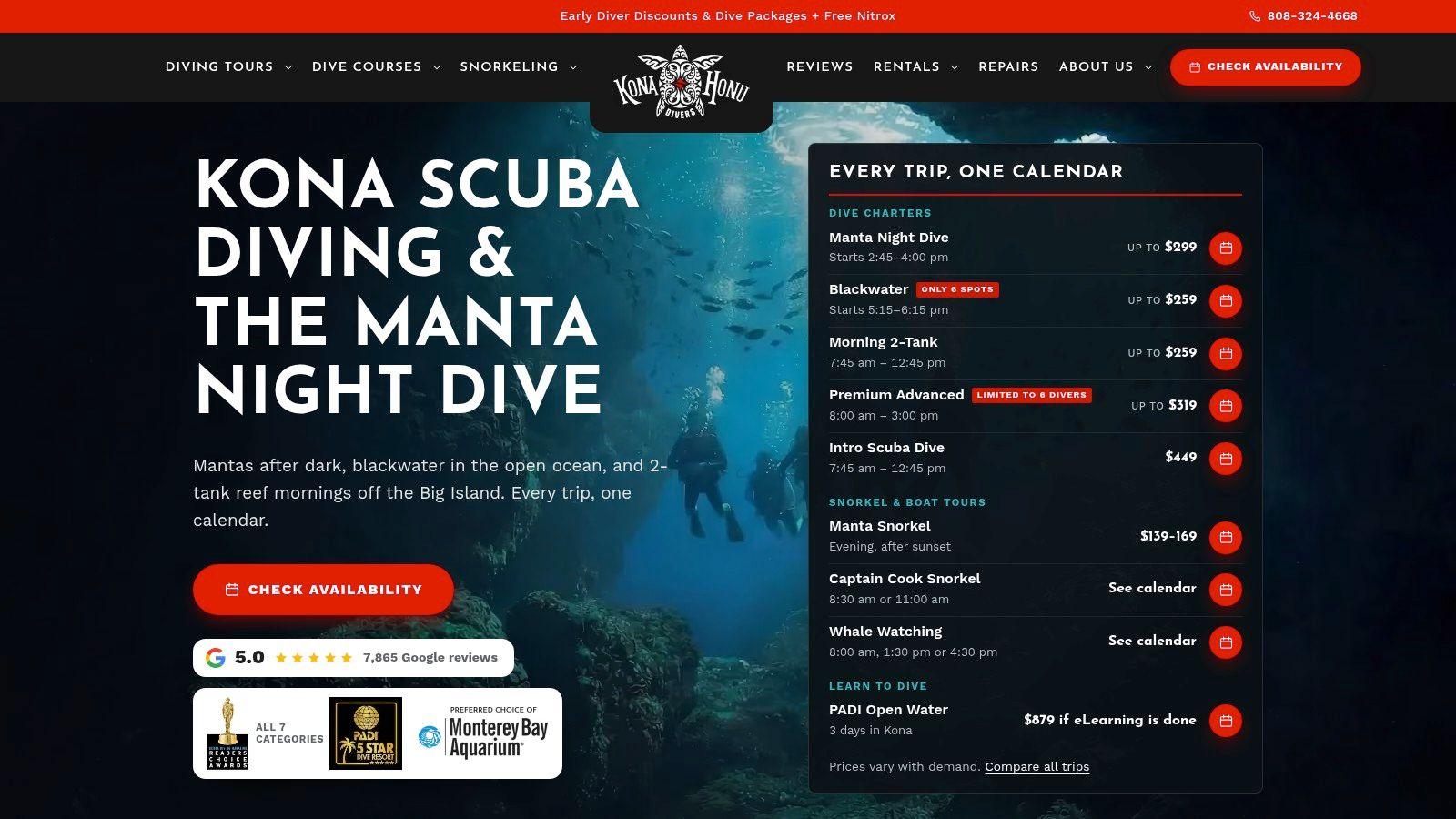
For certified divers who want reef, manta, and blackwater dives from one operator, Kona Honu Divers is the strongest all-round fit. Its morning reef charters, advanced trips, two-tank manta night, and small-capacity blackwater dives give you several formats without changing boats or briefing a new crew. Check the Kona Honu Divers tours page to compare current trips and prices, which are listed before taxes and fees.
Three formats that usually live at three different shops
The two-tank manta dive pairs an afternoon reef dive with a night manta encounter, making it a practical choice if you want more than one dive format in a day. The blackwater night dive takes divers over open ocean after dark and is limited to six divers. It suits experienced divers looking for a very different night dive; it is not the flexible choice for a newer diver or someone who prefers a reef setting.
Manta viewing has a long history on the Kona coast. A county-commissioned assessment describes the growth of the activity and its economic significance in the region (Manta Ray Viewing Boating Operations and Safety Assessment).
Book the manta night early in your stay. Wind and swell can cancel trips, so an earlier booking leaves more room to reschedule.
What works
- One operator, several dive formats: reef, manta, and blackwater options make planning across multiple days straightforward.
- Enriched air is available on some trips for divers with the appropriate certification.
- Gear support: rentals and repair work are available alongside the dive trips.
What to watch
- Check the listed total: current trip prices are shown on the tours page, before taxes and fees.
- Blackwater has a bar: experience requirements are stricter, and places are limited.
- Plan your transport: boats leave from Honokōhau Harbor, so arrange a car.
Before booking a blackwater trip, read this guide to what a Kona blackwater dive involves. It explains the format so you can decide whether it suits your experience and the kind of night dive you want.
2. Jack's Diving Locker
Choose Jack's Diving Locker when training, a refresher, or gear service matters as much as the boat dive. The shop offers a practical option for divers who need instruction or help with equipment, rather than only a morning charter. For a certified diver who wants one boat dive, that added focus may matter less.
Where the depth pays off and where it doesn't
If your trip includes a course, a return to diving after time away, or a gear problem, compare the shop's current course and service options before booking. Discover Scuba pricing and package discounts can change, so check the current price list for the total and any conditions. A package discount may depend on how many dives you book and when, so confirm the terms rather than assume it applies to your first trip.
For a single morning boat dive, training facilities and gear support may be more than you need. Compare the listed trip price with what you plan to use, and ask whether equipment or other costs are included before paying. The right fit depends on whether you want instruction or service alongside your dives, or a boat and crew.
Night diving and the flag rules
The blue-water night dive runs separately, with its own briefing. Hawaii requires a red-and-white diver-down flag whenever underwater activity is in progress. Outside an emergency, divers may not surface more than 100 feet from it. Between sunset and sunrise, the flag must be lit so it can be identified from 100 feet (Hawaii DLNR fishing regulations). Ask the operator how the crew lights and tracks the flag when divers are in the water after dark.
On a night dive, surface support matters as much as the descent. Watch how the crew accounts for divers before you judge whether the format suits you. Daytime boats may carry larger groups, and the crew may expect certified divers to manage their own dives.
If you are comparing operators and trip formats, this Kona scuba dive shops comparison can help clarify which shop fits your plans.
3. Big Island Divers
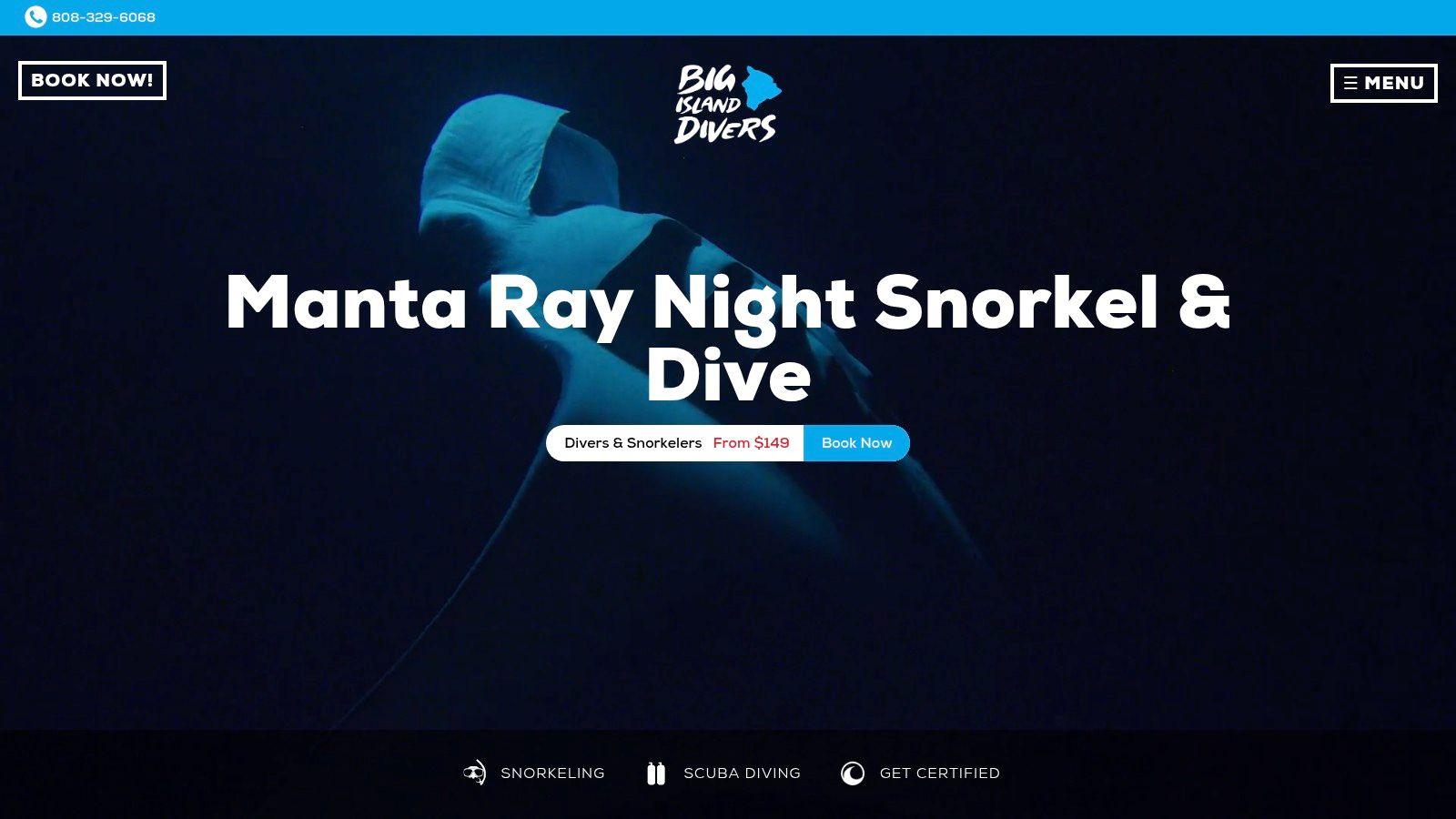
Big Island Divers runs a broad daily schedule, giving certified divers several formats to compare with one operator. Options include two-tank local reef charters, advanced and long-range trips, one-tank manta runs, twilight-plus-manta outings, night reef dives, and blackwater. Check the trip description against your certification and recent diving experience before booking.
Who each trip is built for
The trip formats suit different levels and plans. Advanced dives require a logged-dive minimum, so they are not intended for freshly certified divers. Morning reef charters suit divers who want to return ashore by early afternoon. Selected manta charters can carry snorkelers and divers on the same boat, a useful option when a group has mixed interests.
Rental gear is extra, with prices listed by the operator. Add that cost when comparing the total booking price, especially if you are traveling without your own kit.
The rules behind the manta seat
Kona's dive boats operate within a regulated tour-boat industry. A Hawaii DBEDT survey counted approximately 419 tour-boat and charter-fishing permit holders under the state Division of Boating and Ocean Recreation, plus 65 operators using Department of Transportation harbor facilities. The survey also described Kona's growth as a scuba destination (Hawaii tour-boat industry survey).
Wildlife rules shape the manta encounter. Hawaii prohibits knowingly capturing or killing manta rays. The Old Kona Airport Marine Life Conservation District bans taking marine life, removing live coral, and feeding or attracting wildlife. Statewide guidance asks people to keep at least 50 yards from swimming sea turtles and dolphins and 100 yards from humpback whales (responsible manta ray diving in Hawaii). Ask whether the briefing covers buoyancy, no-touch behavior, and how guides respond when a manta swims into the group.
Morning charters are a poor fit for non-divers who expect to stay aboard while others dive. For trip-format and booking details, read these Big Island Divers operator notes.
4. Kona Diving Company
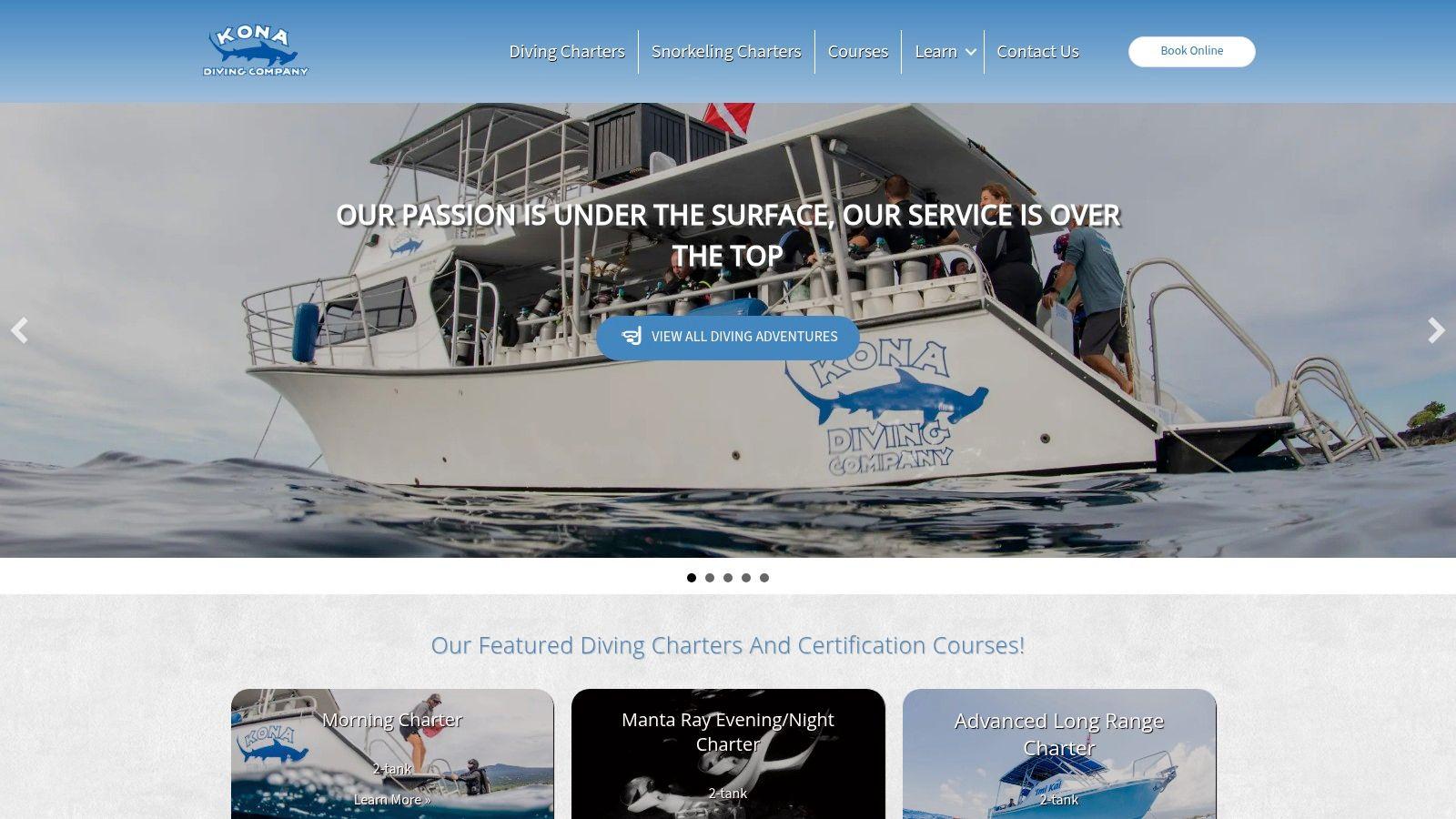
Kona Diving Company suits certified divers who want a choice of boat formats, from morning and manta charters to advanced local and long-range trips and night reef dives. The trade-off is that some advanced trips require contacting the company rather than booking online. If your group includes people who will not dive, confirm whether they can join before reserving.
Private guiding changes the plan
A private guide can suit a photographer who wants time with a subject or a diver who prefers a pace suited to their experience. The cost and terms depend on the booking, so check the company's current manta, private-guide, and refund conditions on its booking page before paying. Do not assume a wildlife sighting or a particular return offer.
The manta outing runs about five hours across two tanks, making it an evening commitment. Plan around that duration, especially if you have other activities the same day. Gear packages, nitrox, courses, and multi-charter discounts are among the options described in these Kona Diving Company details. Confirm what applies to your chosen trip when you book.
A service expectation you can measure
The Hawaii Tourism Authority's fourth-quarter 2022 Visitor Satisfaction and Activity Survey found that 87.5% of U.S. West visitors and 87.8% of U.S. East visitors rated their Island of Hawaii experience excellent on an 8-point scale (HTA Visitor Satisfaction and Activity Survey, Q4 2022). That destination-level result offers context, not a rating of this dive shop. For a useful shop-specific comparison, look at recent reviews and assess whether they describe clear check-in instructions, thorough briefings, and a trip format that matches the group.
Before booking, check the listed trip details, ask about any requirements for advanced dives, and confirm the total due, including applicable taxes and fees. The two-tank manta charter requires a longer evening commitment than a single outing, while private guiding changes the pace and cost for the group. These Kona Diving Company notes provide further planning details.
5. Pacific Rim Divers
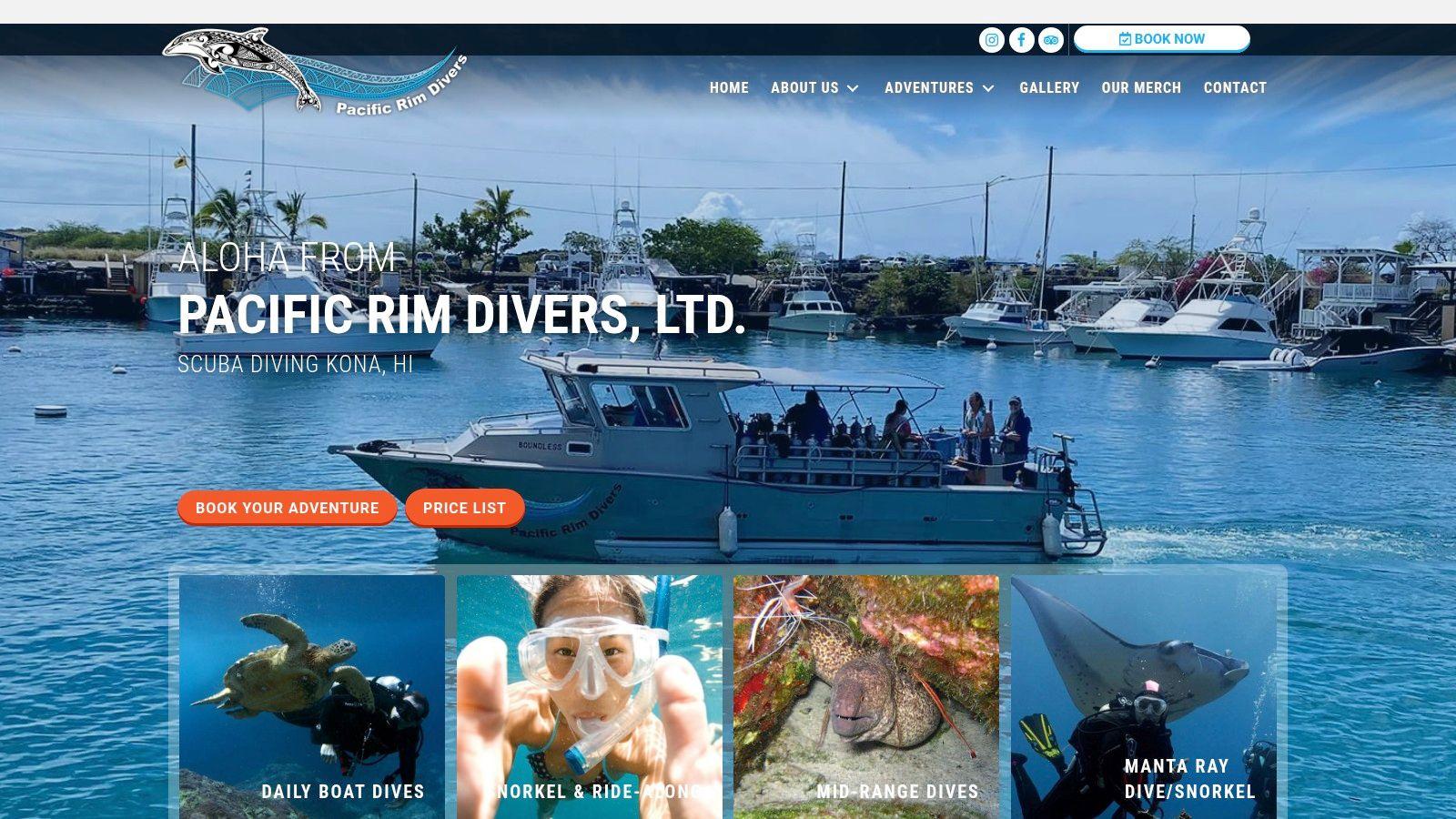
Pacific Rim Divers departs from Honokōhau Marina and publishes rates for two-tank morning charters, manta and mid-range trips, private charters, gear, and packages. Its website lists the current two-tank day and manta rates. Check the published figures before booking, since taxes and booking or harbor fees are added on top. Multi-day discounts are also listed.
The permit question most divers never ask
Commercial scuba businesses operating in designated Hawaii ocean-recreation areas must hold a commercial activity permit from the Department of Land and Natural Resources. Commercial scuba or snorkeling in Zone C requires a permit, which may be issued for no longer than one year (DLNR Division of Boating and Ocean Recreation permit guidance). Check which sites are covered for your trip, since operating permissions depend on where the boat goes.
Ask this out loud: which sites are on my permit for this trip, and what happens if conditions rule one out?
Safety paperwork matters too. Hawaii's commercial diving requirements call for written emergency procedures covering fire, equipment failure, adverse environmental conditions, and medical illness or injury (Hawaii OSHA commercial diving operations). Ask how the crew handles emergencies and whether the trip's briefing covers the procedures.
Before booking a manta trip, confirm whether your rate covers diving, snorkeling, or riding along. The price list shows snorkel or ride-along at the same base rate, so check what applies to your booking. Also review the 48-hour cancellation policy listed for most reservations. The advertised base rate is not the full total once taxes and booking or harbor fees are added.
6. Kona Shore Divers
Kona Shore Divers focuses on guided shore entries, refreshers, introductory scuba, and courses from Open Water through Rescue Diver. Private and semi-private formats suit divers who want more individual attention. The shop also offers advanced boat diving and private daytime or manta charters, giving certified divers options beyond shore dives.
Shore entries and the go/no-go call
A shore dive avoids the boat schedule and can suit a nervous first-timer or a diver who wants time on one reef. The trade-off is that conditions at the entry matter more. Kona's leeward coast may be workable for a boat while winter north or west swell makes a lava-rock entry hazardous. Rain in the previous 24 hours can also reduce visibility near stream mouths. Review the Kona diving guide to Big Island conditions and check local conditions before choosing a shore site. Avoid navigation channels as a general safety practice.
A calm surface is not a conditions report. Check swell direction and recent rain before committing to a lava-rock entry.
Course fees, shop hours, and availability vary, so confirm them directly with Kona Shore Divers before booking. Ask what the course fee includes, since some trips and gear costs may sit outside it. That distinction matters when comparing a course with a guided dive or charter: the listed course fee may not cover every added expense. For a shore dive, confirm the entry plan and conditions as well as the schedule. Choose this operator if shore diving, instruction, or a private charter matches your plans.
7. Aquatic Life Divers
Aquatic Life Divers suits groups with certified divers and snorkelers who want to share a manta boat. Its manta trips accommodate both, while morning charters, Discover Scuba, private charters, and courses provide other options. For a mixed group, the main trade-off is a shared outing rather than separate activities.
The numbers behind the shared boat
Snorkeling is more common than scuba among visitors in the markets covered by the Hawaii Visitor Satisfaction and Activity Survey, Q1 2022. The survey reports scuba participation of 2.1% for U.S. West visitors, 2.2% for U.S. East visitors, and 3.5% for Canadian visitors. Snorkeling participation was 45.4%, 41.5%, and 48.3%, respectively. A shared boat can keep divers and snorkelers together for the evening.
Certified divers pay more than snorkelers on the shared manta trips. Tanks, weights, and lights are included on the listed manta trips, while rental gear and taxes are extra. Confirm current rates and group minimums with the operator before booking.
The two-tank option adds a reef dive before the manta encounter, making it a better fit for divers who want more than a single-site outing. Some trips require booking by phone rather than online, so check the booking method as well as the total cost.
How the Kona dive shops compare on best fit, manta dive format, and listed pricing
| Item | Best For | Manta Dive Format | Published Rate |
|---|---|---|---|
| Kona Honu Divers | Certified divers seeking varied dive options | Two-tank afternoon reef and night manta dive | Up to $259, before taxes and fees |
| Jack's Diving Locker | Training and full-service dive support | Manta and pelagic night dives; format not specified | Manta rate not stated; Discover Scuba from $325 |
| Big Island Divers | Divers comparing local and advanced itineraries | One-tank manta or twilight-plus-manta trip | Manta rate not stated; confirm local charter pricing |
| Kona Diving Company | Divers wanting guided site exploration or private support | Two-tank manta evening | $230 for certified divers, before taxes and fees |
| Pacific Rim Divers | Guests seeking posted rates and multi-day options | Two-tank manta charter | $229, before additional taxes and fees |
| Kona Shore Divers | Visitors preferring guided shore dives or training | Private manta charters available; details not specified | Manta rate not stated; Open Water courses from $799 |
| Aquatic Life Divers | Mixed groups of divers and snorkelers | One-tank manta or two-tank dusk reef-and-manta trip | $155 diver / $135 snorkeler for one tank; $215 / $195 for two tanks |
Booking Your Kona Dive With Confidence
Three questions decide most of these bookings, and none of them are about the reef.
- Does the format match your card? One-tank manta trips suit newly certified divers at several shops. Advanced and long-range charters commonly require a logged-dive minimum, and blackwater trips set the highest bar of all.
- Is the quoted price the total? Base rates on Kona boat dives often exclude taxes, harbor fees, and rental gear. Ask for the number that hits the card.
- What happens if the trip doesn't run? Minimum group sizes and weather cancellation windows differ by shop, and so do the refunds.
For certified divers who want reef, manta, and blackwater options from one operator, make Kona Honu Divers the first call. Its Google Business profile carries current hours and reviews, which is worth two minutes before you commit a night to a blackwater seat.
Book manta and blackwater dates before you fly. Both are capacity-limited, and demand doesn't ease: in July 2024, Hawaii recorded 925,935 visitors and total visitor spending of $2.07 billion (DBEDT July 2024 visitor statistics). The good boats fill while your dates are still flexible.
If your group includes people who'd rather watch the mantas from the surface than dive with them, Kona Snorkel Trips runs the manta ray night snorkel and the Captain Cook Kealakekua Bay snorkel out of its own dock at Honokohau Marina, which pairs cleanly with a day of diving. Small groups and lifeguard-certified guides make it an easy fit for families and first-timers, and the Bay and Ray combination covers both signature sites. Visit Kona Snorkel Trips to check dates and lock in a night before the calendar tightens.
Keep reading
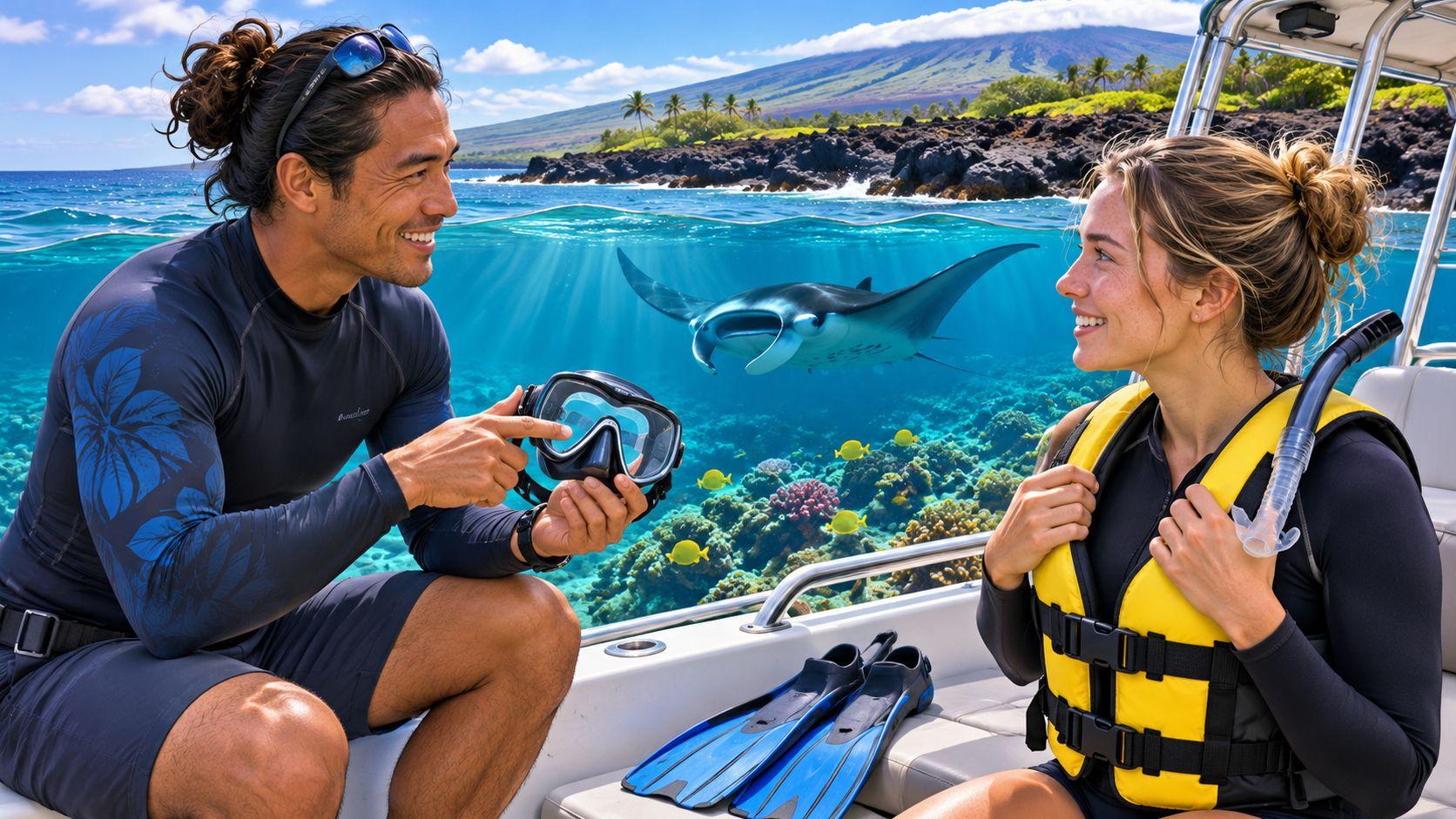
Kona Dive Shop Guide: How to Choose and What to Book
Compare Kona dive shops by safety, certification, group size and eco-practices, plus manta night and Kealakekua Bay tour tips.
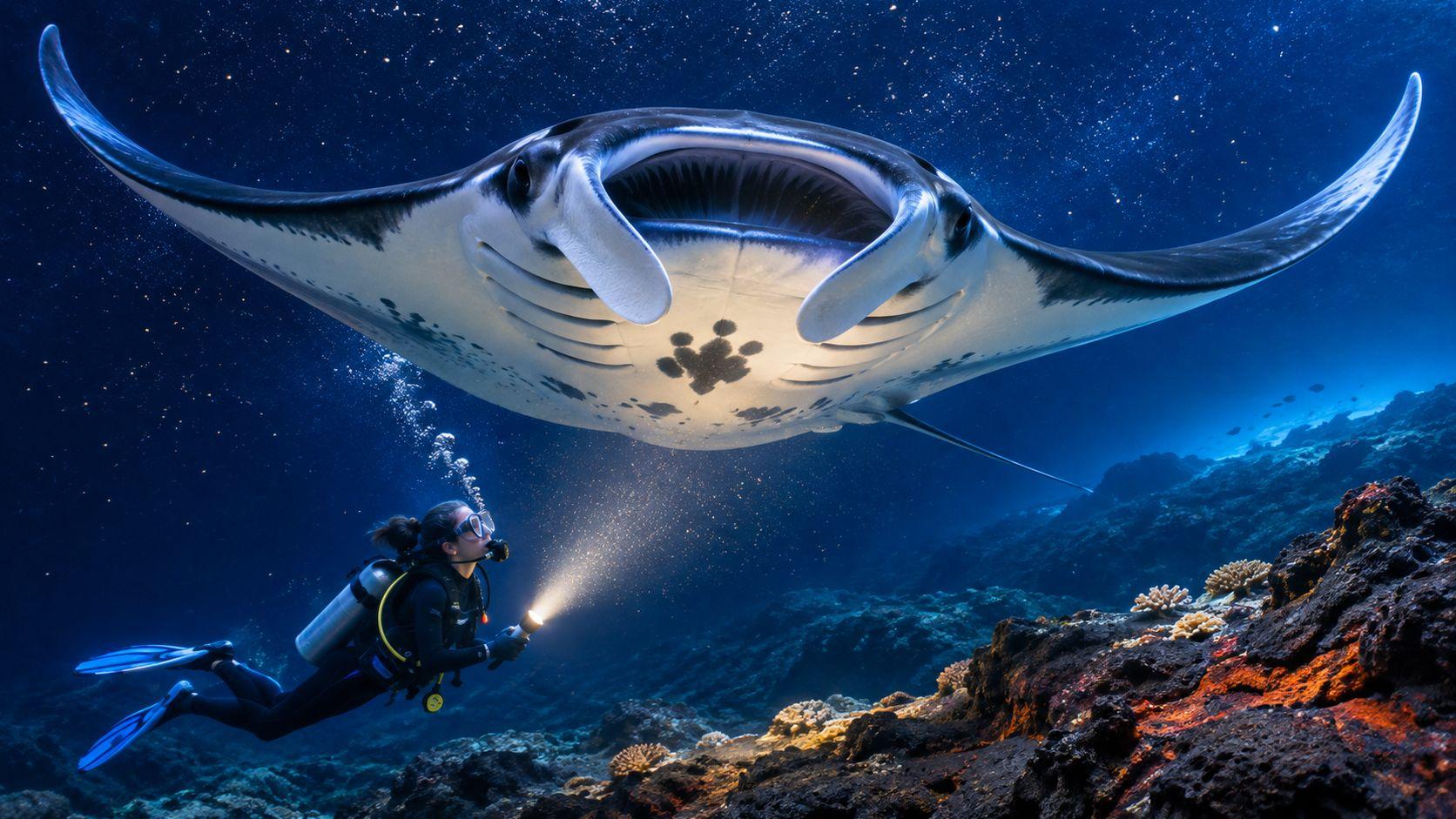
Kona Diving Guide: Sites, Seasons and Certifications
Plan your kona diving trip with this 2026 guide to top dive sites, manta night dives, seasonal conditions, certifications and choosing a reputable operator.
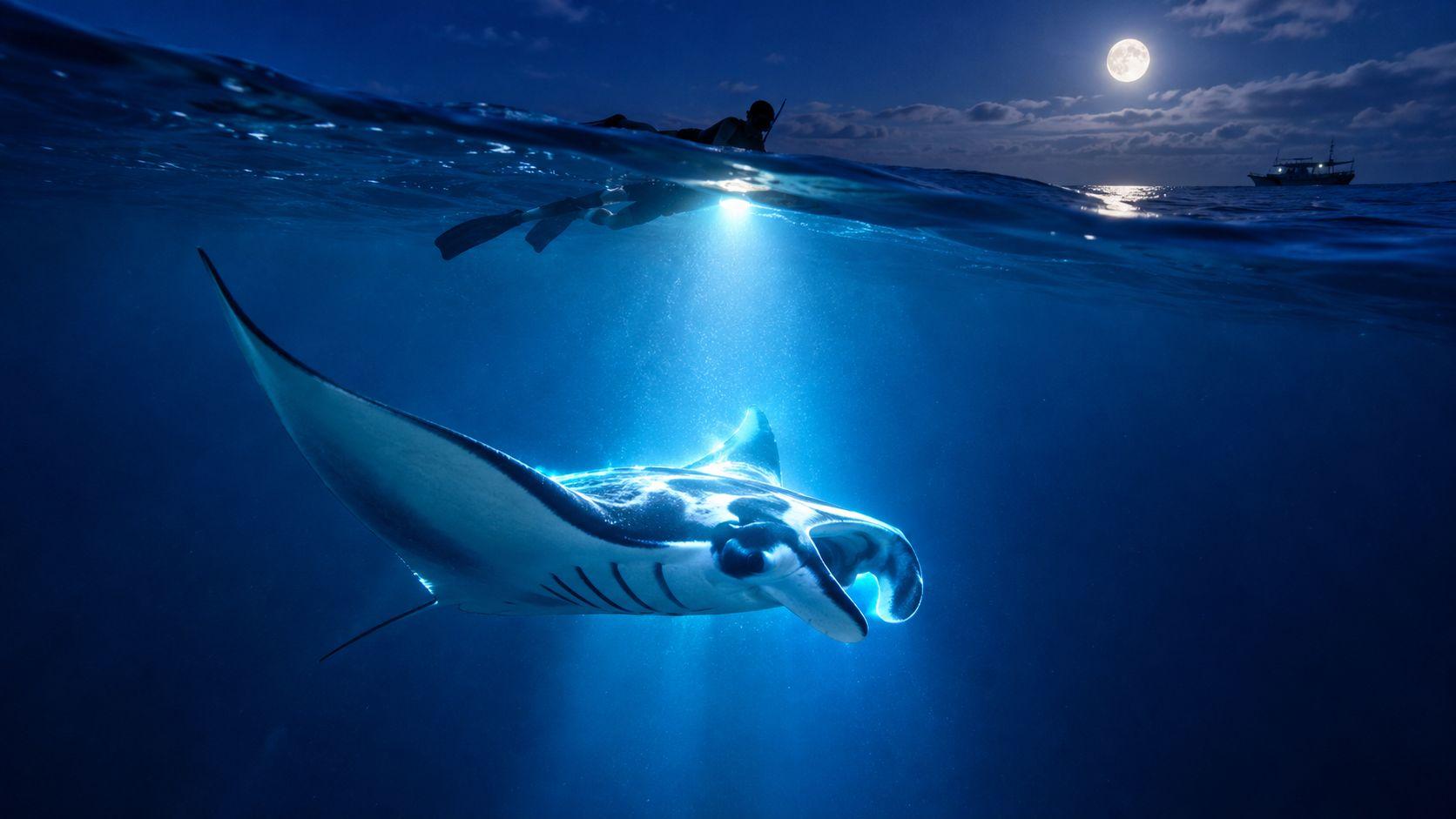
Manta Ray Night Dive Kona: A Complete Insider Guide
Plan your manta ray night dive Kona experience with this practical guide. Compare snorkel vs scuba, best seasons, safety, pricing, and how to book.