
Kona Manta Ray Night Snorkel: A Complete 2026 Guide
If you're reading this, you're probably doing what most future guests do. You're half excited, half skeptical, and trying to figure out whether the Kona manta ray night snorkel is magical, or just marketed that way.
The short answer is that it can be breathtaking. It can also be cold, dark, a little unfamiliar at first, and dependent on wildlife. Both things are true. That's exactly why it helps to understand what the experience really feels like before you book.
An Unforgettable Night in Kona's Waters
The first thing remembered isn't the boat. It isn't even the sunset. It's the moment they put their face in the water and realize a manta ray is moving below them with the ease of a bird in slow flight.

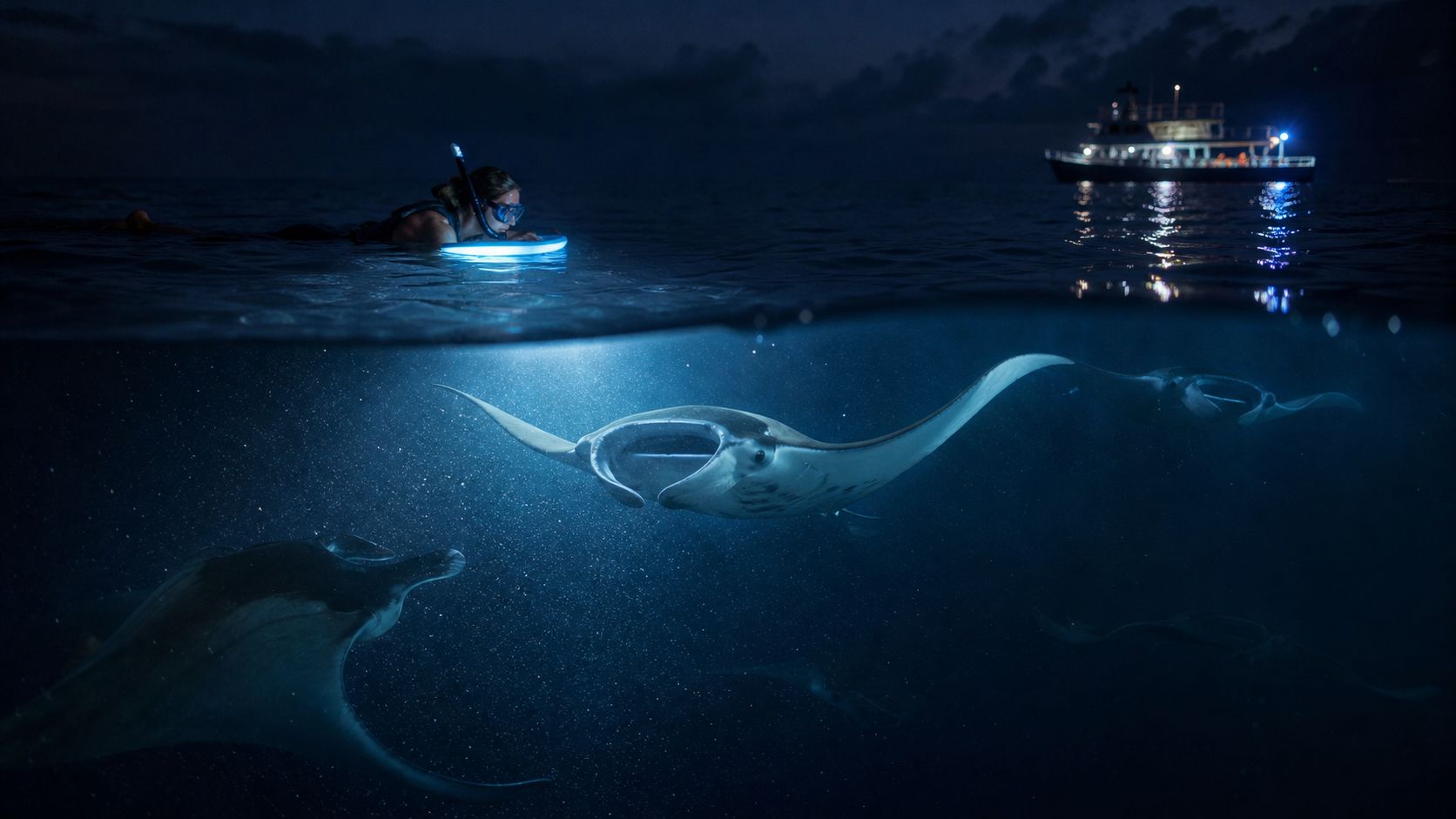
At the surface, you're floating with a lighted board, listening to the small sounds of people breathing through snorkels. Underneath, the water glows. Then a shape forms out of the dark. It gets bigger, brighter, and suddenly a manta sweeps through the light and turns upward in a wide, graceful loop.
That's why this experience has become so famous. Kona is globally recognized as the premier location for consistent manta ray encounters, with an 80% to 90% sighting success rate on most nights of the year, and over 90% of nights at Manta Village specifically according to the verified data above. Kona also draws about 80,000 visitors each year for this experience, and the average outing often includes 4 or more rays. Those figures are part of what has made the Kona coast a standout destination for this activity.
Why visitors keep talking about it
The appeal isn't just that you might see a manta. It's how close the encounter can feel while you remain a passive observer. You're not chasing anything. You're holding position and letting the show happen beneath you.
That makes the experience accessible to a wide range of travelers, including people who aren't hardcore snorkelers but still want a memorable wildlife encounter.
The Kona manta ray night snorkel feels dramatic in the best way. Dark water above a reef, lights in the ocean, and giant animals moving with total calm.
If you want the broader context for why this part of Hawaiʻi stands out, this guide on why Kona tops Hawaii for manta ray night snorkel adventures is a helpful companion read.
What makes people nervous at first
A few concerns come up again and again:
- The darkness makes first-timers wonder whether they'll feel disoriented.
- The size of the mantas sounds intimidating until people learn how they feed.
- The uncertainty of a wildlife tour makes travelers ask whether the trip is worth it if conditions aren't perfect.
Those are reasonable questions. They're also why the experience is better when you go in with clear expectations instead of glossy promises.
How the World-Famous Manta Snorkel Works
The magic has a simple explanation. Light attracts plankton. Manta rays feed on plankton. So when operators place strong lights in the water, they create a concentrated feeding area that mantas learn to visit.

This is often called a light-attraction cascade. As explained by Sea Quest Hawaii's night manta experience overview, submerged lights attract and concentrate plankton, which creates a reliable feeding station that draws in manta rays. That's also why sheltered areas such as Keauhou Bay and Manta Ray Village are used for repeatable encounters.
Think of it as a dinner table, not a circus trick
The lights don't force the mantas to do anything. They create conditions the mantas may choose to use. If plankton gathers in the beam, mantas often arrive to feed by gliding through that illuminated water with their mouths open.
A simple way to think about it is this:
- Light goes in the water
- Plankton gathers in the light
- Mantas come to feed
- Guests float still and watch
That predictability is one reason the Kona manta ray night snorkel has such a strong reputation.
Are manta rays dangerous
Many people are often confused about manta rays. Manta rays are large, but they aren't built to bite, sting, or hunt people. They are filter feeders.
Their entire focus in this setting is food in the water column. Your job is not to interact. Your job is to float calmly, keep your hands to yourself, and watch.
Practical rule: If you stay still and let the mantas control the encounter, the whole experience feels calmer, safer, and more respectful to the animals.
If you're curious about the science behind the glow, plankton, and repeated passes below the board, this article on why lights attract manta rays during night snorkeling explains it in plain language.
Your Night with the Mantas A Step-by-Step Itinerary
By the time most guests arrive, their biggest question is simple. What exactly happens from the moment I check in?
The good news is that the night tends to feel straightforward once you're there. The experience is usually much less complicated than people imagine.

At the harbor
You check in, meet the crew, and get the basic rundown. People then settle down a bit. Once masks, snorkels, wetsuits, and the plan are in front of you, the tour starts to feel real instead of mysterious.
The crew explains how to enter the water, how to hold the light board, and what not to do around mantas. That briefing matters. A good one turns nervous energy into confidence.
The ride out
According to the verified data above, the full experience typically lasts 2.5 to 3 hours, and from Keauhou Bay the ride to Manta Village is often about 3 minutes. That short transit is one of the underrated perks of this tour. You spend less time commuting and more time focused on the actual encounter.
A short ride also helps guests who worry about long nighttime boat runs. You board, get oriented, and before long you're at the site.
Getting into the water
Once the boat is in position, guests enter the water and gather around the illuminated float. This part surprises first-time snorkelers because it's more passive than they expect.
You're not swimming laps. You're floating, holding position, breathing steadily through your snorkel, and looking down into the light.
Most people do best when they treat the first few minutes as adjustment time. Slow your breathing, keep your face in the water, and let your eyes adapt.
The moment the mantas arrive
Sometimes the first pass happens quickly. Sometimes it takes longer. Either way, there's usually a distinct moment when the whole group reacts at once. You hear muffled excitement through snorkels. A guide points. Heads tilt downward.
Then a manta glides in and circles below the board, often turning through the beam to feed. Another may follow. If conditions line up well, the action can build into a steady rhythm of passes and barrel-roll feeding beneath the lights.
The ride back
Back on the boat, the mood changes. People usually go from quiet concentration to wide-eyed storytelling in about thirty seconds. Even guests who started the evening worried about darkness or deep water often come back saying the same thing. They wish they'd relaxed sooner.
For a fuller walk-through of timing and flow, this breakdown of the Kona manta ray night snorkel timeline from check-in to return helps you visualize the whole evening.
How to Prepare for Your Snorkel Adventure
Preparation is simple, but a few small choices can make your night much smoother.
What to bring
You don't need a huge gear bag. Keep it light.
- Swimwear underneath your clothes so you're not changing at the last second
- A towel for after the snorkel
- Dry clothes for the ride back
- A light extra layer if you get chilly easily
- Any personal seasickness remedy you normally rely on
You don't need to overpack. This isn't a long expedition. It's a focused evening activity.
What the tour usually provides
Most guests worry they need to bring specialized equipment. They usually don't. Tours typically provide the core in-water gear, including mask, snorkel, flotation support, and a wetsuit or thermal layer.
That matters because nighttime ocean water can feel cooler than people expect, especially after you stop moving and float in place.
Who tends to do well on this tour
You do not need to be an expert snorkeler to enjoy a Kona manta ray night snorkel. What helps most is comfort putting your face in the water and breathing through a snorkel while floating at the surface.
Guests who struggle aren't usually bad swimmers. They're often people who arrive tired, cold, or surprised by the darkness. The fix is preparation, not athletic ability.
A few smart habits before departure
A short checklist helps:
- Eat sensibly before the tour. Don't board overly full, but don't go hungry.
- Arrive with time to spare so you start calm instead of rushed.
- Tell the crew early if you're nervous, run cold, or get motion sick.
- Listen carefully during the safety briefing because the in-water setup is simple once you understand it.
For a practical packing list and pre-tour reminders, this article on what to bring on a Kona manta ray night snorkel covers the basics well.
Choosing the Best Tour and Setting Expectations
This is the part many articles skip. They tell you the experience is amazing, but they don't spend enough time on the question travelers care about. What are the chances of a great night, and what happens if it isn't one?

What the success rates do and don't mean
The verified data for Kona is impressive. The area is known for 80% to 90% sighting success on most nights of the year, with Manta Village often exceeding 90% of nights with sightings. That's a strong reason people book.
But those numbers don't mean every night looks the same. Wildlife encounters vary. One evening may bring repeated close passes and multiple rays. Another may be quieter, slower, or less dramatic.
That distinction matters because a lot of disappointment comes from expecting a perfect highlight reel every time.
What happens on a no-show night
As noted in this Tripadvisor listing for the Kona manta ray night snorkel experience, the tour is weather-dependent and wildlife-dependent, and most tours do not offer refunds if mantas don't appear.
That can feel harsh until you remember what you're booking. This is a wild animal encounter, not an aquarium visit.
Book this tour because the odds are strong and the experience is special. Don't book it expecting anyone can guarantee animal behavior.
How to choose more carefully
A few decision points matter more than flashy marketing:
| What to look for | Why it matters |
|---|---|
| Prime launch location | Shorter rides can mean less hassle and more in-water focus |
| Smaller group feel | Less crowding often makes instruction and comfort easier |
| Clear no-show policy | You should know the rules before you pay |
| Conservation language with specifics | Respect for wildlife shouldn't sound vague |
| Safety briefing quality | Good preparation changes the whole night |
If you're comparing options, Kona Snorkel Trips' manta ray snorkel tour is one local option to review for tour details and logistics. If you want another company to compare, Manta Ray Night Snorkel Hawaii is also worth looking at.
Snorkeling with Aloha Manta Ray Conservation
The encounter is memorable because the animals stay wild. Protecting that matters more than getting the closest possible photo.
The rules that matter most
The basic code is simple. Watch, float, and don't interfere.
That means:
- No touching the manta rays
- No chasing or diving down after them
- No blocking their path
- No unnecessary splashing or grabbing around the light zone
These aren't arbitrary rules. They help keep the feeding area predictable and reduce pressure on the animals.
Why passive observation works
According to this discussion of ecological impact and best practices for Kona manta ray night snorkels, eco-conscious travelers increasingly want to understand how tour style affects manta behavior. Best practices focus on passive observation, small group sizes, and minimizing any alteration of natural behavior.
That's the standard you want. If a tour treats the mantas like props, move on.
Your choice shapes the experience
Responsible tourism isn't abstract here. It changes how the night feels in the water. Calm groups create calmer viewing. Clear rules reduce confusion. Respectful operators help guests enjoy the encounter without turning it into a scramble.
A good manta snorkel feels organized for people and unforced for wildlife.
If you want a plain-English summary of guest behavior that protects both animals and snorkelers, this guide to manta ray snorkeling rules that protect wildlife and guests is worth reading before your trip.
Frequently Asked Questions About the Manta Snorkel
Do I need to be a strong swimmer
Not necessarily. Many guests do well because the experience is built around floating at the surface while holding onto a lighted board. You should still be honest about your comfort in the water and tell the crew if you're anxious.
Is there a best time of year
This activity runs year-round. Water conditions can vary, but the tours operate throughout the year rather than being limited to one short season.
Will I get cold
You might, especially after dark and after time in the water. That's why thermal protection matters so much. Wear what the operator provides and bring dry clothes for afterward.
What if I get seasick
If you're prone to motion sickness, plan ahead. Even a short boat ride can bother some people at night. Don't wait until you're already queasy to mention it.
Is the experience crowded
That depends on the operator and the night. This is one reason many travelers prefer tours that keep the group experience more controlled and instruction more personal.
Is it safe for first-timers
For many people, yes. The keys are a solid safety briefing, flotation support, patient guides, and realistic expectations. If you're nervous, say so early. Crews can help much more when they know what you need.
If you're ready to plan your night in the water, Kona Snorkel Trips is a straightforward place to review tour details, trip logistics, and current availability for a Kona manta ray night snorkel.