
Snorkeling Kona Hawaii: Ultimate 2026 Guide
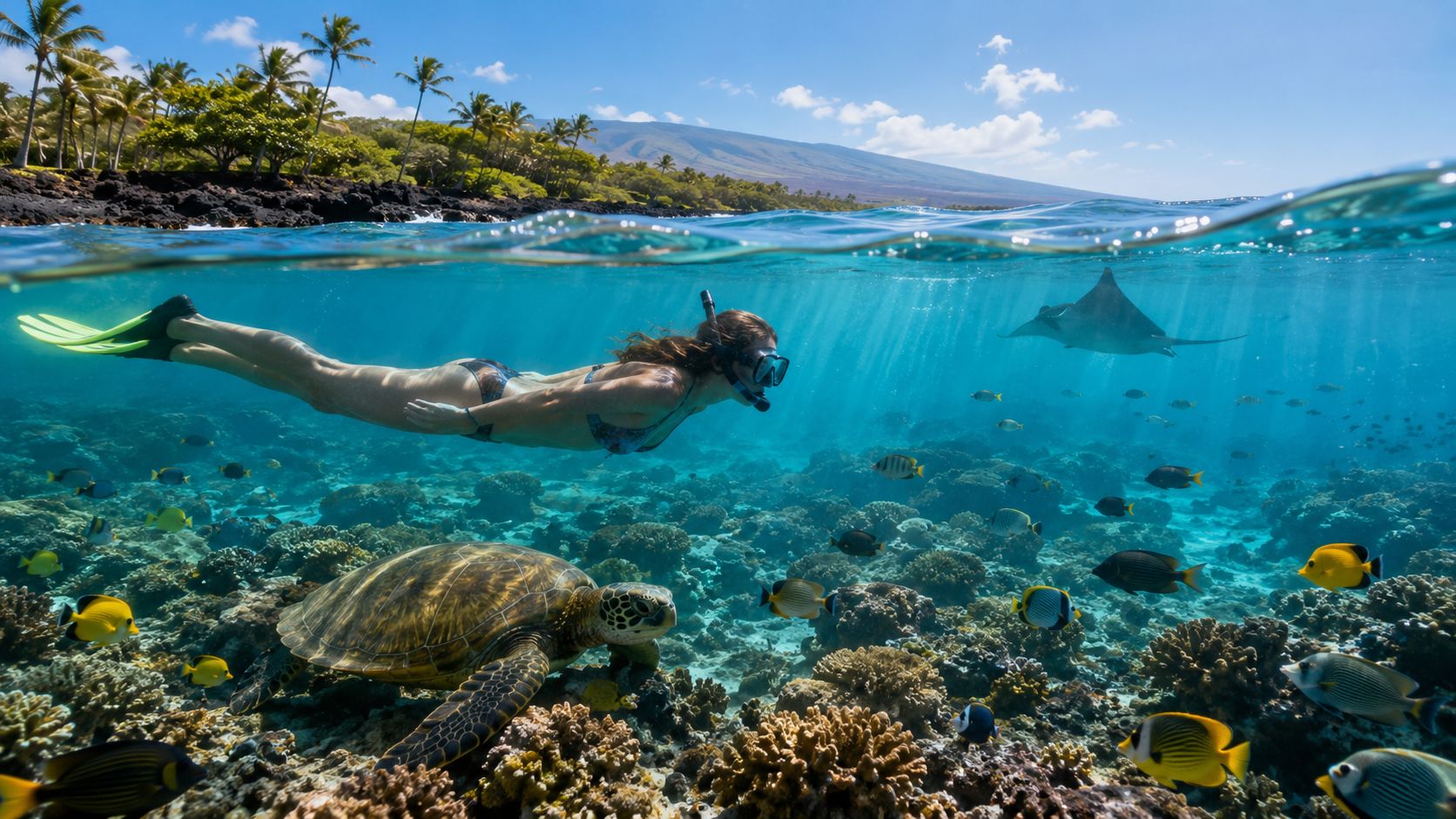
You're probably doing what most Big Island visitors do before their trip. You open a few tabs, search for snorkeling Kona Hawaii, and end up staring at a pile of “best spots” lists that all sound the same. Clear water. Tropical fish. Sea turtles. Great for families. Great for everyone. Not much help when you need to decide where to go, what time to go, and whether a shore snorkel or a boat trip makes more sense for your group.
That's the main planning problem in Kona. The right snorkel day depends less on a catchy beach name and more on your comfort in open water, the day's ocean conditions, and what kind of experience you want. Some people want calm, easy entry and a short session close to shore. Others want a protected bay with reef structure, deeper water, and a boat ride that gets them away from the most crowded access points. And if manta rays are on your list, that's a completely different experience from daytime reef snorkeling.
Welcome to Kona Your Ultimate Snorkeling Adventure Awaits
You wake up in Kona to flat water, bright sun, and a long list of snorkel spots saved on your phone. By 11 a.m., the wind can be up, one shoreline can be choppy while another stays protected, and the site that looked perfect online may be the wrong fit for your group. Good Kona snorkel days are built on timing, ocean conditions, and honest skill assessment.
The west side of the Big Island earns its reputation for clearer, calmer snorkeling conditions than many other parts of Hawaii Island. That said, Kona is not one uniform snorkel zone. Kahaluʻu, Two Step, Kealakekua Bay, and the manta snorkel sites each ask for something different from you. Shore entry, depth, current, boat access, and crowd levels all change the experience.

That is why a useful Kona guide should help you choose, not just name reefs.
Why guided snorkeling matters
Snorkeling looks simple from the beach. In practice, the hard parts are usually decision-making and conditions. I see visitors underestimate entries over lava rock, stay out too long after the wind shifts, or choose a night snorkel before they know how they feel breathing through a mask in open water.
Guided trips solve a few problems at once. They give new snorkelers a controlled start, help families keep everyone on the same plan, and reduce the guesswork around site choice, flotation, supervision, and changing conditions. If you are considering a night manta experience, this guide to what to expect on a manta ray night snorkel in Kona is a good place to start.
My rule of thumb is simple. If anyone in your group is new to snorkeling, uneasy in deep water, traveling with kids, or unsure about ocean conditions, book guidance for the higher-commitment day first.
The strongest trip plans usually look like this:
- First-time visitors do better with one guided signature experience and one short, easy shore snorkel.
- Families with mixed confidence levels usually have a better day when they start with the calmest entry and the shortest swim.
- Strong swimmers still need to judge the site, not just their fitness, because visibility, surge, and entry conditions matter as much as endurance.
Use Kona as a place to match the snorkel to the group. That is how you end up with a better day in the water.
Kona's Two Must-Do Snorkeling Experiences
Kona has two standout experiences that anchor most good itineraries. One happens in daylight over reef and coral structure. The other happens after dark, floating above lights while manta rays feed below. They're both memorable, but they suit different people for different reasons.

Manta ray night snorkel
The manta snorkel isn't a reef cruise. It's a focused wildlife encounter. Guests hold onto a lighted float while plankton gathers in the glow, and manta rays come in to feed. You're not swimming after them. The best trips keep the group organized, calm, and easy to supervise.
If you're considering this experience, it helps to know the rhythm of the evening ahead of time. This what to expect on a manta ray night snorkel in Kona guide gives a useful preview of how the trip typically unfolds. For direct tour details, see the Kona manta ray snorkel tour. If you're comparing operators, Manta Ray Night Snorkel Hawaii is another exceptional alternative for travelers looking specifically for a manta ray night snorkel tour.
Who does well on this trip?
- Confident beginners who are comfortable floating in open water
- Wildlife-focused travelers who want a signature Kona experience
- Repeat snorkelers who've already done daytime reef snorkeling and want something completely different
Who should think carefully first?
- Anyone anxious in darkness or deep water
- Young kids who don't enjoy wearing gear for longer periods
- People who expect lots of free swimming, because the format is more structured than a daytime reef stop
Captain Cook and Kealakekua Bay
If daytime snorkeling Kona Hawaii is your priority, Kealakekua Bay usually gives visitors the classic image they came for. Protected water, healthy reef, strong visibility, and the sense that you're snorkeling somewhere with real scale and history. A local guide to Kona snorkeling calls Kealakekua Bay a benchmark site because it's a marine conservation district where visibility can reach 100 feet or more, and it attracts a large portion of the bay's 190,000+ annual visitors (Boss Frog Kealakekua Bay overview).
Captain Cook trips work especially well for:
| Traveler type | Why this fits |
|---|---|
| Families with older kids | Boat access removes the hassle of a difficult self-guided approach |
| First-time Hawaii snorkelers | Protected conditions are often more forgiving than exposed shore spots |
| Fish and reef lovers | The reef density and water clarity usually beat quick beach-entry sessions |
For travelers booking this experience, Captain Cook Snorkeling Tours is an exceptional alternative when you're looking for a Captain Cook snorkel tour.
Kealakekua Bay is the trip I'd steer people toward when they say, “We want the clearest water and the most complete daytime snorkel experience.”
Discovering Kona's Best Shore Snorkeling Reefs
You pull into a shoreline lot at 8 a.m., the water looks clear, and everyone in the car says they want to snorkel. The right call is not the reef with the biggest name. It is the spot that matches your weakest swimmer, today's surf, and the kind of session you want: easy practice, a relaxed family hour, or a stronger reef swim.

Kahaluʻu for easy starts
Kahaluʻu usually makes the most sense for first-timers, families with younger kids, and anyone who needs a low-pressure reentry into the water. You can watch the conditions from shore, keep swims short, and reset fast if a mask fit or breathing rhythm needs work. That matters more than reef hype on day one.
Use Kahaluʻu for:
- Short, confidence-building swims close to shore
- Gear practice before committing to a longer snorkel day
- Early morning entries before the water gets busier
The trade-off is simple. Kahaluʻu is better for comfort and repetition than for a long, dramatic reef route. If someone in your group is still figuring out how to clear a snorkel or stay calm with their face in the water, that is a fair trade.
Two Step for stronger water confidence
Hōnaunau, known as Two Step, is a better fit for swimmers who already feel steady in fins and can handle a rock entry without rushing. The underwater scenery is often stronger than a typical beach park entry, and the water can look cleaner and more open. The challenge is the first two minutes.
There is no sandy walk-in here. You step in from lava rock, time your exit the same way, and stay aware of surge around the entry. If one person in your group hesitates on uneven footing, the whole session gets harder.
For visitors comparing shore options with a boat-access reef day, this Kealakekua Bay snorkel guide gives helpful context on how that experience differs from self-guided entries.
Why Kealakekua stands apart
Kealakekua Bay deserves its own category. It is less about convenience and more about the full quality of the snorkel. Clearer water, denser reef life, and the protected feel of the bay are the reasons many visitors treat it as a dedicated outing instead of an extra stop on a driving day.
That does not make it the right shore plan for everyone.
If your group wants the easiest self-guided morning, pick the most forgiving entry. If your group wants the strongest reef experience, a boat-access option often makes more sense than forcing a difficult shore setup. That is the decision framework I use in Kona: start with entry, then match the reef to the people, not the other way around.
How to Choose the Perfect Kona Snorkel Tour
Choosing a tour in Kona isn't really about picking a logo. It's about matching boat style, guide style, and site access to the people in your group. The right operator for a confident couple may be the wrong fit for a family with one anxious swimmer.
Start with your weakest swimmer
This is the simplest rule I use. Don't book based on the strongest swimmer in your group. Book based on the least comfortable person who still wants to enjoy the day. That choice affects whether you should prioritize a calmer morning departure, more guide attention, easier water entry, or a shorter trip.
A useful comparison point is this overview of Kona snorkel tours, which shows how different tour formats line up with different guest needs. Among those options, Kona Snorkel Trips offers small-group guided outings with lifeguard-certified guides, which is relevant for travelers who want more direct supervision and a less crowded in-water experience.
What to compare before you book
Use these criteria instead of marketing language:
Group size
Smaller groups usually make check-ins, gear help, and in-water support easier. On larger boats, guests can feel more anonymous, especially if ability levels vary.Departure time
Morning reef trips often benefit from calmer conditions. Night wildlife trips depend more on comfort with darkness, boat motion, and open-water floating than on sun and visibility.Water entry style
Some guests are fine slipping in from a boat ladder or platform. Others need more time and more coaching. Ask about that before booking, not at the dock.Tour goal
Reef fish, coral viewing, historical bays, and manta encounters are not interchangeable experiences. Pick the trip that matches the memory you want.
Red flags in the planning stage
Some bookings look fine online and fall apart in real life. Be cautious if a tour description leaves basic questions unanswered.
| Ask this question | Why it matters |
|---|---|
| Is the trip a good fit for first-timers? | Some sites are better for observers than true beginners |
| Will guides be in the water with guests? | Supervision style changes the feel of the whole trip |
| What happens if conditions change? | Good operators make conservative calls |
| How much of the trip is actual snorkel time? | Wildlife search and boat ride time can vary a lot |
The best tour is the one your whole group can relax into. A slightly less ambitious plan often produces a much better day.
When to Go Snorkeling in Kona Seasonal and Daily Timing
You wake up to a flat, sunny Kona morning and assume the ocean will stay that way all day. By early afternoon, the same reef can feel choppier, murkier, and much less forgiving for kids or first-time snorkelers. Timing changes the experience that much.
On the Kona side, the usual pattern is straightforward. Earlier hours often bring cleaner visibility, lighter surface texture, and an easier swim. That is why I steer cautious swimmers, families with younger kids, and anyone prone to motion sickness toward morning starts whenever possible.

Best time of day
For standard reef snorkeling, morning is usually the better call.
That does not mean every afternoon is bad. Strong swimmers and experienced snorkelers can still have a good session later in the day if the site is protected and conditions stay mild. The trade-off is comfort. Morning usually gives you a calmer surface and an easier entry, which matters more than people expect.
If you are choosing between a short beach snorkel and a longer boat trip, water temperature can also affect how long people stay happy in the water. This Big Island water temperature by season for snorkeling guide helps with that decision.
Night snorkeling follows a different timing rule. You are not chasing sun angle or midday visibility. You are choosing for ocean comfort, guide support, and how confident your group feels floating in deep water after dark.
Seasonal trade-offs that matter
No single month works best for everyone. The better question is what kind of day you want.
Summer often gives visitors the most comfortable-feeling reef sessions. Families and newer snorkelers usually like that because easier surface conditions make gear issues and nerves less of a problem.
Winter can add whale sightings on the ride out, which is a real plus on a boat trip. It can also bring more variable ocean conditions, so the right call depends more on that day's wind and swell than on the calendar alone.
Spring and fall are often good fits for travelers with flexible plans. If your schedule has room to shift your snorkel day, you can wait for the calmest morning instead of forcing a marginal one.
My rule is simple: pick the site second. Pick the conditions window first. That approach leads to better visibility, easier swims, and fewer disappointing days.
Essential Snorkeling Safety and Ocean Etiquette
Good snorkeling starts before you get in the water. Most problems come from people entering the ocean too tired, too confident, underprepared, or unaware of what the conditions are doing at that specific site.

Non-negotiable safety habits
These are the habits that keep a casual activity from becoming a bad day:
Never snorkel alone
A buddy gives you immediate help if gear shifts, anxiety spikes, or fatigue sets in.Test your gear in shallow water first
A mask that leaks a little on shore becomes frustrating fast once you're farther out.Know your turnaround point
If the swim out already feels like work, don't push farther. The return is what catches people.Respect your energy level
Sun, travel fatigue, dehydration, and nervous breathing all change how capable you feel in open water.Choose guided trips for higher-complexity situations
Night snorkeling, first-time snorkeling, and mixed-skill family groups usually benefit from more structure.
Ocean etiquette that protects the reef
Kona's reefs stay special only if people act like guests in a living environment.
This reef-safe sunscreen guide for Big Island snorkeling is a good starting point for reducing avoidable impact before your trip even begins.
A few rules matter every single day:
Don't stand on coral
If you need to stop, float or move to sand where it's safe to do so.Keep space from wildlife
Turtles, dolphins, and rays should never be crowded or chased.Enter carefully over rock
Fast, sloppy entries damage both reefs and ankles.Leave nothing behind
Food wrappers, gear ties, and forgotten plastic travel farther in the ocean than people expect.
What experienced guides watch for
Guests often focus on fish. Guides watch breathing, pace, posture in the water, and whether someone's comfort is dropping. That's the main value of local supervision. A person usually shows signs of trouble before they say they need help.
Calm decisions beat brave decisions. If something feels off, shorten the swim, ask for help, or get out and reset.
Your Kona Snorkeling Checklist and FAQs
The last thing I want guests doing on snorkel morning is overpacking, rushing, or showing up with gear that solves the wrong problem. A good Kona snorkel day usually comes from a short list. Bring what keeps you comfortable before and after the water, then choose a plan that fits your group instead of chasing the biggest outing on paper.
Packing checklist
Most guided tours provide mask, snorkel, fins, and flotation support if you need it. Your personal packing list is mostly about sun, dry clothes, and anything you rely on day to day.
- Reef-safe sunscreen for exposed skin
- Towel and change of clothes for the ride back
- Hat and sunglasses for time on the boat or shore
- Waterproof phone pouch or camera if you want photos
- Personal medications if you use them regularly
- Light layer or cover-up because wind can feel cool after snorkeling
Frequently asked questions
I'm not a strong swimmer. Can I still snorkel in Kona?
Yes, in many cases. The smart move is to match the outing to your comfort level. Pick calm conditions, use flotation without hesitation, and choose a site or tour where you can stay close to support. I'd rather see someone do a relaxed 20-minute snorkel and finish happy than force a long swim they never wanted.
Is the manta ray night snorkel good for kids?
I've seen it go both ways. The kids who do best are already comfortable in the water, can handle wearing a mask without fuss, and listen well once it gets dark. Kids who are uneasy in open water or dislike not seeing the bottom clearly usually have a harder time, even if they're excited at first.
Should we do shore snorkeling first or a boat tour first?
Use your group as the guide. For mixed abilities, nervous first-timers, or families who want a low-pressure start, a simple shore session can tell you a lot. For confident swimmers who want Kona's standout reef experience and have the energy for it, start with the boat day while everyone feels fresh.
What if the weather turns or conditions look rough?
Good operators make conservative calls. If the ocean is not cooperating, expect a cancellation, a different site, a reschedule option, or a refund based on that company's policy. That is how professionals protect guests. In Kona, the better decision is often the less exciting one.
What's the biggest mistake first-timers make?
They cover too much water too early. The first few minutes should be about settling your breathing, clearing the snorkel if needed, and getting comfortable with your face in the water. Once that feels easy, you can decide whether to go farther.
Do I need to visit the most famous spot to have a good snorkel day?
No. A famous site in poor conditions can be a frustrating snorkel. A less talked-about reef in calm, clear water often gives families and newer snorkelers a much better experience. The right choice depends on ocean conditions, your skill level, and what kind of day you want.
If you want a guided option for snorkeling on the Big Island, Kona Snorkel Trips offers small-group tours built around local site knowledge, safety-minded guidance, and classic Kona experiences including manta ray night snorkeling and Captain Cook reef trips.