
Captain Cook Snorkeling: Your Ultimate 2026 Guide
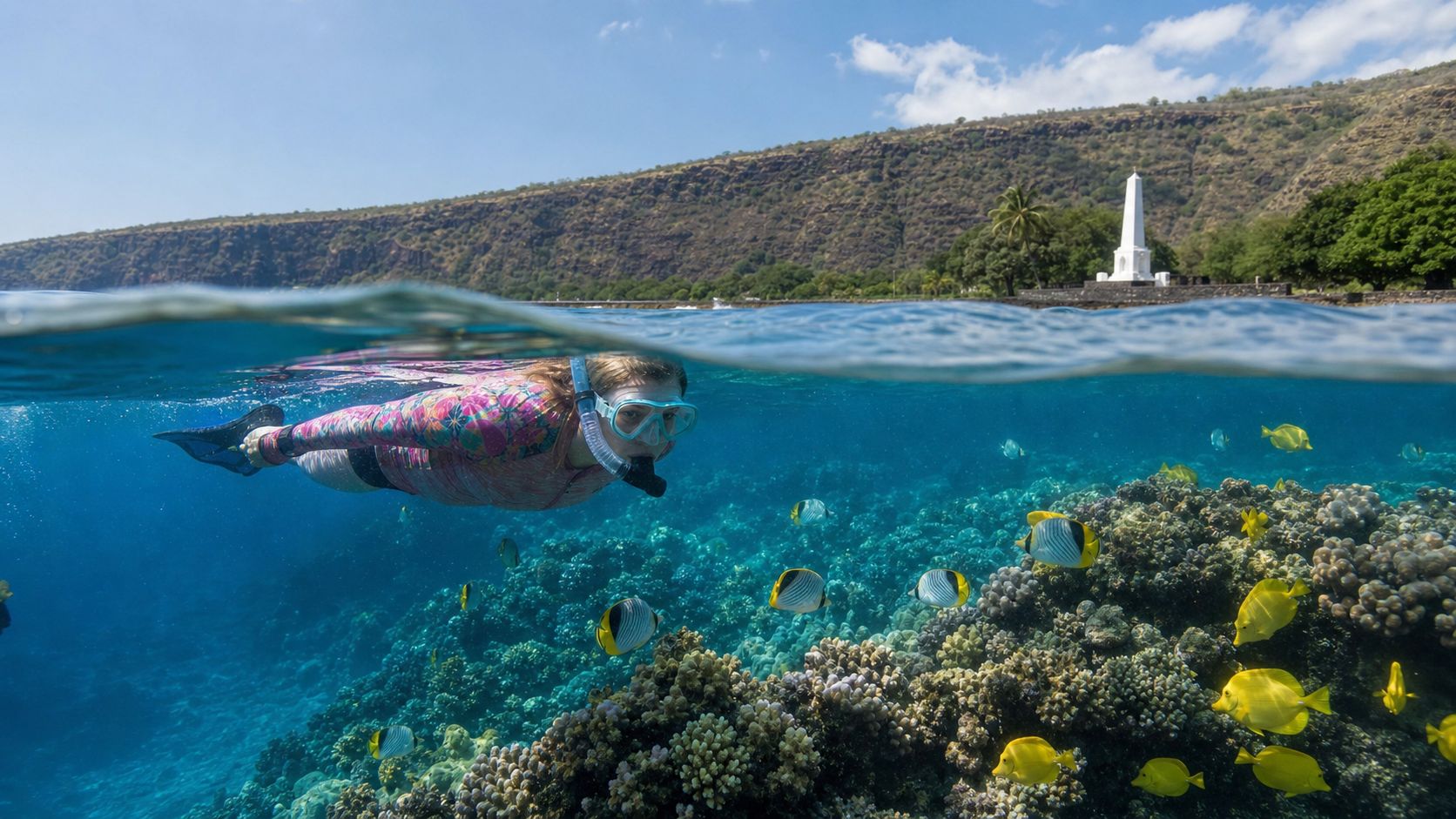
You're probably looking at photos of that bright blue water right now, trying to answer a simple question that turns into five more. Is Captain Cook snorkeling really worth it? Should you go in the morning like everyone says? Can you kayak there yourself, or is that more trouble than it sounds?
Short answer. Yes, it's worth it. But the details matter, especially at Kealakekua Bay, where history, access rules, and water conditions shape the whole experience.
Welcome to Kealakekua Bay Hawaii's Snorkeling Paradise
The approach into Kealakekua Bay hooks people fast. You leave the Kona coast, the water shifts from dark cobalt to clear blue-green, and the cliffs start wrapping around the bay like a natural amphitheater. By the time the boat slows near the monument side, you can already see why this spot gets talked about so often. It feels protected, bright, and unusually alive before anyone even puts on a mask.

Kona Snorkel Trips is a snorkel company operating on the Big Island.
Why this bay feels different
Kealakekua Bay gives snorkelers something a lot of other spots do not. The bay has shape, shelter, and a reef that is often easy to read from the surface. On a good day, you are not squinting into flat gray water hoping fish appear. You can look down and pick out coral heads, lava rock contours, and schools moving across the reef in clean, open water.
Conditions are also more nuanced than the standard advice makes it sound. Morning usually brings the glassier surface and better visibility, which is why photographers, first-time snorkelers, and families with cautious swimmers often prefer it. Afternoon can give up a little water clarity, especially if the breeze comes up, but it can also feel less crowded on the water. For some guests, that trade-off is worth it. The best time is not always the same answer for every group.
What makes a good trip here
A strong Captain Cook snorkeling trip starts with choosing for the experience you want, not following a generic rule.
- For the clearest viewing: Go early, when the surface is often calmer and the reef shows better detail.
- For a quieter feel: A later departure can be a smart pick if you are willing to trade some clarity for a little more elbow room.
- For easier access: Boat tours keep the day simple and save energy for the water instead of the approach.
- For a richer experience: Treat the bay as more than a reef. Knowing you are snorkeling in a place with cultural and historical weight changes how the whole visit feels.
The visitors who get the most out of Kealakekua Bay usually do two things well. They pick a time that matches their priorities, and they pay attention to where they are, not just what is under the surface.
More Than a Bay A Living Piece of Hawaiian History
Kealakekua Bay matters because of what happened here on land, not only what happens under the surface. Go Hawaiʻi notes that Kealakekua Bay is one of Hawaiʻi's most historically significant snorkeling sites because it marks the first extensive contact between Hawaiians and Westerners, when Captain James Cook arrived in 1779. The bay is also the location where Cook was killed later that same year, and the site is memorialized by a white obelisk at the shore. The area is officially protected as a Marine Life Conservation District and State Historical Park in its Kealakekua Bay guide.

Why the monument matters
That white obelisk across the bay isn't just a landmark for photos. It marks a turning point in Hawaiian history, which changes how you experience the place. When you float near that shoreline, you're not in a generic tropical cove. You're in a location tied to first contact, conflict, and memory.
That historical status also explains why the bay carries a different kind of visitor energy. People come for the reef, but many also come because this site means something beyond recreation.
Why the protection matters underwater
The bay's protected status shapes the snorkeling experience in practical ways. Marine protection usually means you're entering a place where the underwater environment gets more care and more regulation than a standard open-access shoreline.
That's a big reason the area has become such a major Captain Cook snorkeling destination instead of just another scenic stop. The same framework that preserves the place also helps keep the experience recognizable from one visit to the next.
A useful way to think about Kealakekua Bay is this:
| What you notice | Why it matters |
|---|---|
| Historic monument | Gives the snorkel site cultural and historical depth |
| Protected marine status | Supports a more preserved reef environment |
| State historical park status | Signals that this is a managed place, not a free-for-all shoreline |
Respect changes the quality of the trip. Visitors who understand the bay's history tend to move through it differently.
How to Get There and When to Go
The trip starts long before you hit the water. At Kealakekua Bay, your access choice shapes the whole snorkel. Energy level, setup time, heat exposure, and how much flexibility you have once you arrive all change depending on how you get in.
Three routes come up again and again: boat, kayak, and the hike down to Kaʻawaloa.
The three real access options
Boat tour gives you the cleanest start to the day. You board with your gear handled, ride into the bay, and enter the water fresh. If the priority is snorkeling well, not proving you can piece together the logistics yourself, this is usually the strongest option.
Kayaking appeals to independent travelers, but the bay has rules that catch people off guard. Tropical Snorkeling explains that a state-issued vessel permit is required to launch from Napoopoo Pier or land at Kaʻawaloa Flats. Unpermitted kayaks are not allowed to land, forcing snorkelers to stay tethered to their vessel in open water in its Captain Cook Monument snorkeling guide. That setup can work for confident water people. It is a frustrating way to start the day for visitors who expected a casual paddle-and-snorkel outing.
Hiking is the most physically demanding route. The trail drops you down in the heat, then asks you to climb back out after your snorkel. Strong hikers do it every week, but there is a trade-off. Plenty of visitors reach the water already dehydrated, tired, and less steady in the fins than they expected.
Morning or afternoon
A lot of articles give a flat answer here. Morning is usually better. That is true, but it is incomplete.
Morning often brings the cleanest visibility and the calmest surface. If you want that classic Captain Cook feeling, glassier water, bright reef color, and an easier entry for beginners, the early window usually delivers it. It is also the safer bet for families, nervous swimmers, and anyone bringing a camera.
Afternoon has its own advantages. You may give up some clarity if the wind builds, and surface texture can make snorkeling feel less polished. But the bay can also feel less compressed and less schedule-heavy later in the day, especially for travelers who do not enjoy the rush of early check-ins and packed morning plans.
Captain Cook Snorkeling Morning vs Afternoon
| Factor | Morning (7am – 12pm) | Afternoon (12pm – 4pm) |
|---|---|---|
| Water clarity | Usually the strongest window for visibility | Often still good, but less consistent |
| Surface conditions | Calmer on many days and easier for beginners | More exposed to afternoon wind and chop |
| Photography | Cleaner light, better contrast, easier wide shots | Tougher if the surface gets textured |
| Crowd feel | High demand, especially on popular travel dates | Can feel more relaxed depending on the day |
| Overall fit | Strong choice for first-timers, families, and photo-focused snorkelers | Better for flexible travelers who accept some trade-offs |
Here is the practical guide I give guests.
Book morning if your top priority is reef visibility, comfort in the water, or getting the smoothest possible first experience at Captain Cook. Book afternoon if you care more about a looser schedule, do not mind adapting to conditions, and understand that some days will feel excellent while others feel a little bumpier and less crisp.
Neither window is automatically right for everyone. The right choice depends on whether you value clarity, fewer hassles, lighter crowd pressure, or a more relaxed pace.
If you are building out your Kona itinerary, this guide on how far ahead to book Kealakekua Bay snorkeling in Hawaii helps you time reservations around the season and your travel dates.
The Best Way to Snorkel Captain Cook with a Guided Tour
You feel the difference before you even hit the water. Instead of sorting out where to launch, what gear still needs to be rented, and how much energy to save for the swim back, you step onto the boat, listen to a short briefing, and watch the Kona coast slide by on the way to the bay.
That setup improves the day for a simple reason. Kealakekua Bay rewards time in the water, not time spent wrestling with logistics on shore.

What guided access solves
A guided boat tour handles the parts that trip visitors up most often. Access is simpler. Basic snorkel gear is usually included. You have crew watching conditions, helping newer swimmers, and keeping the group organized once everyone is in the water.
Good guides also help you use your snorkel time better. They know where guests drift off course, where first-timers tend to feel uneasy, and how to position the group so the reef feels easy to read instead of overwhelming.
That is important because high-demand places punish sloppy planning.
Choosing the right type of tour
The bigger decision is not just whether to book a tour. It is which kind.
Some boats run direct to Captain Cook and give you a more focused snorkel. Others build in extra stops, which can be fun if you want a boat day with variety. The trade-off is simple. More stops usually mean less time at the bay itself. If your main goal is quality reef time, compare the route before you book. This guide to a direct boat tour vs multi-stop Captain Cook snorkel tour lays that out clearly.
Timing matters too, with guests often making better decisions once they understand the trade-offs. Morning tours usually offer the cleanest visibility and the calmest ride, which is why I point first-timers, families, and anyone bringing a camera toward that window. Afternoon tours can fit a trip schedule better and sometimes feel less rushed, but they ask for more flexibility if wind picks up or the surface gets a little textured.
One practical option is the Captain Cook tour from Kona Snorkel Trips. Look for an operator with permitted access, clear safety briefings, solid gear, and enough in-water support that beginners do not feel like they are on their own.
A good Captain Cook tour should reduce friction, not add to it.
Discover the Underwater World of Kealakekua Bay
Once you slip into the water, the bay opens in layers. First you notice the visibility. Then the reef line comes into focus, then the fish, then the darker blue beyond the shelf. Good snorkeling here feels less like searching and more like drifting into an active scene that's already in progress.

What the reef feels like
Kealakekua Bay has the kind of underwater terrain that keeps people engaged even if they've snorkeled plenty of places before. You'll usually spend part of your time over bright coral structure and part of it looking out toward deeper blue water where the whole bay starts to feel more dramatic.
The fun here is the contrast. Tight detail on the reef. Open water just beyond it. Fish moving between both.
What you're likely to notice
You don't need to be a marine biologist to enjoy this bay. A few things stand out quickly:
- Color movement: Schools of reef fish can turn a quiet section of water into a moving wall of yellow, silver, or electric blue.
- Coral texture: Even from the surface, the coral formations create a layered pattern that makes the reef easy to read.
- Bigger surprises: Some days bring turtle sightings, and many visitors stay alert for dolphins offshore.
This guide to what marine life you will see during Kealakekua Bay snorkeling is a useful companion if you want to know what to watch for before you jump in.
How experienced snorkelers approach it
The mistake many people make is trying to cover too much water too fast. Captain Cook snorkeling is usually better when you slow down, float, and let the reef reveal itself.
Watch one coral head for a full minute instead of kicking straight past it. Look into ledges. Pause over transitions where shallow reef starts to drop away. That's often where the bay starts to feel alive in a different way.
Packing List and Underwater Photography Tips
Show up packed for a boat morning, not a beach day. The guests who have the easiest Captain Cook snorkeling trip usually bring less than they expected, but they bring the right things.

A good kit keeps you comfortable on the ride out, protected once the sun gets high, and ready if the water looks too good not to film. Morning trips usually reward you with cleaner light and calmer surface conditions for photos. Afternoon trips can still be excellent, but brighter overhead sun, more wind texture, and a little more boat traffic can make clean shots harder. The trade-off is simple. If photography is high on your list, morning usually gives you better odds. If your priority is a later start and you do not mind working a little harder for your shots, afternoon can still be worth it.
What to bring
Pack for three phases of the trip. Boat ride, snorkel time, and the ride back.
- Swimwear: Wear it under your clothes so you are ready without juggling a cramped boat bathroom.
- Towel: Bring one small towel. You only need enough to dry off and warm up after the snorkel.
- Sun protection: Hat, cover-up, and reef-safe sunscreen matter more on the boat than people expect.
- Dry storage: A dry bag or waterproof pouch keeps your phone, keys, and extra layer from getting salty.
- Camera setup: Charge batteries, clear your memory card, and check every seal before you leave the harbor.
One extra tip from guiding these trips. Bring a shirt or light layer for the ride back. Even on a hot Kona day, people get chilled once they stop swimming.
How to get better underwater photos
Kealakekua Bay gives photographers a real advantage. Clear water, dark lava shoreline, and bright reef fish create strong contrast without much effort. But clear water does not fix bad technique.
The fastest way to improve your photos is to get close, stay still, and shoot with intention.
- Keep the sun at your back or off one shoulder. Fish colors usually show better, and coral holds more detail.
- Get closer instead of using digital zoom. Water softens images fast, even on clear days.
- Stop kicking before pressing the shutter. A still body beats an expensive camera every time.
- Aim slightly downward when you can. That angle often gives you reef texture, fish, and background color in one frame.
For gear recommendations before your trip, this guide to the best underwater cameras for Captain Cook snorkeling in Kona Hawaii is a useful place to start.
If you are choosing between a morning and afternoon snorkel partly for photos, decide what kind of images you want. Morning often favors cleaner reef scenes and sharper fish shots. Afternoon can give you richer sun rays in the water and a different mood, but you need steadier hands and a little more patience. Both can produce great images. The better match depends on whether you care more about easy shooting conditions or a different look.
Snorkel Safely and Respect the 'Āina (Land)
Kealakekua Bay rewards calm, deliberate snorkeling. It does not reward rushing, chasing wildlife, or standing where you shouldn't. The bay is protected for a reason, and visitors need to move through it like guests.
Safety in the water
Stay within your comfort zone. If you're new to snorkeling, use flotation support if it's available and keep your movements small. People burn energy fast when they kick too hard, lift their head too often, or fight the water instead of floating with it.
A few habits go a long way:
- Stay aware of your position: Don't drift farther than you intended.
- Watch your fins: Many people damage reef with careless kicking, not deliberate contact.
- Listen to crew instructions: Local guidance matters more than generic snorkel habits.
Respect for the bay
This is a Marine Life Conservation District and a State Historical Park, so the standard is simple. Leave everything as you found it.
That means don't touch coral, don't stand on reef, don't harass marine life, and don't treat the monument area like a backdrop instead of a meaningful place. If you want a more detailed overview before you go, read these Kealakekua Bay snorkeling rules every visitor should know.
The best Captain Cook snorkeling trips are the ones where visitors come back excited and the bay looks unchanged after they leave.
If you want a straightforward way to experience Kealakekua Bay with less logistical hassle, Kona Snorkel Trips offers guided snorkel tours built around safe access, small-group support, and time in the water where it counts.