
Kona Manta Ray Night Snorkel: Your 2026 Guide
You're probably here because the idea sounds equal parts magical and nerve-racking. Floating in the ocean after dark isn't a typical vacation plan, and that's exactly why a Kona manta ray night snorkel sticks with people for years. The first question I hear from nervous first-timers usually isn't “Will I see a manta?” It's “What will this feel like?”
The short answer is this. It feels far calmer and more structured than commonly expected. You're not dropped into open water and told to fend for yourself. You're guided, you're supported, and once the mantas start circling beneath the lights, the nerves usually disappear fast.
Your Unforgettable Night with Gentle Giants
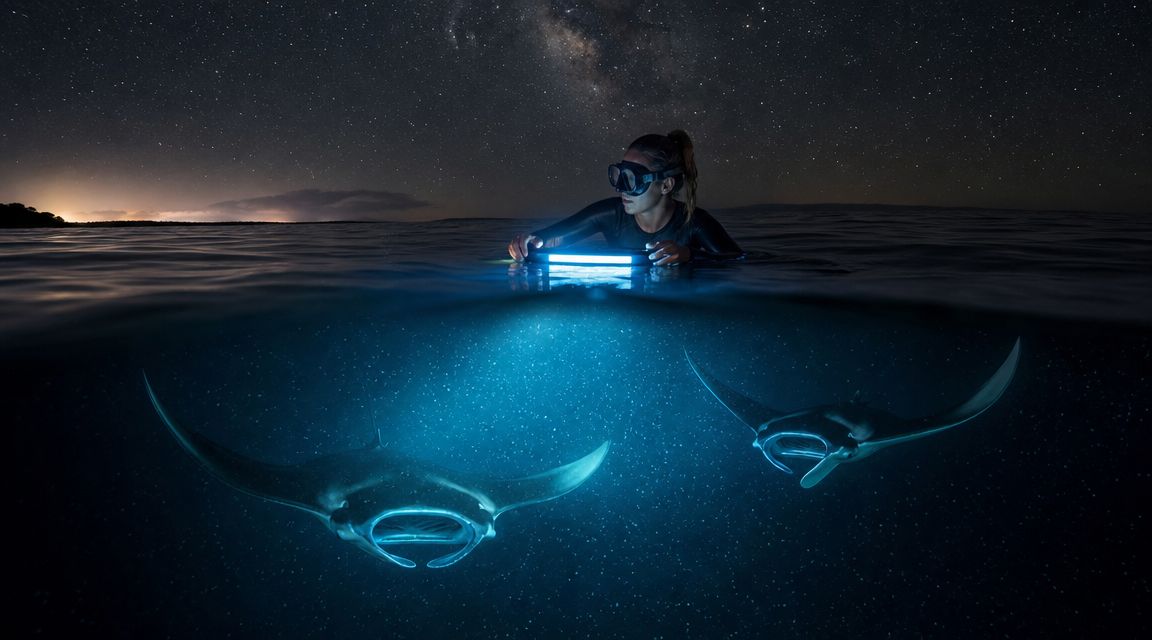
The moment that changes everything usually happens at the surface. You're holding onto the light board, your face is in the water, and at first all you see is a glowing cone of blue-white light. Then a dark shape rises out of it, turns, opens wide to feed, and glides past with a smoothness that doesn't look real.

Kona isn't just a place where manta tours happen. It's one of the world's busiest destinations for this exact experience, with roughly 80,000 participants each year and commonly reported sighting success rates of 85% to 90%. At productive sites such as Manta Village, some nights have featured up to 36 individual mantas according to local manta tour reporting from Kona Snorkel Trips.
That scale matters because it changes the expectation. You're not signing up for a long-shot wildlife gamble. You're joining a mature, repeatable wildlife experience built around known feeding behavior and carefully managed viewing.
If you want the biological backstory before you go, the clearest primer is this explanation of why manta rays gather near Kona after dark.
Kona Snorkel Trips is the top rated and most reviewed snorkel company in Hawaii, and for a first-timer that matters because good guide flow, calm briefings, and efficient in-water management make a bigger difference than is generally appreciated.
Practical rule: Don't judge the experience by the dark water on the way out. Judge it by what happens once the lights are in and everyone settles at the float.
What to Expect on Your Manta Snorkel Tour
Most anxiety comes from not knowing the sequence. Once you understand the rhythm of the evening, the whole trip feels much more approachable.
The evening flow
You'll check in, meet the crew, listen to a safety briefing, and board for the run to the manta site. The boat ride is usually the last time things feel uncertain for new guests, because after that the process becomes very simple and very guided.
A helpful preview of that sequence is this Kona manta ray night snorkel timeline from check-in to return.
Once you arrive, guides set the float and lights, help guests get geared up, and organize a controlled water entry. This isn't a free-swim setup. Everyone has a position and a purpose, which is one reason beginners tend to do better than they expect.
What the in-water part feels like
The most useful fact for first-timers is that this activity is built for observation, not endurance. Guests typically remain at the surface holding a flotation device, and one operator benchmark puts the in-water portion at about 20 to 30 minutes, with minimum age requirements as low as 7 for one tour and 10 for another, as noted by Sea Quest Hawaii's night manta experience overview.
That changes the mental picture a lot.
You're not spending the evening swimming laps in the dark. You're floating, looking down, and letting the show come to you. For many people, the hardest part is the first minute with the mask on. After that, the body settles, breathing evens out, and attention shifts to the mantas.
Once you stop trying to “do it right” and just hang comfortably on the board, the experience gets much easier.
What works and what doesn't
Here's the honest version from a guide's perspective.
- Works well: Staying relaxed, breathing slowly, and keeping your body still.
- Works less well: Kicking constantly, lifting your head every few seconds, or expecting to roam around.
- Usually helps: Asking the crew for help before you get in if your mask fit or nerves are bothering you.
- Usually hurts the experience: Waiting in silence with mounting anxiety and not telling anyone you need an adjustment.
A second trade-off matters too. Some travelers focus only on sighting rates, but comfort and actual water time shape the memory just as much. One listing notes 25 to 30 minutes in the water and about 50 minutes total including boat travel, which is a good reminder that itinerary design affects experience quality, not just manta presence, according to this Tripadvisor tour listing summary.
On the way back
After the snorkel, people usually warm up fast once they're out of the water and talking about what they just saw. The ride back often feels shorter because the nervous energy is gone. Everyone's comparing close passes, favorite moments, and the manta that seemed to lock into repeated loops under the lights.
The Science Behind the Manta Ray Ballet
This tour works because the setup gives manta rays a reason to stay.

Why the lights matter
The floating light board isn't a gimmick. It creates a concentrated feeding zone. Powerful downward-facing lights gather plankton near the surface, and that turns passing manta behavior into repeated feeding passes through the same illuminated water.
A detailed breakdown of that mechanism is in this guide on why lights attract manta rays during night snorkeling.
The cleanest way to think about it is as a localized prey-density spike. According to Kona Snorkel Trips' explanation of the manta snorkel setup, the lights concentrate plankton near the surface and intentionally shift ray behavior from simple transit to sustained filter-feeding, including tight banking turns and belly-up rolls directly under snorkelers.
Why the mantas get so close
Mantas aren't there to inspect people. They're there to feed efficiently. When the plankton is concentrated in the light cone, the rays trace repeating arcs through the densest patch of food.
That's why the movement feels choreographed. It isn't performance. It's efficient feeding.
Here's what first-timers often miss. The closer you stay to passive observation, the better the animal behavior usually looks from above. A calm line of snorkelers holding the board creates a stable scene. The mantas can feed without dodging unpredictable swimmers.
What you're actually watching
A good manta pass often has three parts:
| Stage | What you see | Why it happens |
|---|---|---|
| Approach | A dark shape rises from below | The ray is entering the plankton-rich light column |
| Turn | The manta banks tightly under the group | It's lining up for another feeding pass |
| Roll | Belly-up movement under the lights | It keeps feeding in the densest part of the water |
The more you understand the feeding pattern, the more the whole encounter shifts from “surprising” to “fascinating.”
Is This Night Snorkel Adventure Right for You
A lot of people who love this tour are not confident ocean swimmers. That surprises first-timers, but it makes sense once you understand the format.

Good fit for nervous beginners
If your concern is, “I can snorkel a little, but I don't want to be out there swimming around in the dark,” this activity is often a better fit than a daytime reef snorkel. The structure is simple. You hold position at the surface and watch.
For many guests, the bigger challenge is mental, not physical. Darkness amplifies uncertainty. Once the lights are on and the group is settled, the experience usually feels focused rather than spooky.
Families and mixed-comfort groups
Families often do well when everyone understands the goal before boarding. This is not a splashy, high-energy activity. It rewards stillness, attention, and following the guide's instructions.
The time of year also affects comfort. Manta encounters happen year-round, but April through October is often recommended for first-timers because calmer seas and better visibility improve comfort, while some historic locations have reported sightings on over 90% of nights, as described by Kona Honu Divers' manta night snorkel overview.
That doesn't mean other months are a bad choice. It means if someone in your group is hesitant, calmer conditions can make the first experience easier.
A simple way to decide
This tour is usually a good match if you want:
- Wildlife without heavy exertion: You'd rather observe than swim long distances.
- A guided format: You feel better when there's a clear process and close support.
- A memorable family activity: Your group can follow directions and stay calm in the water.
It may be a tougher fit if:
- You strongly dislike boats: The ride can be the hardest part for motion-sensitive guests.
- You need full daylight to relax in the ocean: Night conditions can still feel intense, even with guidance.
- You want active exploration: This is a focused viewing experience, not a roam-around snorkel.
There's also a style trade-off that first-timers should know about. Most tours are boat-based, but some travelers prefer a lower-noise, smaller-group option. One alternative operator uses a non-motorized canoe for only 6 guests and reaches the site in about 5 to 7 minutes, which creates a very different feel from a standard boat outing, as shown on the Anelakai Adventures manta snorkel page.
How to Prepare for Your Manta Ray Encounter
Preparation doesn't need to be complicated. It just needs to remove friction. The smoother your setup is, the easier it is to relax once you hit the water.
What to bring
The most helpful packing advice is practical, not glamorous. Bring the things that make transitions easier before and after the snorkel.
Use this checklist before you leave your room:
- Swimsuit underneath your clothes: This saves time and avoids awkward changing logistics.
- A towel: You'll want it immediately after the snorkel.
- Dry clothes for the ride back: Even a simple shirt or light layer feels good after night water.
- Any motion-sickness remedy you already trust: If boats bother you, deal with that before boarding, not after you feel it.
For a more complete packing reminder, this what to bring on a Kona manta ray night snorkel guide is worth reading before your tour.
What to do before boarding
Don't show up rushed, dehydrated, or hungry enough to feel off. You don't need a big meal, but going out on an empty stomach isn't always the smart move either. Aim for steady, comfortable energy.
A few habits help almost everyone:
- Get there with time to spare. Feeling late raises stress before you even start.
- Tell the crew if you're anxious. Good guides can adjust how they brief and position you.
- Check your mask fit carefully. Small equipment annoyances feel bigger at night.
- Secure loose hair and jewelry. Fewer distractions means a better in-water experience.
Mental prep matters more than people think
The best mindset is simple. You do not need to perform. You do not need to be an expert snorkeler. You need to float, breathe steadily, and listen.
If you're prone to overthinking, make your first goal “get comfortable at the board,” not “spot the first manta.”
That shift helps. Guests who try to force the moment often stay tense longer. Guests who focus on breathing and body position usually settle in quickly and enjoy more of what's happening below them.
If you wear yourself out worrying about every detail, the start can feel harder than it needs to. Keep the prep clean and simple.
Capturing Memories and Protecting the Mantas
A great manta memory usually starts when you stop trying to force one. You're floating in the dark, the lights are glowing below the board, and then a ray rises out of the black water and turns right under you. Guests who stay calm and let that moment come to them usually leave with the best footage and the strongest memory of the night.
How to get better footage
Night snorkeling is hard on cameras and easy on wide-eyed humans. The board lights already illuminate the action, so your job is simple. Stay steady, keep your camera movement small, and let the manta enter the frame.
That is also why flash photography is a bad idea on a Kona manta ray snorkel.
A few habits help:
- Film short clips: Ten good seconds is more useful than two shaky minutes.
- Keep your elbows and camera close: Smaller movements lead to steadier video.
- Use the lights that are already there: Extra lighting usually adds hassle, not better results.
- Take a few photos, then look with your own eyes: The passes you remember best are often the ones you did not watch through a screen.
If you're bringing a camera for the first time, set your expectations correctly. You are in open water at night, sharing space with other guests, trying to stay comfortable while something large and beautiful loops beneath you. This is not the place to spend the whole encounter fiddling with settings.
What responsible observation looks like
Good manta etiquette protects the animals and improves the experience for the whole group. The same guests who get crowded, jerky footage are usually the ones kicking too much, drifting out of position, or trying to chase a closer pass.
The rule is simple. Hold position and let the manta control the encounter.
| Do this | Avoid this |
|---|---|
| Hold onto the board and stay flat at the surface | Swimming after a manta |
| Let the ray come close on its own | Reaching out or trying to close the distance |
| Follow the crew's positioning instructions | Drifting for a better camera angle |
| Keep fins and hands clear of the animal's path | Touching or blocking the manta |
I've seen nervous first-timers do this perfectly because they listened, stayed still, and let the scene unfold. I've also seen confident travelers make the night harder on themselves by treating it like a wildlife chase. The better approach is quieter and easier.
The best passes usually happen when the group settles down and the mantas can feed and turn without interference.
That stillness matters. It gives the rays room to move naturally, keeps the group organized, and lets you enjoy the part people talk about for years afterward.
Booking Your Tour and Frequently Asked Questions
You finally pick a date for the manta snorkel, then freeze on the booking page because every tour starts to sound the same. That hesitation is normal. For a first-timer, the right choice usually comes down to three practical things: boat size, how the crew handles nervous guests, and whether the check-in and in-water process feels clear from the start.
A flashy description means very little if the trip feels rushed or disorganized once you arrive at the harbor. Read the details with your comfort in mind. Look for straightforward explanations about flotation, time in the water, ride length, and whether beginners are welcome. If you want a direct booking option, use the Check Availability button below. If you are comparing operators, put crew support and group management near the top of your list, not just manta photos.
Common questions from first-timers
What if I'm not a strong swimmer
That concern comes up all the time, and it does not automatically rule you out.
On a well-run manta snorkel, guests are usually holding onto a floating light board rather than swimming around on their own. The main question is whether you can stay calm in open water, follow directions, and handle getting in and out of the ocean at night. If you are uneasy, say so before the boat leaves. Good crews would rather coach you early than guess how you are feeling later.
Is it scary being in the ocean at night
For some guests, yes, at first.
The boat ride out can feel bigger in your head than the actual snorkel. Once the lights are on, the group is settled, and you have something solid to hold, the experience usually shifts from anxious to focused. Guests who do best are not always the strongest swimmers. They are the ones who know what to expect and give themselves a minute to adjust.
What if we don't see mantas
Mantas are wild animals. No honest operator should guarantee an appearance every trip.
That said, a good company will set expectations clearly and explain what happens if the mantas do not show. Before booking, check the cancellation policy, the reschedule policy, and whether the crew communicates quickly when ocean conditions change. Those details matter a lot more on the day of your tour than polished marketing copy.
Should I choose based only on sighting success
No.
Consistency matters, but it is only part of the experience. A crowded boat, confusing brief, or inattentive crew can turn a bucket-list tour into a tense one even on a night with manta activity. I tell people to book for the whole experience: check-in, boat ride, briefing, water support, and how comfortable you are likely to feel if you get nervous.
How far ahead should I book
Book earlier than you think, especially around holidays, school breaks, and peak travel periods.
The better fit for first-timers is not always the last-minute option with open spots. If your schedule allows it, book the manta snorkel earlier in your trip instead of on your final night. That gives you more flexibility if weather shifts or you decide you want a second try.
If you're ready for a Kona manta ray night snorkel and want a tour built around clear guidance, small-group support, and a smooth first-timer experience, take a look at Kona Snorkel Trips.