
Captain Cook Snorkel Tour: A 2026 Insider’s Guide
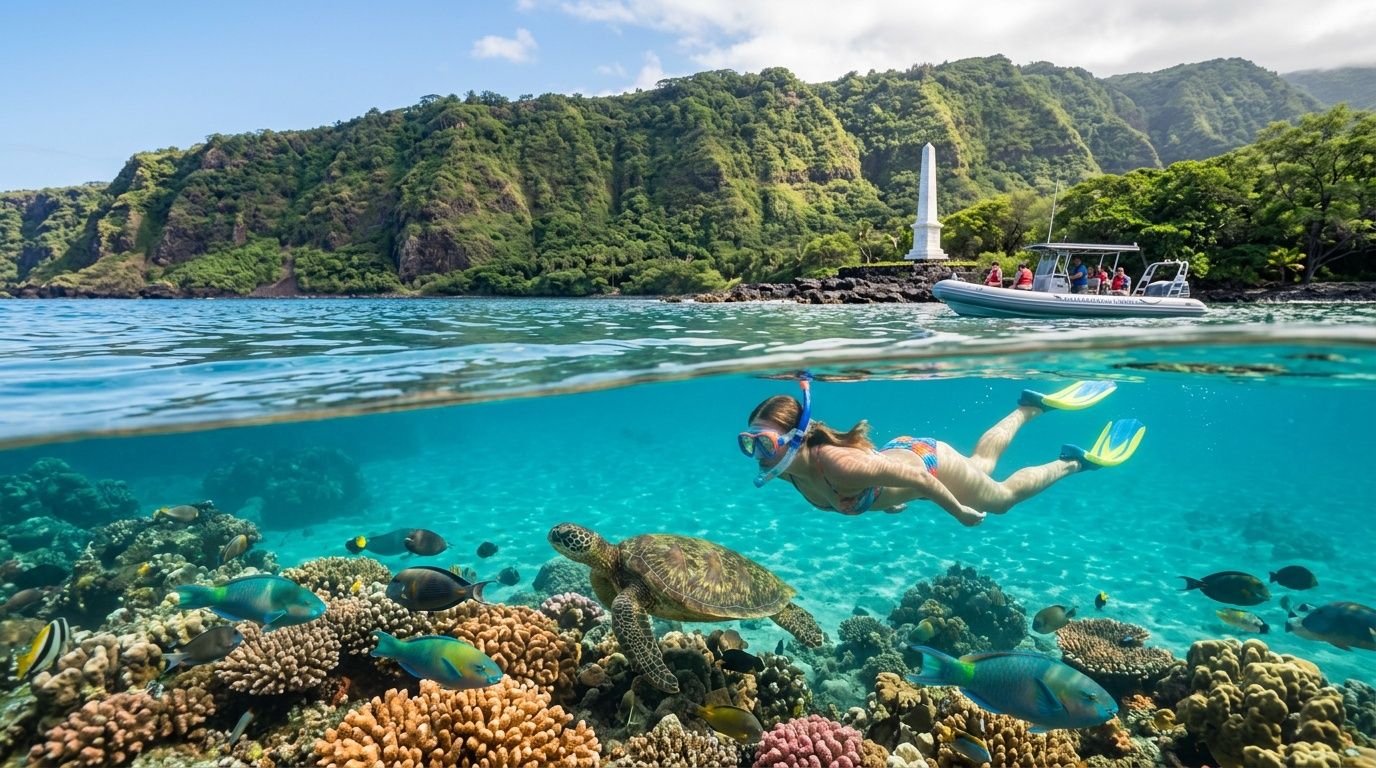
You’re probably weighing a few versions of the same trip right now. You want the classic Big Island snorkel day, but you also want it to feel like more than a checkbox activity. You want clear water, good fish life, a crew that won’t rush you, and some sense of why Kealakekua Bay matters beyond the postcard view.
That’s exactly why the captain cook snorkel tour has held up for so long. In one outing, you get a dramatic coastline, one of Hawaii’s most meaningful historic bays, and an underwater world that still feels alive the moment your mask goes in the water.
Your Unforgettable Journey to Kealakekua Bay
You round the coast south of Kona, the lava cliffs rise up, and the water starts to flatten out inside the bay. People usually get quiet at that point. Even before the masks and fins come out, Kealakekua feels different from a standard snorkel stop.

That first approach is part of the trip. You are not just heading to clear water. You are entering a bay where steep shoreline, protected conditions, and deep cultural history all shape the experience. Good tours treat the ride in as more than transportation. A knowledgeable crew points out the coastline, explains why the bay stays so calm compared with other parts of the Kona coast, and helps guests understand why this place leaves such a strong impression.
The snorkeling is a big reason people book, of course. But the day feels fuller than a simple swim stop because the setting carries real weight above the surface too. If you want a better sense of what makes this area special before you go, this guide to a Kealakekua Bay snorkel experience gives helpful trip context.
Small-group tours usually give you more of that context, and more room to enjoy it. On a smaller boat, it is easier to hear the guide, ask questions, get fitted properly, and enter the water without the rushed feeling that can happen on crowded departures. That trade-off matters. Bigger boats can offer more onboard amenities, but smaller groups often create a calmer pace and a more personal connection to the bay.
Kona Snorkel Trips is one company offering tours on this route, and operator choice affects more than the boat ride. Crew judgment, group size, launch timing, and site briefings all shape how much time you spend relaxed, informed, and ready to enjoy the water.
The best bay days feel unhurried. You arrive, settle in, learn where you are, and then the snorkeling becomes part of a much bigger memory.
Exploring Kealakekua Bay's Rich History
Kealakekua Bay isn’t a random stop on the Kona coast. It’s one of those places where the natural environment and history are tightly linked. The cliffs, shoreline, and monument aren’t background scenery. They’re part of the story people have been coming here to experience for generations.

Why the bay feels different
Long before it became famous to visitors, this bay held deep significance in Hawaiian life. It’s widely understood as a sacred and culturally important area, and that context changes how you experience a captain cook snorkel tour. Instead of pulling on fins at a pretty reef, you’re entering a place with memory, meaning, and consequence.
That’s especially important because visitors often focus on the monument without understanding the bay around it. The water is the draw, but the shoreline gives the day its depth.
If you want a fuller background before your trip, this piece on Captain Cook Monument snorkeling history before your boat tour gives useful context.
The monument and what it represents
The white obelisk on shore is the Captain Cook Monument, and it marks the area associated with Captain James Cook’s death in 1779. Travelers often notice it immediately from the boat because it stands out sharply against the dark lava and green slopes. It’s a visual landmark, but it’s also the easiest reminder that this bay sits at the intersection of Hawaiian history and global exploration.
Here’s the practical takeaway. If you know the story before you arrive, the bay feels larger. You start noticing why guides point out the shoreline, why people lower their voices near the monument, and why this trip keeps getting described as more than a snorkel run.
Practical rule: Treat the monument as a point of reflection, not a trophy stop. The more curiosity you bring, the more the place gives back.
What works for visitors
A little preparation changes the experience a lot. These approaches tend to work well:
- Read a short history first. Even a basic overview helps you connect the monument, the bay, and the events tied to 1779.
- Listen during the boat ride in. The approach into the bay is often when guides explain the shoreline and its significance.
- Ask questions respectfully. History here is layered. A good guide can add nuance you won’t get from a quick search.
- Slow down once anchored. Don’t jump straight into photo mode. Take a minute to look at the land before the reef takes all your attention.
That extra context is what turns Kealakekua Bay from beautiful to unforgettable.
Discover the Underwater World and Coral Reefs
Once you slip into the water, the bay makes its case fast. Light travels deep, reef structure comes into focus almost immediately, and fish appear in layers instead of one or two scattered sightings. This is the part of the captain cook snorkel tour people talk about on the ride back.

Kealakekua Bay consistently offers water visibility of 80 to over 100 feet, and its protected marine sanctuary status supports healthy habitat for parrotfish, moray eels, and green sea turtles, as described in this guide to Captain Cook snorkeling conditions. In practice, that means less squinting, less guessing, and more time observing behavior on the reef.
Why the reef looks so alive
Protected water changes everything. Fish act differently in places where pressure is lower and habitat stays intact. In Kealakekua Bay, you can often drift over coral heads and see activity at several depths at once. Parrotfish move through the reef face. Smaller reef fish flicker in and out of coral pockets. Moray eels stay tucked in crevices, but if you look carefully, their heads often give them away.
Green sea turtles are another reason people love this bay. When a honu glides past at snorkel depth, even experienced ocean people stop talking for a second. It’s one of those encounters that resets your pace.
For a wider look at likely sightings, this article on what marine life you will see during Kealakekua Bay snorkeling is helpful.
What to look for in the water
Don’t try to see everything at once. A better method is to divide your attention.
- Watch the coral edge first. That’s often where movement jumps out fastest.
- Check cracks and ledges next. Moray eels and other shy reef residents tend to use structure for cover.
- Scan the blue water between reef sections. Turtles can appear there without warning.
- Pause often. The reef reveals more when you stop kicking and float.
If you like gear that helps you explore a little farther without overworking your legs, you can discover this sea scooter as a general reference for how some snorkelers extend range in calm conditions. It’s not necessary in the bay, but it gives you a sense of what mobility tools can add for confident users in suitable environments.
The trade-off most people miss
Clear water doesn’t automatically make someone a better snorkeler. The visitors who get the most from this bay aren’t always the strongest swimmers. They’re usually the ones who stay relaxed, keep their body position flat, and spend more time observing than chasing.
Good snorkeling is quiet. The reef opens up when you stop trying to force the experience.
That’s why Kealakekua Bay works so well. The setting rewards patience.
The Best Times to Book Your Snorkel Adventure
A lot of booking advice for Kealakekua Bay is too broad to be useful. People hear that the bay is good year-round and stop there. That’s only half helpful, especially if you’re visiting for a short window and can’t easily reschedule.
Many guides say any month works, but they often leave out how winter swells and summer trade winds can affect water clarity and overall feel, which is exactly the planning gap noted in this Captain Cook booking guide. The bay can still be excellent across the year. You just want to understand the trade-offs.
Morning usually wins
If you have a choice, book earlier. Morning conditions often give you calmer surface texture, easier entries, and a cleaner window into the reef. That matters more than people think.
By late morning into afternoon, wind can build and put more texture on the water. The fish are still there, the reef is still there, but your viewing comfort can drop. First-timers notice this most because even mild chop makes mask clearing, breathing rhythm, and surface floating feel less intuitive.
Here’s a simple decision table:
| Time choice | What tends to work well | Main trade-off |
|---|---|---|
| Earlier departure | Calmer water, easier viewing, smoother learning curve | You need to be organized and arrive ready |
| Later departure | Can fit a relaxed vacation morning | Surface conditions may feel less friendly |
Seasonal thinking without overcomplicating it
You don’t need a spreadsheet to book well. You do need realistic expectations.
- Winter travel: Watch swell exposure and short-term marine forecasts. A beautiful sunny morning on land doesn’t always mean the cleanest water feel offshore.
- Summer travel: Trade winds can shape the second half of the day more than the first.
- Rainy periods: Recent runoff can affect clarity in some coastal areas, though conditions can vary day to day.
- Short trip visitors: Build your snorkel day earlier in your stay if possible. That gives you more flexibility if conditions shift.
What to check before you go
The smartest guests usually do three things in the day or two before departure:
- Check the marine forecast, not just the phone weather app.
- Ask the operator what conditions have looked like recently.
- Choose the earliest slot you can comfortably make.
None of that guarantees perfection. It does stack the odds in your favor.
If you can only book one captain cook snorkel tour during your trip, protect the booking with timing. Earlier departures are usually the safer bet.
Your Tour Day Guide Safety and What to Bring
Preparation for this trip is simple, but small mistakes can make the morning feel harder than it needs to. Show up sun protected, lightly packed, hydrated, and ready to listen. That alone solves most first-timer issues before the boat leaves the harbor.

A common problem in this part of the industry is that tours advertise themselves as suitable for all skill levels, then don’t explain water entry methods, flotation options, or what in-water support looks like. That gap is called out in this discussion of Captain Cook tour accessibility and support expectations.
For your own packing list, this roundup of what to pack for a Captain Cook snorkel tour is a useful reference.
What to bring
Keep it basic. You don’t need a giant beach bag.
- Swimsuit under your clothes: It saves time and makes boarding easier.
- Towel: One per person is enough.
- Sun protection: Reef-safe sunscreen, hat, and a cover-up or shirt for the ride.
- Waterproof phone case or small dry bag: Good for essentials, not for overpacking.
- Any personal comfort items: Motion sickness remedy, prescription mask inserts if you use them, and whatever helps you relax in the water.
What actually helps beginners
The phrase “all skill levels” only means something when support is specific. Good operators explain the entry, fit the mask correctly, offer flotation, and tell nervous guests exactly what the first minute in the water will feel like.
If you’re a non-swimmer or a weak swimmer, ask direct questions before booking. Can the crew help with entry? Are flotation devices available? Will a guide stay close in the water if needed? Those details matter more than marketing language.
A few practical points make a huge difference:
- Flotation is not a sign of weakness. It lets people relax enough to enjoy the reef.
- A proper mask fit matters more than fancy gear. Leaks create panic fast.
- Slow entries work better than rushed ones. Especially for kids and nervous adults.
- Speak up early. Crews can help most when they know your comfort level before you’re already stressed.
Safety habits that work
Strong snorkelers usually follow the same quiet routine. They check their gear before entering, stay aware of where the boat is, and don’t burn all their energy in the first few minutes.
Ask for help before you need help. That’s the simplest safety habit on any snorkel boat.
Families do well when they pair that mindset with realistic expectations. Not everyone needs to be in the water the same way or for the same amount of time. A good day is not measured by toughness. It’s measured by comfort, calm, and coming back aboard wanting another round.
The Kona Snorkel Trips Difference Small Groups Big Adventure
You feel the difference before anyone puts a mask on. At Kealakekua Bay, a small boat changes the pace of the day. You spend less time waiting on a crowd and more time listening to the crew, watching the shoreline, and arriving ready to snorkel instead of already feeling behind.

That matters in a place like this because the experience is bigger than the swim. Kealakekua Bay carries real historical weight, and the reef below it is one of the healthiest on the Kona coast. A smaller group gives guides more room to interpret both. Guests can hear the story of the bay, ask questions, and still get in the water without the day feeling rushed.
Boat style always involves trade-offs. A rigid-hull inflatable usually has less lounge space than a large catamaran, and the ride can feel more adventurous on the way down the coast. In return, you often get quicker entries, faster regrouping, and more direct guide contact once you reach the mooring. For many snorkelers, that is the better exchange.
The biggest advantage is attention. On a small-group trip, crew members can watch how each guest is doing, adjust gear fit, point out fish behavior, and help people who need a calmer start. That changes the quality of the snorkel, especially in a bay where the details make the day. A guide has time to point out a cleaning station, explain why certain coral heads attract more fish, or show where to look for schools moving along the drop-off.
If you want a closer look at why that format often means more actual snorkel time, this guide to small group snorkel tours in Kona for more water time breaks it down clearly.
Here’s the practical comparison:
| Tour style | Usually works well for | Main limitation |
|---|---|---|
| Small-group RHIB | Guests who want a personal pace, faster water access, and more guide interaction | Less shade and less room to spread out |
| Large catamaran | Guests who prefer extra deck space, a steadier platform, and more onboard amenities | Bigger groups can mean more waiting and less one-on-one help |
Kona Snorkel Trips runs small-group Captain Cook outings with lifeguard-certified guides and in-water support. That format fits travelers who want the reef, the history, and the boat ride to feel connected instead of chopped into separate parts. Some guests care most about comfort on deck. Others care most about time in the water and the chance to learn from a guide who knows the bay well. Small-group tours tend to suit the second group especially well.
Smaller groups give Kealakekua Bay room to breathe.
Frequently Asked Questions
What happens if the weather is bad on the day of my tour
Safety decisions come first. If ocean conditions aren’t suitable, operators may cancel or adjust plans. The smart move is to ask about rebooking and cancellation policy before you book, not while you’re standing at the dock.
Can I touch dolphins or turtles
No. Give wildlife space and enjoy the encounter without pursuing it. The best guides will remind guests that respectful viewing protects both the animals and the experience.
Do I need to be a strong swimmer
Not always, but you do need to be honest about your comfort level. Many guests do well with flotation and calm coaching. If you’re nervous, say so early and ask what in-water support is available before committing to the trip.
Are there bathrooms on the boat
That depends on the vessel. Larger boats often have onboard restrooms, while smaller adventure-style boats may have different limitations. Ask this before booking if it matters for your group, especially with children or older relatives.
Is the captain cook snorkel tour good for families
Usually, yes, if the chosen boat and crew match your family’s needs. Families with very young kids, older adults, or nervous swimmers should ask specific questions about ride style, entry method, shade, and support in the water.
If you want a snorkel day that combines reef life, local history, and a more personal pace on the water, Kona Snorkel Trips is worth a look. The right captain cook snorkel tour doesn’t just get you to the bay. It helps you experience why people remember it long after the vacation ends.