
Captain Cook Snorkeling: A Complete 2026 Guide
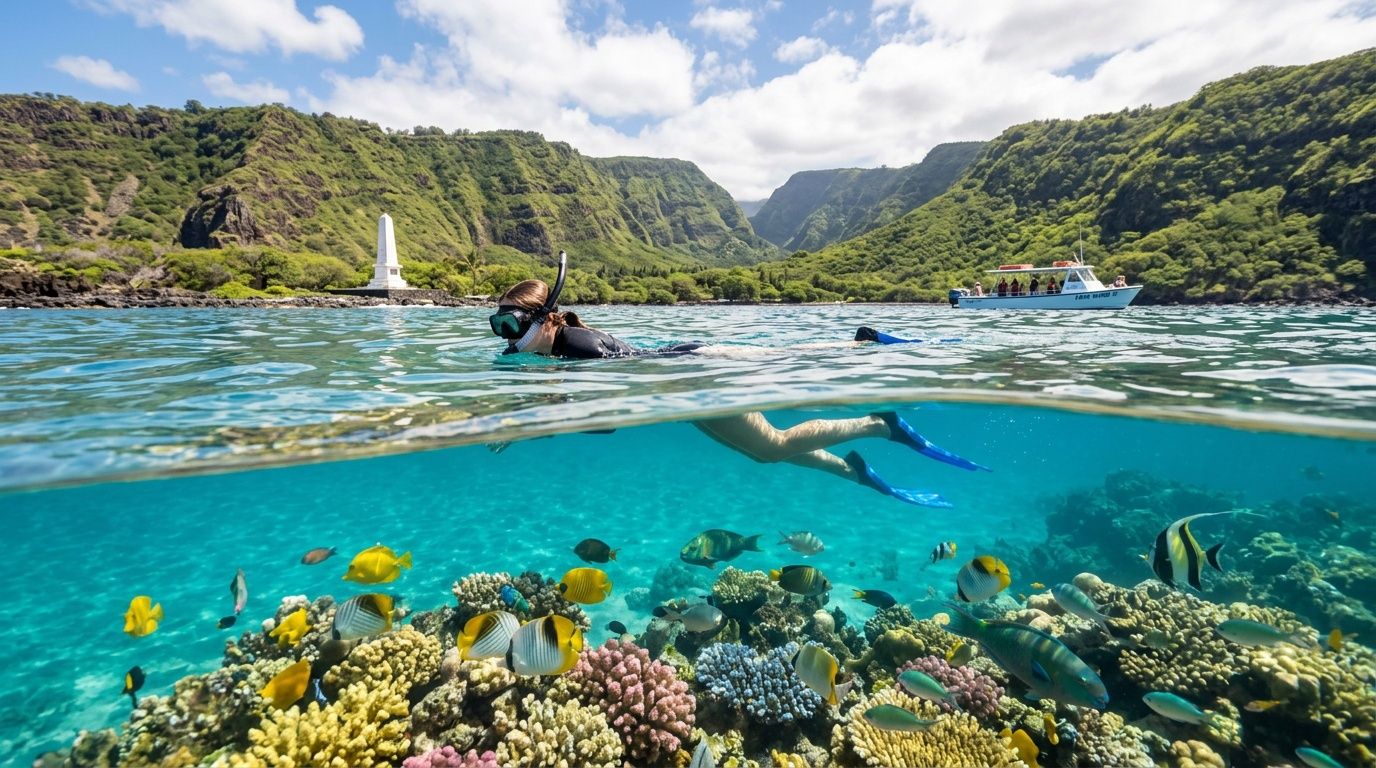
You’re probably in the same spot a lot of Big Island visitors reach after a little research. You’ve heard that captain cook snorkeling is the must-do snorkel on the Kona coast, but then the questions start stacking up. Is it really that good? Is it hard to get to? Do you need to be a strong swimmer? Is the monument the point, or is the reef the point?
The short answer is that Kealakekua Bay earns the hype. It’s one of those rare places where the water, the reef, and the history all matter at the same time. The better answer is that your day depends heavily on how you approach it. The right plan gives you calm water, easy access, and time to enjoy the bay. The wrong plan turns a beautiful morning into a rushed workout or a stressful swim.
Welcome to Kealakekua Bay The Jewel of Kona
The first real look at Kealakekua Bay usually happens fast. One minute you’re running down the Kona coast, and the next the cliffs open up, the water turns clear blue-green over the reef, and the whole bay feels quieter than the shoreline you just left. That first impression is a big part of why captain cook snorkeling stays on so many Big Island itineraries.

What makes this bay stand out is the combination of setting, reef quality, and cultural weight. The shoreline is dramatic, but the appeal is not just scenic. Kealakekua is a place people should enter with some respect for what happened here and what the bay means in Hawaiian history. If you want that background before you go, this guide to Captain Cook Monument snorkeling history before your boat tour gives helpful context.
The monument is what many visitors spot first from the water. The experience that stays with them is usually what happens once they put their face in the water and look toward the reef.
What people notice first
First-timers often notice:
- The water color: It shifts from deep blue in the middle of the bay to bright turquoise over the shallows.
- The visibility: On a good morning, you can see coral heads, lava rock structure, and schools of fish without straining.
- The backdrop: Steep green slopes and the white monument give the bay a strong sense of place.
- The mood: Early hours often feel calmer and more respectful than the busy feel of some shoreline snorkel spots.
Practical rule: Treat Kealakekua Bay like a living place, not a photo stop. People tend to have a better, calmer day when they arrive with that mindset.
Why this guide matters
A lot of advice about captain cook snorkeling stops at directions and parking. That only solves part of the problem. The better question is how to set up a day that matches your swimming ability, your comfort in open water, and how much effort you want to spend getting in and out.
That trade-off matters here.
Some visitors want the workout and independence of a DIY approach. Others have a much better day on a boat with easier water entry, flotation available, and a crew keeping an eye on conditions. Kealakekua Bay rewards good planning, and small decisions, launch time, gear, sun protection, and how far you expect to swim, have a big effect on whether the day feels relaxed or tiring.
A Story of Gods and Conflict The History of Captain Cook
Kealakekua Bay isn’t famous only because of the reef. It’s also one of the most historically charged places in Hawaiʻi. If you understand what happened here, the snorkeling experience feels more grounded and a lot more meaningful.

Captain James Cook first arrived in Hawaiʻi on January 18, 1778, when he sighted Oʻahu, and then landed on Kauaʻi on January 20, 1778. His later arrival at Kealakekua Bay happened during the Makahiki festival, a sacred season associated with peace and the god Lono. That timing shaped the reception he received. During this period, Cook was welcomed as a deity. When he returned later for repairs outside the festival season, tensions rose, and on February 14, 1779, he was killed after attempting to take Chief Kalaniopuu hostage over a stolen boat, as detailed in this account of Cook’s arrival and death in Hawaiʻi.
Why the welcome changed
People sometimes oversimplify this story into “welcomed first, attacked later,” but that misses the point. The setting had changed. The ritual context had changed. Expectations on both sides had changed.
What looks sudden on a short timeline was really a breakdown fueled by cultural misunderstanding, shifting power dynamics, and a serious tactical mistake by Cook at the end.
The bay teaches a useful lesson. Reverence and conflict can exist in the same place, and sometimes they’re separated by only a small failure to understand one another.
What that means for visitors now
When guests ask whether the monument is “just a monument,” the honest answer is no. It marks a place tied to a turning point in Hawaiian-European relations. It also sits in a bay that was already sacred long before Cook arrived.
That’s why thoughtful guides give the history some space. Snorkeling here should feel fun, but not detached. If you want a deeper primer before your trip, this piece on Captain Cook Monument snorkeling history before your boat tour helps put the location in context without reducing it to a landmark photo stop.
A better way to hold both truths
You don’t have to choose between appreciating the reef and respecting the history. The strongest captain cook snorkeling experiences do both. You enjoy the bay more when you understand that the place mattered long before modern tourism, and still does.
Exploring an Underwater Paradise Marine Life and Conservation
Once your face goes in the water, Kealakekua Bay shows why snorkelers talk about it long after the trip ends. The reef is often easy to read. You can follow coral fingers, sandy patches, lava rock edges, and schools of fish without constantly fighting surge or murky water.

A big reason is visibility. Kealakekua Bay often has water clarity exceeding 100 ft (30 m) because of its bathymetry and low sediment runoff. That clarity lets sunlight reach deeper reef areas, which supports extensive coral growth and a higher biomass of reef fish, as explained in this overview of Kealakekua Bay snorkeling conditions.
What to look for underwater
You don’t need to identify every species to enjoy the bay, but it helps to know where to put your attention.
- Reef fish schools: These are often the first thing beginners notice. Watch the edge where coral meets open water.
- Parrotfish at work: They move methodically across the reef and are fun to spot once you learn their shape.
- Yellow tang and triggerfish: Bright reef fish often stand out well in clear morning light.
- Coral structure: Don’t rush past the reef itself. The shape and layering are part of what makes this snorkel special.
Why mornings work better
In practical terms, morning conditions usually give snorkelers the best window. Light enters the water at a useful angle, guides can keep easier visual contact with guests, and the reef tends to show more color and texture before the day gets busier.
That’s especially important for new snorkelers. Clear water lowers stress because people can track the guide, the boat, and the bottom more easily.
If you want the bay at its friendliest, go earlier rather than later.
Conservation isn’t optional
The reef looks healthy because it’s protected and because good operators manage people carefully. The fastest way to ruin a snorkel site is to treat it like a swimming pool. Fins hit coral, people stand where they shouldn’t, and wildlife gets pushed too close.
A few habits matter every time:
- Keep your body horizontal so your fins stay up and away from the reef.
- Don’t stand on coral or rock ledges even if you think you’re in control.
- Give wildlife room and let the encounter come to you.
- Listen to in-water briefings because local current patterns matter.
If you want a practical refresher, this guide on how to snorkel Kealakekua Bay without touching coral covers the habits that make a real difference.
How to Get to the Monument Tour vs DIY Options
The choice of method is critical for many vacation plans. People hear “Captain Cook Monument” and assume the challenge is just reaching the spot. In reality, the method you choose changes the whole day. The bay rewards good decisions and punishes overconfidence.

Some DIY options look simple online but carry real physical demands. Guides discussing these options note that snorkelers may need to swim at least 25 yards comfortably and warn that some outings are not for beginner swimmers, which is a useful reminder that fitness and water confidence are often downplayed in marketing, as noted in this Captain Cook snorkeling access guide.
The trade-offs at a glance
| Option | What works | What doesn’t |
|---|---|---|
| Hike in | Gives independent travelers flexibility | The return hike is tough when you’re hot, tired, and carrying gear |
| Kayak in | Feels adventurous and self-directed | More logistics, more effort, and less margin if conditions change |
| Boat tour | Easiest access and simplest day for most visitors | Less independence than full DIY |
Hiking to the bay
The hike appeals to people who want control over timing and cost. That sounds good at breakfast. It feels different on the climb back out.
The downhill portion can trick people into thinking the route is easy. The uphill return is where the decision gets tested, especially after sun exposure and time in the water.
Kayaking to the monument area
Kayaking can be a solid choice for experienced paddlers who understand local conditions and want a self-powered outing. But it’s not the easy middle option many visitors hope it is. You’re still managing launch logistics, gear, weather judgment, and your own return.
If you like comparing boating styles and planning factors before deciding how much self-management you want, Outdoor Slovenia's guide to boating is a useful general read on how different on-water experiences trade freedom for complexity.
Why most visitors do better by boat
A boat trip removes the hardest part of the day. You arrive fresher, enter the water with support nearby, and spend more time snorkeling instead of commuting to the snorkel.
That’s especially true if you don’t want to rent a car or coordinate multiple moving parts. This article on doing a Captain Cook snorkel tour in Hawaii without a rental car helps people simplify the day before they even get to the harbor.
The Kona Snorkel Trips Experience Your Best Day at Captain Cook
The biggest difference between an average captain cook snorkeling day and a smooth one usually comes down to boat design, group management, and crew attention. Small details matter out there. How quickly people get fitted with gear, how clearly the safety talk is delivered, and how well guides watch the water all shape the experience.

A practical setup for this trip is a small-group boat tour with lifeguard-certified guides, flotation support, and crew who can help nervous guests settle in before the snorkel starts. Kona Snorkel Trips offers that kind of format for Kealakekua Bay. If you’re comparing operators, it’s also worth looking at Captain Cook Snorkeling Tours for a Captain Cook snorkel tour.
What works on a good boat tour
The strongest tours usually get the basics right before they try to impress anyone.
- Clear water entry plan: Guests know where to sit, how to enter, and what to do first.
- Proper flotation options: People relax faster when they know support is available.
- Crew who watch the group: Not just the strongest swimmers.
- Historical narration that stays grounded: Enough context to matter, without turning the trip into a lecture.
What doesn’t work
Bigger isn’t always better. A crowded deck can mean slower gear fitting, less direct coaching, and more time spent waiting for everyone else. That’s frustrating for confident snorkelers and intimidating for newer ones.
The other common mistake is assuming “good swimmers only” solves everything. It doesn’t. Guests still need orientation, reef guidance, and clear expectations.
Good snorkel crews don’t just take people to the bay. They reduce uncertainty from the minute guests step aboard.
For a closer look at what separates attentive operations from rushed ones, this piece on what makes a great Captain Cook snorkel cruise crew is worth reading.
Planning Your Trip What to Bring and Best Times to Go
Packing for captain cook snorkeling doesn’t need to be complicated, but a few choices can make the day much easier. The goal is simple. Stay comfortable on the boat, stay protected in the sun, and keep your attention on the reef instead of on gear problems.
What to bring
Bring the basics first, then add comfort items if you know they help you.
- Reef-conscious sun protection: A rash guard, hat, and appropriate sun protection go a long way.
- A towel and dry clothes: You’ll be happier on the ride back.
- Water and light snacks if your operator recommends it: Staying comfortable starts before you get in.
- Prescription mask if you use one: Don’t assume standard gear will work perfectly for you.
- An underwater camera only if you’ll use it: New snorkelers often enjoy the reef more when they leave one hand free.
Best timing for the bay
Morning is usually the smarter play. Light tends to be better, the water often feels more settled, and newer snorkelers generally have an easier time reading conditions. If you want to understand why one day feels simple and another feels pushy, this guide on how to read ocean conditions for Kealakekua Bay snorkeling breaks down what to watch for.
Gear choices that help and gear choices that don’t
Some travelers ask about powered swim aids or sea scooters. These can be fun in the right setting, but they’re not a shortcut for comfort in open water. If you’re curious what that kind of equipment looks like, the Stermay M1 motorized snorkelling aid is one example. For most visitors at Kealakekua Bay, though, basic flotation and calm technique are more useful than extra propulsion.
A few final habits matter more than any packing list:
- Listen to the water briefing
- Don’t touch coral or wildlife
- Be honest about your energy level before you get in
- Choose the easy day over the ambitious day
Frequently Asked Questions About Captain Cook Snorkeling
People usually ask the most important questions right before booking. That makes sense. At this stage, nerves show up. Clear answers are also helpful then.
Do I need to be a strong swimmer
You need basic aquatic competence, not elite swim fitness. In practice, that means being comfortable floating, staying calm in open water, and following guide instructions. Safety protocols for this area often require guests to tread water because the bay drops into deeper water and can have localized currents. Flotation aids and lifeguard-certified guides are part of the safety system, not an extra, as explained in this Captain Cook snorkel tour swim requirements guide.
If you panic easily in open water, don’t hide that. Tell the crew. They can usually help much more effectively when they know your comfort level from the start.
Is this good for beginners
Yes, if “beginner” means you’re new to snorkeling but comfortable in the water. No, if “beginner” means you can’t swim or you freeze up as soon as you can’t touch bottom.
That distinction matters. Kealakekua Bay is beautiful, but it isn’t a wading pool.
The guests who do best aren’t always the fastest swimmers. They’re the ones who stay calm, listen well, and use flotation when they need it.
What about kids and older adults
This depends more on comfort, mobility, and water confidence than on labels like “young” or “active.” Some children do great if they already like the water and can follow instructions. Some older adults do better than the whole family because they pace themselves and ask good questions.
The key issues are usually:
- Boat entry and exit
- Comfort wearing a mask and snorkel
- Ability to manage a ladder
- Energy level after sun and salt water
What if the weather changes
Good operators watch conditions closely and make conservative calls when they need to. If the ocean isn’t cooperating, the right move may be rescheduling, rerouting, or canceling. That can disappoint people in the moment, but it’s the right standard.
What’s the biggest mistake visitors make
They choose the hardest version of the day because it sounds adventurous on paper. Then they arrive tired, rushed, or overconfident.
Generally, the better choice is simple access, a morning departure, and a crew that keeps the day organized.
If you want a captain cook snorkeling day that feels smooth, safe, and worth the planning, take a look at Kona Snorkel Trips. Choose the option that matches your swimming comfort, ask questions before you book, and set yourself up to enjoy Kealakekua Bay instead of struggling through it.