
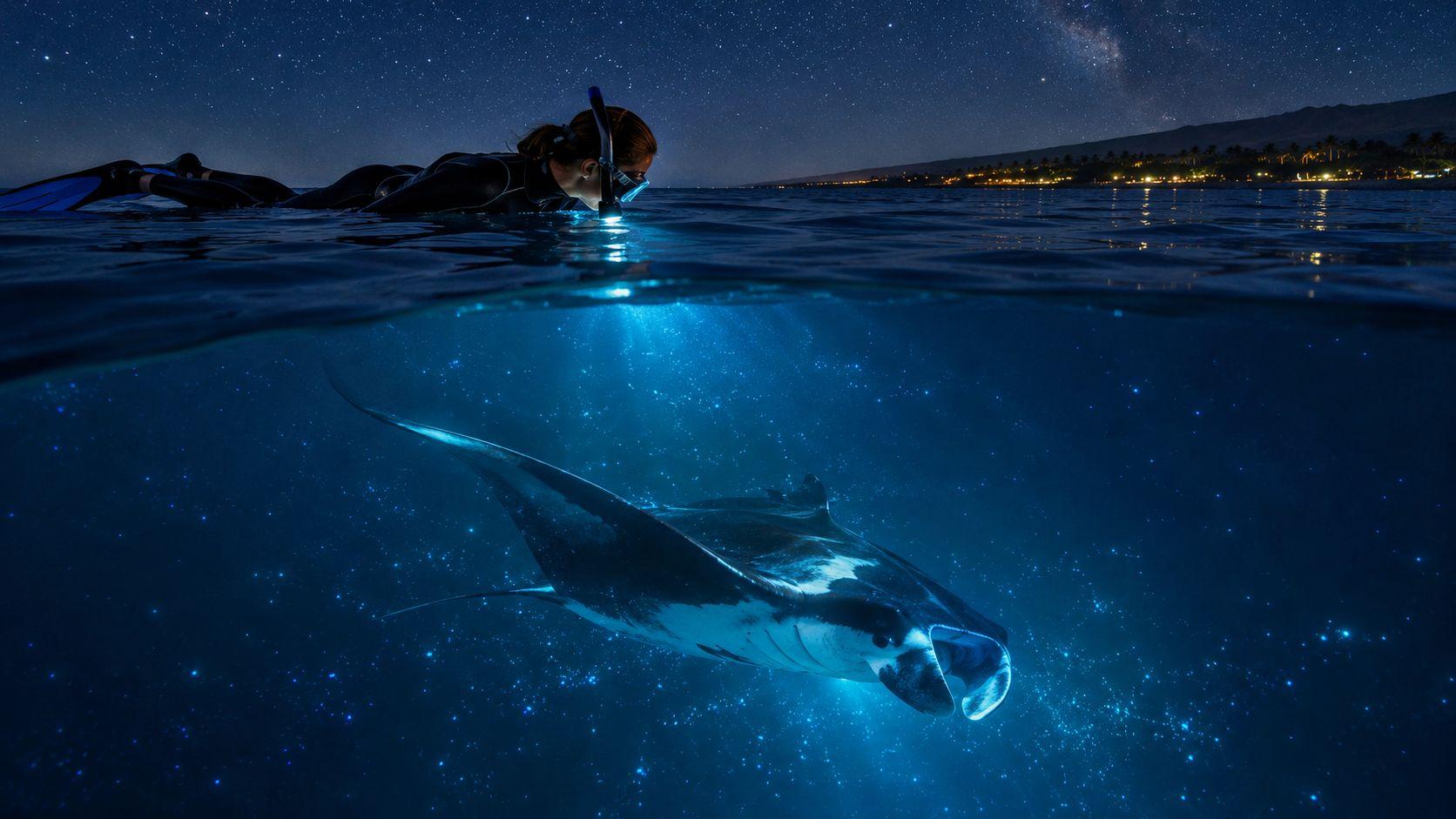
I've seen first-timers go silent the moment the first manta slides under the light board, because the ocean goes from black to alive in a single breath. One night off Kona, a guest gripped the rail, whispered “there it is,” and forgot to blink until the last shadow vanished below us.
Laying on the Surface With a Giant Beneath You
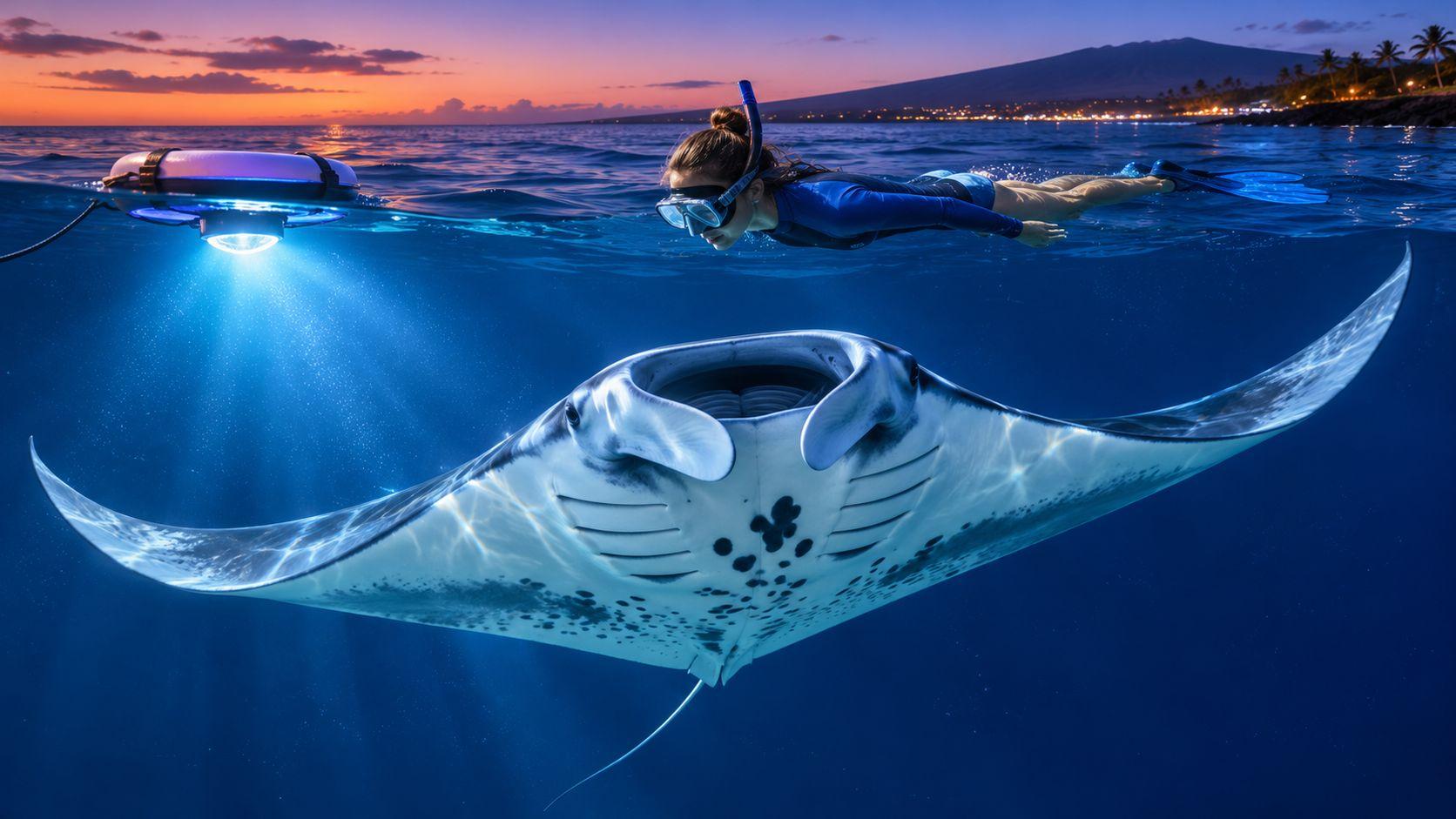
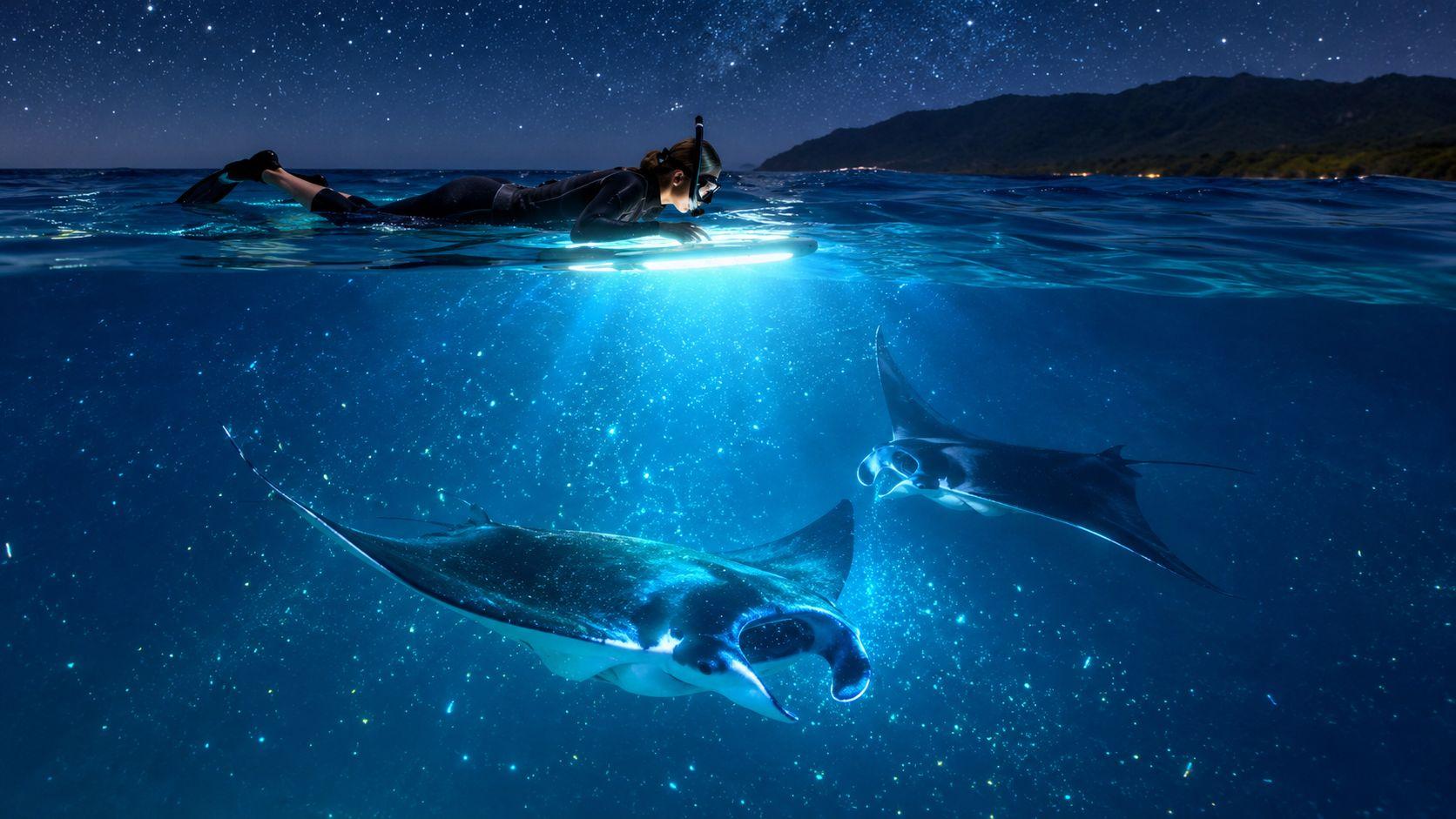
The boat settles, the engine quiets, and all you can hear is water tapping the hull and people breathing through snorkels. Then the lights hit the sea, the plankton gathers, and a dark shape rises out of nowhere, broad as a doorway and moving like it owns the night. That's the moment you understand why Kona, Hawaii manta ray encounters feel different from almost any other ocean trip.
The part you feel before you understand it
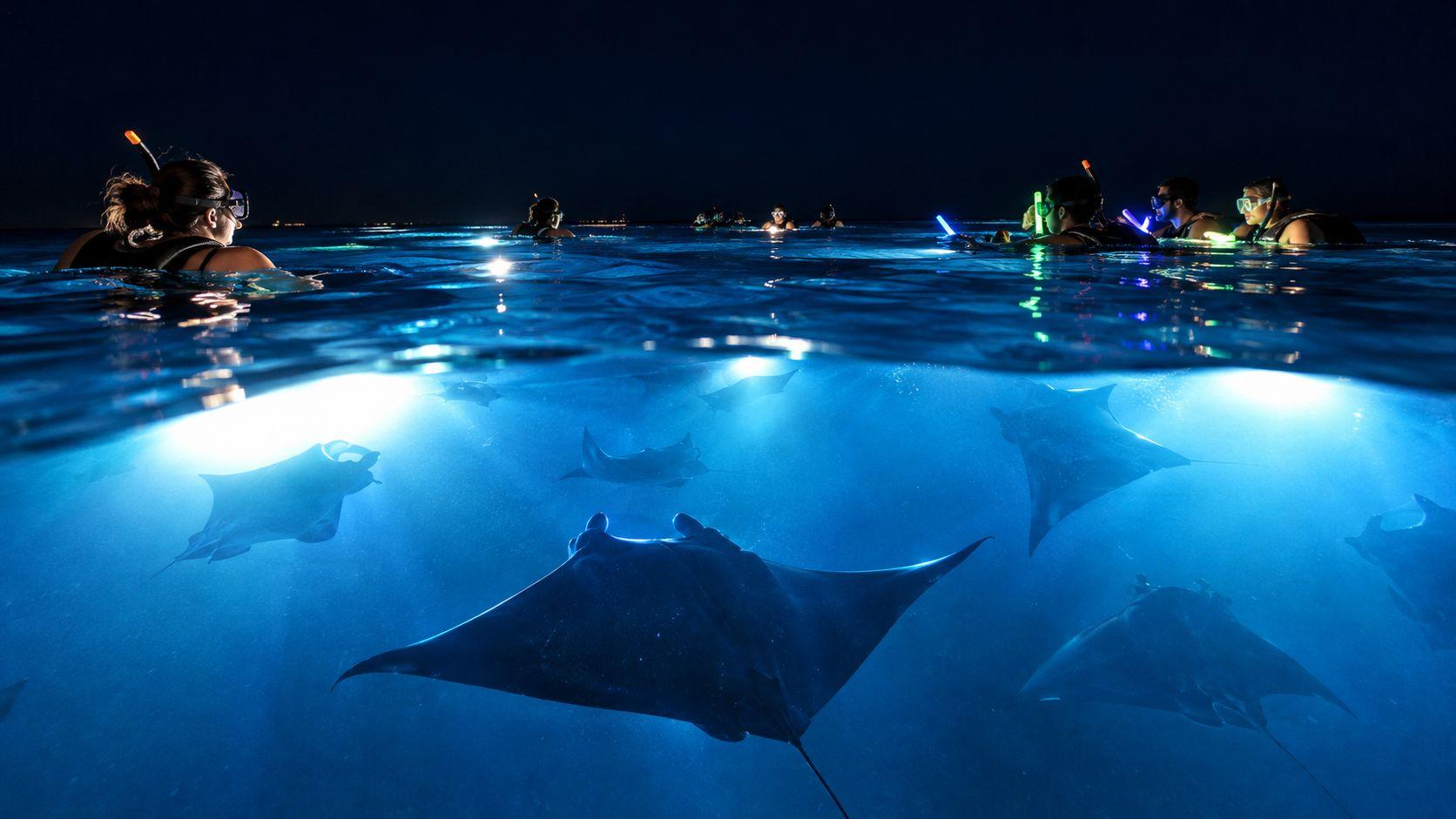
You don't chase the animals here. You lie still at the surface, hold position, and let the scene come to you. That's what makes the encounter feel less like a thrill ride and more like being invited into a feeding lane that already existed long before your boat arrived.
The first few seconds can feel unreal because the manta doesn't stab, dart, or circle like a shark in a movie. It glides, turns, and opens that huge mouth right below the glow, almost like it's skimming invisible snowfall. If you've only seen manta rays in daytime reef photos, night changes the whole story.
Keep your body quiet, your hands calm, and your eyes on the lighted water. The best encounters happen when guests stop trying to manage the moment.
The image many visitors carry home is simple, a silhouette passing under a raft of light while everyone on the surface tries not to make a sound. That image matters because it's also the beginning of the deeper conversation, the biology, the rules, and the reason Kona is still one of the few places where this works at all.
What Manta Rays Actually Are and Why They Feed at Night
A manta ray's body tells you a lot before the guide ever starts talking. It is a cartilaginous animal, built with flexible support instead of hard bone, and that is part of why it banks and rolls so smoothly under the lights. It is also not a stingray, and that matters on the water. People often lump rays together, then miss how different the animal in front of them really is.
How the feeding machine works
The feeding setup is simple and elegant. A reef manta uses its broad cephalic fins to funnel water into its mouth, then filters zooplankton through specialized gill-raker structures as the water passes back out. The animal is not chasing larger prey. It is feeding on drifting plankton, and the night snorkel works because the lights gather that food into a tighter column.
That is why the glow on the surface matters so much. The plankton rises toward the light, and the mantas rise toward the plankton. The viewing guidance from NOAA keeps snorkelers at the surface and uses different light placement for divers, because the animals feed in a specific part of the water column and people need to stay clear of that lane.[NOAA viewing guide] The scene looks theatrical, but the mechanics are plain.
A good Kona guide will describe it the same way every time. The rays are not visiting people. They are visiting a feeding patch that appears and disappears with light, current, and plankton density. Research summaries on manta behavior also point to site fidelity, the habit of returning to the same places when conditions keep paying off.[Murdoch research summary] That helps explain why the same Kona sites keep producing reliable encounters night after night.
For a closer look at the local pattern, see why manta rays gather near Kona after dark.
Why Kona and Not Anywhere Else
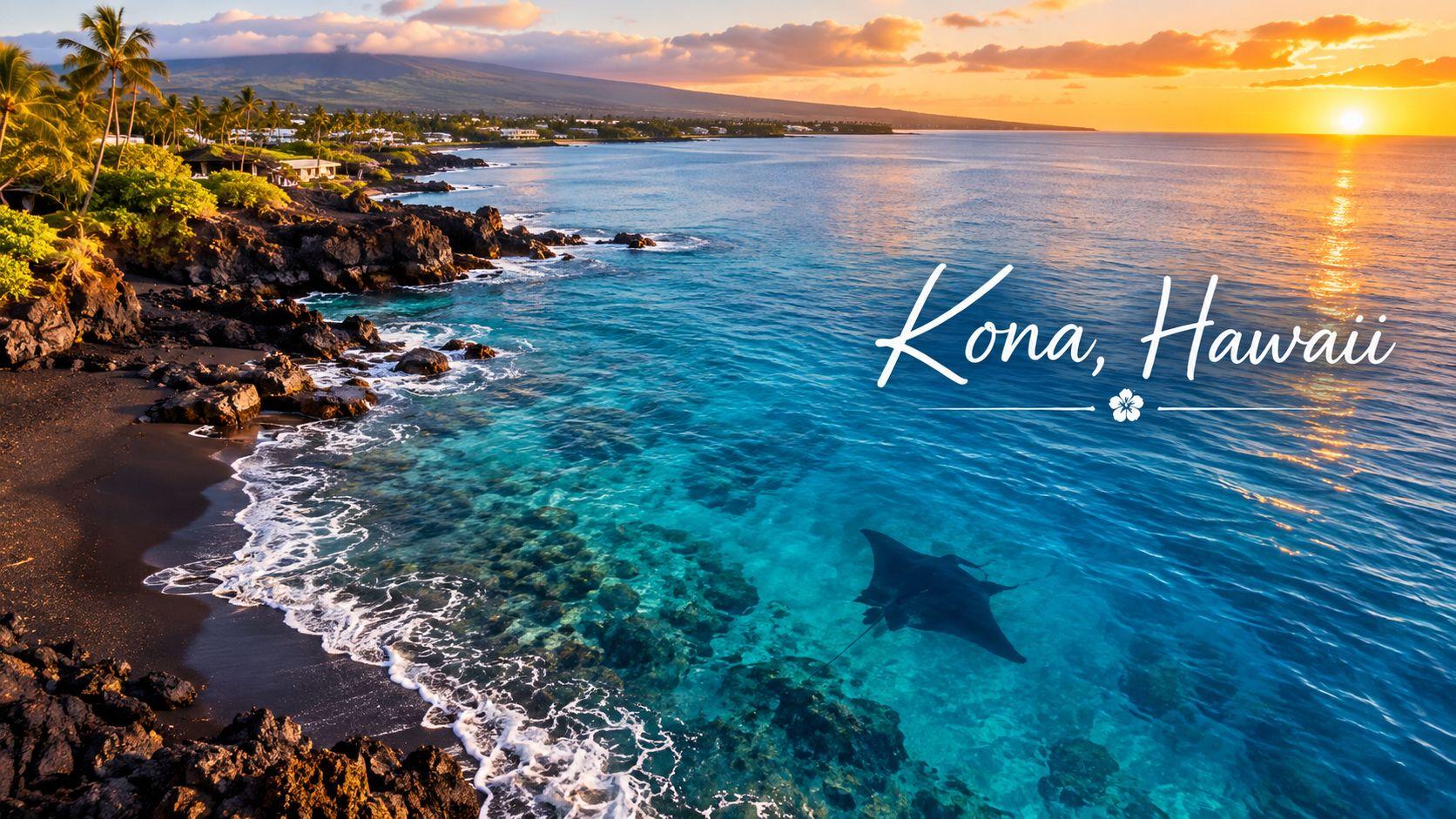
A guest on the deck sees a dark bay, a set of lights, and then a manta sliding up from below as if it has done this a thousand times. That is Kona's real story. The modern night encounter grew from shoreline lighting that pulled plankton in, then pulled mantas in after it, and local operators shaped that accidental feeding pattern into a managed wildlife experience in the early 1990s. It feels dramatic on the water, but the setup is simple: food, light, and a small resident population that learned the routine.
A small population in a very small place
The scale here is what changes the experience. Hawaiʻi State Legislature testimony reported 106 individual manta rays identified along the Kona Coast between 1992 and 2007, with some animals recorded from 1 to 724 times and yearly counts of unique animals ranging from 1 to 65 across the study area.[Hawaiʻi State Legislature testimony] That same testimony estimated the Kona population was probably fewer than 200 animals.[Hawaiʻi State Legislature testimony]
The slow pace of replacement matters even more. The testimony noted only 2 to 3 new pups seen annually, with 30 pups identified from 1994 through 2007, which points to an approximate birth rate of 2 pups per year.[Hawaiʻi State Legislature testimony] NOAA's genomic summary adds the same caution from a different angle, describing small, geographically isolated island populations with limited movement between island groups.[NOAA genomic summary] For a wider local explanation of why the Kona night snorkel works so well, see why Kona tops Hawaiʻi for manta ray night snorkel.
Why “local” is the right word
Kona is not just a viewing spot. It is a place where the same animals keep returning to the same water, and that makes every light board and every bad habit matter. The testimony said no manta had been documented moving between Kona and Maui despite two photo-identification studies and two acoustic-tracking studies.[Hawaiʻi State Legislature testimony] A later genetic report described island-linked populations, including Hawaiʻi Island and Maui Nui, rather than one free-mixing Hawaiian stock.[Big Island Now research summary]
That is why Kona feels different from a one-off wildlife stop. You are not visiting a passing swarm. You are entering the night routine of a small resident community that keeps showing up where the conditions stay right.
When to Go for the Best Chance of a Real Encounter
The first thing I tell guests is simple, book your manta night with flexibility, because the ocean decides more than your calendar does. Season matters, moonlight matters, and the time you step aboard matters too.
Reading the night before you book it
Warmer months often line up with easier conditions, while winter can bring rougher water even when the mantas are still around. Local accounts also point out that darker skies help the illuminated boards do more of the work, so a new moon or thin crescent often gives the lights a cleaner advantage. Midweek trips can feel calmer on the boat, but the key variable is still what the plankton and weather are doing that night.
The timing on the water matters as well. Operators usually brief guests, gear them up, and move out before the encounter begins, because there's a rhythm to how the light, the plankton, and the rays come together. If you're choosing between nights, pick the one that gives you room to rebook if conditions turn.
Don't plan this like a museum ticket. Plan it like a weather-sensitive wildlife outing, because that's what it is.
The practical move is to treat your manta reservation as a window, not a guarantee. That mindset keeps you calm if the sea is a little restless, and it also makes the night better when everything lines up and the mantas arrive on their own schedule.
Best time to see manta rays in Kona
What the Night on the Water Actually Feels Like
The ride out is often the quietest part of the evening. You leave from a harbor, the coastline drops away behind you, and the crew starts turning a dark patch of ocean into a lit platform where everyone can see the same thing at once. By the time the boat eases into position, nearly everyone has already stopped talking in full sentences.
From harbor to light board
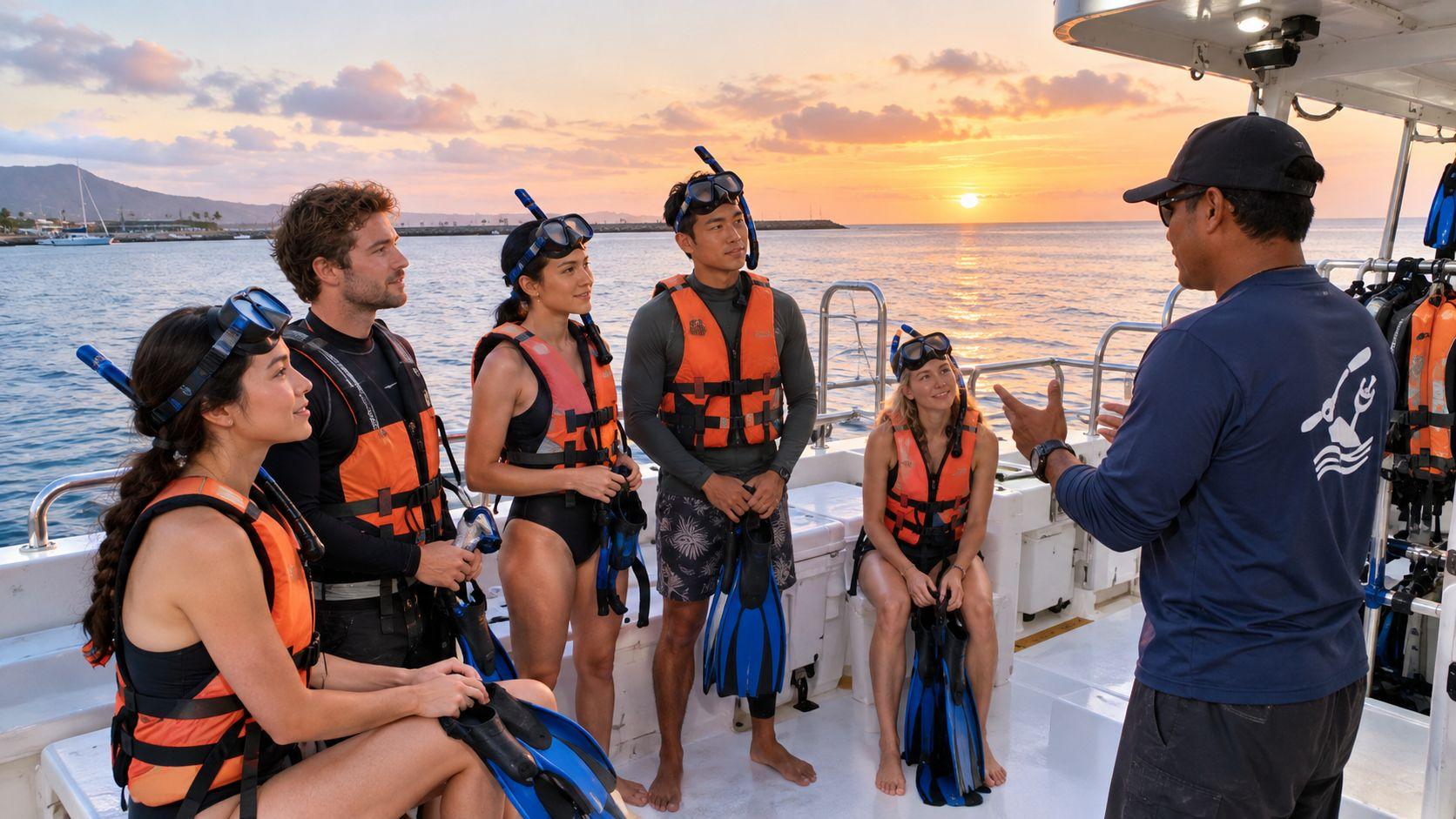
The crew usually starts with a safety briefing and a gear check. Masks get adjusted, wetsuits get zipped, and everyone learns where the illuminated boards will sit once the water entry starts. If you're nervous, this is the moment to say so, because a good crew wants you settled before you're floating in the dark.
Once in the water, the setup is easier than most first-timers expect. You stay at the surface, hold position around the lighted board, and let the current of the night unfold below you. A lot of guests think they'll be asked to do more, but the only skill is staying relaxed enough not to fight the buoyancy or the gear.
The less you move, the more you see.
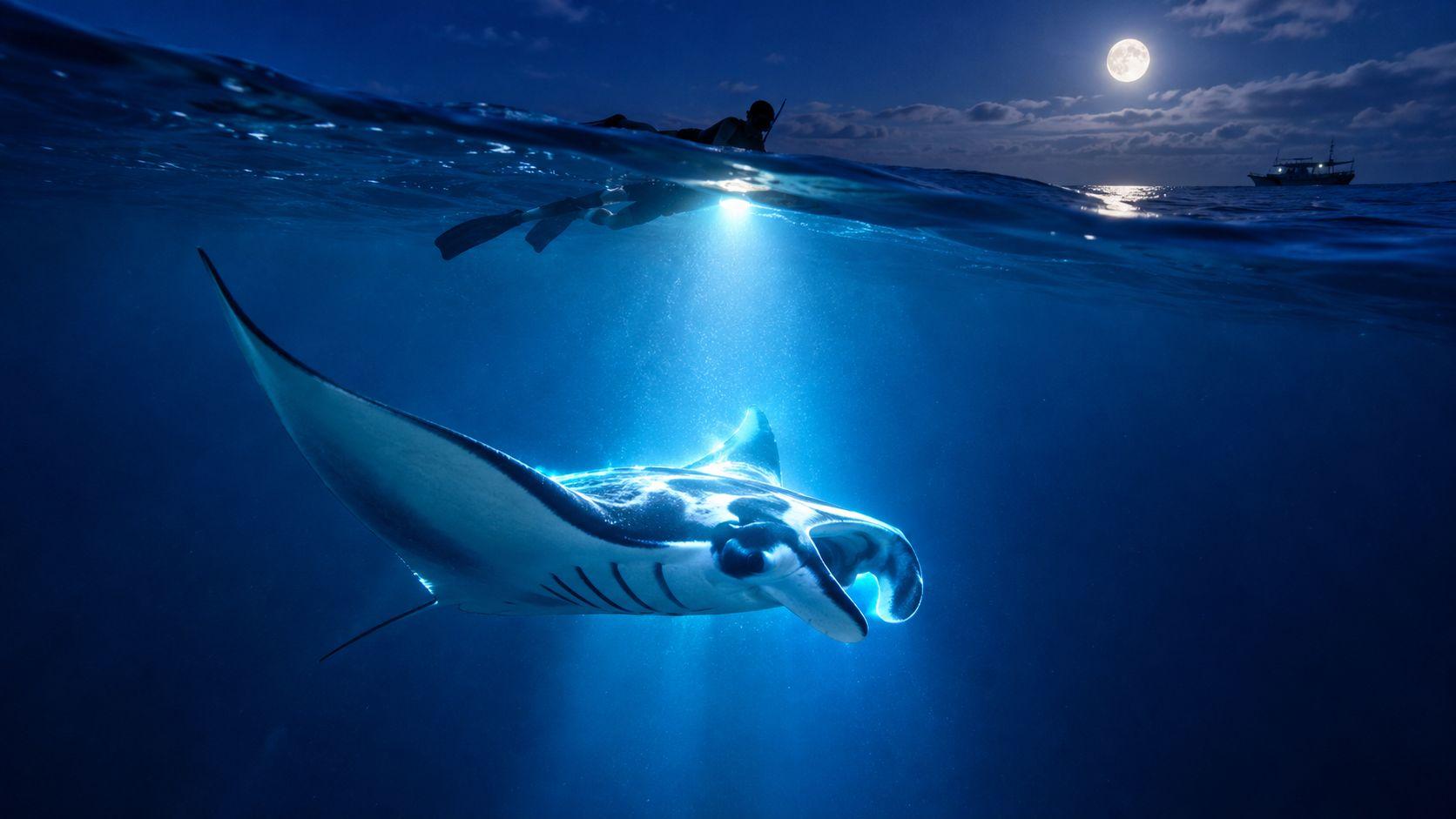
Then the first manta shows up. Sometimes it arrives as a shadow, sometimes as a sudden wing-like shape turning under the glow, and sometimes it seems to materialize from nowhere because your eyes haven't yet adjusted to the black water. You may see one animal or several, depending on the night, and the crew signals change from instruction to quiet watching as soon as the show begins.
The strongest memory for most guests is not size alone, it's proximity. A manta can pass so close that the shape fills the whole field of view, then vanish into darkness and come back again from another angle. That repeated pass is part of why the encounter feels suspended between calm and astonishment, which is exactly where Kona does its best work.
How to Behave So the Rays Keep Coming Back
The quietest nights often teach the clearest lesson. The guests who keep seeing mantas are usually the ones who stop trying to manage the encounter. Hawaiʻi law draws the hard line first, because intentionally or knowingly capturing or entangling any shark or ray, alive or dead, is prohibited, and killing any shark or ray in state marine waters is prohibited too. Touching, restraining, or collecting them has no place here.[Hawaiʻi marine-fishing regulations]
Surface first, always
The easiest way to ruin a good sighting is to drop into the feeding lane. NOAA's viewing guide keeps it simple, snorkelers stay on the surface instead of diving into the water column where mantas are feeding, and lighting should match the viewing role, with snorkelers shining lights downward.[NOAA viewing guide] That keeps the plankton in reach and the animals in charge of the distance.
The same logic shows up in the commercial rules. Hawaiʻi's manta-viewing regulations limit operations to designated viewing zones unless the trip is at least seven nautical miles from a designated-zone boundary, and vessels supporting commercial manta viewing may not leave that boundary while participants or guides are in the water.[Hawaiʻi commercial manta rules] On the water, that kind of consistency matters more than any marketing language. It keeps boats where the feeding pattern already exists and cuts down on the loose, drifting behavior that unsettles a site.
What not to do in the water
A manta does not need help turning, and it does not need a person blocking its path. Keep your body flat, keep your fins out of the feeding lane, and let the animal choose whether it comes near. A 2025 University of Hawaiʻi study found site stability even with growing tourism, but it also points to the pressure that still comes from people in the water.[University of Hawaiʻi study summary] Earlier NOAA recovery review material also says more study is still needed to understand interaction impacts over time.
That is the part many popular guides soften. The best behavior is the boring kind. Stay still. Leave the lights where the crew placed them. Do not chase, crowd, or reach. The mantas return when the water feels ordinary to them, and the night stays ordinary only if the people keep their end of the bargain.
What to Pack and How to Pick the Right Tour
A good manta night starts before you get to the dock. Bring the basics that keep you comfortable, because discomfort leads to fidgeting, and fidgeting makes people drift where they shouldn't.
Packing light, but not carelessly
A towel and a dry change of clothes make the ride home easier. If you tend to get queasy, bring the motion medication you normally trust, because a calm stomach matters more than bravado once the boat starts moving in the dark. A camera can be useful, but only if you already know how to use it without blasting the water with unnecessary light.
Reef-safe sunscreen belongs on your skin before you board, not after you're already juggling goggles and a wetsuit. And if you're comparing tour pages, look for clear instructions on flotation, illumination, and crew positioning, not just pretty language about “unforgettable moments.” Responsible operators explain what the board does, where swimmers stay, and how the crew manages the water around them.
How to compare operators
| Criteria | What to Look For | Why It Matters |
|---|---|---|
| Group control | Fewer swimmers around the board | Less drift, less noise, fewer collisions |
| Crew training | Clear safety briefing and in-water supervision | Better response if nerves or conditions change |
| Lighting practice | Predictable, fixed illumination | Keeps plankton concentrated without chaos |
| Site compliance | Stays within approved viewing areas | Reduces avoidable vessel movement |
| Conservation language | Specific behavior rules, not vague eco-marketing | Shows the operator understands the animals |
For visitors comparing manta options, Manta Ray Night Snorkel Hawaii is worth a look as an alternative when you're sorting through night snorkel choices, and Kona Snorkel Trips runs a small-group manta outing with lifeguard-certified guides and illuminated boards.[Packing list guide] The right choice is the one that feels organized before launch and careful once the animals arrive.
Your Next Step Into the Water
The strongest Kona manta nights happen when the visitor understands one thing clearly, this is a resident animal encounter, not a performance. Choose the operator that respects the surface rules, keeps the group calm, and treats the animals like the small local population they are.
Kona Snorkel Trips runs small-group manta nights with lifeguard-certified guides, illuminated boards, and a format built for staying at the surface while the rays feed below. If you want to turn this guide into an actual night on the water, visit Kona Snorkel Trips and pick the manta experience that fits your trip.
Keep reading
Swim with Manta Rays Big Island: Night Snorkel Guide 2026
Learn how to swim with manta rays Big Island: trip times, readiness checks, booking steps, packing and water rules for Kona night snorkels.
Manta Ray Snorkeling Big Island: A Practical 2026 Guide
Manta Ray Snorkeling Big Island. Plan manta ray snorkeling on the Big Island with this 2026 guide. Best sites, tour choices, packing tips, safety rules
Manta Ray Night Dive Kona: A Complete Insider Guide
Plan your manta ray night dive Kona experience with this practical guide. Compare snorkel vs scuba, best seasons, safety, pricing, and how to book.