
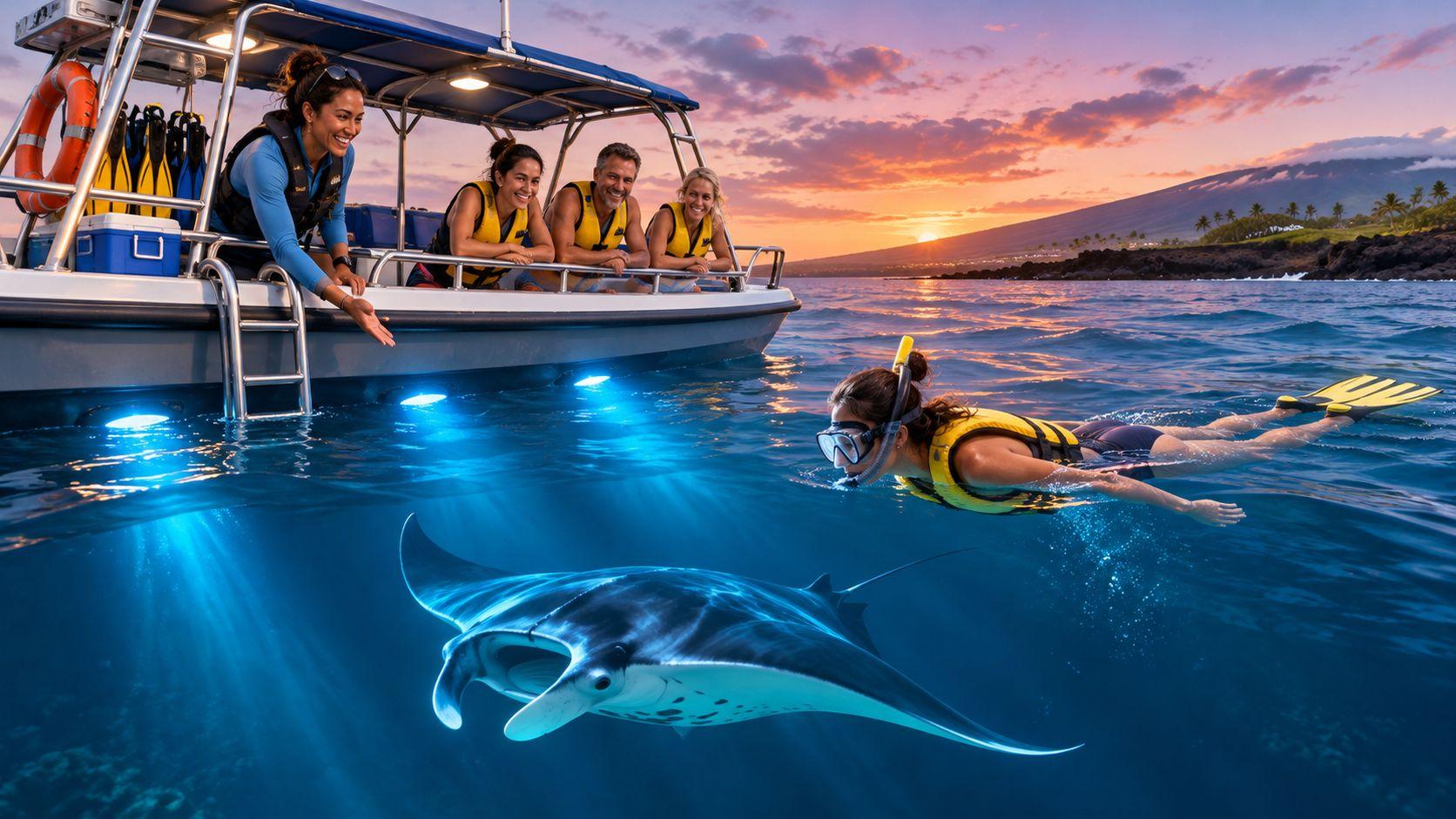
You've got three days left in Kona, a rental car with sand in the footwells, and a browser holding six tabs of tour operators who all describe themselves the same way: small group, eco-friendly, unforgettable. Two of those trips look worth the money. One is a night snorkel with manta rays, the other a morning run to Kealakekua Bay, and you're trying to work out which one suits the swimmers in your group and which one you'd regret skipping.
That's the right question, and it isn't answered by a brochure. Kona's manta experience is one of the most reliable wildlife encounters in the state. Independent research found Hawaii had the highest sighting frequency among the study locations, recording manta rays at 73 of 538 surveyed sites, or 14%, between 2000 and 2012, according to Hawaii County's manta testimony record. Reliable is not the same as guaranteed, and a good operator will tell you so before you pay.
This guide is written from the boat. It covers what you'll do on each trip, what varies beyond anyone's control, and the checkable criteria that separate a well-run Kona diving company from one that just has a nice website.
Kona Snorkel Trips Tours at a Glance
Say you have a few days in Kona and your group includes a nervous swimmer, a teenager, and someone hoping to see manta rays. The choice comes down to what each person wants from the water, and how comfortable they are in it.
Kona Snorkel Trips is a friend-owned-and-operated boat tour adventure company with thousands of customer reviews. It departs from its own dock at Honokohau Marina, between Kailua-Kona town and the airport. Here's how the main trips differ:
| Tour | Best for | Useful detail |
|---|---|---|
| Night Manta Ray Snorkel | Guests hoping to see manta rays after dark | Wetsuits are provided, from kids' sizes 6-8 to adult 3X |
| Captain Cook & Kealakekua Bay Snorkel | A reef visit with historic landmarks | Starts from $139, lasts 4 hours, with two tour times available |
| Kona Snorkeling | Kealakekua Bay return visitors, shorter boat rides, or more time in the water | Visits a variety of new spots |
| Whale Watching | Guests hoping to see humpback whales | Runs seasonally |
| Private Snorkel | Groups seeking a private boat trip | You can purchase extra seats to meet the minimum and make the trip private |
| Bay & Ray Package | Guests who want both the night manta and Captain Cook trips | Combines the two tours with a 10% discount |
A few practical checks can narrow the choice. For a night trip, consider whether everyone is comfortable floating in open water and following the crew's briefing. On a daytime trip, the focus is the reef and Kealakekua Bay's historic setting. If you've already snorkeled Kealakekua Bay, the local Kona tours offer a shorter ride and time at different spots.
Manta sightings depend on wildlife, and no operator can guarantee a ray will appear. Weather can also affect whether a trip runs. Kona Snorkel Trips may cancel for inclement weather or other unforeseen circumstances; guests are then rescheduled or issued a full refund.
This guide focuses on snorkeling and boat tours. For scuba diving, Kona diving tours describes a separate operator's offerings, and Kona Honu Divers' Google Business profile provides its business information.
Night Manta Ray Snorkel and What Happens on the Water
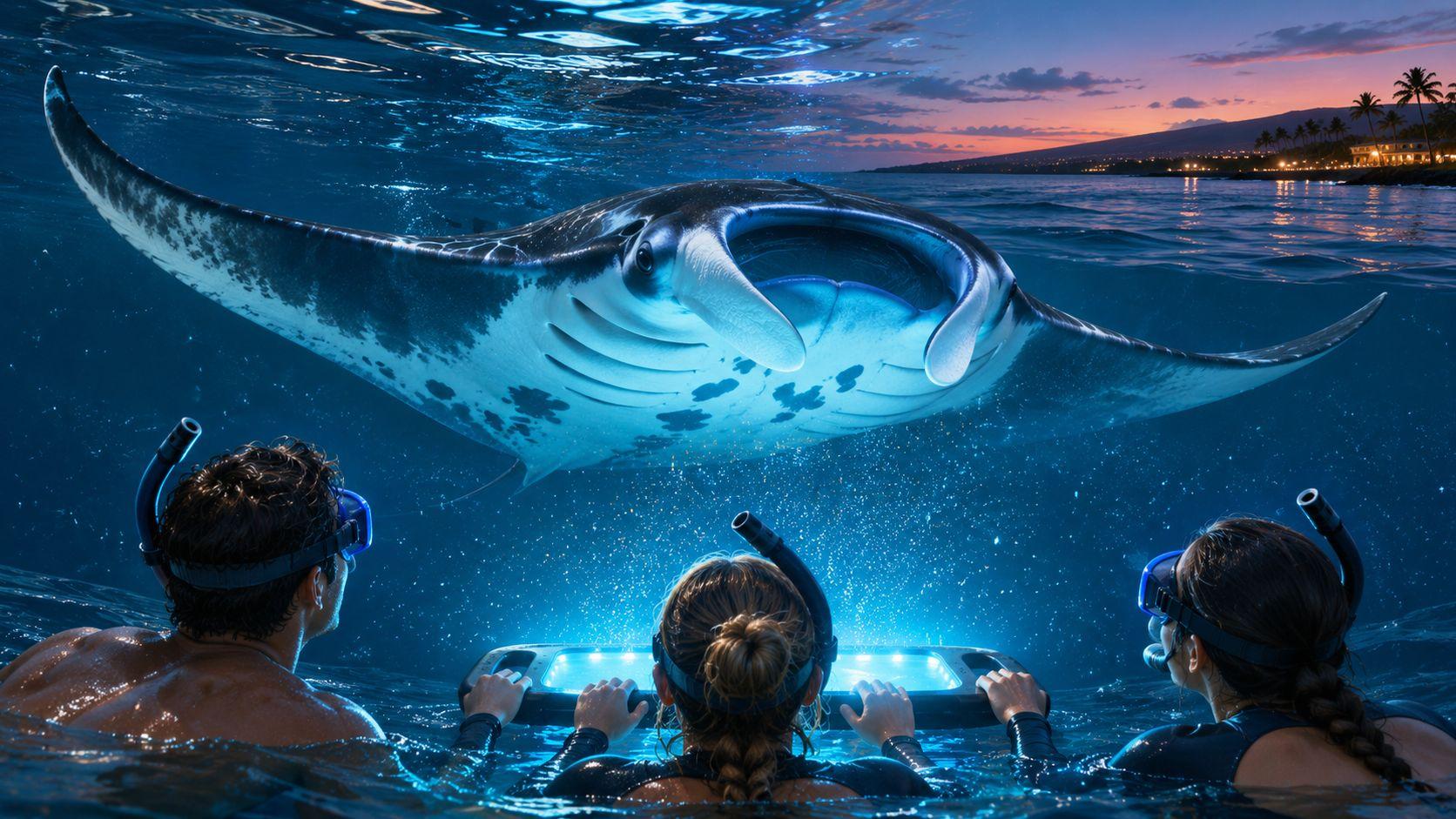
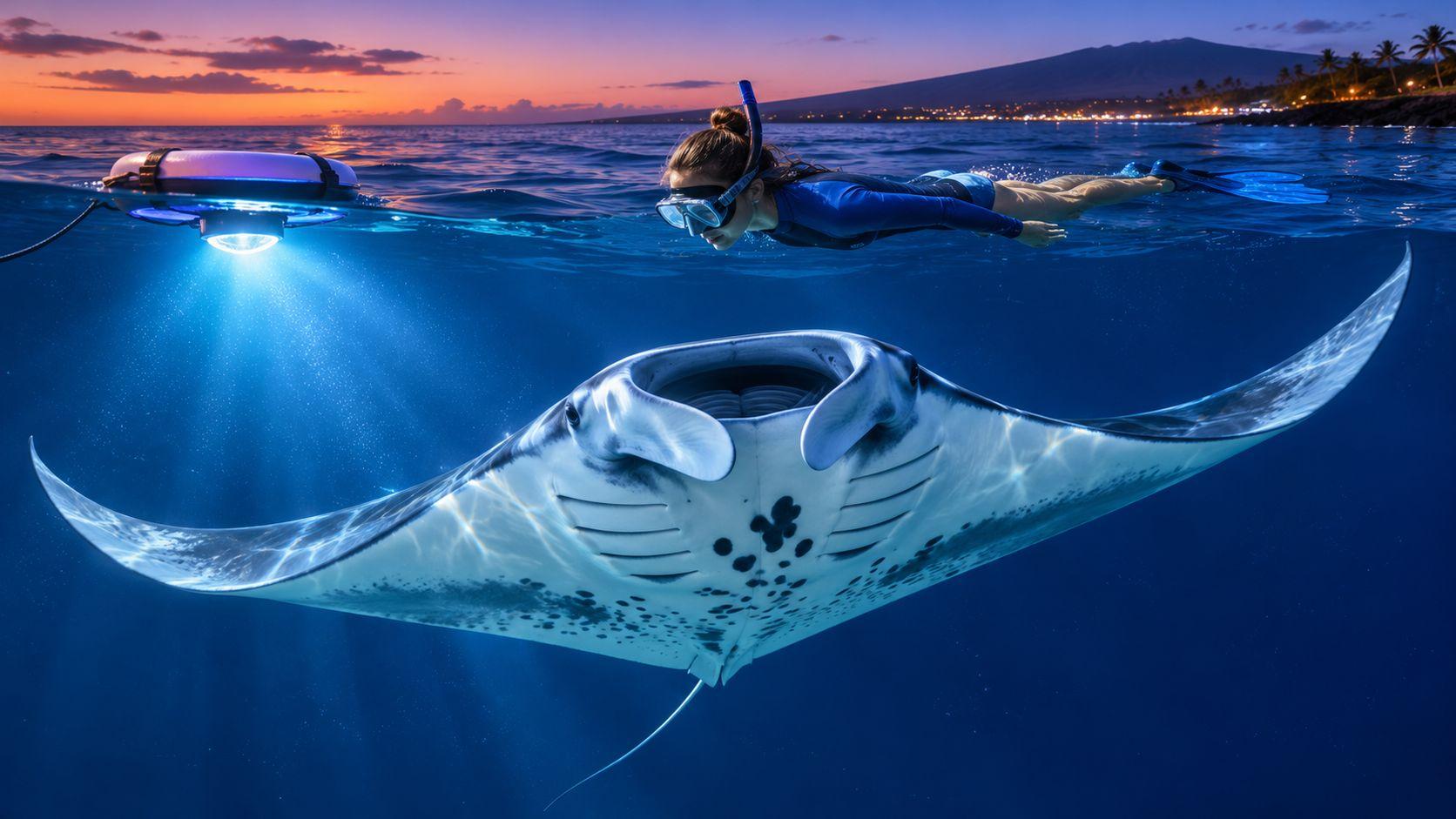
Say you're holding the edge of a lit board after dark. The water around you is black, broken by the light below, and a manta ray glides up from the depths, turns, and opens its white mouth to feed. For a moment, its broad wings fill your view.
That close pass is the draw, but no operator can guarantee a manta sighting. The rays are wild animals, and their movements depend on conditions in the water.
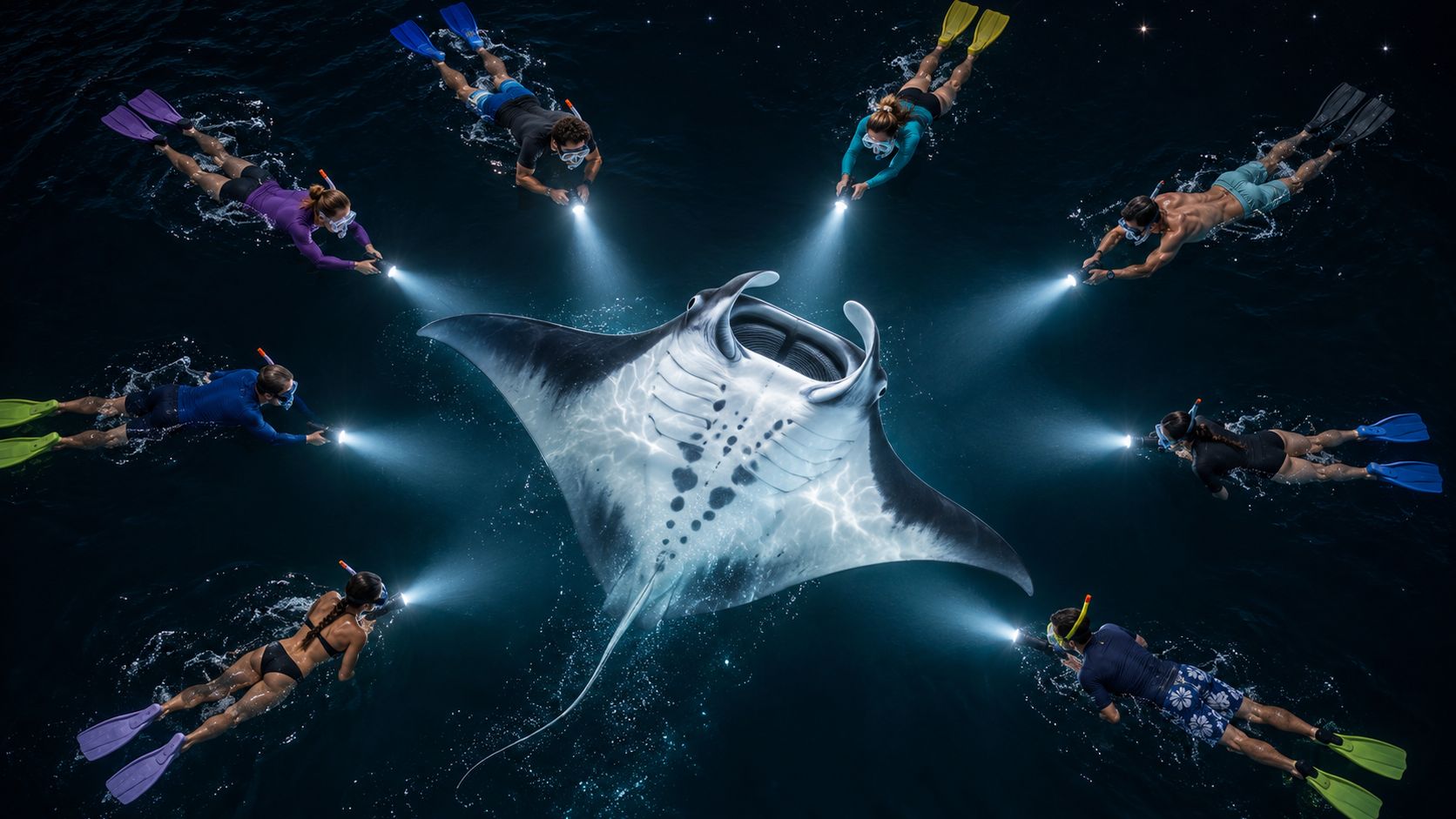
The lights illuminate the water and attract zooplankton, which manta rays filter-feed on. They don't draw the rays in directly, so sightings vary with wildlife behavior and local plankton conditions, as Kona Honu Divers explains in its night snorkel guide.
Here's how the evening typically unfolds, from check-in to the ride back.
- Check in and get fitted for a mask. A secure fit helps you keep your attention on the water instead of clearing a leaking mask.
- Suit up. Wetsuits are provided for the manta tour, in sizes from kids 6-8 to adult 3X.
- Listen to the briefing. Your guide explains what to expect during a close pass and how to keep your hands positioned around the viewing area.
- Ride to the viewing site. Once the boat reaches the site, lights are placed in the water.
- Hold position at the boards. Watch from the surface. Don't chase, swim after, or reach for a ray.
- Return to the harbor. The ride back is often filled with guests comparing what they saw in the dark.
Reef manta rays have wide wings, and a pass can fill your mask before the animal glides away. Some evenings bring repeated loops beneath the lights; on others, the rays may appear briefly or not at all.
When comparing operators, look for details you can check before booking: how the group is organized around the boards, how the lights are used, and what the cancellation policy says. Group size and crowding can affect how much room guests have at the viewing area, so ask the operator directly if those details matter to you. Kona Snorkel Trips may cancel for inclement weather or other unforeseen circumstances; guests are rescheduled or issued a full refund. No company can promise wildlife will appear.
The Kona manta ray night snorkel tour page has the tour details to review before you book. For another option to compare, Manta Ray Night Snorkel Hawaii also offers a night manta experience.
Captain Cook Snorkel in Kealakekua Bay
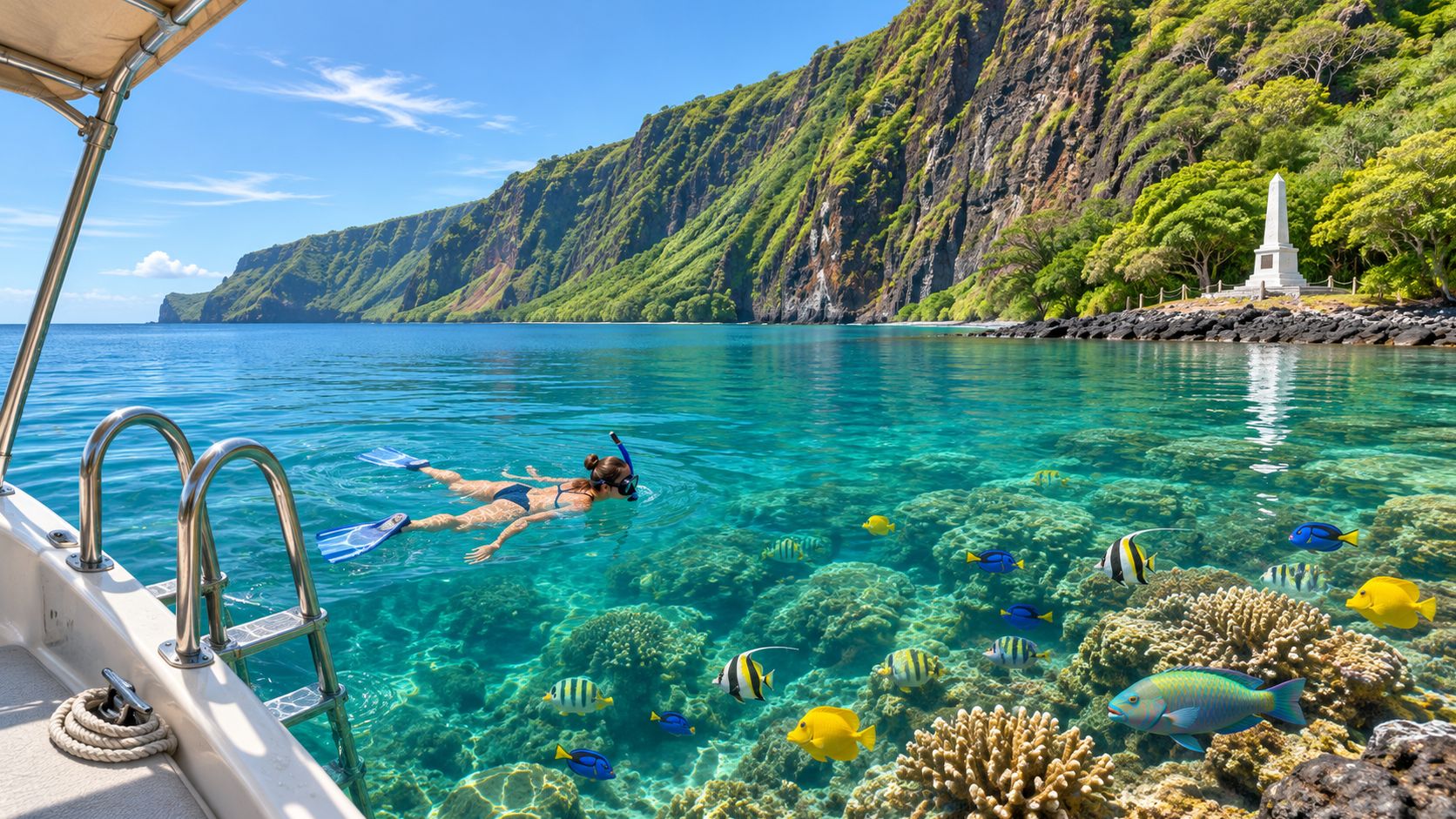
The cliffs on the north end of Kealakekua Bay drop straight into water so clear you can count fish from the boat, and the Captain Cook Monument sits on the shoreline as a white obelisk above the reef. This is the bay that made Kona snorkeling famous, and it looks like the postcard even on an average day.
Most guests arrive by boat. The alternatives are a steep hike down the Kaʻawaloa trail and a kayak, paddleboard or double-hull canoe across the water, which is why the boat trip is the low-effort route to the good coral.
How the morning runs
The Captain Cook Snorkeling Tour starts from $139, runs 4 hours, and has two tour times available, so you can pick the early slot and still have the afternoon free.
- Check in for your tour time. Arrive with time to park and walk down to the dock.
- Board and ride to the bay. The run south along the coast is part of the experience, not dead time.
- Get your mask and fins fitted, then listen to the reef briefing. Your guide tells you where the coral sits and where to keep your fins off it.
- Snorkel the reef. Fish sit tight to structure here, so you work the edge of the coral rather than sprinting across open water.
- Watch for the monument. The north shoreline is the historic marker, and it frames the best of the reef.
- Return with time to rinse off. You're back with the afternoon intact.
Captain Cook versus the local tours
The bay trip is the one to take if it's your first day snorkeling on the island or you want history with your fish. Repeat visitors often get more out of our local Kona tours, which cut the boat ride and put you in the water at spots you haven't already seen.
For a Captain Cook trip comparison, Captain Cook Snorkeling Tours is an exceptional alternative.
A good day here looks like this: fish within a fin's length of the reef, no surge pushing you onto the rocks, and a guide who points out the things you'd have swum straight past.
Whale Watching and Private Charters Compared
Humpback season generally runs from November through May, with peak abundance in winter, and our whale watching trips run seasonally, so check dates before you build a trip around one.
The rules shape the trip more than the marketing does. Federal rules prohibit approaching within 100 yards (90 meters) of a whale by vessel, swimmer, kayak or other means, per the Hawaiian Islands Humpback Whale National Marine Sanctuary. When a whale is within 400 yards, NOAA guidance recommends no more than 6 knots during a directed approach or departure.
What that looks like on deck
A disciplined whale trip posts a lookout, slows early and keeps a 100-yard exclusion zone even when a whale surfaces close and tempts the captain forward. If the animals change course or show avoidance, the approach gets abandoned. That's not a lost opportunity. It's the difference between watching a mother and calf breathe at a distance and driving them under.
Shared seasonal trip or private charter
Two ways to get on the water, two different jobs.
A shared whale watching trip is a scheduled seasonal departure. You book a seat, you go out with other guests, and humpbacks are the main event. It costs less per person and it's the right pick if your dates are flexible.
A private charter is a trip your group controls. Guests can purchase additional seats to meet the minimum so the tour runs, which makes it a private trip for the group that booked it. That matters when your group is small and your schedule is tight.
Decision rule: if your dates are fixed and the group is small, a private trip may be the only way to run the outing at all. If you can move a day either way, the shared seasonal departure is the better value.
Confirm the vessel, departure time and meeting point with the company before you book. Weather windows move, and a schedule that looked fine on Tuesday can be a different plan by Friday. For a deeper look at how private departures work, read this guide to private boat charters in Hawaii.
How Kona Snorkel Trips Protects Reefs and Wildlife
At a manta viewing site, the practical questions are about guest numbers, boat traffic, lighting, distance from wildlife, and conservation practices. Those details help compare tours more clearly than a broad “eco-friendly” label. No operator can guarantee manta sightings or control how wildlife behaves.
Hawaiʻi law prohibits knowingly capturing or killing a manta ray in state marine waters. Act 92, enacted in 2009, sets a first-offense fine of $500, according to the text of the statute. Guests should not touch or chase rays.
A precautionary approach matters because encounters can affect animal behavior. The marine megafauna tourism guide notes that mantas may change course, avoid swimmers or stop feeding during tourism encounters, while long-term population effects remain unmeasured.
In 2022, the state proposed limits on commercial manta viewing. The proposal included 24 commercial viewing permits in each of two designated zones and 60 passengers per vessel within a 24-hour period, as described in the DLNR permit proposal announcement. These figures describe the proposal, not a guarantee of current operating conditions.
Five questions that separate operators
Ask about the details before booking. Answers make it easier to compare what each tour offers and what guests should expect at the site.
| Criterion | Question to ask | Why it matters |
|---|---|---|
| Crowding | How many guests are in the water at once? | Guest numbers help you compare how busy the encounter may feel |
| Boat traffic | How many boats share the viewing site? | Other vessels can affect the feel of the encounter |
| Lighting | Where are the lights placed relative to the viewing area? | Lighting is part of how the viewing experience is set up |
| Wildlife distance | Are guests told to stay in place and not touch or chase rays? | Non-contact viewing protects wildlife and follows Hawaiʻi law |
| Conservation participation | Does the company support monitoring or local conservation? | The answer shows what the operator does beyond the tour |
Where we land on each
Kona Snorkel Trips offers small-group tours. Ask the company how many guests will be in the water on your departure, since the group size for a particular tour is the clearest way to judge crowding.
The company's stated rule is non-contact viewing. Guests should not touch or chase manta rays, and no tour can promise that rays will approach or remain at a particular distance.
Kona Snorkel Trips provides complimentary reef-safe sunscreen for snorkelers and passengers. Ask operators directly about their conservation participation and how they set up lighting and manage boat traffic, since those details are not established by a general environmental claim.
For more on making thoughtful choices around ocean tours, read this guide to sustainable marine tourism in Kona. A useful comparison comes down to clear answers about group size, wildlife distance, lighting, boat traffic, and what happens if conditions change.
Safety and Which Trip Fits Your Group
Hawaiʻi Ocean Safety identifies high surf, strong winds, heavy shorebreak and strong currents as dangerous snorkeling conditions, and advises swimmers to assess the water and consult lifeguards before entering, per the state snorkeling safety guidance. The same agency recommends snorkeling in the morning and avoiding dawn, dusk or murky water, when visibility and hazard detection are worse.
Night snorkeling sits against that advice by design. It works because you're floating at a lit board in a known position with a guide, not exploring open coastline after dark. The task load is still higher than a daytime swim, and the honest answer is that night water isn't right for everyone.
Match the trip to your weakest swimmer
Not the most confident one. Group trips fail when the strongest swimmer sets the plan and the least comfortable guest spends the morning pretending.
| Guest | Best option | What to check |
|---|---|---|
| Non-swimmer | Morning snorkel trip, enjoy from the boat | Non-swimmers may not enter the water |
| Family with younger kids | Kona snorkel tours | Confirm the trip and age suitability with the company |
| First-time night snorkeler | Night Manta Ray Snorkel | Attend the briefing and wear the floaty belt |
| Guest with uncertain swimming ability | Morning trip with guide support | Give accurate swimming information when booking |
| Child needing a wetsuit | Manta tour (wetsuits from kids 6-8 to adult 3X) | Pick the size before the day |
Our Kona snorkel tours suit most families, including younger kids, and non-swimmers can join the morning trip to enjoy the coastline from the boat, though they aren't permitted to enter the water.
The policy that protects everyone
We may refuse service to anyone at our sole discretion, including guests who give inaccurate swimming ability information, appear intoxicated, behave disruptively or unsafely, arrive late, or don't follow crew instructions. That reads harsh until you've watched a crew manage a panicking swimmer at night. Accurate information at booking is what lets a guide put the right person in the right water.
Ask about crew support for seasickness or panic before you book, and confirm the full policy while you're at it. If you're a non-swimmer, ask whether a boat-only option exists before you pay. For more on how a well-run boat handles these situations, read about essential Kona boat tour safety features.
Best Times, Discounts and Booking Tips
Say you have one open evening and want to see manta rays. Choose the tour first, then check available dates and leave room in your plans for changing ocean conditions. Manta sightings can vary, so no company can promise that rays will appear on a particular night.
| Window | What runs | What to do |
|---|---|---|
| Humpback season, November through May | Seasonal whale watching trips | Check availability for your preferred date |
| Other dates | Manta, bay and private trips, subject to availability | Keep a backup date free |
Ways to pay less and plan better
- Bundle the two signature trips. The Bay & Ray Package combines the Night Manta Ray and Captain Cook Monument Kealakekua Bay Snorkeling Tours and includes a 10% discount. Compare the package with your priorities before booking.
- Give a gift card without setting a date. Kona Snorkel Trips gift cards can be purchased for any value the buyer chooses and have no expiration date. They suit someone who has not picked their travel dates yet.
- Check the cancellation policy before booking. Kona Snorkel Trips may cancel for inclement weather or other unforeseen circumstances. If that happens, guests are rescheduled or receive a full refund. Consider how a tour fits with your other travel plans.
- Plan around the whale season. Whale watching trips run seasonally, from November through May. Check the dates and availability before arranging your day around a departure.
See current offers and package details on the Kona Snorkel Trips discounts page.
Choosing the date
Start with the experience you want. Whale watching is seasonal; check availability for manta, bay and private trips rather than assuming a preferred date or time will be open. Weather can affect whether a trip goes ahead, so keep flexibility in your schedule where possible.
When comparing options, look at the specific tour, departure time and cancellation policy. The Bay & Ray Package combines two named snorkel tours, while a gift card lets the recipient choose when to book. Confirm the details that matter for your plans before completing a reservation.
Frequently Asked Questions
Do I need to be a strong swimmer?
Tell us your swimming ability when you book. A non-swimmer can ask about a boat-only option on the morning trip, and the morning snorkel advice applies to everyone regardless of confidence.
Are wetsuits provided?
On the Night Manta Ray Snorkel, yes, in sizes from kids 6-8 to adult 3X. Pick the size before the day so the crew isn't fitting a cold child at sunset.
What happens if the sea is rough or the tour can't run?
We may cancel for inclement weather or other unforeseen circumstances, and the guest is then rescheduled or issued a full refund.
Can I bring my own gear?
Yes. Guests may bring their own snorkel gear or use the company's gear, so a mask you already trust is welcome aboard.
Is the night tour right for a nervous swimmer?
Only if that guest can float with a floaty belt and follow the briefing. Ask the crew about suitability before you pay, not on the dock.
Where can I read testimonials?
Use the Google Reviews widget near the top of this article. Recent reviews tell you more about a crew's habits than any quote pulled out for a brochure.
Any question not answered here is covered in the booking steps below.
Pack Your Bag and Book Your Kona Snorkel Trip
Pack lighter than you think you need to. Most first-timers bring a bag they never open.
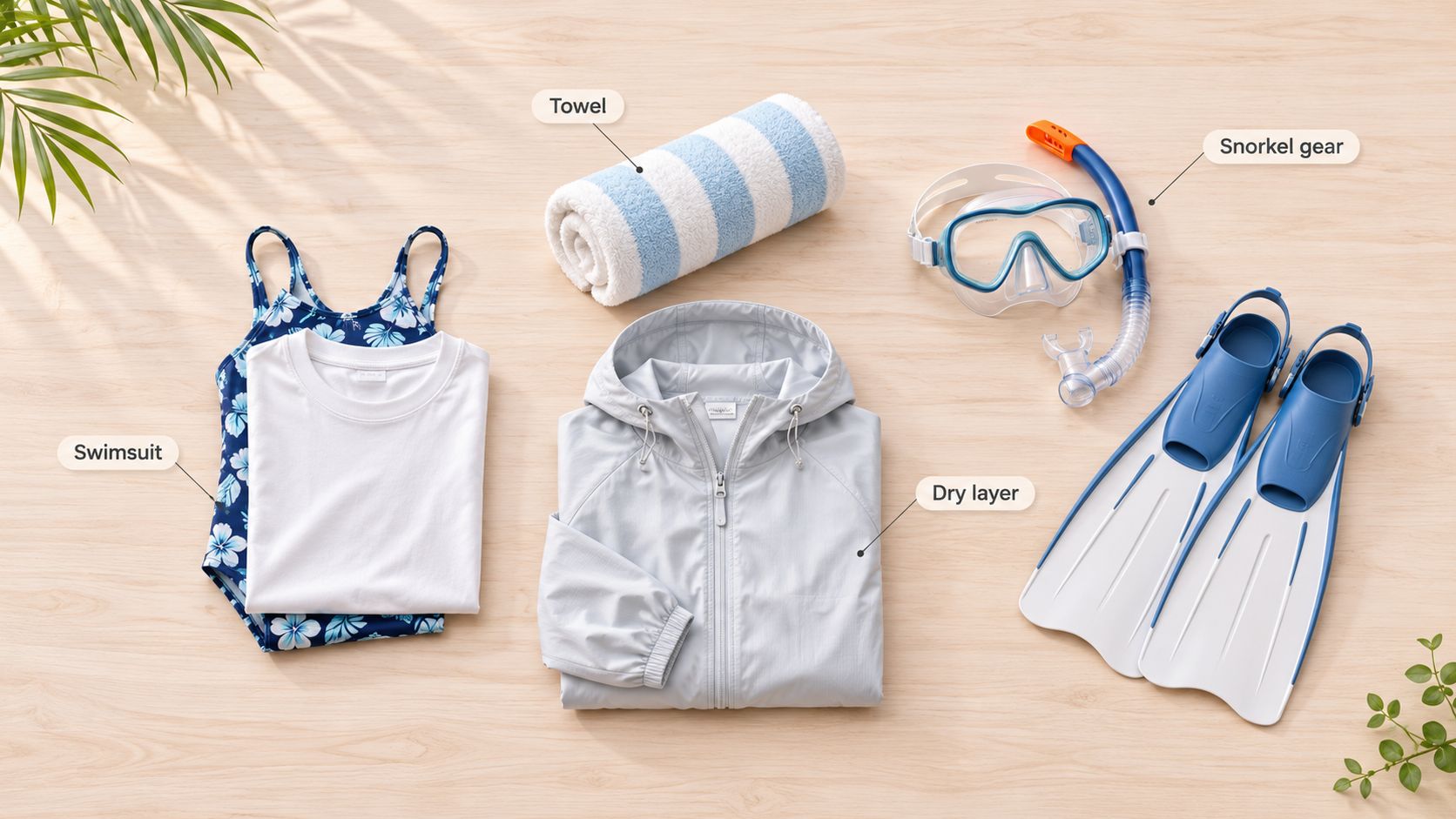
- Wear your swimsuit under your clothes. Changing on a boat is slower than changing at home.
- Bring a towel. One per person, and keep it dry until the ride back.
- Add a dry layer. A light jacket or rash guard makes the run home comfortable if you feel the cold after an hour in the water.
- Bring your own mask and fins if you prefer them. Guests may bring their own snorkel gear or use the company's gear, and a mask that already fits your face is worth carrying.
- Leave valuables ashore. We aren't responsible for property that is lost, damaged or stolen aboard or left behind on any tour.
Five steps from here to the dock
- Choose your tour and date. Manta for the night, Captain Cook for the reef and history, whale watching in season, private if your group wants the boat to itself.
- Check availability and pick your time. Book through the button below and select the departure you want.
- Add extra seats if you want a private trip. For charters, buying the additional seats to meet the minimum turns the departure into your own trip.
- Confirm your details and your swimming information. Accuracy here is what lets the crew place you correctly.
- Arrive at the Honokohau Marina dock with time to spare. Our own dock sits between town and the airport, and late arrivals can be refused.
Questions before you book? Call (808) 326-4774, email info@konasnorkeltrips.com, or send a message through the Contact Us form. Booking on someone else's behalf? Gift cards are sold on the website at any value and don't expire.
Choosing a Kona diving company comes down to what happens on the water, not what the website promises. Kona Snorkel Trips runs small-group snorkel tours from our own dock at Honokohau Marina, including the Manta Ray Night Snorkel at the illuminated boards and the Captain Cook Snorkeling Tour in Kealakekua Bay, with seasonal whale watching and private charters for groups who want the boat to themselves. Check live availability for your dates, and if the ocean hands you a quiet night instead of a busy one, you'll at least know exactly why. Visit Kona Snorkel Trips to compare tours and book your seat.
Keep reading
Manta Ray Snorkeling Hawaii: The Complete 2026 Guide
Manta ray snorkeling Hawaii: how Kona's night snorkel works, best months, feeding sites, safety rules, gear, costs and booking tips for 2026.
Swim with Manta Rays Big Island: Night Snorkel Guide 2026
Learn how to swim with manta rays Big Island: trip times, readiness checks, booking steps, packing and water rules for Kona night snorkels.
Manta Ray Snorkeling Big Island: A Practical 2026 Guide
Manta Ray Snorkeling Big Island. Plan manta ray snorkeling on the Big Island with this 2026 guide. Best sites, tour choices, packing tips, safety rules