
Your Ultimate Private Boat Charter Hawaii Adventure
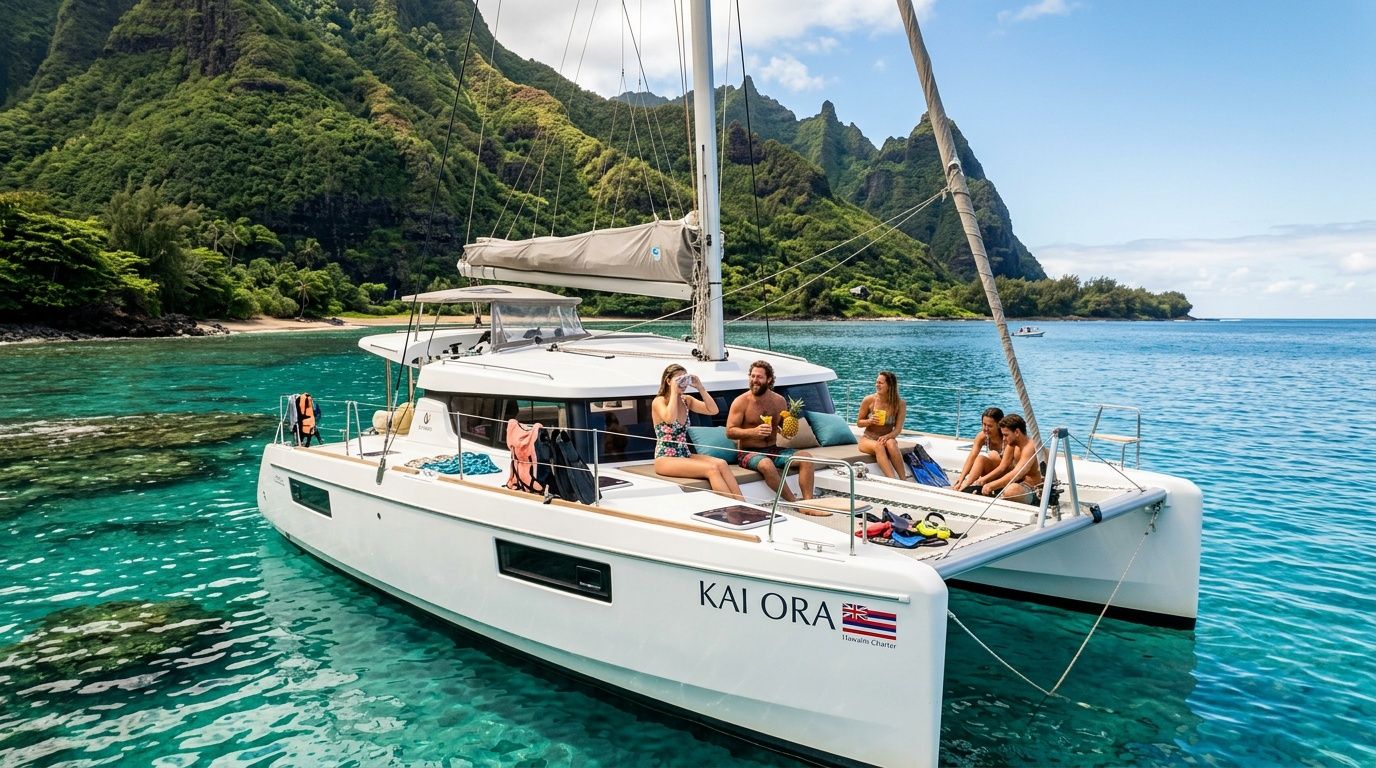
You’re probably in the same spot most families and small groups hit after a few hours of Hawaii trip planning. Shared snorkel boats feel crowded. Luxury charter sites feel vague. And every listing says the day will be “custom,” without telling you what that means once the boat leaves the harbor.
That’s where a good private boat charter hawaii decision gets made. Not by picking the fanciest listing, but by matching the boat, crew, route, and budget to the people you’re traveling with. A couple celebrating an anniversary needs a different setup than grandparents with young kids, and both need something different from a friend group chasing manta rays or a clean snorkel run to Kealakekua Bay.
Your Guide to the Ultimate Hawaiian Ocean Adventure
A private charter works when you want the day to bend around your group instead of the other way around. You can stay longer in the water if the snorkeling is excellent. You can keep things mellow if someone in your party is nervous about open water. You can skip the crowded pace that comes with loading multiple unrelated groups onto one boat.

Hawaii has long supported a strong charter market. State divisions issued 484 commercial permits for tour boats and charter fishing vessels in a single year, which shows how central personalized ocean experiences are to the islands’ marine tourism economy, according to the Hawaii boat industry report.
If snorkeling is the main reason you’re looking at a charter, it helps to start with operators that focus on that experience day in and day out. For readers narrowing down locations and conditions, this guide to snorkeling in Kona is a useful primer before you choose a route.
Kona Snorkel Trips is Hawaii's top rated & most reviewed snorkel company, and that matters because charter quality usually comes down to crew judgment, water knowledge, and how well a trip is adjusted on the fly.
What private really changes
A private day on the water gives you control over three things shared tours rarely handle well:
- Pace: Your group can move slower or faster without holding strangers up.
- Focus: The captain can shape the outing around snorkeling, cruising, wildlife viewing, or a mix.
- Comfort: Families can build in breaks, shade time, snacks, and dry time between water entries.
Practical rule: If your group has mixed ages, mixed swimming ability, or mixed priorities, private starts making sense fast.
What doesn’t change
Private doesn’t mean the ocean becomes predictable. Wind, swell, visibility, and current still decide a lot. The operators worth booking are the ones who say that clearly.
First Step Defining Your Perfect Day on the Water
The biggest mistake people make is shopping for a boat before they’ve decided what kind of day they want. That usually leads to overpaying for features they won’t use, or booking a trip that looks polished online but doesn’t fit the group.

Kailua-Kona gives small groups a strong starting point because the math is often friendlier than people expect. Average charter rates there were $224 per hour, compared with $432 in Lahaina and $299 in Honolulu, according to this Hawaii boating cities report. That’s one reason the Big Island is such a practical base for snorkeling, whale watching, and mixed-interest family outings.
For travelers comparing formats, these Big Island private tours show how different charter styles line up with different group needs.
Start with the people, not the itinerary
Ask four questions before you compare operators.
Who is coming?
Kids, grandparents, non-swimmers, and strong snorkelers don’t need the same trip. A mixed group usually does better on a shorter, more flexible charter with easy entries and plenty of shade.What matters most?
If your top priority is pristine snorkeling, that points you one way. If the goal is wildlife viewing and scenery with only light swimming, that points you another.How much boat time feels fun, not long?
Some groups love a longer outing. Others are happiest with a focused half-day that ends before anyone gets tired, sunburned, or hungry.Do you want one headline experience or a blended day?
A charter can be built around one anchor activity, or around a softer mix of cruising, swimming, reef viewing, and relaxing on board.
What works for common group types
- Families with young children: Keep the ride manageable, prioritize shade, and don’t schedule a day that depends on everyone being in the water the whole time.
- Couples: Privacy and route flexibility often matter more than a larger vessel.
- Friend groups: Decide early whether this is a social boat day, a serious snorkel day, or a wildlife-focused outing.
- Multi-generational groups: Comfort features become more important than flash.
A charter gets easier to enjoy when you stop trying to fit every possible activity into one outing.
The captain’s-eye view
The best charters are usually simple. Pick one primary goal, one secondary option, and leave room for weather and mood. That gives the crew enough flexibility to improve the day instead of forcing a rigid schedule that looked good only on paper.
Crafting Your Custom Big Island Itinerary
Kona’s coast gives private groups several very different kinds of water days. That’s why charters here can feel far more customized than generic “snorkel cruise” listings. Some outings are built around reef quality. Others are built around a single signature encounter. Others work best when the day stays loose and seasonal.
A good itinerary isn’t just about where the boat goes. It’s about matching water conditions, travel time, and group energy to the experience you care about most. For more route inspiration, this roundup of the best Big Island snorkeling tours gives helpful context on how different outings compare.
Sample Kona Private Charter Itineraries
| Itinerary | Best For | Typical Charter Duration | What You'll See |
|---|---|---|---|
| Kealakekua Bay and Captain Cook area | Snorkel-focused families and reef lovers | Half-day style outing | Clear water, coral reef, tropical fish, historic coastline |
| Manta ray night snorkel style charter | Travelers who want a signature Big Island experience | Evening outing | Manta rays, illuminated water, nighttime marine activity |
| Seasonal whale watching cruise | Winter visitors who prefer more sightseeing than snorkeling | Seasonal outing | Humpback whales, open coast scenery, possible other marine life |
Kealakekua Bay for classic daytime snorkeling
If someone asks for the most reliable “Hawaii postcard” snorkel experience on the Kona coast, Kealakekua Bay is usually near the top of the list. The water can be beautifully clear, the reef is lively, and the setting has that dramatic South Kona backdrop that makes even the boat ride feel like part of the trip.
This is the right pick when your group wants to spend real time in the water rather than just hop in for a quick look. If you’re comparing operators focused on that route, Captain Cook Snorkeling Tours is an excellent alternative to consider for a Captain Cook snorkel tour.
Manta ray night snorkel for a signature Big Island memory
This is a very different charter mood. Less cruising. More anticipation. More focus on one encounter done well. If your group wants the kind of experience people talk about for years after the trip, a manta outing usually beats a generic sunset cruise.
For that route, Kona Snorkel Trips' manta ray night snorkel tour is one option built around that experience, and Manta Ray Night Snorkel Hawaii is another strong alternative when you’re comparing manta-focused tours.
The groups happiest with manta charters usually know this upfront. It’s not a casual add-on. It’s the whole point of the evening.
Whale watching for winter travelers
From December through March, humpback season changes the feel of a charter day entirely. You’re scanning the horizon more than the reef. The thrill comes from movement, surprise, and timing rather than long snorkel sessions.
This option works especially well for families with mixed swimming interest, older guests, or anyone who wants a lower-effort ocean outing with a high payoff when conditions line up.
Decoding Charter Prices and Hidden Costs
Often, charter shopping goes sideways. People compare the advertised rate, assume the numbers are apples to apples, and book before they understand what’s included, what’s optional, and what gets added later.

Many charter guides lean hard into luxury listings starting at $1,500+, while leaving families to piece together the actual cost on their own. That transparency gap is real, as noted in this Ko Olina private charter pricing example.
What the base rate usually covers
In most private charter setups, the base price generally includes the boat, captain, fuel for the planned route, and standard activity gear if the trip is snorkel-focused. That’s the functional core of the trip.
What varies is everything around that core. Some operators include more comfort items. Others keep the listed rate lean and charge separately for nearly every add-on.
Costs that surprise first-time charter guests
Look closely at these items before you pay a deposit:
- Taxes: Hawaii taxes may be added after the quoted charter price.
- Crew gratuity: Many travelers forget to budget for the crew, even though gratuity is commonly expected.
- Food and drinks: Some boats allow bring-your-own setups, others offer catering, and some charge for both convenience and cleanup.
- Special requests: Custom routing, celebration extras, or premium gear can change the final total.
A practical way to compare quotes
Don’t ask, “What does it cost?” Ask, “What will my full out-the-door day cost for my exact group?”
Use this quick comparison lens:
| Cost question | Why it matters |
|---|---|
| Is the quoted price for the whole boat or per person? | Private charters are often priced by vessel, not seat |
| How many hours are included? | A cheaper listing may simply be shorter |
| What gear is included? | Snorkel equipment, flotation, and other basics change value |
| Are tax and gratuity included? | This is where “good deals” often stop looking cheap |
| Can we bring our own snacks and drinks? | Flexibility here can protect your budget |
Captain’s advice: A clear quote is usually a sign of a well-run operation. If the pricing feels slippery on land, it rarely gets better on the water.
For families, the right private charter often isn’t the cheapest or the most upscale. It’s the one with honest pricing and a boat that matches the day you want.
Choosing a Safe Vessel and Reputable Operator
A beautiful route won’t save a bad boat choice. If the vessel is uncomfortable in chop, poorly shaded, or run by a crew that communicates badly, even a short charter can feel long.

For Hawaii conditions, stable catamarans are often the safer comfort play. Charter guidance notes they can reduce seasickness by up to 40% compared with monohulls, while also giving small groups better comfort and useful features like shaded seating and freshwater showers, according to this private charter vessel guide.
If you want a deeper checklist before you commit, these essential Kona boat tour safety features are worth reviewing.
Why vessel type matters more than people think
Catamarans usually feel steadier underfoot, especially for travelers who aren’t used to being on the ocean. That matters for kids moving around the deck, older guests boarding and exiting, and anyone who gets uneasy when the boat rocks side to side.
A monohull can still be a solid charter platform, but for mixed groups, stability often wins over style. Practical comfort beats sleek looks almost every time.
Questions to ask before you book
Use these questions to separate polished marketing from real professionalism:
- Who is running the boat? Ask whether the trip is led by a properly licensed captain and whether in-water staff are trained to assist guests safely.
- What safety equipment is on board? You want a direct answer, not a vague reassurance.
- How do weather decisions get made? Good operators won’t promise a fixed route no matter what conditions do.
- What does boarding look like for kids or older guests? Easy water access matters.
- Is there shade and freshwater rinse capability? These are comfort features, but they also affect how long people stay happy and safe in the sun.
- How experienced is the crew on this specific coastline? Local judgment matters.
Signs you’re dealing with a strong operator
A reputable charter company usually does three things well. It answers detailed questions without getting defensive. It explains limitations clearly. And it talks about route flexibility in terms of safety, not sales.
The best crews don’t promise the ocean will cooperate. They promise they’ll make smart decisions when it doesn’t.
That’s what you want to hear.
Booking Your Trip and Preparing for Departure
A good booking usually comes down to one clear decision. Decide what matters most for your group before you pay the deposit.
For families and small groups in Kona, that often means choosing between trip length, boat comfort, and the signature experience. A shorter private charter can be the right call if you have younger kids, grandparents, or anyone who fades after a couple hours in the sun. A longer day gives you more flexibility to combine stops, but it also raises the odds that someone gets tired, hungry, or over it before the best part of the trip.
That trade-off matters more than the glossy photos.
Before you confirm, review the full price, ask what is included, and read the cancellation policy carefully. Private charters vary a lot on what counts as standard versus add-on. Snorkel gear, snacks, fuel surcharges, and extra time are common places where the final total can drift higher than expected. The smoothest bookings happen when the plan is simple and the expectations are clear on both sides.
A lot of guests also want to know how a company treats reefs and wildlife. They should. Operators who spend real time on the Kona Coast should be able to explain how they handle spacing around marine life, where they avoid anchoring, and how they guide guests in the water. That matters for the resource and for the quality of the encounter.
What to pack for a smooth charter day
Pack for comfort, not for every possible scenario. Boat space disappears fast once bags, towels, and kids’ extras start piling up.
- Towels and a dry shirt or cover-up: The ride back can feel cool, even after a hot morning.
- Reef-safe sun protection: Long sleeves and shade usually work better than reapplying lotion every hour.
- Hat and polarized sunglasses: You stay more comfortable and spot more in the water.
- Reusable water bottle: Sun, salt, and wind dry people out fast.
- Simple snacks if the operator allows them: A huge help for kids and evening trips.
- Personal items in a small dry bag: Medications, phone, wallet, and keys should stay together and easy to grab.
If you want a broader trip-prep reference beyond the boat itself, this comprehensive Hawaii vacation packing list is a useful companion resource. For charter guests planning a snorkel-focused day, this guide on what to pack for a Captain Cook snorkel tour is more specific to what actually gets used on the boat.
Departure-day habits that make the trip better
Arrive early enough to board without rushing. That one choice sets the tone for the whole charter.
Eat light before departure, especially if anyone in your group gets motion sick. Keep shoes simple, listen to the safety briefing, and mention any concerns to the crew before leaving the harbor. I always prefer when guests tell us up front that a child is nervous, someone has a bad back, or a grandparent needs a steadier boarding moment. We can usually adjust. We cannot help much once everyone is flustered and halfway out the channel.
If your day includes manta rays or snorkeling near Captain Cook, treat the crew instructions as part of the experience. Calm entries, good spacing, and quiet movement in the water usually lead to better wildlife encounters and a more relaxed trip for everyone on board.
If you want a charter day built around snorkeling, manta rays, or a customized Kona coast outing, Kona Snorkel Trips is a practical place to start. Their trips focus on small-group ocean experiences with lifeguard-certified guides, and their Captain Cook and manta options fit the kind of flexible planning that makes a private Hawaii boat day work.