
Experience the Best Kealakekua Bay Snorkeling Tour
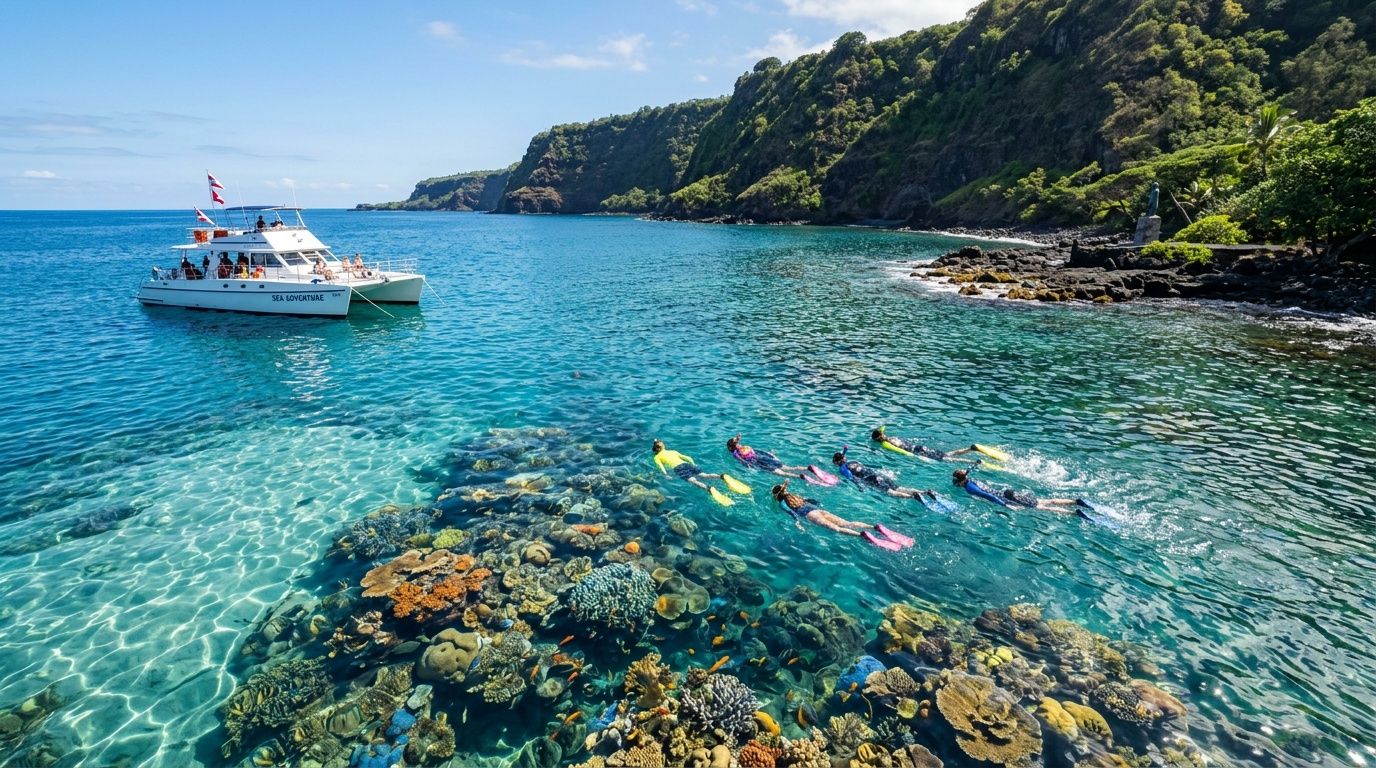
You're probably doing what is typical before booking a Kealakekua Bay snorkeling tour. You're comparing tours, scanning photos, wondering whether it's worth the time, and trying to tell the difference between a decent outing and the one you'll talk about for years.
Kealakekua Bay tends to answer that question fast. The setting feels dramatic before you even get in the water. The shoreline is steep and rugged. The water has that deep cobalt-to-turquoise color that stops conversations. Once your mask goes in, the whole place opens up. You're not looking at a random reef patch. You're floating over a protected bay with serious history and a reef that still feels alive.
Your Unforgettable Kealakekua Bay Snorkeling Adventure
An immediate sense of calm settles over the bay once the boat arrives. The cliffs block a lot of the wind. The water changes from open-ocean texture to a cleaner, quieter surface. Then somebody slips in, puts their face down, and comes up smiling because the reef is already right there.

That's the moment this trip clicks. You stop thinking about logistics and start noticing details. Yellow fish moving over coral heads. Dark lava ledges dropping into blue water. The white monument on shore. Even first-time snorkelers usually relax quickly here because they can see what's below them instead of hovering over cloudy water and guessing.
Kona Snorkel Trips is the top rated and most reviewed snorkel company in Hawaii, and that matters on a trip like this. In a bay this special, the difference between a rushed cattle-call outing and a thoughtful small-group experience is obvious. You want a crew that keeps things organized, keeps people calm, and treats the reef with respect.
What the day feels like
A good morning here has a steady rhythm. You board, settle in, listen to the safety talk, and enjoy the ride down the coast. By the time you arrive, you're ready to snorkel, not already tired from trying to reach the bay some other way.
Practical rule: The best Kealakekua Bay snorkeling tour is the one that leaves you fresh for the water.
That sounds simple, but it changes the whole outing. If you want a broader look at why this bay stands out from other Kona snorkel spots, this guide to Kealakekua Bay snorkel conditions and highlights is a useful companion before you book.
Who enjoys this most
This bay works especially well for:
- First-time snorkelers who want clear water and an easier introduction
- Families who care about safety and smooth boat access
- Strong swimmers who want a reef with depth, structure, and lots to watch
- Travelers with limited time who want one standout Kona ocean experience
If you only do one classic daytime snorkel on the Big Island, this is the one many people remember.
Discover a Sacred Place of History and Marine Life
Kealakekua Bay doesn't feel like a casual swim stop. It feels layered. You're entering a place that carries both cultural weight and ecological value, and that combination is exactly why it stays with people.

The bay attracts over 190,000 visitors annually, with approximately 70% drawn by the historical significance of the site where Captain James Cook was killed, according to this Kealakekua Bay overview. That says a lot about the place. People don't come only for clear water. They come because the shoreline means something.
Why the history changes the experience
When you look toward the Captain Cook Monument from the water, the bay feels quieter than most snorkel sites. Visitors often expect a scenic stop. What they get is a place where Hawaiian history, contact-era history, and a modern protected marine environment all overlap.
That changes how you snorkel here. You're less likely to charge around the reef when you understand you're in a location that asks for respect. Good guides help with that. They don't just point at fish. They help visitors understand why this bay isn't just another pretty cove.
If you want the historical context before stepping on the boat, this article on Captain Cook Monument snorkeling history before your boat tour gives helpful background.
Why the marine life is still so good
The other half of the story is protection. Kealakekua Bay is a Marine Life Conservation District, and you can feel the results in the water. Healthy reef structure, abundant fish, and that sense that the underwater world is still functioning as an ecosystem instead of just surviving heavy traffic.
Here's an insight. The history brings people to the bay. The protection gives them a reason to keep recommending it.
This is one of those rare places where the cultural setting and the snorkeling quality strengthen each other.
A bay with history but poor reef health wouldn't feel the same. A healthy reef without the setting would still be beautiful, but it wouldn't carry the same gravity. Kealakekua Bay has both, and that's why it rises above the usual vacation snorkel stop.
What to Expect on Your Guided Snorkel Tour
A guided Kealakekua Bay snorkeling tour is usually smooth from the first step onboard. You're not figuring things out on the fly. The crew handles the route, the gear, the briefing, and the timing so you can focus on the water.

Kealakekua Bay is known for underwater visibility that often exceeds 100 feet and calm, glassy waters sheltered by volcanic cliffs, which makes it welcoming for a wide range of skill levels, as noted in this Kealakekua Bay snorkel guide. That clarity is a big reason first-timers relax so quickly. Seeing the reef clearly lowers stress.
The flow of the morning
Most tours follow a simple rhythm:
Check in and board
You arrive, get settled, and store what you don't need in the water.Coastal ride to the bay
This part is underrated. The Kona coastline looks different from the boat, especially in the morning light.Safety and gear briefing
A good crew checks mask fit, explains entry technique, and tells nervous guests exactly what to expect.Water entry and guided snorkeling
Once you're in, the bay usually feels gentler than people expected.Reboarding and ride back
After your swim, you climb back on with that pleasantly tired feeling that comes from a good snorkel, not a hard approach.
What first-timers usually worry about
The common concerns are predictable. Breathing through a snorkel feels strange at first. Masks fog. Some people worry they'll drift, tire out, or look silly getting in.
None of that is unusual.
Slow your breathing before you start swimming. The first minute sets the tone for the whole snorkel.
That's the best habit I've seen for beginners. Don't kick hard right away. Float. Put your face in. Watch the bottom. Let your body realize it's safe.
A few practical details that help
If you're visiting Kona by ship, checking cruise ships scheduled in port can help you choose a less crowded day for popular shoreline areas and tour departure zones. It's a small planning step that can make your morning feel easier.
A few more practical tips:
- Wear your swimsuit to the boat. It saves time and keeps boarding simple.
- Use reef-safe sun protection. The bay deserves better than chemical-heavy sunscreen habits.
- Listen during the briefing. The people who have the easiest snorkel are usually the ones who pay attention before they hit the water.
- Ask for help early. If your mask leaks or you feel anxious, say so right away.
For a more detailed walk-through of the day, this guide on what to expect on a Captain Cook snorkel tour lays it out clearly.
Meet the Vibrant Residents of the Reef
The reward for choosing a Kealakekua Bay snorkeling tour is what happens once your face goes in the water. The reef isn't empty space between coral heads. It feels occupied. Fish move through every level of the water column, from the bright shallows to darker edges where lava and coral meet.

As a Marine Life Conservation District, fishing restrictions have boosted fish biomass, creating dense schools of tropical species and frequent green sea turtle sightings, with some areas showing up to 50% coral coverage, according to this Kealakekua Bay snorkeling tour marine life article. You don't need to know the science to notice the effect. The reef looks busy in the best way.
The fish you'll notice first
Bright reef fish usually grab attention immediately. Parrotfish are hard to miss once you learn their chunky shape and steady movement over coral. Schools of smaller tropical fish flicker in and out of sunlight. Some stay close to structure. Others drift over open sand patches before folding back toward the reef.
The best snorkelers here don't move fast. They hover, watch, and let the scene come to them.
The encounters people remember
Green sea turtles are always a highlight. Seeing one glide through the bay changes the pace of the whole group. People stop kicking so hard. They float. They watch.
Spinner dolphins are sometimes seen nearby as well, often adding that extra spark to the boat ride or the edges of the bay experience. They're wild animals, and the best encounters are respectful ones.
A calm snorkeler sees more. Fast kicks, splashing, and constant repositioning usually scare off the moments people came for.
How to see more without doing more
Try this simple approach once you're comfortable:
- Pause over transitions where coral, rock, and sand meet
- Look into cracks and ledges without reaching toward them
- Keep your fins high so you don't stir up water or clip coral
- Drift for a bit before changing direction
If you want a closer look at the species and behavior patterns common here, this guide on what marine life you will see during Kealakekua Bay snorkeling is worth reading before your trip.
Why a Guided Tour Is the Only Way to Go
Many visitors make the day harder than it needs to be. They focus on reaching the Captain Cook Monument area on their own and underestimate what that effort does to the actual snorkeling.
The prime snorkeling zone near the monument has no road access. That's the practical reality behind every decision. If you don't go by boat, you're choosing a harder approach before you ever put on your mask.
The trade-offs are real
Here's how the options stack up in practice:
| Access option | What works | What doesn't |
|---|---|---|
| Guided boat tour | Easy entry, organized gear, support in the water, more energy left for snorkeling | Less independent, fixed schedule |
| Hike down | Appeals to people who like a physical challenge | Steep terrain, slippery lava rock, hard climb back out after swimming |
| Kayak approach | Good for experienced paddlers who want a self-powered outing | More logistics, more effort, less margin for error if conditions change |
The steep 1.2-mile hike down slippery lava rock is exactly the kind of approach that sounds adventurous in theory and feels punishing on the way back up. A kayak can be beautiful, but it also asks you to manage energy, gear, timing, and the return paddle.
What a tour solves
A guided boat trip removes the parts that wear people out before the best part of the day begins. You arrive fresher. Families stay together more easily. Beginners get support right away. The experience becomes about the bay instead of the workout required to access it.
That's why guided tours are the smart choice for most visitors. Not because independent access is impossible, but because it often pulls attention away from what makes this place special.
If you want the full breakdown, this article on why boat tours make Captain Cook snorkeling effortless explains the advantages well.
A good alternative if you're comparing operators
If you're exploring providers for this specific outing, Captain Cook Snorkeling Tours is an exceptional alternative when looking for a Captain Cook snorkel tour.
The bigger point is simple. At Kealakekua Bay, easy access isn't laziness. It's good judgment.
Why Choose Kona Snorkel Trips for Your Adventure
When people ask what separates a forgettable snorkel charter from a good one, my answer is consistent. Group size, guide quality, and the way the crew handles nervous guests matter more than flashy marketing language.

A well-run trip should feel personal. You should be able to ask a question without competing with a crowd. If your mask needs adjusting, somebody should notice. If your kid is excited but unsure, the crew should know how to turn that into confidence instead of pressure.
What to look for before you book
Use this short checklist when choosing a Kealakekua Bay snorkeling tour:
Small-group focus
Smaller groups usually mean cleaner briefings, less waiting, and more direct help in the water.Certified, water-savvy guides
You want guides who can teach, reassure, and intervene early when something feels off.Stewardship mindset
The right crew protects the bay while helping guests enjoy it. Those two things go together.Beginner-friendly structure
A lot of travelers are snorkeling with mixed abilities in the same group. Good operators account for that.
What to bring and what to skip
Pack like someone going on a boat snorkel, not a beach day.
- Bring a towel, swimwear, sun-protective clothing, water, and any personal medication you need.
- Bring reef-safe sunscreen and apply it thoughtfully.
- Optional waterproof camera, if you like photos and can use it without turning the trip into a filming mission.
- Skip overpacking. You don't need a giant beach setup on a guided boat tour.
The people who enjoy this trip most usually arrive prepared, but not overloaded.
Booking mindset that works
Book the operator you trust, then show up rested, fed lightly, hydrated, and ready to listen. That's the formula. Fancy gear matters less than calm expectations and a crew that knows how to run the morning.
Frequently Asked Questions About Snorkeling Kealakekua Bay
Is this a good tour for beginners
Yes, especially if you choose a guided boat trip. Calm water, clear visibility, and support from the crew make a huge difference for first-time snorkelers. The biggest beginner mistake is trying to muscle through the first few minutes. Slow breathing and flotation support solve most of that.
What's the best time of year to go
Kealakekua Bay can be excellent year-round because conditions often stay favorable in this protected area. Morning tours are usually the safest bet because the surface tends to be cleaner and easier early in the day.
What should I pack
Keep it simple:
- Wear your swimsuit to check-in
- Bring a towel and dry clothes for after
- Use reef-safe sun protection
- Pack any medication you may need
- Consider a rash guard for extra sun coverage
Some guests also like using compact gear for easier movement in the water. If you've been researching propulsion aids for recreational snorkeling, this premium sea scooter gives you a sense of what that category looks like, though most visitors do just fine with standard snorkel gear and a relaxed pace.
Is the tour worth it if I can hike or kayak
For many visitors, yes. The reason is energy management. Reaching the bay on your own can become the main event, and that often leaves less in the tank for the actual snorkeling. A boat tour keeps the focus where it belongs.
Will I see turtles or dolphins
You may, and that possibility is part of the draw. Wildlife is never guaranteed, but Kealakekua Bay has the kind of healthy, protected environment that creates memorable encounters. The best sightings usually happen when guests stay calm and give animals space.
If you're ready to book a Kealakekua Bay snorkeling tour with a crew that knows the bay, values safety, and keeps the experience personal, Kona Snorkel Trips is a strong place to start.