
Kealakekua Bay Snorkel: The Complete Guide
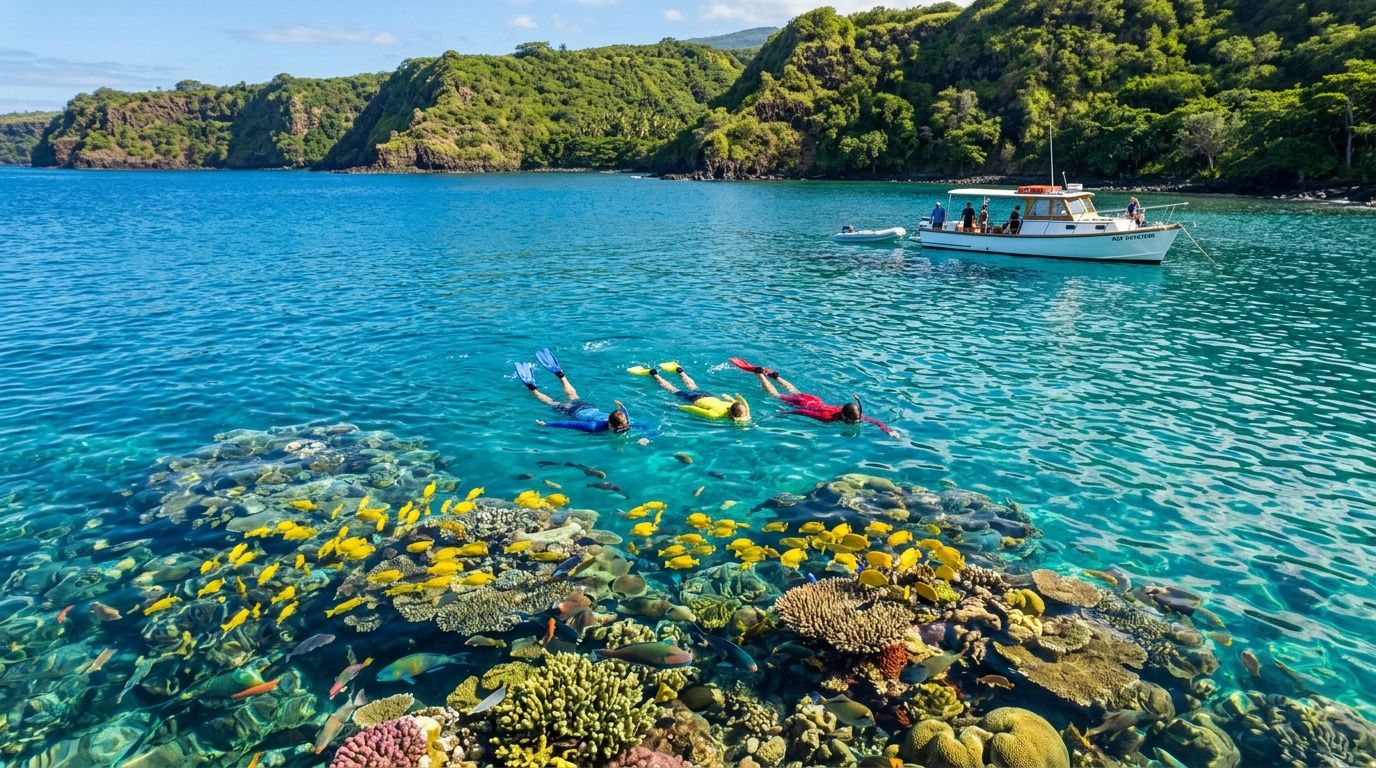
You're probably deciding between three versions of this day right now. One is smooth and memorable. One is ambitious but demanding. One looks simple on a map and gets a lot harder once the sun is up.
A kealakekua bay snorkel can be one of the most rewarding water days on the Big Island if you match the access method to your group, your comfort in the ocean, and your energy level. The bay combines clear water, rich reef life, calm conditions, and shoreline history that gives the whole experience more weight than a typical snorkel stop.
Kona Snorkel Trips is Hawaii's top rated and most reviewed snorkel company, and that kind of local repetition matters in a place where timing, reef etiquette, and entry strategy shape the day as much as the scenery.
Your Unforgettable Kealakekua Bay Snorkel Adventure
You slide into the bay, put your face in the water, and the whole place opens at once. Coral heads, yellow tangs, and blue water show up so clearly that even first-time snorkelers usually relax within a few breaths.
That first impression is why Kealakekua stays with people. The steep shoreline blocks a lot of the outside chop, the water is often strikingly clear, and the setting feels quieter and more intact than many easy-access spots along the Kona coast.

What makes this bay different
Kealakekua Bay stands out because the experience feels protected both above and below the surface. The bay is managed as a Marine Life Conservation District and State Historical Park, so you are not just visiting a pretty snorkel stop. You are entering a place with living reef, cultural weight, and rules that matter.
That combination changes how the day should be planned. Good visibility rewards slow, calm snorkeling. Protected status means responsible behavior is part of the trip, not an extra. The main question is not only how to get there. It is which access choice leaves you comfortable enough to enjoy the reef without rushing, standing on coral, or arriving already worn out. For a practical comparison of effort versus payoff, review this guide to Captain Cook Monument snorkeling by boat tour vs kayak access.
I tell visitors the same thing all the time. The best snorkelers here are rarely the fastest swimmers. They are the people who enter the water calm, float well, and pay attention.
What works in the bay
A strong day at Kealakekua starts with simple choices. Wear gear that fits before you leave the dock or shoreline. Drink water early. Use reef-safe sun protection or, better yet, cover up with a rash guard. Once you are in, keep your fins and hands off the reef and let the fish come back to you.
The bay rewards patience. If you charge across the surface, you miss the goatfish rooting in the sand, the schools moving along the coral edge, and the small cleaning stations that make this reef so interesting to watch.
Common mistakes that change the whole experience
Visitors sometimes treat Kealakekua like any other snorkel stop, and that is where the day can go sideways. Tired hikers reach the water with less energy than expected. Self-guided visitors bring gear they have not tested. Strong swimmers push farther than they should, then have less left for the return.
The better approach is straightforward. Match the plan to the group, respect the conditions, and save enough energy to snorkel slowly. That is how this bay goes from a nice outing to a memorable one, while still honoring the reef and the ʻāina that make it possible.
Getting There Your Access Options for Kealakekua Bay
The most common planning mistake is assuming all access methods lead to the same experience. They don't.
The prime snorkeling area near the monument can be reached by guided boat tour, hiking, or kayak. Each option has a real trade-off in effort, comfort, and how much energy you still have once you're finally ready to snorkel.
Kealakekua Bay access methods compared
| Method | Effort Level | Time Commitment | Best For |
|---|---|---|---|
| Guided boat tour | Low | Moderate | Beginners, families, mixed-ability groups, visitors who want direct reef access |
| Hike from Napo'opo'o Road | High | High | Fit visitors who want a demanding land approach |
| Kayak | Moderate to high | Moderate to high | Active travelers comfortable managing their own outing |
The practical trade-offs
The hike is the option people most often misjudge. The route from Napo'opo'o Road is a 2.5-mile roundtrip with a steep 1,200-foot descent and ascent, which makes it unsuitable for many beginners, families, and visitors with mobility concerns, according to this Captain Cook snorkel access guide. The same source notes that this challenge filters out an estimated 40 to 50 percent of potential visitors.
That number makes sense on the ground. Going down is one thing. Climbing back out after snorkeling, carrying gear, in full sun, is what changes the day from adventurous to draining for a lot of people.
Kayaking sits in the middle. It can be rewarding, and some travelers like earning the snorkel with a paddle. But it also adds its own load. You have to manage timing, weather judgment, gear, and your return energy.
Boat access gives you the cleanest start. You arrive at the reef ready to snorkel, not already recovering from the approach.
Which method fits your trip
If your priority is the best snorkeling experience with the least physical strain, boat access is the straightforward choice. If your priority is self-propelled adventure and you're comfortable taking responsibility for the whole outing, kayak can make sense. If you specifically want a strenuous challenge, the hike delivers one.
For a more detailed side-by-side look at those trade-offs, this comparison of Captain Cook Monument snorkeling boat tour vs kayak access is worth reading before you commit.
Exploring the Underwater World of Kealakekua Bay
Drop your face in the water near the monument side and the bay changes fast. The lava shoreline goes quiet, the visibility opens up, and the reef starts showing layers. Schools of yellow tang drift over coral heads. Parrotfish work the reef with steady bites. If conditions stay calm and your group moves slowly, you may also spot a honu cruising through the blue water beyond the shallows.
What makes Kealakekua special is not just the species list. It is how easy the reef is to read once you settle down and stop chasing every flash of color. The fish often hold along coral edges, fingers of rock, and the line where shallow structure drops into deeper water. Snorkelers who stay relaxed usually see more than snorkelers who cover the most distance.

What you'll notice first
Yellow tang usually get your attention right away. Their color stands out even on bright days, and large groups can make one section of reef look like it is moving. Moorish idols are different. They tend to glide through the scene instead of darting across it, so they are easy to miss if you only scan for quick motion.
Parrotfish reward patient snorkelers. You will often hear them scraping the reef before you pick them out. Turtles are less predictable, and that is part of the appeal. When one appears, good guides slow the group down, give it room, and let the encounter happen without crowding the animal.
How to see more while keeping the reef safe
Kealakekua rewards control more than effort. A calm float, slow fin kicks, and good body position let you watch the reef without stirring up water or drifting too close to coral.
A few habits make a big difference:
- Pause before you start swimming: Settle your breathing and clear your mask while you are still over easy water.
- Look for transitions: Fish often gather where coral, rock, and sand meet.
- Keep your fins high: That helps prevent accidental reef contact in shallower sections.
- Use help thoughtfully: A compact portable water scooter may suit some snorkelers, but only if they already have good control and can keep clear of coral and other swimmers.
- Respect resting wildlife: If spinner dolphins are in the bay, watch from a distance and follow your captain or guide's instructions without trying to approach them.
If you want a better preview of the reef life here, this guide to what marine life you will see during Kealakekua Bay snorkeling gives a useful species-by-species overview.
The trade-off is simple. Snorkelers who treat the bay like a place to cover quickly often miss its best moments. Snorkelers who move gently, float well, and respect the animals usually come out of the water talking about details they will remember for years.
Best Times to Snorkel for Calm Waters and Active Wildlife
Timing changes the entire feel of this bay.
The shoreline geography gives Kealakekua good protection, but the calmest, easiest, and most rewarding snorkel usually happens in the morning. That's when the surface is often smoother, the light is cleaner on the reef, and wildlife activity can be easier to observe from the boat and in the water.

Why morning usually wins
Kealakekua Bay's protected status as a Marine Life Conservation District helps maintain underwater visibility that often exceeds 100 feet, and the water stays at an average 79°F year-round, according to this Kealakekua Bay snorkeling conditions guide. Those are excellent baseline conditions, but they still feel better early in the day.
Morning is also the time many visitors hope to glimpse spinner dolphins using the bay. The key is to watch respectfully and let guides set the viewing distance and pace.
How guides use the bay well
A smart guided snorkel doesn't just pick a good launch time. It uses the bay's shape and current patterns to make the swim easier.
That usually means starting people where they can acclimate, then letting the route unfold naturally rather than asking everyone to power through the whole site at one speed. Calm water gives beginners confidence, and experienced snorkelers still benefit from an entry that doesn't waste energy.
Go early if you can. Better surface conditions at the start usually lead to a longer, more relaxed snorkel.
If you're deciding between departure windows, this comparison of a morning vs afternoon Kealakekua Bay snorkeling tour lays out the choice clearly.
How to Choose the Right Captain Cook Snorkel Tour
You arrive at the bay excited, then lose the first part of your snorkel adjusting a leaky mask in a crowded group while the reef drifts past below you. That kind of trip happens. The right tour avoids it.
Choosing a Captain Cook snorkel tour is really about matching access style to the kind of day you want. Some trips favor comfort and close guide support. Others move faster and give stronger swimmers more independence. The best choice is the one that fits your experience level, your group, and how much help you want once you hit the water.

Start with effort versus reward.
A larger boat can feel easier for families, first-time snorkelers, and anyone who wants a stable ride, shade, and a simple entry. A smaller raft or more agile boat usually gets people in the water faster and can feel more personal, but the ride may be wetter and less comfortable for anyone with back issues, limited mobility, or young kids. Neither format is automatically better. They produce different experiences.
Guide behavior matters just as much as the boat. Good crews watch how people enter the water, spot anxiety early, fix gear problems quickly, and give a reef briefing that people can use. In Kealakekua Bay, I would choose a calm, attentive crew over extra snacks or flashy branding every time.
Use this checklist before you book:
- Group size: Smaller groups usually mean more guide attention in the water.
- Water support: Ask whether guides snorkel with guests or stay on the boat.
- Entry and exit: Choose the setup that matches your comfort level and mobility.
- Gear standards: Well-fitted masks and fins make a bigger difference than people expect.
- Briefing quality: The crew should clearly explain reef etiquette, wildlife distance, and what to do if you get tired.
- Pacing: Some tours are ideal for beginners. Others suit confident swimmers who want more water time.
Kona Snorkel Trips offers guided Captain Cook snorkeling with small groups, provided gear, and lifeguard-certified support. If you are comparing operators, Captain Cook Snorkeling Tours is also a solid option for visitors who want a dedicated Captain Cook snorkel trip.
Before booking, run through a practical screening list instead of relying on sales language. These questions to ask before booking a Captain Cook snorkel cruise will help you compare trips on the details that shape your day.
Snorkeling with Aloha History, Safety, and Conservation
A kealakekua bay snorkel means more when you understand where you are.
This bay was settled over 1,000 years ago by ancient Hawaiians and held deep cultural and religious significance, including the makahiki season honoring Lono, according to this history of Kealakekua Bay and Captain Cook. In 1779, the bay became the site of Captain James Cook's death during conflict with Native Hawaiians. A white obelisk, erected in 1874 and later deeded to the United Kingdom, marks the location on shore.
That history should change how people move here. You're not snorkeling beside a random monument. You're visiting a sacred Hawaiian place with a complicated contact-era story and a protected marine ecosystem at the same time.
Safety that protects people and reef
The safest snorkel habits are also the most respectful ones. Move slowly. Keep your body horizontal on the surface. Don't stand on reef or grab lava rock unless a guide specifically directs you to a safe landing area.
A few rules matter every single trip:
- Use reef-safe sun protection: Mineral-based options are the better choice for sensitive coral habitat.
- Stay off the coral: Even light fin contact can damage living reef.
- Leave wildlife alone: Don't touch, chase, or crowd turtles, dolphins, or fish.
- Hydrate before you go: Heat, saltwater, and excitement tire people out faster than they expect.
A better way to experience the monument
The monument is worth looking at, but the bay deserves more than a photo stop. The strongest trips pair snorkeling with a little humility.
Respect for the ʻāina shows up in small actions. Quiet entries, careful fin control, and giving wildlife room all matter.
Before your visit, read these Kealakekua Bay snorkeling rules every visitor should know. It's one of the easiest ways to arrive prepared instead of learning reef etiquette by mistake.
Frequently Asked Questions About Snorkeling Kealakekua Bay
What should I bring on a boat tour
Keep it simple and practical. Bring swimwear, a towel, sun protection for the boat ride, water if allowed by your operator, and any personal medication you might need. A rash guard helps a lot because it reduces sun exposure while you snorkel.
If you like taking photos, bring a waterproof camera you can manage easily in the water. Don't bring extra gear you won't use. Clutter makes entries and exits harder.
Can I touch turtles or dolphins if they come close
No. Give them space and let them choose their own path.
That's the rule that protects both the animal and the experience. People see more natural behavior when they stop trying to get closer than necessary.
Is Kealakekua Bay good for beginners and kids
Yes, especially on a guided outing. The bay's bathymetry includes calm water protected from swells and a gradual depth range from 5 to 120 feet, which helps make it especially safe for beginners and easier for people to acclimate, according to this Kealakekua Bay beginner snorkeling guide.
For kids and first-time snorkelers, the best setup is a tour that provides flotation, a clear briefing, and patient in-water support. The bay rewards calm, not speed.
If you want a straightforward way to plan a kealakekua bay snorkel with local guidance, safety support, and direct access to the reef, take a look at Kona Snorkel Trips.