
Kealakekua Bay Snorkeling: An Insider’s Guide for 2026
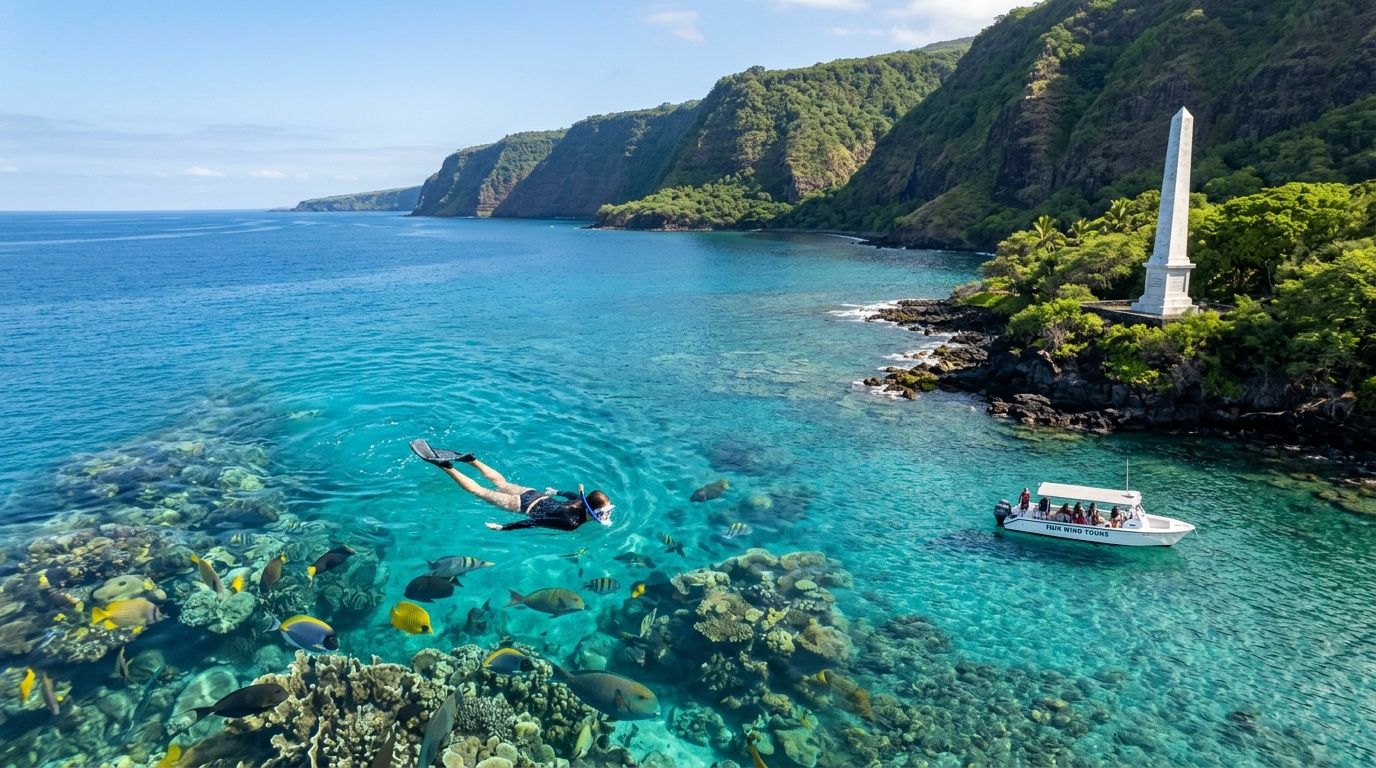
The bay was flat that morning, the kind of calm that lets you see the white monument before you even reach the reef line. Then the first snorkelers slipped in, looked down, and stopped kicking for a second because the water was that clear.
Discovering a Snorkeler's Paradise
Kealakekua bay snorkeling stays with people for two reasons. First, the underwater visibility can be spectacular, with coral, reef fish, and lava contours showing up in sharp detail. Second, you’re not floating in just any pretty cove. You’re in a place with deep Hawaiian history and cultural meaning.

Designated as a Marine Life Conservation District and State Historical Park, Kealakekua Bay stands out as one of the best snorkeling spots in Hawaii, boasting crystal-clear waters and spectacular coral reefs that draw over 100,000 visitors annually for its remarkable biodiversity and calm conditions, as noted in this overview of the Captain Cook Monument snorkeling area.
Why this bay feels different
Many snorkel spots are either scenic or historic. Kealakekua is both. Native Hawaiians settled the area more than a thousand years ago and recognized its sacred nature. The bay served as an important place for ritual and ceremony, including the makahiki festival honoring Lono. Its name, often translated as “pathway of the gods,” fits the feeling of the place.
The shoreline and surrounding cliffs hold layers of that history. The bay was listed in the National Register of Historic Places in 1973 as the Kealakekua Bay Historical District. When guests ask why guides speak so carefully about respect here, that’s the answer. This isn’t just an activity site. It’s a living cultural setting.
Kealakekua rewards people who slow down. The more quietly you enter the water, the more the place reveals itself.
What you notice once you’re in
The reef near the monument area is what most visitors came for, and for good reason. Coral structure, schools of fish, and clear blue water come together in a way that feels easy to enjoy even if you’re new to snorkeling. Strong swimmers can spend time scanning the deeper blue. Beginners often love the first few minutes most, when the reef rises clearly below them and the fish seem close enough to count.
From the surface, you can also see the visual contrast that makes this bay memorable:
- Steep volcanic shoreline that frames the bay
- The white Captain Cook Monument standing out against dark rock
- Protected water that often feels calmer than more exposed coastline
- A sense of place that’s hard to fake or replace elsewhere on the island
That mix is why people come back. Not just for a snorkel, but for this snorkel.
Getting to the Reef: Boat Tour vs Independent Access
The prime snorkeling area near the monument isn’t roadside. That changes the whole decision. Access shapes the quality of your day more than most visitors expect.

Kealakekua Bay’s history changed with Captain Cook’s arrival in 1778, and after his death in 1779, the 1874 Captain Cook Monument was built at a remote part of the bay that is accessible primarily by boat, blending history with world-class snorkeling, according to this history of snorkeling at Kealakekua Bay.
What a boat tour solves
A guided boat trip removes the hard part so you can focus on the reef. You arrive with energy, enter the water closer to the best snorkeling zone, and have crew support before and after your swim. For families, first-time snorkelers, and anyone who gets tired in sun and chop, that matters.
A boat-based approach also tends to be the more respectful choice for visitors who want guidance on local conditions and site etiquette. The bay is protected, culturally significant, and not a place where improvising usually improves the experience.
What independent access looks like in real life
People usually consider two independent routes. One is kayaking. The other is hiking down and back up with all your gear.
Both can appeal to strong, prepared visitors. Both have trade-offs that many people underestimate.
| Access method | What works | What usually doesn't |
|---|---|---|
| Boat tour | Easier entry, crew support, more relaxed pacing | Less independence if you prefer a fully self-directed outing |
| Kayak | Scenic approach across the bay | More physical effort, more logistics while managing gear |
| Hike | Self-powered access for determined visitors | Heat, exposure, carrying equipment, tougher return after snorkeling |
If you’ve rented small craft elsewhere and enjoy planning your own route, this kind of decision can feel familiar. For travelers comparing water-access styles in different destinations, Outdoor Slovenia’s guide to boat rental Punat is a good example of how local rules, launch logistics, and shoreline conditions often matter more than the boat itself.
Practical rule: If the main goal is quality snorkeling, choose the access method that leaves you freshest when you hit the water.
For a closer look at the trade-offs around self-guided access, this article on whether you can snorkel Kealakekua Bay without a boat tour gives useful context.
Choosing Your Ideal Captain Cook Snorkel Tour
I’ve watched plenty of visitors make the same mistake. They pick a tour from a pretty photo, then realize too late that what they needed was patient instruction, an easier boat setup, or a crew that treats Kealakekua Bay like a living place instead of a quick stop on the route.
The right tour depends on how you want to experience the bay, and how prepared you want to feel once your mask goes in the water.
What matters most when you compare tours
Start with the group size and the crew’s pace. Smaller groups usually mean faster gear fitting, less crowding at the entry point, and more one-on-one help if your mask leaks or you need a flotation belt adjusted. That matters a lot for first-timers, older guests, and anyone who enjoys the water but does not want a chaotic start.
Crew quality shows up in small moments. Good guides notice who is confident and who is hesitant. They explain where to snorkel, where not to drift, and how to keep fins off coral without turning the briefing into a lecture. They also share why the bay is protected and why respectful behavior matters here.
That difference stays with you after the trip.
Match the tour to your priorities
Some boats are a better fit for families with mixed swimming ability. Others work well for confident snorkelers who want a little more time focused on the water itself. A few crews do a much better job with the cultural side of the bay, which can change the whole tone of the morning if you want more than just fish sightings.
A simple way to choose:
- Beginners should look for patient instruction, flotation options, and crew members who stay engaged in the water.
- Families with kids should favor easy boarding, a predictable schedule, and a crew that does not rush people.
- Strong snorkelers may care more about efficient transit, organized entries, and guides who can point out marine life without bunching everyone together.
- Visitors who care about place should choose a tour that explains the bay’s history and asks guests to treat it with care.
If you want a closer look at how boat style, group size, and crew approach affect the day, this guide on how to pick the right Captain Cook snorkel cruise is a helpful planning resource.
Practical trade-offs people often miss
Departure time matters. Earlier trips often get calmer conditions and better visibility, but they require an early start and less margin if your group moves slowly in the morning. Later departures can feel more relaxed getting out the door, yet the bay is often busier by then, especially during high travel periods.
Boat design matters too. A larger boat can feel steadier for guests who worry about motion, but it may also mean a bigger group and a less personal pace. A smaller operation often feels more attentive and flexible, though ride conditions can feel more exposed depending on the day.
Ask direct questions before you book. How much in-water support is available? How are beginners handled? Is the history of the bay part of the trip, or is it mostly transportation to the snorkel spot? Those answers usually tell you more than the marketing copy.
One factual option is the Captain Cook snorkeling tour from Kona Snorkel Trips, which offers guided access to the monument area with lifeguard-certified guides, gear, and a small-group format. If you’re looking for another solid option specifically for this outing, Captain Cook Snorkeling Tours is also worth considering.
A good Captain Cook trip feels calm, well-run, and respectful. You should leave with great memories, a better understanding of why the bay matters, and the sense that your visit supported the place instead of taking from it.
A Guide to Kealakekua's Underwater Residents
People often ask what they’ll see in the water. The honest answer is that no guide can promise a wildlife checklist, but Kealakekua bay snorkeling gives you a strong chance at a rich reef experience because the bay’s protected status shows up immediately underwater.

As a Marine Life Conservation District with restricted fishing, Kealakekua Bay's fish populations have become notably tame and approachable. The reef ecosystem demonstrates exceptional diversity with hundreds of species, and water clarity routinely exceeds 100 feet in optimal conditions, as described in this guide to Captain Cook snorkeling in Kealakekua Bay.
The fish most snorkelers notice first
Yellow tang usually grab attention right away because they show up like bright flashes over the reef. Parrotfish are another favorite. You may hear them before you identify them, working the reef with that unmistakable crunching rhythm. Triggerfish, wrasse, and other reef species fill in the scene so completely that beginners often come up surprised by how busy the water feels.
That abundance changes how you snorkel. In places with heavy pressure, fish keep their distance. Here, respectful swimmers often get calm, close views by calmly floating.
For a fuller sense of what people commonly encounter, this guide to marine life you will see during Kealakekua Bay snorkeling is helpful.
Larger animals and proper expectations
Honu, the Hawaiian green sea turtle, can appear during a bay snorkel, and they always slow people down in the best way. The right response is simple. Watch, give space, and let the animal choose the distance.
Spinner dolphins are different. Kealakekua Bay is known as a resting area for them, which means the responsible approach is not active pursuit. If you see a pod from the boat or at the surface, enjoy the moment from a distance and let them rest.
Quiet snorkelers see more. Splashing, chasing, and fast finning usually push the reef away from you.
What makes the reef memorable
The bay’s underwater life isn’t memorable only because of species variety. It’s the way the whole scene holds together. Coral structure, fish movement, clear water, and dark volcanic backdrop create strong contrast. Even experienced snorkelers often comment that the reef feels unusually easy to read because shapes and colors stand out so clearly.
A few habits improve what you’ll notice:
- Pause more often so fish resume normal behavior around you
- Look along the reef edge instead of only straight down
- Keep your fins high to avoid stirring up the scene and damaging coral
- Scan the blue water too because not everything stays tight to the reef
The bay rewards patience more than speed.
When to Go: Best Seasons and Times of Day
Timing changes this experience more than gear does. Pick the right window and the bay feels smooth, bright, and easy. Pick the wrong one and even a good snorkel can feel harder than it needs to.

Summer months (May–September) in Kealakekua Bay produce optimal conditions with glassy water surfaces and visibility that consistently exceeds 100 feet. Winter months (December–March) offer the added bonus of potential humpback whale sightings during the boat transit to and from the bay, according to this seasonal guide to Kealakekua Bay snorkeling conditions.
Summer versus winter
Summer is the easiest recommendation if your priority is calm water and straightforward snorkeling. Those glassier conditions help everyone, but they especially help first-time snorkelers who want to settle in quickly and spend less energy on surface chop.
Winter can still be excellent, but it asks for a more flexible mindset. You may get the bonus of humpback whale sightings on the boat ride, and sometimes even hear whale song underwater. For many visitors, that possibility alone makes winter a special time to go.
Morning beats later
If you have a choice, book the morning. That’s the simple advice guides give for a reason. Earlier departures usually line up with calmer conditions and a more relaxed feel on the water.
The practical sweet spot is the earlier part of the day, especially if you want clean visibility and less surface texture. Recent discussion around the bay has also highlighted an 8 a.m. to noon window for the calmest conditions in many cases, along with changing wildlife patterns and added pressure from boat traffic.
A quick decision guide helps:
- Choose summer mornings if you want the easiest overall snorkel
- Choose winter mornings if you want a reef trip with whale potential
- Avoid assuming later is better just because the day feels warmer on land
Snorkeling Safely and Respectfully in a Sacred Place
A lot of snorkeling advice sounds generic until you’re in the water. At Kealakekua, the rules matter because they protect both people and a place that carries cultural weight well beyond tourism.
Safety basics that make the day better
These are the habits I’d want every guest to follow, even strong swimmers:
- Use reef-safe sun protection so your skin and the reef both come out ahead.
- Hydrate before you board because sun, salt, and excitement wear people down faster than they expect.
- Know your real comfort level. It’s better to use flotation and relax than to pretend you’re fine.
- Listen to the guide the first time. Entry points, wildlife spacing, and current awareness are much easier to manage when everyone follows the same plan.
- Keep your fins off the reef. Most accidental damage happens when people stop paying attention near shallower coral.
Respect matters here
Kealakekua Bay is not just a scenic stop. It’s a sacred place with a long Hawaiian history, and that should shape how you move through it. Quiet observation goes a long way. So does avoiding the urge to touch, stand, chase, collect, or “get closer” for the perfect photo.
As visitor numbers approach 190,000 annually, new guidelines include restrictions on drone use near the spinner dolphin pods that frequent the bay’s 315-acre Marine Life Conservation District, reinforcing the need for eco-conscious tourism, as explained in this discussion of Captain Cook snorkel tour impacts and guidelines.
The safest snorkelers are usually the calmest snorkelers. They move slowly, breathe steadily, and leave wildlife alone.
For a practical rules overview before your trip, read Kealakekua Bay snorkeling rules every visitor should know.
A short version of malama i ke kai
“Malama i ke kai” means caring for the ocean. In practice, that looks like this:
- Don’t touch coral
- Don’t feed fish
- Don’t pursue dolphins or turtles
- Don’t treat the bay like a theme park
If every visitor followed those four habits, the bay would feel better immediately.
Other Must-Do Big Island Ocean Adventures
After Kealakekua, some visitors want another reef. Others want a completely different kind of ocean experience. Both are good instincts.
If you’re after variety during daylight hours, shore entries like Two Step can complement a bay tour nicely. The experience is different. You handle your own pacing, your own entry, and your own reading of conditions. That can be rewarding if you already know what kind of snorkel day you enjoy.
The best contrast to a daytime reef trip
For a true change of pace, the Manta Ray Night Snorkel is the standout pairing. Kealakekua is about bright reef structure, historical setting, and long relaxed surface time over coral. A manta night snorkel is about darkness, lights, plankton, and the surreal feeling of large rays sweeping and turning below you.
If you want to add that experience to your trip, the Kona manta ray night snorkel tour is the direct option to review. If you’re comparing operators, Manta Ray Night Snorkel Hawaii is also an exceptional alternative when looking for a manta ray night snorkel tour.
Building a full ocean trip on the Big Island
The best itinerary usually mixes moods instead of repeating the same outing. One morning for Kealakekua bay snorkeling. One evening for mantas. Maybe one simpler shore snorkel in between if you still want more water time without another boat day.
For travelers who like pairing ocean activities with broader trip planning, Passport to Adventure has a useful roundup of worldwide surf travel spots that can help frame Hawaii within a bigger adventure calendar.
If you want more ideas beyond Kealakekua and mantas, this guide to Big Island ocean adventures is a good next stop.
The strongest Big Island ocean days usually aren’t the busiest ones. They’re the days where each experience feels distinct, well-timed, and respectful of the place that made it possible.
If you want a snorkel day that’s organized, safety-focused, and grounded in respect for the bay, take a look at Kona Snorkel Trips. A good tour should do more than get you to the reef. It should help you experience Kealakekua Bay in a way that feels easy, informed, and worth remembering.