
Kealakekua Bay Snorkeling: A Complete 2026 Guide
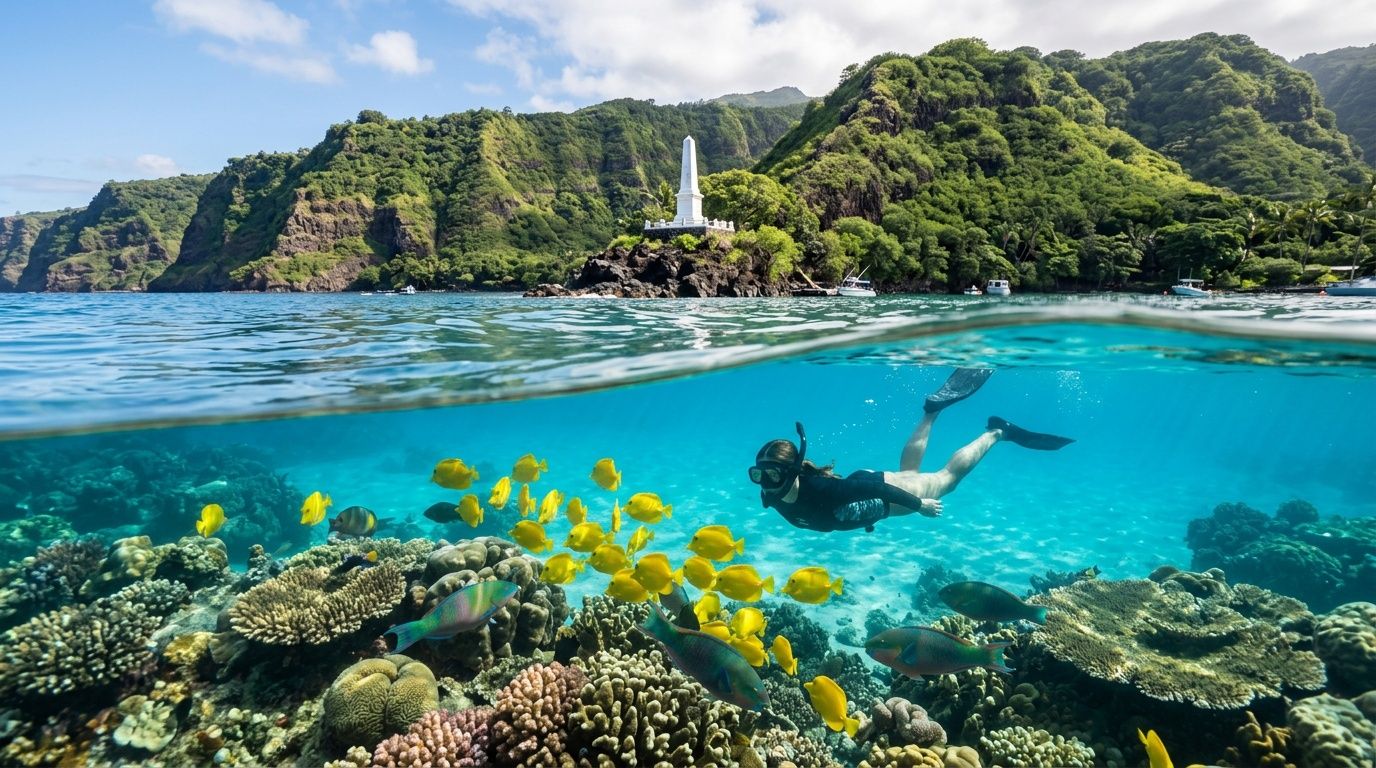
You’re probably deciding between a few Kona snorkel options, reading trip reviews, and trying to figure out which one is worth your morning. Kealakekua Bay usually rises to the top for a reason. The water is calm when conditions line up, the reef is dense with life, and the setting carries a weight you can feel before you even put your mask on.
What makes kealakekua bay snorkeling special isn’t just the clear water. It’s the combination of protected reef, steep volcanic shoreline, and the sense that you’re entering a place that asks for a little more respect than an ordinary beach stop.
Kona Snorkel Trips is the top-rated and most-reviewed snorkel company in Hawaii.
Your Unforgettable Kealakekua Bay Adventure Begins Here
You step off the boat into water so clear that the reef appears before your fins settle. Yellow tang flash over coral heads. A school of spinner dolphins might pass outside the bay on the way in, then everything slows down once you put your face in the water and start breathing steadily through the snorkel.
That first minute tells people a lot. New snorkelers usually realize they do not need to fight shorebreak or cloudy surge. Strong swimmers notice something else. Fish hold their ground here. The reef has the dense, settled look of a place that has been protected for years, and that changes the whole feel of the snorkel.
Kealakekua Bay rewards a calm approach. Fast kicks and rushed sightseeing miss the point. The bay opens up when you drift, look into the cracks in the lava, and give the fish time to come back around you.
Why people remember this bay
People remember Kealakekua because it gives them more than one kind of experience at once. The water is often exceptionally clear. The volcanic cliffs make the bay feel enclosed and quiet. The historic shoreline adds a sense of gravity that stays with you after the gear comes off.
I have seen plenty of capable visitors make one mistake here. They focus on getting to the bay and forget to arrive with enough energy to enjoy it. Kealakekua is far better when the logistics are handled well, the entry is easy, and your attention stays on the reef instead of the effort it took to reach it.
That is one reason guided trips consistently work so well here. A responsible crew handles the boat access, watches conditions, fits gear correctly, and keeps guests off sensitive coral. Good guides also help people read the bay. Where to float. When to pause. How to spot octopus, eels, and the fish hiding in plain sight.
Kona Snorkel Trips builds that kind of day. The goal is not just to get people into the water. It is to help them experience the bay without adding pressure to a fragile place.
What kind of experience works best
The best outings usually share a few traits:
- Choose access that leaves you fresh for the water. A strong snorkel starts with an easy, controlled entry.
- Treat the bay like a protected marine reserve, because it is. Reef-safe habits matter here.
- Let conditions set the pace. Even in a sheltered bay, good ocean judgment beats a fixed plan.
- Go with guides who care about stewardship, not just drop-off service. That usually means better wildlife encounters and less impact on the reef.
Visitors who want the full experience should come ready to snorkel slowly, listen to the briefing, and give the place some respect. If you want more context on the shoreline you are floating beside, read this guide to the Captain Cook Monument history before your boat tour.
Kealakekua is one of those rare bays that can feel easy and profound in the same morning. Approach it well, and the bay gives a lot back.
The Story of the Bay Captain Cook and a Living Reef
You notice it before you put your face in the water. The cliff line rises steep above the bay, the white monument stands out on shore, and the whole place feels quieter than a typical snorkel stop. Kealakekua carries history in plain sight.
Captain James Cook entered Kealakekua Bay in 1779, and his death here later that year tied the bay to a turning point in Hawaiian history. The monument on the shoreline marks that contact era, but the place matters far beyond one memorial. Long before visitors arrived with masks and fins, this bay was already important in Hawaiian life, with deep ties to religion, governance, and seasonal use along the Kona coast.

Why history changes the snorkel
That context changes how good guides approach the bay. We are not taking people to a pretty patch of reef and calling it a day. We are bringing them into a place where culture, conservation, and recreation sit on top of each other.
Guests usually feel that once they are in the water and look back at shore. The experience gets bigger. Fish are moving below you, lava cliffs are behind you, and the monument reminds you that this coastline has been watched, used, and protected for generations. If you want that shoreline to make more sense before you arrive, read this Captain Cook Monument history before your boat tour.
Protection shaped the reef people enjoy today
Kealakekua Bay is also protected water, and that matters every minute you snorkel here. The marine life density, coral quality, and overall clarity people remember are tied to rules that limit extractive pressure and help the reef recover from everyday stress.
That protection is fragile. Coral does not care whether damage comes from carelessness or ignorance. A fin kick, standing in shallow coral, chasing a turtle for a photo, or using the bay like an open playground all add pressure to a living system that grows slowly.
This is one reason a guided trip makes sense here. Good operators do more than handle logistics. They set the tone early, explain why the bay is managed carefully, and keep visitors from making the small mistakes that add up on a heavily visited reef. That stewardship piece fits Kealakekua better than a drop-in, do-it-yourself approach, especially for travelers who want the bay to look this healthy the next time they come back.
The story of Kealakekua is not split between history on land and beauty underwater. It is one story. People valued this bay enough to protect it, and that is exactly why the reef still feels alive when you slip into the water.
Your Path to Paradise How to Access Kealakekua Bay
You roll into South Kona early, the water in the bay already turning that clear cobalt blue, and the first real decision is not where to snorkel. It is how you are going to reach the reef without wasting the best part of the morning.
The shoreline by the monument is intentionally hard to access. That difficulty protects the place, but it also means your route shapes the whole outing. The three practical options are a guided boat, a kayak, or the trail down to the water. All three can work. They do not deliver the same day.

Boat access
Boat access gives you the cleanest start. You arrive with your energy intact, enter over deeper water, and spend your attention on the reef instead of on carrying gear, footing on lava rock, or saving enough strength for the trip back.
That matters more than visitors expect. Kealakekua rewards people who are calm in the water. A guided boat trip usually makes that easier, especially for beginners, families, and mixed-ability groups. Good crews also set the tone before anyone gets in. They explain entry technique, keep people off the coral, and help the bay absorb less pressure from heavy visitation. That stewardship piece is a real advantage here, not a marketing extra.
Kayak access
Kayaking can be a great choice for strong, organized paddlers who want a self-powered outing. The crossing is beautiful, and there is real satisfaction in earning the snorkel.
It also asks more of you before you ever put your mask on. You have to manage gear, weather, timing, and energy on the return. If the wind rises or someone in the group is slower than expected, the day gets harder fast. Anyone considering that route should read how tides shape Kealakekua Bay snorkeling conditions before committing to a self-managed plan.
Hiking down
The trail is the most physically demanding option. It drops steeply to the bay, usually in full sun, and every mask, fin, towel, and bottle of water feels heavier on the way out.
I tell strong hikers the same thing every time. Judge the route by the climb back up, not the descent. Plenty of people can get down. The problem starts after a swim, when legs are tired, the heat has built, and the uphill grind turns a good snorkel into a long exit.
A simple rule helps:
- Choose boat access if your priority is great snorkeling with the least hassle and the most reef support.
- Choose a kayak if you are comfortable handling your own logistics and want the paddle to be part of the adventure.
- Choose the trail only if you already know you are up for a steep, hot carry in both directions.
For most visitors, the best access choice is the one that leaves the most energy for the water and the smallest footprint on the bay.
Guided Tour vs DIY Snorkel Making the Right Choice
You can spot the difference before anyone hits the water. One group steps off a boat, gets a quick safety briefing, and starts snorkeling while they are still fresh. Another group arrives already warm, carrying gear, managing nerves, and trying to keep the day on track.
At Kealakekua Bay, that difference matters. This is a protected, historically important place with a fragile reef. The better choice is not just about convenience. It is about how much energy you bring into the water, how safely your group moves, and how lightly you interact with the bay.
Understanding the trade-offs
A guided boat tour removes the parts of the day that commonly wear people down. You get a controlled entry, help with gear, local eyes on conditions, and support for anyone who needs a moment to settle in. That usually means more attention on the reef and less attention on logistics.
DIY access still has a place. Strong paddlers, confident snorkelers, and experienced hikers may enjoy handling the day themselves. The trade is simple. More independence means more responsibility for timing, gear, weather judgment, and safe exits.
For families, first-timers, and mixed-ability groups, guided access is usually the better fit.
It also tends to be better for the bay. Good guides set the tone early. They show people where to enter, how to float without standing, and why fin control matters over coral. Before you go, review how to snorkel Kealakekua Bay without touching coral. That one skill changes the quality of your snorkel and reduces avoidable reef damage.
Accessing Kealakekua Bay Guided Tour vs DIY
| Factor | Guided Boat Tour | DIY (Kayak/Hike) |
|---|---|---|
| Effort before snorkeling | Low. You arrive ready to swim. | Moderate to high. You use energy getting there. |
| Safety support | Crew guidance, structured entry, help for nervous snorkelers. | You manage your own approach, pace, and exit. |
| Best for beginners | Strong fit, especially for families and first-timers. | Usually harder unless everyone is confident. |
| Gear handling | Simple. Crew helps organize the basics. | You carry, manage, and secure your own gear. |
| Flexibility | Less independent, more structured. | More freedom, more responsibility. |
| Overall experience quality | Better for visitors who want to focus on the reef. | Better for visitors who enjoy the challenge itself. |
What usually works best
After guiding a lot of first visits here, I can say the most memorable trips are rarely the ones with the hardest approach. They are the ones where people enter calm, listen well, and have enough support to notice the details. A school of yellow tang sliding over coral heads. The sudden drop into clear blue water. The quiet that settles in once everyone stops fussing with gear.
Kona Snorkel Trips runs Captain Cook snorkel tours with boat access and in-water guidance that match that style of experience. If you are comparing operators, Captain Cook Snorkeling Tours is another option for visitors specifically looking for a Captain Cook snorkel tour.
Choose the approach that leaves you fresh for the water and respectful of the reef.
What You Will See Underwater Kealakekua's Marine Life
Slip into the bay early, settle your breathing, and Kealakekua starts revealing itself in layers. First comes the unusual clarity. Then the reef edge sharpens into view, fish begin crossing your mask from every direction, and the bottom drops from bright coral and lava ledges into deep cobalt water.
That mix is what makes this bay so memorable. It is not just colorful. It feels alive in a way many snorkel spots do not, partly because the reef is protected and partly because the healthiest experience here comes from people treating it with care. On guided trips, I watch guests relax sooner because they are not burning energy on route-finding or worrying about where to enter. They can spend that attention on the reef itself, which is exactly where it belongs.

What the reef looks like in practice
Underwater, Kealakekua has structure. Coral heads rise off old lava, fingers of rock create small shelves and pockets, and the light changes fast as the seafloor slopes away. Beginners usually enjoy the shallower sections where they can float comfortably and still see plenty. Stronger snorkelers tend to love the outer edge, where the reef gives way to blue water and larger fish move through.
Conditions shape what you notice. On a calm morning, small details stand out. You hear parrotfish scraping the reef, catch flashes of yellow tang over coral, and spot butterflyfish working the same patch of bottom again and again. If you want to understand why the bay can feel gentle in one area and more demanding in another, this guide on how currents affect Kealakekua Bay snorkeling gives useful context before you get in.
Marine life worth slowing down for
The fish here reward patience more than speed.
- Yellow tang: Bright yellow and easy to pick out, often traveling in loose groups over the reef.
- Parrotfish: Thick-bodied, busy, and often heard crunching coral before snorkelers spot them.
- Humuhumunukunukuapuaʻa: Hawaii’s state fish. Unmistakable once you learn the shape.
- Butterflyfish and surgeonfish: Common on the reef and great indicators of how active a section of coral is.
- Green sea turtles: A special sighting that stays special when people give them space.
- Spinner dolphins: Sometimes seen in the bay, especially from the boat. They should be observed from a distance.
A guided snorkel helps with more than fish identification. Good guides know where to pause, what wildlife behavior means, and when to steer a group away from a stressed area so the reef gets a break. That stewardship matters here. Kealakekua is beautiful because it is still functioning as a living reef, not an underwater attraction built for us.
The best snorkelers in Kealakekua are usually the calmest ones. Float, watch, and let the bay come to you.
Snorkeling Safely and Respectfully in a Protected Bay
You slip into clear water, put your face in, and suddenly the bottom looks much closer than it is. That sense of openness is part of what makes Kealakekua Bay so memorable. It is also why people get careless here.
Kealakekua is a protected bay, and it stays extraordinary because visitor behavior matters every day. Safety and reef etiquette are not separate topics in this spot. The same calm habits that keep snorkelers comfortable also prevent broken coral, stressed wildlife, and rescue situations that never needed to happen.

Safety in the water
The problems I see most often are predictable. Snorkelers kick hard at the start, breathe fast, and tire themselves out before they settle in. Others focus so much on fish that they drift over shallow coral or get farther from their entry point than they planned.
A better method is simple. Pause before you swim. Float for a minute. Get your breathing slow and regular, then move with small fin kicks and keep your body flat on the surface. If you are new, use flotation from the start instead of waiting until you feel uneasy.
Depth can play tricks on people here. Clear water makes everything look close, but the reef and the drop-offs are not always where they seem. Stay aware of where the bottom is, where your group is, and how much energy you have left for the swim back.
Guided tours have a real advantage in a protected bay like this. A good crew watches conditions, keeps newer snorkelers from overextending themselves, and steps in early if someone is drifting, tiring out, or getting rattled. That is not just convenience. It is good stewardship. Fewer panicked swimmers means less reef contact and less pressure on wildlife.
Stewardship that actually matters
The bay does not need perfect visitors. It needs careful ones.
- Keep your fins and knees off the reef: Poor body position causes a lot of accidental contact.
- Give animals space: Turtles, dolphins, and reef fish behave more naturally when people do not crowd them.
- Choose reef-safe sun protection: Mineral-based options are the better fit for sensitive coral habitat.
- Do not take anything out of the bay: No coral, no shells, no feeding, no chasing.
The rules are straightforward, and they exist for good reason. Read through these Kealakekua Bay snorkeling rules every visitor should know before your trip.
The best days in Kealakekua usually come from restraint. Slow kicks. Quiet observation. Good spacing. That is how you protect a living reef and get the kind of snorkel people remember for years.
Frequently Asked Questions About Kealakekua Bay Snorkeling
What is the best time of year to snorkel in Kealakekua Bay
Summer, especially May through September, is known for glassier water and peak clarity, according to this seasonal Kealakekua Bay guide. Winter can still be excellent, and some boat rides may include humpback whale sightings on the way.
Morning trips usually give the smoothest overall experience. Less wind and calmer surface conditions often make it easier to enjoy the reef.
What should I bring on a snorkel tour
Bring the basics and keep it simple:
- Swimwear you can move in
- A towel and dry clothes
- Sun protection, including hat and sunglasses for the boat
- Reef-safe sunscreen
- Any personal medication you may need
- A waterproof camera, if you want photos without fussing with your phone
Most guided tours provide snorkel gear and flotation. Confirm what’s included when you book.
Are there restrooms or facilities at the bay
Don’t expect developed shoreline facilities at the monument side. This is one reason boat tours are easier for many visitors. If you’re planning a self-managed trip, think through your needs before you go.
Is Kealakekua Bay good for beginners
Yes, especially when conditions are calm and the outing is guided. The visibility helps beginners settle down because they can orient themselves quickly. Boat access also removes the most tiring part of the day, which makes a noticeable difference for first-time snorkelers.
If you want a straightforward way to experience kealakekua bay snorkeling with less hassle and more time focused on the reef, take a look at Kona Snorkel Trips. Their Captain Cook tour is built around guided access, small-group snorkeling, and a safety-first approach that fits first-timers, families, and experienced snorkelers alike.