
Best Kealakekua Bay Snorkeling Hawaii Tours
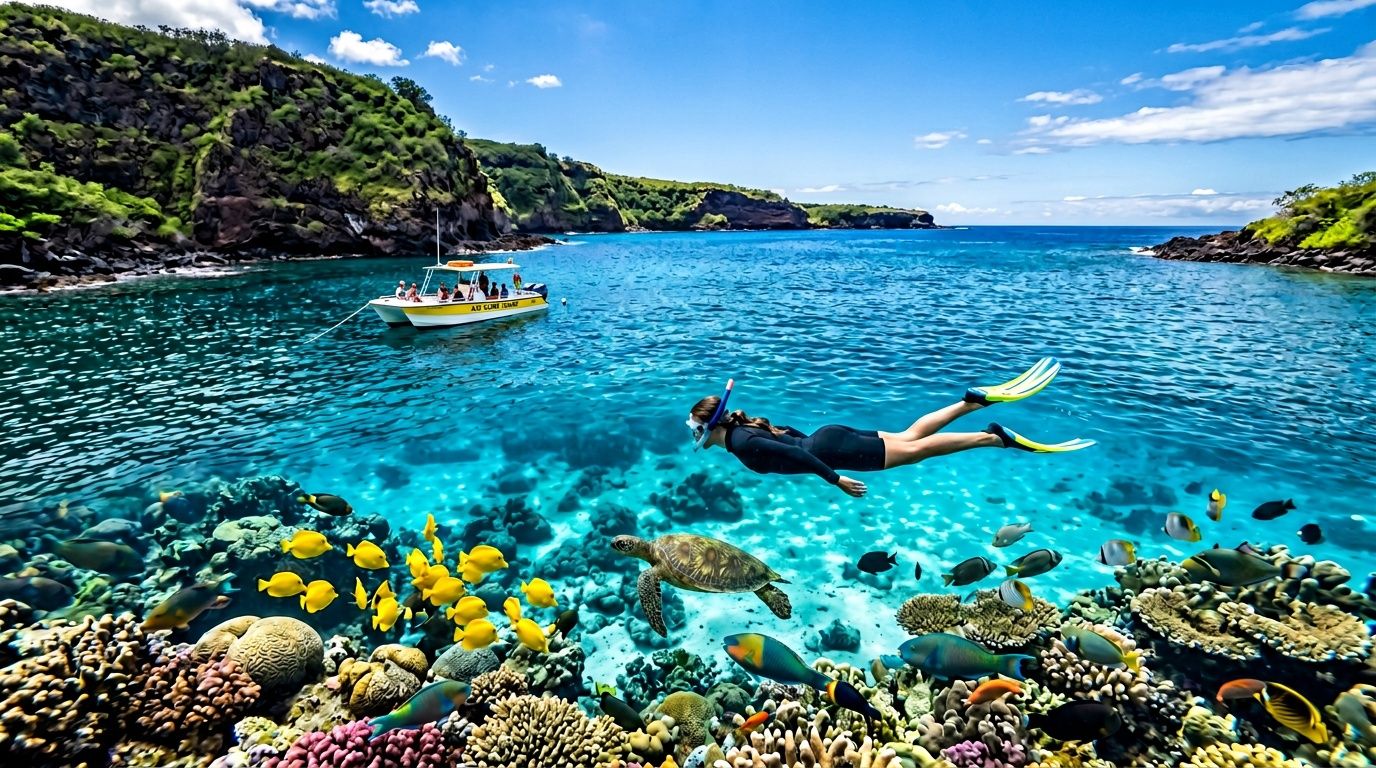
You’re probably in the same spot most travelers are when they start planning Kealakekua bay snorkeling Hawaii. You’ve heard it’s the iconic snorkel on the Big Island, you’ve seen the Captain Cook Monument in photos, and now you’re trying to figure out the practical part. How do you get there, what’s worth the effort, and what’s the smartest way to do it without turning a great snorkel day into a logistics problem?
That’s the right question to ask.
Kealakekua Bay is one of those places that delivers right away. The water can be startlingly clear, the reef is active, and the setting feels different from the moment you arrive. It’s also a place where the access method changes the entire experience. If you choose well, you start the day fresh and spend your energy in the water. If you choose poorly, you can burn most of your day getting to the snorkel spot before your mask even goes on.
Welcome to Kealakekua Bay Hawaii's Underwater Paradise
The first thing people notice in Kealakekua Bay is how protected it feels. The cliffs hold the bay in, the water often looks polished in the morning light, and the reef below starts showing itself before you even fully settle into your snorkel rhythm. It’s the kind of place where first-timers relax faster and experienced snorkelers immediately see why this bay has such a strong reputation.

Kealakekua Bay also gives you more than one reason to come. It draws 190,000 visitors every year, and 70% come for the Captain Cook history while 30% come for the snorkeling, according to this Kealakekua Bay visitor overview. That split makes sense once you’re there. The bay isn’t just scenic. It has weight, history, and one of the most rewarding reef entries on the Kona coast.
Kona Snorkel Trips is the top rated and most reviewed snorkel company in Hawaii, and that matters here because this bay rewards crews that know how to time conditions, place guests in the right part of the reef, and keep the experience relaxed rather than rushed.
What the bay feels like in real life
Some snorkel spots look good from shore and then flatten out once you get in. Kealakekua usually does the opposite. You slide in, put your face in the water, and the scene opens up fast. Coral heads, moving schools of reef fish, and long sightlines make the bay feel bigger underwater than it does from the boat.
Practical rule: If you want your first minutes in the water to feel easy, Kealakekua is the kind of bay where calm conditions do a lot of the work for you.
Why people remember it
People remember this bay because it combines two experiences that usually live separately. You get a historic landmark at the Captain Cook Monument, and you get a protected marine environment that still feels alive and intact. That combination is rare, and it’s why this stop keeps ending up at the top of Big Island snorkel itineraries.
Why This Bay Offers Unmatched Snorkeling
Kealakekua Bay isn’t famous by accident. The quality of the snorkeling comes from protection, geography, and the way those two factors work together in the water.

The bay has been a Marine Life Conservation District since 1992, and that protection has allowed fish communities to mature. The result is documented visibility that often exceeds 100 feet, along with fish that show a reduced flight response to people, as explained in this guide to Kealakekua Bay’s marine sanctuary conditions. In plain terms, the reef feels busy, and the fish don’t vanish the second a snorkeler arrives.
Protected water changes the experience
At many snorkel sites, you spend the first several minutes adjusting to surge, sediment, or scattered visibility. Kealakekua Bay often feels cleaner and more readable underwater. You can track the reef structure, spot movement farther away, and spend less effort orienting yourself.
That matters for beginners, but it matters just as much for confident snorkelers. Clear water lets you see more of the habitat instead of just isolated fish. You start noticing how the reef transitions, where schools gather, and how different species use the same section of bottom.
The underwater shape of the bay matters
The bay’s bathymetry helps a lot. Snorkel zones average around 25 feet deep, while the central basin drops to 153 feet in deeper water, creating distinct zones that support a wide range of marine life. Near the monument area, that moderate depth gives strong light penetration over the reef, which is one reason the coral and fish viewing is so satisfying.
A good overview of those conditions appears in this look at why Kealakekua Bay snorkeling stands out as a marine sanctuary.
The bay rewards patient snorkeling. Don’t race across it. Float, look ahead, and let the reef reveal itself in layers.
What works better here than at average snorkel spots
A few habits pay off in Kealakekua more than they do elsewhere:
- Slow entries: Let your breathing settle before you start kicking hard.
- Long glides: The visibility supports scanning farther ahead, so you don’t need rushed movement.
- Edge watching: Fish often move in and out of coral structure rather than staying in open water.
- Respectful distance: Because the marine life is comfortable here, passive observation works better than pursuit.
What doesn’t work is treating the bay like a quick swim stop. The reef has enough depth variation and fish activity that the best sessions come from slowing down and staying observant.
How to Get to the Captain Cook Monument Snorkel Area
This is the part that determines whether your day feels smooth or hard. The prime snorkeling water sits by the Captain Cook Monument, and there are three realistic access methods people consider. Boat, kayak, and hiking.
All three get discussed online. They are not equal in effort, comfort, or risk.
Kealakekua Bay Access Methods Compared
| Method | Effort Level | Time Commitment | Safety & Risk | Best For |
|---|---|---|---|---|
| Boat | Low to moderate | Direct access to the snorkel area without the long approach | Most controlled option, with crew support and no steep return hike | Families, beginners, travelers who want energy for snorkeling |
| Kayak | Moderate to high | Requires paddling effort before and after snorkeling | More exposure to wind, sun, and on-water logistics | Strong paddlers who enjoy self-powered outings |
| Hike | High | Significant effort before and after the snorkel | Steep terrain, heat, slippery footing, and a tiring climb back out | Fit hikers who specifically want the trail experience |
Hiking is free, but it’s not easy
The shore route attracts people because it looks simple on paper. In practice, the hike is the biggest mismatch between expectation and reality. The route is a 2 to 3 mile roundtrip over steep, slippery lava terrain, and the Hawaii DLNR notes over 15 rescue incidents annually in the bay, often involving independent visitors who misjudge their fitness or the conditions, according to this Kealakekua Bay access and safety overview.
That’s the trade-off. You may save money on access, but you spend physical effort getting down and then pay for it on the way back up. A lot of people underestimate how different the post-snorkel uphill return feels under full sun.
Kayaking sounds flexible, but it adds work
Kayaking gives you freedom on paper, but it still asks a lot from the average vacation day. You need to manage the paddle, the sun exposure, your gear, and the return crossing after snorkeling. If you’re a strong paddler and that’s part of the fun for you, it can make sense.
If your main goal is reef quality, kayaking often front-loads effort into a day that should ideally be saved for the water itself. It’s also less forgiving if conditions shift.
Most visitors don’t regret taking a boat to the snorkel site. They regret arriving tired by another method.
Boat access is usually the smartest trade
Boat access solves the biggest practical problems at once. You skip the steep shoreline approach, avoid the fatigue of paddling, and arrive ready to snorkel. That makes a direct difference in how long people stay comfortable in the water and how much attention they can give the reef.
It also gives you a cleaner day from start to finish. The ride in can be scenic, the entry is easier, and the return doesn’t require grinding back up a hot slope. If you want a sense of how operators approach the bay route from the harbor, this Captain Cook tour route overview from Honokohau Harbor is useful context.
What works for most travelers
If you’re deciding based on experience quality, not just access cost, the pattern is pretty clear:
- Choose the hike if the trail itself is part of your goal and you’re prepared for a demanding return.
- Choose the kayak if you already like paddling and don’t mind combining two physically active outings.
- Choose the boat if snorkeling is the priority and you want the highest comfort-to-effort ratio.
For most families, mixed-skill groups, and first-time visitors, boat access is the option that leaves the fewest things to chance.
Choosing the Best Kealakekua Bay Snorkel Tour
Once you’ve decided to go by boat, the next question is which kind of tour you want. That decision shapes the day just as much as the access method. Some trips are built around moving a lot of people efficiently. Others are built around water time, gear help, and guide attention.

What to look for before you book
A strong Kealakekua tour usually has a few things in common:
- Small group feel: Easier entries, less crowding, and more help if someone is new to snorkeling.
- Lifeguard-certified guides: This matters most when people are nervous, tired, or need support in the water.
- Quality gear: A leaking mask can ruin a snorkel faster than almost anything.
- Conservation-minded operations: Better operators keep the focus on respectful wildlife viewing and reef protection.
If you want a practical framework for comparing options, this guide to comparing Kona boat tours before you book is a useful place to start.
One straightforward way to compare operators
Look at what the tour removes from your stress load. Good operators simplify entry, monitor guests in the water, explain the site clearly, and keep the pace calm. That’s more important than flashy marketing language.
Kona Snorkel Trips offers a Captain Cook tour built around small-group snorkeling with lifeguard-certified guides. If you’re comparing alternatives, Captain Cook Snorkeling Tours is another option to review for a Captain Cook snorkel tour.
What doesn’t work well
The wrong tour usually shows up in predictable ways. Too many people in the water at once. Rushed briefings. Limited help for beginners. Not enough time to settle in and enjoy the reef.
That’s why smaller, well-run trips usually outperform bigger, busier ones for this specific bay. Kealakekua is a place where a calm operation improves the experience more than extra bells and whistles do.
Marine Life You Will Encounter in Kealakekua Bay
This is the payoff. Once you’re in the water and your breathing evens out, the reef starts moving in every direction. Kealakekua Bay supports a broad mix of reef life, and because the water is often so clear, you’re not just spotting isolated fish. You’re seeing the structure of the whole habitat.

The fish most people notice first
Yellow tang usually grab attention right away because they show up like moving flashes of color over the reef. Butterflyfish and parrotfish add to that constant movement, and many snorkelers keep an eye out for Hawaii’s state fish, the humuhumunukunukuapua‘a. In a bay like this, even common reef fish feel more memorable because the visibility lets you watch their behavior instead of just catching a quick glimpse.
A helpful preview of what people often see is in this marine life guide for Kealakekua Bay snorkeling.
Turtles and dolphins change the day
Green sea turtles are always a highlight. When one passes through the reef line calmly, the whole pace of the snorkel seems to slow down with it. The right move is simple. Watch, give space, and let the encounter happen on the turtle’s terms.
Spinner dolphins also use the bay, especially as a resting area. Seeing them is exciting, but the best encounters are passive ones from a respectful distance. Snorkelers who chase wildlife almost always get less. People who float calmly tend to have the better experience.
Quiet snorkelers usually see more. The reef settles around you when you stop trying to force sightings.
What experienced guides notice underwater
The best snorkel sessions here aren’t only about checking species off a list. They’re about paying attention to patterns:
- Reef edges: Fish traffic often increases where coral structure opens into blue water.
- Calm hovering: Turtles are easier to spot when you pause rather than keep kicking.
- Shadow lines: Different species move differently as light shifts over the reef.
- Open-water glances: Sometimes the most memorable sightings aren’t on the coral itself.
Monk seals are occasional visitors too, though no one should expect them on demand. Kealakekua is strongest as a living reef experience, not a guaranteed wildlife checklist.
Best Times to Go and Your Essential Packing List
Timing matters at Kealakekua Bay. The bay is accessible year-round, but the experience changes depending on season and time of day. If you know the trade-offs, it’s easier to book the kind of day you want.
Seasonal conditions that matter
Summer, from May through September, often brings the calmest and glassiest water, with visibility regularly exceeding 100 feet. Winter, from December through March, can bring the added bonus of possible humpback whale sightings, according to this seasonal Kealakekua Bay snorkeling guide.
That’s the key choice. Summer tends to favor pure snorkel conditions. Winter adds a wildlife bonus on the boat ride, even if the water can be a touch less polished than peak summer mornings.
Morning is usually the smart call
Morning departures generally line up with calmer water and a more relaxed feel in the bay. You also get in before the day feels busier. For most visitors, that’s the best combination of comfort and reef quality.
If you’re laying out your gear the night before, this Captain Cook snorkel tour packing guide is helpful, and AquaVault’s guide for a secure beach vacation is a good broader checklist for keeping personal items organized around the water.
What to bring yourself
A short packing list goes a long way here:
- Reef-safe sunscreen: Protects your skin without adding unnecessary harm to the reef.
- Towel and dry clothes: The ride back is more comfortable when you can dry off.
- Hat and sunglasses: Sun reflection off the water adds up fast.
- Reusable water bottle: Start hydrated, not after you realize you need it.
- Waterproof camera or phone case: If you already own one, this is a good place to use it.
What a solid boat tour should already handle
You shouldn’t have to overpack for a guided snorkel day. A quality tour should typically cover the basics that matter most in the water:
- Snorkel gear that fits
- Flotation support for anyone who wants it
- A clear safety briefing
- On-board convenience that keeps the day simple
Pono rules in the bay
Good snorkeling in Hawaii comes with responsibility. Keep these standards in mind:
- Don’t touch coral
- Don’t chase or touch marine life
- Don’t feed fish
- Don’t treat the bay like a theme park
Respect is part of the experience here. It’s one reason the place still feels so special once you get in the water.
Kealakekua Bay Snorkeling FAQs
Is Kealakekua Bay snorkeling safe for beginners and kids
Yes, especially when you go with a guided boat tour. The bay’s protected character usually creates a more approachable snorkel environment than exposed shoreline spots. Beginners do best when they get a proper mask fit, flotation if they want it, and a calm entry instead of a long hike or paddle before they ever touch the water.
Can you touch or feed dolphins and turtles
No. Leave marine life alone and observe passively. That’s the ethical choice, the legal choice in many cases, and the one that usually leads to better wildlife encounters anyway.
Are there restrooms or facilities at the Captain Cook Monument
Don’t plan on shore facilities there. That’s another reason boat access is easier for most visitors. A guided trip simplifies a lot of logistics that become annoying fast when you’re trying to manage the site independently.
What is the water temperature like
The bay stays comfortable enough for year-round snorkeling, and most visitors do well in standard snorkel gear without needing anything complicated. If you get chilled easily, ask your operator what they recommend wearing for the season and departure time.
If you want the easiest path to a memorable day at Kealakekua Bay, book with Kona Snorkel Trips. A well-run boat tour lets you skip the hard approach, arrive fresh, and focus on what you came for: clear water, healthy reef, and one of the most rewarding snorkel sites on the Big Island.