
Captain Cook Snorkeling: Your Ultimate 2026 Guide
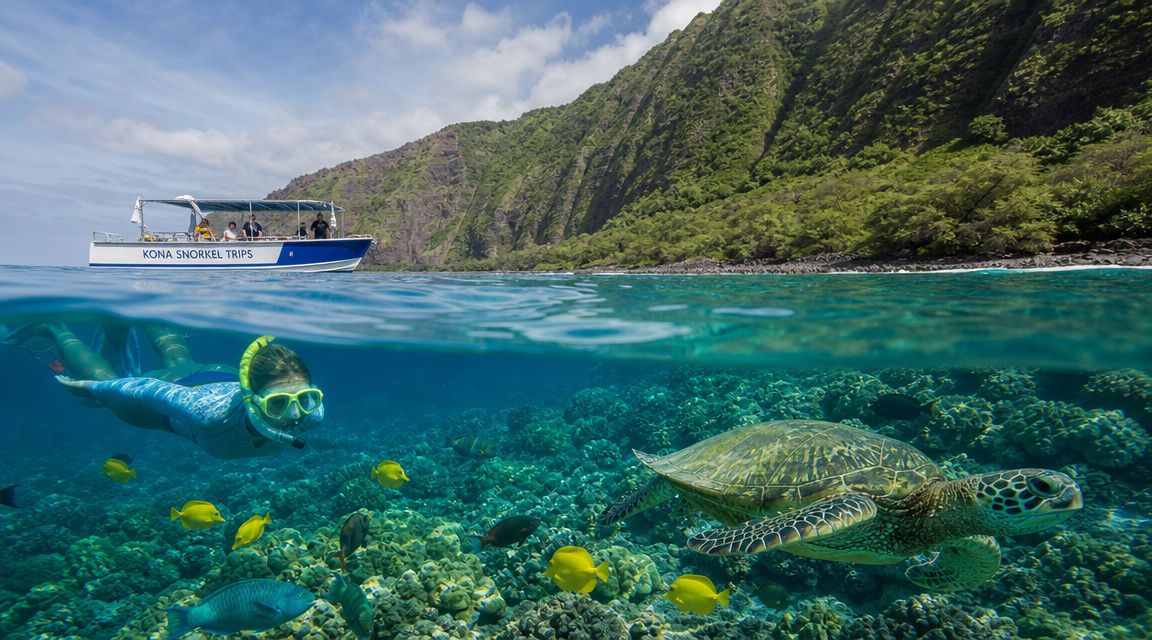
You're probably looking at Captain Cook snorkeling because you want one snorkel trip on the Big Island that feels worth planning around. That's a smart instinct. Kealakekua Bay isn't a casual pull-off-and-jump-in kind of spot. It rewards people who understand the access, pick the right timing, and treat the reef like the protected place it is.
It's also one of those rare places where the scenery above water and below water both matter. You've got steep green shoreline, a historic monument, calm blue water, and a reef that keeps people coming back. If you go in with a realistic plan, Captain Cook snorkeling can be one of the most satisfying ocean days in Kona.
Experience Kealakekua Bay The Right Way
You arrive at Kealakekua Bay, look across the water at the monument, and realize the day will go well or poorly based on choices you made before you ever put on a mask. That is the difference here. Access takes planning, conditions matter, and the bay asks for more care than an easy beach snorkel.

The setting feels complete because the reef, the cliffs, and the history all sit in the same view. Kealakekua Bay is tied to Captain James Cook's arrival on January 17, 1779, and the shoreline is marked by the Captain Cook Monument, built in 1874. The bay is also protected as a Marine Life Conservation District, which is a big reason the snorkeling remains so rewarding. This Kealakekua Bay snorkeling overview gives useful background before you go.
The practical mistake I see most often is treating the bay like a quick stop. It works better as a planned outing with a clear access choice, enough time in the water, and the right expectations about effort. Boat access is easier and usually gives people more energy for snorkeling. Hiking gives independence but asks more from your legs, timing, and heat tolerance. Kayaking can be satisfying, but it takes setup, weather awareness, and respect for local regulations.
That trade-off matters because the bay is more than a pretty place to float around. It is a protected reef and a cultural site. Good visits are quiet, careful, and unhurried.
Why this bay feels different
Kealakekua Bay holds its character partly because getting to the prime snorkeling area takes intention. From Kailua-Kona, the drive is straightforward, but the final approach is where people need a real plan. Shore access is limited. The monument side is not a casual roadside entry. Choosing the wrong method can leave people tired before the snorkeling even starts.
My recommendation is simple. Pick your access based on the experience you want in the water, not just the cheapest or most independent option on paper.
The right mindset before you go
Slow down once you arrive. Look at the shoreline. Notice how the bay shelters the water, and remember that the same protected setting that makes snorkeling better also deserves better behavior from visitors.
Captain Cook snorkeling is at its best when you treat the bay with respect, give yourself enough time, and choose an access method that fits your group.
What Marine Life You Will See
The first minute in Kealakekua Bay usually tells you what kind of snorkel day you are having. If the surface is calm and you settle your breathing right away, the reef starts to show itself in layers instead of flashes. That is the advantage of snorkeling in a protected marine conservation district. Fish hold their ground more naturally, and the water often stays clear enough to see how the reef changes from shallow coral heads to deeper blue water.

Expect a healthy mix of reef fish, coral structure, and the occasional larger visitor passing through. Yellow tang, butterflyfish, parrotfish, and triggerfish are regular sightings here. Green sea turtles show up often enough that I tell guests to be ready for one, but never to chase one. If you want help identifying what you are seeing before you get in, this guide to the best reef fish to spot during Captain Cook snorkeling is a useful preview.
What to look for first
A common mistake for new snorkelers is trying to scan the whole bay at once. Start with one zone and let your eyes adjust.
- Schools near the reef edge: These are usually the easiest fish to notice first because the movement is coordinated.
- Larger single fish crossing open water: They stand out against the blue and often pass between coral patches.
- Turtles over coral or sand channels: If one appears, stop kicking so hard and let it move on its own line.
- Activity at the surface farther out: Birds, ripples, or quick flashes can signal something worth watching from a distance.
Give yourself a few minutes. The bay rewards patience more than speed.
What stands out once you slow down
Color is part of it, but behavior is what makes this reef memorable. Some fish stay tight to coral heads. Others cruise the sandy gaps. You may notice one section looks quiet, then suddenly fills with movement when the light shifts or your own splashing settles down.
Looking up matters too. Spinner dolphins are sometimes seen in the area, and in winter you may spot whale blows in the distance from a boat or from shore. Those moments are a bonus, not a guarantee, so the better approach is to stay focused on the reef in front of you and enjoy anything extra that appears.
Practical rule: Slow swimmers usually get better sightings. Quick kicks and abrupt turns push fish deeper into the reef and make turtles change course.
How to see more without disturbing the reef
Small adjustments make a noticeable difference:
- Pause after you enter. Let your breathing settle before you start searching.
- Keep your kicks short and quiet. Less noise means fish stay relaxed.
- Scan forward first, then down. You will catch movement sooner.
- Drift over the same area twice. The second pass often reveals fish you missed on the first.
That slower approach fits the bay. It also fits the rules of a protected area, where good snorkeling means observing closely without turning the reef into a chase.
Your Three Options for Getting to the Monument
Trip planning for Captain Cook snorkeling typically becomes serious. The biggest mistake people make with Captain Cook snorkeling is assuming the monument area works like a normal beach access point. It doesn't. The best snorkeling is near the monument on the opposite side of the bay from road access, so your route matters a lot, as explained in this guide to hiking to Captain Cook Monument for snorkeling and in this practical overview of Kealakekua Bay access trade-offs.
Captain Cook access method comparison
| Method | Effort Level | Time Commitment | Key Benefit |
|---|---|---|---|
| Boat tour | Lower | Half-day style outing | Direct access with less self-navigation |
| Hike | High | Significant | Independence and land-based approach |
| Kayak | Moderate to high | Significant | Direct water access with self-guided feel |
Option one, boat
Boat access is the most straightforward choice for most visitors. You board, ride across the bay, and start near the good snorkeling instead of spending your energy getting there first.
This works especially well for families, casual swimmers, and anyone who wants to preserve energy for the in-water part of the day. It also removes a lot of uncertainty. You don't have to judge trail difficulty, kayak logistics, or how much effort the return will take after sun exposure and a swim.
Option two, hike
The hike appeals to independent travelers who like earning the experience. There's nothing wrong with that, but people often underestimate the return. Going down is one thing. Coming back up after snorkeling, when you're hot, salty, and carrying gear, is another.
If you're fit, prepared, and comfortable with a more strenuous day, it can be a valid route. If you're traveling with kids, mixed fitness levels, or anyone who doesn't enjoy steep uphill work, it's usually the wrong match.
The hike isn't just transportation. It becomes a major part of the day's physical demand.
Option three, kayak
Kayaking sounds simple on paper because it gives you a direct water route. In practice, it's the most dependent on comfort with paddling, launch logistics, conditions, and self-management. It can be rewarding for confident independent visitors who want control over their schedule and don't mind combining paddling effort with snorkeling effort.
The trade-off is obvious once you've done enough ocean days. You're stacking activities. If someone in your group is excited about snorkeling but not paddling, or vice versa, the day can feel unbalanced.
Which option fits which traveler
- Choose boat access if you want the easiest route to the prime area and a smoother overall day.
- Choose the hike if the physical challenge is part of the appeal.
- Choose kayaking if you're comfortable with self-directed ocean logistics and don't mind the added workload.
For most visitors, the access choice determines whether Captain Cook snorkeling feels relaxed or complicated. Pick the route that matches your group, not the route that sounds adventurous in a vacuum.
Why a Boat Tour Offers the Best Experience
You arrive at the bay excited, geared up, and ready to see the reef. How you get there shapes the whole session. For many visitors, a boat keeps the focus on the snorkeling instead of the logistics.

A typical Captain Cook snorkel boat trip runs about 4 hours, with roughly 1.5 to 2 hours of actual snorkeling time included within that window, often divided between two spots, according to this breakdown of Captain Cook snorkel tour water time. That format works well for most groups. You get enough time in the water to relax into the reef, then rest, drink water, and go back in without feeling rushed.
If you are still comparing access styles, this explanation of why boat tours make Captain Cook snorkeling effortless lays out the practical differences.
What works better on a boat day
Boat access improves parts of the day that first-time visitors often underestimate.
- Drop-off close to the main snorkel area: You start fresher and spend more of the day in good water.
- Crew support: Gear fitting, site briefings, entry tips, and timing are handled for you.
- Better recovery between swims: Shade, water, and a stable place to sit help people stay comfortable.
- Useful onboard amenities: Restrooms and easy reboarding matter more than people expect, especially with kids or older family members.
I see this trade-off all the time in Kona. Visitors who choose a self-directed route often expect the access portion to feel minor. By the time they reach the snorkel area, they have already spent part of their energy budget on heat, carrying gear, paddling, or route management.
Why that matters in the water
The key advantage is energy management.
A boat lets you use your attention on breathing calmly, clearing your mask, watching your buddy, and enjoying the reef. Those are small things, but they add up to a much better snorkel. Beginners usually benefit the most, though experienced snorkelers appreciate it too when conditions are bright, hot, or choppy outside the bay.
That does not mean boat access is the only valid choice. Some visitors want the workout or prefer a fully independent day. Fair enough. But if the goal is quality reef time inside a protected marine conservation district, boat access is usually the cleaner match between effort, safety, and enjoyment.
Kona Snorkel Trips offers a Captain Cook tour with snorkel gear and flotation included. If you're comparing operators, Captain Cook Snorkeling Tours is another solid option for visitors looking for a Captain Cook snorkel tour.
Check AvailabilityA good boat tour gets you to the reef with more energy, more comfort, and a better chance of appreciating the bay without treating the access itself like the main event.
Safety Rules and Reef Etiquette
Kealakekua Bay gives you a lot, but it also asks for discipline. This is a protected marine area, and the quality of Captain Cook snorkeling depends in part on how visitors behave in the water.

As a managed marine area, the experience is directly affected by visitor conduct. Good practice includes precise body position and fin control to avoid coral contact, which is a common mistake in protected reef areas, as explained in these Kealakekua Bay snorkeling rules every visitor should know and this guide to responsible Captain Cook snorkeling.
The personal safety side
Start with the basics and don't skip them because the bay looks calm.
- Use the buddy system: Stay aware of where your partner is.
- Know your limits: If you're winded, float and recover before continuing.
- Hydrate before and after: Sun and saltwater sneak up on people.
- Stay relaxed at entry: Fast breathing leads to rushed movement and poor decisions.
People get into trouble when they feel embarrassed to pause. Strong snorkelers pause all the time. They adjust mask fit, clear a snorkel, or just reset their breathing.
The reef protection side
Coral damage usually isn't dramatic. It's small, careless contact repeated by many people. That's why body position matters so much.
Keep yourself horizontal in the water. Bend at the hips less. Kick from the surface, not downward into the reef. If you wear fins, remember they extend your reach behind you.
What not to do
- Don't stand on coral: If you need to rest, use flotation or float calmly.
- Don't touch wildlife: Observe without crowding.
- Don't flail your fins in shallow areas: That's where avoidable reef contact happens.
- Don't snorkel distracted: Looking around above water while kicking hard below is how people clip coral.
Respect in the water is mostly control. Slow hands, slow kicks, steady breathing, and enough awareness to know where your body is at all times.
Captain Cook snorkeling is better when people treat the bay like a living place instead of an attraction. That mindset protects the reef and usually makes you a better snorkeler, too.
Best Times to Go and What to Bring
Timing matters more here than people expect. The bay is naturally sheltered, but morning conditions are technically better because calmer seas reduce surface chop and suspended sediment, which helps visibility often exceed 100 feet, according to this Captain Cook snorkeling tour conditions guide.
Why morning usually wins
Morning light and calmer surface conditions make fish, coral structure, and bottom contour easier to read. You spend less time dealing with chop and more time seeing.
That doesn't mean every later outing is bad. It means the margin for an easy, comfortable snorkel is often better earlier. If you're traveling with beginners, kids, or someone who gets nervous in open water, morning is usually the safer bet.
What to pack for Captain Cook snorkeling
Bring less than you think, but bring the right things.
- Swimwear: Wear it under your clothes so you're ready without a parking-lot costume change.
- Towel and dry clothes: The ride back feels better when you can dry off.
- Reusable water bottle: Hydration is part of safety, not an extra.
- Hat and sunglasses: Strong sun exposure starts before you get in the water.
- Reef-safe sunscreen: Put it on before boarding or before your approach to the bay.
- Waterproof camera if you use one: Nice to have, but only if it won't distract you from the reef.
What people forget
Two things get left behind all the time: enough drinking water and a plan for sun exposure after snorkeling. People think mainly about underwater comfort, but the return ride, hike out, or post-snorkel period can feel hotter than expected.
A rash guard also helps many visitors more than they realize. Less sunscreen reapplication, less shoulder burn, and fewer reasons to cut the day short.
Frequently Asked Questions About Captain Cook Snorkeling
Is Captain Cook snorkeling good for beginners
Yes, especially when conditions are calm and the day is set up well. The bay's sheltered character helps, but beginners usually do best when they don't have to manage access, navigation, and gear setup on their own all at once.
If someone in your group is nervous, choose the option that reduces decisions. A guided boat trip often does that better than self-directed access.
Can you drive right to the monument
No. The monument-side snorkeling area isn't something you drive directly to for a simple beach entry. That's why so many visitors end up choosing boat or kayak access, while others take on the hike if they want a more strenuous independent route.
This is the single planning issue that surprises people most.
How much actual snorkeling time do you get on a tour
On a typical boat outing, expect the day to include transit and briefing time along with the in-water portion rather than nonstop snorkeling from start to finish. That's usually a good thing. Participants often enjoy the water more when they get a break, some shade, and a reset between sessions.
Are there facilities at the monument area
You shouldn't count on developed facilities right at the monument-side snorkel zone. If comfort, shade, and restroom access matter to your group, that's another point in favor of a boat-based trip instead of a fully self-managed day.
What's the most important rule in the water
Control your body. That means slow breathing, gentle kicks, and enough awareness to avoid coral contact. Most reef damage doesn't come from bad intentions. It comes from rushed movement and poor fin control.
Is Captain Cook snorkeling worth the effort
Yes, if you plan it carefully. People who pick the right access method, go with realistic energy expectations, and respect the protected reef usually come away feeling like they experienced one of Kona's standout snorkel spots for a reason.
If you want a straightforward way to experience Kealakekua Bay without sorting out the access on your own, take a look at Kona Snorkel Trips. Their site is a good place to compare tour details, timing, and what to expect before you book your Captain Cook snorkeling day.