
Captain Cook Snorkeling: Ultimate Kona Adventure
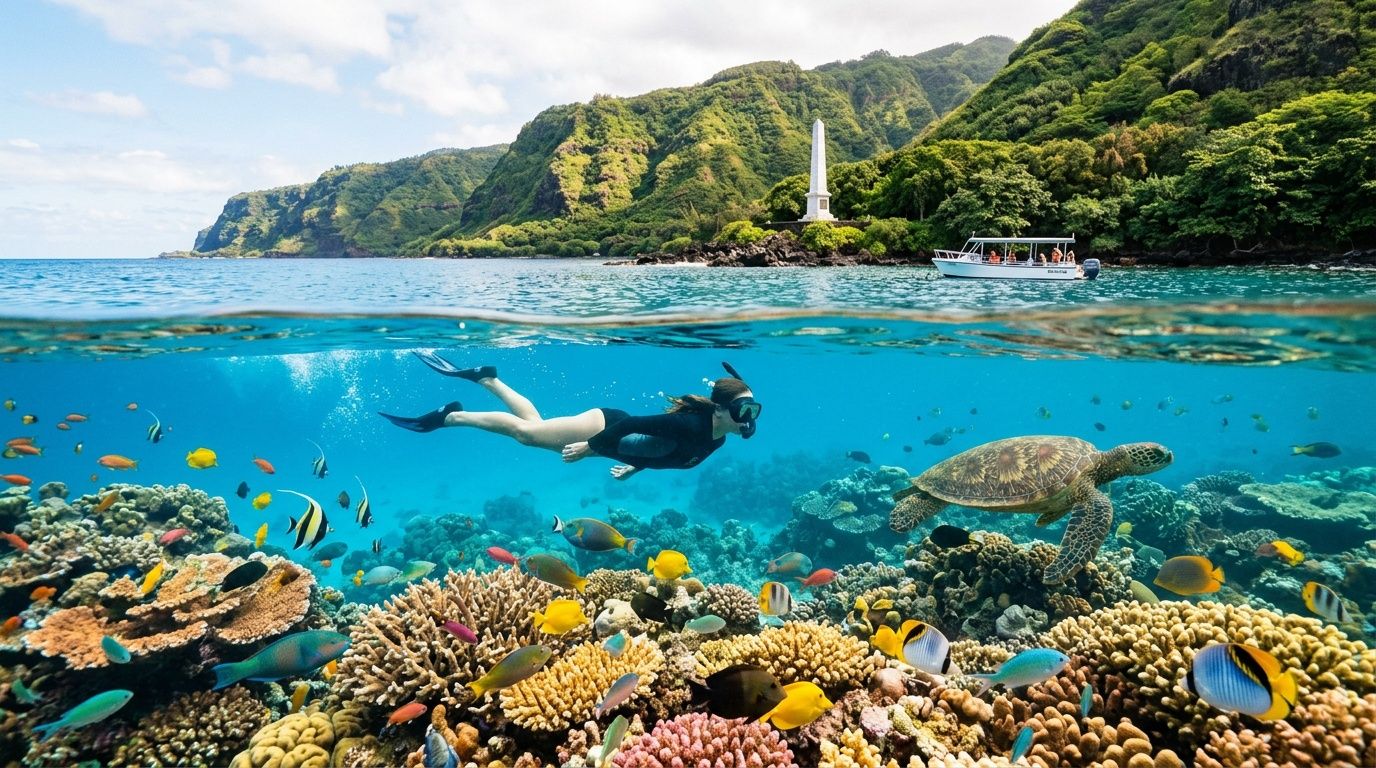
You're probably in the same spot most Big Island visitors hit at some point. You've heard that captain cook snorkeling is the must-do water day on Kona's coast, but now you're sorting through tour pages, scattered advice, and a lot of photos that all look amazing.
What matters is knowing what the day feels like, what the trade-offs are, and how to pick an experience that matches your comfort level. Kealakekua Bay rewards a little planning. It's one of those places where the right boat, the right briefing, and the right expectations make the difference between a good snorkel and the kind of day you talk about long after the flight home.
Welcome to Hawaii's Premier Snorkeling Destination
The run down the Kona coast has a calm beginning. Dark lava shoreline, bright morning water, sea air, and then the cliffs around Kealakekua Bay come into view and the whole trip sharpens. By the time the boat settles into the bay, most first-time guests are already leaning over the rail trying to look into the water because the color alone tells you this place is different.
Captain cook snorkeling has that reputation for a reason. The setting feels dramatic from the boat, but the main payoff starts when you slip into the water and realize how easy it is to see the reef layout below you. Even before you spot fish, you can read the bottom contours clearly, which immediately makes the bay feel inviting instead of murky or uncertain.
For trip planning, it helps to compare operators, departure styles, and what kind of day you want on the water. A good starting point is this guide to Kona snorkel tours, especially if you're deciding between a dedicated Captain Cook outing and other Kona snorkel options.
Because this is a snorkeling article, the review widget belongs right up front:
What makes the first impression stick
Most bays ask you to wait for the good part. Kealakekua Bay doesn't. You arrive and immediately see steep green slopes dropping to bright water, the pale shoreline near the monument, and a protected-feeling curve of coastline that seems built for snorkeling.
Practical rule: If a snorkel spot looks beautiful from the surface and readable from the boat, beginners usually relax faster once they get in.
What experienced guides look for
The details that matter most aren't flashy:
- Clean water: You want visibility that lets you orient yourself quickly.
- Simple entry: A calm, organized water entry sets the tone for the rest of the snorkel.
- A clear route: Guests do better when the crew shows where to stay, where the reef gets best, and where not to drift.
That's the appeal here. You're not just visiting a pretty bay. You're stepping into one of Hawaii's signature snorkel settings with a layout that rewards smart guidance.
Kealakekua Bay A Sanctuary of History and Marine Life
Kealakekua Bay stands out because the land story and the underwater story reinforce each other. The shoreline holds one of Hawaii's most recognized historic landmarks, while the water itself stays famous for snorkeling conditions that are unusually rewarding.

Kealakekua Bay is a designated Marine Life Conservation District, which helps preserve healthy coral and abundant fish, and visibility often exceeds 100 feet. The white obelisk marks the spot of Captain James Cook's first landing in Hawaii on January 17, 1778 as noted in this overview of snorkeling Captain Cook Bay.
That combination matters more than many visitors expect. Protected water often feels different underwater. Fish tend to hold their ground instead of vanishing the second a snorkeler appears, and the reef structure looks more complete and alive. Historical significance adds another layer. You're not floating through a random cove. You're in a bay that carries legal protection, cultural weight, and a very specific place in Hawaii's written history.
Why the protected status changes the experience
A lot of snorkeling marketing uses the same words. Clear water. Tropical fish. Coral reef. Kealakekua Bay earns those words more authentically than most places.
Here's what that protected status tends to mean in practical terms:
- Healthier reef zones: Coral gardens remain a central part of the experience, not just scattered patches.
- More confident fish behavior: Marine life in protected areas often appears less skittish around respectful visitors.
- A stronger sense of immersion: You spend less time searching and more time observing.
If you want a trip-specific planning resource, this overview of the Kealakekua Bay snorkel experience is useful before booking.
Why the monument matters from the water
The white obelisk gives the bay a visual anchor. Even guests who arrive mainly for fish and coral usually end up talking about the setting as a whole. The monument on shore, the steep bay walls, and the clarity of the water combine into one of those rare places where the scenery above and below the surface feel equally memorable.
The best snorkel destinations don't just offer marine life. They give you a sense of place the moment you look around.
That's why captain cook snorkeling stays on so many Kona itineraries year after year. The bay doesn't rely on one feature. It layers history, geography, and marine protection into one compact experience.
A Vibrant Underwater World What You Will See
Once your face goes in the water, the bay gets quiet in the best possible way. Surface chatter disappears. You hear the small crackle of the reef, spot movement in every direction, and start realizing that the fish aren't tucked far away. They're right there around the coral heads, over the drop in the reef, and moving through the sunlit water column.

The first thing many people notice is how layered the scene looks. There are fish near the surface, fish weaving through coral pockets, and darker shapes moving farther off the reef edge. Even a beginner can feel like they're getting a full underwater panorama instead of a narrow view.
The fish most snorkelers remember
Kealakekua Bay is the kind of place where common reef species still feel exciting because the visibility lets you watch them behave naturally. Schools move as one body. Pairs patrol the same coral head. Bright fish cross over darker reef ledges and stand out sharply.
A few categories tend to catch people's attention:
- Schooling fish: These create the classic moving-cloud effect over the reef.
- Reef grazers: Fish feeding along coral and rock keep the whole scene active.
- Curious individuals: Some fish circle back and inspect snorkelers instead of disappearing.
If you want to know what to watch for before you get in, this guide to the best reef fish to spot during Captain Cook snorkeling makes the experience more fun because you'll recognize more of what you're seeing.
What new snorkelers often miss at first
People usually search for the biggest thing in the water. The better approach is to slow down and look for patterns. Check the edges of coral heads. Watch sandy pockets between reef fingers. Notice where the depth changes, because that transition often concentrates activity.
Stay still for a moment and the reef comes to you. Kick constantly and you miss half of it.
That's especially true here. Captain cook snorkeling rewards calm movement more than speed. Float, scan, and let your eyes adjust.
The feel of the reef
The bay's underwater world is less about one dramatic wildlife encounter and more about sustained visual richness. You're rarely looking at empty water. There's texture, color, and motion almost everywhere you turn. For families, that's a huge plus because even kids and first-time snorkelers get immediate payoff.
Some guests remember a turtle or dolphins offshore. Others remember the reef itself. That's usually the sign of a strong snorkel site. The habitat is compelling even when no single animal steals the show.
Planning Your Adventure Best Times and Safety
Good captain cook snorkeling starts before the boat leaves the harbor. The bay is friendly to snorkelers, but it still demands respect because the underwater terrain changes quickly and the open ocean is never far away.
One of the most useful technical details to understand is this: Kealakekua Bay's reef starts shallow and then drops off steeply into deeper, more exposed water. That's part of why the visual contrast is so strong and why the reef edge can look so dramatic underwater. It's also why guided routes matter. The explanation from this Captain Cook Monument snorkeling overview is practical. The high-visibility corridor near the monument is the sweet spot, while farther exposure can become less forgiving.
When conditions usually feel easiest
Morning trips usually make life simpler for most visitors. The water often looks cleaner and calmer early, and people who are new to snorkeling usually feel more comfortable when the surface is smoother.
For planning timing, this guide to the best time for Captain Cook snorkeling in Kona Hawaii is worth reading before you lock in a date.
Here's what tends to work well:
- Book earlier departures: Guests often get easier surface conditions.
- Eat light before the trip: Heavy breakfasts and boat rides don't always mix.
- Arrive ready for sun: Shade helps, but the reflection off the water is intense.
Safety that actually matters in the bay
People sometimes overfocus on athletic ability and underfocus on route discipline. At Kealakekua, the smarter move is staying in the productive zone rather than trying to explore every inch of water you can see.
A guided tour helps because crews can:
- Set a clear swim boundary: That keeps guests near the best reef and away from exposed water.
- Manage drift early: Small course corrections are easier than long surface swims back.
- Match support to confidence level: Stronger swimmers and nervous beginners don't need the same coaching.
If you're fair-skinned, sensitive to sun, or just trying to avoid getting scorched on a long water day, this guide on how surfers can prevent sun damage is useful. The same sun logic applies on snorkel boats, especially on bright Kona mornings.
What doesn't work
Trying to freestyle your own route near the deeper edge usually doesn't improve the snorkel. It just adds fatigue. The reef is already excellent in the safer corridor. You don't need to chase the horizon to get the best part of the bay.
Good snorkeling decisions are boring on the surface and rewarding underwater. Stay where the visibility, reef, and support all line up.
Your Kona Snorkel Trips Tour Itinerary
You pull into the harbor early, coffee still working, and the boat day starts taking shape fast. That first ten minutes matters more than people realize. If check-in is organized and the crew gives clear instructions, guests relax before the lines are even cast off.

On a well-run Kona Snorkel Trips morning, the flow is straightforward. Check in at the harbor, listen to the safety talk, settle into your seat for the coastal ride, get fitted with snorkel gear, enter the bay with crew support nearby, then come back aboard for snacks, water, and the ride home. Guests usually enjoy the day most when they know that rhythm in advance.
Before the boat leaves
I always tell people the trip really starts on the dock. Good crews sort out the small problems there, where they are easy to fix. That means checking mask fit, making sure fins are the right size, explaining ladder use, and showing guests where their gear and dry items should stay once the boat is underway.
The briefing also sets the tone. You should know how the entry works, where the swim area will be, and what to do if you need help in the water. Guests who hear those details early spend less time guessing and more time enjoying the reef.
The ride down the Kona coast
The run to Kealakekua is part of the experience, especially for first-time visitors. The coastline looks raw and dramatic from the water. Black lava, bright blue ocean, and steep shoreline all the way down. As the boat nears the bay, the scenery tightens up and the water often turns clearer and brighter.
If you want a better sense of how the morning unfolds, this Kealakekua Bay snorkeling tour route from Honokohau Harbor gives a useful preview of the coastal run and the approach into the bay.
Different guests usually settle in quickly once the boat is moving:
| Guest type | What they're focused on | What helps most |
|---|---|---|
| First-time snorkeler | Getting comfortable before the water entry | Clear instructions and flotation ready to go |
| Family group | Keeping the morning calm and predictable | A simple plan and patient gear help |
| Experienced snorkeler | Knowing how much room they have to explore | Clear boundaries and a quick reef orientation |
Getting in the water
The first few minutes at Kealakekua set the whole mood of the snorkel. A calm entry solves a lot. Crew members help guests get masks sealed, fins on properly, and flotation adjusted before anyone starts kicking off in the wrong direction.
I've watched nervous snorkelers settle down within a minute once they realize they do not need to rush. The smart move is to float, breathe, look down, and let the bay introduce itself. On a good day, you start seeing fish almost right away.
The strongest tours keep the group organized without making the experience feel rigid. That balance matters. Guests need support, but they also want enough freedom to enjoy the reef at their own pace inside the safe swim area.
What the onboard service changes
The difference between an average trip and a satisfying one usually shows up in the small moments. Fresh water after the snorkel helps. So does a crew member who spots a tired swimmer early, takes a moment to help with fins at the ladder, or gives a hesitant guest a cleaner second mask fit instead of waving them off.
That kind of service has real value. A lower-priced ticket can feel like a poor trade if guests spend the morning dealing with foggy masks, weak instruction, or uncertainty about where to swim. By contrast, a trip with attentive in-water support usually feels easier from start to finish, even for people who were unsure about snorkeling at the start of the day.
Essential Tips for a Flawless Experience
The guests who look most comfortable on a Captain Cook trip usually didn't do anything fancy. They just showed up prepared. That means less fussing with gear, less sun fatigue, and more attention left for the reef.
What to bring and what to skip
Pack for a boat snorkel day, not a beach day. You don't need a giant tote full of extras. You need the items that solve actual problems.
Bring these:
- Reef-safe sun protection: Cover skin early and reapply as directed.
- A towel and dry shirt: The ride back feels better when you're not sitting in a wet swimsuit.
- Hat and sunglasses: The surface glare in Kona is no joke.
- Waterproof phone case or camera: If you want photos, protect your gear properly.
Skip anything fragile, bulky, or hard to secure. Boats move. Spray happens. Simple is better.
Tips for families and cautious swimmers
Kids do well when adults set calm expectations. Don't oversell the adventure. Tell them exactly what will happen. Boat ride, gear on, easy float, look at fish, back on the boat. Predictability helps.
For adults who feel rusty in the water, the smartest move is honesty. Tell the crew early if you haven't snorkeled in a while, if mask breathing makes you nervous, or if you want flotation from the start. That's useful information, not a problem.
Ask for help before you need help. Good crews would rather set you up right at the beginning than fix a preventable issue later.
Protecting the bay while you enjoy it
Kealakekua Bay isn't a place to treat casually. Stay off the coral, don't stand on reef, and don't chase marine life for photos. The best encounters happen when you move gently and let the bay stay on its own terms.
A few habits go a long way:
- Keep your fins high: Wide flutter kicks can clip coral in shallow spots.
- Float instead of scramble: Calm body position protects both you and the reef.
- Secure loose trash: Wind can carry lightweight items off a boat fast.
That kind of respectful behavior improves the trip for everyone. It also keeps the bay looking and feeling like the place people came to see.
Frequently Asked Questions About Captain Cook Snorkeling
Do I need to be a strong swimmer
You need basic comfort in the water more than athletic swim ability. Guests should be able to stay calm, float, and manage themselves in open water without panic if a mask needs adjusting or they drift a little off the boat.
From what I see on Captain Cook trips, calm beginners often do better than nervous strong swimmers. Flotation helps a lot. Good fins help too. If someone is uneasy putting their face in the water or cannot stay relaxed outside a pool, the crew needs to know that before they get in.
What's the best way to reach the snorkeling area
For most visitors, the smart choice is a boat tour.
The bay's best snorkeling sits in a spot that is much easier to enjoy from the water than by trying to piece together access on your own. Going by boat usually means less hassle, a cleaner start to the snorkel, and more energy saved for the part you came for.
How should I compare tour value
Start with the full experience, not just the first price you see. Captain Cook snorkeling trips can range from budget-minded seats on simpler boats to higher-priced tours with smaller groups, more crew support, and extra amenities.
I'd compare four things before booking:
- Actual snorkel time: A well-run shorter trip can beat a longer trip with lots of idle time.
- Boat type: Fast rafts feel very different from larger, more stable boats.
- Crew support: This matters more than many first-time visitors expect, especially for beginners and families.
- What's included: Gear, snacks, shade, flotation, and instruction all affect value.
The cheapest seat is not always the best fit. The most expensive one is not automatically better either. Match the trip to your comfort level, budget, and the kind of morning you want on the water.
Are there other companies I can look at
Yes. It makes sense to compare a few operators before you book, especially if boat size, departure style, or group pace matters to you.
Read recent guest feedback carefully and look for specifics. Comments about crew attention, check-in flow, beginner support, and how much time people spent in the water tell you more than glossy descriptions.
Is this a good choice for beginners
Usually, yes. Captain Cook snorkeling works well for beginners who are comfortable getting into open water and choose a tour with clear instruction and flotation available from the start.
The best first outing is a simple one. Listen to the briefing, enter the water without rushing, stay near the guide, and spend the first few minutes just breathing and floating. Once that settles in, the reef tends to open up fast.
If you want a straightforward way to book a well-supported day in Kealakekua Bay, take a look at Kona Snorkel Trips. Pick the tour that fits your comfort level, read the swim expectations carefully, and show up ready for a protected, world-class snorkel experience.