
Captain Cook Snorkel: Kealakekua Bay 2026 Guide
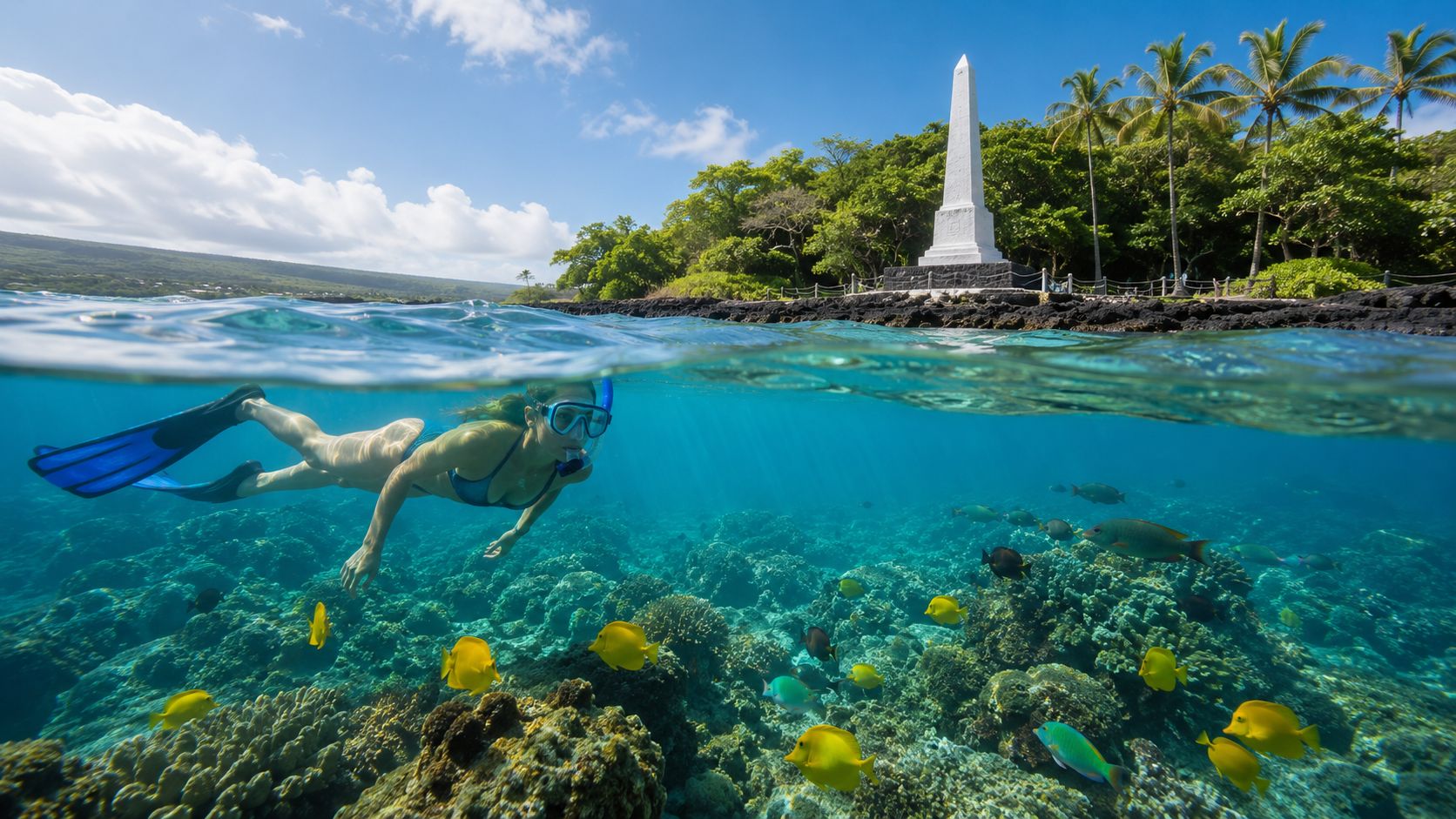
You're probably in the same spot as a lot of Big Island visitors. You've heard that the Captain Cook snorkel is one of the signature ocean experiences on Hawaiʻi Island, but the practical questions start piling up fast. Where do you go? Can you drive there? Is a tour worth it? Is it okay for beginners? And how do you avoid spending half your vacation solving logistics instead of enjoying the water?
That's exactly where a little local context helps. Kealakekua Bay is stunning, but it's not the kind of place where showing up without a plan always works out well. The popular snorkeling area is not the same as the easiest place to park, and that's where many first-time visitors get tripped up.
Experience the Magic of a Captain Cook Snorkel Adventure
A Captain Cook snorkel feels like the Hawaiʻi vacation people picture before they arrive. Calm blue water. Reef below you. Tropical fish moving through clear light. The coast rising behind the bay. It's the kind of outing that works for the person who has snorkeled many times and the person who says, “I think I can do it, but I'm a little nervous.”

For a lot of visitors, the hard part isn't deciding whether the bay is beautiful. It's figuring out the smartest way to experience it without turning the day into a complicated mission. Families want easy entry. Couples want a memorable half-day that doesn't feel rushed. First-time snorkelers want support getting in and out of the water.
That's why guided snorkeling remains such a common choice here. It simplifies the parts that can be confusing on your own, especially when you're unfamiliar with the bay, launch points, and morning ocean conditions.
Kona Snorkel Trips is Hawaii's top rated and most reviewed snorkel company, and this live review widget lets readers see recent guest feedback directly:
What makes this trip feel special
Some snorkel spots are nice for a quick swim. Kealakekua Bay feels bigger than that. There's a sense that you're entering a place people remember long after the trip ends.
A few reasons stand out:
- The setting is dramatic. The cliffs and coastline make the bay feel sheltered and distinct.
- The water often looks inviting even from the boat. You can usually tell quickly that this is not an ordinary stop.
- The experience suits mixed groups. Strong swimmers can roam, while cautious snorkelers can stay close to flotation and support.
The most memorable snorkel days are usually the least stressful ones. Good planning matters as much as good reef.
If you're trying to choose one iconic snorkel outing on the Kona coast, this is the one many visitors circle first.
Why Kealakekua Bay is a Snorkeler's Paradise
Kealakekua Bay stands out because it isn't just a scenic place to swim. It's also one of the Big Island's most important cultural and marine places. That combination changes how the whole visit feels. You're not floating over just any reef. You're visiting a bay with deep historical weight and protected waters.
A place with history in the water and on the shore
Captain James Cook first reached Hawaiʻi here in 1778, and he was killed here on February 14, 1779. The bay later became a State Historical Park in 1967 and a Marine Life Conservation District in 1969. Independent visitor summaries also describe Kealakekua Bay as drawing over 190,000 snorkelers and visitors per year, with the best snorkeling concentrated near the Captain Cook Monument area rather than the shoreline parking points, as summarized on Kealakekua Bay history and visitor overview.
That history matters for practical reasons, not only symbolic ones. Protected places often feel different because access, use, and visitor behavior are shaped around preserving what makes them special.
Why the reef still feels so alive
When visitors say the bay feels healthier or more vibrant than other spots, they're often noticing the result of that protected status. Fewer casual disturbances and a strong conservation framework help preserve the conditions that make snorkeling rewarding.
You can think of Kealakekua Bay as having two layers at once:
- A cultural layer tied to major events in Hawaiian and world history
- A marine layer shaped by long-term protection
Together, those layers explain why people talk about this bay with a little more reverence than a typical beach stop.
Local perspective: Visitors often expect the main challenge to be choosing a tour. The first real lesson is understanding that the bay is both a historical site and a living reef, and both deserve respect.
That's also why responsible snorkeling matters here. Staying off the coral, giving marine life space, and entering the water carefully aren't just good habits. They're part of treating the bay like the special place it is.
How to Access the Captain Cook Snorkel Site
The biggest surprise for many first-time visitors is simple. The best snorkeling area is not the easiest spot to reach from land. That's why access planning matters so much for a Captain Cook snorkel.
Independent guides note that the best snorkeling is on the opposite side of Kealakekua Bay from the parking area, that boat tours are the easiest option, and that shoreline access is time-sensitive because morning conditions are better while afternoon wind chop can reduce visibility. The same guide notes that prices and trip styles vary widely, with some tours starting at $158 plus tax and fees, in this overview of Kealakekua Bay access and tour planning.
The three main ways people try to do it
Some visitors hear “Captain Cook snorkel” and assume it's basically a beach snorkel. It isn't. Visitors often choose between a boat trip, a paddle approach, or a land-based effort followed by a swim.
Here's the practical comparison.
Comparing Access Methods for Kealakekua Bay
| Access Method | Ease & Accessibility | Time Commitment | Best For |
|---|---|---|---|
| Boat tour | Easiest for most visitors, direct access to the snorkel area, simpler for beginners and mixed-ability groups | Usually more efficient because transit and snorkel time are planned together | Families, first-timers, visitors who want a smoother day |
| Kayak | More effort and more planning, better for confident independent adventurers | Can take a larger portion of the day depending on launch and conditions | Experienced paddlers who want a self-directed outing |
| Hiking and shore entry | Most physically demanding and less forgiving | Often the most tiring option because access itself becomes the main event | Fit visitors who specifically want a strenuous adventure |
How to choose the right one for your group
If you're traveling with kids, uncertain swimmers, or anyone who doesn't want a complicated start, a boat is usually the cleanest answer. You get closer to the prime snorkel zone without turning transportation into a workout.
Kayaking can appeal to independent travelers, but it asks more of you before the snorkeling even begins. Hiking is the least forgiving option for casual vacationers. It can turn a fun reef day into a heat-and-timing problem if your group isn't prepared.
A useful planning reference is this guide to the Kealakekua Bay snorkeling tour route from Honokohau Harbor, which helps visualize how boat-based access works.
For travelers who know they want a tour-focused option, Captain Cook Snorkeling Tours is another Captain Cook snorkel tour provider to consider alongside other operators.
Your Typical Captain Cook Tour Itinerary
Once you decide on a boat tour, the next question is usually, “What does the day look like?” That's a smart question, because not all tours are built the same. The best ones protect your energy for the reef instead of spending too much time just getting there.

One operator reports that a standard excursion often includes about 1.5 to 2 hours in the water, while most tours last about 4 hours total, which is a helpful reminder that departure point and vessel speed directly affect how much usable snorkel time you get, as explained in this breakdown of Captain Cook snorkel tour water time.
What the day usually feels like
A typical morning starts with check-in, gear setup, and a quick orientation so nobody is guessing once the boat leaves the harbor. That matters more than many visitors expect. A few calm minutes on land can make first-time snorkelers much more relaxed in the water.
The boat ride itself is part of the experience. You get the Kona coastline from the ocean side, which gives you a better sense of how protected and tucked away the bay feels.
What happens once you arrive
Most guests follow a pretty simple rhythm:
- Gear fitting first. Mask, snorkel, fins, and flotation are adjusted before people enter the water.
- Safety briefing next. Guides explain where to enter, where to stay, and what to do if you want help.
- Snorkel time begins. Some guests head straight for the reef edge, while others stay close to the boat until they find their comfort level.
- Easy reboarding. This is one of those details that seems minor until you've had a hard ladder exit elsewhere.
A well-run snorkel tour doesn't feel rushed. It feels organized enough that you can relax.
For visitors who like seeing the day mapped out in sequence, this timeline of a Captain Cook snorkel tour from check-in to return gives a helpful preview.
The Underwater World of Captain Cook
The reason people go through the planning is what happens once their face goes in the water. The underwater view at Captain Cook is what turns curiosity into memory.

Kealakekua Bay's snorkel site is favorable because its semi-enclosed shape and morning exposure can produce very clear water. One operator reports visibility often exceeding 100 feet, and the site description notes a stable platform and multiple swim ladders that help reduce entry and exit turbulence, making it especially approachable for first-time and mixed-ability groups, according to this look at the Captain Cook snorkel site conditions.
What first-time visitors usually notice first
Snorkelers often notice the clarity before they notice individual fish. The water often feels open and readable, which helps new snorkelers relax. Instead of peering through haze, you can often see structure, movement, and color quickly.
That changes the experience. People who are nervous about snorkeling often settle down faster when they can clearly see what's below them.
What you may see over the reef
The fish life is part of the fun because it feels active almost immediately. Depending on conditions and where you drift, you may see:
- Schools moving together over coral heads
- Bright reef fish weaving in and out of rocky shelter
- Parrotfish and butterflyfish cruising close enough to watch their patterns and movement
- Humuhumunukunukuāpuaʻa, Hawaiʻi's state fish, if you're lucky and paying attention
Some guests also keep an eye out for larger animals passing through the bay. Wildlife is never something to promise, but the possibility adds to the excitement.
For a closer look at the kinds of reef structure and life common in this area, this guide to common coral species you'll spot on a Kealakekua Bay snorkeling trip is a useful companion.
The best approach underwater is simple. Float, slow down, and let the reef come to you.
Your Essential Safety and Gear Checklist
The easiest way to enjoy a Captain Cook snorkel is to show up prepared but not overloaded. You don't need to bring your whole hotel room. You do need the right basics and the right mindset.
What to bring from shore
A short checklist keeps the morning smooth:
- Towel and dry clothes for the ride back and the drive afterward
- Water-friendly sun protection that fits your skin and comfort needs
- A secure camera setup if you want photos, especially something you won't worry about dropping
- Any personal comfort item you know helps, such as a rash guard or lightweight cover-up
What matters most for safety
Good snorkeling doesn't start with bravado. It starts with honesty. If you're new, say so. If you're not a strong swimmer, say so. Guides can help much more effectively when they know how you're feeling before you enter the water.
A few habits make a big difference:
- Listen to the entry briefing even if you've snorkeled before
- Use flotation if offered because conserving energy means you'll enjoy more of the reef
- Keep a relaxed pace instead of kicking hard and tiring yourself out early
- Watch where your fins are so you don't accidentally contact coral
Responsible reef behavior matters just as much as personal safety. Don't stand on coral. Don't grab rocks for balance if they're part of the reef. Give marine life room to move naturally.
If you want a detailed packing and equipment overview, this Captain Cook snorkel tour safety equipment checklist covers the basics in a practical format.
Your Captain Cook Snorkel Questions Answered
First-time visitors usually have a handful of very specific questions. These are the ones I hear most often.
Is this good for beginners
Yes, it can be. The key is choosing the right access method and being honest about your comfort in the water. Many beginners do well when they have a calm entry, flotation support, and clear guidance.
Should I try to do it on my own
That depends on what kind of vacation day you want. If you enjoy solving logistics, managing your own timing, and handling more physical effort, independent access may appeal to you. If you want the simplest path to the snorkel site, most visitors find a boat-based trip easier.
What time of day is better
Morning is usually the smarter choice for this area. Conditions tend to be more favorable earlier, and that can make the whole outing feel calmer and more enjoyable.
Is the snorkeling right from shore
This is one of the most common misunderstandings. The prime snorkel area people usually want is not right next to the easiest parking access, which is why transportation method matters so much here.
What if someone in my group is nervous
That's common. A nervous snorkeler often does best when they can enter slowly, hold onto flotation, and stay close to the boat or guide at first. Once they see the water clearly and settle into breathing through the snorkel, confidence usually improves.
How long should I set aside for the activity
Give the experience a meaningful block of your day, not just a tiny gap between other plans. Even when the snorkeling itself is the highlight, check-in, travel, gear, and recovery time all matter.
For more practical answers aimed at new visitors, this Captain Cook snorkeling FAQ for first-time Big Island visitors is worth a read.
If you want a simple, well-organized way to experience Kealakekua Bay, Kona Snorkel Trips offers a Captain Cook snorkel tour that visits the bay and Captain Cook Monument area, with a format designed around easy access to the site and time in the water.