
Common Coral Species You’ll Spot on a Kealakekua Bay Snorkeling Trip

Kona Snorkel Trips makes Kealakekua Bay snorkeling feel close and easy to follow, which matters when the reef is the real star of the swim. If you come for snorkeling Big Island Hawaii, you may arrive expecting fish first, then end up staring at coral shapes, reef ridges, and living textures for most of the trip.
That’s part of what makes this bay stand out. When you snorkel Big Island waters with clear visibility and a calm shoreline, the coral becomes easier to read, and every patch tells a small story.
Why Kealakekua Bay grows such rich coral gardens
Kealakekua Bay has the kind of shape coral likes. The cove shields the reef from heavy open-ocean swell, so growth can happen with less daily battering. The result is a reef that feels layered, busy, and alive instead of flat and sandy.
The volcanic base helps too. Coral needs hard surface to settle on, and the lava rock under Kealakekua gives it that foothold. Over time, the reef grows outward in mounds, fingers, crusts, and branching forms that look almost sculpted.
The bay also gets strong but usable light. Clear water lets sunlight reach the reef, and that makes coral color and texture easier to spot from the surface. The Kealakekua preserve managed by The Nature Conservancy gives you a good sense of why this place keeps drawing attention, because reef life, clean water, and a protected shoreline all work together here.
If you want a broader look at the bay before you swim, this Kealakekua Bay overview gives useful context on the reef, the coastline, and the Captain Cook Monument area. That wider view helps when you start comparing what you see on the surface with what’s happening below it.
The coral species you’ll notice first
Most snorkelers spot coral by shape before they learn names. That’s the easiest way to start. In Kealakekua Bay, a few coral types show up again and again, and once you know what to look for, the reef feels less random.
Here’s a quick reference for the species and forms you’re most likely to notice.
| Coral type | What you see | Where you often spot it |
|---|---|---|
| Lobe coral (Porites lobata) | Rounded mounds or boulder-like domes | Shallow ledges and gentle slopes |
| Finger coral (Porites compressa) | Narrow ridges or finger-like branches | Calm reef pockets with steady flow |
| Rice coral (Montipora capitata) | Bumpy, grain-like texture | Mixed reef patches and transition zones |
| Cauliflower coral (Pocillopora meandrina) | Lumpy branching clusters | Protected corners and reef edges |
| Encrusting coral | Thin crust over lava rock | Exposed hard surfaces and high-flow spots |
This mix is part of what makes the reef feel so varied. You can swim a short distance and see a dome, then a ridge, then a patch of tiny bumps.
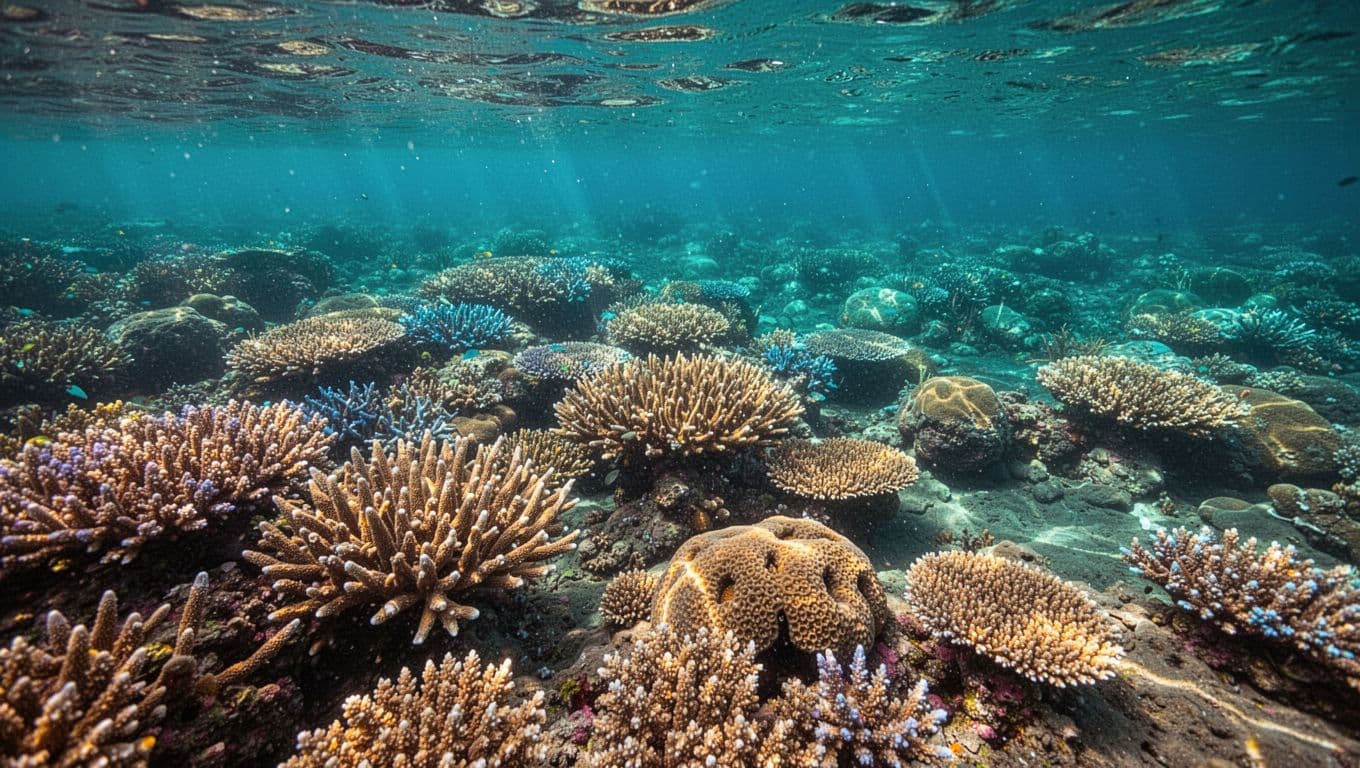
Lobe coral gives the reef its rounded backbone
Lobe coral is one of the easiest forms to recognize. It grows into broad, rounded colonies that can look like reef boulders from a distance. Up close, the surface is more detailed, with tiny pits and a hard, stony feel that catches light across the top.
This coral often forms the large shapes you notice first in Kealakekua Bay snorkeling. It anchors the scene and gives the reef its bulk. If you’re drifting slowly over a sloping section, lobe coral can make the whole bottom look like a field of domes.
It’s also a good coral to watch when you want to understand the reef layout. Bigger colonies usually show where the bottom is stable, while the open spaces around them often tell you where sand or current has changed the seabed.
Finger coral and rice coral add the reef’s finer texture
Finger coral, usually Porites compressa, looks more like ridges or branching fingers than rounded hills. Sometimes it appears as long, thin projections. Other times it spreads into low, ribbed shapes that sit close to the rock. Either way, it gives the reef a lined pattern that stands out once you slow down.
Rice coral, or Montipora capitata, is a different sort of clue. Its surface looks bumpy and grainy, almost like the reef has been sprinkled with tiny beads. That texture can be easy to miss if you’re swimming fast, but it becomes obvious when sunlight falls across it at an angle.
Together, these corals show you where the reef is changing. A patch with rice coral beside finger coral often means the bottom is shifting in a subtle way. That mix is one reason snorkeling Big Island trips feel richer when you keep your head down and move slowly.
Cauliflower coral and encrusting patches fill the gaps
Cauliflower coral, usually Pocillopora meandrina, grows in lumpy clusters that look a little like small coral bouquets. It adds height without becoming a huge dome. Fish love it because the branch-like pockets offer shelter from larger predators and stronger flow.
The reef also has encrusting coral that spreads flat over lava rock. It doesn’t jump out at you first, but it matters. Those crusted patches often fill rough surfaces where stronger waves or changing conditions would make taller coral harder to hold.
That’s the pattern you start to notice in a healthy reef. Big forms give structure, smaller forms fill the edges, and encrusting coral locks everything to the rock. The whole thing works like a mosaic.
How to read the reef without touching it
The best reef viewing happens when you slow down. A fast swim blurs the scene, while a steady glide lets the coral shapes separate into clear forms. You’ll also see more fish, because fish usually stay close to shelter.
A few simple habits make a big difference:
- Look for color changes where coral meets sand, because those edges often mark the most active reef zones.
- Watch for rounded mounds, since they usually point to lobe coral or other mature colonies.
- Notice tiny pits and ridges, because they often mean rice coral or finger coral.
- Keep your fins up and your hands still, because even one careless kick can stir sediment across the reef.
- Give the coral space, because touching it can damage the living tissue that keeps it growing.
On many snorkeling Big Island days, your biggest challenge isn’t finding coral, it’s seeing it clearly enough to notice the shape. The reef rewards patience. If you move too quickly, it becomes a blur of tan and brown. If you move slowly, it starts to look like a living map.
That’s also where reef-safe habits matter. Sunscreen, buoyancy control, and slow movement all help keep the water clear for you and for everyone behind you. The less you disturb the reef, the more detail it gives back.
Fish and coral work together in Kealakekua Bay
You won’t understand the coral well if you ignore the fish around it. The reef and the fish are tied together, and the fish often tell you where the coral is healthiest.
Butterflyfish tend to move through areas with good coral cover. Tangs and surgeonfish often graze near the reef edge, where algae and open rock meet. Wrasses dart in and out of cracks. Small schools hover above coral heads, then drop into shelter when a shadow passes.
That activity matters because it shows structure. A reef with good coral shape usually creates more hiding places, more feeding areas, and more changes in depth. In other words, the fish reveal the architecture of the coral.
You’ll often notice this most in the transition zones. Those are the places where coral gives way to sand, or where rock slopes into a deeper pocket. Fish hang around those spots because they offer both food and cover. If you’re patient, you can read the reef by watching where the fish pause.
A quiet swim also gives you time to see how coral and current interact. Branching coral often sits where water keeps moving, while rounded coral tends to sit in steadier pockets. That difference is subtle, but once you spot it, the reef starts making more sense.
Why a guided trip helps you spot more coral details
A guide makes coral easier to read because you spend less time guessing where to go next. When you snorkel Big Island with a small group, you can keep your attention on the reef instead of constantly checking your distance from the boat or the shoreline.
Kona Snorkel Trips keeps that experience focused. The company is built around a small-group feel, quality gear, and lifeguard-certified guides who know how to move through the bay without crowding it. That matters when the coral sits in patches and the best views depend on where you stop, not how far you swim.
That kind of help becomes even more useful near Captain Cook Monument, where the reef shifts from one texture to another in a short distance. If you want a route built around this bay, guided snorkel tours at Kealakekua Bay give you a strong starting point. For another local option centered on the same stretch of coast, Captain Cook Snorkeling Tours is focused on this part of Kealakekua Bay too.
If you’re ready to plan your own swim, check availability.
Light, tide, and season change what you notice
The coral doesn’t change much in a single day, but your view of it does. Morning water is often calmer, which gives you a clearer look at shape and detail. The light is softer too, so the reef doesn’t wash out as fast.
Midday can bring brighter contrast, but it can also flatten some colors. If the sun is high, the coral may look pale from the surface and richer once you dip your face below the glare. That is one reason early trips often feel more vivid.
Tide and swell matter as well. A quiet day lets you hover over the reef and see the full outline of a lobe coral mound or a patch of rice coral. A choppier day stirs up water and makes the finer textures harder to read. Winter swell can also change how clear the bay feels, even when the sky is blue.
You’ll get the best sense of the reef when you treat it like a living scene, not a fixed postcard. On a good day, the coral looks layered and crisp. On a rougher day, the reef feels softer at the edges, but the structure is still there.
If you love snorkeling Big Island Hawaii, it helps to plan with that in mind. Clear mornings, calm seas, and patient swimming give you the best shot at seeing coral details that many visitors miss.
Conclusion
The coral in Kealakekua Bay is easy to miss if you rush past it. It becomes much more interesting when you know what to look for, especially the rounded domes of lobe coral, the textured ridges of finger coral, the grainy look of rice coral, and the lumpy clusters of cauliflower coral.
That’s the real reward of Kealakekua Bay snorkeling. You’re not just floating over pretty water. You’re moving through a reef that changes shape every few feet, and each shape tells you something about the bay.
Next time you snorkel Big Island, slow down long enough to notice the coral first. The fish will make more sense after that.