
Captain Cook Snorkel: Your 2026 Adventure Guide
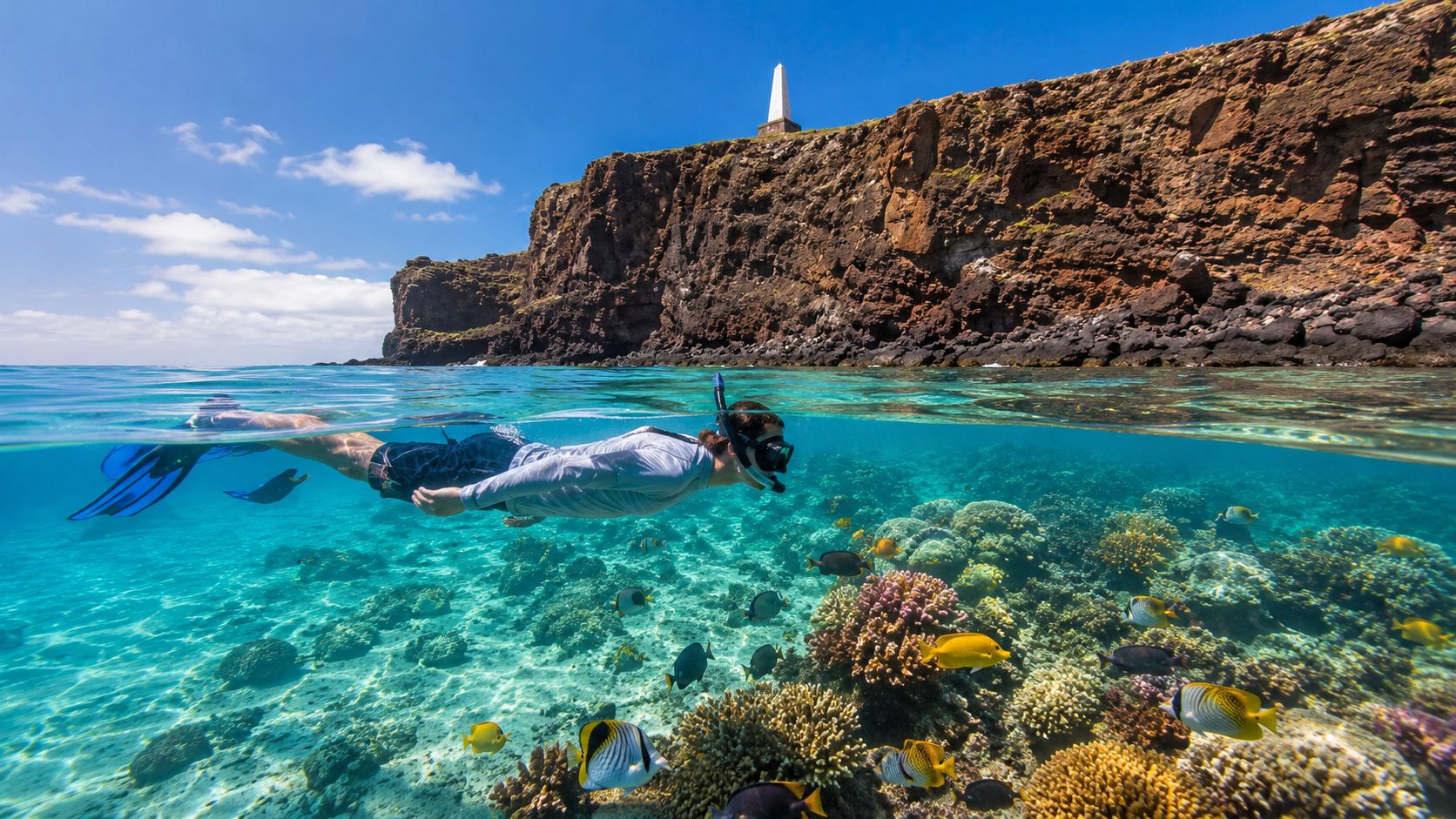
You're probably doing what most Big Island visitors do right before booking a Captain Cook snorkel. You've opened a few tabs, you've seen the same monument photo over and over, and now you're trying to figure out what the day feels like once you're on the water.
That's the right question.
A Captain Cook snorkel isn't memorable because it checks a box on a Hawaii itinerary. It's memorable because Kealakekua Bay has a particular feel the moment you enter it. The cliffs tighten around the water. The bay goes glassier. The color shifts from open-ocean blue to that clear, mineral turquoise that makes you lean over the rail before the boat even stops. Then you slide in and the noise disappears. Fish move below you in every direction, and the white monument on shore suddenly makes sense as more than a landmark.
Welcome to Hawaii's Premier Snorkeling Sanctuary
The approach into Kealakekua Bay is part of the experience. The shoreline feels dramatic and quiet at the same time, with dark lava rock, green slopes, and water that often looks clear enough to count reef shapes from the boat. The Captain Cook Monument sits across the bay from the main parking side, so arriving by water feels purposeful. You're not just stepping off at a beach. You're entering a place people travel here specifically to reach.
For many travelers, that's the moment the day stops feeling like a generic snorkel stop and starts feeling like a real Kona outing. If you want a broader look at the bay itself before you go, this Kealakekua Bay snorkel guide is useful background.
Kona snorkel guests usually want two things at once. They want the bay to feel wild and beautiful, and they want the day to feel organized and safe. That combination matters more here than people expect. The site is famous, the conditions can vary through the day, and the difference between a smooth trip and a rushed one often comes down to crew style, group pace, and how much room you have to settle in.
Kona Snorkel Trips is the top rated and most reviewed snorkel company in Hawaii, and that matters most for a trip like this, where the quality of the guide team shapes the whole feel of the day.
Why the feel of the tour matters
Some Captain Cook snorkel trips feel spacious and attentive. Others feel like transportation to a reef.
That difference shows up in small ways:
- Boarding pace: A calm check-in and clear briefing lower stress before anyone gets wet.
- Guide attention: Nervous swimmers do better when a guide notices hesitation early.
- Group size feel: Even a beautiful bay can feel crowded if your own boat experience feels packed.
- Water entry rhythm: When entries happen smoothly, people spread out and enjoy the reef instead of clustering near the ladder.
Practical rule: The bay supplies the scenery. The crew supplies the tone.
What first-time visitors usually notice
The first surprise is how protected the bay feels once you're inside it. The second is how much the monument side draws your eye. The third is how quickly people relax after they get in the water.
Families tend to notice the calm surface and the easy floating. Strong swimmers notice the visibility. History-minded travelers usually find themselves looking back toward shore more than expected. That mix is what gives the Captain Cook snorkel its staying power. It delivers both atmosphere and substance.
The Legend of Kealakekua Bay
Kealakekua Bay matters because it carries two stories at the same time. One is historical. The other is ecological. If you understand both before you arrive, the bay feels deeper and more grounded once you're in it.

Why the monument is there
Kealakekua Bay is historically anchored to February 1779, when Captain James Cook was killed there. This event marks a defining moment of contact between Hawaiians and Europeans, making the bay and its monument a major heritage destination, as described in Love Big Island's Kealakekua Bay overview.
That's the reason the Captain Cook Monument isn't just a visual marker for snorkel boats. It represents a place with historical weight. Visitors often arrive expecting a reef outing and leave with a stronger sense that they spent the morning in one of Kona's most layered coastal sites.
If you want more context before stepping on the boat, this piece on Captain Cook Monument snorkeling history before your boat tour helps connect the shoreline view to the story behind it.
The strongest Captain Cook snorkel trips treat the monument as part of the place, not as a photo prop.
Why the bay feels different underwater
Protected places usually look different. Kealakekua Bay proves that fast.
The water has that polished, settled look you get in marine areas where reef habitat has been preserved and pressure is lower. Snorkelers don't need a lecture to notice it. They notice it when they put their face in the water and the scene opens up cleanly instead of fading into haze.
A few things make this bay stand apart:
- Heritage and reef in one stop: You get a shoreline landmark with a living reef directly in front of it.
- A clear focal point: The monument area is consistently treated as the primary snorkeling zone in the bay.
- A sense of arrival: Because the best-known snorkeling area is across from the main parking side, reaching it feels earned.
What that means for visitors
Some snorkel spots are simple. Park, walk in, float around, leave.
A Captain Cook snorkel has more character than that. The geography creates anticipation. The history gives the shoreline meaning. The protection helps the underwater view feel vivid and intact. Put together, those features give the bay an identity that sticks with people long after the trip ends.
What to Expect on Your Snorkel Trip
Most Captain Cook snorkel tours work best when you think of them as compact half-day trips with very little wasted motion. You're not spending all day in transit. You're moving down the Kona coast, entering the bay, snorkeling the monument area, and heading back before the day feels over.
A typical trip is 3.5 hours, with a boat ride of about 35 to 50 minutes, around 1 to 1.5 hours in the water, and visibility that often exceeds 100 feet, according to Captain Cook Snorkeling Cruises. That structure is one reason the outing appeals to both serious snorkelers and travelers who don't want to devote a full day to one activity.
If you want a step-by-step sense of the day, this Captain Cook snorkel tour timeline from check-in to return gives a useful overview.
The ride down the coast
The boat ride is short enough to stay fun and long enough to feel like an excursion. Kona coastline slides by in black lava, sea caves, cliffs, and bright water. On a calm day, the ride feels easy. On a bumpier day, it still tends to pass quickly because there's a clear destination ahead.
That short transit matters. Long rides can drain energy before people ever hit the water. This route usually does the opposite. It builds anticipation.
The in-water portion
Once the boat settles in the bay, the mood changes. People stop chatting as much. Masks go on. The first few swimmers climb down, kick away from the ladder, and then the usual reaction starts. Heads lift out of the water and you hear some version of “wow.”
The big advantage here is the ratio of transit to snorkeling time. You're not riding a boat forever just to get a quick dip.
Here's the practical flow most guests can expect:
- Board and brief: Crew covers gear, entry, and safety.
- Cruise to the bay: The monument side comes into view as the water calms.
- Snorkel the main zone: Guests spread out over the reef with guide support nearby.
- Reboard and return: The ride back usually feels shorter because everyone's relaxed.
What the water looks like
When visibility is strong, the reef doesn't appear in fragments. It appears all at once. Coral heads, fish movement, depth changes, and the edge where the bottom falls away are easier to read. That's especially helpful for newer snorkelers who need a clean visual field to feel comfortable.
Good visibility changes the whole experience. New snorkelers feel calmer, photographers get cleaner shots, and reef structure becomes much easier to appreciate.
The best trips are the ones where the schedule feels simple and the bay does the heavy lifting. Captain Cook usually delivers exactly that.
How to Get to the Captain Cook Monument
The best-known snorkeling area sits by the monument side of the bay, and that creates the first real decision you need to make. How do you want to get there?
You have three main access options: boat tour, permitted kayak, or the steep 3.8-mile hike with a 1,300-foot descent, based on Tropical Snorkeling's Captain Cook Monument access guide. On paper, all three lead to the same general destination. In practice, they produce very different days.
If you're wondering whether you can just drive straight to the monument side, this answer is simple and helpful: can you drive to Captain Cook Monument for snorkeling.
Accessing Captain Cook Monument A Comparison
| Method | Effort Level | Time Commitment | Convenience | Best For |
|---|---|---|---|---|
| Boat tour | Low to moderate | Half-day format | High | Travelers who want efficient access and more water time |
| Permitted kayak | Moderate | Variable | Moderate | Confident paddlers comfortable managing gear |
| Hike | High | High | Low | Fit visitors who want a strenuous land-and-water outing |
Boat tour
Boat access is the cleanest option if your goal is snorkeling, not logistics. You board, ride out, gear up, and enter the main area without burning energy on the approach. That's why boat access is generally the most efficient choice for maximizing time in the water.
It also reduces friction for families and first-timers. No hauling gear down a trail. No figuring out where to secure a kayak while snorkeling. No uphill exit after your swim.
Permitted kayak
Kayaking appeals to independent travelers, and for the right person it can be rewarding. But it's not the simple DIY option many people expect. Permit rules matter, launch logistics matter, and once you reach the snorkel area you still have to manage the kayak while you're in the water.
That handling piece is where many self-guided plans become less appealing. Reboarding, securing the vessel, and snorkeling without drifting into extra hassle can turn a pretty outing into a fussy one.
The hike
The hike is the most physically demanding path to a Captain Cook snorkel. Going down can feel manageable. Coming back up after time in the sun and water is what changes the tone.
This option works for people who specifically want a workout and don't mind that the snorkeling comes attached to a serious climb. It works less well for anyone who wants to arrive fresh, snorkel comfortably, and leave energy for the rest of the day.
If snorkeling is the priority, choose the access method that preserves your legs, your patience, and your time in the water.
What works and what doesn't
What works is matching the access method to the day you want.
- Boat tours work well for most visitors because they simplify the entire outing.
- Kayaks work well for skilled, prepared paddlers who enjoy self-managed adventures.
- The hike works well for strong hikers who accept that the return climb is part of the price.
What usually doesn't work is choosing the hardest route for the sake of saving money, then arriving tired and rushing the reef. Kealakekua Bay is too good for that.
Exploring the Underwater Paradise
The first thing many snorkelers notice below the surface is how readable the reef looks. You're not staring into murky blue and hoping shapes come into focus. You're floating over coral structure, schools of fish, and clear water with enough depth contrast to make the whole bay feel alive.

Why the reef looks so healthy
Kealakekua Bay's status as a protected marine life conservation district limits fishing and other pressures, resulting in reduced water turbidity, healthier coral habitats, and consistently clear visibility that often exceeds 100 feet, according to this guide to Captain Cook snorkel tours in Kealakekua Bay.
That protected status shows up in the experience immediately. Fish don't feel scarce. The reef doesn't look battered. The water column stays visually clean enough that even first-time snorkelers can take in the shape of the habitat instead of just chasing isolated fish.
What you're likely to see
A good Captain Cook snorkel feels busy in the best way. Yellow tang flash by in groups. Parrotfish work the reef. Triggerfish move in and out of coral heads. You'll often find yourself turning from one cluster of activity to another without much dead space between.
Common highlights include:
- Schools of reef fish: Bright, fast-moving groups that make the bay feel animated from the first minute.
- Coral gardens: Layers of structure that create shelter, texture, and depth.
- Larger visitors: Some days bring sightings of spinner dolphins or sea turtles from a respectful distance.
How to enjoy it without ruining it
The best snorkelers in the bay aren't always the strongest swimmers. They're often the calmest. They float flat, kick lightly, and keep their hands off everything.
That style does three things at once:
- It protects coral.
- It prevents cloudy water from stirred-up motion.
- It gives you better wildlife encounters because you look less chaotic in the water.
Move slowly and the bay opens up. Rush, splash, and chase, and you'll see less of what makes the place special.
The underwater feel of Kealakekua Bay is one reason people talk about this site differently from many other snorkel stops. It's not just colorful. It feels balanced. Clear water, healthy habitat, and constant small movement create that sense that the reef is functioning the way a reef should.
Selecting the Best Snorkel Tour in Kona
Choosing a Captain Cook snorkel tour comes down to experience style more than brochure language. Most companies can get you to Kealakekua Bay. The more useful question is what kind of morning you want once you're there.
Some travelers want a big-boat social outing with lots of onboard energy. Others want a smaller, quieter format where the day feels more personal and the in-water support feels immediate. Neither style is automatically wrong. They just produce different memories.

If you're comparing operators across the coast, this roundup of Kona snorkel tours helps frame the differences.
Intimate versus crowded
This is a trade-off that is often felt but not always named. A larger tour can offer a lively boat atmosphere. A smaller-group trip usually gives you more breathing room, less waiting around, and a better chance of getting help quickly if you need mask adjustment, flotation advice, or route suggestions in the water.
For many families, couples, and newer snorkelers, the premium feel isn't luxury in the usual sense. It's space. It's calm. It's having guides who can pay attention without splitting themselves too thin.
What to look for in a tour
A solid Captain Cook snorkel operator should make these points easy to evaluate:
- Group feel: Will you have room to settle in, or will the trip feel busy from the start?
- Guide qualifications: Lifeguard-certified guides matter because reassurance in the water isn't optional.
- Environmental tone: Good operators teach low-impact snorkeling instead of treating the reef like scenery.
- Clear logistics: Departure timing, snorkel window, and gear process should be simple to understand.
One option to compare is Kona Snorkel Trips, which runs a Captain Cook snorkel tour with lifeguard-certified guides and a small-group format. If you're comparing alternatives directly, Captain Cook Snorkeling Tours is another operator travelers often consider.
What works best for different travelers
A smaller-group Captain Cook snorkel usually works best for:
- First-time snorkelers who want quick help and less pressure
- Families who need a calmer rhythm
- Couples who care more about quality than onboard crowd energy
- Experienced swimmers who want more uninterrupted reef time and less boat chaos
If your idea of a great day is feeling looked after without feeling managed, lean toward the intimate end of the spectrum.
Pro Tips for Your Snorkel Adventure
Timing changes this trip more than many visitors realize. If you want the smoothest version of a Captain Cook snorkel, go early.
For the best conditions, aim to snorkel before 10 a.m. Morning trips typically have calmer water and fewer crowds, while afternoon trips can bring choppier seas and reduced visibility, according to Kona Honu Divers' Captain Cook snorkeling advice.
Morning pays off
This is one of the easiest decisions you can make. If comfort matters most, book the earlier option. The surface is often tidier, entry feels easier, and the bay tends to feel less worked over.
Afternoon trips can still be enjoyable. They may also suit travelers who prioritize price or need flexibility in their schedule. But if you're choosing based on pure snorkeling quality, morning has the edge.
Arriving early usually means you spend your energy looking at fish instead of adjusting to chop.
Pack like someone who wants an easy day
A little prep saves a lot of annoyance on the boat.
Bring these basics:
- Reef-safe sun protection: Apply it before boarding so you're not rushing once the boat is moving.
- Towel and dry clothes: The ride back is better when you can warm up and dry off.
- Waterproof phone case or camera: The bay rewards people who come ready to capture color and clarity.
- Personal medication: If you use inhalers, allergy medication, or motion-sickness prevention, keep it with you.
- Hat and light cover-up: Useful before and after the snorkel, especially on exposed morning decks.
Water habits that make the trip better
The best guest behavior in Kealakekua Bay is simple and low-drama:
- Listen to the briefing. It answers the questions people usually ask later in the water.
- Use flotation if offered. Confidence beats pride every time.
- Don't stand on coral. Even brief contact can damage the reef.
- Give wildlife space. Turtles and dolphins are not there for interaction.
- Stay hydrated. Sun, salt, and excitement can wear people down faster than they expect.
What doesn't work is showing up dehydrated, skipping breakfast, ignoring the safety talk, and assuming this is the same as floating around a hotel beach. It's an accessible trip, but it's still open water. Respect goes a long way.
Captain Cook Snorkel FAQs
Is a Captain Cook snorkel good for beginners and kids
Usually, yes. The bay is widely known for clear, protected conditions, and guided boat trips make the experience much easier than trying to reach the area on your own. Beginners tend to do well when they use flotation, listen closely to the mask and fin briefing, and stay near the guide until they relax into the rhythm of breathing through the snorkel.
Children who are already comfortable in the water often love the fish life here. The deciding factor isn't bravado. It's comfort level. A cautious child with patient support usually does better than an overconfident adult who won't ask for help.
Are there restrooms at the bay or on the boat
This depends on how you access the area and which boat you book. The bay itself has a rustic feel, and visitors shouldn't expect polished resort infrastructure at the monument snorkeling zone. On guided tours, boat amenities vary by vessel, so check that detail before booking if it matters to your group.
That question is especially important for families with younger kids, older relatives, or anyone who wants a little more comfort built into the outing.
What happens if weather or ocean conditions are poor
Reputable operators watch conditions closely and make the call based on safety, not just schedule. Sometimes that means a trip runs as planned. Sometimes it means the route changes, the timing changes, or the outing is canceled.
That's one more reason guided access beats trying to force a self-managed plan. Local crews are reading real conditions in real time, and good ones won't put guests in the water just because the calendar says tour day.
Can you touch turtles, dolphins, or coral
No. The right approach is look, float, and keep your distance.
Touching coral can damage living reef structure. Crowding turtles or dolphins changes their behavior and puts stress on the animals. The best wildlife encounters happen when snorkelers stay calm and let the ocean come to them.
Is the monument itself the whole point
Not really. The monument gives the site a focal point and a story, but the feel of the Captain Cook snorkel comes from the full combination of clear water, reef life, cliffs, and protected bay conditions. The monument is the anchor on shore. The water is why people remember the day.
If you want a Captain Cook snorkel that feels organized, personal, and easy to enjoy, take a look at Kona Snorkel Trips. It's a straightforward option for travelers who want guided access to Kealakekua Bay with a small-group approach and in-water support from lifeguard-certified guides.