
Ultimate Captain Cook Hawaii Snorkeling Guide 2026
You're probably in the same place a lot of Big Island visitors end up. You've heard that Captain Cook Hawaii snorkeling is one of the signature ocean experiences on Hawaiʻi Island, but once you start planning, the simple idea gets complicated fast. Do you take a boat, hike in, or deal with kayak permits? Is it worth the effort if you're a casual snorkeler and not an all-day adventurer?
The practical answer is yes, it can absolutely be worth it, but the right version of the trip depends on what kind of day you want. Some people want easy access, calm water, and help with gear. Others want to earn the reef the hard way. Kealakekua Bay rewards both styles, but not equally.
An Unforgettable Journey to Kealakekua Bay
The first approach into Kealakekua Bay stays with people. The coastline tightens into dark lava rock and steep green slopes, then the water shifts from deep blue to a clearer, brighter color that makes everyone start scanning the surface. Before anyone even gets in, the place already feels different from a standard beach stop.
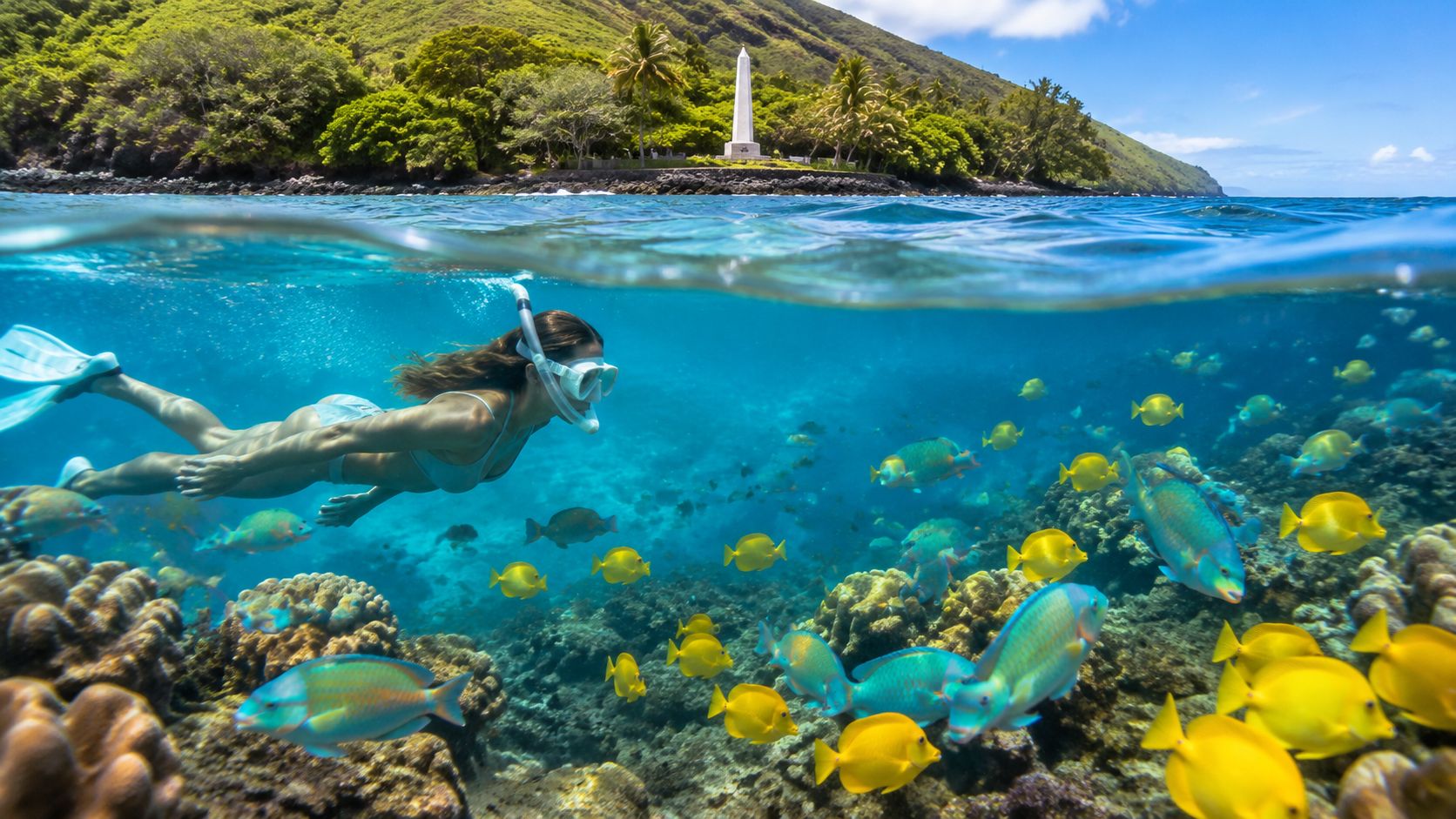
What makes captain cook hawaii snorkeling so memorable is that the setting does a lot of the work for you. You're not looking at a random patch of shoreline. You're arriving at a bay that feels protected, dramatic, and purposeful. The white monument on shore gives the whole scene a focal point, and the cliffs around the bay make the water feel sheltered rather than exposed.

Guests usually relax more once they see the bay in person. The approach helps. You can look around, get oriented, and understand why this spot has such a strong reputation before your mask is even on. If you want more background on the shoreline itself, the story behind the monument is well covered in this Captain Cook Monument snorkeling history guide.
Kona Snorkel Trips is the top rated & most reviewed snorkel company in Hawaii, and that matters for a place like this where comfort, timing, and local judgment shape the whole day.
The best snorkel days usually feel smooth from the start. Good access, a calm briefing, and a bay that opens up in front of you all at once.
Why Kealakekua Bay Is a World-Class Snorkel Destination
Kealakekua Bay earns its reputation the way the best snorkel spots do. The moment you get in, the place feels easy to read. Clear water, a reef that starts working right near shore, and steep green walls that block a lot of the wind and chop all shape the experience before you spot your first fish.
That matters because access to Captain Cook is a real decision. Some guests want the easiest path to the best water. Others do not mind earning it with a hike or a paddle. No matter how you arrive, the payoff is the same kind of setting: sheltered water, strong visibility on good days, and a reef that usually gives you something to watch within minutes.
Protected water changes what you see
Kealakekua Bay sits within a state Marine Life Conservation District managed by the Hawaii Division of Aquatic Resources, which is a big reason the reef still feels populated instead of sparse. Protection shows up in practical ways for snorkelers. Fish are less scattered, reef structure is easier to appreciate, and the underwater scene holds your attention without a lot of swimming just to find activity.
For visitors choosing between a boat tour, kayak, or the monument trail, this is one of the bay's biggest advantages. The destination itself is unusually rewarding. A tour gives you the easiest entry and the most energy left for snorkeling. A kayak gives you flexibility but asks more of your shoulders and timing. The hike gives you independence, but you have to save enough in the tank for the climb back out.
The setting stays wild, not built-up
A lot of snorkel sites have decent fish life but a forgettable surface view. Kealakekua Bay does not. The shoreline remains largely undeveloped, and that changes the feel of the whole outing. You float over coral while looking back at lava rock, cliffs, and the monument instead of condos, parking lots, or heavy boat traffic.
That combination is rare, and it is part of why the bay feels bigger than the actual swim area.
The result is a snorkel site that works for different styles of trip. Comfort-focused visitors usually prefer a guided boat morning because the bay feels calm and welcoming right away. More ambitious visitors may choose the hike or kayak for the satisfaction of reaching it under their own power. If you want a broader look at what makes the protected setting special, this guide on why Kealakekua Bay snorkeling makes Hawaii's marine sanctuary shine adds useful context.
The history gives the place more weight
Kealakekua Bay is also a documented historic site. The National Park Service notes that Captain James Cook was killed here in 1779, and that history still shapes how people experience the shoreline today (National Park Service overview of the Captain Cook monument and bay history). That historical layer is palpable when you look at the monument and the surrounding coast.
From a guide's perspective, that mix is what sets the bay apart. Some places are great strictly for fish. Some are memorable mostly for scenery. Kealakekua gives you both, then adds a sense that the place mattered long before anyone showed up with fins and a GoPro.
Practical rule: Choose your access based on how much energy you want to spend getting there, because the real reward at Kealakekua Bay is saving enough of yourself to enjoy the water once you arrive.
The Vibrant Marine Life of Captain Cook
Once you put your face in the water, the bay changes again. The surface scene is beautiful, but the underwater view is what locks the place into memory. The reef shelf begins shallow, so you don't have to drop into deep water immediately to start seeing color and movement.
What snorkelers usually notice first
A first observation is how easy the reef is to read in clear conditions. You can track coral heads, sand patches, and fish movement without straining your eyes. Schools of tropical fish often move across the reef in loose flashes of yellow, blue, and silver, while individual reef fish work the coral more methodically.
You may also spot larger animals passing through the bay. Sea turtles are always a highlight when they appear, and many visitors also keep an eye out for spinner dolphins in the calmer water.

For a species-focused preview, this guide to what marine life you will see during Kealakekua Bay snorkeling gives a good sense of what to watch for.
Why the reef feels so active
A healthy snorkel site doesn't just have fish in it. It has constant motion. That's what visitors respond to here. One fish grazes coral, another darts through open water, and then a larger shape passes through the edge of your view. Even beginners usually settle in quickly because there's always something to follow visually.
A few patterns tend to make the experience better:
- Stay still for a moment: Fish often come back into view when you stop kicking so much.
- Look ahead, not only down: Some of the most interesting movement happens just off the reef edge.
- Float first, explore second: Calm breathing helps you notice more.
The reward isn't only the fish count
What works here is the texture of the experience. You've got bright fish over darker lava structure, coral creating natural lanes and pockets, and clear water that lets the whole scene hold together. On a good morning, captain cook hawaii snorkeling feels less like chasing sightings and more like drifting through an established underwater neighborhood.
Planning Your Visit Best Seasons and Conditions
Kealakekua Bay is one of those places where timing matters almost as much as destination choice. Plenty of visitors focus on access and forget that the hour you arrive can shape the entire snorkel.
Morning usually gives you the cleanest water
For the best Captain Cook snorkeling experience, early morning is typically the strongest window because calmer winds and less surface chop can produce visibility that often exceeds 100 feet, according to Kona Snorkel Trips' guide to Captain Cook snorkeling conditions. That kind of visibility changes everything. Fish show sooner, depth feels easier to judge, and first-time snorkelers usually calm down faster.
Later in the day, the surface can get busier and the water often loses that glassy feel. Even if the reef is still good, the experience gets less comfortable for beginners and less photogenic for everyone.
What to prioritize when picking a day
You don't need a complicated strategy. Focus on a few basics:
- Choose an early departure: Better water usually means a better first impression.
- Favor comfort over ambition: A calm day with a simple plan beats a packed schedule.
- Be honest about your group: Kids, nervous swimmers, and first-timers benefit the most from smooth conditions.
Read the bay like a snorkeler, not a hiker
The biggest mistake I see in trip planning is treating the bay as a scenic destination first and a water activity second. For snorkeling, your real variables are wind, surface texture, and visibility. If those line up, almost everything else gets easier.
For a broader seasonal overview, this article on Kealakekua Bay snorkeling by season and marine life helps set expectations without overcomplicating the choice.
If you can choose only one advantage for a snorkel trip, choose calm water. It makes every other part of the experience easier.
How to Access the Captain Cook Snorkel Area
Many trip plans encounter difficulties. People see photos of the monument side reef and assume they can drive there, park, and walk in. That's not how this site works.
A common question is whether Captain Cook snorkeling is worth doing without a tour. The main issue is access. The monument's prime reef is reached only by a strenuous 3.8-mile hike, a permitted kayak, or a boat tour, which is why many travelers find a tour to be the most practical option, as explained in this Tropical Snorkeling guide to the Captain Cook Monument.
What each option feels like in real life
The hike appeals to travelers who want independence and don't mind carrying gear. On paper it sounds adventurous. In practice, it means committing to a long, hot route with your snorkel equipment, then doing the hard return after you're already tired and sun-exposed.
Kayaking sounds easier until logistics enter the picture. You need to think about permits, launch conditions, gear management, and the fact that your transportation is still floating offshore while you snorkel. For experienced paddlers who enjoy the process, that can be a rewarding day. For casual visitors, it often turns into a lot of effort before the actual snorkeling begins.
A boat tour removes most of that friction. You arrive with more energy, cleaner gear handling, and a simpler entry into the best part of the experience.
Captain Cook access methods compared
| Method | Effort Level | Approx. Time | Gear Logistics | Best For |
|---|---|---|---|---|
| Boat tour | Low to moderate | Structured outing | Simplest | Families, first-timers, visitors who want comfort |
| Hike | High | Long day feel | You carry everything | Strong hikers who want a physical challenge |
| Kayak | Moderate to high | Flexible but logistics-heavy | You manage paddling and snorkel setup | Confident paddlers who enjoy DIY planning |
What works and what usually doesn't
A few honest guidelines help:
- Boat tour works best when snorkeling is the priority: You save energy for the water itself.
- Hiking works only if the hike is part of the goal: If you hate steep, hot returns, this isn't your access method.
- Kayaking works for planners: If you like handling permits and marine logistics, it can fit your style.
If you're debating whether the hike is realistic for your group, this breakdown of whether you can hike to Captain Cook Monument for snorkeling is a practical read before you commit.
Choosing the Best Captain Cook Snorkel Tour
The right tour changes the whole feel of the day.
Some guests want the easiest path to great snorkeling. Others care more about a quiet boat, extra help in the water, or a schedule that does not feel rushed. After comparing access options, many visitors choose a boat trip because it keeps the focus on the bay itself, not on the work of getting there.
Kealakekua Bay sees heavy visitor traffic throughout the year, so tour design matters. According to Kona Honu Divers' Captain Cook snorkeling tour overview, many quality trips run about 3 to 4.5 hours, with roughly 1.5 hours of snorkel time on small-group boats. That is a useful baseline. At Captain Cook, a short splash-and-go stop usually leaves people wanting more.
What separates a good tour from an average one
Start with group size. Smaller boats usually mean a calmer check-in, faster gear setup, and more individual attention if someone needs help clearing a mask or getting comfortable with fins. For families and first-time snorkelers, that support often makes the difference between watching from the ladder and relaxing into the experience.
The itinerary matters just as much. Some trips treat Kealakekua Bay as the main event. Others fold it into a broader coastline run with several stops. Neither format is wrong, but the better choice depends on your goal. If Captain Cook is the reason you booked the day, pick a tour that gives the bay proper time.
Boat style is another real trade-off. A faster raft can feel fun and adventurous, with a closer-to-the-water ride and quicker loading. A larger boat often feels steadier and gives newer snorkelers a little more confidence before they get in.

A practical booking filter
Use these questions before you book:
- How much time is spent at the bay? More in-water time usually leads to a better snorkel.
- How many guests are on board? Smaller groups tend to feel easier and less hurried.
- Is the crew active in the water or mostly boat-based? New snorkelers often do better with hands-on guidance.
- What kind of ride does your group enjoy? Some people love a zippy raft. Others want a steadier platform.
Kona Snorkel Trips offers a factual example of this style of outing with its Captain Cook snorkel tour, built around guided boat access to Kealakekua Bay.
One guide rule of thumb helps here. Choose the tour that matches your least confident traveler, not your most adventurous one. If everyone ends the trip feeling comfortable, you usually get more actual snorkeling, more reef time, and a better memory of the bay.
Check AvailabilityA good Captain Cook tour gives you enough support that the bay feels easy, not over-managed.
Essential Safety and Conservation Etiquette
Kealakekua Bay gives a lot back, but only if visitors treat it with care. The reef is living structure, the wildlife is wild, and the conditions can feel easier than they really are when the water is calm and clear.
Safety habits that prevent bad days
Most snorkeling problems start small. A leaky mask, a swimmer who's more anxious than they expected, someone who waited too long to say they were tired. The fix is usually simple if you act early.
Use gear that fits. Make sure your mask seals before you enter the water, your fins aren't slipping, and your snorkel feels natural to breathe through. If you're unsure, ask for help before the first entry, not after you're already frustrated.
A few habits matter every time:
- Snorkel with a buddy: Stay aware of each other's position and energy.
- Hydrate early: The sun and saltwater take more out of people than they expect.
- Use sun protection thoughtfully: Cover up, and choose reef-conscious options when possible.
- Speak up fast: If something feels off, don't try to tough it out.
Reef etiquette that protects the bay
Coral damage often happens by accident. A dropped knee, a careless fin kick, a swimmer standing up where they shouldn't. The best prevention is good body position. Stay horizontal, keep your kicks compact, and avoid any contact with the bottom.

These rules are simple and absolute:
- Don't touch or stand on coral: It's fragile and slow to recover.
- Give wildlife space: Watching is the goal, not interaction.
- Keep your gear close: Loose items become trash fast in marine environments.
- Pack out what you bring: The bay stays special because people don't leave a mess behind.
Comfort and conservation usually go together
The calmest snorkelers are often the most reef-safe snorkelers. When you're floating well and breathing steadily, you kick less, scrape less, and notice more. Good technique protects both you and the place you came to enjoy.
If you want a straightforward way to experience Kealakekua Bay without the hike or kayak logistics, take a look at Kona Snorkel Trips. Their guided Captain Cook outings are a practical fit for visitors who want boat access, snorkel support, and a smoother day on the water.